


Exodus 10:6
Bible text: King James Version (1769 Blayney text) · Public domain
Bible text: King James Version with Strong's numbers · Public domain
Bible text: Berean Standard Bible · Public domain
Bible text: American Standard Version (1901) · Public domain
Bible text: World English Bible, Messianic edition · Public domain
Bible text: Geneva Bible (1599) · Public domain
Bible text: Young's Literal Translation · Public domain
- וּמָלְאוּu·mal·'Uand they will be fullH4390Conj-w ¦ V-Qal-ConsecPerf-3cpVerb Qal Consecutive Perfect 3rd Plural common genderוּandמָלְאוּthey will be full
- בָתֶּיךָva·Tei·khayour housesH1004N-mpc ¦ 2msNoun Plural Masculine Constructבָתֶּיhousesךָyour
- וּבָתֵּיu·va·Teiand [the] houses ofH1004Conj-w ¦ N-mpcNoun Plural Masculine Constructוּandבָתֵּי[the] houses of
- כָלkholallH3605N-mscNoun Singular Masculine Construct
- עֲבָדֶיךָ'a·va·dei·Khayour servantsH5650N-mpc ¦ 2msNoun Plural Masculine Constructעֲבָדֶיservantsךָyour
- וּבָתֵּיu·va·Teiand [the] houses ofH1004Conj-w ¦ N-mpcNoun Plural Masculine Constructוּandבָתֵּי[the] houses of
- כָלkholallH3605N-mscNoun Singular Masculine Construct
- מִצְרַיִםmitz·ra·YimEgyptH4713N-properNoun Proper Location
- אֲשֶׁר'a·SherwhichH834RelParticle Relative
- לֹאlo'notH3808NegParticle Negative
- רָאוּra·'Uthey sawH7200V-Qal-Perf-3cpVerb Qal Perfect 3rd Plural common gender
- אֲבֹתֶיךָ'a·vo·Tei·khayour ancestorsH1N-fpc ¦ 2msNoun Plural Feminine Constructאֲבֹתֶיancestorsךָyour
- וַאֲבוֹתva·'a·Votand [the] ancestors ofH1Conj-w ¦ N-fpcNoun Plural Feminine Constructוַandאֲבוֹת[the] ancestors of
- אֲבֹתֶיךָ'a·vo·Tei·khayour ancestorsH1N-fpc ¦ 2msNoun Plural Feminine Constructאֲבֹתֶיancestorsךָyour
- מִיּוֹםmi·Yomfrom [the] dayH3117Prep-m ¦ N-mscNoun Singular Masculine Constructמִfromיּוֹם[the] day
- הֱיוֹתָםhe·yo·Tamthey wereH1961V-Qal-Inf ¦ 3mpVerb Qal Infinitive Constructהֱיוֹתָwereםthey
- עַל'alonH5921PrepPreposition
- הָאֲדָמָהha·'a·da·Mahthe landH127Art ¦ N-fsNoun Singular Feminine Absoluteהָtheאֲדָמָהland
- עַד'aduntilH5704PrepPreposition
- הַיּוֹםhai·Yomthe dayH3117Art ¦ N-msNoun Singular Masculine Absoluteהַtheיּוֹםday
- הַזֶּהha·Zeh<the> thisH2088Art ¦ PrtParticle Demonstrativeהַ<the>זֶּהthis
- וַיִּפֶןvai·Yi·fenand he turnedH6437Conj-w ¦ V-Qal-ConsecImperf-3msVerb Qal Consecutive Imperfect 3rd Singular Masculineוַandיִּפֶןhe turned
- וַיֵּצֵאvai·ye·Tze'and he went outH3318Conj-w ¦ V-Qal-ConsecImperf-3msVerb Qal Consecutive Imperfect 3rd Singular Masculineוַandיֵּצֵאhe went out
- מֵעִםme·'Imfrom withH5973Prep-m ¦ PrepPrepositionמֵfromעִםwith
- פַּרְעֹהpar·'OhPharaohH6547N-msNoun Title Singular Masculine Absolute
English is a literal word-by-word gloss of the Hebrew, not the KJV's wording. Why?
This is the original text the KJV's translators worked from — each Hebrew word with its own literal English meaning in this verse, prepared by scholars at Tyndale House, Cambridge. The KJV translates whole sentences, not word by word, so its wording differs: one Hebrew word can become several English words, and the KJV may choose “the LORD” where the gloss reads “Yahweh”. Both are faithful — they answer different questions. For the KJV's own rendering, switch to the KJV text.
Details
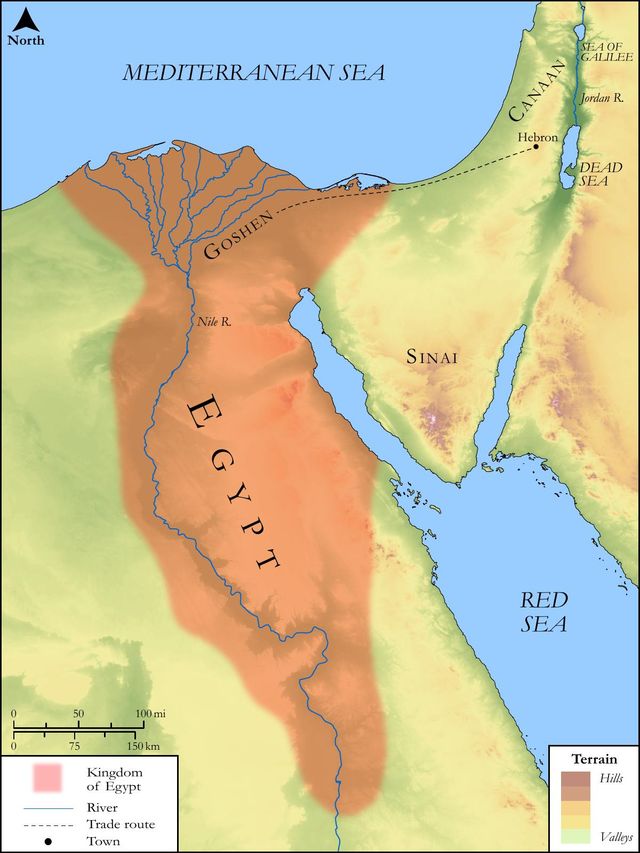
See on the biblical-era maps

Study this verse
Public-domain commentary
Matthew Henry
From his Commentary on the Whole Bible. Henry comments on passages, not single verses — this entry covers Exodus 10:1–11.
Here, I. Moses is instructed. We may well suppose that he, for his part, was much astonished both at Pharaoh's obstinacy and at God's severity, and could not but be compassionately concerned for the desolations of Egypt, and at a loss to conceive what this contest would come to at last. Now here God tells him what he designed, not only Israel's release, but the magnifying of his own name: That thou mayest tell in thy writings, which shall continue to the world's end, what I have wrought in Egypt, Exo 10:1, Exo 10:2. The ten plagues of Egypt must be inflicted, that they may be recorded for the generations to come as undeniable proofs, 1. Of God's overruling power in the kingdom of nature, his dominion over all the creatures, and his authority to use them either as servants to his justice or sufferers by it, according to the counsel of his will. 2. Of God's victorious power over the kingdom of Satan, to restrain the malice and chastise the insolence of his and his church's enemies. These plagues are standing monuments of the greatness of God, the happiness of the church, and the sinfulness of sin, and standing monitors to the children of men in all ages not to provoke the Lord to jealousy nor to strive with their Maker. The benefit of these instructions to the world sufficiently balances the expense.
II.Pharaoh is reproved (Exo 10:3):
Thus saith the Lord God of the poor, despised, persecuted, Hebrews, How long wilt thou refuse to humble thyself before me? Note, It is justly expected from the greatest of men that they humble themselves before the great God, and it is at their peril if they refuse to do it. This has more than once been God's quarrel with princes. Belshazzar did not humble his heart, Dan 5:22. Zedekiah humbled not himself before Jeremiah, Ch2 36:12. Those that will not humble themselves God will humble. Pharaoh had sometimes pretended to humble himself, but no account was made of it, because he was neither sincere nor constant in it.
III.The plague of locusts is threatened, Exo 10:4-6.
The hail had broken down the fruits of the earth, but these locusts should come and devour them: and not only so, but they should fill their houses, whereas the former inroads of these insects had been confined to their lands. This should be much worse than all the calamities of that king which had ever been known. Moses, when he had delivered his message, not expecting any better answer than he had formerly, turned himself and went out from Pharaoh, Exo 10:6. Thus Christ appointed his disciples to depart from those who would not receive them, and to shake off the dust of their feet for a testimony against them; and ruin is not far off from those who are thus justly abandoned by the Lord's messengers, Sa1 15:27, etc.
IV.Pharaoh's attendants, his ministers of state, or privy-counsellors, interpose, to persuade him to come to some terms with Moses, Exo 10:7.
They, as in duty bound, represent to him the deplorable condition of the kingdom (Egypt is destroyed), and advise him by all means to release his prisoners (Let the men go); for Moses, they found, would be a snare to them till it was done, and it were better to consent at first than to be compelled at last. The Israelites had become a burdensome stone to the Egyptians, and now, at length, the princes of Egypt were willing to be rid of them, Zac 12:3. Note, It is a thing to be regretted (and prevented, if possible) that a whole nation should be ruined for the pride and obstinacy of its princes, Salus populi suprema lex - To consult the welfare of the people is the first of laws.
V.A new treaty is, hereupon, set on foot between Pharaoh and Moses, in which Pharaoh consents for the Israelites to go into the wilderness to do sacrifice; but the matter in dispute was who should go, Exo 10:8. 1. Moses insists that they should take their whole families, and all their effects, along with them, Exo 10:9. note, Those that serve God must serve him with all they have. Moses pleads, "We must hold a feast, therefore we must have our families to feast with, and our flocks and herds to feast upon, to the honour of God." 2. Pharaoh will by no means grant this: he will allow the men to go, pretending that this was all they desired, though this matter was never yet mentioned in any of the former treaties; but, for the little ones, he resolves to keep them as hostages, to oblige them to return, Exo 10:10, Exo 10:11. In a great passion he curses them, and threatens that, if they offer to remove their little ones, they will do it at their peril. Note, Satan does all he can to hinder those that serve God themselves from bringing their children in to serve him. He is a sworn enemy to early piety, knowing how destructive it is to the interests of his kingdom; whatever would hinder us from engaging our children to the utmost in God's service, we have reason to suspect the hand of Satan in it. 3. The treaty, hereupon, breaks off abruptly; those that before went out from Pharaoh's presence (Exo 10:6) were now driven out. Those will quickly hear their doom that cannot bear to hear their duty. See Ch2 25:16. Quos Deus destruet eos dementat - Whom God intends to destroy he delivers up to infatuation. Never was man so infatuated to his own ruin as Pharaoh was.
Continue studying Exodus 10:6 across the web’s major study libraries — every link below opens this exact verse, chapter, or book on the destination site.
Read & Compare
 BibleGatewayThis verse in more than 200 translations and 70 languages.
 Bible.comThe YouVersion reader — hundreds of translations, reading plans, and highlights.
 ESV.orgCrossway's official English Standard Version reader.
 NET BibleThe NET translation with 60,000+ translators' notes on every rendering decision.
 STEP BibleTyndale House's free study tool — original text, vocabulary, and scholarly resources.
 BibliaLogos Bible Software's free web reader.
 USCCBThe New American Bible (Revised Edition) with the U.S. bishops' study notes.
Commentaries
 BibleHub CommentariesDozens of classic commentaries on this verse, gathered on one page.
 StudyLightMore than 100 commentary sets — the largest collection on the web.
 BibleRefPlain-English commentary on what this verse means, verse by verse.
 Enduring WordDavid Guzik's free commentary on this chapter, widely used by Bible teachers.
 Bible Study ToolsVerse commentary alongside Greek and Hebrew study aids.
Original Language & Research
- BibleHub InterlinearThe verse word by word — original language, transliteration, and English.
- BibleHub LexiconEvery word's original-language definition and Strong's entry.
 Blue Letter BibleDeep-study tools — Strong's numbers, concordance, and word studies.
 SefariaThe Hebrew text with Rashi and centuries of Jewish commentary.
Sermons, Hymns & Audio


TrulyRandomVerse is not affiliated with these sites and doesn’t control their content. They’re linked because they’re genuinely useful.
Summary
Exodus 10:6 records Moses' chilling declaration to Pharaoh regarding the eighth plague: an unprecedented, suffocating swarm of locusts destined to utterly devastate every Egyptian household and crop. This verse powerfully underscores the unparalleled nature of God's judgment and Moses' resolute departure, signaling the absolute inevitability of the catastrophe due to Pharaoh's persistent defiance.
Context
ShowHideLiterary Context
This verse immediately follows God's explicit instruction to Moses to confront Pharaoh again, emphasizing the divine purpose of the plagues to display God's power and make His name known (Exodus 10:1-2). Moses then delivers the direct warning of the locust plague's severity to Pharaoh and his court in Exodus 10:3-5. Verse 6 intensifies this warning by specifying the locusts' pervasive reach into all houses and stressing the plague's historically unprecedented scale. Moses' abrupt and definitive departure at the verse's conclusion signals the end of any further negotiation, setting the stage for Pharaoh's servants to desperately urge concession (Exodus 10:7) and Pharaoh's subsequent, albeit limited, offer (Exodus 10:8-11).
Historical & Cultural Context
By this point in the narrative, Egypt had already endured seven progressively devastating plagues, each meticulously designed to target specific aspects of Egyptian life and, crucially, to challenge the authority and efficacy of their numerous deities. Pharaoh's heart remained stubbornly hardened despite immense national suffering and the increasing pleas from his own advisors. While locust infestations were a known natural phenomenon in the lands of Egypt and Canaan, capable of causing widespread famine by devouring crops, the plague described in Exodus 10 was clearly not a typical occurrence. The emphatic statement "which neither thy fathers, nor thy fathers' fathers have seen" highlights its supernatural origin and unprecedented scale, directly challenging Egyptian gods associated with fertility, agriculture (such as Min and Renenutet), and even the sun god Ra, whose life-giving warmth was now paradoxically bringing forth destruction. The complete inundation of houses also spoke to a profound disruption of daily life and a loss of sanctuary, signifying YHWH's total, inescapable control over every facet of their existence.
Key Themes
ShowHideThis verse powerfully contributes to several overarching themes within Exodus and the broader biblical narrative. It underscores the theme of Divine Sovereignty, demonstrating God's absolute control over creation and His ability to wield natural forces as instruments of His will, far surpassing any human or pagan deity's power. It also highlights God's Righteous Judgment against persistent rebellion and hardened hearts, illustrating that divine warnings are not idle threats but precursors to inevitable consequences for those who defy His commands. Furthermore, the unprecedented nature of the plague reinforces the theme of God's Uniqueness and Self-Revelation, proving that YHWH is unlike any other god, acting decisively in history to fulfill His covenant promises and display His glory to all nations, as declared in Exodus 9:16. The verse also subtly emphasizes the Authority of Moses as God's chosen messenger, whose words carry divine weight and whose departure signifies the finality of God's patience.
Exposition and Analysis
ShowHideKey Word Analysis
ShowHideThis primitive root means "to fill or (intransitively) be full of, in a wide application (literally and figuratively)." Here, it conveys more than mere presence; it describes an overwhelming saturation, an inundation to capacity. The locusts would not just be in the houses but would fill them, creating an unbearable, suffocating, and inescapable presence that signifies the complete and miraculous nature of God's judgment, far beyond any typical infestation.
This word refers to "a house (in the greatest variation of applications, especially family, etc.)." The repetition of "houses" emphasizes the pervasive and inescapable nature of the coming plague. It signifies that the locusts would invade every private space, from Pharaoh's royal palace to the humblest Egyptian home, disrupting daily life and removing any sense of sanctuary, underscoring the universal impact of God's judgment across all levels of society.
This primitive root means "to go (causatively, bring) out, in a great variety of applications, literally and figuratively." Moses' action of "going out" (and "turning himself" from H6437, pânâh) is not a casual exit but a deliberate, resolute departure. It signifies the end of any further dialogue or negotiation, sealing the warning and indicating the certain, imminent arrival of the plague. This action underscores Moses' divine authority and the finality of God's word in the face of Pharaoh's persistent defiance.
Verse Breakdown
ShowHide"And they shall fill thy houses, and the houses of all thy servants, and the houses of all the Egyptians"
This clause vividly portrays the pervasive and inescapable nature of the coming plague. The locusts would not be confined to the fields but would invade every private space, from Pharaoh's palace to the humblest Egyptian home. This detail emphasizes the complete disruption of life and the universal impact of God's judgment, leaving no one untouched and demonstrating God's total control over every aspect of their existence.
"which neither thy fathers, nor thy fathers' fathers have seen, since the day that they were upon the earth unto this day"
This crucial phrase highlights the extraordinary, unprecedented scale of the locust plague. It distinguishes this divine judgment from any previous natural occurrences or historical memory, asserting its unique historical significance and demonstrating God's unparalleled power to orchestrate such a disaster. It serves as a direct challenge to Pharaoh's authority and the collective memory of Egypt, emphasizing the unique and divine origin of this particular disaster.
"And he turned himself, and went out from Pharaoh"
This final clause signifies Moses' decisive departure. It marks the end of the warning and the beginning of the inevitable. Moses leaves no room for further debate or negotiation, his exit confirming the certainty of the judgment to follow. This action underscores the divine authority behind Moses' words and the finality of God's patience with Pharaoh's hardened heart, indicating that the time for repentance has passed and judgment is at hand.
Literary Devices
ShowHideExodus 10:6 employs several powerful literary devices to heighten its impact. Hyperbole is evident in the phrase "fill thy houses," which, while perhaps literally possible given the scale of locust swarms, strongly conveys an overwhelming sense of saturation, terror, and inescapable invasion, far beyond a typical infestation. The Repetition of "thy houses, and the houses of all thy servants, and the houses of all the Egyptians" serves to emphasize the universal and inescapable nature of the judgment, affecting every level of Egyptian society from the highest to the lowest. Furthermore, the verse utilizes Contrast by stressing the unprecedented nature of this plague—"which neither thy fathers, nor thy fathers' fathers have seen"—setting it apart from any prior historical or natural events and thereby highlighting the unique, divine origin and unparalleled power behind this particular disaster.
THEOLOGICAL AND THEMATIC CONNECTIONS
ShowHideExodus 10:6 powerfully demonstrates God's absolute sovereignty over creation and His righteous judgment against persistent defiance. It reveals that God's warnings are not idle threats but expressions of His divine will, leading to inevitable consequences for those who harden their hearts. The plague of locusts, like the others, served to expose the impotence of Egypt's gods and establish YHWH as the one true God, capable of delivering His people from bondage. This event is a critical part of the broader biblical narrative of God's self-revelation, where He acts decisively in history to fulfill His covenant promises and demonstrate His glory to all nations, ensuring that His name is declared throughout the earth.
Reflection and Application
ShowHideExodus 10:6 serves as a timeless reminder of the serious consequences of persistent disobedience to God's will. Pharaoh's stubbornness, despite repeated warnings and escalating judgments, led to unprecedented devastation that touched every household. For us today, this verse challenges us to examine areas in our lives where we might be resisting God's leading or hardening our hearts against His truth. It encourages humility and prompt obedience, reminding us that God's sovereignty extends over all creation, and He can use even the smallest things to accomplish His purposes, whether in judgment or in salvation. Ultimately, it reinforces faith in a God who is powerful enough to deliver His people and just enough to judge sin, urging us to seek His mercy, respond to His warnings, and align our lives with His righteous commands, trusting that His ways are always perfect.
Questions for Reflection
ShowHideFAQ
ShowHideWhy did God use such a destructive plague like locusts, invading even homes?
ShowHideGod used the plague of locusts, like the other plagues, for several interconnected reasons. First, it was a direct judgment against Pharaoh's persistent refusal to release Israel, demonstrating the severe consequences of defying the divine will. Second, it was a powerful display of YHWH's absolute sovereignty over nature and His undeniable superiority over the Egyptian gods, many of whom were associated with agriculture, fertility, and even protection of homes. The unprecedented scale of the plague, particularly its invasion of every household, ensured that no one could mistake it for a mere natural disaster; it was clearly a targeted act of divine power. Finally, it served to "show forth [God's] power" and ensure His "name may be declared throughout all the earth" (Exodus 9:16), preparing the way for Israel's miraculous deliverance and establishing God's fearsome reputation among nations.
Does God still send "plagues" or natural disasters as judgment today?
ShowHideWhile the Bible records specific instances of God sending plagues as direct judgment in the past (as seen in Exodus 10), interpreting modern natural disasters solely as divine judgment for specific sins is complex and often misapplied. The New Testament emphasizes that all creation groans under the curse of sin (Romans 8:22), and natural disasters are a consequence of living in a fallen world. However, the Bible also teaches that God remains sovereign over all things, including natural events, and can use them for His purposes—whether to call people to repentance, test faith, or demonstrate His power. We should approach such events with humility, seeking God's mercy and understanding His broader redemptive plan, rather than presuming to know specific reasons for every disaster.
Was Pharaoh truly responsible for his actions if God hardened his heart?
ShowHideThis is a profound theological question that the Exodus narrative addresses with a dual perspective: Pharaoh repeatedly hardened his own heart (Exodus 8:15), and God also hardened Pharaoh's heart (Exodus 9:12). This duality does not negate Pharaoh's responsibility. Rather, God's hardening of Pharaoh's heart can be understood as God confirming Pharaoh in his existing rebellion, allowing his stubbornness to run its full course so that God's power and glory could be fully displayed. Pharaoh freely chose to resist God's initial commands and warnings, and God, in His sovereignty, used Pharaoh's obstinacy to accomplish His greater redemptive purposes for Israel and to reveal His unparalleled might to the world, demonstrating His justice and power to all.
Christ-Centered Fulfillment
ShowHideExodus 10:6, with its depiction of an unprecedented, pervasive plague and the ultimate deliverance of God's people from bondage, finds profound fulfillment and amplification in the person and work of Jesus Christ. Just as the locust plague demonstrated God's absolute sovereignty over creation, Jesus, in His earthly ministry, displayed this same divine authority by calming storms with a word (Mark 4:39), multiplying meager food to feed multitudes (Matthew 14:19-21), and casting out demons with supreme authority (Mark 1:27). His power over nature echoes the very power of God displayed in the plagues, confirming His divine identity as the Creator and Sustainer. Furthermore, the plagues served as a judgment against the spiritual and physical bondage of Egypt, leading to the physical liberation of Israel from slavery. This foreshadows the ultimate and far greater deliverance accomplished by Jesus. Humanity is in bondage to sin and death, a far more pervasive and destructive "plague" than any physical one, invading every human "house" and leaving no one untouched. Jesus, through His sinless life, sacrificial death on the cross, and glorious resurrection, broke the power of sin and death, offering true freedom and spiritual liberation to all who believe in Him (Romans 6:22). The "unprecedented" nature of the locust plague points to the truly unprecedented and unique work of Christ, whose sacrifice and resurrection offer a salvation "neither thy fathers, nor thy fathers' fathers have seen"—a new covenant and an eternal deliverance that surpasses all previous acts of God's redemption. He is the ultimate Deliverer, bringing an end to the spiritual plagues that afflict humanity and ushering in His eternal kingdom, where death and sorrow will be no more (Revelation 21:4).