


Exodus 10:5
Bible text: King James Version (1769 Blayney text) · Public domain
Bible text: King James Version with Strong's numbers · Public domain
Bible text: Berean Standard Bible · Public domain
Bible text: American Standard Version (1901) · Public domain
Bible text: World English Bible, Messianic edition · Public domain
Bible text: Geneva Bible (1599) · Public domain
Bible text: Young's Literal Translation · Public domain
- וְכִסָּהve·khi·Sahand it will coverH3680Conj-w ¦ V-Piel-ConsecPerf-3msVerb Piel Consecutive Perfect 3rd Singular Masculineוְandכִסָּהit will cover
- אֶת'et<obj.>H853DirObjMParticle Object Indicator
- עֵין'ein[the] eye ofH5869N-fscNoun Singular Feminine Construct
- הָאָרֶץha·'A·retzthe landH776Art ¦ N-fsNoun Singular Feminine Absoluteהָtheאָרֶץland
- וְלֹאve·Lo'and notH3808Conj-w ¦ NegParticle Negativeוְandלֹאnot
- יוּכַלyu·Khalanyone will be ableH3201V-Qal-Imperf-3msVerb Qal Imperfect 3rd Singular Masculine
- לִרְאֹתlir·'Otto seeH7200Prep-l ¦ V-Qal-InfVerb Qal Infinitive Constructלִtoרְאֹתsee
- אֶת'et<obj.>H853DirObjMParticle Object Indicator
- הָאָרֶץha·'A·retzthe groundH776Art ¦ N-fsNoun Singular Feminine Absoluteהָtheאָרֶץground
- וְאָכַלve·'a·Khaland it will eatH398Conj-w ¦ V-Qal-ConsecPerf-3msVerb Qal Consecutive Perfect 3rd Singular Masculineוְandאָכַלit will eat
- אֶת'et<obj.>H853DirObjMParticle Object Indicator
- יֶתֶרYe·ter[the] remainder ofH3499N-mscNoun Singular Masculine Construct
- הַפְּלֵטָהha·pe·le·Tahthe escaped thingH6413Art ¦ N-fsNoun Singular Feminine Absoluteהַtheפְּלֵטָהescaped thing
- הַנִּשְׁאֶרֶתha·nish·'E·retwhich remainsH7604Art ¦ V-Niphal-Prtcpl-fsVerb Niphal Participle Singular Feminine Absoluteהַwhichנִּשְׁאֶרֶתremains
- לָכֶםla·Khemto <the> youPrep-l ¦ 2mpSuffix Personal 2nd Plural Masculineלָto <the>כֶםyou
- מִןminfromH4480PrepPreposition
- הַבָּרָדha·ba·Radthe hailH1259Art ¦ N-msNoun Singular Masculine Absoluteהַtheבָּרָדhail
- וְאָכַלve·'a·Khaland it will eatH398Conj-w ¦ V-Qal-ConsecPerf-3msVerb Qal Consecutive Perfect 3rd Singular Masculineוְandאָכַלit will eat
- אֶת'et<obj.>H853DirObjMParticle Object Indicator
- כָּלkoleveryH3605N-mscNoun Singular Masculine Construct
- הָעֵץha·'Etz<the> treeH6086Art ¦ N-msNoun Singular Masculine Absoluteהָ<the>עֵץtree
- הַצֹּמֵחַha·tzo·Me·achthat is sproutingH6779Art ¦ V-Qal-Prtcpl-msVerb Qal Participle Singular Masculine Absoluteהַthatצֹּמֵחַis sprouting
- לָכֶםla·Khemfor <the> youPrep-l ¦ 2mpSuffix Personal 2nd Plural Masculineלָfor <the>כֶםyou
- מִןminfromH4480PrepPreposition
- הַשָּׂדֶהha·sa·Dehthe fieldH7704Art ¦ N-msNoun Singular Masculine Absoluteהַtheשָּׂדֶהfield
English is a literal word-by-word gloss of the Hebrew, not the KJV's wording. Why?
This is the original text the KJV's translators worked from — each Hebrew word with its own literal English meaning in this verse, prepared by scholars at Tyndale House, Cambridge. The KJV translates whole sentences, not word by word, so its wording differs: one Hebrew word can become several English words, and the KJV may choose “the LORD” where the gloss reads “Yahweh”. Both are faithful — they answer different questions. For the KJV's own rendering, switch to the KJV text.
Details
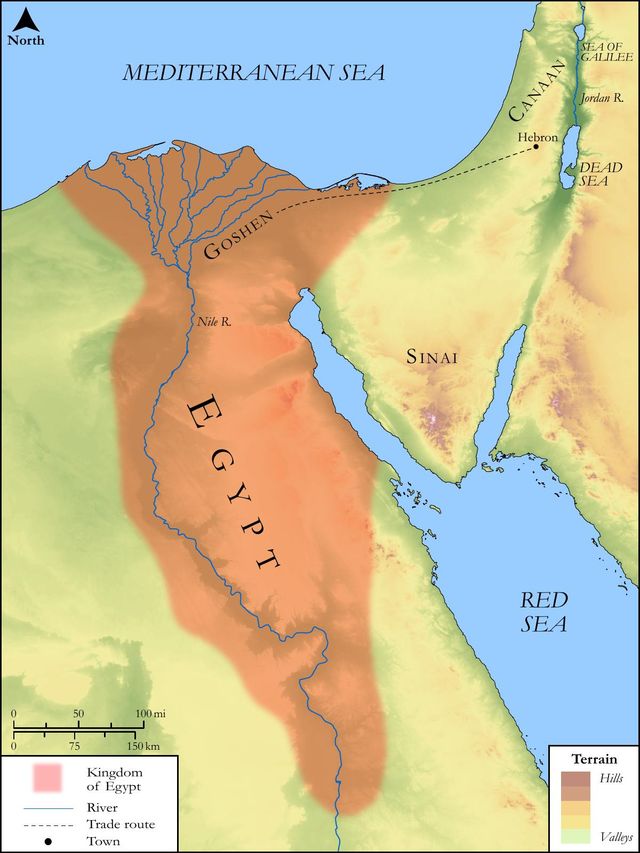
See on the biblical-era maps

Study this verse
Public-domain commentary
Matthew Henry
From his Commentary on the Whole Bible. Henry comments on passages, not single verses — this entry covers Exodus 10:1–11.
Here, I. Moses is instructed. We may well suppose that he, for his part, was much astonished both at Pharaoh's obstinacy and at God's severity, and could not but be compassionately concerned for the desolations of Egypt, and at a loss to conceive what this contest would come to at last. Now here God tells him what he designed, not only Israel's release, but the magnifying of his own name: That thou mayest tell in thy writings, which shall continue to the world's end, what I have wrought in Egypt, Exo 10:1, Exo 10:2. The ten plagues of Egypt must be inflicted, that they may be recorded for the generations to come as undeniable proofs, 1. Of God's overruling power in the kingdom of nature, his dominion over all the creatures, and his authority to use them either as servants to his justice or sufferers by it, according to the counsel of his will. 2. Of God's victorious power over the kingdom of Satan, to restrain the malice and chastise the insolence of his and his church's enemies. These plagues are standing monuments of the greatness of God, the happiness of the church, and the sinfulness of sin, and standing monitors to the children of men in all ages not to provoke the Lord to jealousy nor to strive with their Maker. The benefit of these instructions to the world sufficiently balances the expense.
II.Pharaoh is reproved (Exo 10:3):
Thus saith the Lord God of the poor, despised, persecuted, Hebrews, How long wilt thou refuse to humble thyself before me? Note, It is justly expected from the greatest of men that they humble themselves before the great God, and it is at their peril if they refuse to do it. This has more than once been God's quarrel with princes. Belshazzar did not humble his heart, Dan 5:22. Zedekiah humbled not himself before Jeremiah, Ch2 36:12. Those that will not humble themselves God will humble. Pharaoh had sometimes pretended to humble himself, but no account was made of it, because he was neither sincere nor constant in it.
III.The plague of locusts is threatened, Exo 10:4-6.
The hail had broken down the fruits of the earth, but these locusts should come and devour them: and not only so, but they should fill their houses, whereas the former inroads of these insects had been confined to their lands. This should be much worse than all the calamities of that king which had ever been known. Moses, when he had delivered his message, not expecting any better answer than he had formerly, turned himself and went out from Pharaoh, Exo 10:6. Thus Christ appointed his disciples to depart from those who would not receive them, and to shake off the dust of their feet for a testimony against them; and ruin is not far off from those who are thus justly abandoned by the Lord's messengers, Sa1 15:27, etc.
IV.Pharaoh's attendants, his ministers of state, or privy-counsellors, interpose, to persuade him to come to some terms with Moses, Exo 10:7.
They, as in duty bound, represent to him the deplorable condition of the kingdom (Egypt is destroyed), and advise him by all means to release his prisoners (Let the men go); for Moses, they found, would be a snare to them till it was done, and it were better to consent at first than to be compelled at last. The Israelites had become a burdensome stone to the Egyptians, and now, at length, the princes of Egypt were willing to be rid of them, Zac 12:3. Note, It is a thing to be regretted (and prevented, if possible) that a whole nation should be ruined for the pride and obstinacy of its princes, Salus populi suprema lex - To consult the welfare of the people is the first of laws.
V.A new treaty is, hereupon, set on foot between Pharaoh and Moses, in which Pharaoh consents for the Israelites to go into the wilderness to do sacrifice; but the matter in dispute was who should go, Exo 10:8. 1. Moses insists that they should take their whole families, and all their effects, along with them, Exo 10:9. note, Those that serve God must serve him with all they have. Moses pleads, "We must hold a feast, therefore we must have our families to feast with, and our flocks and herds to feast upon, to the honour of God." 2. Pharaoh will by no means grant this: he will allow the men to go, pretending that this was all they desired, though this matter was never yet mentioned in any of the former treaties; but, for the little ones, he resolves to keep them as hostages, to oblige them to return, Exo 10:10, Exo 10:11. In a great passion he curses them, and threatens that, if they offer to remove their little ones, they will do it at their peril. Note, Satan does all he can to hinder those that serve God themselves from bringing their children in to serve him. He is a sworn enemy to early piety, knowing how destructive it is to the interests of his kingdom; whatever would hinder us from engaging our children to the utmost in God's service, we have reason to suspect the hand of Satan in it. 3. The treaty, hereupon, breaks off abruptly; those that before went out from Pharaoh's presence (Exo 10:6) were now driven out. Those will quickly hear their doom that cannot bear to hear their duty. See Ch2 25:16. Quos Deus destruet eos dementat - Whom God intends to destroy he delivers up to infatuation. Never was man so infatuated to his own ruin as Pharaoh was.
Continue studying Exodus 10:5 across the web’s major study libraries — every link below opens this exact verse, chapter, or book on the destination site.
Read & Compare
 BibleGatewayThis verse in more than 200 translations and 70 languages.
 Bible.comThe YouVersion reader — hundreds of translations, reading plans, and highlights.
 ESV.orgCrossway's official English Standard Version reader.
 NET BibleThe NET translation with 60,000+ translators' notes on every rendering decision.
 STEP BibleTyndale House's free study tool — original text, vocabulary, and scholarly resources.
 BibliaLogos Bible Software's free web reader.
 USCCBThe New American Bible (Revised Edition) with the U.S. bishops' study notes.
Commentaries
 BibleHub CommentariesDozens of classic commentaries on this verse, gathered on one page.
 StudyLightMore than 100 commentary sets — the largest collection on the web.
 BibleRefPlain-English commentary on what this verse means, verse by verse.
 Enduring WordDavid Guzik's free commentary on this chapter, widely used by Bible teachers.
 Bible Study ToolsVerse commentary alongside Greek and Hebrew study aids.
Original Language & Research
- BibleHub InterlinearThe verse word by word — original language, transliteration, and English.
- BibleHub LexiconEvery word's original-language definition and Strong's entry.
 Blue Letter BibleDeep-study tools — Strong's numbers, concordance, and word studies.
 SefariaThe Hebrew text with Rashi and centuries of Jewish commentary.
Sermons, Hymns & Audio


TrulyRandomVerse is not affiliated with these sites and doesn’t control their content. They’re linked because they’re genuinely useful.
Summary
Exodus 10:5 powerfully depicts the overwhelming scale and devastating impact of the eighth plague, the locusts, sent by God upon Egypt. This verse describes an unprecedented swarm so vast that it would completely obscure the very ground, consuming every remaining shred of vegetation that had miraculously survived the preceding hail plague, thereby ensuring a total and catastrophic agricultural obliteration as a direct divine judgment against Pharaoh's unyielding defiance.
Context
ShowHideLiterary Context
This verse is strategically placed within the escalating narrative of the ten plagues, specifically introducing the horrific details of the eighth plague: locusts. It immediately follows God's solemn warning to Pharaoh through Moses and Aaron regarding the impending swarm, emphasizing the divine origin and purpose of this judgment (Exodus 10:4). The vivid description of the locusts' destructive capacity in this verse directly precedes the desperate plea from Pharaoh's own officials for him to release Israel, highlighting the immediate and profound impact of the impending disaster on the Egyptian court (Exodus 10:7). Crucially, this plague targets the "residue" of vegetation that had been spared by the devastating hail plague (Exodus 9:25), underscoring God's cumulative, precise, and comprehensive judgment against Egypt's agricultural foundation.
Historical & Cultural Context
Ancient Egypt's prosperity and very survival were inextricably linked to its agricultural abundance, sustained primarily by the annual inundation of the Nile River. Plagues like locust infestations were known natural disasters in the region, capable of causing widespread famine. However, the plague described in Exodus 10:5 transcends ordinary natural phenomena, being presented as a supernatural act of Yahweh, meticulously orchestrated to demonstrate His sovereignty. Each plague was a direct, targeted assault not only on Egyptian life and economy but also, implicitly, on their vast pantheon of gods. For example, the locusts would have challenged deities associated with fertility, crops, and the harvest, such as Min (god of fertility and vegetation) or Renenutet (goddess of the harvest). Pharaoh, considered a divine king and the guarantor of Egypt's order (Ma'at) and prosperity for his land, was systematically humiliated as his inability to protect Egypt from these escalating disasters exposed the impotence of both himself and his gods in the face of Yahweh's absolute power.
Key Themes
ShowHideExodus 10:5 contributes significantly to several major theological and narrative themes woven throughout the book of Exodus. Foremost among these is the theme of God's absolute sovereignty over creation and all earthly powers. The plague demonstrates that Yahweh, not Pharaoh or Egypt's gods, controls the natural world and can wield its forces as instruments of His will and judgment. It also powerfully illustrates the theme of divine judgment against rebellion, as Pharaoh's persistent hardening of his heart leads to increasingly severe and comprehensive devastation. This verse, by detailing the consumption of all remaining vegetation, underscores the cumulative nature of God's wrath, systematically dismantling every source of Egyptian security and sustenance. Finally, for the Israelites, this plague, like the others, served as a tangible sign of God's faithfulness to His covenant promises to deliver them from bondage, reinforcing their understanding of Yahweh as their mighty deliverer and protector, as seen in the broader narrative of God's mighty hand and outstretched arm (Exodus 6:6).
Exposition and Analysis
ShowHideExodus 10:5 meticulously details the two primary destructive actions of the locusts: their overwhelming numerical density and their complete consumption of vegetation, leaving nothing behind.
Key Word Analysis
ShowHideThis verb signifies not merely a partial covering but a complete obscuring or concealment, implying a total blanketing. In this context, it vividly portrays a dark, moving carpet of insects so dense that the very "face of the earth" (the ground itself, H5869 ʻayin combined with H776 ʼerets) would become invisible. This emphasizes the unprecedented, unimaginable scale and density of the locust invasion, creating an eerie, living darkness.
This term specifically refers to what was "left over" or "remained" after the previous, devastating plague of hail (H1259 bârâd). The hail had destroyed much of the crops and trees (Exodus 9:25), but some vegetation had survived. The locusts were sent precisely to consume this remnant, highlighting God's meticulous precision and the cumulative, comprehensive nature of His judgment, ensuring nothing was spared.
The inclusion of "every tree which groweth for you out of the field" (H7704 sâdeh) underscores the totality and long-term impact of the destruction. Unlike annual crops that might regrow relatively quickly, trees represent perennial agricultural investment, providing fruit, shade, and timber. Their consumption (H398 ʼâkal) by the locusts signified not merely a temporary setback but a complete and lasting devastation of Egypt's food supply, natural landscape, and economic stability.
Verse Breakdown
ShowHide"And they shall cover the face of the earth, that one cannot be able to see the earth:"
This opening clause immediately establishes the overwhelming, unprecedented scale of the locust plague. The phrase "cover the face of the earth" (literally, "the eye of the land") emphasizes the sheer numerical density of the insects, so vast that they would completely obscure the ground beneath them. The consequence, "that one cannot be able to see the earth," underscores the visual impact: the land would appear as a moving, dark mass of insects, creating an eerie, suffocating darkness and conveying a sense of utter helplessness.
"and they shall eat the residue of that which is escaped, which remaineth unto you from the hail,"
This segment highlights God's precise and cumulative judgment. The locusts were not a random natural disaster but were specifically directed to consume what the preceding, devastating hail plague had left untouched. This ensured that no part of Egypt's agricultural foundation would survive, demonstrating God's intent to systematically strip Egypt of its resources and expose its vulnerability.
"and shall eat every tree which groweth for you out of the field:"
This final phrase confirms the comprehensive and absolute nature of the destruction. Not only annual crops but also perennial trees, vital for fruit, shade, and timber, would be devoured. This signifies a total economic and environmental collapse, leaving Egypt utterly barren and its long-term agricultural prospects ruined, a stark consequence of Pharaoh's persistent refusal to obey God.
Literary Devices
ShowHideThe primary literary device employed in Exodus 10:5 is Hyperbole, particularly evident in the phrase "cover the face of the earth, that one cannot be able to see the earth." While locust swarms are indeed massive and destructive, this phrasing exaggerates their density to convey an almost supernatural scale, emphasizing the overwhelming terror and the completeness of the judgment. The Vivid Imagery of the land being "covered" and "every tree" being "eaten" paints a stark picture of utter desolation and environmental ruin. There is also an element of Repetition with the phrase "and they shall eat," which underscores the relentless and comprehensive nature of the locusts' consumption.
Theological and Thematic Connections
ShowHideExodus 10:5 powerfully illustrates several core theological truths concerning God's character and His interaction with humanity. This plague unequivocally demonstrates God's absolute sovereignty over creation and His ability to wield natural forces as precise instruments of His judgment. It was not a random natural disaster but a divinely orchestrated act, meticulously timed and devastating in its scope, directly targeting Egypt's agricultural foundation and challenging their reliance on their own pantheon of gods. This underscores that Yahweh is the ultimate authority, capable of dismantling human power and prosperity at will. Furthermore, the verse highlights the escalating consequences of persistent rebellion against God; Pharaoh's repeated hardening of his heart led to increasingly severe and comprehensive judgments, serving as a stark warning that defiance against God's will brings escalating and devastating repercussions. Conversely, for the Israelites, this plague was a powerful sign of God's active intervention on their behalf, demonstrating His unwavering commitment to His covenant promises to deliver them from bondage, even against the mightiest empire of the day.
Reflection and Application
ShowHideExodus 10:5 offers profound and enduring lessons for contemporary believers, reminding us of God's active involvement in human history and the absolute nature of His power. It serves as a powerful testament that for those who persist in defiance against God's revealed will, there are real, escalating, and comprehensive consequences. While we may not experience literal plagues today, the principle holds true: rejecting divine wisdom and authority can lead to spiritual, relational, and societal decay. This verse challenges us to consider areas in our own lives where we might be subtly or overtly resisting God's commands, and to recognize that such resistance can lead to a "consumption" of our peace, joy, and fruitfulness. Conversely, for those who trust in God, this verse is a powerful reminder of His unwavering commitment to His people and His ability to deliver them from any oppression or overwhelming circumstance. It encourages us to cultivate a posture of humility and surrender to God, recognizing His ultimate sovereignty and trusting in His redemptive plan for our lives and for the world.
Questions for Reflection
ShowHideFAQ
ShowHideWhy were the plagues, especially the locusts, so devastating and seemingly excessive?
ShowHideThe plagues were not merely punitive but profoundly pedagogical, serving multiple divine purposes. They were designed to demonstrate Yahweh's absolute sovereignty over all creation and to expose the impotence of Egypt's gods, proving Him to be the one true God. They also served to break Pharaoh's hardened will, compelling him to release Israel, and to prove God's faithfulness to His covenant people. The escalating severity and comprehensive nature of the plagues, like the locusts consuming everything that remained, were necessary to leave no doubt about God's power and to ensure that His glory would be known throughout the earth (Exodus 9:16). The "excessiveness" was a direct response to Pharaoh's extraordinary stubbornness, ensuring the complete dismantling of Egypt's power and the unequivocal triumph of God's will.
Does God still send plagues or natural disasters as judgment today?
ShowHideWhile the Bible clearly shows God using natural phenomena for specific acts of judgment in historical contexts (like the Exodus plagues or the flood in Genesis 7), interpreting every modern natural disaster as direct, targeted divine judgment for specific sins is generally problematic and can misrepresent God's complex character and ways. God is indeed sovereign over all creation, and natural events, including disasters, occur within a fallen world. However, the Exodus narrative serves as a timeless reminder that God can and does intervene in history, and that persistent societal or individual rebellion against Him can lead to severe consequences, though not always in the form of literal, targeted plagues as seen in Exodus. Ultimately, the most significant judgment for sin has been poured out on Christ on the cross (Romans 8:3), and the final, comprehensive judgment is yet to come (Revelation 20:11-15).
Christ-Centered Fulfillment
ShowHideWhile Exodus 10:5 describes a specific historical judgment, its underlying themes find profound fulfillment and reinterpretation in the person and work of Jesus Christ. The plague of locusts powerfully demonstrated God's absolute power over creation and His ability to deliver His people from physical bondage through overwhelming judgment on their oppressor. In Christ, we witness God's ultimate power demonstrated not primarily through physical destruction, but through redemptive suffering, resurrection, and spiritual victory. Jesus, as God incarnate, possesses inherent authority over all creation, famously calming storms with a word (Mark 4:39) and demonstrating His dominion over all natural forces. More significantly, Christ delivers humanity from a far greater bondage than Pharaoh's oppression: the bondage to sin and death. His sacrificial death on the cross and triumphant resurrection constitute the ultimate act of deliverance, overcoming the spiritual "oppressor" (Satan) and bringing about a new covenant of freedom, life, and reconciliation with God (Colossians 2:13-15). The judgment that fell upon Egypt for its rebellion foreshadows the judgment for sin that Christ Himself bore on the cross, allowing all who trust in Him to escape the ultimate "plague" of eternal separation from God (Romans 5:8-9). Thus, the power, sovereignty, and deliverance vividly displayed in Exodus 10:5 are amplified, perfected, and eternally secured in Jesus, who brings about a spiritual liberation that transcends any physical deliverance.