


Exodus 10:15
Bible text: King James Version (1769 Blayney text) · Public domain
Bible text: King James Version with Strong's numbers · Public domain
Bible text: Berean Standard Bible · Public domain
Bible text: American Standard Version (1901) · Public domain
Bible text: World English Bible, Messianic edition · Public domain
Bible text: Geneva Bible (1599) · Public domain
Bible text: Young's Literal Translation · Public domain
- וַיְכַסvay·Khasand it coveredH3680Conj-w ¦ V-Piel-ConsecImperf-3msVerb Piel Consecutive Imperfect 3rd Singular Masculineוַandיְכַסit covered
- אֶת'et<obj.>H853DirObjMParticle Object Indicator
- עֵין'ein[the] eye ofH5869N-fscNoun Singular Feminine Construct
- כָּלkolallH3605N-mscNoun Singular Masculine Construct
- הָאָרֶץha·'a·Retzthe landH776Art ¦ N-fsNoun Singular Feminine Absoluteהָtheאָרֶץland
- וַתֶּחְשַׁךְva·tech·Shakhand it grew darkH2821Conj-w ¦ V-Qal-ConsecImperf-3fsVerb Qal Consecutive Imperfect 3rd Singular Feminineוַandתֶּחְשַׁךְit grew dark
- הָאָרֶץha·'a·Retzthe landH776Art ¦ N-fsNoun Singular Feminine Absoluteהָtheאָרֶץland
- וַיֹּאכַלvai·Yo·khaland it ateH398Conj-w ¦ V-Qal-ConsecImperf-3msVerb Qal Consecutive Imperfect 3rd Singular Masculineוַandיֹּאכַלit ate
- אֶת'et<obj.>H853DirObjMParticle Object Indicator
- כָּלkolallH3605N-mscNoun Singular Masculine Construct
- עֵשֶׂב'E·sev[the] vegetation ofH6212N-mscNoun Singular Masculine Construct
- הָאָרֶץha·'A·retzthe landH776Art ¦ N-fsNoun Singular Feminine Absoluteהָtheאָרֶץland
- וְאֵתve·'Etand <obj.>H853Conj-w ¦ DirObjMParticle Object Indicatorוְandאֵת<obj.>
- כָּלkolallH3605N-mscNoun Singular Masculine Construct
- פְּרִיpe·Ri[the] fruit ofH6529N-mscNoun Singular Masculine Construct
- הָעֵץha·'Etzthe tree[s]H6086Art ¦ N-msNoun Singular Masculine Absoluteהָtheעֵץtree[s]
- אֲשֶׁר'a·SherwhichH834RelParticle Relative
- הוֹתִירho·Tirit had left overH3498V-Hiphil-Perf-3msVerb Hiphil Perfect 3rd Singular Masculine
- הַבָּרָדha·ba·Radthe hailH1259Art ¦ N-msNoun Singular Masculine Absoluteהַtheבָּרָדhail
- וְלֹאve·lo'and notH3808Conj-w ¦ NegParticle Negativeוְandלֹאnot
- נוֹתַרno·Tarit was left behindH3498V-Niphal-Perf-3msVerb Niphal Perfect 3rd Singular Masculine
- כָּלkolanyH3605N-mscNoun Singular Masculine Construct
- יֶרֶקYe·rekgreeneryH3418N-msNoun Singular Masculine Absolute
- בָּעֵץba·'Etzon the tree[s]H6086Prep-b ¦ N-msNoun Singular Masculine Absoluteבָּon theעֵץtree[s]
- וּבְעֵשֶׂבu·ve·'E·sevand on [the] vegetation ofH6212Conj-w ¦ Prep-b ¦ N-mscNoun Singular Masculine Constructוּandבְonעֵשֶׂב[the] vegetation of
- הַשָּׂדֶהha·sa·Dehthe fieldH7704Art ¦ N-msNoun Singular Masculine Absoluteהַtheשָּׂדֶהfield
- בְּכָלbe·kholin allH3605Prep-b ¦ N-mscNoun Singular Masculine Constructבְּinכָלall
- אֶרֶץ'E·retz[the] land ofH776N-fscNoun Singular Feminine Construct
- מִצְרָיִםmitz·Ra·yimEgyptH4714N-properNoun Proper Location
English is a literal word-by-word gloss of the Hebrew, not the KJV's wording. Why?
This is the original text the KJV's translators worked from — each Hebrew word with its own literal English meaning in this verse, prepared by scholars at Tyndale House, Cambridge. The KJV translates whole sentences, not word by word, so its wording differs: one Hebrew word can become several English words, and the KJV may choose “the LORD” where the gloss reads “Yahweh”. Both are faithful — they answer different questions. For the KJV's own rendering, switch to the KJV text.
Details
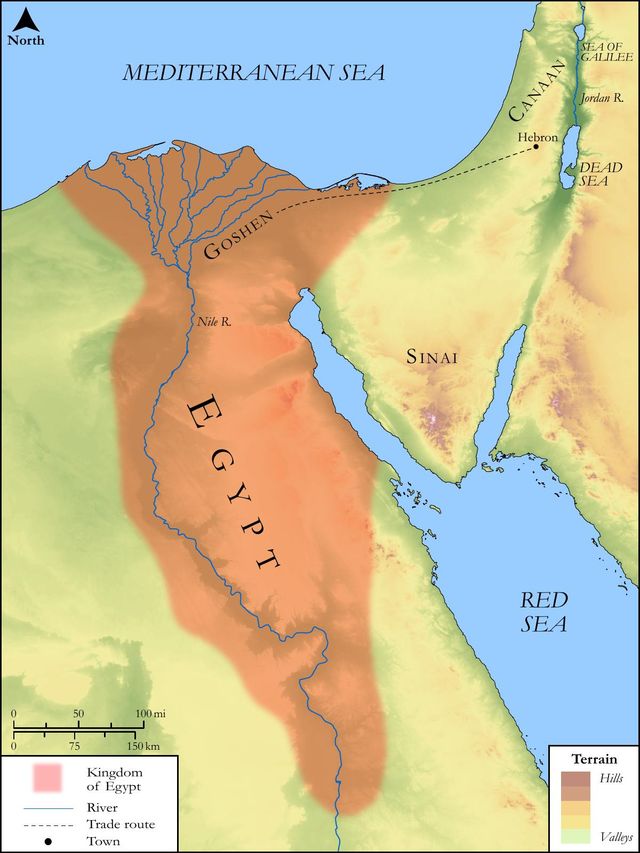
See on the biblical-era maps

Study this verse
Public-domain commentary
Matthew Henry
From his Commentary on the Whole Bible. Henry comments on passages, not single verses — this entry covers Exodus 10:12–20. His two-level outline is real structure in the source text, so it is rendered as structure.
Here is, I. The invasion of the land by the locusts - God's great army, Joe 2:11. God bids Moses stretch out his hand (Exo 10:12), to beckon them, as it wee (for they came at a call), and he stretched forth his rod, Exo 10:13. Compare Exo 9:22 23. Moses ascribes it to the stretching out, not of his own hand, but the rod of God, the instituted sign of God's presence with him. The locusts obey the summons, and fly upon the wings of the wind, the east wind, and caterpillars without number, as we are told, Psa 105:34, Psa 105:35. A formidable army of horse and foot might more easily have been resisted than this host of insects. Who then is able to stand before the great God?
II.The desolations they made in it (Exo 10:15):
They covered the face of the earth, and ate up the fruit of it. The earth God has given to the children of men; yet, when God pleases, he can disturb their possession and send locusts and caterpillars to force them out. Herbs grow for the service of man; yet, when God pleases, those contemptible insects shall not only be fellow-commoners with him, but shall plunder him, and eat the bread out of his mouth. Let our labour be, not for the habitation and meat which thus lie exposed, but for those which endure to eternal life, which cannot be thus invaded, nor thus corrupted.
III.Pharaoh's admission, hereupon, Exo 10:16, Exo 10:17.
He had driven Moses and Aaron from him (Exo 10:11), telling them (it is likely) he would have no more to do with them. But now he calls for them again in all haste, and makes court to them with as much respect as before he had dismissed them with disdain. Note, The day will come when those who set at nought their counsellors, and despise all their reproofs, will be glad to make an interest in them and engage them to intercede on their behalf. The foolish virgins court the wise to give them of their oil; and see Psa 141:6.
1.Pharaoh confesses his fault: I have sinned against the Lord your God, and against you. He now sees his own folly in the slights and affronts he had put on God and his ambassadors, and seems at least, to repent of it. When God convinces men of sin, and humbles them for it, their contempt of God's ministers, and the word of the Lord in their mouths, will certainly come into the account, and lie heavily upon their consciences. Some think that when Pharaoh said, "The Lord your God," he did in effect say, "The Lord shall not be my God." Many treat with God as a potent enemy, whom they are willing not to be at war with, but care not for treating with him as their rightful prince, to whom they are willing to submit with loyal affection. True penitents lament sin as committed against God, even their own God, to whom they stand obliged.
2.He begs pardon, not of God, as penitents ought, but of Moses, which was more excusable in him, because, by a special commission, Moses was made a god to Pharaoh, and whosesoever sins he remitted they were forgiven; when he prays, Forgive this once, he, in effect, promises not to offend in like manner any more, yet seems loth to express that promise, nor does he say any thing particularly of letting the people go. Note, Counterfeit repentance commonly cheats men with general promises and is loth to covenant against particular sins.
3.He entreats Moses and Aaron to pray for him. There are those who, in distress, implore the help of other persons' prayers, but have no mind to pray for themselves, showing thereby that they have no true love to God, nor any delight in communion with him. Pharaoh desires their prayers that this death only might be taken away, not this sin: he deprecates the plague of locusts, not the plague of a hard heart, which yet was much the more dangerous.
IV.The removal of the judgment, upon the prayer of Moses, Exo 10:18, Exo 10:19. This was,
1.As great an instance of the power of God as the judgment itself. An east wind brought the locusts, and now a west wind carried them off. Note, Whatever point of the compass the wind is in, it is fulfilling God's word, and turns about by his counsel. The wind bloweth where it listeth, as it respects any control of ours; not so as it respects the control of God: he directeth it under the whole heaven.
2.It was as great a proof of the authority of Moses, and as firm a ratification of his commission and his interest in that God who both makes peace and creates evil, Isa 45:7. Nay, hereby he not only commanded the respect, but recommended himself to the good affections of the Egyptians, inasmuch as, while the judgment came in obedience to his summons, the removal of it was in answer to his prayers. He never desired the woeful day, though he threatened it. His commission indeed ran against Egypt, but his intercession was for it, which was a good reason why they should love him, though they feared him.
3.It was also as strong an argument for their repentance as the judgment itself; for by this it appeared that God is ready to forgive, and swift to show mercy. If he turn away a particular judgment, as he did often from Pharaoh, or defer it, as in Ahab's case, upon the profession of repentance and the outward tokens of humiliation, what will he do if we be sincere, and how welcome will true penitents be to him! O that this goodness of God might lead us to repentance!
V.Pharaoh's return to his impious resolution again not to let the people go (Exo 10:20), through the righteous hand of God upon him, hardening his heart, and confirming him in his obstinacy. Note, Those that have often baffled their convictions, and stood it out against them, forfeit the benefit of them, and are justly given up to those lusts of their own hearts which (how strong soever their convictions) prove too strong for them.
Continue studying Exodus 10:15 across the web’s major study libraries — every link below opens this exact verse, chapter, or book on the destination site.
Read & Compare
 BibleGatewayThis verse in more than 200 translations and 70 languages.
 Bible.comThe YouVersion reader — hundreds of translations, reading plans, and highlights.
 ESV.orgCrossway's official English Standard Version reader.
 NET BibleThe NET translation with 60,000+ translators' notes on every rendering decision.
 STEP BibleTyndale House's free study tool — original text, vocabulary, and scholarly resources.
 BibliaLogos Bible Software's free web reader.
 USCCBThe New American Bible (Revised Edition) with the U.S. bishops' study notes.
Commentaries
 BibleHub CommentariesDozens of classic commentaries on this verse, gathered on one page.
 StudyLightMore than 100 commentary sets — the largest collection on the web.
 BibleRefPlain-English commentary on what this verse means, verse by verse.
 Enduring WordDavid Guzik's free commentary on this chapter, widely used by Bible teachers.
 Bible Study ToolsVerse commentary alongside Greek and Hebrew study aids.
Original Language & Research
- BibleHub InterlinearThe verse word by word — original language, transliteration, and English.
- BibleHub LexiconEvery word's original-language definition and Strong's entry.
 Blue Letter BibleDeep-study tools — Strong's numbers, concordance, and word studies.
 SefariaThe Hebrew text with Rashi and centuries of Jewish commentary.
Sermons, Hymns & Audio


TrulyRandomVerse is not affiliated with these sites and doesn’t control their content. They’re linked because they’re genuinely useful.
Summary
Exodus 10:15 vividly portrays the overwhelming devastation wrought by the eighth plague on Egypt: an unprecedented swarm of locusts that completely obscured the land, consuming every last vestige of vegetation left by the preceding hail. This catastrophic event plunged the nation into profound darkness and ensured widespread famine, serving as a powerful demonstration of Yahweh's absolute sovereignty over creation and His escalating, precise judgment against Pharaoh's persistent and hardened defiance, leaving Egypt utterly barren and without hope of natural recovery.
Context
ShowHideLiterary Context
This verse is situated at a critical juncture within the escalating narrative of the Plagues of Egypt, specifically detailing the climactic impact of the eighth plague—the locusts. It immediately follows Pharaoh's continued refusal to "let my people go" (Exodus 10:3), despite Moses's dire warnings. The preceding hail plague had already decimated much of Egypt's crops and livestock, but the locusts are meticulously described as consuming precisely "which the hail had left." This detail underscores the divine precision and comprehensive nature of God's judgment, ensuring that any remaining agricultural hope was utterly extinguished. The relentless progression of these judgments, each more severe than the last, inexorably leads to the final, most catastrophic plague: the death of the firstborn, which ultimately compels Pharaoh to release Israel.
Historical & Cultural Context
Ancient Egypt's prosperity and very survival were inextricably linked to the annual inundation of the Nile River and the subsequent fertility of its delta, which supported its vast agricultural economy. Plagues like hail and locusts were not merely economic setbacks but existential threats, directly attacking the nation's lifeblood and food supply. Culturally, the Egyptians worshipped an extensive pantheon of deities, many of whom were associated with natural forces, fertility, and agriculture. For instance, Renenutet was the goddess of harvest, and Seth was associated with chaos and storms. The overwhelming nature of this locust plague, orchestrated by Yahweh, served as a direct and humiliating challenge to the perceived power of these deities, demonstrating that the God of Israel alone held absolute dominion over creation and the destiny of nations. The "darkening" of the land by the locusts would have been particularly terrifying, as the sun god Ra was a supreme deity, and any obscuring of the sun would have been seen as a profound disruption of the order of the world and a direct assault on the source of life itself.
Key Themes
ShowHideExodus 10:15 powerfully contributes to several overarching themes in the book of Exodus. Foremost among these is God's absolute sovereignty and power over all creation, including natural forces, which He wields with precise intent as instruments of His will. This plague, like the others, serves as a dramatic demonstration that Yahweh is the one true God, superior to all Egyptian deities and Pharaoh himself. Another key theme is divine judgment against rebellion and hardened hearts. Pharaoh's persistent defiance, despite repeated warnings and escalating consequences, directly provokes the intensified severity of each plague, illustrating the inevitable and comprehensive consequences of resisting God's commands. Finally, the verse highlights the theme of God's faithfulness to His covenant promises. The plagues are not merely acts of destruction but are fundamentally acts of liberation for Israel, fulfilling God's ancient promise to Abraham to deliver his descendants from bondage (Genesis 15:13-14). Through these mighty acts, God reveals His glory and power, not only to the Egyptians but also to His own people, teaching them to trust in His mighty hand for their deliverance (Exodus 6:6-7).
Exposition and Analysis
ShowHideExodus 10:15 vividly portrays the comprehensive ruin inflicted by the locust plague through precise, impactful language, emphasizing the totality of the destruction.
Key Word Analysis
ShowHideThis verb signifies more than a mere dusting; it means to "plump, i.e. fill up hollows; by implication, to cover (for clothing or secrecy); clad self, close, clothe, conceal, cover (self), (flee to) hide, overwhelm." In this context, it conveys a sense of being completely engulfed and overwhelmed by a dense, suffocating blanket of locusts, so numerous they obscured the ground and sky.
A primitive root meaning "to be dark (as withholding light); transitively, to darken; be black, be (make) dark, darken, cause darkness, be dim, hide." This word emphasizes the physical obscuring of the sun by the sheer, unimaginable mass of insects, creating a literal dimming of the land. Metaphorically, it also conveys the profound despair and the blotting out of hope for the Egyptians as their land was consumed.
This term means "pallor, i.e. hence, the yellowish green of young and sickly vegetation; concretely, verdure, i.e. grass or vegetation; grass, green (thing)." Its emphatic use here, in the negative ("there remained not any green thing"), powerfully underscores the absolute and total consumption of all plant life, leaving the land utterly barren, devoid of sustenance, and visually desolate.
Verse Breakdown
ShowHide"For they covered the face of the whole earth, so that the land was darkened;"
This opening clause establishes the unprecedented scale and immediate visual impact of the infestation. The phrase "whole earth" (referring to the entire land of Egypt) is hyperbole, emphasizing the unimaginable density and breadth of the swarm, which was so vast it literally blocked out the sunlight, casting a terrifying and disorienting pall over the entire landscape. This immediate plunge into darkness would have been a profound psychological blow, challenging the very order of their world, which was often tied to the sun god Ra.
"and they did eat every herb of the land, and all the fruit of the trees which the hail had left:"
This clause highlights the thoroughness of the destruction and its strategic, divinely orchestrated nature. The locusts consumed "every herb" and "all the fruit," leaving nothing edible. Crucially, they targeted precisely what the previous devastating plague of hail had spared, demonstrating a chilling divine precision in judgment. This ensured that no part of the agricultural infrastructure, no source of food—whether field crops or tree fruits—remained untouched, systematically dismantling Egypt's food security.
"and there remained not any green thing in the trees, or in the herbs of the field, through all the land of Egypt."
This concluding statement reiterates and reinforces the absolute and comprehensive devastation. The repetition of "not any green thing" serves as a powerful literary device, emphasizing the utter desolation and the complete absence of any living plant material. From the tallest tree to the smallest herb in the field, the land was stripped bare, signaling complete ecological and economic ruin across the entire nation of Egypt, leaving its inhabitants facing certain famine.
Literary Devices
ShowHideThe primary literary device employed in Exodus 10:15 is hyperbole, particularly evident in phrases like "covered the face of the whole earth" and "there remained not any green thing." This exaggeration is not meant to be taken literally as a global event but powerfully conveys the overwhelming, inescapable, and total nature of the plague within the confines of Egypt. The parallelism in the concluding phrase "in the trees, or in the herbs of the field" reinforces the comprehensive scope of the destruction, ensuring the reader understands that no part of the vegetation was spared. Furthermore, the vivid, sensory language—describing the darkness caused by the swarm, the act of eating every plant, and the final image of no green thing remaining—creates a powerful and terrifying image for the reader, immersing them in the horror of the plague.
Theological and Thematic Connections
ShowHideExodus 10:15 profoundly reveals several theological truths. First, it underscores God's absolute sovereignty over creation. Yahweh demonstrates His power not just to create, but to orchestrate natural forces—even destructive ones—with precise intent and overwhelming efficacy. This challenges any notion that human power or other deities could stand against His will, particularly in a culture where natural phenomena were attributed to various gods. Second, it exemplifies divine judgment against rebellion and hardened hearts. The escalating severity of the plagues, culminating in such total devastation, serves as a clear and inevitable consequence for Pharaoh's persistent defiance of God's command to release Israel. This plague was a direct assault on Egypt's lifeblood, designed to break Pharaoh's will and dismantle the economic and religious foundations of his empire, demonstrating that God's justice is both patient and ultimately decisive.
This verse connects to the broader biblical narrative by illustrating God's faithfulness to His covenant promises to Abraham to deliver his descendants and make His name known. The plagues are an act of liberation for Israel and an act of judgment against their oppressors. The theme of God's control over nature as an instrument of judgment and blessing recurs throughout Scripture, serving as a consistent reminder of His ultimate authority.
Reflection and Application
ShowHideExodus 10:15 serves as a potent reminder that God is not a distant, passive deity but an active, sovereign force intimately involved in the affairs of His creation and humanity. For us today, it challenges our tendency to underestimate the profound and far-reaching consequences of defiance against God's revealed will. Just as Pharaoh's stubbornness brought ruin upon his entire nation, our own persistent resistance to God's commands—whether in personal morality, justice, or spiritual priorities—can lead to devastating personal, communal, and even societal consequences. This verse also calls us to acknowledge God's ultimate control over all aspects of creation, including natural disasters and the very sustenance of life. It invites us to cultivate a posture of humility, reverence, and absolute trust, recognizing that true security and flourishing lie not in our accumulated resources, human ingenuity, or perceived self-sufficiency, but in obedient reliance on the Almighty God. It reminds us that God is capable of dismantling any system, power, or stronghold that opposes His righteous will and redemptive purposes for humanity and His creation.
Questions for Reflection
ShowHideFAQ
ShowHideWas the locust plague truly global, as "whole earth" might imply?
ShowHideNo, the phrase "whole earth" (כָּל־הָאָרֶץ, kol-ha'aretz) in this context refers to the entire land of Egypt. Hebrew often employed hyperbole to emphasize totality or vastness within a localized context. The intent of the text is to convey that the plague affected every single part of Egypt, from its northern delta to its southern reaches, ensuring no region was spared, rather than implying a worldwide event. This emphasizes the unprecedented and inescapable nature of the judgment within the affected land.
Why would God use such destructive and seemingly cruel methods like plagues?
ShowHideThe plagues were not arbitrary acts of cruelty but served multiple profound divine purposes. They were acts of righteous judgment against Pharaoh and Egypt for their cruel enslavement and oppression of Israel, and for their persistent defiance of God's command. They also served to demonstrate Yahweh's absolute supremacy over all Egyptian gods, systematically dismantling the religious and philosophical foundations of Egyptian power and belief. Furthermore, the plagues were designed to liberate His covenant people, Israel, and to reveal His power and glory to both Israel and Egypt, so "they may know that I am the Lord" (Exodus 7:5). The severity of the plagues was proportionate to Pharaoh's persistent and hardened resistance, ultimately showcasing God's justice and His unwavering commitment to His people.
How could Pharaoh remain so stubborn after witnessing such devastation?
ShowHidePharaoh's stubbornness is a complex theological and psychological interplay between his own hardened will and God's sovereign purpose. The text indicates that Pharaoh repeatedly hardened his own heart (Exodus 8:15, Exodus 8:32), even after experiencing the devastating effects of the plagues and making temporary concessions. Simultaneously, the Bible states that God also "hardened Pharaoh's heart" (Exodus 9:12), not by coercing him against his will, but by allowing his existing sinful resistance to intensify and become fully manifest. This divine hardening served to prolong the conflict, thereby showcasing God's power and glory more fully through a series of escalating judgments, culminating in the complete liberation of Israel and the comprehensive defeat of Egypt.
Christ-Centered Fulfillment
ShowHideExodus 10:15, with its stark depiction of overwhelming divine judgment and total desolation, finds profound Christ-centered fulfillment in several interconnected ways. The plagues, including the consuming locusts, serve as powerful foreshadowings of the ultimate judgment of God against sin and rebellion, a judgment that Jesus Christ, the Lamb of God, fully absorbed on the cross. While the locusts brought physical darkness and desolation to Egypt, Christ endured spiritual darkness and profound separation from God—crying out, "My God, my God, why have you forsaken me?"—to deliver humanity from the ultimate plague of sin and its eternal consequences.
Furthermore, just as God delivered Israel from physical bondage through these mighty acts of power, Jesus Christ delivers humanity from spiritual bondage to sin, death, and the power of darkness through His sacrificial life, atoning death, and glorious resurrection. He is the ultimate deliverer, offering a liberation far greater and more eternal than the Israelites' exodus from Egypt. Christ's absolute sovereignty over creation, powerfully evident in His calming of raging storms with a mere word (Mark 4:39) and His miraculous multiplication of a few loaves and fish to feed thousands (Matthew 14:19-21), demonstrates His divine authority, echoing God's power displayed in the plagues, but now for the purpose of salvation, sustenance, and restoration. Ultimately, the judgment seen in Exodus points forward to Christ as the one who will return as the righteous judge of the living and the dead (Acts 10:42), bringing final justice and establishing a new heavens and new earth where "no green thing" will ever be consumed by judgment again, but rather, all things will flourish eternally under His benevolent and glorious reign (Revelation 21:1-4).