


Esther 8:6
Bible text: King James Version (1769 Blayney text) · Public domain
Bible text: Berean Standard Bible · Public domain
Bible text: American Standard Version (1901) · Public domain
Bible text: World English Bible, Messianic edition · Public domain
Bible text: Geneva Bible (1599) · Public domain
Bible text: Young's Literal Translation · Public domain
- כִּיkiforH3588PrtParticle Conditional
- אֵיכָכָה'ei·kha·Khahhow?H349InterrogParticle Interrogative
- אוּכַל'u·Khalwill I be ableH3201V-Qal-Imperf-1csVerb Qal Imperfect 1st Singular common gender
- וְרָאִיתִיve·ra·'I·tiand I will lookH7200Conj-w ¦ V-Qal-ConsecPerf-1csVerb Qal Consecutive Perfect 1st Singular common genderוְandרָאִיתִיI will look
- בָּרָעָהba·ra·'Ahon the evilH7451Prep-b ¦ N-fsNoun Singular Feminine Absoluteבָּon theרָעָהevil
- אֲשֶׁר'a·SherwhichH834RelParticle Relative
- יִמְצָאyim·Tza'it will findH4672V-Qal-Imperf-3msVerb Qal Imperfect 3rd Singular Masculine
- אֶת'et<obj.>H853DirObjMParticle Object Indicator
- עַמִּי'a·Mimy peopleH5971N-msc ¦ 1csNoun Singular Masculine Constructעַמִּpeopleיmy
- וְאֵיכָכָהve·'ei·kha·Khahand how?H349Conj-w ¦ InterrogParticle Interrogativeוְandאֵיכָכָהhow?
- אוּכַל'u·Khalwill I be ableH3201V-Qal-Imperf-1csVerb Qal Imperfect 1st Singular common gender
- וְרָאִיתִיve·ra·'I·tiand I will lookH7200Conj-w ¦ V-Qal-ConsecPerf-1csVerb Qal Consecutive Perfect 1st Singular common genderוְandרָאִיתִיI will look
- בְּאָבְדַןbe·'a·ve·Danon [the] destruction ofH13Prep-b ¦ N-mscNoun Singular Masculine Constructבְּonאָבְדַן[the] destruction of
- מוֹלַדְתִּיmo·lad·Timy kindredH4138N-fsc ¦ 1csNoun Singular Feminine Constructמוֹלַדְתִּkindredיmy
English is a literal word-by-word gloss of the Hebrew, not the KJV's wording. Why?
This is the original text the KJV's translators worked from — each Hebrew word with its own literal English meaning in this verse, prepared by scholars at Tyndale House, Cambridge. The KJV translates whole sentences, not word by word, so its wording differs: one Hebrew word can become several English words, and the KJV may choose “the LORD” where the gloss reads “Yahweh”. Both are faithful — they answer different questions. For the KJV's own rendering, switch to the KJV text.
Details
See on the biblical-era maps
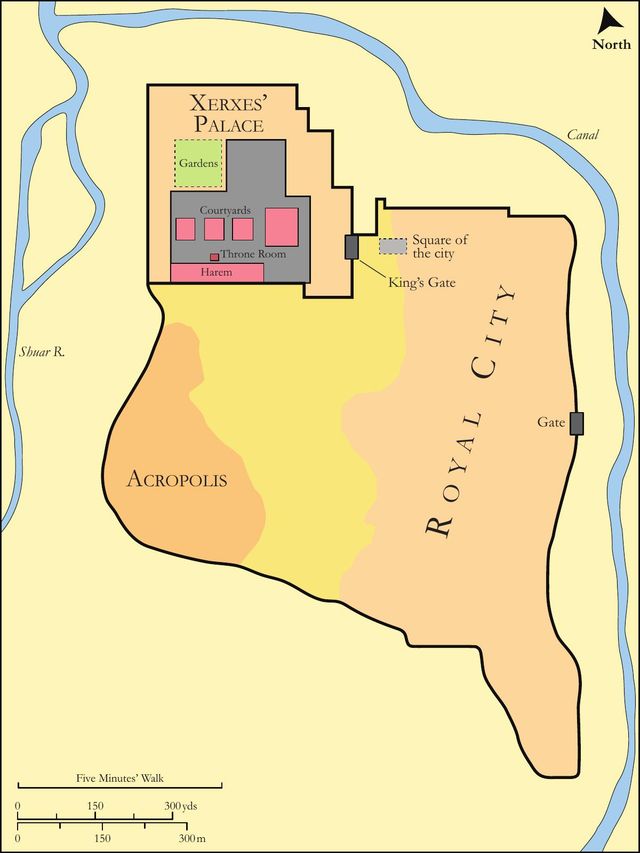
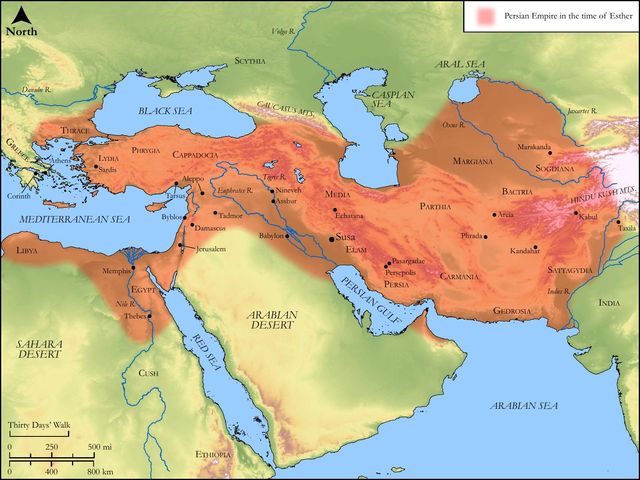
Study this verse
Public-domain commentary
Matthew Henry
From his Commentary on the Whole Bible. Henry comments on passages, not single verses — this entry covers Esther 8:3–14. His four-level outline is real structure in the source text, so it is rendered as structure.
Haman, the chief enemy of the Jews, was hanged, Mordecai and Esther, their chief friends, were sufficiently protected; but many others there were in the king's dominions that hated the Jews and desired their ruin, and to their rage and malice all the rest of that people lay exposed; for the edict against them was still in force, and, in pursuance of it, their enemies would on the day appointed fall upon them, and they would be deemed as rebels against the king and his government if they should offer to resist and take up arms in their own defence. For the preventing of this,
I.The queen here makes intercession with much affection and importunity.
She came, a second time, uncalled into the king's presence (Est 8:3), and was as before encouraged to present her petition, by the king's holding out the golden sceptre to her, Est 8:4. Her petition is that the king, having put away Haman, would put away the mischief of Haman and his device against the Jews, that that might not take place now that he was taken off. Many a man's mischief survives him, and the wickedness he devised operates when he is gone. What men project and write may, after their death, be either very profitable or very pernicious. It was therefore requisite in this case that, for the defeating of Haman's plot, they should apply to the king for a further act of grace, that by another edict he would reverse the letters devised by Haman, and which he wrote (she does not say which the king consented to and confirmed with his own seal; she leaves it to his own conscience to say that), by which he took an effectual course to destroy the Jews in all the king's provinces, Est 8:5. If the king were indeed, as he seemed to be, troubled that such a decree was made, he could not do less than revoke it; for what is repentance, but undoing, to the utmost of our power, what we have done amiss?
1.This petition Esther presents with much affection: She fell down at the king's feet and besought him with tears (Est 8:3), every tear as precious as any of the pearls with which she was adorned. It was time to be earnest when the church of God lay at stake. Let none be so great as to be unwilling to stoop, none so merry as to be unwilling to weep, when thereby they may do any service to God's church and people. Esther, though safe herself, fell down, and begged with tears for the deliverance of her people.
2.She expresses it with great submission, and a profound deference to the king and his wisdom and will (Est 8:5): If it please the king and if I have found favour in his sightand again, "If the thing itself seem right and reasonable before the king, and if I that ask it be pleasing in his eyes, let the decree be reversed." Even when we have the utmost reason and justice on our side, and have the clearest cause to plead, yet it becomes us to speak to our superiors with humility and modesty, and all possible expressions of respect, and not to talk like demandants when we are supplicants. There is nothing lost be decency and good breeding. As soft answers turn away wrath, so soft askings obtain favour.
3.She enforces her petition with a pathetic plea: "For how can I endure to see the evil that shall come upon my people? Little comfort can I have of my own life if I cannot prevail for theirs: as good share in the evil myself as see it come upon them; for how can I endure to see the destruction of my kindred, that are dear to me?" Esther, a queen, owns her poor kindred, and speaks of them with a very tender concern. Now it was that she mingled her tears with her words, that she wept and made supplication; we read of no tears when she begged for her own life, but, now that she was sure of that, she wept for her people. Tears of pity and tenderness are the most Christ-like. Those that are truly concerned for the public would rather die in the last ditch than live to see the desolations of the church of God and the ruin of their country. Tender spirits cannot bear to think of the destruction of their people and kindred, and therefore dare not omit any opportunity of giving them relief.
II.The king here takes a course for the preventing of the mischief that Haman had designed.
1.The king knew, and informed the queen, that, according to the constitution of the Persian government, the former edict could not be revoked (Est 8:8): What is written in the king's name, and sealed with the king's ring, may not, under any pretence whatsoever, be reversed. This was a fundamental article of their magna charta, that no law or decree, when once it had passed the royal assent, could be repealed or recalled, no judgment vacated, no attainder reversed, Dan 6:15. This is so far from bespeaking the wisdom and honour of the Medes and Persians that really it bespeaks their pride and folly, and consequently their shame. It is ridiculous in itself for any man, or company of men, to pretend to such an infallibility of wisdom as to foresee all the consequences of what they decree; and therefore it is unjust, and injurious to mankind, to claim such a supremacy of power as to make their decrees irrevocable, whether the consequences prove good or bad. This savours of that old presumption which ruined us all: We will be as gods. Much more prudent is that proviso of our constitution, that no law can, by any words or sanctions whatsoever, be made unrepealable, any more than any estate unalienable. Cujus est instruere, ejus est destruere - the right to enact implies the right to repeal. It is God's prerogative not to repent, and to say what can never be altered or unsaid.
2.Yet he found an expedient to undo the devices of Haman, and defeat his design, by signing and publishing another decree to authorize the Jews to stand upon their defence, vim vi repellere, et invasorem occidere - to oppose force to force, and destroy the assailant. This would be their effectual security. The king shows them that he had done enough already to convince them that he had a concern for the Jewish nation, for he had ordered his favourite to be hanged because he laid his hand upon the Jews (Est 8:7), and he therefore would d the utmost he could to protect them; and he leaves it as fully with Esther and Mordecai to use his name and power for their deliverance as before he had left it with Haman to use his name and power for their destruction: "Write for the Jews as it liketh you (Est 8:8), saving only the honour of our constitution. Let the mischief be put away as effectually as may be without reversing the letters." The secretaries of state were ordered to attend to draw up this edict on the twenty-third day of the third month (Est 8:9), about two months after the promulgation of the former, but nine months before the time set for its execution: it was to be drawn up and published in the respective languages of all the provinces. Shall the subjects of an earthly prince have his decrees in a language they understand? and shall God's oracles and laws be locked up from his servants in an unknown tongue? It was to be directed to the proper officers of every province, both to the justices of peace and to the deputy-lieutenants. It was to be carefully dispersed throughout all the king's dominions, and true copies sent by expresses to all the provinces. The purport of this decree was to commission the Jews, upon the day which was appointed for their destruction, to draw together in a body for their own defence. And,
(1.)To stand for their life, that, whoever assaulted them, it might be at their peril.
(2.)They might not only act defensively, but might destroy, and slay, and cause to perish, all the power of the people that would assault them, men, women, and children (Est 8:11), and thus to avenge themselves on their enemies (Est 8:13), and, if they pleased, to enrich themselves by their enemies, for they were empowered to take the spoil of them for a prey. Now,
[1.]This showed his kindness to the Jews, and sufficiently provided for their safety; for he latter decree would be looked upon as a tacit revocation of the former, though not in expression. But,
[2.]It shows the absurdity of that branch of their constitution that none of the king's edicts might be repealed; for it laid the king here under a necessity of enacting a civil war in his own dominions, between the Jews and their enemies, so that both sides took up arms by his authority, and yet against his authority. No better could come of men's pretending to be wise above what is given them. Great expedition was used in dispersing this decree, the king himself being in pain lest it should come too late and any mischief should be done to the Jews by virtue of the former decree before the notice of this arrived. It was therefore by the king's commandment, as well as Mordecai's, that the messengers were hastened and pressed on (Est 8:14), and had swift beasts provided them, Est 8:10. It was not a time to trifle when so many lives were in danger.
Historical interpretation
Historical reception
2 surviving comments on this verse. Each one is dated, so this reads as a timeline rather than a list.
The fact that Esther falls at the feet of the king and entreats him for the salvation of the people plainly symbolizes the holy church that humbly implores the almighty Lord every day for the rescue of her children through the faith and the mystery of the incarnation of the only begotten Son, so that the arrogance of her enemies may be restrained by the (Lord’s) grace, and the innocence of the faithful may be freed from the clutches of the (wicked). The heavenly king holds out his golden scepter to the pleading queen because he abundantly bestows the clemency of his mercy upon her. She asks that the old decree of the most wicked Haman may be changed into a new decree. Indeed this is the interest of the true queen, namely that any sect that is in error, any hostile plot which the ancient enemy prepares through his ministers for the extinction of the people of God, may be repelled and destroyed through the saving documents of the gospel.
So when Esther falls at the feet of the king and beseeches him for the sake of her people, this must refer to the fact that every day the holy Church humbly petitions the Lord Almighty—through the faith and mysteries of the incarnate, only-born Son of God—to free her children so that through his grace, the arrogance of the enemy might be crushed and the innocence of the faithful be freed from their hands. The supreme king holds out his golden scepter toward the queen as she pleads with him, because he is lavishing on her the mercy of his righteousness. She asks that the earlier letters of the wicked Haman be replaced with new instructions, because it is the fervent wish of the new queen that the followers of every error in doctrine, and all the hostile machinations with which the ancient enemy tried through its agents to exterminate the people of God, should be rejected and destroyed by the thoroughly salutary writings of the Gospels. The letters themselves are written in the name of the king and then sealed with his ring, because the teaching of the Gospels—which are preached throughout the world in the name of Christ—are declared everywhere to be confirmed by the seal of the Holy Spirit, since the preachers themselves, who are filled with its gift, seem to everyone to be undefeatable in their unflagging strength and to remain ever glorious and triumphant over their enemies.
Continue studying Esther 8:6 across the web’s major study libraries — every link below opens this exact verse, chapter, or book on the destination site.
Read & Compare
 BibleGatewayThis verse in more than 200 translations and 70 languages.
 Bible.comThe YouVersion reader — hundreds of translations, reading plans, and highlights.
 ESV.orgCrossway's official English Standard Version reader.
 NET BibleThe NET translation with 60,000+ translators' notes on every rendering decision.
 STEP BibleTyndale House's free study tool — original text, vocabulary, and scholarly resources.
 BibliaLogos Bible Software's free web reader.
 USCCBThe New American Bible (Revised Edition) with the U.S. bishops' study notes.
Commentaries
 BibleHub CommentariesDozens of classic commentaries on this verse, gathered on one page.
 StudyLightMore than 100 commentary sets — the largest collection on the web.
 BibleRefPlain-English commentary on what this verse means, verse by verse.
 Enduring WordDavid Guzik's free commentary on this chapter, widely used by Bible teachers.
 Bible Study ToolsVerse commentary alongside Greek and Hebrew study aids.
Original Language & Research
- BibleHub InterlinearThe verse word by word — original language, transliteration, and English.
- BibleHub LexiconEvery word's original-language definition and Strong's entry.
 Blue Letter BibleDeep-study tools — Strong's numbers, concordance, and word studies.
 SefariaThe Hebrew text with Rashi and centuries of Jewish commentary.
Sermons, Hymns & Audio


TrulyRandomVerse is not affiliated with these sites and doesn’t control their content. They’re linked because they’re genuinely useful.
Summary
Esther 8:6 encapsulates Queen Esther's profound anguish and selfless intercession before King Ahasuerus, as she pleads for the salvation of her people from a devastating decree. Despite Haman's execution, the legal edict for the annihilation of all Jews remained binding, compelling Esther to risk her life and royal favor once more. Her poignant rhetorical question, "how can I endure to see the evil that shall come unto my people? or how can I endure to see the destruction of my kindred?", powerfully conveys her utter inability to passively witness the impending genocide, underscoring her deep empathy, unwavering courage, and immense burden of leadership.
Context
ShowHideLiterary Context
Esther 8:6 immediately follows the dramatic climax of Haman's downfall and execution in Esther 7. While the immediate threat posed by Haman himself was neutralized, the core problem—the irrevocable decree calling for the annihilation of all Jews throughout the Persian Empire—remained legally intact. Persian law, once written and sealed with the king's ring, could not be revoked, as explicitly stated in Esther 8:8. Therefore, Esther's victory was only partial; she had saved herself and exposed her enemy, but the existential threat to her entire people persisted. This verse marks her continued, selfless advocacy, moving beyond personal safety to confront the pervasive danger still looming over her "kindred," a term previously used to describe her close relationship with Mordecai in Esther 2:7. Her plea here is a desperate, heartfelt appeal for a solution to this unprecedented legal and human crisis.
Historical & Cultural Context
The Persian Empire, at its zenith, was vast and governed by a complex legal system where royal decrees, once issued and sealed, were considered immutable. This legal principle, highlighted in Daniel 6:8, created a unique challenge for Esther and Mordecai. The king, though absolute in power, was bound by his own laws, preventing a simple revocation of Haman's edict. The concept of "people" (עַמִּי - ‘ammi) and "kindred" (מוֹלַדְתִּי - moladti) was profoundly significant in Hebrew thought, representing one's ethnic, familial, and tribal identity, which was the bedrock of social and personal security. For Esther, the threat to her kindred was not merely a political problem but an assault on her very identity and existence. Her plea reflects the deep-seated fear of ethnic extermination, a recurring theme for the Jewish people throughout history, and the profound responsibility felt by leaders to protect their community.
Key Themes
ShowHideThis verse powerfully encapsulates several key themes central to the book of Esther. Firstly, it underscores Profound Empathy and Selfless Intercession. Esther's rhetorical question reveals a deep personal identification with the fate of her people, demonstrating an inability to countenance their suffering or destruction. This resonates with the biblical call to "weep with those who weep" found in Romans 12:15. Secondly, it highlights Courage in Continued Advocacy. Despite having secured her own safety and Haman's demise, Esther does not rest. She risks the king's favor and potentially her life again to ensure the complete deliverance of her people, echoing her earlier resolve in Esther 4:16. Thirdly, it portrays The Weight of Leadership and Responsibility. As queen, Esther felt an immense burden to protect her people. Her anguished question, "how can I endure?", emphasizes the unbearable weight of seeing her community destroyed under her watch, a testament to her commitment to her people's welfare above her own.
Exposition and Analysis
ShowHideKey Word Analysis
ShowHideThe Hebrew root H3201, yâkôl, from which the verb "endure" (אוּכַל, ukhal) is derived here, signifies "to be able," "to prevail," or "to tolerate." In Esther's rhetorical question, "how can I endure?", it conveys a profound emotional and moral impossibility. It's not a physical inability, but a deep anguish and revulsion that makes the thought of passively witnessing her people's destruction utterly unbearable. This word emphasizes her complete identification with their suffering, rendering the impending catastrophe intolerable to her very being.
The Hebrew word H7451, raʻ, is a comprehensive term denoting "bad," "calamity," "misfortune," or "harm." In this context, it refers to the devastating disaster decreed to befall her people. It encompasses the full spectrum of the impending suffering—physical violence, loss of life, and the profound trauma of ethnic annihilation. Esther uses this term to encapsulate the comprehensive nature of the catastrophe Haman had orchestrated.
The Hebrew word H13, ʼobdan, specifically means "perishing," "ruin," or "annihilation." It is a potent term indicating complete and utter obliteration, leaving no remnant. By employing this word, Esther highlights the absolute and final nature of the threatened genocide—the complete wiping out of her family and people, leaving no hope for survival or recovery. This emphasizes the existential horror of the scenario she faces.
Verse Breakdown
ShowHide"For how can I endure to see the evil that shall come unto my people?"
This opening clause is a powerful rhetorical question, expressing Esther's deep personal agony and her utter inability to passively witness the impending disaster. It highlights her profound empathy and identification with the collective fate of her Jewish "people" (עַמִּי), emphasizing that their suffering would be her own unbearable suffering. The "evil" refers to the comprehensive calamity of the decree.
"or how can I endure to see the destruction of my kindred?"
This second clause parallels and intensifies the first. "Kindred" (מוֹלַדְתִּי) specifically refers to her family, relatives, and those of her birth. By specifying "kindred," Esther personalizes the threat even further, demonstrating that the abstract concept of "her people" includes those most intimately connected to her. The word "destruction" (אָבְדָן) underscores the absolute and final nature of the threatened annihilation, reinforcing the unbearable horror of the scenario for Esther.
Literary Devices
ShowHideEsther 8:6 employs several powerful literary devices to convey Queen Esther's profound distress and the gravity of the situation. The most prominent is the Rhetorical Question, repeated twice ("For how can I endure to see...?"). This is not a question seeking an answer, but a declaration of emotional impossibility, emphasizing the unbearable nature of the impending tragedy and serving as a desperate plea for intervention. The verse also exhibits clear Parallelism, with the second clause ("or how can I endure to see the destruction of my kindred?") mirroring and intensifying the first ("For how can I endure to see the evil that shall come unto my people?"). This structural repetition amplifies the emotional impact and underscores the dual horror of the general "evil" and the specific "destruction" of her intimate family. Furthermore, the language evokes strong Pathos, appealing directly to the king's emotions and compassion by vividly portraying Esther's personal anguish and the horrific fate awaiting her people. This emotional appeal is crucial in a narrative where a king's personal sentiment can sway policy.
Theological and Thematic Connections
ShowHideEsther 8:6 stands as a profound testament to the power of intercessory prayer and courageous defense of the weak, even when God's name is not explicitly mentioned in the text. Esther's plea embodies a deep theological truth: true leadership, especially in times of crisis, involves a willingness to identify completely with the suffering of one's people and to act selflessly on their behalf. Her anguish reflects a divine compassion, mirroring God's own sorrow over the suffering of His people. The verse highlights the theme of divine providence, as Esther's desperate appeal, though seemingly a human act, is part of God's unseen hand working to preserve His covenant people against overwhelming odds. Her willingness to risk everything for the salvation of others serves as a powerful example for believers called to stand in the gap for the vulnerable and oppressed.
Reflection and Application
ShowHideEsther 8:6 challenges us to consider our own capacity for empathy and our willingness to act on behalf of those in distress. In a world still plagued by injustice, persecution, and suffering, Esther's example calls believers to move beyond personal comfort and self-preservation. Her "how can I endure?" is a question we must ask ourselves when confronted with the pain of others, prompting us to actively engage in advocacy, intercession, and practical aid. It reminds us that our faith is not merely personal but communal, requiring us to bear the burdens of others and to rebuke the powerful, even at personal cost. This verse encourages a proactive, compassionate response to injustice, mirroring the heart of God who hears the cries of the oppressed and calls His people to be agents of His justice and mercy in the world.
Questions for Reflection
ShowHideFAQ
ShowHideWhy couldn't the king simply revoke Haman's decree?
ShowHideAncient Persian law, particularly decrees sealed with the king's ring, was considered immutable and could not be revoked. This principle is explicitly stated in Esther 8:8 and also referenced in Daniel 6:8. Once a law was written and issued, even the king himself was bound by it. This legal rigidity created the unique challenge for Esther and Mordecai: they could not simply nullify the decree but had to find a creative legal workaround, which ultimately involved issuing a counter-decree allowing the Jews to defend themselves.
What is the significance of Esther referring to "my kindred" in addition to "my people"?
ShowHideThe term "my people" (עַמִּי - ‘ammi) refers to the broader ethnic and religious group—the Jews. "My kindred" (מוֹלַדְתִּי - moladti), however, is a more intimate term, referring to her immediate family, relatives, and those of her birth. By using both terms, Esther intensifies her plea, demonstrating that the impending destruction is not just a general threat to a distant group, but a deeply personal one that would devastate her closest kin. It underscores her profound personal connection and the unbearable anguish of seeing her own family annihilated, making her intercession even more poignant and compelling to the king.
Christ-Centered Fulfillment
ShowHideEsther's profound anguish and selfless intercession for her people in Esther 8:6 powerfully foreshadow the ultimate intercession of Jesus Christ. Just as Esther could not "endure to see the destruction of her kindred," so too Christ, out of boundless love, could not passively witness humanity's destruction by sin and death. His entire earthly ministry, culminating in His sacrificial death and resurrection, was an act of divine intercession. He identified completely with His "kindred"—humanity, taking on flesh and experiencing our infirmities, as detailed in Hebrews 2:14-18. While Esther pleaded for a reprieve from a physical decree, Christ offered Himself as the ultimate sacrifice to redeem us from the spiritual decree of sin and its consequence, death, as articulated in Romans 6:23. His cry in Gethsemane, "My Father, if it be possible, let this cup pass from me" found in Matthew 26:39, echoes a divine "how can I endure?" in the face of bearing the world's sin, yet He endured it for our salvation. Now, as our High Priest, He continues to live to make intercession for us, as affirmed in Hebrews 7:25, ensuring that His people will never face ultimate destruction. Esther's courage and self-sacrifice point to the infinitely greater love of the Lamb of God who takes away the sin of the world, who laid down His life for His friends, a truth beautifully expressed in John 15:13.