


Deuteronomy 32:46
Bible text: King James Version (1769 Blayney text) · Public domain
Bible text: King James Version with Strong's numbers · Public domain
Bible text: Berean Standard Bible · Public domain
Bible text: American Standard Version (1901) · Public domain
Bible text: World English Bible, Messianic edition · Public domain
Bible text: Geneva Bible (1599) · Public domain
Bible text: Young's Literal Translation · Public domain
- וַיֹּאמֶרvai·Yo·merand he saidH559Conj-w ¦ V-Qal-ConsecImperf-3msVerb Qal Consecutive Imperfect 3rd Singular Masculineוַandיֹּאמֶרhe said
- אֲלֵהֶם'a·le·Hemto themH413Prep ¦ 3mpPreposition Definiteאֲלֵtoהֶםthem
- שִׂימוּSi·musetH7760V-Qal-Imp-2mpVerb Qal Imperative 2nd Plural Masculine
- לְבַבְכֶםle·vav·Khemyour heartH3824N-msc ¦ 2mpNoun Singular Masculine Constructלְבַבְheartכֶםyour
- לְכָלle·kholto allH3605Prep-l ¦ N-mscNoun Singular Masculine Constructלְtoכָלall
- הַדְּבָרִיםha·de·va·Rimthe wordsH1697Art ¦ N-mpNoun Plural Masculine Absoluteהַtheדְּבָרִיםwords
- אֲשֶׁר'a·SherwhichH834RelParticle Relative
- אָנֹכִי'a·no·KhiIH595Pro-1csPronoun Personal 1st Singular common gender
- מֵעִידme·'Id[am] warningH5749V-Hiphil-Prtcpl-msVerb Hiphil Participle Singular Masculine Absolute
- בָּכֶםba·Khem<in> <the> youPrep-b ¦ 2mpSuffix Personal 2nd Plural Masculineבָּ<in> <the>כֶםyou
- הַיּוֹםhai·Yomthis dayH3117Art ¦ N-msNoun Singular Masculine Absoluteהַthisיּוֹםday
- אֲשֶׁר'a·SherthatH834RelParticle Relative
- תְּצַוֻּםte·tza·Vumyou will command themH6680V-Piel-Imperf-2mp ¦ 3mpVerb Piel Imperfect 2nd Plural Masculineתְּצַוֻּyou will commandםthem
- אֶת'et<obj.>H853DirObjMParticle Object Indicator
- בְּנֵיכֶםbe·nei·Khemyour childrenH1121N-mpc ¦ 2mpNoun Plural Masculine Constructבְּנֵיchildrenכֶםyour
- לִשְׁמֹרlish·Morto take careH8104Prep-l ¦ V-Qal-InfVerb Qal Infinitive Constructלִtoשְׁמֹרtake care
- לַעֲשׂוֹתla·'a·Sotto doH6213Prep-l ¦ V-Qal-InfVerb Qal Infinitive Constructלַtoעֲשׂוֹתdo
- אֶת'et<obj.>H853DirObjMParticle Object Indicator
- כָּלkolallH3605N-mscNoun Singular Masculine Construct
- דִּבְרֵיdiv·Rei[the] words ofH1697N-mpcNoun Plural Masculine Construct
- הַתּוֹרָהha·to·Rahthe lawH8451Art ¦ N-fsNoun Singular Feminine Absoluteהַtheתּוֹרָהlaw
- הַזֹּאתha·Zot<the> thisH2063Art ¦ PrtParticle Demonstrativeהַ<the>זֹּאתthis
English is a literal word-by-word gloss of the Hebrew, not the KJV's wording. Why?
This is the original text the KJV's translators worked from — each Hebrew word with its own literal English meaning in this verse, prepared by scholars at Tyndale House, Cambridge. The KJV translates whole sentences, not word by word, so its wording differs: one Hebrew word can become several English words, and the KJV may choose “the LORD” where the gloss reads “Yahweh”. Both are faithful — they answer different questions. For the KJV's own rendering, switch to the KJV text.
Details
See on the biblical-era map
Study this verse
Public-domain commentary
Matthew Henry
From his Commentary on the Whole Bible. Henry comments on passages, not single verses — this entry covers Deuteronomy 32:44–52. His three-level outline is real structure in the source text, so it is rendered as structure.
Here is, I. The solemn delivery of this song to the children of Israel, Deu 32:44, Deu 32:45. Moses spoke it to as many as could hear him, while Joshua, in another assembly, at the same time, delivered it to as many as his voice would reach. Thus coming to them from the mouth of both their governors, Moses who was laying down the government, and Joshua who was taking it up, they would see they were both in the same mind, and that, though they changed their commander, there was no change in the divine command; Joshua, as well as Moses, would be a witness against them if ever they forsook God.
II.An earnest charge to them to mind these and all the rest of the good words that Moses had said to them.
How earnestly does he long after them all, how very desirous that the word of God might make deep and lasting impressions upon them, how jealous over them with a godly jealousy, lest they should at any time let slip these great things!
1.The duties he charges upon them are, (1.) Carefully to attend to these themselves: "Set your hearts both to the laws, and to the promises and threatenings, the blessings and curses, and now at last to this song. Let the mind be closely applied to the consideration of these things; be affected with them; be intent upon your duty, and cleave to it with full purpose of heart." (2.) Faithfully to transmit these things to those that should come after them: "What interest you have in your children, or influence upon them, use it for this purpose; and command them (as your father Abraham did, Gen 18:19) to observe to do all the words of this law." Those that are good themselves cannot but desire that their children may be so likewise, and that posterity may keep up religion in their day and the entail of it may not be cut off.
2.The arguments he uses to persuade them to make religion their business and to persevere in it are,
(1.)The vast importance of the things themselves which he had charged upon them (Deu 32:47): "It is not a vain thing, because it is your life. It is not an indifferent thing, but of absolute necessity; it is not a trifle, but a matter of consequence, a matter of life and death; mind it, and you are made for ever; neglect it, and you are for ever undone." O that men were but fully persuaded of this, that religion is their life, even the life of their souls!
(2.)The vast advantage it would be of to them: Through this thing you shall prolong your days in Canaan, which is a typical promise of that eternal life which Christ has assured us those shall enter into that keep the commandments of God, Mat 19:17.
III.Orders given to Moses concerning his death.
Now that this renowned witness for God had finished his testimony, he must go up to Mount Nebo and die; in the prophecy of Christ's two witnesses there is a plain allusion to Moses and Elias (Rev 11:6), and perhaps their removal, being by martyrdom, is no less glorious than the removal either of Moses or Elias. Orders were given to Moses that self-same day, Deu 32:48. Now that he had done his work, why should he desire to live a day longer? He had indeed formerly prayed that he might go over Jordan, but now he is entirely satisfied, and, as God had bidden him, saith no more of that matter.
1.God here reminds him of the sin he had been guilty of, for which he was excluded Canaan (Deu 32:51), that he might the more patiently bear the rebuke because he had sinned, and that now he might renew his sorrow for that unadvised word, for it is good for the best of men to die repenting of the infirmities they are conscious to themselves of. It was an omission that was thus displeasing to God; he did not sanctify God, as he ought to have done, before the children of Israel, he did not carry himself with a due decorum in executing the orders he had then received.
2.He reminds him of the death of his brother Aaron (Deu 32:50), to make his own the more familiar and the less formidable. Note, It is a great encouragement to us, when we die, to think of our friends that have gone before us through that darksome valley, especially of Christ, our elder brother and great high priest.
3.He sends him up to a high hill, thence to take a view of the land of Canaan and then die, Deu 32:49, Deu 32:50. The remembrance of his sin might make death terrible, but the sight God gave him of Canaan took off the terror of it, as it was a token of God's being reconciled to him, and a plain indication to him that though his sin shut him out of the earthly Canaan, yet it should not deprive him of that better country which in this world can only be seen, and that with an eye of faith. Note, Those may die with comfort and ease whenever God calls for them (notwithstanding the sins they remember against themselves) who have a believing prospect and a well-grounded hope of eternal life beyond death.
Continue studying Deuteronomy 32:46 across the web’s major study libraries — every link below opens this exact verse, chapter, or book on the destination site.
Read & Compare
 BibleGatewayThis verse in more than 200 translations and 70 languages.
 Bible.comThe YouVersion reader — hundreds of translations, reading plans, and highlights.
 ESV.orgCrossway's official English Standard Version reader.
 NET BibleThe NET translation with 60,000+ translators' notes on every rendering decision.
 STEP BibleTyndale House's free study tool — original text, vocabulary, and scholarly resources.
 BibliaLogos Bible Software's free web reader.
 USCCBThe New American Bible (Revised Edition) with the U.S. bishops' study notes.
Commentaries
 BibleHub CommentariesDozens of classic commentaries on this verse, gathered on one page.
 StudyLightMore than 100 commentary sets — the largest collection on the web.
 BibleRefPlain-English commentary on what this verse means, verse by verse.
 Enduring WordDavid Guzik's free commentary on this chapter, widely used by Bible teachers.
 Bible Study ToolsVerse commentary alongside Greek and Hebrew study aids.
Original Language & Research
- BibleHub InterlinearThe verse word by word — original language, transliteration, and English.
- BibleHub LexiconEvery word's original-language definition and Strong's entry.
 Blue Letter BibleDeep-study tools — Strong's numbers, concordance, and word studies.
 SefariaThe Hebrew text with Rashi and centuries of Jewish commentary.
Sermons, Hymns & Audio


TrulyRandomVerse is not affiliated with these sites and doesn’t control their content. They’re linked because they’re genuinely useful.
Summary
Deuteronomy 32:46 presents Moses' climactic and urgent charge to the Israelites before his death and their entry into the Promised Land. This pivotal verse underscores the profound importance of internalizing God's words with wholehearted devotion, diligently transmitting these divine instructions to the next generation, and actively living them out in practical obedience. It serves as a foundational declaration that their very life, flourishing, and continuation as God's covenant people are inextricably linked to their comprehensive embrace of His law.
Context
ShowHideLiterary Context
This verse concludes Moses' powerful "Song of Moses" (Deuteronomy 32:1-43), a poetic and prophetic recounting of God's faithfulness to Israel and Israel's past and future rebellions. Following this solemn song, Moses delivers his final, direct exhortation to the people, emphasizing the enduring significance of the words he has spoken. It serves as a bridge, transitioning from the prophetic warning of the song to the practical implications for Israel's future in the land. Immediately after this verse, Moses is commanded to ascend Mount Nebo to view the Promised Land before his death, making these truly his last words of instruction to the nation, imbuing them with profound weight and urgency.
Historical & Cultural Context
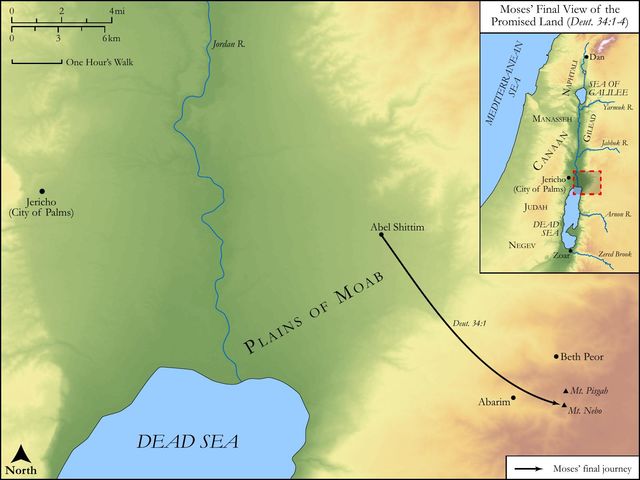
The Israelites are gathered on the plains of Moab, poised to cross the Jordan River and enter the land of Canaan after forty years of wilderness wandering. Moses is addressing a new generation, many of whom did not personally experience the Exodus or the initial giving of the Law at Sinai. Therefore, Deuteronomy, meaning "second law," serves as a covenant renewal document, reiterating and explaining the Law to this new generation. The command to "set their hearts" and "command their children" reflects the Hebrew understanding of covenant succession and the vital role of oral tradition and familial instruction in preserving cultural and religious identity. Their very existence as a distinct people, and their prosperity in the land, depended on their adherence to these divine instructions, distinguishing them from the idolatrous nations they were about to encounter.
Key Themes
ShowHideDeuteronomy 32:46 powerfully encapsulates several key themes central to the book of Deuteronomy and the broader biblical narrative. It highlights the divine authority of the Word, emphasizing that these are not merely Moses' words but God's own testimony. The phrase "set your hearts" underscores the theme of wholehearted commitment to God, echoing the greatest commandment to love the Lord with all one's being found earlier in Deuteronomy 6:5. Furthermore, the command to "command your children" establishes the critical theme of intergenerational faithfulness and spiritual legacy, ensuring that the covenant relationship and its demands are passed down. Finally, the repeated emphasis on "observe to do" reinforces the theme of practical obedience as the necessary response to divine revelation, linking their life and blessing in the land to their active adherence to "all the words of this law" as seen in passages like Deuteronomy 30:19-20.
Exposition and Analysis
ShowHideKey Word Analysis
ShowHideThis term (H3824) refers to the innermost being of a person—the seat of intellect, will, emotions, and intentions. To "set your hearts" on something implies a deep, interior engagement, a conscious act of directing one's entire mind and will towards God's words, ensuring they are not merely heard but profoundly internalized and understood. It signifies a comprehensive mental and volitional commitment.
This verb (H5749) signifies to "bear witness" or "to warn," often with the implication of solemn reiteration. When Moses says he "testifies" these words, it underscores their authoritative and binding nature. He is not merely offering advice but delivering a divine declaration, acting as God's appointed witness and messenger, emphasizing the absolute truthfulness and serious implications of these divine instructions.
While often translated as "law," Torah (H8451) has a much broader meaning, encompassing "instruction," "teaching," or "guidance." It refers to God's entire revelation of His will and way for His people, including commandments, statutes, ordinances, and the narratives of His redemptive acts. It is God's comprehensive blueprint for how His people are to live in covenant relationship with Him and with one another, designed for their ultimate blessing, well-being, and flourishing.
Verse Breakdown
ShowHide"And he said unto them,"
This opening clause establishes Moses' direct, personal, and authoritative address to the entire congregation of Israel. It sets a solemn tone, indicating that what follows is a crucial, final instruction from their revered leader and God's prophet, delivered with the weight of his impending departure.
"Set your hearts unto all the words which I testify among you this day,"
This is the core command for internal reception. It demands a wholehearted, intentional commitment to God's revealed will, which Moses has delivered. "This day" emphasizes the immediacy and urgency of the command, as the people stand at the threshold of the Promised Land, facing a new era of responsibility and the critical need for divine guidance.
"which ye shall command your children to observe to do,"
This clause extends the command intergenerationally, highlighting the vital responsibility of parents and elders to diligently teach and impress God's instructions upon the next generation. The phrase "observe to do" underscores that the ultimate purpose of hearing and understanding God's words is not mere intellectual assent, but active, practical obedience in daily life, translating belief into behavior.
"all the words of this law."
This concluding phrase reiterates the comprehensive nature of the divine instruction. It emphasizes that every aspect of the Torah—God's complete teaching and guidance—is to be embraced, internalized, and lived out. It reinforces the idea that the entire body of God's revelation is essential for their life and success in the land, leaving no room for selective obedience.
Literary Devices
ShowHideDeuteronomy 32:46 employs several powerful literary devices to convey its urgent message. The primary device is Exhortation, as Moses delivers a direct, impassioned, and solemn command to the people, urging them to action. There is significant Repetition, particularly of the phrase "all the words," which serves to emphasize the comprehensive nature of the divine instruction and the requirement for total commitment, ensuring no part of God's revelation is neglected. The phrase "this day" functions as a device of Emphasis, highlighting the immediate and critical nature of Moses' final charge, underscoring the present moment as a decisive turning point. Furthermore, the verse is steeped in Covenant Language, with terms like "testify" and "law" (Torah) underscoring the binding agreement between God and Israel, and the people's responsibility within that covenant relationship. The structure moves from internal commitment ("set your hearts") to external action ("observe to do") and intergenerational transmission ("command your children"), creating a holistic picture of covenant faithfulness and its enduring legacy.
Theological and Thematic Connections
ShowHideDeuteronomy 32:46 masterfully encapsulates the Deuteronomic theology of covenant, asserting that Israel's very life, prosperity, and continued existence in the Promised Land are contingent upon their wholehearted and comprehensive obedience to God's revealed will. It underscores the dynamic interplay between divine revelation, human reception, and intergenerational transmission. The Torah is not presented as a burdensome set of rules but as the very path to life and blessing, demanding both profound internal commitment and diligent external action. This principle of active, Spirit-empowered engagement with God's word for life and flourishing resonates throughout the biblical narrative, serving as a timeless reminder that true faith involves both devotion of the heart and demonstration through obedience.
Reflection and Application
ShowHideThe enduring relevance of Deuteronomy 32:46 for believers today is profound, calling us beyond mere intellectual assent to a deep, internal commitment to God's Word. It challenges us to actively "set our hearts" on Scripture, allowing it to permeate our thoughts, desires, and actions, shaping our worldview and priorities. This requires intentional engagement through consistent study, prayerful meditation, and humble submission to its authority. Furthermore, the verse places a sacred responsibility upon every generation to intentionally disciple the next, modeling and teaching biblical truths so that faith is not merely inherited but truly embraced and lived out. Parents, spiritual leaders, and the entire community of faith are called to be diligent in this task, ensuring that the legacy of faith continues and that future generations know and obey the Lord. Our spiritual vitality, both individually and communally, is intrinsically linked to our wholehearted devotion to and diligent practice of God's commands, securing a blessed future that honors Him and extends His kingdom.
Questions for Reflection
ShowHideFAQ
ShowHideWhat does "set your hearts" truly mean in this context?
ShowHideIn Deuteronomy 32:46, "set your hearts" (Hebrew: simu levavchem) is a powerful idiom that signifies far more than intellectual understanding or passive reception. It denotes a deliberate, conscious act of directing one's entire inner being—intellect, will, emotions, and intentions—towards God's words. It implies giving serious attention, profound consideration, and wholehearted commitment, ensuring that the divine instruction permeates every aspect of one's life and shapes one's deepest convictions. It's about internalizing the truth so deeply that it becomes the guiding principle for all thought and action, mirroring the call to love God with all one's heart, soul, and might found in Deuteronomy 6:5.
Why is the command to "command your children" so crucial for Israel's future?
ShowHideThis command highlights the vital principle of intergenerational faithfulness and the continuity of the covenant. For Israel to thrive in the Promised Land and maintain their unique identity as God's people, the divine instructions could not be a one-time revelation but had to be diligently transmitted and embodied by each successive generation. It ensured that the covenant relationship with Yahweh, and the responsibilities that came with it, were not forgotten but actively taught, modeled, and lived out. This continuous spiritual education was essential to prevent apostasy, preserve their distinctiveness among pagan nations, and ensure the nation's blessing and longevity. This emphasis on spiritual legacy is a recurring theme throughout Scripture, from Proverbs 22:6 to the New Testament's call for discipleship in passages like Ephesians 6:4.
What is encompassed by "all the words of this law"?
ShowHide"All the words of this law" refers to the Torah, which in Hebrew (תּוֹרָה, torah) means "instruction" or "teaching." It is far more comprehensive than a mere legal code. In Deuteronomy, it primarily refers to the entire body of divine revelation given through Moses, encompassing not only the specific commandments and statutes but also the narrative of God's redemptive acts, His character, His covenant promises, and His warnings. It is God's complete blueprint for how His people are to live in relationship with Him and with one another, designed for their ultimate well-being and flourishing. This comprehensive nature of God's word is beautifully celebrated in Psalm 119, which extols the various facets of the Torah as light, life, and wisdom, and is echoed in the New Testament's affirmation of the profitableness of "all Scripture" in 2 Timothy 3:16.
Christ-Centered Fulfillment
ShowHideDeuteronomy 32:46, with its urgent call to internalize and obey God's law, finds its ultimate fulfillment and transformation in Jesus Christ. The Old Covenant Law, though holy and good, could not fully "set the heart" because of humanity's fallen nature and inherent inability to perfectly keep it (Romans 7:12 and Romans 8:3). Christ, however, is the living Word who perfectly embodied and fulfilled the entire Law, not to abolish it, but to bring it to its intended purpose (Matthew 5:17). Through His atoning sacrifice, He inaugurated a New Covenant where God's law is no longer merely an external code but is written upon the hearts and minds of believers by the Holy Spirit (Jeremiah 31:33 and Hebrews 8:10). This internal transformation empowers believers to truly "observe to do" God's will, not out of fear or obligation, but out of love and a Spirit-enabled desire ([Philippians 2:13](/ philippians/2-13 "God Works in You")). Thus, the intergenerational command to teach God's words is now fulfilled in the Great Commission, where believers are called to make disciples of all nations, teaching them to obey all that Christ has commanded (Matthew 28:19-20), thereby extending the kingdom of God across generations through the power of the Gospel and the transformative work of the Holy Spirit, leading to true life in Christ (John 14:6).