


Deuteronomy 32:45
Bible text: King James Version (1769 Blayney text) · Public domain
Bible text: Berean Standard Bible · Public domain
Bible text: American Standard Version (1901) · Public domain
Bible text: World English Bible, Messianic edition · Public domain
Bible text: Geneva Bible (1599) · Public domain
Bible text: Young's Literal Translation · Public domain
- וַיְכַלvay·Khaland he finishedH3615Conj-w ¦ V-Piel-ConsecImperf-3msVerb Piel Consecutive Imperfect 3rd Singular Masculineוַandיְכַלhe finished
- מֹשֶׁהmo·ShehMosesH4872N-proper-mNoun Proper Masculine
- לְדַבֵּרle·da·Berto speakH1696Prep-l ¦ V-Piel-InfVerb Piel Infinitive Constructלְtoדַבֵּרspeak
- אֶת'et<obj.>H853DirObjMParticle Object Indicator
- כָּלkolallH3605N-mscNoun Singular Masculine Construct
- הַדְּבָרִיםha·de·va·Rimthe wordsH1697Art ¦ N-mpNoun Plural Masculine Absoluteהַtheדְּבָרִיםwords
- הָאֵלֶּהha·'E·leh<the> theseH428Art ¦ PrtParticle Demonstrativeהָ<the>אֵלֶּהthese
- אֶל'eltoH413PrepPreposition
- כָּלkolallH3605N-mscNoun Singular Masculine Construct
- יִשְׂרָאֵלYis·ra·'ElIsraelH3478N-properNoun Proper Location
English is a literal word-by-word gloss of the Hebrew, not the KJV's wording. Why?
This is the original text the KJV's translators worked from — each Hebrew word with its own literal English meaning in this verse, prepared by scholars at Tyndale House, Cambridge. The KJV translates whole sentences, not word by word, so its wording differs: one Hebrew word can become several English words, and the KJV may choose “the LORD” where the gloss reads “Yahweh”. Both are faithful — they answer different questions. For the KJV's own rendering, switch to the KJV text.
Details
See on the biblical-era map
Study this verse
Public-domain commentary
Matthew Henry
From his Commentary on the Whole Bible. Henry comments on passages, not single verses — this entry covers Deuteronomy 32:44–52. His three-level outline is real structure in the source text, so it is rendered as structure.
Here is, I. The solemn delivery of this song to the children of Israel, Deu 32:44, Deu 32:45. Moses spoke it to as many as could hear him, while Joshua, in another assembly, at the same time, delivered it to as many as his voice would reach. Thus coming to them from the mouth of both their governors, Moses who was laying down the government, and Joshua who was taking it up, they would see they were both in the same mind, and that, though they changed their commander, there was no change in the divine command; Joshua, as well as Moses, would be a witness against them if ever they forsook God.
II.An earnest charge to them to mind these and all the rest of the good words that Moses had said to them.
How earnestly does he long after them all, how very desirous that the word of God might make deep and lasting impressions upon them, how jealous over them with a godly jealousy, lest they should at any time let slip these great things!
1.The duties he charges upon them are, (1.) Carefully to attend to these themselves: "Set your hearts both to the laws, and to the promises and threatenings, the blessings and curses, and now at last to this song. Let the mind be closely applied to the consideration of these things; be affected with them; be intent upon your duty, and cleave to it with full purpose of heart." (2.) Faithfully to transmit these things to those that should come after them: "What interest you have in your children, or influence upon them, use it for this purpose; and command them (as your father Abraham did, Gen 18:19) to observe to do all the words of this law." Those that are good themselves cannot but desire that their children may be so likewise, and that posterity may keep up religion in their day and the entail of it may not be cut off.
2.The arguments he uses to persuade them to make religion their business and to persevere in it are,
(1.)The vast importance of the things themselves which he had charged upon them (Deu 32:47): "It is not a vain thing, because it is your life. It is not an indifferent thing, but of absolute necessity; it is not a trifle, but a matter of consequence, a matter of life and death; mind it, and you are made for ever; neglect it, and you are for ever undone." O that men were but fully persuaded of this, that religion is their life, even the life of their souls!
(2.)The vast advantage it would be of to them: Through this thing you shall prolong your days in Canaan, which is a typical promise of that eternal life which Christ has assured us those shall enter into that keep the commandments of God, Mat 19:17.
III.Orders given to Moses concerning his death.
Now that this renowned witness for God had finished his testimony, he must go up to Mount Nebo and die; in the prophecy of Christ's two witnesses there is a plain allusion to Moses and Elias (Rev 11:6), and perhaps their removal, being by martyrdom, is no less glorious than the removal either of Moses or Elias. Orders were given to Moses that self-same day, Deu 32:48. Now that he had done his work, why should he desire to live a day longer? He had indeed formerly prayed that he might go over Jordan, but now he is entirely satisfied, and, as God had bidden him, saith no more of that matter.
1.God here reminds him of the sin he had been guilty of, for which he was excluded Canaan (Deu 32:51), that he might the more patiently bear the rebuke because he had sinned, and that now he might renew his sorrow for that unadvised word, for it is good for the best of men to die repenting of the infirmities they are conscious to themselves of. It was an omission that was thus displeasing to God; he did not sanctify God, as he ought to have done, before the children of Israel, he did not carry himself with a due decorum in executing the orders he had then received.
2.He reminds him of the death of his brother Aaron (Deu 32:50), to make his own the more familiar and the less formidable. Note, It is a great encouragement to us, when we die, to think of our friends that have gone before us through that darksome valley, especially of Christ, our elder brother and great high priest.
3.He sends him up to a high hill, thence to take a view of the land of Canaan and then die, Deu 32:49, Deu 32:50. The remembrance of his sin might make death terrible, but the sight God gave him of Canaan took off the terror of it, as it was a token of God's being reconciled to him, and a plain indication to him that though his sin shut him out of the earthly Canaan, yet it should not deprive him of that better country which in this world can only be seen, and that with an eye of faith. Note, Those may die with comfort and ease whenever God calls for them (notwithstanding the sins they remember against themselves) who have a believing prospect and a well-grounded hope of eternal life beyond death.
Continue studying Deuteronomy 32:45 across the web’s major study libraries — every link below opens this exact verse, chapter, or book on the destination site.
Read & Compare
 BibleGatewayThis verse in more than 200 translations and 70 languages.
 Bible.comThe YouVersion reader — hundreds of translations, reading plans, and highlights.
 ESV.orgCrossway's official English Standard Version reader.
 NET BibleThe NET translation with 60,000+ translators' notes on every rendering decision.
 STEP BibleTyndale House's free study tool — original text, vocabulary, and scholarly resources.
 BibliaLogos Bible Software's free web reader.
 USCCBThe New American Bible (Revised Edition) with the U.S. bishops' study notes.
Commentaries
 BibleHub CommentariesDozens of classic commentaries on this verse, gathered on one page.
 StudyLightMore than 100 commentary sets — the largest collection on the web.
 BibleRefPlain-English commentary on what this verse means, verse by verse.
 Enduring WordDavid Guzik's free commentary on this chapter, widely used by Bible teachers.
 Bible Study ToolsVerse commentary alongside Greek and Hebrew study aids.
Original Language & Research
- BibleHub InterlinearThe verse word by word — original language, transliteration, and English.
- BibleHub LexiconEvery word's original-language definition and Strong's entry.
 Blue Letter BibleDeep-study tools — Strong's numbers, concordance, and word studies.
 SefariaThe Hebrew text with Rashi and centuries of Jewish commentary.
Sermons, Hymns & Audio


TrulyRandomVerse is not affiliated with these sites and doesn’t control their content. They’re linked because they’re genuinely useful.
Summary
Deuteronomy 32:45 serves as the solemn and definitive conclusion to Moses' profound final discourse, marking the culmination of his divinely appointed task to deliver God's comprehensive covenant stipulations, prophetic warnings, and the powerful Song of Moses to the entire nation of Israel. This pivotal verse underscores the exhaustive nature of the divine revelation imparted and the weighty responsibility placed upon the new generation to internalize and obey "all these words" as they prepared to enter the Promised Land.
Context
ShowHideLiterary Context
This verse immediately follows the monumental "Song of Moses" (Deuteronomy 32:1-43), a lengthy poetic and prophetic composition that encapsulates the history of God's faithfulness, Israel's recurring rebellion, and the covenantal consequences of both obedience and disobedience. The Song itself is a divinely inspired summary of Israel's past, present, and future relationship with Yahweh, intended to be a lasting witness against them. Prior to the Song, Moses had delivered extensive legal instructions, covenant renewal exhortations, and historical recounts throughout the entire book of Deuteronomy, which functions as a farewell address and a second giving of the Law. Thus, Deuteronomy 32:45 acts as the final verbal punctuation mark to this monumental address, solidifying its completion before Moses' final instructions regarding the Law's public reading and his impending death and burial, as detailed in Deuteronomy 34. It sets the stage for the crucial transition of leadership to Joshua and Israel's imminent entry into Canaan.
Historical & Cultural Context
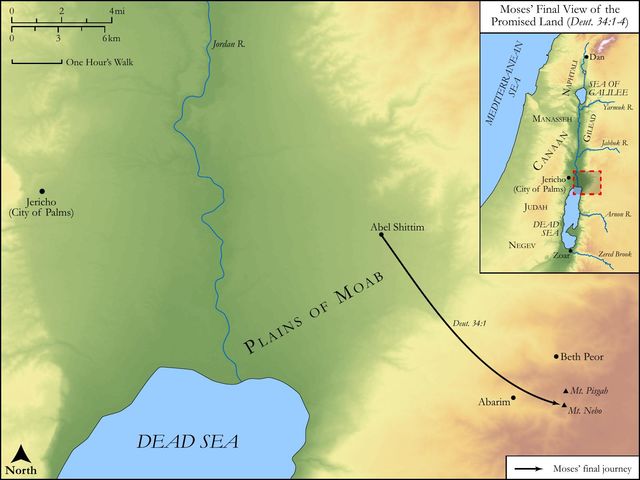
The setting for this profound address is the plains of Moab, on the eastern side of the Jordan River, with the Promised Land visible yet still unconquered across the river. Forty years of wilderness wandering have concluded, and the rebellious generation that departed Egypt has largely passed away. A new generation, born and raised in the wilderness, stands poised to inherit the land promised to their forefathers. Moses, now 120 years old and keenly aware of his impending death (as prophesied in Deuteronomy 32:49-52), delivers these final, weighty words. In Israel, public declarations, oral transmission of law, and covenant renewal ceremonies were paramount for establishing and maintaining national identity, legal frameworks, and religious fidelity. Moses' comprehensive address, culminating in this verse, was a crucial act of covenant ratification and instruction, designed to embed God's laws deeply into the collective memory and future obedience of the nation.
Key Themes
ShowHideThis verse powerfully underscores several major themes woven throughout the book of Deuteronomy. It highlights the theme of Divine Authority and Revelation, emphasizing that Moses' words are not merely human counsel but God's definitive, authoritative instruction for His people, delivered through His chosen mediator. The phrase "all these words" points to the Completeness and Sufficiency of God's Word, indicating that everything necessary for Israel's life, blessing, and covenant faithfulness in the land has been divinely provided. This concept is further reinforced in Deuteronomy 32:46-47. Furthermore, it reinforces the theme of Covenant Obligation and Obedience, as the entire discourse, now concluded, serves as a solemn call for Israel to "take to heart all the words" (as seen in Deuteronomy 32:46) and to diligently teach them to their children. The finality of Moses' speech also subtly touches upon the theme of Leadership Transition, as the baton is about to pass from Moses to Joshua, yet the enduring and unchanging Word of God remains the ultimate guide and authority for the nation, transcending human leadership.
Exposition and Analysis
ShowHideKey Word Analysis
ShowHideTranslated "made an end," this primitive root signifies completion, cessation, or bringing something to a finish. It implies not merely stopping but having fully accomplished, discharged, or consumed a task. In this context, it powerfully emphasizes that Moses had delivered the entire, intended, and comprehensive message that God had given him for Israel. There was nothing left unsaid in this particular address, underscoring its exhaustive, authoritative, and final nature. It conveys a sense of divine purpose fulfilled.
Translated "words" (plural, davarim), this term is far richer and more expansive than mere utterances. In biblical Hebrew, dâbâr (singular) can mean "word," "thing," "matter," "affair," "decree," "message," or "report." Here, "all these words" refers to the totality of Moses' discourse in Deuteronomy—the laws, commands, statutes, judgments, historical recounting, covenant stipulations, and prophetic warnings, including the preceding Song. It signifies the entire body of divine revelation and instruction delivered by Moses, emphasizing its comprehensive nature as God's complete counsel for His people.
Translated "Israel," this is a symbolic name for Jacob, meaning "he will rule as God," and by extension, refers to his posterity, the entire nation. In this context, "all Israel" emphasizes the corporate nature of the covenant and the universal audience for Moses' message. It signifies that the divine instruction was not for a select few, but for every individual within the covenant community, from the greatest to the least, underscoring their collective responsibility to hear, understand, and obey God's commands.
Verse Breakdown
ShowHide"And Moses made an end of speaking"
This opening clause emphasizes the solemn and deliberate conclusion of a monumental act. It signifies not a casual cessation but the purposeful completion of Moses' divinely appointed task of delivering God's extensive and comprehensive message to the nation of Israel. This highlights the finality and exhaustive nature of his address, conveying that the full counsel of God for this pivotal moment had been imparted.
"all these words"
This crucial phrase refers to the entirety of Moses' preceding discourse within the book of Deuteronomy. It encompasses the detailed laws and statutes, the recounting of Israel's history of God's faithfulness and their rebellion, the covenant stipulations and blessings/curses, the exhortations to obedience, and specifically the powerful and prophetic "Song of Moses" (Deuteronomy 32:1-43). It underscores the completeness, sufficiency, and divine origin of the revelation provided to Israel through Moses.
"to all Israel"
This specifies the universal audience for Moses' message. The divine instruction was not for a select group or a particular tribe, but for the entire corporate body of the nation, from the greatest leader to the humblest individual. This emphasizes the collective responsibility of every member within the covenant community to hear, understand, internalize, and obey God's commands, highlighting the shared destiny and accountability of the people before Yahweh.
Literary Devices
ShowHideDeuteronomy 32:45 primarily functions as a Culmination and Summary Statement. It marks the definitive end of Moses' extensive and weighty final discourse, bringing a profound sense of closure to a significant period of divine instruction. By stating that Moses "made an end of speaking all these words," the text employs Emphasis through the use of the quantifier "all," underscoring the totality and comprehensive nature of the divine revelation delivered. This serves to impress upon the reader and the original audience the complete provision of God's guidance and the weighty responsibility placed upon Israel to heed every part of it. The verse also acts as a Transition, signaling the shift from Moses' verbal instruction to the subsequent actions and events leading to Israel's entry into the Promised Land and Moses' impending death, effectively closing one chapter and opening another in the nation's history.
Theological and Thematic Connections
ShowHideDeuteronomy 32:45 powerfully underscores the divine origin and authoritative nature of God's Word, delivered through His chosen prophet, Moses. The completion of "all these words" signifies that God has fully equipped His people with the necessary revelation for life, blessing, and covenant faithfulness. It highlights the principle that God's communication is purposeful, comprehensive, and demands a response of diligent hearing and obedience. This verse serves as a foundational reminder that the entirety of God's instruction, whether spoken through prophets or written in Scripture, is sufficient for guiding His people in all aspects of life, ensuring their well-being and their relationship with Him.
Reflection and Application
ShowHideMoses' concluding words to Israel serve as a profound and timeless reminder for believers today about the immense value and enduring authority of God's Word. Just as Israel was called to internalize and live by "all these words," we are exhorted to diligently study, meditate upon, and apply the entirety of Scripture. This verse encourages us to approach God's commands with the utmost seriousness, recognizing their divine origin and their transformative power in our lives. It challenges us to consider if we truly treat the Bible as a complete and sufficient guide, or if we selectively engage with its truths, perhaps favoring certain passages over others or neglecting less comfortable commands. Furthermore, it subtly points to the reality of transitions in leadership and life, reminding us that while human leaders may pass on, the eternal Word of God remains steadfast and true, providing a constant anchor in a changing world. Our spiritual flourishing, both individually and corporately, is directly tied to our engagement with the comprehensive revelation God has given us, just as Israel's well-being and success in the Promised Land depended on their faithful obedience to Moses' final charge.
Questions for Reflection
ShowHideFAQ
ShowHideWhat is the significance of Moses "making an end of speaking" in this verse?
ShowHideThe phrase "made an end of speaking" signifies the solemn and deliberate completion of Moses' final, comprehensive, and divinely inspired discourse to the nation of Israel. It emphasizes that he had delivered the full counsel of God for that moment, leaving nothing unsaid regarding the Law, the covenant, and the prophetic warnings necessary for Israel's life in the land. This highlights the exhaustive nature of God's revelation through Moses and the weighty responsibility placed upon Israel to heed every word before entering the Promised Land. It marks a pivotal transition point, concluding the verbal instruction and setting the stage for the physical entry into Canaan and the transfer of leadership to Joshua.
What does "all these words" refer to in Deuteronomy 32:45?
ShowHide"All these words" refers to the entire body of divine instruction, exhortation, and prophecy that Moses had delivered to Israel throughout the book of Deuteronomy, particularly in the preceding chapters. This includes the detailed laws and statutes, the covenant stipulations, the historical recounts of God's faithfulness and Israel's rebellion, and specifically the powerful and prophetic "Song of Moses" found in Deuteronomy 32:1-43. It underscores the comprehensive nature of God's provision for His people, ensuring they had all the necessary guidance for their life in the land and their ongoing relationship with Him, leaving no room for excuses or ignorance.
Christ-Centered Fulfillment
ShowHideDeuteronomy 32:45, marking the conclusion of Moses' authoritative words, finds its ultimate Christ-centered fulfillment in Jesus, the Word Incarnate and the greater Prophet. Just as Moses delivered "all these words" as God's definitive revelation for the Old Covenant people, Jesus Christ is the full and final revelation of God, the Logos who became flesh and dwelt among us. He is the ultimate "end of speaking" for God's redemptive plan, embodying and fulfilling all that the Law and Prophets foretold (as seen in Matthew 5:17). Jesus, the prophet like Moses promised in Deuteronomy, came not just to speak words but to be the living Word, perfectly revealing the Father (as affirmed in John 1:18). His teachings, unlike Moses' which pointed to a future land, usher in the reality of the Kingdom of God and eternal life. Furthermore, while Moses' words were complete for his generation, Jesus declared that His words would never pass away, signifying their eternal authority and life-giving power (as described in John 6:63). Thus, the finality and authority of Moses' words in Deuteronomy 32:45 beautifully foreshadow the supreme and ultimate authority of Christ's finished work and His enduring Word, which brings salvation and eternal life to all who believe, establishing a New Covenant far superior to the old.