


2 Samuel 24:4
Bible text: King James Version (1769 Blayney text) · Public domain
Bible text: King James Version with Strong's numbers · Public domain
Bible text: Berean Standard Bible · Public domain
Bible text: American Standard Version (1901) · Public domain
Bible text: World English Bible, Messianic edition · Public domain
Bible text: Geneva Bible (1599) · Public domain
Bible text: Young's Literal Translation · Public domain
- וַיֶּחֱזַקvai·ye·che·Zakand it prevailedH2388Conj-w ¦ V-Qal-ConsecImperf-3msVerb Qal Consecutive Imperfect 3rd Singular Masculineוַandיֶּחֱזַקit prevailed
- דְּבַרde·var[the] word ofH1697N-mscNoun Singular Masculine Construct
- הַמֶּלֶךְha·Me·lekhthe kingH4428Art ¦ N-msNoun Singular Masculine Absoluteהַtheמֶּלֶךְking
- אֶל'eltoH413PrepPreposition
- יוֹאָבyo·'AvJoabH3097N-proper-mNoun Proper Masculine
- וְעַלve·'Aland overH5921Conj-w ¦ PrepPrepositionוְandעַלover
- שָׂרֵיsa·Rei[the] commanders ofH8269N-mpcNoun Plural Masculine Construct
- הֶחָיִלhe·Cha·yilthe armyH2428Art ¦ N-msNoun Singular Masculine Absoluteהֶtheחָיִלarmy
- וַיֵּצֵאvai·ye·Tze'and he went outH3318Conj-w ¦ V-Qal-ConsecImperf-3msVerb Qal Consecutive Imperfect 3rd Singular Masculineוַandיֵּצֵאhe went out
- יוֹאָבyo·'AvJoabH3097N-proper-mNoun Proper Masculine
- וְשָׂרֵיve·sa·Reiand commanders ofH8269Conj-w ¦ N-mpcNoun Plural Masculine Constructוְandשָׂרֵיcommanders of
- הַחַיִלha·Cha·yilthe armyH2428Art ¦ N-msNoun Singular Masculine Absoluteהַtheחַיִלarmy
- לִפְנֵיlif·Nei<to> beforeH6440Prep-l ¦ N-mpcNoun Plural Masculine Constructלִ<to>פְנֵיbefore
- הַמֶּלֶךְha·Me·lekhthe kingH4428Art ¦ N-msNoun Singular Masculine Absoluteהַtheמֶּלֶךְking
- לִפְקֹדlif·Kodto enrollH6485Prep-l ¦ V-Qal-InfVerb Qal Infinitive Constructלִtoפְקֹדenroll
- אֶת'et<obj.>H853DirObjMParticle Object Indicator
- הָעָםha·'Amthe peopleH5971Art ¦ N-msNoun Singular Masculine Absoluteהָtheעָםpeople
- אֶת'et<obj.>H853DirObjMParticle Object Indicator
- יִשְׂרָאֵלYis·ra·'ElIsraelH3478N-properNoun Proper Location
English is a literal word-by-word gloss of the Hebrew, not the KJV's wording. Why?
This is the original text the KJV's translators worked from — each Hebrew word with its own literal English meaning in this verse, prepared by scholars at Tyndale House, Cambridge. The KJV translates whole sentences, not word by word, so its wording differs: one Hebrew word can become several English words, and the KJV may choose “the LORD” where the gloss reads “Yahweh”. Both are faithful — they answer different questions. For the KJV's own rendering, switch to the KJV text.
Details
See on the biblical-era maps
Study this verse
Continue studying 2 Samuel 24:4 across the web’s major study libraries — every link below opens this exact verse, chapter, or book on the destination site.
Read & Compare
 BibleGatewayThis verse in more than 200 translations and 70 languages.
 Bible.comThe YouVersion reader — hundreds of translations, reading plans, and highlights.
 ESV.orgCrossway's official English Standard Version reader.
 NET BibleThe NET translation with 60,000+ translators' notes on every rendering decision.
 STEP BibleTyndale House's free study tool — original text, vocabulary, and scholarly resources.
 BibliaLogos Bible Software's free web reader.
 USCCBThe New American Bible (Revised Edition) with the U.S. bishops' study notes.
Commentaries
 BibleHub CommentariesDozens of classic commentaries on this verse, gathered on one page.
 StudyLightMore than 100 commentary sets — the largest collection on the web.
 BibleRefPlain-English commentary on what this verse means, verse by verse.
 Enduring WordDavid Guzik's free commentary on this chapter, widely used by Bible teachers.
 Bible Study ToolsVerse commentary alongside Greek and Hebrew study aids.
Original Language & Research
- BibleHub InterlinearThe verse word by word — original language, transliteration, and English.
- BibleHub LexiconEvery word's original-language definition and Strong's entry.
 Blue Letter BibleDeep-study tools — Strong's numbers, concordance, and word studies.
 SefariaThe Hebrew text with Rashi and centuries of Jewish commentary.
Sermons, Hymns & Audio


TrulyRandomVerse is not affiliated with these sites and doesn’t control their content. They’re linked because they’re genuinely useful.
Summary
This verse from 2 Samuel 24 marks a pivotal moment in the narrative, illustrating King David's unwavering determination to carry out a census despite the fervent opposition of his chief general, Joab, and the military commanders. It highlights the potent authority of the king's command, which ultimately overrides all resistance, compelling Joab and the army leadership to initiate the numbering of the people of Israel—an act rooted in pride and self-reliance that would subsequently invite severe divine judgment upon the nation.
Context
ShowHideLiterary Context
This verse is situated within the concluding chapter of 2 Samuel, which serves as an epilogue to David's long and complex reign, recounting events that underscore both his human frailties and God's sovereign dealings with him and the nation of Israel. The preceding verses establish the contentious premise: 2 Samuel 24:1 states that the Lord's anger was kindled against Israel, leading Him to incite David to number the people. This divine incitement, paralleled by Satan's incitement in 1 Chronicles 21:1, sets the stage for David's sinful act. Joab, discerning the spiritual danger and potential for divine wrath, vehemently protests David's command in 2 Samuel 24:3, questioning its benefit and warning of its potential to bring guilt upon Israel. 2 Samuel 24:4 then describes the decisive moment where David's will prevails, initiating the census that leads directly to the devastating plague described in 2 Samuel 24:15.
Historical & Cultural Context
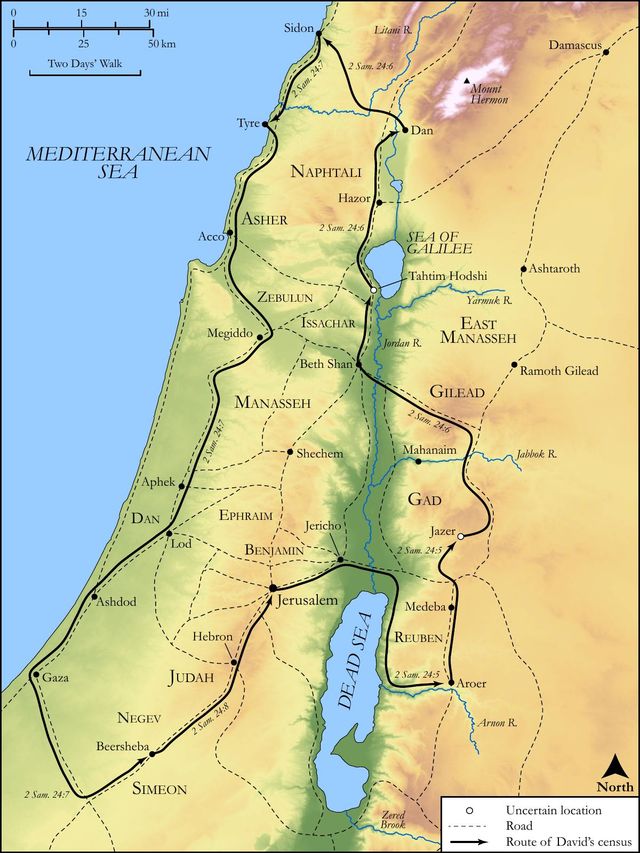
In ancient Israel, censuses were not inherently forbidden and were conducted for legitimate purposes, such as military conscription or taxation, as evidenced in the Book of Numbers. However, David's census here is presented as problematic, likely due to his underlying motivation—a desire to boast in his military strength, a lack of full reliance on God, or an act of pride that usurped God's role as the nation's true protector. Kings among the nations often wielded absolute authority, and their commands, once issued, were typically binding and irreversible. Joab, as David's loyal but often pragmatic and strong-willed general, understood the profound political and spiritual ramifications of such an act. His strong objection underscores the gravity of David's command, highlighting that even those closest to the king recognized the profound error in his judgment. The geographical setting would involve the vast territories of Israel and Judah, necessitating extensive travel and organization for the census-takers.
Key Themes
ShowHideThis verse powerfully illustrates several key themes central to the narrative of David's reign and the broader Old Testament. Firstly, it highlights the absolute nature of kingly authority in ancient Israel, where the monarch's word, even when ill-advised or divinely disfavored, could override the counsel of his most trusted advisors. Secondly, it underscores the theme of reluctant obedience, as Joab and the military commanders, despite their clear misgivings and spiritual discernment, ultimately yield to David's unwavering command. Thirdly, it is a stark demonstration of the consequences of pride and disobedience in leadership, as David's insistence on the census, born from a motive displeasing to God, directly leads to severe divine judgment upon Israel, culminating in a devastating plague. Finally, the broader narrative of 2 Samuel 24 reveals the complex interplay between human will and divine purpose, where even a sinful act can be permitted by God's sovereignty to achieve His ultimate ends, such as the purchase of the threshing floor of Araunah, which would later become the site for Solomon's Temple (2 Samuel 24:18-25).
Exposition and Analysis
ShowHideKey Word Analysis
ShowHideThis term signifies "a word; by implication, a matter (as spoken of) or thing." In this context, "the king's word" refers not merely to a spoken utterance but to a definitive command, an authoritative decree that carries the full weight of royal power. It emphasizes the binding nature of David's instruction, which functions as an unchallengeable mandate.
This primitive root means "to fasten upon; hence, to seize, be strong (figuratively, courageous, causatively strengthen, cure, help, repair, fortify), obstinate; to bind, restrain, conquer." Here, it powerfully conveys that David's word was not simply persuasive but possessed an inherent strength and unyielding quality that overcame all opposition. It highlights David's stubborn determination and the irresistible force of his royal decree, effectively overpowering Joab's reasoned objections and the collective reluctance of the military leadership.
This word denotes "a force, whether of men, means or other resources; an army, wealth, virtue, valor, strength." When used in the phrase "captains of the host," it refers specifically to the military force or army of Israel. Its inclusion underscores the comprehensive nature of the king's command, which was directed at and enforced throughout the entire military structure of the nation, highlighting the widespread and collective, albeit unwilling, participation of the nation's armed forces.
Verse Breakdown
ShowHide"Notwithstanding the king's word prevailed against Joab, and against the captains of the host."
This opening clause vividly portrays the triumph of David's unyielding will over the collective wisdom and moral objections of his most trusted military leaders. Despite Joab's passionate and insightful warning about the census's potential to bring guilt upon Israel, David's absolute authority and personal determination proved unassailable. This signifies a moment of significant spiritual lapse for David, where his personal desire or pride outweighed the divine wisdom communicated through his loyal servant. The verb "prevailed" underscores the decisive and forceful nature of David's command, leaving no room for further dissent.
"And Joab and the captains of the host went out from the presence of the king, to number the people of Israel."
This second clause depicts the reluctant but compelled obedience of Joab and the military commanders. Having failed to dissuade the king, they now proceed to execute his command. Their departure "from the presence of the king" indicates the immediate initiation of the census, setting in motion the chain of events that would lead to divine judgment upon Israel. It highlights the power dynamic inherent in the ancient monarchy, where, despite their personal convictions and moral qualms, they were ultimately bound by their duty to the king. This act of obedience, though compelled, initiated the national sin.
Literary Devices
ShowHideThe verse effectively employs several literary devices to convey its profound message. Contrast is immediately evident in the stark opposition between King David's unyielding command and Joab's wise, albeit ultimately futile, protest. This highlights David's spiritual blindness in this particular moment versus Joab's surprising discernment. The verse also functions as a powerful piece of foreshadowing, as the very act of the census, compelled by David's prevailing word, directly portends the severe divine judgment that will befall Israel. There is a subtle irony in David, a king usually depicted as "a man after God's own heart," insisting on an act rooted in pride and self-reliance rather than trust in God. Furthermore, the repetition of "Joab and the captains of the host" serves as a form of anaphora or repetition, emphasizing their collective, albeit unwilling, involvement and the widespread implementation of the king's problematic decree across the nation.
Theological and Thematic Connections
ShowHideThis verse serves as a potent reminder of the immense weight of leadership and the profound impact of a leader's choices, particularly when those choices are driven by motives contrary to God's will. David's insistence on the census, despite clear warnings, underscores the insidious danger of pride and self-reliance, which can lead even the most devout individuals astray and bring devastating consequences upon those they lead. It highlights the tension between human authority and divine sovereignty, demonstrating that while human will can initiate actions, God ultimately remains in control, often allowing consequences to unfold that serve His larger purposes, even if those consequences are corrective and painful. The reluctant obedience of Joab also raises profound questions about the nature of obedience to human authority when it appears to conflict with perceived divine will, showcasing the moral complexity faced by those in subordinate positions who must navigate loyalty to earthly rulers and ultimate allegiance to God.
Reflection and Application
ShowHideThe narrative of David's census and the prevailing of his word over Joab's wise counsel offers timeless lessons for leaders and individuals alike. It compels us to examine our own motives, especially when exercising authority, making significant decisions, or pursuing personal goals. Are our actions rooted in genuine humility and unwavering trust in God, or are they subtly driven by pride, a desire for self-glory, or an over-reliance on our own strength and resources? This story challenges leaders to cultivate an environment where wise and even dissenting counsel is not only tolerated but actively sought and genuinely considered, recognizing that true strength and wisdom lie in humility and openness to correction, rather than in unyielding self-will. For those in subordinate positions, Joab's example demonstrates the importance of rebuking the powerful, even when it is unpopular or risks personal repercussions, while also grappling with the complexities of obedience to human authority. Ultimately, this passage calls us to prioritize God's will and wisdom above all else, understanding that genuine security, lasting blessing, and true success come from Him alone, not from human numbers, achievements, or self-sufficient endeavors.
Questions for Reflection
ShowHideFAQ
ShowHideWhy was the census a sin if censuses were allowed elsewhere in the Bible?
ShowHideThe sin was not in the act of taking a census itself, as censuses were conducted for legitimate purposes (e.g., military organization, taxation) in other biblical accounts, such as in the Book of Numbers. The transgression lay in David's underlying motive for initiating this particular census. While the text doesn't explicitly state his motive, biblical scholars generally agree it was rooted in pride, a desire to boast in his military strength, or a lack of full reliance on God. Instead of trusting in God as the true protector and provider for Israel, David sought to quantify his human resources, demonstrating a shift from faith to self-reliance. 2 Samuel 24:1 indicates God's anger was kindled against Israel, and David's sinful command served as the catalyst for the ensuing judgment. The parallel account in 1 Chronicles 21:1 even states that "Satan stood up against Israel and incited David to take a census of Israel," further highlighting the malevolent spiritual forces at play behind David's flawed motivation.
Did Joab's reluctant obedience make him complicit in David's sin?
ShowHideThis is a complex ethical question. Joab clearly recognized the sinfulness of David's command and vehemently objected to it, demonstrating moral courage and spiritual discernment (as seen in 2 Samuel 24:3). His obedience was compelled by the king's absolute authority, not by agreement with the king's sinful motive. While he physically carried out the census, his heart was clearly against it. In this scenario, Joab's actions highlight the tension between obeying a legitimate human authority and adhering to divine principles. He fulfilled his duty as a commander, but his initial protest indicates he was not complicit in the sinful intent behind the census. This situation serves as a powerful illustration of the difficult choices individuals face when caught between conflicting loyalties to human superiors and to God.
Christ-Centered Fulfillment
ShowHideThe prevailing of David's word, leading to a census rooted in pride and subsequent divine judgment, profoundly underscores humanity's desperate need for a perfect King. David, though a man after God's own heart, was still a fallen monarch whose personal failings had devastating consequences for his people. This narrative points forward to Jesus Christ, the ultimate and perfect King, whose word always aligns with the Father's will and whose reign is characterized by humility, perfect obedience, and selfless love, never by pride or self-exaltation. Unlike David, who counted his fighting men to boast in his strength, Jesus "counted" His followers not by earthly might but by their willing submission to His divine authority and their spiritual allegiance to Him, as He declares, "My sheep hear my voice, and I know them, and they follow me." The judgment that fell upon Israel due to David's sin foreshadows the ultimate judgment for all sin, yet it also magnifies the grace of Christ, who, unlike David, bore the full weight of God's wrath on the cross, becoming the ultimate sacrifice for the sins of His people (Isaiah 53:5). Furthermore, the narrative's conclusion, where David purchases the threshing floor for an altar of atonement (2 Samuel 24:18-25), prophetically points to Christ as the true and final altar, the place where God's wrath against sin is appeased and reconciliation is made possible through His perfect sacrifice, establishing a new and living way to God (Hebrews 10:19-20).