


2 Samuel 20:25
- וּשְׁוָאu·she·ya'and ShevaH7724Conj-w ¦ N-proper-mNoun Proper MasculineוּandשְׁוָאSheva
- סֹפֵרso·Fer[was] secretaryH5608N-msNoun Singular Masculine Absolute
- וְצָדוֹקve·tza·Dokand ZadokH6659Conj-w ¦ N-proper-mNoun Proper MasculineוְandצָדוֹקZadok
- וְאֶבְיָתָרve·'ev·ya·Tarand AbiatharH54Conj-w ¦ N-proper-mNoun Proper MasculineוְandאֶבְיָתָרAbiathar
- כֹּהֲנִיםko·ha·Nim[were] priestsH3548N-mpNoun Plural Masculine Absolute
English is a literal word-by-word gloss of the Hebrew, not the KJV's wording. Why?
This is the original text the KJV's translators worked from — each Hebrew word with its own literal English meaning in this verse, prepared by scholars at Tyndale House, Cambridge. The KJV translates whole sentences, not word by word, so its wording differs: one Hebrew word can become several English words, and the KJV may choose “the LORD” where the gloss reads “Yahweh”. Both are faithful — they answer different questions. For the KJV's own rendering, switch to the KJV text.
Details
See on the biblical-era maps
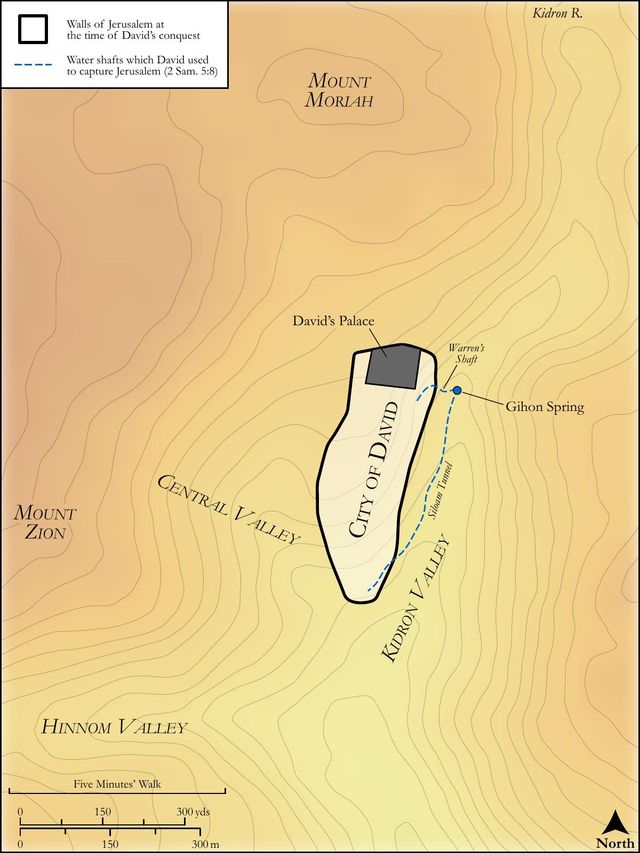
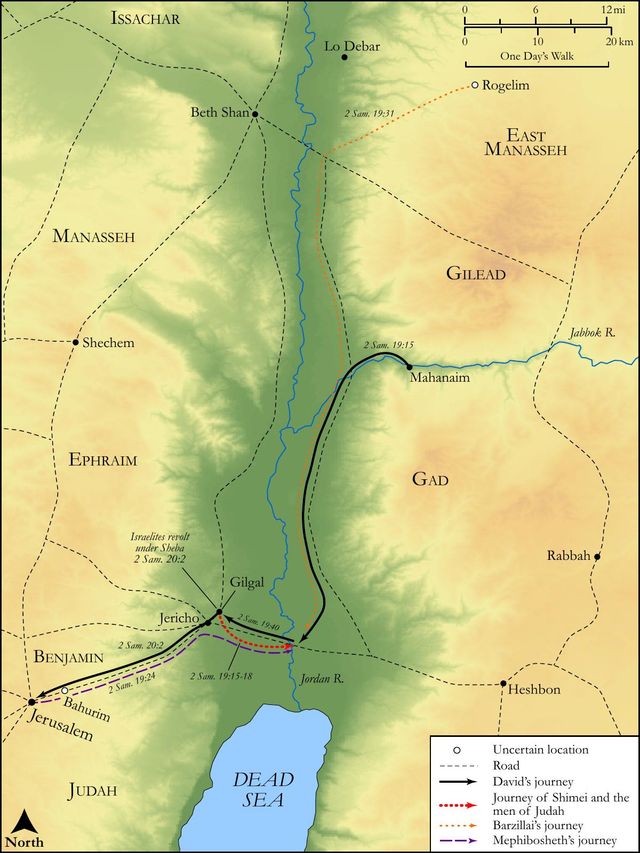
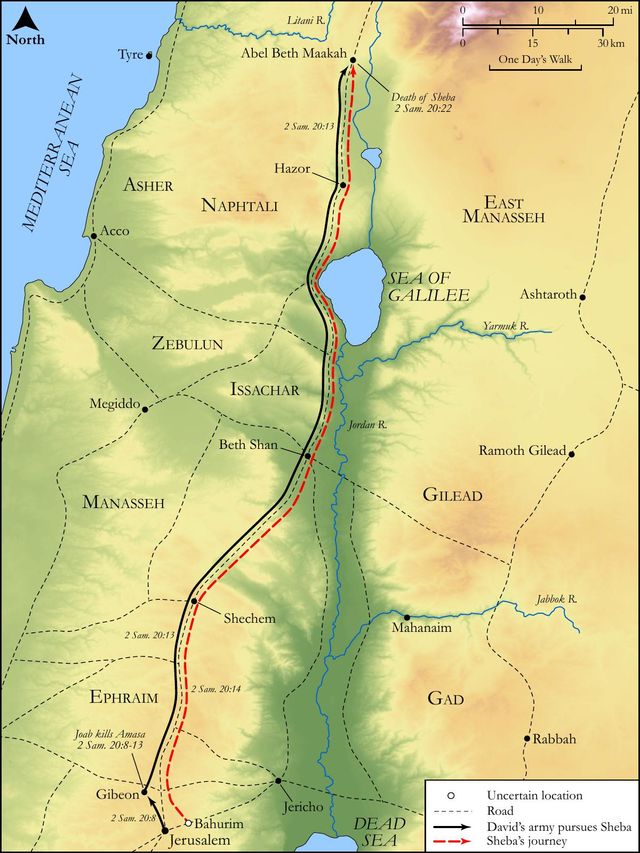
Study this verse
Public-domain commentary
Matthew Henry
From his Commentary on the Whole Bible. Henry comments on passages, not single verses — this entry covers 2 Samuel 20:23–26.
Here is an account of the state of David's court after his restoration. Joab retained the office of general, being too great to be displaced. Benaiah, as before, was captain of the guards. Here is one new office erected, which we had not (Sa2 8:16-18), that of treasurer, or one over the tribute, for it was not till towards the latter end of his time that David began to raise taxes. Adoram was long in this office, but it cost him his life at last, Kg1 12:18.
Continue studying 2 Samuel 20:25 across the web’s major study libraries — every link below opens this exact verse, chapter, or book on the destination site.
Read & Compare
 BibleGatewayThis verse in more than 200 translations and 70 languages.
 Bible.comThe YouVersion reader — hundreds of translations, reading plans, and highlights.
 ESV.orgCrossway's official English Standard Version reader.
 NET BibleThe NET translation with 60,000+ translators' notes on every rendering decision.
 STEP BibleTyndale House's free study tool — original text, vocabulary, and scholarly resources.
 BibliaLogos Bible Software's free web reader.
 USCCBThe New American Bible (Revised Edition) with the U.S. bishops' study notes.
Commentaries
 BibleHub CommentariesDozens of classic commentaries on this verse, gathered on one page.
 StudyLightMore than 100 commentary sets — the largest collection on the web.
 BibleRefPlain-English commentary on what this verse means, verse by verse.
 Enduring WordDavid Guzik's free commentary on this chapter, widely used by Bible teachers.
 Bible Study ToolsVerse commentary alongside Greek and Hebrew study aids.
Original Language & Research
- BibleHub InterlinearThe verse word by word — original language, transliteration, and English.
- BibleHub LexiconEvery word's original-language definition and Strong's entry.
 Blue Letter BibleDeep-study tools — Strong's numbers, concordance, and word studies.
 SefariaThe Hebrew text with Rashi and centuries of Jewish commentary.
Sermons, Hymns & Audio


TrulyRandomVerse is not affiliated with these sites and doesn’t control their content. They’re linked because they’re genuinely useful.
Summary
2 Samuel 20:25 provides a concise administrative postscript to the tumultuous narrative of Sheba's rebellion and the re-establishment of King David's authority, concluding a list of his key officials. This verse specifically identifies Sheva as the royal scribe and Zadok and Abiathar as the high priests, thereby underscoring the indispensable roles of both civil administration and religious leadership in maintaining the stability, functionality, and divine order of David's kingdom, even after periods of profound internal strife and challenges to the monarchy. It highlights the enduring institutional framework that sustained the realm.
Context
ShowHideLiterary Context
This verse appears at the very end of 2 Samuel, serving as the concluding entry in a list of King David's principal officials (2 Samuel 20:23-26). This administrative roster immediately follows the detailed account of Sheba's rebellion (2 Samuel 20:1-22), which itself was a direct aftermath of Absalom's revolt (2 Samuel 15-19). The preceding verses (2 Samuel 20:23-24) name other vital figures such as Joab (commander of the army), Benaiah (commander of the Cherethites and Pelethites, David's elite guard), Adoram (in charge of forced labor), and Jehoshaphat (the recorder). By meticulously detailing these foundational positions, the narrative emphasizes that despite severe internal strife and profound challenges to David's authority, the essential governmental and religious structures remained intact and functional. This list signifies a definitive return to order, stability, and the established hierarchy after a prolonged period of unrest, marking a conclusive statement on the administrative solidity of David's reign as presented in this book. It acts as a literary "tying up loose ends," assuring the reader of the kingdom's operational status.
Historical & Cultural Context
In ancient Israel, the roles of scribe and priest were immensely significant, extending far beyond mere clerical or ritualistic duties. The royal scribe (sopher) was a highly educated and influential figure, often serving as the king's chief secretary, administrator, diplomat, and even advisor, responsible for royal correspondence, treaties, and crucial records. This position was vital for the efficient operation of the kingdom, embodying its intellectual and bureaucratic backbone. The priests (kohenim), especially the high priests, held paramount spiritual authority, mediating between God and the people, offering sacrifices, interpreting divine law, and maintaining the sacred institutions associated with the Ark of the Covenant and the tabernacle. The mention of two high priests, Zadok and Abiathar, reflects a unique historical arrangement during David's reign. Zadok hailed from the lineage of Eleazar, Aaron's elder son, while Abiathar descended from Ithamar, Aaron's younger son, and was the sole survivor of the priestly house of Eli. Both had demonstrated loyalty to David at various critical junctures. Their joint presence signifies the comprehensive religious leadership supporting the monarchy, reflecting a period of dual high priesthood that would later be resolved.
Key Themes
ShowHideThis verse, as part of a larger administrative list, contributes significantly to several overarching themes prominent in 2 Samuel and the broader Deuteronomistic History. Firstly, it powerfully underscores the theme of Order and Administration, highlighting the indispensable necessity of a structured and organized government for a nation's stability and prosperity. David, as God's chosen king, understood the importance of surrounding himself with capable individuals to manage the diverse facets of the kingdom. Secondly, it speaks to the Continuity of Leadership, demonstrating that despite numerous crises—from Saul's downfall to Absalom's rebellion and Sheba's uprising—vital state and religious offices endured. The presence of these key figures, particularly Zadok and Abiathar, signifies stability and the ongoing function of essential duties, often echoing earlier administrative lists found in 2 Samuel 8:15-18. Lastly, it subtly touches upon the Intertwining of Sacred and Secular Authority in ancient Israel, where the king's rule was inextricably linked to divine mandate and the spiritual well-being of the nation, as seen in the complementary roles of both scribe (civil) and priests (religious). This intertwining, while foundational, would later face challenges, as seen in the eventual dismissal of Abiathar by Solomon in 1 Kings 2:26-27.
Exposition and Analysis
ShowHideKey Word Analysis
ShowHideThis is a personal name, identifying the individual holding the office of scribe. While the Strong's definition of H7724 also includes "false," in this context, it refers to a specific Israelite individual. His inclusion by name, alongside other prominent officials, emphasizes the specific person entrusted with the crucial administrative function of the scribe, indicating a stable and recognized appointment within the royal court. The variant H7864 (Shᵉyâʼ) also refers to an Israelite, suggesting a common name or a scribal variant.
Derived from a primitive root meaning "to score with a mark as a tally or record," this term (H5608) refers to an individual who can inscribe, enumerate, and recount. In the royal court, the sopher was far more than a mere copyist. This highly educated and influential official served as the king's chief secretary, responsible for all official correspondence, state records, treaties, and often acted as a royal advisor, diplomat, and even a minister of state. The position required literacy, administrative skill, and often political acumen, making the scribe a pivotal figure in the daily governance of the kingdom.
This term (H3548), derived from a root meaning "one officiating," refers to those consecrated to serve God, offer sacrifices, and teach God's law to the people. Zadok and Abiathar held the highest priestly offices, functioning as high priests. Their role was central to the spiritual and national identity of Israel, mediating between God and the nation, overseeing the tabernacle/ark, and providing religious counsel. Their presence in this list highlights the essential religious dimension of David's administration and the ongoing functionality of Israel's covenant relationship with God.
Verse Breakdown
ShowHide"And Sheva [was] scribe"
This clause identifies the specific individual holding the vital administrative position of royal scribe at this point in David's reign. The mention of his name underscores the personal appointment and the importance of this office in maintaining the kingdom's bureaucratic efficiency, communication, and record-keeping, especially after periods of disorder. It signals that the machinery of government, including its intellectual and administrative backbone, was fully operational and competently staffed.
"and Zadok and Abiathar [were] the priests"
This clause names the two high priests, highlighting their joint leadership of the religious sphere. Their continued service signifies the stability and functionality of the religious establishment under David. While both served as high priests, their roles and lineages were distinct, and their relationship would later face a critical test during the succession to the throne, as recorded in 1 Kings. For the moment, their combined presence in this list emphasizes the comprehensive nature of David's restored administration, encompassing both civil and sacred authority, vital for the well-being of the nation.
Literary Devices
ShowHideThe verse primarily functions as a List or Catalogue, a common literary device in historical narratives, particularly in administrative and genealogical sections, to provide essential details and establish a sense of order and completeness. By listing key officials, the text emphasizes the structured nature of David's governance and the re-establishment of stability after the chaos of rebellion. There is also an implicit Merism at play: by naming the scribe (representing civil administration, statecraft, and intellectual function) and the priests (representing religious authority, divine mediation, and spiritual guidance), the verse encapsulates the full scope of governance in ancient Israel, where secular and sacred functions were deeply intertwined and mutually dependent. Furthermore, this list serves as a form of Inclusio with earlier administrative lists in 2 Samuel, reinforcing the idea of a complete and functioning government at the conclusion of David's active reign narrative, thereby providing a sense of closure and stability to the book.
Theological and Thematic Connections
ShowHideThis seemingly simple administrative verse carries significant theological weight, reminding us that God is a God of order, and human governance, even in its imperfect forms, is a reflection of His desire for structure and stability in society. The listing of officials, particularly those in both civil (scribe) and religious (priests) capacities, underscores the biblical principle of delegated authority and the importance of faithful stewardship in all spheres of life. God uses human institutions and individuals to bring about His purposes, and the diligent service of those in leadership is crucial for the well-being of the community. The stability represented by these enduring roles, even after severe unrest, points to God's providence in preserving His chosen king and kingdom, demonstrating His faithfulness even amidst human failures and political turmoil. It highlights that even the mundane aspects of administration are part of God's larger plan for a flourishing society.
Reflection and Application
ShowHideThe administrative details of David's court, though ancient, offer timeless lessons for contemporary life and faith. This verse reminds us of the profound importance of order, structure, and faithful service within any community—be it a family, a church, a business, or a nation. Just as David relied on competent and dedicated officials to govern his kingdom effectively, so too do our modern institutions thrive on clear roles, accountability, and individuals committed to their responsibilities. It calls us to recognize that every vocation, every position, no matter how seemingly mundane, can be a sphere of faithful service to God and others. Our diligence, integrity, and commitment to our roles contribute to the overall health, stability, and effectiveness of the collective body, reflecting God's own character of order and purpose. We are called to serve with excellence, understanding that our work, when offered to God, becomes an act of worship that contributes to the flourishing of His creation and the well-being of those around us. This verse encourages us to embrace our callings with a sense of divine purpose, knowing that God works through human structures.
Questions for Reflection
ShowHideFAQ
ShowHideWhy are two priests mentioned, Zadok and Abiathar?
ShowHideThe mention of both Zadok and Abiathar as high priests reflects a unique and complex historical situation during David's reign. Zadok was from the lineage of Eleazar, Aaron's elder son, and was typically associated with the tabernacle at Gibeon. Abiathar, on the other hand, was from the lineage of Ithamar, Aaron's younger son, and was the sole survivor of the priestly house of Eli, having served with the Ark of the Covenant and demonstrated loyalty to David during Saul's persecution (1 Samuel 22:20-23). David maintained both men in high priestly office, perhaps to unify the priestly lines, acknowledge their respective loyalties and contributions to his reign, or manage the distinct sacred sites (Ark vs. Tabernacle). While they served concurrently, Zadok often appears to have had a more prominent role in matters related to the sanctuary and later became the sole high priest under Solomon, fulfilling a prophecy concerning a faithful priest from the line of Zadok (1 Samuel 2:35 and 1 Kings 2:35).
What was the significance of the "scribe" in ancient Israel, and why is Sheva mentioned by name?
ShowHideThe "scribe" (sopher) in ancient Israel was a highly significant and influential royal official, far more than just a copyist. This individual served as the king's chief secretary, responsible for all official correspondence, state records, financial accounts, and often acted as a royal advisor, diplomat, and even a minister of state. The scribe's role required high literacy, administrative skill, and often political acumen, making them a pivotal figure in the daily governance of the kingdom. Mentioning Sheva by name in this list, alongside other prominent officials like Joab and Zadok, emphasizes his specific appointment and the importance of this office in David's stable administration. It highlights the king's reliance on competent and named individuals to manage the complex affairs of the state, underscoring the personal trust placed in such a vital position.
Christ-Centered Fulfillment
ShowHideThe administrative stability and diverse leadership roles highlighted in 2 Samuel 20:25 find their ultimate and perfect fulfillment in Jesus Christ. David's kingdom, though divinely appointed, was imperfect, temporary, and reliant on human administrators and priests to maintain order and mediate with God. Christ, however, is the perfect and eternal embodiment of both the ultimate Administrator and the supreme High Priest. He is the one who perfectly orders all things, establishing a kingdom that is unshakeable and everlasting, possessing an eternal dominion that will not pass away (Daniel 7:14; Luke 1:33). As the divine Scribe, Christ perfectly embodies wisdom and righteousness, not merely recording God's law but fulfilling it and writing it upon the hearts of His people through the New Covenant, making them living letters of Christ (Jeremiah 31:33; 2 Corinthians 3:3). As our Great High Priest, He has offered the perfect, once-for-all sacrifice for sin through His own blood and continually intercedes for us before the Father, making direct and confident access to God possible for all believers (Hebrews 4:14-16; Hebrews 7:24-27). Thus, the roles of scribe and priest in David's court, essential for the governance and spiritual life of ancient Israel, ultimately point to the comprehensive and perfect reign of Christ, who holds all authority in heaven and on earth (Matthew 28:18) and perfectly fulfills every administrative and priestly function for His eternal kingdom, ensuring its perfect order and our eternal reconciliation with God.