


2 Samuel 20:24
Bible text: King James Version (1769 Blayney text) · Public domain
Bible text: Berean Standard Bible · Public domain
Bible text: American Standard Version (1901) · Public domain
Bible text: World English Bible, Messianic edition · Public domain
Bible text: Geneva Bible (1599) · Public domain
Bible text: Young's Literal Translation · Public domain
- וַאֲדֹרָםva·'a·do·Ramand AdoramH151Conj-w ¦ N-proper-mNoun Proper MasculineוַandאֲדֹרָםAdoram
- עַל'al[was] overH5921PrepPreposition
- הַמַּסha·Masthe forced laborH4522Art ¦ N-msNoun Singular Masculine Absoluteהַtheמַּסforced labor
- וִיהוֹשָׁפָטvi·ho·sha·Fatand JehoshaphatH3092Conj-w ¦ N-proper-mNoun Proper MasculineוִandיהוֹשָׁפָטJehoshaphat
- בֶּןben[the] son ofH1121N-mscNoun Singular Masculine Construct
- אֲחִילוּד'a·chi·LudAhiludH286N-proper-mNoun Proper Masculine
- הַמַּזְכִּירha·maz·Kir[was] the recorderH2142Art ¦ V-Hiphil-Prtcpl-msVerb Hiphil Participle Singular Masculine Absoluteהַ[was] theמַּזְכִּירrecorder
English is a literal word-by-word gloss of the Hebrew, not the KJV's wording. Why?
This is the original text the KJV's translators worked from — each Hebrew word with its own literal English meaning in this verse, prepared by scholars at Tyndale House, Cambridge. The KJV translates whole sentences, not word by word, so its wording differs: one Hebrew word can become several English words, and the KJV may choose “the LORD” where the gloss reads “Yahweh”. Both are faithful — they answer different questions. For the KJV's own rendering, switch to the KJV text.
Details
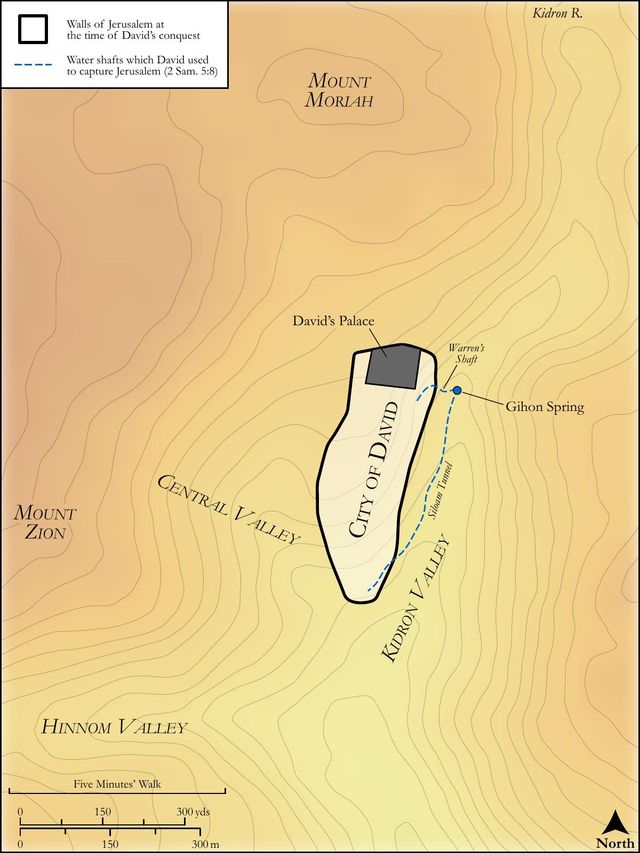
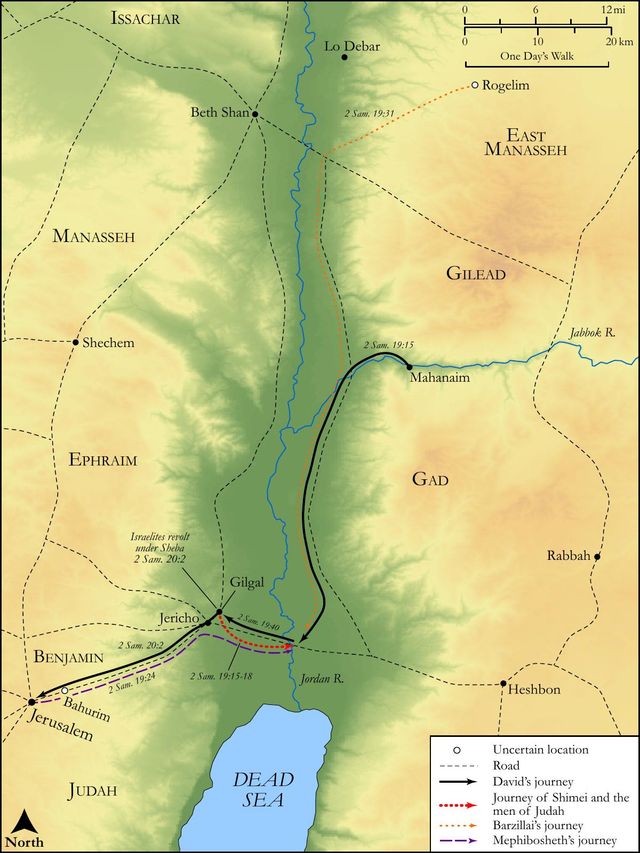
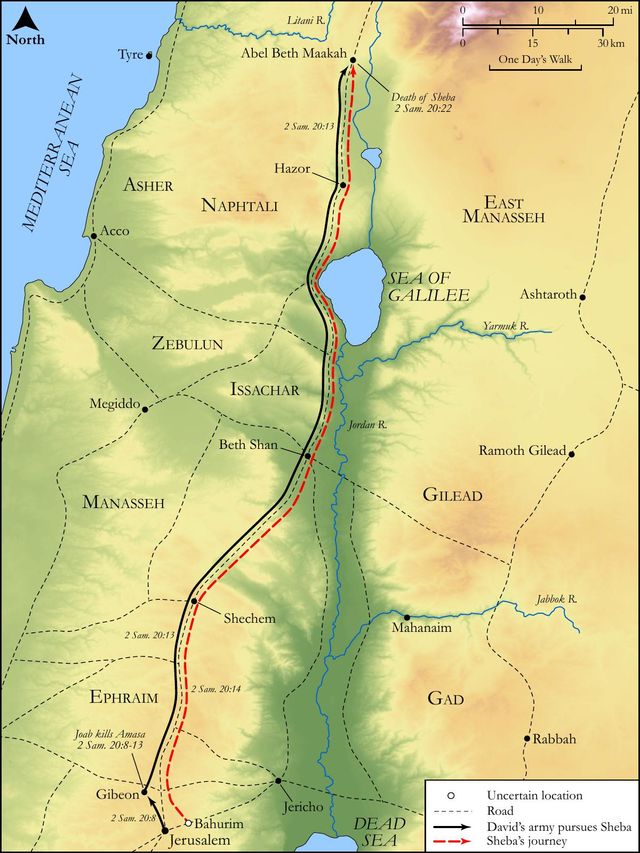
See on the biblical-era maps
Study this verse
Public-domain commentary
Matthew Henry
From his Commentary on the Whole Bible. Henry comments on passages, not single verses — this entry covers 2 Samuel 20:23–26.
Here is an account of the state of David's court after his restoration. Joab retained the office of general, being too great to be displaced. Benaiah, as before, was captain of the guards. Here is one new office erected, which we had not (Sa2 8:16-18), that of treasurer, or one over the tribute, for it was not till towards the latter end of his time that David began to raise taxes. Adoram was long in this office, but it cost him his life at last, Kg1 12:18.
Continue studying 2 Samuel 20:24 across the web’s major study libraries — every link below opens this exact verse, chapter, or book on the destination site.
Read & Compare
 BibleGatewayThis verse in more than 200 translations and 70 languages.
 Bible.comThe YouVersion reader — hundreds of translations, reading plans, and highlights.
 ESV.orgCrossway's official English Standard Version reader.
 NET BibleThe NET translation with 60,000+ translators' notes on every rendering decision.
 STEP BibleTyndale House's free study tool — original text, vocabulary, and scholarly resources.
 BibliaLogos Bible Software's free web reader.
 USCCBThe New American Bible (Revised Edition) with the U.S. bishops' study notes.
Commentaries
 BibleHub CommentariesDozens of classic commentaries on this verse, gathered on one page.
 StudyLightMore than 100 commentary sets — the largest collection on the web.
 BibleRefPlain-English commentary on what this verse means, verse by verse.
 Enduring WordDavid Guzik's free commentary on this chapter, widely used by Bible teachers.
 Bible Study ToolsVerse commentary alongside Greek and Hebrew study aids.
Original Language & Research
- BibleHub InterlinearThe verse word by word — original language, transliteration, and English.
- BibleHub LexiconEvery word's original-language definition and Strong's entry.
 Blue Letter BibleDeep-study tools — Strong's numbers, concordance, and word studies.
 SefariaThe Hebrew text with Rashi and centuries of Jewish commentary.
Sermons, Hymns & Audio


TrulyRandomVerse is not affiliated with these sites and doesn’t control their content. They’re linked because they’re genuinely useful.
Summary
2 Samuel 20:24 concludes a significant section of David's reign by listing two pivotal officials, Adoram and Jehoshaphat, who were instrumental in the administration of the kingdom. This verse provides a concise snapshot of David's re-established and stabilized government following the tumultuous rebellions of Absalom and Sheba. It highlights the structured nature of the Israelite monarchy, emphasizing the specialized roles necessary for managing national resources through tribute and preserving institutional memory through the office of the recorder.
Context
ShowHideLiterary Context
This verse is situated at the very end of a brief administrative list found in 2 Samuel 20:23-26. Its immediate preceding narrative details the swift and decisive suppression of Sheba's rebellion, which itself followed the profound upheaval of Absalom's revolt. The placement of this administrative summary serves as a literary denouement, signaling a definitive return to order and stability after a period of intense internal strife. It functions to underscore the re-establishment of royal authority and the resumption of normal governmental functions, emphasizing that despite chaos, David's kingdom endured. This list intentionally echoes an earlier, foundational administrative roster in 2 Samuel 8:15-18, thereby highlighting continuity in David's governance and the enduring nature of his administrative framework.
Historical & Cultural Context
Among the kings of that day, a well-organized and efficient administration was the bedrock of any successful monarchy, essential for national defense, economic stability, and the execution of large-scale public works. David's reign, particularly after the consolidation of power and the establishment of Jerusalem as his capital, marked a significant development in the centralization and sophistication of Israelite government. The "tribute" (Hebrew: mas) refers to a system of forced labor or corvée, commonly levied on conquered peoples but also, at times, on Israelites for national projects like fortifications, palaces, or public infrastructure. While vital for national development, this system was often a source of deep popular discontent, famously contributing to the division of the kingdom under Rehoboam. The "recorder" (Hebrew: mazkîr) was a highly esteemed official, far more than a mere scribe. This role was crucial for maintaining official state records, advising the king on historical precedents and policy, and managing royal correspondence, underscoring the paramount importance of institutional memory and effective communication in a pre-modern state.
Key Themes
ShowHide2 Samuel 20:24 contributes significantly to several overarching themes within the book of 2 Samuel and the broader Deuteronomistic History. Primarily, it reinforces the theme of order and stability triumphing over chaos, demonstrating David's exceptional capacity to restore and maintain the foundational structures of his kingdom even after profound challenges. It also highlights the theme of wise governance, as David's leadership is characterized by his understanding of the necessity for specialized roles and competent officials to manage a burgeoning nation. The inclusion of these specific offices underscores the practicality of kingship—it was not merely a ceremonial position but involved the complex administration of resources, people, and information. Furthermore, the longevity of some of these officials, like Jehoshaphat, points to the theme of continuity of leadership and the development of a bureaucratic tradition that would extend into Solomon's reign, as seen in the detailed list of Solomon's officials in 1 Kings 4:1-6.
Exposition and Analysis
ShowHideKey Word Analysis
ShowHideThis name, meaning "my lord is exalted," refers to a prominent Israelite official also known as Adoniram or Hadoram in other biblical texts. According to the Strong's data, Adoram is a contraction of Adoniram. He held the powerful and often controversial position of being "over the tribute," indicating his responsibility for overseeing the system of forced labor. His long tenure, spanning David's reign and continuing into Solomon's, underscores the critical administrative continuity within the monarchy and the essential, albeit unpopular, nature of his role in managing national resources and labor for public works.
From the root masas (to faint), this term literally signifies "a burden (as causing to faint)" and specifically refers to a tax in the form of forced labor or conscription for public works. It was a common practice among the kings of that day to mobilize large workforces for significant building projects such as roads, fortifications, palaces, and temples, as Pharaoh did when he set taskmasters over Israel to build treasure cities. While indispensable for national development and infrastructure, the mas system frequently led to resentment, particularly when imposed upon the Israelite population, making the position of "over the tribute" a sensitive and often perilous one.
Derived from a primitive root meaning "to mark (so as to be recognized)" or "to remember," the term mazkîr (from zâkar) designates a high-ranking official, often translated as "remembrancer" or "secretary of state." This role was far more significant than that of a mere scribe. The recorder's duties included maintaining official state archives, advising the king on historical precedents and policy matters, managing diplomatic correspondence, and likely serving as a key counselor. This position was crucial for preserving the institutional memory of the kingdom and ensuring continuity and informed decision-making in governance.
Verse Breakdown
ShowHide"And Adoram [was] over the tribute"
This clause highlights a crucial, albeit often harsh, aspect of ancient kingdom administration. Adoram's role involved managing the system of forced labor, which was vital for the construction of national infrastructure, military fortifications, and royal projects. His position signifies the king's authority to command the labor of his subjects for the collective good, even though it was a source of significant burden and would later contribute to popular unrest and the division of the kingdom.
"and Jehoshaphat the son of Ahilud [was] recorder"
This clause points to the intellectual and administrative sophistication present within David's royal court. Jehoshaphat's office as recorder was critical for the kingdom's internal organization and its external relations. He was responsible for documenting royal decrees, significant historical events, and state affairs, thereby ensuring that the king's decisions and the kingdom's history were meticulously preserved and readily accessible. This office underscores the profound importance of institutional memory and informed counsel for effective and stable governance.
Literary Devices
ShowHideThe concise enumeration of two key officials in 2 Samuel 20:24 skillfully employs several literary devices. The mention of "over the tribute" (representing the physical, labor-intensive aspects of governance) and "recorder" (representing the intellectual, administrative, and historical aspects) together constitute a Merism. This device uses two contrasting or complementary parts to signify a comprehensive whole, in this case, the entire administrative apparatus of David's kingdom. Furthermore, these two specific individuals serve as a Synecdoche, where a part (these two distinct officials) stands in for the whole (David's complex, re-established, and functioning administration). The deliberate Juxtaposition of these two roles—one dealing with the material and often contentious issue of labor, the other with the intellectual and historical preservation of the state—underscores the multifaceted nature of royal governance and David's comprehensive approach to re-establishing order and stability.
Theological and Thematic Connections
ShowHideThe meticulous listing of officials within David's kingdom, even in a seemingly minor verse, conveys a profound theological truth: God is inherently a God of order, not chaos. Just as the divine act of creation brought order to the earth that was "without form, and void," human societies, particularly those operating under divine covenant, are called to reflect this divine order through wise, just, and structured administration. The existence of specialized roles, ranging from managing vital resources to preserving historical records, demonstrates the essential necessity of structure, accountability, and the proper deployment of diverse gifts for the flourishing of any community—be it a nation, a family, or the church. This divine principle of order undergirds effective leadership and communal well-being, ensuring that resources are stewarded responsibly and that history is remembered to provide wisdom for future generations.
Reflection and Application
ShowHideThe administrative details presented in 2 Samuel 20:24, though rooted in an ancient context, offer timeless principles for effective leadership and the flourishing of any community. David's unwavering commitment to re-establishing a stable and organized government after significant upheaval serves as a powerful reminder that order and structure are not merely bureaucratic necessities but foundational elements for peace, productivity, and overall well-being. Whether in our personal lives, our families, our churches, or our workplaces, identifying clear roles, understanding responsibilities, and valuing diverse contributions are absolutely essential. The "recorder" reminds us of the profound importance of documenting, remembering, and learning from history—both personal and communal—to glean wisdom for navigating the future. Similarly, the "tribute" manager, despite the controversial nature of his role, highlights the necessity of diligent resource management and the mobilization of collective effort for shared goals. We are called to be faithful stewards of all that God has entrusted to us, recognizing that even seemingly mundane administrative tasks contribute to the greater purposes of God when executed with integrity, diligence, and a spirit of service.
Questions for Reflection
ShowHideFAQ
ShowHideWas Adoram the same person who was stoned under Rehoboam?
ShowHideYes, it is highly probable that Adoram (also known as Adoniram or Hadoram in other passages) is the same individual who served as "over the tribute" from David's reign, through Solomon's, and into the early reign of Rehoboam. His remarkably long tenure highlights the continuity of this crucial administrative role across three kings. His tragic death, when the people of Israel stoned him during the rebellion against Rehoboam's harsh policies, powerfully underscores the deep-seated resentment against the forced labor system that he administered (1 Kings 12:18). This continuity of service and his ultimate fate vividly illustrate the volatile and unpopular nature of such a powerful position.
What was the primary function of the "recorder" (mazkîr)?
ShowHideThe "recorder" (Hebrew: mazkîr) was a high-ranking and exceptionally influential official in the royal court, far exceeding the duties of a simple scribe. The term mazkîr literally means "one who causes to remember" or "remembrancer." Their primary function was to serve as a key advisor to the king, meticulously maintaining official state records, documenting royal decrees, and preserving the kingdom's history and precedents. This role was absolutely crucial for ensuring administrative continuity, facilitating informed decision-making by providing historical context, and managing all official communications, including vital diplomatic correspondence. Jehoshaphat, who held this esteemed office, is mentioned as recorder earlier in David's reign (2 Samuel 8:16) and continued to serve under Solomon, emphasizing the critical importance of this office for the stability, institutional memory, and wise governance of the monarchy.
Christ-Centered Fulfillment
ShowHideWhile 2 Samuel 20:24 meticulously details the earthly administration of King David, it subtly yet profoundly points forward to the perfect and eternal administration of King Jesus. David's diligent efforts to establish order, manage resources, and govern his kingdom foreshadow Christ, the ultimate Administrator and sovereign Head of all creation. Just as Adoram managed the physical resources and labor of the earthly kingdom, Christ perfectly manages and sustains all creation by the word of His power (Colossians 1:17). His "tribute" is not coerced labor, but the willing sacrifice and heartfelt worship of His redeemed people, offered as living sacrifices in joyful obedience (Romans 12:1). Furthermore, as Jehoshaphat served as the kingdom's "recorder," preserving its history and advising the king, so Christ is the living embodiment of all truth and wisdom, the one in whom "are hidden all the treasures of wisdom and knowledge" (Colossians 2:3). He is the true and faithful witness, the Alpha and the Omega, who perfectly records and orchestrates all of history for the glory of God and the ultimate establishment of His eternal kingdom (Revelation 1:8; Ephesians 1:10). In Christ, we find the perfect order, righteous governance, and ultimate fulfillment of all administrative and redemptive purposes, culminating in a perfectly ordered and eternally flourishing new heavens and new earth.