


2 Samuel 20:23
Bible text: King James Version (1769 Blayney text) · Public domain
Bible text: King James Version with Strong's numbers · Public domain
Bible text: Berean Standard Bible · Public domain
Bible text: American Standard Version (1901) · Public domain
Bible text: World English Bible, Messianic edition · Public domain
Bible text: Geneva Bible (1599) · Public domain
Bible text: Young's Literal Translation · Public domain
- וְיוֹאָבve·yo·'Avand JoabH3097Conj-w ¦ N-proper-mNoun Proper MasculineוְandיוֹאָבJoab
- אֶל'el[was] toH413PrepPreposition
- כָּלkolallH3605N-mscNoun Singular Masculine Construct
- הַצָּבָאha·tza·Va'the army ofH6635Art ¦ N-mscNoun Singular Masculine Constructהַtheצָּבָאarmy of
- יִשְׂרָאֵלYis·ra·'ElIsraelH3478N-properNoun Proper Location
- וּבְנָיָהu·ve·na·Yahand BenaiahH1141Conj-w ¦ N-proper-mNoun Proper MasculineוּandבְנָיָהBenaiah
- בֶּןben[the] son ofH1121N-mscNoun Singular Masculine Construct
- יְהוֹיָדָעye·Ho·ya·Da'JehoiadaH3077N-proper-mNoun Proper Masculine
- עַל'al[was] overH5921PrepPreposition
- הַכְּרֵתִיha·ke·rithe Kerethite[s]H3774Art ¦ N-msNoun Gentilic Singular Masculine AbsoluteהַtheכְּרֵתִיKerethite[s]
- וְעַלve·'aland overH5921Conj-w ¦ PrepPrepositionוְandעַלover
- הַפְּלֵתִיha·pe·le·Tithe Pelethite[s]H6432Art ¦ N-msNoun Gentilic Singular Masculine AbsoluteהַtheפְּלֵתִיPelethite[s]
English is a literal word-by-word gloss of the Hebrew, not the KJV's wording. Why?
This is the original text the KJV's translators worked from — each Hebrew word with its own literal English meaning in this verse, prepared by scholars at Tyndale House, Cambridge. The KJV translates whole sentences, not word by word, so its wording differs: one Hebrew word can become several English words, and the KJV may choose “the LORD” where the gloss reads “Yahweh”. Both are faithful — they answer different questions. For the KJV's own rendering, switch to the KJV text.
Details
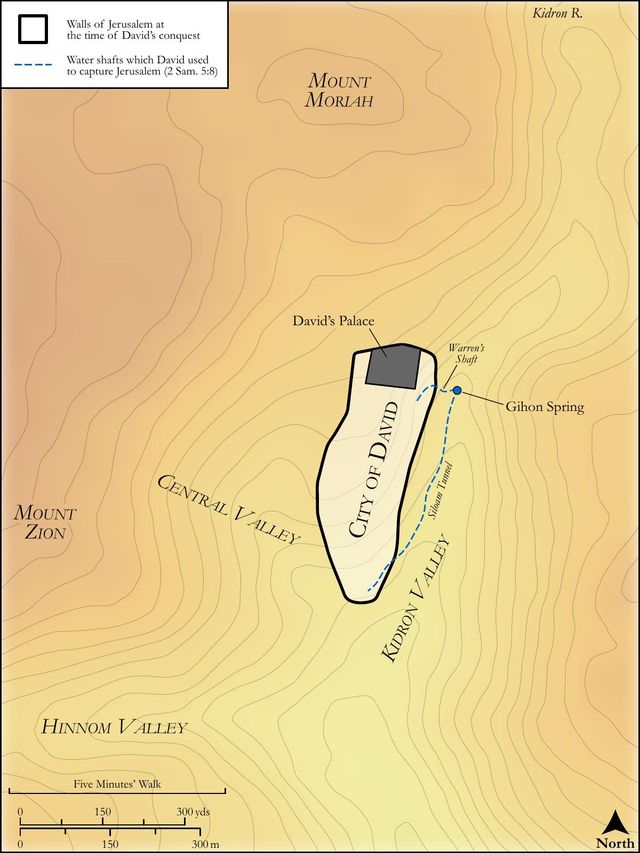
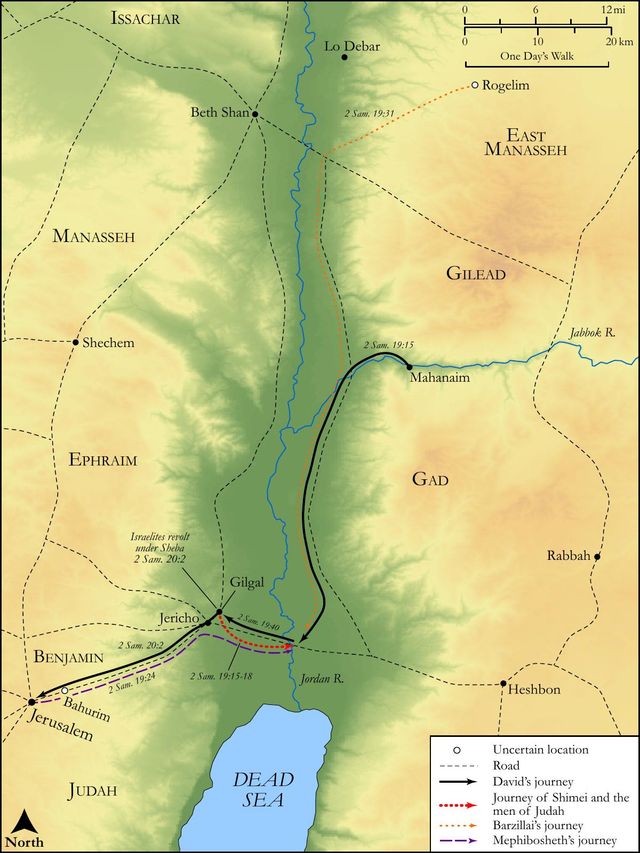
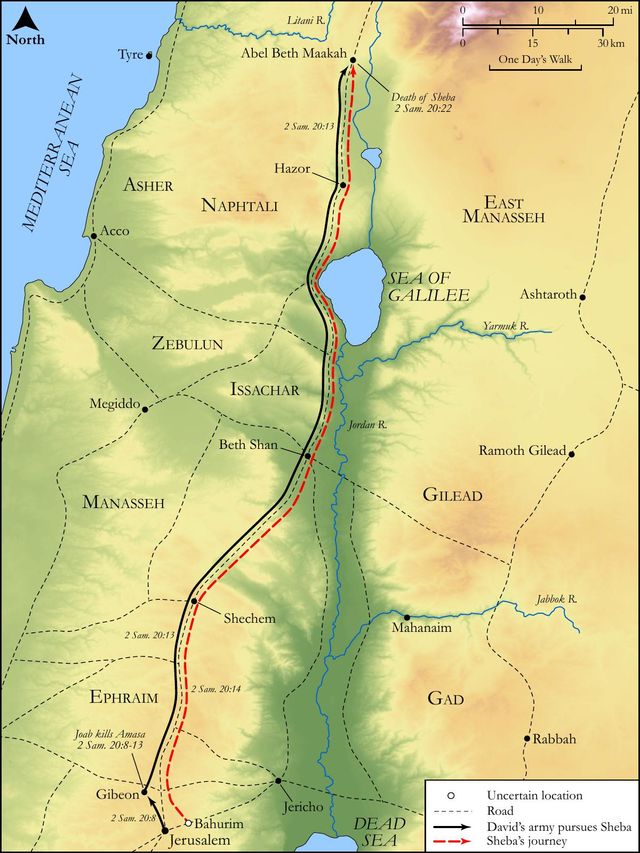
See on the biblical-era maps
Study this verse
Public-domain commentary
Matthew Henry
From his Commentary on the Whole Bible. Henry comments on passages, not single verses — this entry covers 2 Samuel 20:23–26.
Here is an account of the state of David's court after his restoration. Joab retained the office of general, being too great to be displaced. Benaiah, as before, was captain of the guards. Here is one new office erected, which we had not (Sa2 8:16-18), that of treasurer, or one over the tribute, for it was not till towards the latter end of his time that David began to raise taxes. Adoram was long in this office, but it cost him his life at last, Kg1 12:18.
Continue studying 2 Samuel 20:23 across the web’s major study libraries — every link below opens this exact verse, chapter, or book on the destination site.
Read & Compare
 BibleGatewayThis verse in more than 200 translations and 70 languages.
 Bible.comThe YouVersion reader — hundreds of translations, reading plans, and highlights.
 ESV.orgCrossway's official English Standard Version reader.
 NET BibleThe NET translation with 60,000+ translators' notes on every rendering decision.
 STEP BibleTyndale House's free study tool — original text, vocabulary, and scholarly resources.
 BibliaLogos Bible Software's free web reader.
 USCCBThe New American Bible (Revised Edition) with the U.S. bishops' study notes.
Commentaries
 BibleHub CommentariesDozens of classic commentaries on this verse, gathered on one page.
 StudyLightMore than 100 commentary sets — the largest collection on the web.
 BibleRefPlain-English commentary on what this verse means, verse by verse.
 Enduring WordDavid Guzik's free commentary on this chapter, widely used by Bible teachers.
 Bible Study ToolsVerse commentary alongside Greek and Hebrew study aids.
Original Language & Research
- BibleHub InterlinearThe verse word by word — original language, transliteration, and English.
- BibleHub LexiconEvery word's original-language definition and Strong's entry.
 Blue Letter BibleDeep-study tools — Strong's numbers, concordance, and word studies.
 SefariaThe Hebrew text with Rashi and centuries of Jewish commentary.
Sermons, Hymns & Audio


TrulyRandomVerse is not affiliated with these sites and doesn’t control their content. They’re linked because they’re genuinely useful.
Summary
Second Samuel 20:23 functions as a pivotal administrative summary, strategically positioned to conclude the tumultuous period of internal strife and rebellion that plagued David's reign. This concise verse meticulously reaffirms the established military hierarchy of the kingdom, underscoring the enduring and indispensable roles of key figures like Joab and Benaiah. Its placement signals a profound return to order and stability after significant challenges to the throne, highlighting the resilience and continuity of David's core leadership amidst the recent upheavals.
Context
ShowHideLiterary Context
This verse serves as a crucial epilogue to a dramatic and often violent narrative arc within David's reign, immediately following the decisive suppression of Sheba's rebellion detailed in 2 Samuel 20. The preceding chapters meticulously chronicle the lingering unrest after Absalom's revolt, culminating in Sheba's attempt to fragment Israel and challenge David's authority. Joab's ruthless efficiency in pursuing and executing Sheba, including the controversial assassination of Amasa, sets the stage for this administrative summary. The verse provides a sense of closure, effectively drawing a line under these turbulent events and re-establishing the foundational order before the narrative transitions to a collection of diverse appendices in 2 Samuel 21-24. Its structure and content intentionally echo earlier lists of David's trusted officials, such as those found in 2 Samuel 8:16-18, thereby emphasizing the continuity and enduring nature of David's administrative framework despite the recent profound upheavals.
Historical & Cultural Context
David's reign (circa 1010-970 BC) was a dynamic era marked by both territorial expansion and persistent internal conflicts. The immediate historical backdrop to this verse was particularly challenging, defined by the devastating Absalom's rebellion (2 Samuel 15-18) and the subsequent, albeit short-lived, revolt led by Sheba. In the monarchy of Israel, a robust and unequivocally loyal military was not merely an asset but an absolute necessity for maintaining royal power, ensuring national security, and enforcing the king's will. The "host of Israel" refers to the broader national army, comprising conscripts and professional soldiers, mobilized for large-scale campaigns. In contrast, the "Cherethites and Pelethites" constituted David's elite personal bodyguard, widely understood to be foreign mercenaries (likely originating from Crete and Philistia, respectively) renowned for their exceptional military prowess and, more critically, their unwavering, singular loyalty to the king. Their steadfastness was dramatically demonstrated during Absalom's rebellion, when they alone remained with David during his flight from Jerusalem (2 Samuel 15:18). Their distinct and specialized roles within David's military apparatus reflect a sophisticated organizational structure designed to ensure both national defense and the king's immediate personal security.
Key Themes
ShowHideThis verse powerfully encapsulates several critical themes. Foremost among them is Continuity and Stability in governance, even in the aftermath of severe challenges to the throne. The explicit reaffirmation of Joab and Benaiah in their vital military roles signifies that David's kingdom has not only weathered the storm but has also successfully reasserted its authority and re-established its foundational structures. This speaks profoundly to the resilience of David's administration and, implicitly, to God's continued providential oversight of His chosen king and covenant promises. Another central theme is Loyalty and Trust, particularly underscored by Benaiah's command over the Cherethites and Pelethites, whose unwavering devotion to David was legendary and indispensable during times of crisis. This highlights the paramount importance of trusted personnel in maintaining royal power and ensuring national security. Finally, the verse offers a concise glimpse into the Military Organization of David's kingdom, clearly distinguishing between the expansive national army and the specialized, highly loyal royal guard, thereby illustrating the practical and strategic aspects of maintaining order and defense in ancient Israel.
Exposition and Analysis
ShowHideKey Word Analysis
ShowHideThis term, צָבָא (tsâbâʼ), literally denotes a "mass of persons" or a "military force," often implying an organized "army." In this context, it specifically refers to the entire fighting force of Israel, distinguishing it from the king's personal guard. Joab's position "over all the host of Israel" signifies his role as the supreme commander-in-chief, responsible for the general mobilization, strategic planning, and overall leadership of the national army. This was a position of immense power and influence, reflecting his long-standing, albeit often controversial, service and military genius in David's kingdom.
These names, כְּרֵתִי (Kᵉrêthîy) and פְּלֵתִי (Pᵉlêthîy), refer to David's elite, professional personal bodyguard. While their exact ethnic origins are debated, they are widely understood to be foreign mercenaries, possibly from Crete (Cherethites) and Philistia (Pelethites), renowned for their absolute and unwavering loyalty to David. Unlike the general "host," their primary function was the direct protection of the king and his immediate household. Benaiah's command over this highly specialized unit signifies his close proximity to David and his crucial role in ensuring the king's personal safety and the stability of his immediate court.
Verse Breakdown
ShowHide"Now Joab [was] over all the host of Israel:"
This clause emphatically reconfirms Joab's supreme military authority as David's commander-in-chief. Despite his recent controversial and often brutal actions, such as the killing of Absalom (2 Samuel 18:14) against David's explicit orders, and the assassination of Amasa (2 Samuel 20:10), David evidently recognized Joab's indispensable military prowess, strategic acumen, and unmatched effectiveness in maintaining order. His continued leadership over the entire national army underscores his unique and powerful position within the kingdom, a testament to David's pragmatic reliance on his effectiveness in securing the realm.
"and Benaiah the son of Jehoiada [was] over the Cherethites and over the Pelethites:"
This second clause details Benaiah's equally significant role as the commander of David's elite personal guard. The Cherethites and Pelethites were the most trusted and loyal unit, directly responsible for the king's immediate safety and the execution of his personal commands. Benaiah's appointment to this crucial position highlights his rising prominence and profound trustworthiness within David's inner circle. This role would later serve as a pivotal stepping stone for Benaiah to become Solomon's chief commander, ultimately replacing Joab (1 Kings 2:34-35). His command over this highly specialized and loyal unit underscores the paramount importance of personal security for the monarch in ancient Israel and the value placed on unwavering fidelity.
Literary Devices
ShowHideThe verse primarily functions as a Summary Statement and Administrative Reaffirmation. It provides a concise, almost tabular, overview of the kingdom's key military leadership positions at a critical juncture, signaling a definitive return to normalcy and established order after a period of intense chaos and rebellion. The text employs Juxtaposition by presenting the two primary military leaders and their respective commands side-by-side, highlighting the dual nature of David's military structure: the broad national army under Joab and the specialized, loyal royal guard under Benaiah. This succinct presentation also serves as a form of Closure, effectively bringing the narrative of rebellion and its suppression to a tidy administrative conclusion before the book transitions to a collection of appendices. The very act of listing these appointments after such profound turmoil serves as a powerful Reaffirmation of David's authority and the stability of his kingdom, demonstrating that despite the challenges, the core structures of his rule remained intact and divinely sustained.
Theological and Thematic Connections
ShowHideThis seemingly administrative verse carries significant theological weight, subtly affirming God's providential hand in maintaining order and stability, even through human leaders with their inherent flaws and complex moral compromises. It illustrates that God often uses established structures and appointed individuals, however imperfect or controversial, to achieve His broader purposes for a nation and to uphold His covenant promises. The continuity of leadership, particularly after the severe trials of Absalom and Sheba's rebellions, can be seen as a testament to God's faithfulness to His covenant with David, ensuring the preservation of his kingdom and the lineage from which the Messiah would ultimately come. It reminds us that even in times of great chaos, God is sovereignly at work, orchestrating events and upholding His divine order through human instruments, demonstrating His capacity to bring stability out of disorder.
Reflection and Application
ShowHideSecond Samuel 20:23, though a brief administrative note, offers profound lessons on leadership, stability, and divine providence that resonate deeply with contemporary life. It highlights the indispensable necessity of clear, defined roles and loyal individuals in maintaining order and ensuring the effective functioning of any organization, be it a national government, a local church, or a family unit. Even after periods of intense conflict, betrayal, or disruption, the re-establishment of reliable structures and trusted leadership is paramount for healing, reconciliation, and sustainable progress. For believers, this verse can serve as a powerful reminder that God often works through imperfect human systems and leaders to accomplish His divine will. It challenges us to critically examine our own roles within our communities and organizations: are we committed to fostering loyalty, promoting stability, and offering effective service, even when circumstances are challenging or the path forward is unclear? It also invites us to cultivate a profound trust in God's overarching sovereignty, knowing that He possesses the power and wisdom to bring order out of chaos and to sustain His purposes through the most unlikely and diverse of human instruments.
Questions for Reflection
ShowHideFAQ
ShowHideWhy is this verse included at this specific point in the narrative?
ShowHideThis verse functions as a critical concluding administrative summary for the tumultuous and violent events chronicled in 2 Samuel 15-20. Following the devastating rebellion of Absalom and the subsequent, though brief, revolt of Sheba, David's kingdom had experienced profound instability, internal strife, and a severe challenge to its very foundation. By explicitly reaffirming the key military appointments of Joab and Benaiah, the verse powerfully signals a definitive return to order, stability, and the re-establishment of David's unchallenged authority. It serves as an important literary device, providing a sense of closure to the narrative of rebellion before the book transitions into a collection of miscellaneous appendices in 2 Samuel 21-24. Its inclusion emphasizes that despite the severe challenges and internal divisions, the core structures of David's government remained intact and resilient.
Who were the Cherethites and Pelethites, and why were they significant?
ShowHideThe Cherethites and Pelethites were David's elite personal bodyguard, a highly professional and distinct unit separate from the general Israelite army. They are widely believed to be foreign mercenaries, possibly originating from Crete (Cherethites) and Philistia (Pelethites), recruited specifically for their exceptional military prowess and, crucially, their unwavering, absolute loyalty to David. Unlike many Israelites who wavered or defected during Absalom's rebellion, the Cherethites and Pelethites remained steadfastly with David, accompanying him during his flight from Jerusalem (2 Samuel 15:18). Their significance lies precisely in their unswerving devotion to the king, making them the most trusted unit for his personal protection, the enforcement of his will, and the maintenance of order within his immediate court. Benaiah's command over them underscores his own trusted and indispensable position within David's inner circle.
Why did Joab remain as commander-in-chief despite his controversial actions?
ShowHideJoab, David's nephew, was an exceptionally effective, albeit often ruthless and morally ambiguous, military commander. Despite his highly controversial actions, such as the killing of Absalom (2 Samuel 18:14) against David's explicit orders, and the cold-blooded assassination of Amasa (2 Samuel 20:10), Joab's military genius, strategic acumen, and indispensability to the stability of David's kingdom were undeniable. He consistently secured victories, decisively quelled rebellions, and maintained order, even when David himself was indecisive or emotionally compromised. David, while frequently displeased with Joab's brutal methods, recognized his pragmatic necessity for the ongoing security and effective governance of his reign. This verse, therefore, reflects David's continued reliance on Joab's unique and formidable capabilities, even if it came with significant moral and personal complexities.
Christ-Centered Fulfillment
ShowHideSecond Samuel 20:23, in its depiction of a king re-establishing order and appointing loyal commanders to secure his realm, powerfully foreshadows the ultimate King, Jesus Christ, who perfectly embodies leadership, stability, and unwavering authority. While David's reign was perpetually marked by human flaws, internal strife, and the often-brutal necessity of maintaining order through force, Christ's eternal reign is one of perfect peace, absolute justice, and unshakeable stability. He is the true Commander of God's people, not merely over an earthly "host of Israel," but over the spiritual Israel, His Church, gathered from every nation, tribe, and tongue. Just as Benaiah commanded a loyal guard whose fidelity was paramount, Christ commands a people whose loyalty is not based on mercenary service or obligation, but on transformed hearts, freely given in response to His redeeming love and the power of the Holy Spirit. The peace and order that David sought to re-establish through human appointments find their ultimate, eternal, and perfect fulfillment in the Kingdom of God, where Christ reigns supreme. Having definitively conquered sin, death, and all opposing powers, He establishes a realm of righteousness and peace that will never be shaken (Hebrews 1:8). He is the true "Lamb of God who takes away the sin of the world" (John 1:29), and the "King of kings and Lord of lords" who leads the armies of heaven to final victory (Revelation 19:11-16), ensuring perfect order, eternal security, and everlasting peace for all who follow Him.