


2 Chronicles 8:3
Bible text: King James Version (1769 Blayney text) · Public domain
Bible text: King James Version with Strong's numbers · Public domain
Bible text: Berean Standard Bible · Public domain
Bible text: American Standard Version (1901) · Public domain
Bible text: World English Bible, Messianic edition · Public domain
Bible text: Geneva Bible (1599) · Public domain
Bible text: Young's Literal Translation · Public domain
- וַיֵּלֶךְvai·Ye·lekhand he wentH1980Conj-w ¦ V-Qal-ConsecImperf-3msVerb Qal Consecutive Imperfect 3rd Singular Masculineוַandיֵּלֶךְhe went
- שְׁלֹמֹהshe·lo·MohSolomonH8010N-proper-mNoun Proper Masculine
- חֲמָתcha·Matto HamathH2578N-properNoun Proper Location
- צוֹבָהtzo·VahZobahH2578N-properNoun Proper Location
- וַיֶּחֱזַקvai·ye·che·Zakand he prevailedH2388Conj-w ¦ V-Qal-ConsecImperf-3msVerb Qal Consecutive Imperfect 3rd Singular Masculineוַandיֶּחֱזַקhe prevailed
- עָלֶיהָ'a·Lei·haover itH5921Prep ¦ 3fsPrepositionעָלֶיoverהָit
English is a literal word-by-word gloss of the Hebrew, not the KJV's wording. Why?
This is the original text the KJV's translators worked from — each Hebrew word with its own literal English meaning in this verse, prepared by scholars at Tyndale House, Cambridge. The KJV translates whole sentences, not word by word, so its wording differs: one Hebrew word can become several English words, and the KJV may choose “the LORD” where the gloss reads “Yahweh”. Both are faithful — they answer different questions. For the KJV's own rendering, switch to the KJV text.
Details
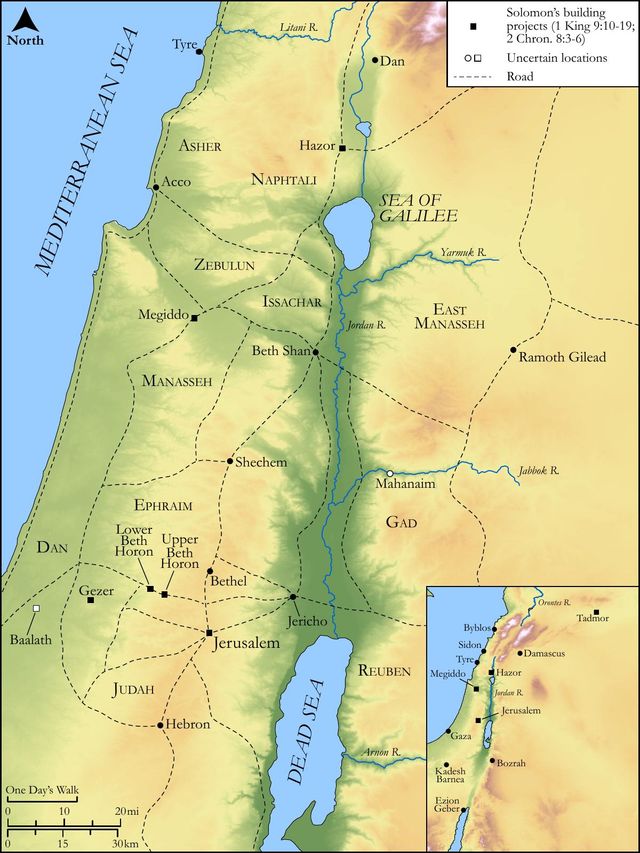
See on the biblical-era map
Study this verse
Public-domain commentary
Matthew Henry
From his Commentary on the Whole Bible. Henry comments on passages, not single verses — this entry covers 2 Chronicles 8:1–11. His two-level outline is real structure in the source text, so it is rendered as structure.
This we had Kg1 9:10-24, and therefore shall only observe here,
I.Though Solomon was a man of great learning and knowledge, yet he spent his days, not in contemplation, but in action, not in his study, but in his country, in building cities and fortifying them, in a time of peace preparing for a time of war, which is as much a man's business as it is in summer to provide food for winter.
II.As he was a man of business himself, and did not consult his own ease, so he employed a great many hands, kept abundance of people to work.
It is the interest of a state by all means possible to promote and encourage industry, and to keep its subjects from idleness. A great many strangers there were in Israel, many that remained of the Canaanites; and they were welcome to live there, but not to live and do nothing. The men of Laish, who had no business, were an easy prey to the invaders, Jdg 18:7.
III.When Solomon had begun with building the house of God, and made good work and quick work of that, he prospered in all his undertakings, so that he built all that he desired to build, Ch2 8:6. Those who have a genius for building find that one project draws on another, and the latter must amend and improve the former. Now observe,
1.How the divine providence gratified even Solomon's humour, and gave him success, not only in all that he needed to build and that it was for his advantage to build, but in all that he had a mind to build. So indulgent a Father God is sometimes to the innocent desires of his children that serve him. Thus he pleased Jacob with that promise, Joseph shall put his hand on thy eyes.
2.Solomon knew how to set bounds to his desires. He was not one of those that enlarge them endlessly, and can never be satisfied, but knew when to draw in; for he finished all he desired, and then he desired no more. He did not sit down and fret that he had not more cities to build, as Alexander did that he had not more worlds to conquer, Hab 2:5.
IV.That one reason why Solomon built a palace on purpose for the queen, and removed her and her court to it, was because he thought it by no means proper that she should dwell in the house of David (Ch2 8:11), considering that that had been a place of great piety, and perhaps her house was a place of great vanity. She was proselyted, it is likely, to the Jewish religion; but it is a question whether all her servants were. Perhaps they had among them the idols of Egypt, and a great deal of profaneness and debauchery. Now, though Solomon had not zeal and courage enough to suppress and punish what was amiss there, yet he so far consulted the honour of his father's memory that he would not suffer that place to be thus profaned where the ark of God had been and where holy David had prayed many a good prayer and sung many a sweet psalm. Not that all the places where the ark had been were so holy as never to be put to a common use; for then the houses of Abinadab and Obed-edom must have been so. But the place where it had been so long, and had been so publicly attended on, was so venerable that it was not fit to be the place of so much gaiety, not to say iniquity, as was to be found, I fear, in the court that Pharaoh's daughter kept. Note, Between things sacred and things common the ancient landmarks ought to be kept up. It was an outer-court of the temple that was the court of the women.
Continue studying 2 Chronicles 8:3 across the web’s major study libraries — every link below opens this exact verse, chapter, or book on the destination site.
Read & Compare
 BibleGatewayThis verse in more than 200 translations and 70 languages.
 Bible.comThe YouVersion reader — hundreds of translations, reading plans, and highlights.
 ESV.orgCrossway's official English Standard Version reader.
 NET BibleThe NET translation with 60,000+ translators' notes on every rendering decision.
 STEP BibleTyndale House's free study tool — original text, vocabulary, and scholarly resources.
 BibliaLogos Bible Software's free web reader.
 USCCBThe New American Bible (Revised Edition) with the U.S. bishops' study notes.
Commentaries
 BibleHub CommentariesDozens of classic commentaries on this verse, gathered on one page.
 StudyLightMore than 100 commentary sets — the largest collection on the web.
 BibleRefPlain-English commentary on what this verse means, verse by verse.
 Enduring WordDavid Guzik's free commentary on this chapter, widely used by Bible teachers.
 Bible Study ToolsVerse commentary alongside Greek and Hebrew study aids.
Original Language & Research
- BibleHub InterlinearThe verse word by word — original language, transliteration, and English.
- BibleHub LexiconEvery word's original-language definition and Strong's entry.
 Blue Letter BibleDeep-study tools — Strong's numbers, concordance, and word studies.
 SefariaThe Hebrew text with Rashi and centuries of Jewish commentary.
Sermons, Hymns & Audio


TrulyRandomVerse is not affiliated with these sites and doesn’t control their content. They’re linked because they’re genuinely useful.
Summary
2 Chronicles 8:3 concisely records King Solomon's strategic assertion of authority over Hamathzobah, a significant region located far to the north of Israel. This verse, often overlooked amidst accounts of his wisdom and building projects, underscores the active measures Solomon took to secure the kingdom's extensive borders and vital trade routes, thereby contributing directly to the unparalleled peace, prosperity, and stability that characterized his divinely blessed reign. It highlights that Solomon's dominion was not merely a passive inheritance but was actively maintained through decisive strategic action.
Context
ShowHideLiterary Context
This verse is strategically placed within the Chronicler's narrative, following the detailed accounts of the completion and dedication of the Temple and Solomon's own palace (as recounted in 2 Chronicles 7:11). Having established Solomon's devotion to God through these monumental architectural achievements, the Chronicler now shifts focus to the practical outworking of his divinely ordained reign. Chapter 8 begins by summarizing Solomon's extensive building programs across his kingdom, including fortifications and store cities (verses 1-6). The mention of Hamathzobah in verse 3 serves as a crucial interjection, demonstrating the geographical reach and the security measures that underpinned the kingdom's internal peace and prosperity. It clarifies that Solomon's reign, while renowned for its peace, was not one of passive tranquility but was actively maintained through strategic control and the assertion of authority over potential threats and vital territories. This action is a testament to the comprehensive nature of God's blessing, encompassing both spiritual devotion and geopolitical strength.
Historical & Cultural Context
Hamathzobah refers to the combined region of Hamath and Zobah, two prominent Aramean kingdoms situated in what is modern-day Syria, significantly north of Israel's traditional borders. Zobah, in particular, had historically been a formidable adversary to Israel, notably engaging in significant conflicts with King David (2 Samuel 8:3-8). Solomon's action against Hamathzobah was likely not a large-scale military conquest in the traditional sense, but rather a decisive assertion of dominion, control, or the establishment of a strategic outpost, possibly through a combination of military pressure, diplomacy, or the construction of fortified cities in the region. This area was critically important for controlling lucrative international trade routes that traversed north-south, connecting the powerful empires of Mesopotamia with Egypt and the Mediterranean coast. By "prevailing" against Hamathzobah, Solomon effectively secured Israel's northern frontier, neutralized potential threats, and ensured the free flow of goods, tribute, and communication, which were indispensable for the immense wealth and stability that defined his kingdom.
Key Themes
ShowHideThis concise verse significantly contributes to several overarching themes within the book of Chronicles and the broader Solomonic narrative. Firstly, it powerfully illustrates Solomon's Dominion and Strength, reminding the reader that his reign, while primarily celebrated for wisdom and peace, was firmly supported by the necessary military and political power to maintain control over a vast and influential empire. This demonstrates the comprehensive nature of God's blessing upon his kingship, enabling him to fulfill his role as a strong and secure ruler. Secondly, it highlights the Expansion and Security of Israel's Influence and Territory, showcasing how Solomon's kingdom reached its greatest geographical extent, thereby partially fulfilling the ancient promises of God regarding the boundaries of the land given to Abraham and his descendants (e.g., Genesis 15:18). This expansion was foundational for the vast dominion Solomon held. Lastly, the action against Hamathzobah underscores the vital theme of Securing Borders and Prosperity. By neutralizing a potential northern threat and controlling key trade arteries, Solomon ensured the internal peace and economic flourishing that characterized his golden age, allowing him to focus on internal development, the Temple, and the spiritual life of the nation without significant external distractions.
Exposition and Analysis
ShowHideKey Word Analysis
ShowHideThe name of the king, derived from the Hebrew word for "peace" (shalom), which is highly significant given the peaceful nature of his reign. While his name suggests peace, this verse demonstrates that such peace was often actively established and maintained through strategic actions, not merely a passive state. Solomon's actions, even those involving asserting control over foreign territories, were ultimately aimed at securing the peace and prosperity of his kingdom, aligning with the prophetic meaning of his name.
This verb signifies a purposeful movement or journey. In this context, "went" implies a deliberate and intentional expedition or dispatch of forces/representatives by Solomon. It is not a casual visit but a strategic undertaking aimed at achieving a specific objective in Hamathzobah. This highlights Solomon's active engagement in the governance and security of his kingdom, extending his reach beyond the immediate borders to secure vital interests.
The Hebrew verb חָזַק (châzaq) means "to be strong," "to seize," "to hold fast," "to strengthen," or "to conquer." In this specific context, it signifies a decisive and successful assertion of authority or control. It implies that Solomon did not merely visit Hamathzobah, but he established his dominion over it, overcoming any resistance or establishing a firm, unyielding influence. This could have been through military conquest, forced submission, or a powerful diplomatic maneuver backed by military might. The outcome was that Hamathzobah was brought under Israelite influence, ensuring stability and preventing it from posing a threat to Solomon's kingdom or its crucial trade routes. This word conveys a sense of firm, unyielding power and the successful execution of a strategic objective, demonstrating the strength underlying Solomon's peaceful reign.
Verse Breakdown
ShowHide"And Solomon went to Hamathzobah"
This opening clause establishes the subject (Solomon) and his deliberate action. The verb "went" (וַיֵּלֶךְ, vayyelekh) indicates a purposeful journey or expedition, implying that Solomon, or his delegated authority, undertook a strategic move towards this northern region. The destination, Hamathzobah, is key, highlighting that Solomon's administrative and security concerns extended far beyond the immediate borders of Israel, reaching into areas vital for regional stability and control of lucrative trade routes, demonstrating a proactive and expansive foreign policy.
"and prevailed against it"
This second clause describes the successful and decisive outcome of Solomon's engagement with Hamathzobah. The use of "prevailed" (וַיֶּחֱזַק, vayyeḥĕzaq from chazaq) underscores the definitive nature of the action. It means Solomon overcame any opposition, established his authority firmly, and brought the region under his control or influence. This outcome was crucial for securing the northern frontier, ensuring the safety of trade routes, and contributing significantly to the overall peace and prosperity of his vast kingdom. It signifies the successful extension of Israelite power and the effective consolidation of Solomon's empire, showcasing his strength and God's enabling hand.
Literary Devices
ShowHideThe Chronicler's account of Solomon's action in 2 Chronicles 8:3 masterfully employs Narrative Economy and Understatement. The verse is remarkably concise, summarizing a significant military or political achievement in a single, brief statement. Unlike the often-detailed accounts of David's campaigns, the Chronicler chooses to present Solomon's "prevailing" against Hamathzobah without elaborate descriptions of battles, negotiations, or the specific means by which this control was established. This brevity serves to emphasize the ease and completeness of Solomon's authority and the divine favor that attended his reign. It suggests that Solomon's power was so formidable, and his reign so blessed, that such a vital strategic objective could be achieved with minimal narrative effort, highlighting the peace and stability that were the hallmarks of his era rather than the means by which they were achieved. The swift declaration of "prevailed against it" also functions as a Statement of Fact, presenting Solomon's dominion as an established, uncontested reality rather than a contested struggle, reinforcing the Chronicler's theme of God's blessing on the Davidic line.
Theological and Thematic Connections
ShowHideSolomon's action in 2 Chronicles 8:3, though a brief historical note, carries profound theological weight. It demonstrates the practical outworking of God's covenant promises to Israel concerning the extent of their land and the prosperity of their king. While Solomon's reign is often idealized as one of unparalleled peace and wisdom, this verse reminds us that divine blessing also empowered him to exercise necessary strength and strategic governance to secure the kingdom. It illustrates that true peace, especially in a fallen world, often requires the establishment and maintenance of secure boundaries, both physical and spiritual. This proactive securing of borders ensured the stability required for the flourishing of the Temple worship, the nation's spiritual life, and its unprecedented economic prosperity. It underscores that God's blessing is holistic, encompassing both spiritual devotion and the practical means to maintain order and security.
Reflection and Application
ShowHideSolomon's strategic "prevailing" against Hamathzobah offers a powerful and enduring lesson on the importance of actively securing and maintaining boundaries for true well-being and flourishing, both individually and corporately. In our spiritual lives, this translates to the imperative for vigilance and decisive action against influences that threaten our peace, faith, or integrity. Just as Solomon ensured the security of his kingdom's physical borders, believers are called to "prevail" against spiritual opposition by standing firm in the truth, relying on God's strength, and discerningly protecting their spiritual and personal spheres. This might involve setting healthy boundaries in relationships, guarding our minds against ungodly influences, actively resisting temptations that seek to erode our commitment to Christ, or courageously confronting injustice. Even in times of apparent peace and blessing, this verse reminds us that spiritual diligence, courageous action, and proactive faith are often necessary to preserve the blessings God has given us and to maintain order and righteousness in our lives and communities. It's a call to active stewardship of our spiritual inheritance, not passive resignation in the face of challenges.
Questions for Reflection
ShowHideFAQ
ShowHideWhy is a military action like this mentioned in a book that often emphasizes Solomon's peace and wisdom?
ShowHideWhile Solomon's reign is indeed celebrated for its unprecedented peace and wisdom, 2 Chronicles 8:3 serves as a crucial reminder that this peace was not merely a passive state but was actively secured and maintained through strategic governance and, when necessary, the assertion of military or political power. The Chronicler highlights this action to demonstrate the full extent of God's blessing on Solomon, which enabled him to not only build the magnificent Temple and rule wisely but also to consolidate and protect his vast kingdom. By "prevailing" against Hamathzobah, Solomon secured vital northern trade routes and eliminated potential threats, thereby creating the very conditions of stability and prosperity for which his reign is remembered. This verse underscores that true peace often requires strength and vigilance, ensuring that the kingdom's borders were secure and its wealth could flow unimpeded, as also implied by the vastness of Solomon's dominion. It shows that God's blessing equips His chosen leaders with all that is necessary to fulfill their roles.
Christ-Centered Fulfillment
ShowHideSolomon's "prevailing" against Hamathzobah, emblematic of his earthly dominion and the security he brought to Israel, ultimately points to the far greater and eternal reign of Jesus Christ. Solomon, the son of David, established a kingdom of peace through wisdom and strength, securing physical borders and ensuring prosperity. However, his reign was temporary, and his peace was always vulnerable to external threats and internal sin. Jesus, the true Son of David and the promised Messiah, is the ultimate King who "prevailed" not against an earthly kingdom or a geopolitical foe, but against the powers of sin, death, and the devil. His decisive victory was achieved not through military might, but through His sacrificial death on the cross and His glorious resurrection, triumphing over spiritual adversaries (as seen in Colossians 2:15). The peace and security Solomon brought were limited and temporal; the peace Christ offers is eternal, spiritual, and comprehensive, a reign over hearts and lives that knows no bounds (prophesied in Isaiah 9:6-7). Just as Solomon secured the physical promised land, Christ establishes an everlasting spiritual kingdom, liberating His people from the bondage of sin and death and leading them into an eternal inheritance. He is the Lamb of God who takes away the sin of the world (John 1:29), and the Lion of the tribe of Judah who has "prevailed" to open the scroll and execute God's plan of redemption (Revelation 5:5). His dominion is not merely over a region, but over all creation, an eternal reign of righteousness, peace, and unfathomable grace.