


2 Chronicles 5:6
Bible text: King James Version (1769 Blayney text) · Public domain
Bible text: King James Version with Strong's numbers · Public domain
Bible text: Berean Standard Bible · Public domain
Bible text: American Standard Version (1901) · Public domain
Bible text: World English Bible, Messianic edition · Public domain
Bible text: Geneva Bible (1599) · Public domain
Bible text: Young's Literal Translation · Public domain
- וְהַמֶּלֶךְve·ha·Me·lekhand the kingH4428Conj-w ¦ Art ¦ N-msNoun Singular Masculine Absoluteוְandהַtheמֶּלֶךְking
- שְׁלֹמֹהshe·lo·MohSolomonH8010N-proper-mNoun Proper Masculine
- וְכָלve·kholand allH3605Conj-w ¦ N-mscNoun Singular Masculine Constructוְandכָלall
- עֲדַת'a·Dat[the] congregation ofH5712N-fscNoun Singular Feminine Construct
- יִשְׂרָאֵלYis·ra·'ElIsraelH3478N-properNoun Proper Location
- הַנּוֹעָדִיםha·no·'a·Dimwho were gatheredH3259Art ¦ V-Niphal-Prtcpl-mpVerb Niphal Participle Plural Masculine Absoluteהַwhoנּוֹעָדִיםwere gathered
- עָלָיו'a·Lavwith himH5921Prep ¦ 3msPrepositionעָלָיwithוhim
- לִפְנֵיlif·Nei<to> beforeH6440Prep-l ¦ N-mpcNoun Plural Masculine Constructלִ<to>פְנֵיbefore
- הָאָרוֹןha·'a·Ronthe arkH727Art ¦ N-msNoun Singular Masculine Absoluteהָtheאָרוֹןark
- מְזַבְּחִיםme·za·be·Chim[were] sacrificingH2076V-Piel-Prtcpl-mpVerb Piel Participle Plural Masculine Absolute
- צֹאןtzonsheepH6629N-csNoun Singular common gender Absolute
- וּבָקָרu·va·Karand cattleH1241Conj-w ¦ N-csNoun Singular common gender Absoluteוּandבָקָרcattle
- אֲשֶׁר'a·SherwhichH834RelParticle Relative
- לֹאlo'notH3808NegParticle Negative
- יִסָּפְרוּyi·sa·fe·Ruthey were countedH5608V-Niphal-Imperf-3mpVerb Niphal Imperfect 3rd Plural Masculine
- וְלֹאve·Lo'and notH3808Conj-w ¦ NegParticle Negativeוְandלֹאnot
- יִמָּנוּyi·ma·Nuthey were numberedH4487V-Niphal-Imperf-3mpVerb Niphal Imperfect 3rd Plural Masculine
- מֵרֹבme·Rofrom multitudeH7230Prep-m ¦ N-msNoun Singular Masculine Absoluteמֵfromרֹבmultitude
English is a literal word-by-word gloss of the Hebrew, not the KJV's wording. Why?
This is the original text the KJV's translators worked from — each Hebrew word with its own literal English meaning in this verse, prepared by scholars at Tyndale House, Cambridge. The KJV translates whole sentences, not word by word, so its wording differs: one Hebrew word can become several English words, and the KJV may choose “the LORD” where the gloss reads “Yahweh”. Both are faithful — they answer different questions. For the KJV's own rendering, switch to the KJV text.
Details
See on the biblical-era maps
Study this verse
Public-domain commentary
Matthew Henry
From his Commentary on the Whole Bible. Henry comments on passages, not single verses — this entry covers 2 Chronicles 5:1–10.
This agrees with what we had Kg1 8:2, etc., where an account was given of the solemn introduction of the ark into the new-erected temple. 1. There needed no great solemnity for the bringing in of the dedicated things, Ch2 5:1. They added to the wealth, and perhaps were so disposed as to add to the beauty of it; but they could not add to the holiness, for it was the temple that sanctified the gold, Mat 23:17. See how just Solomon was both to God and to his father. Whatever David had dedicated to God, however much he might have liked it himself, he would by no means alienate it, but put it among the treasures of the temple. Those children that would inherit their godly parents' blessing must religiously pursue their pious intentions and not defeat them. When Solomon had made all the vessels of the temple in abundance (Ch2 4:18), many of the materials were left, which he would not convert to any other use, but laid up in the treasury for a time of need. Dedicated things must not be alienated. It is sacrilege to do it. 2. But it was fit that the ark should be brought in with great solemnity; and so it was. All the other vessels were made new, and larger, in proportion to the house, than they had been in the tabernacle. But the ark, with the mercy-seat and the cherubim, was the same; for the presence and the grace of God are the same in little assemblies that they are in large ones, in the poor condition of the church that they are in its prosperous estate. Wherever two or three are gathered together in Christ's name there is he as truly present with them as if there were 2000 or 3000. The ark was brought in attended by a very great assembly of the elders of Israel, who came to grace and solemnity; and a very sumptuous appearance no doubt they made, Ch2 5:2-4. It was carried by the priests (Ch2 5:7), brought into the most holy place, and put under the wings of the great cherubim which Solomon had set up there, Ch2 5:7, Ch2 5:8. There they are unto this day (Ch2 5:9), not the day when this book was written after the captivity, but when that was written out of which this story was transcribed. Or they were there (so it might be read) unto this day, the day of Jerusalem's desolations, that fatal day, Psa 137:7. The ark was a type of Christ, and, as such, a token of the presence of God. That gracious promise, Lo, I am with you always, even unto the end of the world, does in effect bring the ark into our religious assemblies if we by faith and prayer put that promise in suit; and this we should be most solicitous and earnest for. Lord, if thy presence go not up with us, wherefore should we go up? The temple itself, if Christ leave it, is a desolate place, Mat 23:38. 3. With the ark they brought up the tabernacle and all the holy vessels that were in the tabernacle, Ch2 5:5. Those were not alienated, because they had been dedicated to God, were not altered or melted down for the new work, though there was no need of them; but they were carefully laid up as monuments of antiquity, and probably as many of the vessels as were fit for use were still used. 4. This was done with great joy. They kept a holy feast upon the occasion (Ch2 5:3), and sacrificed sheep and oxen without number, Ch2 5:6. Note, (1.) The establishment of the public worship of God according to his institution, and with the tokens of his presence, is, and ought to be, matter of great joy to any people. (2.) When Christ is formed in a soul, the law written in the heart, the ark of the covenant settled there, so that it becomes the temple of the Holy Ghost, there is true satisfaction in that soul. (3.) Whatever we have the comfort of we must, by the sacrifice of praise, give God the glory of, and not be straitened therein; for with such sacrifices God is well pleased. If God favour us with his presence, we must honour him with our services, the best we have.
Continue studying 2 Chronicles 5:6 across the web’s major study libraries — every link below opens this exact verse, chapter, or book on the destination site.
Read & Compare
 BibleGatewayThis verse in more than 200 translations and 70 languages.
 Bible.comThe YouVersion reader — hundreds of translations, reading plans, and highlights.
 ESV.orgCrossway's official English Standard Version reader.
 NET BibleThe NET translation with 60,000+ translators' notes on every rendering decision.
 STEP BibleTyndale House's free study tool — original text, vocabulary, and scholarly resources.
 BibliaLogos Bible Software's free web reader.
 USCCBThe New American Bible (Revised Edition) with the U.S. bishops' study notes.
Commentaries
 BibleHub CommentariesDozens of classic commentaries on this verse, gathered on one page.
 StudyLightMore than 100 commentary sets — the largest collection on the web.
 BibleRefPlain-English commentary on what this verse means, verse by verse.
 Enduring WordDavid Guzik's free commentary on this chapter, widely used by Bible teachers.
 Bible Study ToolsVerse commentary alongside Greek and Hebrew study aids.
Original Language & Research
- BibleHub InterlinearThe verse word by word — original language, transliteration, and English.
- BibleHub LexiconEvery word's original-language definition and Strong's entry.
 Blue Letter BibleDeep-study tools — Strong's numbers, concordance, and word studies.
 SefariaThe Hebrew text with Rashi and centuries of Jewish commentary.
Sermons, Hymns & Audio


TrulyRandomVerse is not affiliated with these sites and doesn’t control their content. They’re linked because they’re genuinely useful.
Summary
Second Chronicles 5:6 vividly portrays the culmination of the Temple's dedication, an event of immense national significance. King Solomon, alongside the entire assembly of Israel, offered an immeasurable quantity of sheep and oxen as sacrifices before the Ark of the Covenant. This unparalleled act of devotion underscored the profound sacredness of God's dwelling among His people, expressed the nation's overflowing gratitude and commitment to the covenant, and marked the solemn inauguration of the Temple as the central locus of worship in Israel.
Context
ShowHideLiterary Context
This verse is strategically placed at the zenith of the Temple dedication narrative within 2 Chronicles, following the detailed accounts of its construction and furnishing in chapters 2-4. Specifically, 2 Chronicles 5 begins with the completion of the architectural work and the ceremonial transfer of the holy vessels, culminating in the bringing of the Ark of the Covenant from the City of David into the newly built sanctuary. Verse 6 describes the colossal sacrificial offerings made by Solomon and the assembled nation prior to the Ark's final placement in the Most Holy Place and before the glorious manifestation of the Lord's presence filled the Temple (as recounted in 2 Chronicles 5:7-14). It serves as a monumental prelude, emphasizing the profound act of national worship and consecration that precedes and sets the stage for God's divine affirmation and indwelling.
Historical & Cultural Context
The dedication of Solomon's Temple represented arguably the most pivotal religious and political event in Israel since the Exodus and the establishment of the Tabernacle at Sinai. As with the Tabernacle in the wilderness, whose altar was dedicated with the offerings of the princes of Israel, the consecration of a major sanctuary was a grand public occasion involving extensive sacrifices. For Israel, these sacrifices, particularly burnt offerings and peace offerings, were not mere rituals but deeply significant acts of worship, atonement, and communion with Yahweh. The extraordinary scale of offerings detailed in 2 Chronicles 5:6 reflects not only the immense wealth and resources of Solomon's flourishing kingdom but also the fervent national devotion surrounding the establishment of a permanent, magnificent dwelling place for God's presence, replacing the portable Tabernacle. The Ark of the Covenant, as the preeminent symbol of God's throne and covenantal presence, was the undisputed focal point of this worship, signifying the renewal and affirmation of the covenant relationship between Yahweh and His chosen people.
Key Themes
ShowHideThe passage powerfully highlights several foundational themes. Firstly, the magnificence and scale of worship are vividly portrayed through the "multitude" of sacrifices, symbolizing the nation's overwhelming devotion and the unparalleled significance of the event. This echoes the grandeur of the Temple itself and the prosperity of Solomon's reign, demonstrating a desire to honor God in a manner commensurate with His majesty. Secondly, divine presence and covenant fidelity are central, as the sacrifices are offered "before the ark," the tangible symbol of God's dwelling among His people and the locus of His covenant promises, as seen in Exodus 25:22. The Temple's dedication was a profound act of covenant renewal and an affirmation of God's unwavering faithfulness. Thirdly, Solomonic leadership is prominently underscored, with King Solomon leading the entire congregation in this monumental act of worship, fulfilling his divinely appointed role as the spiritual and political head of the nation, much like Moses before him. Finally, the phrase "all the congregation of Israel that were assembled unto him" emphasizes national unity in worship, bringing together the diverse tribes under a common purpose of honoring God and establishing His dwelling place in Jerusalem, a theme central to the Chronicler's theological narrative, also found throughout 1 Kings 8.
Exposition and Analysis
ShowHideKey Word Analysis
ShowHideThis verb (H2076) denotes the act of slaughtering an animal, typically for a religious purpose, specifically as an offering to God. In the context of the Temple dedication, these would have included various types of offerings, such as burnt offerings (olah), which were entirely consumed on the altar as an act of complete devotion and atonement, and peace offerings (shelamim), which allowed the worshipper to partake in a communal meal with God, signifying fellowship and thanksgiving. The sheer volume of sacrifices indicates both a comprehensive act of national atonement and a massive celebration of communion with God.
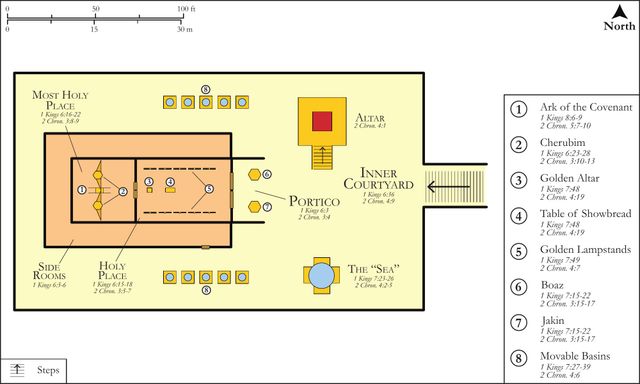
Specifically, the Ark of the Covenant (H727). This sacred chest was the most important artifact in Israelite worship, symbolizing God's presence, His divine throne, and the covenant relationship between Yahweh and Israel. It contained the tablets of the Law, Aaron's rod, and a pot of manna. Sacrificing "before the ark" meant offering worship directly in the symbolic presence of God, emphasizing the sanctity of the act and the divine approval sought for the newly consecrated Temple and its dedication.
This word (H7230) signifies an abundance, a great quantity, or a vast number in any respect. The phrase "could not be told nor numbered for multitude" (לָרֹב לֹא יִסָּפֵר וְלֹא יִמָּנֶה) is a hyperbolic expression used to convey an immeasurable quantity, far exceeding any typical offering. It underscores the extraordinary scale of the event, reflecting the nation's overwhelming devotion and the immense resources dedicated to honoring God at this pivotal moment in Israel's history.
Verse Breakdown
ShowHide"Also king Solomon, and all the congregation of Israel that were assembled unto him"
This clause highlights the unified leadership and collective participation in this monumental act of worship. King Solomon, as the divinely appointed monarch, leads the entire nation, demonstrating the spiritual and political unity of Israel under his reign. The assembly of "all the congregation" (H5712, ʻêdâh'), meaning a stated assemblage or concourse, signifies a national consensus and widespread participation in the dedication of God's dwelling place.
"before the ark"
This specifies the sacred location and focal point of the sacrifices. The Ark of the Covenant (H727, ʼârôwn'), having just been brought into the Temple, serves as the symbolic presence of God (H6440, pânîym' for "before" in the sense of face/presence). Offering sacrifices "before" it emphasizes that the worship was directed to God Himself, acknowledging His sovereignty and inviting His blessing upon the newly consecrated sanctuary.
"sacrificed sheep and oxen"
This identifies the types of animals offered, which were common sacrificial animals in Israelite worship. Sheep (H6629, tsôʼn') and oxen (H1241, bâqâr') were used for various offerings, including burnt offerings (for atonement and complete devotion) and peace offerings (for fellowship and thanksgiving). The mention of both types of animals suggests a comprehensive act of worship encompassing different aspects of the covenant relationship.
"which could not be told nor numbered for multitude"
This concluding phrase is a powerful hyperbolic description emphasizing the sheer, incalculable quantity of animals sacrificed. The verbs "told" (H5608, çâphar') and "numbered" (H4487, mânâh') both convey enumeration. It conveys an overwhelming abundance (H7230, rôb'), signifying the extraordinary devotion, generosity, and national fervor associated with the Temple's dedication. It implies that the offerings were so numerous they defied human counting, reflecting the unparalleled significance of the event in Israel's history.
Literary Devices
ShowHideThe primary literary device employed in 2 Chronicles 5:6 is Hyperbole. The phrase "which could not be told nor numbered for multitude" is a deliberate exaggeration intended to emphasize the extraordinary scale and overwhelming abundance of the sacrifices. It is not meant to be taken literally as an impossible quantity, but rather to convey the immense devotion and resources poured into this singular act of national worship. This hyperbole serves to impress upon the reader the grandeur and significance of the Temple dedication, underscoring the deep reverence and commitment of Solomon and the entire congregation of Israel. Additionally, there is a strong element of Symbolism present, with the Ark representing God's immediate presence and the sacrifices themselves symbolizing atonement, devotion, and communion with the Divine. The collective action of "all the congregation of Israel" also highlights Unity and corporate worship.
Theological and Thematic Connections
ShowHideThe immense scale of sacrifices in 2 Chronicles 5:6 speaks volumes about the Israelite understanding of worship, covenant, and God's desire to dwell among them. It illustrates that true devotion often involves costly giving, reflecting the profound value placed on God's presence and the fervent desire for His favor. This act was not merely ritualistic but a profound expression of national gratitude, repentance, and unwavering commitment to the covenant relationship. The "uncountable" offerings highlight the overflowing joy and reverence of a people celebrating the culmination of God's promise to dwell with them, establishing a permanent, magnificent center for His worship. This unparalleled act of devotion foreshadows the ultimate, immeasurable sacrifice that would one day be offered for the sins of the world, far surpassing any animal offering in its efficacy and scope.
Reflection and Application
ShowHideThe scene in 2 Chronicles 5:6 presents a powerful and challenging image of wholehearted, extravagant worship. The "multitude" of sacrifices, beyond counting, speaks to a devotion that held nothing back in honoring God at the inauguration of His dwelling place. For us today, while animal sacrifices are no longer required under the New Covenant, the underlying principle of giving our "uncountable" best to God remains profoundly relevant. This isn't limited to financial contributions but extends to the offering of our time, talents, spiritual gifts, and indeed, our entire lives as "living sacrifices" (Romans 12:1). It challenges us to consider if our worship, both individually and corporately, reflects a similar depth of gratitude, awe, and commitment to God's manifest presence in our lives. Do we approach worship with a sense of its profound significance, holding back nothing, or do we offer merely what is convenient or comfortable? The example of Solomon and Israel calls us to a worship that is generous, unified, and truly centered on God's glorious presence and His worthiness of our utmost devotion.
Questions for Reflection
ShowHideFAQ
ShowHideWhy were so many animals sacrificed during the Temple dedication?
ShowHideThe immense number of animals sacrificed, described as "could not be told nor numbered for multitude," served several crucial purposes, reflecting the unparalleled significance of the Temple dedication. Firstly, it signified the extraordinary magnitude and importance of the event, establishing God's permanent dwelling place among His people. Such a lavish offering was commensurate with the glory of God and the prosperity of Solomon's reign. Secondly, the sacrifices included both burnt offerings (for atonement and complete devotion) and peace offerings (for fellowship and thanksgiving). The sheer volume ensured comprehensive atonement for the nation's sins and allowed for a massive communal celebration and feasting, symbolizing renewed covenant relationship and deep communion with God. Finally, it demonstrated the nation's overwhelming gratitude and devotion, reflecting a desire to honor God with an offering that surpassed all previous acts of worship, as also noted in 1 Kings 8:63.
What was the significance of sacrificing "before the ark"?
ShowHideSacrificing "before the ark" was of paramount significance because the Ark of the Covenant was the most sacred object in Israelite worship, symbolizing the very presence and throne of God among His people. It contained the tablets of the Law, representing God's covenant with Israel. By offering these vast sacrifices directly "before the ark," Solomon and the congregation were performing their worship in the immediate, tangible presence of God. This act underscored that the Temple was indeed God's dwelling place, and the sacrifices were a direct act of worship and communion with Yahweh Himself. It was an affirmation of God's covenant faithfulness and an appeal for His continued blessing and presence in the newly consecrated sanctuary, making the Ark the focal point of their national devotion, echoing God's promise to meet with His people there, as stated in Exodus 25:22.
Christ-Centered Fulfillment
ShowHideThe immense, uncountable sacrifices offered by King Solomon and all Israel before the Ark of the Covenant during the Temple dedication in 2 Chronicles 5:6 point profoundly to the ultimate, once-for-all sacrifice of Jesus Christ. The multitude of sheep and oxen, though vast and impressive, were but temporary and imperfect offerings, requiring constant repetition for atonement and fellowship. They served as a shadow, foreshadowing the coming of the true Lamb of God, who takes away the sin of the world. Jesus' sacrifice on the cross was not merely numerous but infinitely sufficient, a single, perfect offering that completely and eternally atones for sin and perfects those who are being sanctified (see Hebrews 10:10-14). Furthermore, while the Israelites gathered "before the ark" to encounter God's presence in a physical temple, believers in Christ now have direct and confident access to God's presence through His shed blood, entering the spiritual "Most Holy Place" by a new and living way that He opened for us through the veil, that is, His flesh (Hebrews 10:19-22). The physical Temple, with its animal sacrifices and the Ark as its focal point, has been superseded by Christ Himself, who is the true Temple (John 2:19-21) and through whom we, as the temple of the Holy Spirit, are now called to offer spiritual sacrifices of praise and good deeds that are pleasing to God (Hebrews 13:15-16).