


2 Chronicles 5:7
Bible text: King James Version (1769 Blayney text) · Public domain
Bible text: King James Version with Strong's numbers · Public domain
Bible text: Berean Standard Bible · Public domain
Bible text: American Standard Version (1901) · Public domain
Bible text: World English Bible, Messianic edition · Public domain
Bible text: Geneva Bible (1599) · Public domain
Bible text: Young's Literal Translation · Public domain
- וַיָּבִיאוּvai·ya·Vi·'uand they broughtH935Conj-w ¦ V-Hiphil-ConsecImperf-3mpVerb Hiphil Consecutive Imperfect 3rd Plural Masculineוַandיָּבִיאוּthey brought
- הַכֹּהֲנִיםHa·ko·ha·nimthe priestsH3548Art ¦ N-mpNoun Plural Masculine Absoluteהַtheכֹּהֲנִיםpriests
- אֶת'et<obj.>H853DirObjMParticle Object Indicator
- אֲרוֹן'a·Ron[the] ark ofH727N-mscNoun Singular Masculine Construct
- בְּרִיתbe·rit[the] covenant ofH1285N-fscNoun Singular Feminine Construct
- יְהוָהYah·wehYahwehH3068N-properNoun Proper Title
- אֶל'eltoH413PrepPreposition
- מְקוֹמוֹme·ko·Moits placeH4725N-msc ¦ 3msNoun Singular Masculine Constructמְקוֹמplaceוֹits
- אֶל'eltoH413PrepPreposition
- דְּבִירde·Vir[the] innermost room ofH1687N-mscNoun Singular Masculine Construct
- הַבַּיִתha·Ba·yitthe houseH1004Art ¦ N-msNoun Singular Masculine Absoluteהַtheבַּיִתhouse
- אֶל'eltoH413PrepPreposition
- קֹדֶשׁKo·desh[the] holy place ofH6944N-mscNoun Title Singular Masculine Construct
- הַקְּדָשִׁיםha·ke·da·Shimthe holy placesH6944Art ¦ N-mpNoun Title Plural Masculine Absoluteהַtheקְּדָשִׁיםholy places
- אֶל'eltoH413PrepPreposition
- תַּחַתTa·chatunderH8478N-mscNoun Singular Masculine Construct
- כַּנְפֵיkan·Fei[the] wings ofH3671N-fdcNoun Dual Feminine Construct
- הַכְּרוּבִיםha·ke·ru·Vimthe cherubimH3742Art ¦ N-mpNoun Plural Masculine Absoluteהַtheכְּרוּבִיםcherubim
English is a literal word-by-word gloss of the Hebrew, not the KJV's wording. Why?
This is the original text the KJV's translators worked from — each Hebrew word with its own literal English meaning in this verse, prepared by scholars at Tyndale House, Cambridge. The KJV translates whole sentences, not word by word, so its wording differs: one Hebrew word can become several English words, and the KJV may choose “the LORD” where the gloss reads “Yahweh”. Both are faithful — they answer different questions. For the KJV's own rendering, switch to the KJV text.
Details
See on the biblical-era maps
Study this verse
Public-domain commentary
Matthew Henry
From his Commentary on the Whole Bible. Henry comments on passages, not single verses — this entry covers 2 Chronicles 5:1–10.
This agrees with what we had Kg1 8:2, etc., where an account was given of the solemn introduction of the ark into the new-erected temple. 1. There needed no great solemnity for the bringing in of the dedicated things, Ch2 5:1. They added to the wealth, and perhaps were so disposed as to add to the beauty of it; but they could not add to the holiness, for it was the temple that sanctified the gold, Mat 23:17. See how just Solomon was both to God and to his father. Whatever David had dedicated to God, however much he might have liked it himself, he would by no means alienate it, but put it among the treasures of the temple. Those children that would inherit their godly parents' blessing must religiously pursue their pious intentions and not defeat them. When Solomon had made all the vessels of the temple in abundance (Ch2 4:18), many of the materials were left, which he would not convert to any other use, but laid up in the treasury for a time of need. Dedicated things must not be alienated. It is sacrilege to do it. 2. But it was fit that the ark should be brought in with great solemnity; and so it was. All the other vessels were made new, and larger, in proportion to the house, than they had been in the tabernacle. But the ark, with the mercy-seat and the cherubim, was the same; for the presence and the grace of God are the same in little assemblies that they are in large ones, in the poor condition of the church that they are in its prosperous estate. Wherever two or three are gathered together in Christ's name there is he as truly present with them as if there were 2000 or 3000. The ark was brought in attended by a very great assembly of the elders of Israel, who came to grace and solemnity; and a very sumptuous appearance no doubt they made, Ch2 5:2-4. It was carried by the priests (Ch2 5:7), brought into the most holy place, and put under the wings of the great cherubim which Solomon had set up there, Ch2 5:7, Ch2 5:8. There they are unto this day (Ch2 5:9), not the day when this book was written after the captivity, but when that was written out of which this story was transcribed. Or they were there (so it might be read) unto this day, the day of Jerusalem's desolations, that fatal day, Psa 137:7. The ark was a type of Christ, and, as such, a token of the presence of God. That gracious promise, Lo, I am with you always, even unto the end of the world, does in effect bring the ark into our religious assemblies if we by faith and prayer put that promise in suit; and this we should be most solicitous and earnest for. Lord, if thy presence go not up with us, wherefore should we go up? The temple itself, if Christ leave it, is a desolate place, Mat 23:38. 3. With the ark they brought up the tabernacle and all the holy vessels that were in the tabernacle, Ch2 5:5. Those were not alienated, because they had been dedicated to God, were not altered or melted down for the new work, though there was no need of them; but they were carefully laid up as monuments of antiquity, and probably as many of the vessels as were fit for use were still used. 4. This was done with great joy. They kept a holy feast upon the occasion (Ch2 5:3), and sacrificed sheep and oxen without number, Ch2 5:6. Note, (1.) The establishment of the public worship of God according to his institution, and with the tokens of his presence, is, and ought to be, matter of great joy to any people. (2.) When Christ is formed in a soul, the law written in the heart, the ark of the covenant settled there, so that it becomes the temple of the Holy Ghost, there is true satisfaction in that soul. (3.) Whatever we have the comfort of we must, by the sacrifice of praise, give God the glory of, and not be straitened therein; for with such sacrifices God is well pleased. If God favour us with his presence, we must honour him with our services, the best we have.
Continue studying 2 Chronicles 5:7 across the web’s major study libraries — every link below opens this exact verse, chapter, or book on the destination site.
Read & Compare
 BibleGatewayThis verse in more than 200 translations and 70 languages.
 Bible.comThe YouVersion reader — hundreds of translations, reading plans, and highlights.
 ESV.orgCrossway's official English Standard Version reader.
 NET BibleThe NET translation with 60,000+ translators' notes on every rendering decision.
 STEP BibleTyndale House's free study tool — original text, vocabulary, and scholarly resources.
 BibliaLogos Bible Software's free web reader.
 USCCBThe New American Bible (Revised Edition) with the U.S. bishops' study notes.
Commentaries
 BibleHub CommentariesDozens of classic commentaries on this verse, gathered on one page.
 StudyLightMore than 100 commentary sets — the largest collection on the web.
 BibleRefPlain-English commentary on what this verse means, verse by verse.
 Enduring WordDavid Guzik's free commentary on this chapter, widely used by Bible teachers.
 Bible Study ToolsVerse commentary alongside Greek and Hebrew study aids.
Original Language & Research
- BibleHub InterlinearThe verse word by word — original language, transliteration, and English.
- BibleHub LexiconEvery word's original-language definition and Strong's entry.
 Blue Letter BibleDeep-study tools — Strong's numbers, concordance, and word studies.
 SefariaThe Hebrew text with Rashi and centuries of Jewish commentary.
Sermons, Hymns & Audio


TrulyRandomVerse is not affiliated with these sites and doesn’t control their content. They’re linked because they’re genuinely useful.
Summary
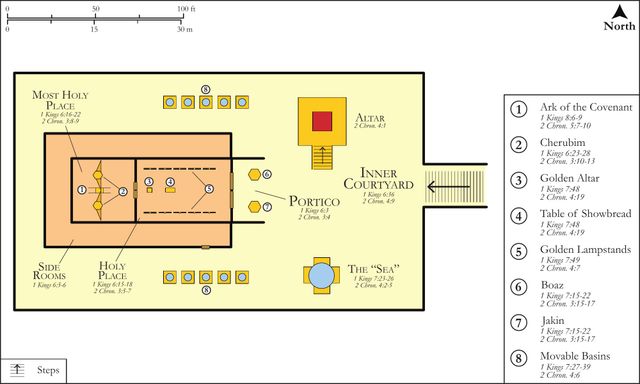
This verse encapsulates the climactic moment of the Ark of the Covenant's ceremonial placement into its permanent dwelling within the Holy of Holies of Solomon's newly consecrated Temple in Jerusalem. This sacred act marked the culmination of centuries of the Ark's nomadic existence, formally establishing God's tangible dwelling among His people in a fixed, glorious structure and signifying the profound spiritual significance of the Temple's dedication as the new, central focal point of Israelite worship and divine encounter.
Context
ShowHideLiterary Context
This verse is deeply embedded within the grand narrative of Solomon's Temple dedication, specifically 2 Chronicles 5 and its parallel account in 1 Kings 8. It immediately follows the detailed description of the Levitical priests carrying the Ark from the City of David (Zion) up to the Temple, a solemn procession accompanied by immense sacrifice and national celebration. The placement of the Ark is presented as the central, culminating act of the entire dedication ceremony, directly preceding the dramatic manifestation of God's glory—a cloud so completely filling the Temple that the priests could not stand to minister (2 Chronicles 5:13-14). This precise sequence underscores the Ark's unparalleled role as the preeminent symbol of God's presence and the profound significance of its permanent installation as the spiritual climax of the dedication.
Historical & Cultural Context
Historically, the Ark of the Covenant possessed a long and often itinerant history. It resided in the Tabernacle at Shiloh for centuries, then experienced periods of capture by the Philistines (1 Samuel 4) and temporary residence in various locations before King David eventually brought it to Jerusalem (2 Samuel 6), where it remained in a tent. Solomon's monumental construction of the Temple and the Ark's permanent placement within it represented a pivotal shift for Israel, signifying their transition from a nomadic, wilderness-dwelling people to a settled kingdom with a fixed spiritual and national center. Culturally, the Temple served as the tangible symbol of God's covenant with Israel and His commitment to dwell among them, a concept given at Sinai, "let them make me a sanctuary; that I may dwell among them," and uniquely defined by Yahweh's absolute holiness, sovereign power, and specific covenant relationship with His chosen people.
Key Themes
ShowHideThis verse powerfully encapsulates several core themes central to Israelite theology and the broader biblical narrative. Foremost is Divine Presence, as the Ark was the tangible symbol of God's dwelling with His people, and its placement in the "most holy place" signified His condescension to reside in their midst. This act also profoundly emphasizes Holiness and Sanctity, underscoring God's absolute purity and the reverence required in His presence, a concept deeply rooted in the Mosaic Law, particularly concerning the Day of Atonement when the High Priest alone entered this sacred space. The event further highlights the Fulfillment of God's Promises, as a permanent dwelling for the Ark and God's name in Jerusalem was a long-held divine intention, initially conceived by David (2 Samuel 7). Finally, the meticulous, reverent procedure of the priests bringing the Ark demonstrates the paramount importance of Order and Obedience in Worship, emphasizing the divinely ordained protocols for approaching the holy God.
Exposition and Analysis
ShowHideKey Word Analysis
ShowHideThis term refers to the innermost sanctuary of the Temple, specifically the Holy of Holies. Its root meaning, derived from dabar (to speak), suggests a "speaking place" or "utterance." This emphasizes that the dᵉbîyr was not merely a sacred chamber but the very locus from which God would communicate His divine will and speak to His people, particularly through the High Priest, making it the divine communication center of the covenant.
This word signifies a sacred place or thing, denoting sanctity, consecration, and set-apartness. When used in the superlative "most holy place" (literally "holiness of holinesses"), it emphatically describes the supreme sanctity and absolute separation of this chamber for God's exclusive presence. It underscores God's unapproachable purity and transcendence, dictating that only the High Priest could enter it, and then only once a year, on the Day of Atonement, to perform specific atoning rituals.
These were angelic beings, often depicted with wings, whose figures were intricately carved into the Temple walls and ceiling, and most significantly, formed the cover of the Ark of the Covenant (the mercy seat). Their outstretched wings over the Ark symbolized their role as guardians of God's holiness and His throne. They represent the divine presence, majesty, and protection, creating a tangible visual representation of God's heavenly throne room descending to dwell among His people.
Verse Breakdown
ShowHide"And the priests brought in the ark of the covenant of the LORD"
This initial clause identifies the specific agents—the Levitical priests, consecrated for sacred service—and the central object of the ceremony—the Ark of the Covenant, the most sacred artifact in Israel, representing God's personal presence and His enduring covenant relationship with His people. The act of "bringing in" signifies a deliberate, reverent procession culminating in its final, permanent placement.
"unto his place, to the oracle of the house, into the most holy [place]"
This segment precisely specifies the Ark's designated destination. "His place" refers to its divinely appointed, permanent dwelling. "The oracle of the house" and "the most holy place" are synonymous terms for the Holy of Holies, the innermost and most sacred chamber of the Temple, accessible only to the High Priest. This tripartite description emphasizes the Ark's supreme importance and the unparalleled sanctity of its new, permanent home.
"even under the wings of the cherubims"
This concluding phrase provides a vivid, iconic visual detail, situating the Ark directly beneath the protective and majestic wings of the cherubim. These angelic figures, whether integrally carved into the Temple's structure or forming part of the Ark's mercy seat, symbolized the divine throne and guardianship. Their presence reinforces the profound theological truth that the Ark was placed directly under the watchful eye and sovereign, holy presence of God Himself.
Literary Devices
ShowHideThe verse employs significant Symbolism, with the Ark of the Covenant serving as the preeminent symbol of God's tangible presence and covenant faithfulness, while the Temple itself symbolizes God's established dwelling among His people. The "most holy place" functions as a powerful symbol of ultimate Sanctity and divine transcendence, emphasizing the profound reverence required in God's presence. The Cherubim are potent symbols of God's throne, majesty, and guardianship over His holiness, creating a visual link to the heavenly realm. The narrative structure of 2 Chronicles 5 meticulously builds to this moment, making the Ark's placement a dramatic Climax in the Temple dedication, immediately preceding the overwhelming manifestation of God's glory. The precise, ritualistic language used throughout the account underscores the Solemnity and sacredness of the entire event.
Theological and Thematic Connections
ShowHideThe placement of the Ark in the Holy of Holies in Solomon's Temple marks a profound theological statement: God desires to dwell among His people. This act solidified the understanding that God, though transcendent and infinite, also condescends to be present in a specific, sacred space, mediating His relationship with Israel through the covenant. It underscored the absolute holiness of God, requiring specific access and reverence, and established the Temple as the focal point of national worship and divine encounter. This earthly sanctuary served as a tangible shadow of heavenly realities, pointing to the ultimate dwelling of God with humanity. It reminds us that God initiates relationship and graciously provides the means for His people to draw near, albeit with the utmost respect and awe for His divine nature and absolute purity.
Reflection and Application
ShowHideWhile the physical Ark and Temple are no longer the central locus of God's dwelling for New Covenant believers, the spiritual truths embedded in 2 Chronicles 5:7 remain profoundly relevant and transformative. This passage invites us to reflect deeply on the nature of God's presence, His unapproachable holiness, and His profound desire for intimate communion with humanity. It challenges us to consider what it truly means for God to dwell "among" or, more intimately, "within" us today, prompting a deeper sense of reverence, purity, and intentionality in every aspect of our lives. Recognizing that we, as believers, are now the very temple of the Holy Spirit (1 Corinthians 6:19), we are called to live in a way that honors this sacred indwelling, making our entire existence a consecrated space for God's glory. Our corporate gatherings as the Church also become a spiritual "most holy place" where God's presence is uniquely manifested, calling for awe, reverence, sincere worship, and a commitment to holiness.
Questions for Reflection
ShowHideFAQ
ShowHideWhat was the "oracle of the house" and why was it significant?
ShowHideThe "oracle of the house" (Hebrew: dᵉbîyr) refers to the innermost sanctuary of the Temple, also known as the Holy of Holies. It was the most sacred and exclusive space within the entire Israelite religious system, designed specifically to house the Ark of the Covenant, and was considered the very dwelling place of God's tangible presence on earth. Its significance lay in its unparalleled sanctity; only the High Priest was permitted to enter it, and then only once a year on the Day of Atonement, to offer sacrifices for the sins of the people. The term "oracle" also suggests a place of divine utterance or communication, implying that it was the sacred locus from which God would speak and reveal His will.
What was the symbolic meaning of the "wings of the cherubims" in relation to the Ark?
ShowHideThe cherubim were angelic beings whose figures were intricately depicted on the mercy seat of the Ark itself and were also carved into the walls and ceiling of the Holy of Holies. Their outstretched wings over the Ark symbolized their role as guardians of God's holiness and His throne. They represent the divine presence, majesty, and protection, creating a visual representation of God's heavenly throne room descending to dwell among His people. This imagery connects to earlier biblical accounts, such as the cherubim guarding the way to the tree of life in Eden after humanity's fall, emphasizing their role in protecting God's sacred space and presence.
Christ-Centered Fulfillment
ShowHideThe placement of the Ark in the Holy of Holies, signifying God's desire to dwell among His people, finds its ultimate and perfect fulfillment in the person and work of Jesus Christ. While the Temple represented God's presence confined to a physical, earthly structure, Christ is the very Incarnation of God, truly "God with us" (Matthew 1:23). He Himself declared, "Destroy this temple, and in three days I will raise it up," speaking not of the stone edifice but of the temple of His own body (John 2:19-21). Through His sacrificial death on the cross, the thick veil of the Temple, which separated the Holy of Holies from the rest of the sanctuary, was miraculously torn from top to bottom (Matthew 27:51), signifying that direct, unhindered access to God's holy presence is now available to all believers through Christ's atoning work. He is the true and greater High Priest who entered the heavenly Holy of Holies once for all, not with the blood of animals but with His own precious blood (Hebrews 9:11-12), making perpetual intercession for us before the Father (Hebrews 7:25). Thus, Christ Himself is the ultimate "place" where God dwells and where humanity encounters the divine, fulfilling the deep longing for God's intimate presence that the Ark and Temple only foreshadowed.