


1 Kings 8:7
Bible text: King James Version (1769 Blayney text) · Public domain
Bible text: Berean Standard Bible · Public domain
Bible text: American Standard Version (1901) · Public domain
Bible text: World English Bible, Messianic edition · Public domain
Bible text: Geneva Bible (1599) · Public domain
Bible text: Young's Literal Translation · Public domain
- כִּיkiforH3588PrtParticle Conditional
- הַכְּרוּבִיםha·ke·ru·Vimthe cherubimH3742Art ¦ N-mpNoun Plural Masculine Absoluteהַtheכְּרוּבִיםcherubim
- פֹּרְשִׂיםpo·re·Sim[were] spreading outH6566V-Qal-Prtcpl-mpVerb Qal Participle Plural Masculine Absolute
- כְּנָפַיִםke·na·Fa·yimwingsH3671N-fdNoun Dual Feminine Absolute
- אֶל'eltoH413PrepPreposition
- מְקוֹםme·Kom[the] place ofH4725N-mscNoun Singular Masculine Construct
- הָאָרוֹןha·'a·Ronthe arkH727Art ¦ N-msNoun Singular Masculine Absoluteהָtheאָרוֹןark
- וַיָּסֹכּוּvai·ya·So·kuand they coveredH5526Conj-w ¦ V-Qal-ConsecImperf-3mpVerb Qal Consecutive Imperfect 3rd Plural Masculineוַandיָּסֹכּוּthey covered
- הַכְּרֻבִיםha·ke·ru·Vimthe cherubimH3742Art ¦ N-mpNoun Plural Masculine Absoluteהַtheכְּרֻבִיםcherubim
- עַל'aloverH5921PrepPreposition
- הָאָרוֹןha·'a·Ronthe arkH727Art ¦ N-msNoun Singular Masculine Absoluteהָtheאָרוֹןark
- וְעַלve·'aland overH5921Conj-w ¦ PrepPrepositionוְandעַלover
- בַּדָּיוba·Davits polesH905N-mpc ¦ 3msNoun Plural Masculine Constructבַּדָּיpolesוits
- מִלְמָעְלָהmil·Ma·'e·lahfrom to above <towards>H4605Prep-m ¦ Prep-l ¦ Adj-cs ¦ SfxAdjective Numerical Singular common gender Absoluteמִfromלְtoמָעְלָaboveה<towards>
English is a literal word-by-word gloss of the Hebrew, not the KJV's wording. Why?
This is the original text the KJV's translators worked from — each Hebrew word with its own literal English meaning in this verse, prepared by scholars at Tyndale House, Cambridge. The KJV translates whole sentences, not word by word, so its wording differs: one Hebrew word can become several English words, and the KJV may choose “the LORD” where the gloss reads “Yahweh”. Both are faithful — they answer different questions. For the KJV's own rendering, switch to the KJV text.
Details
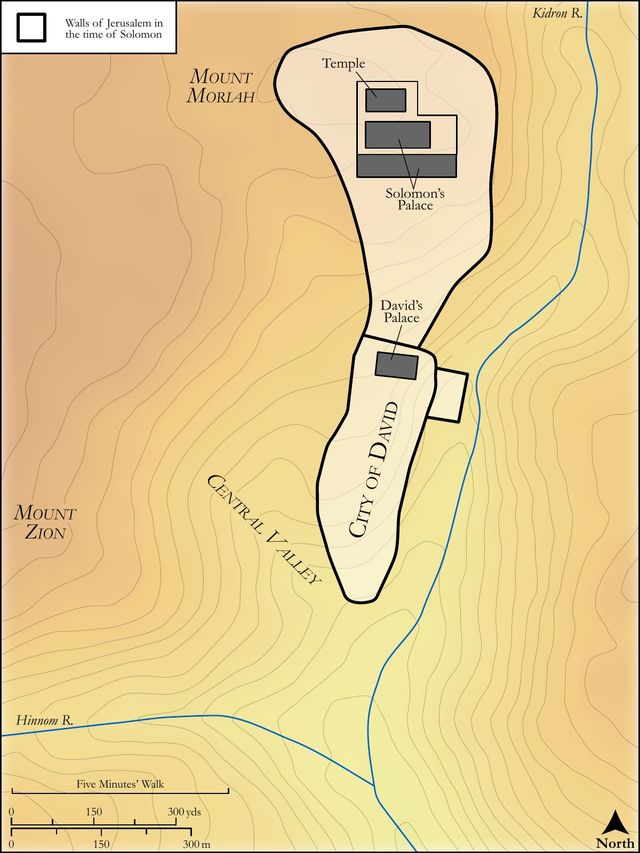
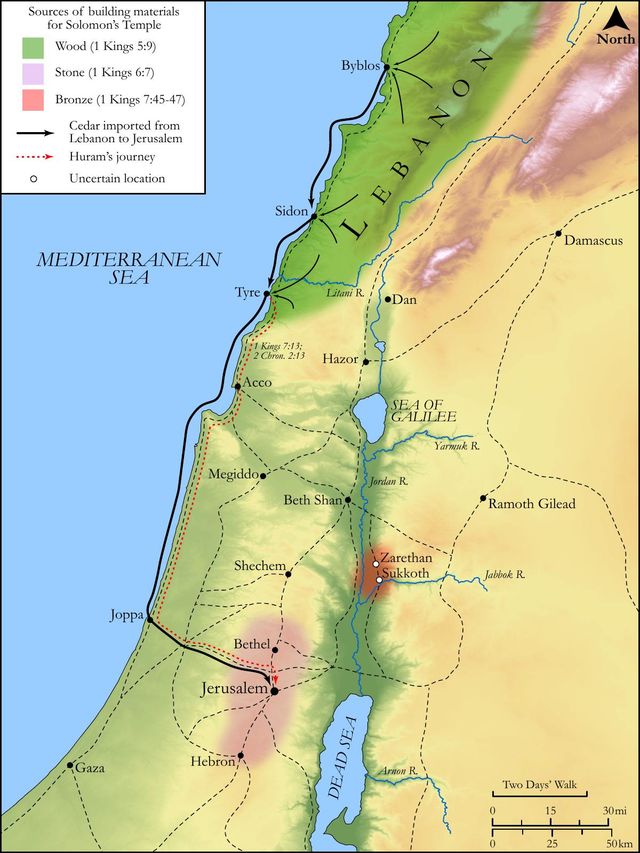
See on the biblical-era maps
Study this verse
Public-domain commentary
Matthew Henry
From his Commentary on the Whole Bible. Henry comments on passages, not single verses — this entry covers 1 Kings 8:1–11. His three-level outline is real structure in the source text, so it is rendered as structure.
The temple, though richly beautified, yet while it was without the ark was like a body without a soul, or a candlestick without a candle, or (to speak more properly) a house without an inhabitant. All the cost and pains bestowed on this stately structure are lost if God do not accept them; and, unless he please to own it as the place where he will record his name, it is after all but a ruinous heap. When therefore all the work is ended (Kg1 7:51), the one thing needful is yet behind, and that is the bringing in of the ark. This therefore is the end which must crown the work, and which here we have an account of the doing of with great solemnity.
I.Solomon presides in this service, as David did in the bringing up of the ark to Jerusalem; and neither of them thought it below him to follow the ark nor to lead the people in their attendance on it. Solomon glories in the title of the preacher (Ecc 1:1), and the master of assemblies, Ecc 12:11. This great assembly he summons (Kg1 8:1), and he is the centre of it, for to him they all assembled (Kg1 8:2) at the feast in the seventh month, namely, the feast of tabernacles, which was appointed on the fifteenth day of that month, Lev 23:34. David, like a very good man, brings the ark to a convenient place, near him; Solomon, like a very great man, brings it to a magnificent place. As every man has received the gift, so let him minister; and let children proceed in God's service where their parents left off.
II.All Israel attend the service, their judges and the chief of their tribes and families, all their officers, civil and military, and (as they speak in the north) the heads of their clans. A convention of these might well be called an assembly of all Israel. These came together, on this occasion,
1.To do honour to Solomon, and to return him the thanks of the nation for all the good offices he had done in kindness to them.
2.To do honour to the ark, to pay respect to it, and testify their universal joy and satisfaction in its settlement. The advancement of the ark in external splendour, though it has often proved too strong a temptation to its hypocritical followers, yet, because it may prove an advantage to its true interests, is to be rejoiced in (with trembling) by all that wish well to it. Public mercies call for public acknowledgments. Those that appeared before the Lord did not appear empty, for they all sacrificed sheep and oxen innumerable, Kg1 8:5. The people in Solomon's time were very rich, very easy, and very cheerful, and therefore it was fit that, on this occasion, they should consecrate not only their cheerfulness, but a part of their wealth, to God and his honour.
III.The priests do their part of the service.
In the wilderness, the Levites were to carry the ark, because then there were not priests enough to do it; but here (it being the last time that the ark was to be carried) the priests themselves did it, as they were ordered to do when it surrounded Jericho. We are here told,
1.What was in the ark, nothing but the two tables of stone (Kg1 8:9), a treasure far exceeding all the dedicated things both of David and Solomon. The pot of manna and Aaron's rod were by the ark, but not in it.
2.What was brought up with the ark (Kg1 8:4): The tabernacle of the congregation. It is probable that both that which Moses set up in the wilderness, which was in Gibeon, and that which David pitched in Zion, were brought to the temple, to which they did, as it were, surrender all their holiness, merging it in that of the temple, which must henceforward be the place where God must be sought unto. Thus will all the church's holy things on earth, that are so much its joy and glory, be swallowed up in the perfection of holiness above.
3.Where it was fixed in its place, the place appointed for its rest after all its wanderings (Kg1 8:6): In the oracle of the house, whence they expected God to speak to them, even in the most holy place, which was made so by the presence of the ark, under the wings of the great cherubim which Solomon set up (Kg1 6:27), signifying the special protection of angels, under which God's ordinances and the assemblies of his people are taken. The staves of the ark were drawn out, so as to be seen from under the wings of the cherubim, to direct the high priest to the mercy-seat, over the ark, when he went in, once a year, to sprinkle the blood there; so that still they continued of some use, though there was no longer occasion for them to carry it by.
IV.God graciously owns what is done and testifies his acceptance of it, Kg1 8:10, Kg1 8:11.
The priests might come into the most holy place till God manifested his glory there; but, thenceforward, none might, at their peril, approach the ark, except the high priest, on the day of atonement. Therefore it was not till the priests had come out of the oracle that the Shechinah took possession of it, in a cloud, which filled not only the most holy place, but the temple, so that the priests who burnt incense at the golden altar could not bear it. By this visible emanation of the divine glory,
1.God put an honour upon the ark, and owned it as a token of his presence. The glory of it had been long diminished and eclipsed by its frequent removes, the meanness of its lodging, and its being exposed too much to common view; but God will now show that it is as dear to him as ever, and he will have it looked upon with as much veneration as it was when Moses first brought it into his tabernacle.
2.He testified his acceptance of the building and furnishing of the temple as good service done to his name and his kingdom among men.
3.He struck an awe upon this great assembly; and, by what they saw, confirmed their belief of what they read in the books of Moses concerning the glory of God's appearance to their fathers, that hereby they might be kept close to the service of the God of Israel and fortified against temptations to idolatry.
4.He showed himself ready to hear the prayer Solomon was now about to make; and not only so, but took up his residence in this house, that all his praying people might there be encouraged to make their applications to him. But the glory of God appeared in a cloud, a dark cloud, to signify,
(1.)The darkness of that dispensation in comparison with the light of the gospel, by which, with open face, we behold, as in a glass, the glory of the Lord.
(2.)The darkness of our present state in comparison with the vision of God, which will be the happiness of heaven, where the divine glory is unveiled. Now we can only say what he is not, but then we shall see him as he is.
Continue studying 1 Kings 8:7 across the web’s major study libraries — every link below opens this exact verse, chapter, or book on the destination site.
Read & Compare
 BibleGatewayThis verse in more than 200 translations and 70 languages.
 Bible.comThe YouVersion reader — hundreds of translations, reading plans, and highlights.
 ESV.orgCrossway's official English Standard Version reader.
 NET BibleThe NET translation with 60,000+ translators' notes on every rendering decision.
 STEP BibleTyndale House's free study tool — original text, vocabulary, and scholarly resources.
 BibliaLogos Bible Software's free web reader.
 USCCBThe New American Bible (Revised Edition) with the U.S. bishops' study notes.
Commentaries
 BibleHub CommentariesDozens of classic commentaries on this verse, gathered on one page.
 StudyLightMore than 100 commentary sets — the largest collection on the web.
 BibleRefPlain-English commentary on what this verse means, verse by verse.
 Enduring WordDavid Guzik's free commentary on this chapter, widely used by Bible teachers.
 Bible Study ToolsVerse commentary alongside Greek and Hebrew study aids.
Original Language & Research
- BibleHub InterlinearThe verse word by word — original language, transliteration, and English.
- BibleHub LexiconEvery word's original-language definition and Strong's entry.
 Blue Letter BibleDeep-study tools — Strong's numbers, concordance, and word studies.
 SefariaThe Hebrew text with Rashi and centuries of Jewish commentary.
Sermons, Hymns & Audio


TrulyRandomVerse is not affiliated with these sites and doesn’t control their content. They’re linked because they’re genuinely useful.
Summary
This verse provides a vivid depiction of the Ark of the Covenant's climactic installation within the Most Holy Place of Solomon's newly dedicated Temple. It meticulously describes the colossal cherubim, crafted by Solomon, whose expansive wings formed a majestic canopy, enveloping both the Ark and its staves. This precise arrangement profoundly underscored the Ark's unparalleled sanctity, emphasizing divine guardianship and the meticulous adherence to sacred protocol surrounding the most revered object in ancient Israelite worship.
Context
ShowHideLiterary Context
1 Kings 8:7 is strategically positioned within the monumental narrative of the dedication of Solomon's Temple, marking a zenith in Israelite history and worship. The preceding verses, 1 Kings 8:1-6, meticulously detail the solemn procession of the Ark of the Covenant from the City of David to its permanent, long-awaited resting place within the Temple. This movement culminates generations of anticipation, fulfilling God's promise to dwell among His people in a fixed sanctuary. Verse 7 specifically focuses on the Ark's final, precise positioning within the inner sanctuary, the Most Holy Place, directly beneath the massive, gold-overlaid cherubim that Solomon had integrated into the Temple's design, as previously described in 1 Kings 6:23-28. The verse's emphasis on the cherubim's overshadowing presence highlights the visual and symbolic culmination of the sacred installation, signifying the completion of God's earthly dwelling.
Historical & Cultural Context
The construction and dedication of Solomon's Temple ushered in a transformative era for Israel, signifying a profound shift from the nomadic worship centered on the Tabernacle to a centralized, permanent place of worship in Jerusalem. The Ark of the Covenant, with its rich history spanning the wilderness wanderings and various temporary resting places, finally found its enduring home. Cherubim imagery, familiar in Scripture from the guarding of the way of the tree of life and from the mercy seat of the tabernacle, held a distinct theological meaning in Israel. Here, they were always depicted as subservient to Yahweh, symbolizing His holiness, glory, and serving as guardians of His divine presence, rather than being objects of worship themselves. The Temple's intricate design, particularly its inner sanctuary housing the Ark, served as the physical manifestation of God's covenant relationship with Israel, providing a vital focal point for national identity, spiritual unity, and communal worship.
Key Themes
ShowHideThis verse powerfully contributes to several foundational themes woven throughout 1 Kings and the broader Old Testament narrative. Firstly, it underscores the theme of Divine Presence and Dwelling, as the Ark's placement signifies the culmination of God's desire to dwell among His people, moving from a portable tent to a magnificent, permanent structure. The cherubim's covering further accentuates the profound reverence and inapproachable sanctity surrounding God's immediate, albeit veiled, presence within the Temple. Secondly, the theme of Guardianship and Holiness is prominently displayed; cherubim are consistently portrayed in Scripture as guardians of God's holiness and sacred spaces, from their initial role in guarding the Garden of Eden to their majestic portrayal in prophetic visions such as Ezekiel 1. Their position directly over the Ark underscored its unique sacredness and divine protection. Finally, the subtle mention of the staves being covered yet present reinforces the theme of Adherence to Law and Covenant Faithfulness, as Mosaic Law explicitly stipulated that the staves were never to be removed from the Ark, even when stationary (as commanded in Exodus 25:15). This detail confirms the meticulous obedience to God's commands in the Temple's design and function, signifying the Ark's perpetual readiness for movement and its enduring sacredness.
Exposition and Analysis
ShowHideKey Word Analysis
ShowHideThese are celestial beings, often depicted with wings, consistently associated with God's presence, glory, and holiness throughout Scripture. From guarding the Garden of Eden to being embroidered on the Tabernacle curtains and serving as guardians of God's throne, their presence signifies divine guardianship and the sanctity of sacred space. In this context, they are the massive, carved figures within the Temple's Most Holy Place, distinct from the smaller cherubim on the Ark's mercy seat.
This verb signifies an action of breaking apart or dispersing, but in this context, it specifically refers to the expansive extension of the cherubim's wings. It conveys the deliberate and complete act of stretching out their wings to create an overarching canopy, emphasizing their protective and encompassing posture over the Ark.
This primitive root means "to entwine as a screen," and by implication, "to fence in, cover over, or protect." In 1 Kings 8:7, it describes the complete envelopment of the Ark and its staves by the cherubim's wings, signifying a profound act of concealment, protection, and demarcation of the sacred space. This action underscores the inapproachable holiness of the Ark and the divine guardianship surrounding it.
Verse Breakdown
ShowHide"For the cherubims spread forth [their] two wings over the place of the ark"
This initial clause sets the scene by describing the posture and primary function of the two colossal, gold-overlaid cherubim that Solomon had commissioned for the Most Holy Place. Their wings, spanning an impressive width, were deliberately extended to form a protective, overarching canopy directly above the precise location where the Ark of the Covenant was to be placed. This action visually emphasizes their role as divine guardians and the profound sacredness of the Ark's resting place, creating a sense of awe and reverence.
"and the cherubims covered the ark and the staves thereof above"
This second clause reiterates and clarifies the protective action of the cherubim, emphasizing the completeness of their sacred guardianship. The repetition of "the cherubims" underscores their central and indispensable role in this momentous scene. The explicit mention that they covered both the Ark and its staves highlights the meticulous adherence to divine commands. The inclusion of the staves is particularly significant, demonstrating strict obedience to the Mosaic Law which stipulated that these poles were never to be removed from the Ark, even when stationary. This detail maintains the Ark's sacred integrity and symbolizes its perpetual readiness for movement, even in its permanent dwelling.
Literary Devices
ShowHideThe verse employs several potent literary devices to convey its profound theological significance and the solemnity of the moment. Imagery is central, painting a vivid and awe-inspiring picture of the massive, winged cherubim creating a protective, overshadowing canopy directly above the Ark. This evokes a powerful sense of divine majesty, sanctity, and impenetrable guardianship. The deliberate repetition of "the cherubims" (Hebrew: kᵉrûbîm) within the same short verse emphasizes their prominent and indispensable role in safeguarding the Ark, reinforcing their symbolic function as guardians of God's holiness and glory. Furthermore, the entire scene is rich in symbolism: the Ark itself symbolizes God's covenant presence, His throne, and His divine authority; the cherubim symbolize divine guardianship, the inapproachable holiness of God, and the sacred boundaries of His presence; and the Most Holy Place symbolizes the very dwelling place of the Almighty, the nexus between heaven and earth. The meticulous detail of the staves being covered but present also serves as a subtle yet powerful symbolic affirmation of Israel's unwavering adherence to divine law and the enduring sacredness of the Ark's perpetual readiness, even in its fixed abode.
Theological and Thematic Connections
ShowHideThis verse, depicting the Ark's final placement under the cherubim, serves as a powerful theological statement about God's desire to dwell among His people, yet His absolute holiness necessitates specific boundaries and profound reverence. It illustrates the culmination of centuries of divine guidance, from the portable Tabernacle to the magnificent, permanent Temple, signifying a new and established phase in God's covenant relationship with Israel. The cherubim, consistently associated with guarding God's glory and sacred spaces, underscore the profound holiness of the Divine Presence, reminding humanity of the awe and reverence due to the Creator. While the physical Ark and Temple were central to Old Testament worship and served as tangible expressions of God's presence, they ultimately pointed to a deeper, spiritual reality of God's presence, foreshadowing a more intimate and accessible dwelling with humanity.
Reflection and Application
ShowHideWhile the physical Ark and Temple no longer exist, 1 Kings 8:7 offers timeless spiritual truths that resonate deeply with believers today, calling us to a profound understanding of God's nature and our relationship with Him. The meticulous reverence and profound care surrounding the Ark's placement under the cherubim call us to cultivate a similar awe and respect for God's presence in every facet of our lives. We are powerfully reminded that God, though transcendent and utterly holy, desires to dwell intimately with humanity. This ancient account challenges us to consider how we treat the "temple" of our own bodies, which, through the indwelling Holy Spirit, are now sacred dwelling places for God. It also encourages us to recognize and trust in the spiritual protection God provides, just as the cherubim guarded the Ark. Our lives, our worship, and our daily walk should reflect the profound holiness of the God who has chosen to make His home within us, prompting us to live in a manner worthy of His indwelling presence, always approaching Him with reverence, gratitude, and humble obedience for His accessibility through Christ.
Questions for Reflection
ShowHideFAQ
ShowHideWhat is the difference between the cherubim on the Ark's mercy seat and the large cherubim in Solomon's Temple?
ShowHideThe cherubim on the Ark's mercy seat, as described in Exodus 25:18-20, were small, hammered gold figures, integrally part of the Ark's lid itself. They faced each other with wings outstretched over the mercy seat, symbolizing the guardians of God's throne and the place of atonement where God would meet with Israel. In contrast, the cherubim in Solomon's Temple, as detailed in 1 Kings 6:23-28, were colossal, carved olive wood figures, overlaid with gold, each standing ten cubits (approximately 15 feet) high. These massive statues stood as separate, freestanding entities within the Most Holy Place, independent of the Ark, with their immense wings spreading to form a grand canopy directly over the Ark. Both sets of cherubim served to emphasize the sanctity, glory, and divine guardianship of God's presence, but they differed significantly in size, material, and their direct connection to the Ark itself, with the Temple cherubim creating a larger, more encompassing symbolic embrace.
Christ-Centered Fulfillment
ShowHideThe meticulous placement of the Ark under the overshadowing cherubim in Solomon's Temple, a physical representation of God's desire to dwell among His people in a veiled and sacred manner, finds its ultimate and glorious fulfillment in the person and work of Jesus Christ. The Temple, with its Most Holy Place, Ark, and cherubim, was but a shadow pointing to the true and perfect reality that was to come. Jesus Himself is the ultimate "Tabernacle" of God, for in Him "the whole fullness of deity dwells bodily" (Colossians 2:9). The eternal Word became flesh and "tabernacled among us" (John 1:14), making God's presence fully accessible, intimately known, and perfectly revealed in a way no physical structure ever could. He is the true Ark of the New Covenant, embodying God's law, grace, and redemptive presence. Through His sacrificial death on the cross, Jesus tore the veil of the Temple from top to bottom (as described in Matthew 27:51), signifying the opening of a new and living way into the very presence of God, a privilege once reserved for the high priest alone. Now, through Christ, believers can boldly "draw near to the throne of grace" (Hebrews 4:16). Furthermore, the Holy Spirit now indwells all believers, making them living temples of God (1 Corinthians 6:19), fulfilling God's profound desire to dwell not merely in a building, but within His redeemed people, secured by the perfect covering and eternal protection of Christ's finished work.