


2 Chronicles 5:5
Bible text: King James Version (1769 Blayney text) · Public domain
Bible text: King James Version with Strong's numbers · Public domain
Bible text: Berean Standard Bible · Public domain
Bible text: American Standard Version (1901) · Public domain
Bible text: World English Bible, Messianic edition · Public domain
Bible text: Geneva Bible (1599) · Public domain
Bible text: Young's Literal Translation · Public domain
- וַיַּעֲלוּvai·ya·'a·Luand they brought upH5927Conj-w ¦ V-Hiphil-ConsecImperf-3mpVerb Hiphil Consecutive Imperfect 3rd Plural Masculineוַandיַּעֲלוּthey brought up
- אֶת'et<obj.>H853DirObjMParticle Object Indicator
- הָאָרוֹןha·'a·rOnthe arkH727Art ¦ N-msNoun Singular Masculine Absoluteהָtheאָרוֹןark
- וְאֶתve·'Etand <obj.>H853Conj-w ¦ DirObjMParticle Object Indicatorוְandאֶת<obj.>
- אֹהֶל'O·hel[the] tent ofH168N-mscNoun Singular Masculine Construct
- מוֹעֵדmo·'EdmeetingH4150N-msNoun Singular Masculine Absolute
- וְאֶתve·'Etand <obj.>H853Conj-w ¦ DirObjMParticle Object Indicatorוְandאֶת<obj.>
- כָּלkolallH3605N-mscNoun Singular Masculine Construct
- כְּלֵיke·Lei[the] articles ofH3627N-mpcNoun Plural Masculine Construct
- הַקֹּדֶשׁha·Ko·desh<the> holinessH6944Art ¦ N-msNoun Singular Masculine Absoluteהַ<the>קֹּדֶשׁholiness
- אֲשֶׁר'a·SherwhichH834RelParticle Relative
- בָּאֹהֶלba·'O·hel[were] in the tentH168Prep-b ¦ N-msNoun Singular Masculine Absoluteבָּ[were] in theאֹהֶלtent
- הֶעֱלוּhe·'e·Luthey brought upH5927V-Hiphil-Perf-3cpVerb Hiphil Perfect 3rd Plural common gender
- אֹתָם'o·Tam<obj.> themH853DirObjM ¦ 3mpParticle Object Indicatorאֹתָ<obj.>םthem
- הַכֹּהֲנִיםha·ko·ha·Nimthe priestsH3548Art ¦ N-mpNoun Plural Masculine Absoluteהַtheכֹּהֲנִיםpriests
- הַלְוִיִּםhal·vi·Yimthe LevitesH3881Art ¦ N-mpNoun Gentilic Plural Masculine AbsoluteהַtheלְוִיִּםLevites
English is a literal word-by-word gloss of the Hebrew, not the KJV's wording. Why?
This is the original text the KJV's translators worked from — each Hebrew word with its own literal English meaning in this verse, prepared by scholars at Tyndale House, Cambridge. The KJV translates whole sentences, not word by word, so its wording differs: one Hebrew word can become several English words, and the KJV may choose “the LORD” where the gloss reads “Yahweh”. Both are faithful — they answer different questions. For the KJV's own rendering, switch to the KJV text.
Details
See on the biblical-era maps
Study this verse
Public-domain commentary
Matthew Henry
From his Commentary on the Whole Bible. Henry comments on passages, not single verses — this entry covers 2 Chronicles 5:1–10.
This agrees with what we had Kg1 8:2, etc., where an account was given of the solemn introduction of the ark into the new-erected temple. 1. There needed no great solemnity for the bringing in of the dedicated things, Ch2 5:1. They added to the wealth, and perhaps were so disposed as to add to the beauty of it; but they could not add to the holiness, for it was the temple that sanctified the gold, Mat 23:17. See how just Solomon was both to God and to his father. Whatever David had dedicated to God, however much he might have liked it himself, he would by no means alienate it, but put it among the treasures of the temple. Those children that would inherit their godly parents' blessing must religiously pursue their pious intentions and not defeat them. When Solomon had made all the vessels of the temple in abundance (Ch2 4:18), many of the materials were left, which he would not convert to any other use, but laid up in the treasury for a time of need. Dedicated things must not be alienated. It is sacrilege to do it. 2. But it was fit that the ark should be brought in with great solemnity; and so it was. All the other vessels were made new, and larger, in proportion to the house, than they had been in the tabernacle. But the ark, with the mercy-seat and the cherubim, was the same; for the presence and the grace of God are the same in little assemblies that they are in large ones, in the poor condition of the church that they are in its prosperous estate. Wherever two or three are gathered together in Christ's name there is he as truly present with them as if there were 2000 or 3000. The ark was brought in attended by a very great assembly of the elders of Israel, who came to grace and solemnity; and a very sumptuous appearance no doubt they made, Ch2 5:2-4. It was carried by the priests (Ch2 5:7), brought into the most holy place, and put under the wings of the great cherubim which Solomon had set up there, Ch2 5:7, Ch2 5:8. There they are unto this day (Ch2 5:9), not the day when this book was written after the captivity, but when that was written out of which this story was transcribed. Or they were there (so it might be read) unto this day, the day of Jerusalem's desolations, that fatal day, Psa 137:7. The ark was a type of Christ, and, as such, a token of the presence of God. That gracious promise, Lo, I am with you always, even unto the end of the world, does in effect bring the ark into our religious assemblies if we by faith and prayer put that promise in suit; and this we should be most solicitous and earnest for. Lord, if thy presence go not up with us, wherefore should we go up? The temple itself, if Christ leave it, is a desolate place, Mat 23:38. 3. With the ark they brought up the tabernacle and all the holy vessels that were in the tabernacle, Ch2 5:5. Those were not alienated, because they had been dedicated to God, were not altered or melted down for the new work, though there was no need of them; but they were carefully laid up as monuments of antiquity, and probably as many of the vessels as were fit for use were still used. 4. This was done with great joy. They kept a holy feast upon the occasion (Ch2 5:3), and sacrificed sheep and oxen without number, Ch2 5:6. Note, (1.) The establishment of the public worship of God according to his institution, and with the tokens of his presence, is, and ought to be, matter of great joy to any people. (2.) When Christ is formed in a soul, the law written in the heart, the ark of the covenant settled there, so that it becomes the temple of the Holy Ghost, there is true satisfaction in that soul. (3.) Whatever we have the comfort of we must, by the sacrifice of praise, give God the glory of, and not be straitened therein; for with such sacrifices God is well pleased. If God favour us with his presence, we must honour him with our services, the best we have.
Continue studying 2 Chronicles 5:5 across the web’s major study libraries — every link below opens this exact verse, chapter, or book on the destination site.
Read & Compare
 BibleGatewayThis verse in more than 200 translations and 70 languages.
 Bible.comThe YouVersion reader — hundreds of translations, reading plans, and highlights.
 ESV.orgCrossway's official English Standard Version reader.
 NET BibleThe NET translation with 60,000+ translators' notes on every rendering decision.
 STEP BibleTyndale House's free study tool — original text, vocabulary, and scholarly resources.
 BibliaLogos Bible Software's free web reader.
 USCCBThe New American Bible (Revised Edition) with the U.S. bishops' study notes.
Commentaries
 BibleHub CommentariesDozens of classic commentaries on this verse, gathered on one page.
 StudyLightMore than 100 commentary sets — the largest collection on the web.
 BibleRefPlain-English commentary on what this verse means, verse by verse.
 Enduring WordDavid Guzik's free commentary on this chapter, widely used by Bible teachers.
 Bible Study ToolsVerse commentary alongside Greek and Hebrew study aids.
Original Language & Research
- BibleHub InterlinearThe verse word by word — original language, transliteration, and English.
- BibleHub LexiconEvery word's original-language definition and Strong's entry.
 Blue Letter BibleDeep-study tools — Strong's numbers, concordance, and word studies.
 SefariaThe Hebrew text with Rashi and centuries of Jewish commentary.
Sermons, Hymns & Audio


TrulyRandomVerse is not affiliated with these sites and doesn’t control their content. They’re linked because they’re genuinely useful.
Summary
Second Chronicles 5:5 meticulously chronicles the solemn and climactic procession in which the most sacred elements of Israelite worship—the Ark of the Covenant, the Tabernacle of the Congregation, and all its holy vessels—were reverently transported and installed into their permanent resting place within Solomon's newly completed Temple in Jerusalem. This pivotal moment signifies the culmination of centuries of nomadic worship, establishing God's centralized, glorious dwelling among His people, executed with precise adherence to divine protocol by the consecrated priests and Levites.
Context
ShowHideLiterary Context
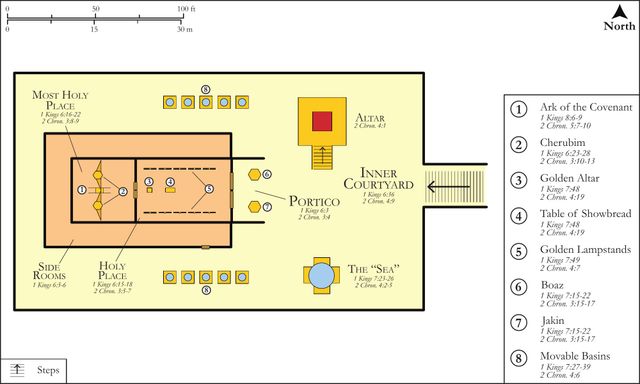
This verse is strategically placed within the grand narrative of the Temple's dedication, serving as a crucial physical act preceding the divine manifestation of God's glory. It follows the assembly of the elders of Israel and the heads of the tribes in 2 Chronicles 5:2-4, highlighting the national and spiritual significance of the event. The preceding chapters detail King Solomon's extensive preparations and the laborious construction of the Temple, fulfilling his father David's divinely inspired vision (e.g., 1 Chronicles 22). The movement of these sacred objects, particularly the Ark and the Tabernacle, from their temporary locations to the magnificent new edifice, is the climactic physical act before the cloud of God's glory fills the Temple in 2 Chronicles 5:11-14 and Solomon offers his profound dedicatory prayer in 2 Chronicles 6. This orderly and reverent transfer underscores the divine orchestration and human obedience central to the Chronicler's theological emphasis.
Historical & Cultural Context
For nearly five centuries, Israel's worship centered around the portable Tabernacle, a "tent of meeting" constructed in the wilderness according to God's precise instructions (e.g., Exodus 25-30). This movable sanctuary symbolized God's intimate presence accompanying His people throughout their wanderings. The Ark of the Covenant, the most sacred item within the Tabernacle, had a tumultuous history, including its capture by the Philistines (1 Samuel 4) and its eventual return to a temporary tent in the City of David under King David (2 Samuel 6). Meanwhile, the main Tabernacle itself, along with its associated vessels, had been situated at the high place in Gibeon (1 Kings 3:4; 2 Chronicles 1:3). The construction of Solomon's Temple marked a profound theological and cultural shift from a nomadic, temporary dwelling for God to a permanent, glorious structure in Jerusalem, the chosen capital. The meticulous involvement of the priests and Levites reflects the highly structured and ritualistic nature of Israelite worship, where only consecrated individuals could handle sacred objects, adhering to strict Mosaic law to avoid divine wrath (Numbers 4).
Key Themes
ShowHideThis verse powerfully contributes to several overarching themes within Chronicles and the broader biblical narrative. Foremost is the theme of God's Dwelling Among His People, as the Tabernacle and Ark, tangible symbols of His presence, are finally settled in a permanent, magnificent house, signifying God's enduring commitment to Israel. It also highlights the Fulfillment of Divine Promise, specifically God's covenant with David that his son would build a house for the Lord's name (2 Samuel 7:13; 1 Chronicles 17:12). The careful, ordered procession, involving the designated roles of the priests and Levites, underscores the theme of Reverence and Order in Worship, emphasizing the sanctity required when approaching God and handling His holy things. This event is not merely a logistical transfer but a profound theological statement about God's faithfulness and the proper human response to His holiness, laying the groundwork for the subsequent divine approval and filling of the Temple with God's glory (2 Chronicles 7:1-3).
Exposition and Analysis
ShowHideKey Word Analysis
ShowHideThis Hebrew verb (H5927) signifies an ascent, not merely a horizontal movement. In this context, it carries both a literal meaning, as Jerusalem was geographically elevated, and a profound symbolic one. It suggests the elevation and exaltation of God's dwelling place, transitioning from a temporary, portable structure to a glorious, permanent edifice. Spiritually, it implies the lifting up of God's presence to a place of supreme honor and centrality within the nation. The repetition of "bring up" at the beginning and end of the verse emphasizes the deliberate and significant nature of this action.
This noun (H727) refers to a box or chest, specifically the Ark of the Covenant. It was the holiest object in Israel, containing the tablets of the Law, Aaron's rod, and a pot of manna. More than a container, it represented God's throne, His covenant presence, and the place of atonement (the mercy seat). Its central role in the procession underscores its supreme importance as the tangible symbol of God's relationship with His people.
This adjective (H6944) denotes a sacred place or thing, set apart for God's exclusive use and presence. The "holy vessels" were not merely functional items but objects consecrated and dedicated to divine service, imbued with a special sanctity. This word emphasizes the inherent sacredness of the objects being moved and, by extension, the sacredness of the entire Temple complex and the act of worship itself.
Verse Breakdown
ShowHide"And they brought up the ark"
This initial clause describes the primary action of the procession, focusing on the most sacred object. "They" refers broadly to the assembled Israelites, but the subsequent clarification specifies the authorized personnel. The Ark of the Covenant, representing God's very presence and covenant relationship with Israel, was the central focus of this solemn transfer, signifying the relocation of divine authority and presence.
"and the tabernacle of the congregation"
Alongside the Ark, the entire Tabernacle, also known as the Tent of Meeting (H168, H4150), was brought. This portable sanctuary, which had served as God's dwelling place since the Exodus, was now being formally retired from its primary function as a mobile sanctuary. Its components were reverently moved into the Temple complex, signifying the culmination of a historical era of worship and the establishment of a new, permanent center.
"and all the holy vessels that [were] in the tabernacle"
This phrase specifies the comprehensive nature of the transfer. It includes all the sacred implements used in Tabernacle worship—such as altars, the menorah, tables, and other consecrated items (H3627, H6944)—ensuring that the entire apparatus of the old covenant worship was properly integrated or stored within the new Temple. This highlights the continuity and preservation of sacred tradition, acknowledging the divine origin of all aspects of Israelite worship.
"these did the priests [and] the Levites bring up"
This final clause clarifies the specific individuals responsible for this sacred task. The priests (H3548), descendants of Aaron, and the Levites (H3881), from the tribe of Levi, were the only ones authorized by God's law to handle the holy objects and perform sacred service. Their involvement underscores the meticulous adherence to divine protocol, the profound solemnity of the occasion, and the consecrated nature of the objects being moved. The repetition of "bring up" (H5927) emphasizes the completion of the action by the divinely appointed personnel, highlighting obedience and reverence.
Literary Devices
ShowHideThe verse employs Repetition ("brought up" appears twice) to underscore the significance and deliberate nature of the action, creating a sense of solemnity and purpose. The careful enumeration of the sacred objects—the Ark, the Tabernacle, and all the holy vessels—uses Merism (mentioning parts to represent the whole) to convey the comprehensive nature of the transfer, ensuring no sacred item was overlooked in this momentous transition. Furthermore, the objects themselves function as powerful Symbols: the Ark symbolizing God's covenant presence, His throne, and the place of atonement, and the Tabernacle representing His dwelling among His people. The entire scene is imbued with Ceremonial Language, reflecting the highly ritualized, divinely ordained, and deeply reverent nature of Israelite worship, emphasizing the awe due to God's holiness.
Theological and Thematic Connections
ShowHideThis verse, detailing the transfer of God's dwelling place, powerfully illustrates His enduring desire for intimate presence with humanity. For centuries, the Ark and Tabernacle served as tangible symbols of God's immanence, His willingness to reside among His chosen people, guiding and protecting them through their wilderness wanderings and conquest of the land. The transition to a permanent Temple signifies a new, more settled phase in this relationship, establishing a central, magnificent place for worship and communion that would serve as a spiritual beacon for the nation. This act underscores God's faithfulness to His promises, particularly to David concerning a lasting dynasty and a house for His name. It also highlights the profound reverence and order required in approaching a holy God, a principle that transcends the Old Covenant and speaks to the intentionality, purity, and obedience demanded in all forms of worship. The meticulous care taken by the priests and Levites in handling these sacred objects serves as a perpetual reminder that God is holy and must be approached on His terms, with respect and obedience to His divine commands.
Reflection and Application
ShowHideThe scene in 2 Chronicles 5:5, though ancient, resonates with timeless truths about God's nature and our relationship with Him. It reminds us that God is deeply committed to dwelling with His people, moving from a portable tent to a magnificent Temple, and ultimately, through Christ, to dwell within believers themselves. This historical moment calls us to reflect on the sanctity of God's presence and the profound reverence due to Him. It challenges us to consider how we approach God in our own lives, whether individually in prayer and devotion or corporately in worship. Are we casual or intentional? Do we recognize the holiness of His presence and respond with awe, humility, and respect? Just as the priests and Levites handled the sacred vessels with utmost care, we are called to steward our spiritual lives and our corporate worship with intentionality, purity, and a deep appreciation for the privilege of God's indwelling presence. This passage encourages us to cultivate a heart that honors God's holiness, seeks His presence above all else, and understands the profound privilege of being His dwelling place.
Questions for Reflection
ShowHideFAQ
ShowHideWhy was the Tabernacle of the Congregation brought up if the Ark was already in Jerusalem?
ShowHideThe Ark of the Covenant had a separate, more tumultuous journey after its capture by the Philistines and its eventual return to a temporary tent in the City of David under King David (2 Samuel 6). However, the main Tabernacle, along with its other holy vessels and components, had been located at the high place in Gibeon (1 Kings 3:4; 2 Chronicles 1:3). Therefore, 2 Chronicles 5:5 describes the comprehensive act of bringing both the Ark (from the City of David) and the Tabernacle with all its remaining vessels (from Gibeon) into the newly completed Temple. This ensured that all elements of the old, portable sanctuary were reverently incorporated or stored within the new, permanent structure, signifying a complete and unified transition in the locus of national worship.
What was the specific role of the priests and Levites in this procession?
ShowHideThe priests and Levites, as divinely appointed and consecrated individuals from the tribe of Levi, held exclusive responsibility for handling the holy objects and performing sacred service according to Mosaic law. The priests (descendants of Aaron) were specifically tasked with carrying the Ark of the Covenant, as stipulated in Numbers 4:15. The Levites, in general, were responsible for the care and transport of the Tabernacle and its vessels (Numbers 1:50-51; Numbers 3:25-37). Their involvement in 2 Chronicles 5:5 underscores the strict adherence to divine protocol and the profound sanctity of the occasion. Their presence ensured that the transfer of these sacred items was performed with the utmost reverence, order, and obedience to God's prescribed commands, emphasizing the holiness of God and the seriousness of approaching His presence.
Christ-Centered Fulfillment
ShowHideThe bringing of the Ark and Tabernacle into Solomon's Temple in 2 Chronicles 5:5 serves as a profound foreshadowing of God's ultimate dwelling among humanity in the person of Jesus Christ. Just as the Temple became the physical locus of God's presence on earth, Christ is the ultimate embodiment of God's immanence, the true "Tabernacle" where God pitched His tent among us, full of grace and truth (John 1:14). The Ark, with its mercy seat, symbolized the place of atonement and communion with God; this finds its perfect fulfillment in Christ, who is our propitiation and through whom we gain direct access to the Father (Romans 3:25; Ephesians 2:18). The permanent nature of the Temple, replacing the temporary Tabernacle, points to the eternal and unshakeable reality of God's presence in Christ, who is "God with us" (Matthew 1:23) forever, and whose kingdom is everlasting. Furthermore, as the priests and Levites brought the holy vessels into the earthly Temple, so Christ, our Great High Priest, has entered the true heavenly sanctuary, not with the blood of goats and calves, but with His own blood, securing eternal redemption for us (Hebrews 9:11-12). Through His sacrifice and resurrection, believers themselves become the spiritual temple of the Holy Spirit (1 Corinthians 6:19), a living dwelling place for God, fulfilling the ancient longing for God to truly reside among His people (Ephesians 2:19-22).