


1 Samuel 29:8
Bible text: King James Version (1769 Blayney text) · Public domain
Bible text: King James Version with Strong's numbers · Public domain
Bible text: Berean Standard Bible · Public domain
Bible text: American Standard Version (1901) · Public domain
Bible text: World English Bible, Messianic edition · Public domain
Bible text: Geneva Bible (1599) · Public domain
Bible text: Young's Literal Translation · Public domain
- וַיֹּאמֶרvai·Yo·merand he saidH559Conj-w ¦ V-Qal-ConsecImperf-3msVerb Qal Consecutive Imperfect 3rd Singular Masculineוַandיֹּאמֶרhe said
- דָּוִדda·VidDavidH1732N-proper-mNoun Proper Masculine
- אֶל'eltoH413PrepPreposition
- אָכִישׁ'a·KhishAchishH397N-proper-mNoun Proper Masculine
- כִּיkiforH3588PrtParticle Conditional
- מֶהmehwhat?H4100InterrogPronoun Interrogative
- עָשִׂיתִי'a·Si·tihave I doneH6213V-Qal-Perf-1csVerb Qal Perfect 1st Singular common gender
- וּמַהu·mahand what?H4100Conj-w ¦ InterrogPronoun Interrogativeוּandמַהwhat?
- מָּצָאתָma·Tza·tahave you foundH4672V-Qal-Perf-2msVerb Qal Perfect 2nd Singular Masculine
- בְעַבְדְּךָve·'av·de·Khain your servantH5650Prep-b ¦ N-msc ¦ 2msNoun Singular Masculine Constructבְinעַבְדְּservantךָyour
- מִיּוֹםmi·yOmfrom [the] dayH3117Prep-m ¦ N-msNoun Singular Masculine Absoluteמִfromיּוֹם[the] day
- אֲשֶׁר'a·SherwhenH834RelParticle Relative
- הָיִיתִיha·Yi·tiI wasH1961V-Qal-Perf-1csVerb Qal Perfect 1st Singular common gender
- לְפָנֶיךָle·fa·Nei·kha<to> before youH6440Prep-l ¦ N-mpc ¦ 2msNoun Plural Masculine Constructלְ<to>פָנֶיbeforeךָyou
- עַד'aduntilH5704PrepPreposition
- הַיּוֹםhai·Yomthe dayH3117Art ¦ N-msNoun Singular Masculine Absoluteהַtheיּוֹםday
- הַזֶּהha·Zeh<the> thisH2088Art ¦ PrtParticle Demonstrativeהַ<the>זֶּהthis
- כִּיkithatH3588PrtParticle Conditional
- לֹאlo'notH3808NegParticle Negative
- אָבוֹא'a·Vo'I will goH935V-Qal-Imperf-1csVerb Qal Imperfect 1st Singular common gender
- וְנִלְחַמְתִּיve·nil·Cham·tiand I will fightH3898Conj-w ¦ V-Niphal-ConsecPerf-1csVerb Niphal Consecutive Perfect 1st Singular common genderוְandנִלְחַמְתִּיI will fight
- בְּאֹיְבֵיbe·'o·ye·Veiagainst [the] enemies ofH341Prep-b ¦ V-Qal-Prtcpl-mpVerb Qal Participle Plural Masculine Constructבְּagainstאֹיְבֵי[the] enemies of
- אֲדֹנִי'a·do·Nimy lordH113N-msc ¦ 1csNoun Singular Masculine Constructאֲדֹנִlordיmy
- הַמֶּלֶךְha·Me·lekhthe kingH4428Art ¦ N-msNoun Singular Masculine Absoluteהַtheמֶּלֶךְking
English is a literal word-by-word gloss of the Hebrew, not the KJV's wording. Why?
This is the original text the KJV's translators worked from — each Hebrew word with its own literal English meaning in this verse, prepared by scholars at Tyndale House, Cambridge. The KJV translates whole sentences, not word by word, so its wording differs: one Hebrew word can become several English words, and the KJV may choose “the LORD” where the gloss reads “Yahweh”. Both are faithful — they answer different questions. For the KJV's own rendering, switch to the KJV text.
Details
See on the biblical-era map
Study this verse
Public-domain commentary
Matthew Henry
From his Commentary on the Whole Bible. Henry comments on passages, not single verses — this entry covers 1 Samuel 29:6–11. His two-level outline is real structure in the source text, so it is rendered as structure.
If the reasons Achish had to trust David were stronger than the reasons which the princes offered why they should distrust him (as I do not see that, in policy, they were, for the princes were certainly in the right), yet Achish was but one of five, though the chief, and the only one that had the title of king; accordingly, in a council of war held on this occasion, he was over-voted, and obliged to dismiss David, though he was extremely fond of him. Kings cannot always do as they would, nor have such as they would about them.
I.The discharge Achish gives him is very honourable, and not a final discharge, but only from the present service.
1.He signifies the great pleasure and satisfaction he had taken in him and in his conversation: Thou art good in my sight as an angel of God, Sa1 29:9. Wise and good men will gain respect, wherever they go, from all that know how to make a right estimate of persons and things, though of different professions in religion. What Achish says of David, God, by the prophet, says of the house of David (Zac 12:8), that it shall be as the angel of the Lord. But the former is a court-compliment; the latter is a divine promise.
2.He gives him a testimonial of his good behaviour, Sa1 29:6. It is very full and in obliging terms: "Thou hast been upright, and thy whole conduct has been good in my sight, and I have not found evil in thee." Saul would not have given him such a testimonial, though he had done far more service to him than Achish. God's people should behave themselves always so inoffensively as if possible to get the good word of all they have dealings with; and it is a debt we owe to those who have acquitted themselves well to give them the praise of it.
3.He lays all the blame of his dismission upon the princes, who would by no means suffer him to continue in the camp. "The king loves thee entirely, and would venture his life in thy hand; but the lords favour thee not, and we must not disoblige them, nor can we oppose them; therefore return and go in peace." He had better part with his favourite than occasion a disgust among his generals and a mutiny in his army. Achish intimates a reason why they were uneasy. It was not so much for David's own sake as for the sake of his soldiers that attended him, whom he calls his master's servants (namely, Saul's), Sa1 29:10. They could trust him, but not them. (4.) He orders him to be gone early, as soon as it was light (Sa1 29:10), to prevent their further resentments, and the jealousies they would have been apt to conceive if he had lingered.
II.His reception of this discourse is very complimental; but, I fear, not without some degree of dissimulation.
"What?" says David, "must I leave my lord the king, whom I am bound by office to protect, just now when he is going to expose himself in the field? Why may not I go and fight against the enemies of my lord the king?" Sa1 29:8. He seemed anxious to serve him when he was at this juncture really anxious to leave him, but he was not willing that Achish should know that he was. No one knows how strong the temptation is to compliment and dissemble which those are in that attend great men, and how hard it is to avoid it.
III.God's providence ordered it wisely and graciously for him.
For, besides that the snare was broken and he was delivered out of the dilemma to which he was first reduced, it proved a happy hastening of him to the relief of his own city, which sorely wanted him, though he did not know it. Thus the disgrace which the lords of the Philistines put upon him prove, in more ways than one, an advantage to him. The steps of a good man ore ordered by the Lord, and he delighteth in his way. What he does with us we know not now, but we shall know hereafter, and shall see it was all for good.
Continue studying 1 Samuel 29:8 across the web’s major study libraries — every link below opens this exact verse, chapter, or book on the destination site.
Read & Compare
 BibleGatewayThis verse in more than 200 translations and 70 languages.
 Bible.comThe YouVersion reader — hundreds of translations, reading plans, and highlights.
 ESV.orgCrossway's official English Standard Version reader.
 NET BibleThe NET translation with 60,000+ translators' notes on every rendering decision.
 STEP BibleTyndale House's free study tool — original text, vocabulary, and scholarly resources.
 BibliaLogos Bible Software's free web reader.
 USCCBThe New American Bible (Revised Edition) with the U.S. bishops' study notes.
Commentaries
 BibleHub CommentariesDozens of classic commentaries on this verse, gathered on one page.
 StudyLightMore than 100 commentary sets — the largest collection on the web.
 BibleRefPlain-English commentary on what this verse means, verse by verse.
 Enduring WordDavid Guzik's free commentary on this chapter, widely used by Bible teachers.
 Bible Study ToolsVerse commentary alongside Greek and Hebrew study aids.
Original Language & Research
- BibleHub InterlinearThe verse word by word — original language, transliteration, and English.
- BibleHub LexiconEvery word's original-language definition and Strong's entry.
 Blue Letter BibleDeep-study tools — Strong's numbers, concordance, and word studies.
 SefariaThe Hebrew text with Rashi and centuries of Jewish commentary.
Sermons, Hymns & Audio


TrulyRandomVerse is not affiliated with these sites and doesn’t control their content. They’re linked because they’re genuinely useful.
Summary
1 Samuel 29:8 captures David's shrewd and strategically vital response to King Achish's decision to dismiss him from the Philistine army. Having meticulously cultivated a deceptive reputation as a loyal servant of the Philistine king, David masterfully feigns indignation and a fervent desire to fight alongside Achish against Israel. This calculated performance allows David to maintain his carefully constructed cover and preserve his relationship with the Philistine king, while simultaneously experiencing profound relief at being providentially spared from the morally untenable position of fighting against his own people, thereby safeguarding his future as Israel's anointed king.
Context
ShowHideLiterary Context
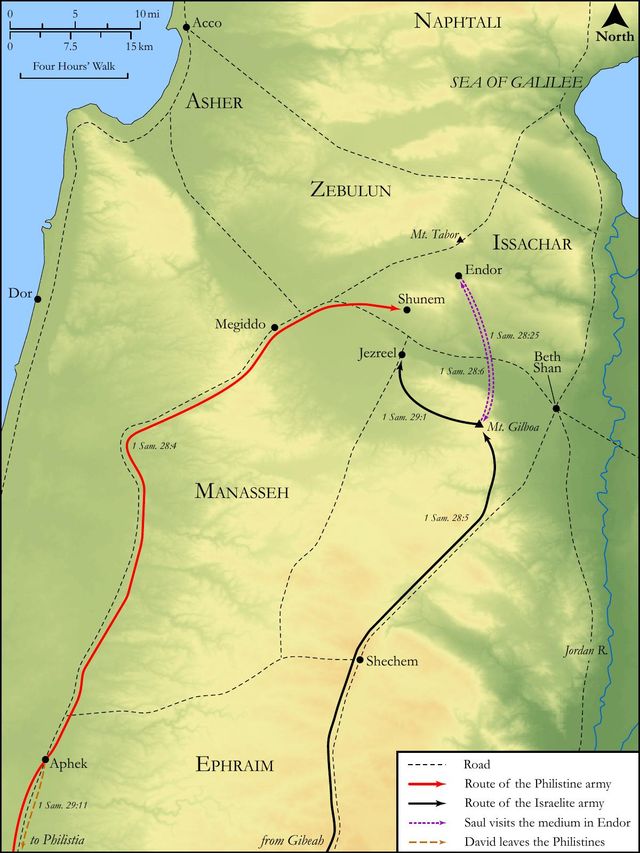
This verse is situated at a pivotal moment in David's protracted flight from King Saul. After seeking refuge with the Philistine king Achish in Gath, David was granted the town of Ziklag, as recorded in 1 Samuel 27:6. For approximately sixteen months, David engaged in raids against non-Israelite groups such as the Geshurites, Girzites, and Amalekites to the south, but he cleverly misled Achish into believing he was attacking Israelite or Judahite territory. This deception successfully solidified Achish's trust in David's loyalty, leading the Philistine king to include David and his men in their grand military assembly against Israel at Aphek, detailed in 1 Samuel 29:1. However, the other Philistine lords vehemently objected to David's presence, fearing his potential defection during battle and arguing that he might reconcile with Saul by turning against them, as expressed in 1 Samuel 29:3-5. Despite Achish's personal confidence in David, he was compelled to accede to the lords' unanimous demand, instructing David to return to Ziklag. David's response in verse 8 is a finely tuned act, designed to uphold his facade of loyalty while securing his desired, divinely orchestrated, outcome.
Historical & Cultural Context
David's sojourn among the Philistines vividly illustrates the intricate political landscape of the days of Saul. Powerful city-states, like those of the Philistine pentapolis (including Gath), frequently offered asylum and land to foreign mercenaries or political fugitives in exchange for military service. David's role as a servant of Achish entailed a reciprocal obligation to provide military support to his lord. The Philistines were a formidable and long-standing adversary of Israel, and the impending battle at Mount Gilboa would prove catastrophic for King Saul and his sons. Within the Philistine political structure, the "lords" or "satraps" wielded significant authority, capable of overriding even the king's personal decisions, particularly in critical military matters where collective trust and strategic cohesion were paramount. David's feigned loyalty to Achish, including his reference to Israel as "the enemies of my lord the king," was a culturally astute maneuver, demonstrating his deep understanding of what a servant owed his lord and his exceptional ability to convincingly play the part, thereby protecting his true allegiance and long-term objectives.
Key Themes
ShowHideThis verse powerfully illuminates several profound themes. Firstly, Divine Providence is unmistakably evident; though the Philistine lords' distrust of David appears to be a purely human decision rooted in pragmatic military concerns, it is ultimately God's unseen hand orchestrating events. God utilizes their suspicion to prevent David, His anointed future king of Israel, from engaging in battle against his own nation, thereby sparing him an impossible ethical dilemma and preserving the integrity of his future reign. This aligns seamlessly with the broader biblical theme of God's sovereign control over human affairs, as articulated in Proverbs 16:9. Secondly, the passage underscores Strategic Deception and Wisdom. David's indignant question and protest are not genuine expressions of surprise but a meticulously calculated performance, a shrewd act of political theater. He skillfully maintains his cover and protects his long-term relationship with Achish, even as he is inwardly relieved to be spared from fighting his own people. This demonstrates David's cunning, adaptability, and pragmatic wisdom in navigating morally ambiguous and dangerous situations during his exile. Thirdly, the tension between Feigned Loyalty and True Allegiance is central. David's outward display of devotion to Achish stands in stark contrast to his true allegiance, which remains with God and His covenant people, Israel. This moment encapsulates the difficult compromises and complex moral landscape David often traversed during his exile, where survival and the preservation of his divine calling frequently necessitated unconventional means.
Exposition and Analysis
ShowHideKey Word Analysis
ShowHideThis primitive root means "to do or make, in the broadest sense and widest application." In David's rhetorical question, "what have I done?", it signifies his feigned blamelessness and suggests an absence of any action that would warrant his dismissal. David is asserting that he has performed all expected duties without fault.
This root means "to come forth to, i.e. appear or exist; transitively, to attain, i.e. find or acquire." David's query, "what hast thou found in thy servant?", challenges Achish to identify any fault or disloyalty in his conduct. It implies that no such fault exists, reinforcing David's performance of unwavering fidelity.
Derived from a root meaning "hating," this word refers to an "adversary" or "foe." David's strategic use of "the enemies of my lord the king" to describe Israel is a crucial element of his deception, publicly aligning himself with the Philistine cause against his own nation and demonstrating his supposed commitment to Achish's interests.
Verse Breakdown
ShowHide"And David said unto Achish, But what have I done?"
David's immediate verbal response is one of feigned shock and protest. The conjunction "But" (וְלָמָּה, w'lammah) introduces a strong objection, conveying a sense of incredulity as if he cannot fathom the reason for Achish's decision. This rhetorical question serves as a powerful tool to express indignation and challenge the perceived injustice of being excluded from the impending battle.
"and what hast thou found in thy servant so long as I have been with thee unto this day"
This clause underscores David's purported long-standing fidelity and impeccable conduct. He appeals to the duration of his service and the absence of any discovered fault, further solidifying his feigned loyalty. This is a masterful appeal to Achish's personal trust, which David had assiduously cultivated over many months through his deceptive raids and reports.
"that I may not go fight against the enemies of my lord the king?"
This is the crux of David's "protest" and the ultimate expression of his strategic deception. By explicitly referring to Israel as "the enemies of my lord the king," David publicly aligns himself with the Philistine cause against his own people. This statement is meticulously crafted to convince Achish of his unwavering commitment and to ensure that his departure is perceived as a regrettable necessity dictated by the other lords, rather than a suspicious removal or a welcome relief for David himself.
Literary Devices
ShowHideThe verse is rich in Irony, as David's spoken words are diametrically opposed to his true desires and intentions. He expresses indignation at being excluded from a battle he desperately wishes to avoid, and he refers to his own people, Israel, as "the enemies of my lord the king," a statement that is contextually true for the Philistines but profoundly ironic given David's divine destiny as Israel's future monarch. Dramatic Irony is also powerfully at play, as the reader possesses full knowledge of David's true allegiance and his profound relief at being sent away, while King Achish remains utterly oblivious to the depth and sophistication of David's deception. David's questions are classic Rhetorical Questions, not posed to elicit information, but rather to serve as a potent means of expressing feigned indignation and expertly manipulating Achish's perception of his loyalty. This entire exchange also functions as Foreshadowing, as God's providential intervention, channeled through the Philistine lords, prevents David from being implicated in the tragic deaths of Saul and his sons, thereby preserving his legitimacy and paving the way for his rightful ascension to the throne of a united Israel.
Theological and Thematic Connections
ShowHideThis passage profoundly illustrates the concept of divine providence, where God orchestrates events, even through the actions and suspicions of adversaries, to fulfill His ultimate purposes. David was caught in an incredibly compromising position, forced to live a life of strategic deception to survive and protect his men. Had he fought alongside the Philistines against Israel, his legitimacy as the future king would have been severely undermined, and he would have faced an impossible moral and spiritual dilemma. God's intervention, though seemingly a setback for David's immediate plans with Achish, was a divine protection, guiding him away from a path that would have compromised his true calling and destiny. This reminds us that God's ways are often beyond our immediate understanding, and He can use seemingly negative or challenging circumstances to achieve His perfect will, demonstrating His sovereign care over His chosen ones and His unfolding plan for salvation history.
Reflection and Application
ShowHideDavid's situation in 1 Samuel 29:8 offers profound insights into navigating life's complex moral and circumstantial challenges. We often find ourselves in situations where our integrity is tested, or where the path forward seems unclear or fraught with compromise. David's example, while not endorsing deception as a general rule, highlights God's ability to work even within our imperfect and challenging circumstances. It encourages us to trust in God's sovereign hand, even when our plans are thwarted or when we face dilemmas that seem to have no good outcome. What appears to be a setback can, in God's economy, be a divine protection, guiding us away from paths that would ultimately harm our true calling or purpose. This passage calls us to cultivate a deep reliance on God's providence, believing that He is actively involved in our lives, steering us towards His good and perfect will, even through the unexpected and the uncomfortable. It challenges us to look beyond immediate appearances and discern the deeper, redemptive purposes of God at work in our lives.
Questions for Reflection
ShowHideFAQ
ShowHideWas David truly loyal to Achish, or was his loyalty feigned?
ShowHideDavid's loyalty to Achish was entirely feigned and part of a calculated strategy of deception. His actions and words throughout this period, particularly as described in 1 Samuel 27:8-12, reveal that he consistently misled Achish about the targets of his raids, convincing the Philistine king that he was attacking Israelite territory while actually preying on non-Israelite tribes. His protest in 1 Samuel 29:8 was a masterful performance designed to maintain his cover, preserve his relationship with Achish, and, most importantly, secure his release from a battle he could not morally or strategically participate in. His true allegiance remained steadfastly with God and Israel.
Why did the Philistine lords distrust David despite Achish's confidence in him?
ShowHideThe Philistine lords' distrust was rooted in sound pragmatic military and political concerns, rather than personal animosity. They recognized David's formidable reputation as a warrior and understood the strong, inherent ties of loyalty within Israelite society. Their primary fear, explicitly stated in 1 Samuel 29:4, was that David would betray them in the heat of battle to reconcile with his former master, King Saul. They believed that David's past actions, his status as the leader of a large Israelite fighting force, and his potential to turn against them made him an unacceptable risk, regardless of Achish's personal assurances. Their suspicion, though humanly motivated, ultimately served as God's instrument to protect David from an impossible dilemma.
How does this event relate to David's future as king of Israel?
ShowHideThis event is profoundly significant for David's future kingship. By preventing David from fighting alongside the Philistines against Israel, God meticulously preserved David's moral and political integrity. Had David participated in the battle of Gilboa, where King Saul and his sons were tragically killed (1 Samuel 31:1-6), he would have been directly complicit in the death of the reigning king and many Israelites. This would have severely complicated his claim to the throne, potentially alienating key tribes and undermining his legitimacy in the eyes of the people. God's providential intervention ensured that David was not implicated in this tragic national disaster, thus clearing his path to legitimately ascend to the throne of Israel, as recorded in 2 Samuel 2.
Christ-Centered Fulfillment
ShowHideDavid's precarious position and God's providential rescue in 1 Samuel 29:8 profoundly foreshadow the ultimate King, Jesus Christ, while simultaneously highlighting critical distinctions. David, God's anointed, was preserved from a morally compromising battle through a complex web of human deception and divine intervention. This imperfect preservation of an imperfect king points to the perfect preservation and righteous path of the true Anointed One. Unlike David, who navigated political intrigue and feigned loyalty to survive, Jesus never resorted to deception or compromise. His kingdom is not of this world, and His battle was not against flesh and blood, but against the spiritual forces of evil (Ephesians 6:12). The Father's providence for Jesus was not to spare Him from battle, but to lead Him directly into the ultimate conflict on the cross, where He perfectly obeyed God's will even unto death (Philippians 2:8) and triumphed over His true enemies—Satan, sin, and death—not by avoiding the fight, but by fully engaging it through self-sacrifice (Colossians 2:15). David's deliverance from a physical battle against his people anticipates Christ's deliverance of His people from spiritual bondage, a deliverance achieved not through political maneuvering but through the Lamb of God who takes away the sin of the world (John 1:29). Thus, David's imperfect journey serves as a shadow, pointing to the perfect and righteous reign of Christ, whose path was one of unwavering truth, perfect obedience, and ultimate victory through sacrificial love.