


1 Kings 8:58
Bible text: King James Version (1769 Blayney text) · Public domain
Bible text: King James Version with Strong's numbers · Public domain
Bible text: Berean Standard Bible · Public domain
Bible text: American Standard Version (1901) · Public domain
Bible text: World English Bible, Messianic edition · Public domain
Bible text: Geneva Bible (1599) · Public domain
Bible text: Young's Literal Translation · Public domain
- לְהַטּוֹתle·ha·Totto inclineH5186Prep-l ¦ V-Hiphil-InfVerb Hiphil Infinitive Constructלְtoהַטּוֹתincline
- לְבָבֵנוּle·va·Ve·nuour heartH3824N-msc ¦ 1cpNoun Singular Masculine Constructלְבָבֵheartנוּour
- אֵלָיו'e·Lavto himH413Prep ¦ 3msPrepositionאֵלָיtoוhim
- לָלֶכֶתla·Le·khetto walkH1980Prep-l ¦ V-Qal-InfVerb Qal Infinitive Constructלָtoלֶכֶתwalk
- בְּכָלbe·kholin allH3605Prep-b ¦ N-mscNoun Singular Masculine Constructבְּinכָלall
- דְּרָכָיוde·ra·Khavhis waysH1870N-mpc ¦ 3msNoun Plural Masculine Constructדְּרָכָיwaysוhis
- וְלִשְׁמֹרve·lish·Morand to keepH8104Conj-w ¦ Prep-l ¦ V-Qal-InfVerb Qal Infinitive Constructוְandלִtoשְׁמֹרkeep
- מִצְוֹתָיוmitz·vo·Tavhis commandmentsH4687N-fpc ¦ 3msNoun Plural Feminine Constructמִצְוֹתָיcommandmentsוhis
- וְחֻקָּיוve·chu·Kavand his statutesH2706Conj-w ¦ N-mpc ¦ 3msNoun Plural Masculine Constructוְandחֻקָּיstatutesוhis
- וּמִשְׁפָּטָיוu·mish·pa·Tavand his judgmentsH4941Conj-w ¦ N-mpc ¦ 3msNoun Plural Masculine Constructוּandמִשְׁפָּטָיjudgmentsוhis
- אֲשֶׁר'a·SherwhichH834RelParticle Relative
- צִוָּהtzi·Vahhe commandedH6680V-Piel-Perf-3msVerb Piel Perfect 3rd Singular Masculine
- אֶת'et<obj.>H853DirObjMParticle Object Indicator
- אֲבֹתֵינוּ'a·vo·Tei·nuour ancestorsH1N-fpc ¦ 1cpNoun Plural Feminine Constructאֲבֹתֵיancestorsנוּour
English is a literal word-by-word gloss of the Hebrew, not the KJV's wording. Why?
This is the original text the KJV's translators worked from — each Hebrew word with its own literal English meaning in this verse, prepared by scholars at Tyndale House, Cambridge. The KJV translates whole sentences, not word by word, so its wording differs: one Hebrew word can become several English words, and the KJV may choose “the LORD” where the gloss reads “Yahweh”. Both are faithful — they answer different questions. For the KJV's own rendering, switch to the KJV text.
Details
See on the biblical-era maps
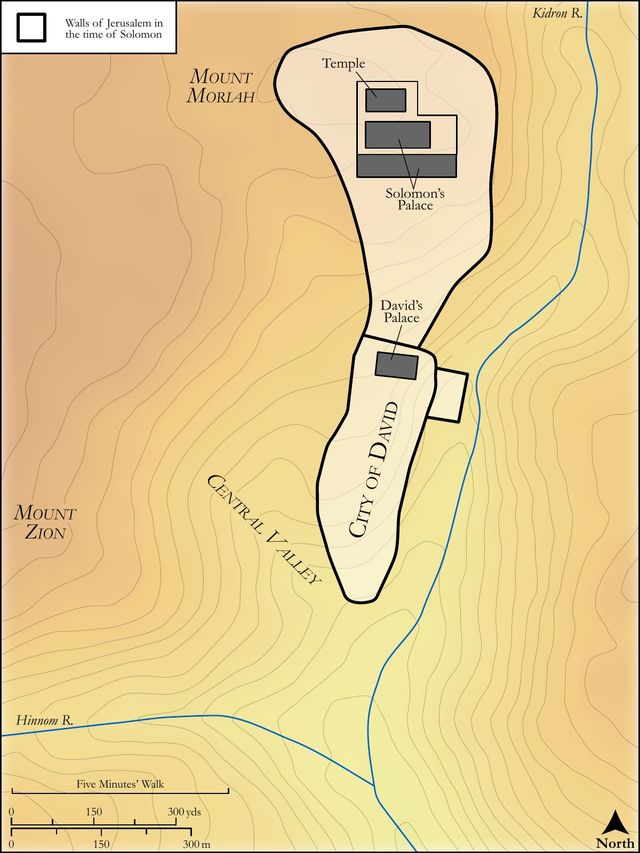
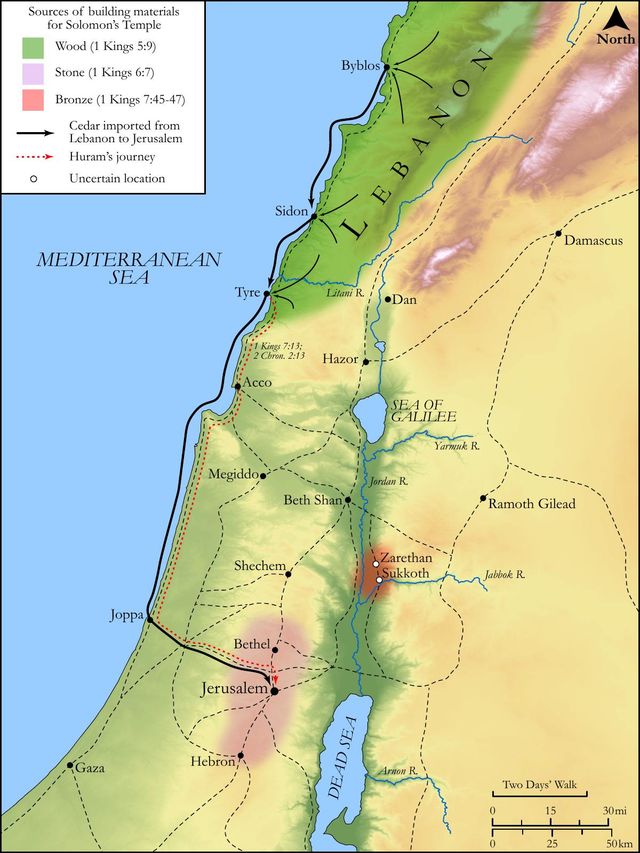
Study this verse
Public-domain commentary
Matthew Henry
From his Commentary on the Whole Bible. Henry comments on passages, not single verses — this entry covers 1 Kings 8:54–61. His two-level outline is real structure in the source text, so it is rendered as structure.
Solomon, after his sermon in Ecclesiastes, gives us the conclusion of the whole matter; so he does here, after this long prayer; it is called his blessing the people, Kg1 8:55. He pronounced it standing, that he might be the better heard, and because he blessed as one having authority. Never were words more fitly spoken, nor more pertinently. Never was congregation dismissed with that which was more likely to affect them and abide with them.
I.He gives God the glory of the great and kind things he had done for Israel, Kg1 8:56.
He stood up to bless the congregation (Kg1 8:55), but began with blessing God; for we must in every thing give thanks. Do we expect God should do well for us and ours? let us take all occasion to speak well of him and his. He blesses God who has given, he does not say wealth, and honour, and power, and victory, to Israel, but rest, as if that were a blessing more valuable than any of those. Let not those who have rest under-value that blessing, though they want some others. He compares the blessings God had bestowed upon them with the promises he had given them, that God might have the honour of his faithfulness and the truth of that word of his which he has magnified above all his name.
1.He refers to the promises given by the hand of Moses, as he did (Kg1 8:15, Kg1 8:24) to those which were made to David. There were promises given by Moses, as well as precepts. It was long ere God gave Israel the promised rest, but they had it at last, after many trials. The day will come when God's spiritual Israel will rest from all their labours.
2.He does, as it were, write a receipt in full on the back of these bonds: There has not failed one word of all his good promises. This discharge he gives in the name of all Israel, to the everlasting honour of the divine faithfulness, and the everlasting encouragement of all those that build upon the divine promises.
II.He blesses himself and the congregation, expressing his earnest desire and hope of these four things:
- 1. The presence of God with them, which is all in all to the happiness of a church and nation and of every particular person. This great congregation was now shortly to be scattered, and it was not likely that they would ever be all together again in this world. Solomon therefore dismisses them with this blessing: "The Lord be present with us, and that will be comfort enough when we are absent from each other. The Lord our God be with us, as he was with our fathers (Kg1 8:57); let him not leave us, let him be to us to day, and to ours for ever, what he was to those that went before us." 2. The power of his grace upon them: "Let him be with us, and continue with us, not that he may enlarge our coasts and increase our wealth, but that he may incline our hearts to himself, to walk in all his ways and to keep his commandments," Kg1 8:58. Spiritual blessings are the best blessings, with which we should covet earnestly to be blessed. Our hearts are naturally averse to our duty, and apt to decline from God; it is his grace that inclines them, grace that must be obtained by prayer. 3. An answer to the prayer he had now made: "Let these my words be nigh unto the Lord our God day and night, Kg1 8:59. Let a gracious return be made to every prayer that shall be made here, and that will be a continual answer to this prayer." What Solomon asks here for his prayer is still granted in the intercession of Christ, of which his supplication was a type; that powerful prevailing intercession is before the Lord our God day and night, for our great Advocate attends continually to this very thing, and we may depend upon him to maintain our cause (against the adversary that accuses us day and night, Rev 12:10) and the common cause of his people Israel, at all times, upon all occasions, as the matter shall require, so as to speak for us the word of the day in its day, as the original here reads it, from which we shall receive grace sufficient, suitable, and seasonable, in every time of need. 4. The glorifying of God in the enlargement of his kingdom among men. Let Israel be thus blessed, thus favoured; not that all people may become tributaries to us (Solomon sees his kingdom as great as he desires), but that all people may know that the Lord is God, and he only, and may come and worship him, Kg1 8:60. With this Solomon's prayers, like the prayers of his father David, the son of Jesse, are ended (Psa 72:19, Psa 72:20): Let the whole earth be filled with his glory. We cannot close our prayers with a better summary than this, Father, glorify thy name.
III.He solemnly charges his people to continue and persevere in their duty to God.
Having spoken to God for them, he here speaks from God to them, and those only would fare the better for his prayers that were made better by his preaching. His admonition, at parting, is, "Let your heart be perfect with the Lord our God, Kg1 8:61. Let your obedience be universal, without dividing - upright, without dissembling - constant, without declining;" this is evangelical perfection.
Historical interpretation
Historical reception
2 surviving comments on this verse. Each one is dated, so this reads as a timeline rather than a list.
For Holy Scripture supports the freedom of the will where it says: “Keep your heart with all diligence,” but the apostle indicates its weakness by saying “The Lord keep your hearts and minds in Christ Jesus.” David asserts the power of free will, where he says, “I have inclined my heart to do your righteous acts,” but he also teaches us its weakness, by praying and saying, “Incline my heart unto your testimonies and not to covetousness.” Solomon also: “The Lord incline our hearts to himself that we may walk in all his ways and keep his commandments and ordinances and judgments.”
Divine Scripture corroborates the freedom of our will when it says, “Guard your heart with all care.” But the apostle lays bare its weakness when he says, “May the Lord guard your hearts and your understanding in Christ Jesus.” David proclaims the power of free will when he says, “I have inclined my heart to do your righteous deeds.” But he also teaches its weakness when he prays and says, “Incline my heart to your testimonies and not to avarice.” Solomon says as well, “May the Lord incline our hearts to himself, so that we may walk in all his ways and keep his commands and his ceremonies and his judgments.” - "Conference 13.10.1"
Continue studying 1 Kings 8:58 across the web’s major study libraries — every link below opens this exact verse, chapter, or book on the destination site.
Read & Compare
 BibleGatewayThis verse in more than 200 translations and 70 languages.
 Bible.comThe YouVersion reader — hundreds of translations, reading plans, and highlights.
 ESV.orgCrossway's official English Standard Version reader.
 NET BibleThe NET translation with 60,000+ translators' notes on every rendering decision.
 STEP BibleTyndale House's free study tool — original text, vocabulary, and scholarly resources.
 BibliaLogos Bible Software's free web reader.
 USCCBThe New American Bible (Revised Edition) with the U.S. bishops' study notes.
Commentaries
 BibleHub CommentariesDozens of classic commentaries on this verse, gathered on one page.
 StudyLightMore than 100 commentary sets — the largest collection on the web.
 BibleRefPlain-English commentary on what this verse means, verse by verse.
 Enduring WordDavid Guzik's free commentary on this chapter, widely used by Bible teachers.
 Bible Study ToolsVerse commentary alongside Greek and Hebrew study aids.
Original Language & Research
- BibleHub InterlinearThe verse word by word — original language, transliteration, and English.
- BibleHub LexiconEvery word's original-language definition and Strong's entry.
 Blue Letter BibleDeep-study tools — Strong's numbers, concordance, and word studies.
 SefariaThe Hebrew text with Rashi and centuries of Jewish commentary.
Sermons, Hymns & Audio


TrulyRandomVerse is not affiliated with these sites and doesn’t control their content. They’re linked because they’re genuinely useful.
Summary
1 Kings 8:58 encapsulates a profound petition from King Solomon during the dedication of the Temple, asking God to supernaturally direct the hearts of His people towards Him. This divine inclination is sought not as an end in itself, but as the essential means by which Israel might consistently walk in God's ways and diligently observe His comprehensive Law—His commandments, statutes, and judgments—thereby living faithfully in accordance with the covenant established with their ancestors.
Context
ShowHideLiterary Context
This verse is a crucial component of Solomon's extensive and eloquent prayer of dedication, which spans 1 Kings 8:22-61. The prayer unfolds immediately after the Ark of the Covenant has been solemnly placed in the Temple's Most Holy Place and the glorious presence of the Lord has filled the house, preventing the priests from ministering (1 Kings 8:10-11). Standing before the altar, Solomon blesses the congregation and then pours out this comprehensive appeal for God's continued presence, mercy, and guidance for His people. Verse 58 specifically builds upon Solomon's preceding request in 1 Kings 8:57, where he asks that the Lord's presence would remain with Israel as it had been with their forefathers, setting the stage for a plea for divine enablement to live in a manner worthy of that divine presence. The prayer as a whole is a theological masterpiece, articulating Israel's understanding of God's transcendence, immanence, and covenant faithfulness.
Historical & Cultural Context
The dedication of the First Temple in Jerusalem, approximately 960 BCE, represents a pinnacle in Israelite history, symbolizing the establishment of a permanent dwelling place for God among His people. This momentous event occurred during the zenith of the united monarchy under Solomon, a period characterized by unprecedented peace, prosperity, and national consolidation. The Temple was not merely an architectural marvel but the very physical nexus of God's covenant with Israel, the place where His presence was uniquely manifested and where atonement could be made for sin. For the Israelites, adherence to the Mosaic Law—comprising the "commandments, statutes, and judgments"—was the foundational expression of their national identity and their unique covenant relationship with Yahweh. This prayer profoundly underscores the cultural understanding that national well-being, divine blessing, and continued divine favor were inextricably linked to collective and individual obedience to God's revealed will, as outlined in the Torah given to their "fathers" at Mount Sinai.
Key Themes
ShowHideThe central theme encapsulated in 1 Kings 8:58 is the profound recognition that true, lasting obedience to God's will is not solely a matter of human resolve but fundamentally requires divine enablement. Solomon's plea for God to "incline our hearts unto him" acknowledges the inherent human tendency to stray and the absolute necessity of God's gracious intervention to direct the human will towards righteousness. This highlights a deep biblical truth: a vibrant spiritual walk and genuine covenant faithfulness are ultimately dependent on God's active work within the human heart. Furthermore, the verse emphasizes the holistic nature of obedience, encompassing both an inner disposition ("incline our hearts") and outward actions ("walk in all his ways, and to keep his commandments, and his statutes, and his judgments"). This comprehensive view reflects the multifaceted demands of the covenant and the fervent desire for Israel to remain steadfast in their unique relationship with Yahweh, as articulated throughout the Pentateuch, particularly in Deuteronomy 6:4-9.
Exposition and Analysis
ShowHideKey Word Analysis
ShowHideThe Hebrew verb נָטָה (nâṭâh) literally means "to stretch out," "to turn aside," "to bend," or "to dispose." In this context, it signifies a divine act of gently but powerfully turning, directing, or disposing the human heart towards God. It implies a gracious, sovereign influence that aligns the will of the people with God's desires, rather than a forced or coercive submission. This word underscores the theological truth that genuine spiritual orientation and obedience are ultimately gifts of God's grace, enabling human free will to choose righteousness and walk in His ways.
The Hebrew noun לֵבָב (lêbâb) refers to the heart, understood in biblical anthropology as the innermost core of a person—the seat of intellect, will, emotions, and moral character. When Solomon prays for God to "incline our hearts," he is appealing for a divine reorientation of the very center of their being, affecting their desires, thoughts, and intentions. This emphasizes that true obedience is not merely external conformity but stems from an internal disposition that is rightly aligned with God.
The Hebrew noun דֶּרֶךְ (derek) literally means "road" or "path," but in biblical usage, it very often functions as a powerful metaphor for one's entire lifestyle, conduct, or manner of living. To "walk in all his ways" therefore signifies a comprehensive and consistent adherence to God's character, principles, and commands in every aspect of life. It denotes a continuous journey of ethical and spiritual conformity, reflecting a transformed inner disposition through outward actions. This is not merely about performing isolated acts of piety, but about a holistic pattern of life that aligns with God's revealed will.
This triad of terms—מִצְוָה (mitsvâh), חֹק (chôq), and מִשְׁפָּט (mishpâṭ)—collectively refers to the comprehensive body of the Mosaic Law given to Israel. "Commandments" (mitsvâh) generally refers to divine precepts or moral injunctions. "Statutes" (chôq) often denotes divine decrees or ordinances, particularly those that are fixed, unchangeable, or ritualistic. "Judgments" (mishpâṭ) refers to legal decisions, civil laws, or judicial pronouncements, emphasizing the just and righteous nature of God's rule. Together, these terms emphasize the totality, breadth, and multifaceted nature of God's requirements for His people, encompassing moral, ceremonial, and civil aspects of the covenant.
Verse Breakdown
ShowHide"That he may incline our hearts unto him"
This opening clause presents the core petition, acknowledging God's sovereign initiative in the realm of human will and desire. It is a prayer for divine grace to reorient the inner disposition of the people, turning their affections and intentions away from self-reliance or idolatry and towards Yahweh. It highlights the biblical understanding that true spiritual obedience originates from a heart transformed and directed by God.
"to walk in all his ways"
This phrase describes the desired outcome of the heart's inclination. It signifies a life of consistent, comprehensive obedience that extends to every facet of existence. "His ways" refers to God's character, His revealed will, and the ethical standards He has set forth. This is a prayer for a lifestyle that mirrors God's righteousness and reflects a deep, abiding relationship with Him.
"and to keep his commandments, and his statutes, and his judgments"
This clause specifies the practical outworking of "walking in all his ways." It emphasizes diligent adherence to the Mosaic Law in its entirety. By listing the three primary categories of divine legislation, Solomon underscores the comprehensive nature of the required obedience—encompassing moral principles, ritual observances, and civil justice. This is a plea for the nation to uphold the specific stipulations of their covenant with God.
"which he commanded our fathers"
This concluding phrase grounds the prayer in the historical continuity of God's covenant faithfulness. It reminds both God and the people that the laws being prayed over are not new or arbitrary, but are the very statutes given to their ancestors, particularly at Sinai. This emphasizes the enduring nature of the covenant and the call for each generation to uphold the spiritual heritage passed down through the patriarchs and Moses.
Literary Devices
ShowHideSolomon's prayer in this verse employs several powerful literary devices. The most prominent is Supplication, as the entire verse functions as a direct plea to God, demonstrating Israel's humble dependence on divine intervention for spiritual vitality and sustained faithfulness. Metaphor is vividly evident in the phrases "incline our hearts" and "walk in all his ways." The "heart" serves as a metaphor for the inner core of a person—their will, affections, and intellect—while "walking" is a common biblical metaphor for one's conduct or lifestyle. The request to "incline" the heart suggests a gentle yet powerful divine turning, guiding the inner being towards righteousness. Furthermore, the listing of "commandments, and his statutes, and his judgments" functions as a Merism or Triadic Formula, where three distinct but related terms are used to represent the entirety or comprehensive scope of God's Law. This emphasizes the holistic and all-encompassing nature of the obedience being sought, leaving no aspect of life outside the divine purview. The language throughout the prayer is deeply imbued with Covenantal Language, echoing the stipulations, promises, and historical narratives found in the books of Deuteronomy and Exodus, reinforcing Israel's identity as God's covenant people.
Theological and Thematic Connections
ShowHide1 Kings 8:58 profoundly illustrates the biblical tension between divine sovereignty and human responsibility in the pursuit of righteousness. Solomon's prayer acknowledges that while God commands obedience, the capacity and desire to obey are ultimately gifts of His grace. This theological truth is foundational: true spiritual transformation and sustained faithfulness are not merely human achievements but require God's active work within the heart. It highlights that the Law, though perfect, cannot by itself produce the willing obedience it demands; it requires a divine inclination of the heart. This sets the stage for later prophetic promises of a new covenant where God would write His law on the heart, ensuring a willing and enabled obedience that goes beyond external conformity to internal transformation.
Reflection and Application
ShowHideSolomon's heartfelt prayer in 1 Kings 8:58 remains profoundly relevant for believers today, serving as a timeless model for our own spiritual aspirations and petitions. It reminds us that our capacity to love God, to obey His Word, and to walk in His ways is not solely a matter of willpower or self-discipline, but fundamentally depends on the gracious work of the Holy Spirit within us. Just as Israel needed God to "incline their hearts," we too must recognize our inherent spiritual weakness and our constant need for divine enablement to align our desires with God's will. This verse calls us to cultivate a posture of humble dependence, praying earnestly for a heart that is not only willing but supernaturally enabled to pursue righteousness. It underscores the importance of God's written Word as our authoritative guide, urging us to diligently study and apply His "commandments, statutes, and judgments" so that our lives may truly reflect our covenant relationship with Him, walking faithfully in His light and demonstrating His character to the world.
Questions for Reflection
ShowHideFAQ
ShowHideWhy does Solomon pray for God to "incline" their hearts rather than simply commanding them to obey?
ShowHideSolomon's prayer reflects a profound biblical understanding of human nature and the nature of true obedience. While God's commands are clear and binding, the human heart, left to its own devices, is prone to wander and resist God's will (Jeremiah 17:9). Solomon recognizes that genuine, sustained obedience flows not merely from external compulsion but from an internal desire and alignment with God. Therefore, he prays for God's gracious, supernatural intervention to reorient the people's affections and wills, making them willing and able to obey. This highlights that true faithfulness is a gift of divine grace, enabling human response, a theme echoed in the New Testament (e.g., Philippians 2:13).
What is the significance of the repetition of "commandments, and his statutes, and his judgments"?
ShowHideThe repetition of "commandments, and his statutes, and his judgments" (Hebrew: mitsvâh, chôq, mishpâṭ, in their plural forms) is a rhetorical device used to emphasize the comprehensive and all-encompassing nature of God's Law. These three terms collectively refer to the entire body of the Mosaic Law, encompassing its moral principles, ritual ordinances, and civil regulations. By listing them, Solomon underscores that God's requirements for Israel were holistic, covering every aspect of their national and personal life. It's a plea for obedience that is not partial or selective, but complete and devoted to the totality of God's revealed will, as given to their "fathers" at Sinai (Deuteronomy 4:1-8).
Christ-Centered Fulfillment
ShowHideSolomon's prayer for God to "incline our hearts" finds its ultimate and most profound fulfillment in the person and work of Jesus Christ and the New Covenant He inaugurated. The Old Covenant, though righteous and good, revealed humanity's inherent inability to perfectly keep God's Law due to the fallen nature of the heart. The very need for God to "incline" the heart pointed to a deeper spiritual problem that the Law itself could not remedy. In Christ, this problem is comprehensively addressed: He perfectly "walked in all his ways" and "kept his commandments, and his statutes, and his judgments," fulfilling the Law's righteous requirements on our behalf (Romans 8:3-4). More significantly, through His atoning sacrifice and glorious resurrection, Christ made possible the New Covenant, prophesied by Jeremiah and Ezekiel, where God's Law is no longer merely an external code but is supernaturally written upon the hearts of believers by the Holy Spirit (Hebrews 8:10). The Holy Spirit, given to all who believe in Christ, is the divine agent who now "inclines" our hearts, empowering us to "walk in all his ways" and live lives of genuine, Spirit-enabled obedience, not by human effort alone, but by abiding in Christ (John 15:5) and "walking by the Spirit" (Galatians 5:16). Thus, what Solomon prayed for as a future hope for Israel is now a present reality for all who are in Christ, as God truly works in us "both to will and to work for his good pleasure" (Philippians 2:13), enabling a relationship of joyful and empowered obedience.