


1 Kings 10:26
Bible text: King James Version (1769 Blayney text) · Public domain
Bible text: King James Version with Strong's numbers · Public domain
Bible text: Berean Standard Bible · Public domain
Bible text: American Standard Version (1901) · Public domain
Bible text: World English Bible, Messianic edition · Public domain
Bible text: Geneva Bible (1599) · Public domain
Bible text: Young's Literal Translation · Public domain
- וַיֶּאֱסֹףvai·ye·'e·Sofand he gatheredH622Conj-w ¦ V-Qal-ConsecImperf-3msVerb Qal Consecutive Imperfect 3rd Singular Masculineוַandיֶּאֱסֹףhe gathered
- שְׁלֹמֹהshe·lo·MohSolomonH8010N-proper-mNoun Proper Masculine
- רֶכֶבRe·khevchariotryH7393N-msNoun Singular Masculine Absolute
- וּפָרָשִׁיםu·fa·ra·Shimand horsemenH6571Conj-w ¦ N-mpNoun Plural Masculine Absoluteוּandפָרָשִׁיםhorsemen
- וַיְהִיvay·hiand it belongedH1961Conj-w ¦ V-Qal-ConsecImperf-3msVerb Qal Consecutive Imperfect 3rd Singular Masculineוַandיְהִיit belonged
- לוֹloto himPrep-l ¦ 3msSuffix Personal 3rd Singular Masculineלtoוֹhim
- אֶלֶף'E·lefone thousandH505N-csNoun Singular common gender Absolute
- וְאַרְבַּעve·'ar·ba'and fourH702Conj-w ¦ N-csNoun Singular common gender Absoluteוְandאַרְבַּעfour
- מֵאוֹתme·'Othundred<s>H3967N-fpNoun Plural Feminine Absolute
- רֶכֶבRe·khevchariot[s]H7393N-msNoun Singular Masculine Absolute
- וּשְׁנֵיםu·she·neimand two [plus]H8147Conj-w ¦ N-cdNoun Dual common gender Absoluteוּandשְׁנֵיםtwo [plus]
- עָשָׂר'a·SartenH6240N-csNoun Singular common gender Absolute
- אֶלֶף'E·lefthousandH505N-csNoun Singular common gender Absolute
- פָּרָשִׁיםpa·ra·ShimhorsemenH6571N-mpNoun Plural Masculine Absolute
- וַיַּנְחֵםvai·yan·Chemand he led themH5148Conj-w ¦ V-Hiphil-ConsecImperf-3ms ¦ 3mpVerb Hiphil Consecutive Imperfect 3rd Singular Masculineוַandיַּנְחֵhe ledםthem
- בְּעָרֵיbe·'a·Reiin [the] cities ofH5892Prep-b ¦ N-mpcNoun Plural Masculine Constructבְּinעָרֵי[the] cities of
- הָרֶכֶבha·Re·khev<the> chariotryH7393Art ¦ N-msNoun Singular Masculine Absoluteהָ<the>רֶכֶבchariotry
- וְעִםve·'imand withH5973Conj-w ¦ PrepPrepositionוְandעִםwith
- הַמֶּלֶךְha·Me·lekhthe kingH4428Art ¦ N-msNoun Singular Masculine Absoluteהַtheמֶּלֶךְking
- בִּירוּשָׁלִָםbi·ru·sha·Limin JerusalemH3389Prep-b ¦ N-properNoun Proper LocationבִּinירוּשָׁלִָםJerusalem
English is a literal word-by-word gloss of the Hebrew, not the KJV's wording. Why?
This is the original text the KJV's translators worked from — each Hebrew word with its own literal English meaning in this verse, prepared by scholars at Tyndale House, Cambridge. The KJV translates whole sentences, not word by word, so its wording differs: one Hebrew word can become several English words, and the KJV may choose “the LORD” where the gloss reads “Yahweh”. Both are faithful — they answer different questions. For the KJV's own rendering, switch to the KJV text.
Details
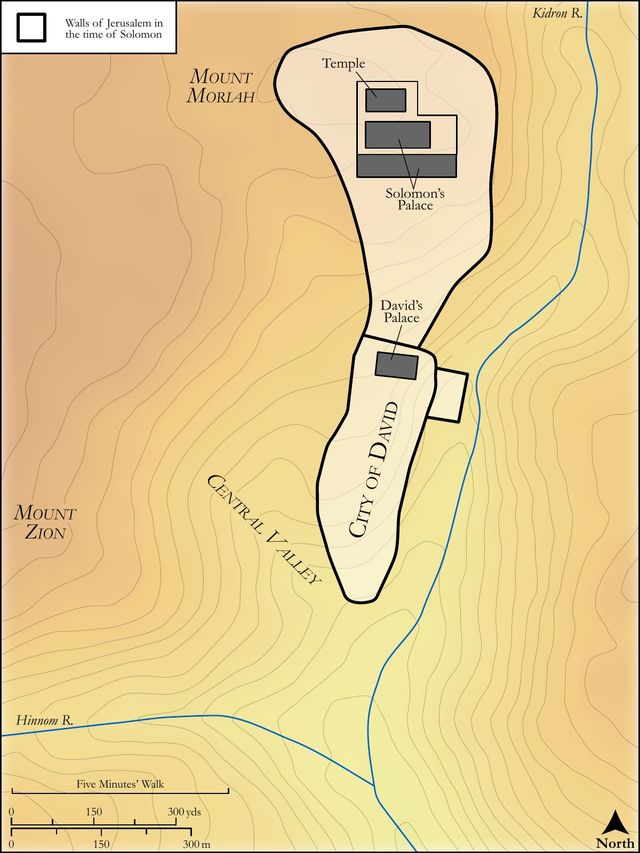
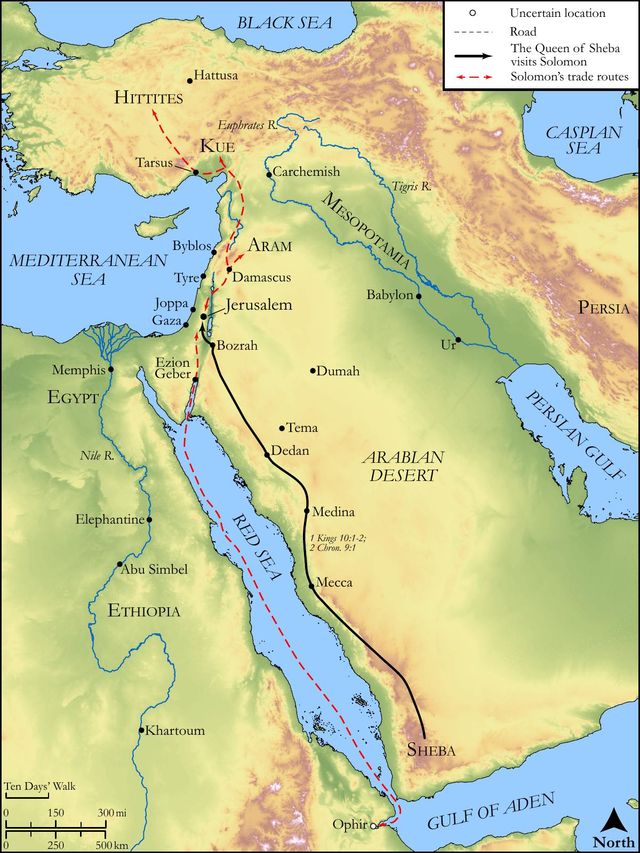
See on the biblical-era maps
Study this verse
Public-domain commentary
Matthew Henry
From his Commentary on the Whole Bible. Henry comments on passages, not single verses — this entry covers 1 Kings 10:14–29. His three-level outline is real structure in the source text, so it is rendered as structure.
We have here a further account of Solomon's prosperity.
I.How he increased his wealth.
Though he had much, he still coveted to have more, being willing to try the utmost the things of this world could do to make men happy.
1.Besides the gold that came from Ophir (Kg1 9:28), he brought so much into his country from other places that the whole amounted, every year, to 666 talents (Kg1 10:14), an ominous number, compare Rev 13:18, and Ezr 2:13.
2.He received a great deal in customs from the merchants, and in land-taxes from the countries his father had conquered and made tributaries to Israel, Kg1 10:15.
3.He was Hiram's partner in a Tharshish fleet, of and for Tyre, which imported once in three years, not only gold, and silver, and ivory, substantial goods and serviceable, but apes to play with and peacocks to please the eye with their feathers, Kg1 10:22. I wish this may not be an evidence that Solomon and his people, being overcharged with prosperity, by this time grew childish and wanton.
4.He had presents made him, every year, from the neighbouring princes and great men, to engage the continuance of his friendship, not so much because they feared him or were jealous of him as because they loved him and admired his wisdom, had often occasion to consult him as an oracle, and sent him these presents by way of recompence for his advice in politics, and (whether it became his grandeur and generosity or no we will not enquire) he took all that came, even garments and spices, horses and mules, Kg1 10:24, Kg1 10:25.
5.He traded to Egypt for horses and linen-yarn (or, as some read it, linen-cloth), the staple commodities of that country, and had his own merchants or factors whom he employed in this traffic and who were accountable to him, Kg1 10:28, Kg1 10:28. The custom to be paid to the king of Egypt for exported chariots and horses out of Egypt was very high, but (as bishop Patrick understands it) Solomon, having married his daughter, got him to compound for the customs, so that he could bring them up cheaper than his neighbours, which obliged them to buy them of him, which he was wise enough no doubt to make his advantage of. This puts an honour upon the trading part of a nation, and sets a tradesman not so much below a gentleman as some place him, that Solomon, one of the greatest men that ever was, thought it no disparagement to him to deal in trade. In all labour there is profit.
II.What use he made of his wealth.
He did not hoard it up in his coffers, that he might have it to look upon and leave behind him. He has, in his Ecclesiastes, so much exposed the folly of hoarding that we cannot suppose he would himself be guilty of it. No, God that had given him riches, and wealth, and honour, gave him also power to eat thereof, and to take his portion, Ecc 5:19.
1.He laid out his gold in fine things for himself, which he might the better be allowed to do when he had before laid out so much in fine things for the house of God.
(1.)He made 200 targets, and 300 shields, of beaten gold (Kg1 10:16, Kg1 10:17), not for service, but for state, to be carried before him when he appeared in pomp. With us, magistrates have swords and maces carried before them, as the Romans had their rods and axes, in token of their power to correct and punish the bad, to whom they are to be a terror. But Solomon had shields and targets carried before him, to signify that he took more pleasure in using his power for the defence and protection of the good, to whom he would be a praise. Magistrates are shields of the earth.
(2.)He made a stately throne, on which he sat, to give laws to his subjects, audience to ambassadors, and judgment upon appeals, Kg1 10:18-20. It was made of ivory, or elephants' teeth, which was very rich; and yet, as if he had so much gold that he knew not what to do with it, he overlaid that with gold, the best gold. Yet some think he did not cover the ivory all over, but here and there. He rolled it, flowered it, or inlaid it, with gold. The stays or arms of this stately chair were supported by the images of lions in gold; so were the steps and paces by which he went up to it, to be a memorandum to him of that courage and resolution wherewith he ought to execute judgment, not fearing the face of man. The righteous, in that post, is bold as a lion.
(3.)He made all his drinking vessels, and all the furniture of his table, even at his country seat, of pure gold, Kg1 10:21. He did not grudge himself what he had, but took the credit and comfort of it, such as it was. That is good that does us good.
2.He made it circulate among his subjects, so that the kingdom was as rich as the king; for he had no separate interests of his own to consult, but sought the welfare of his people. Those princes are not governed by Solomon's maxims who think it policy to keep their subjects poor. Solomon was herein a type of Christ, who is not only rich himself, but enriches all that are his. Solomon was instrumental to bring so much gold into the country, and disperse it, that silver was nothing accounted of, Kg1 10:21. There was such plenty of it in Jerusalem that it was as the stones; and cedars, that used to be great rarities, were as common as sycamore trees, Kg1 10:27. Such is the nature of worldly wealth, plenty of it makes it the less valuable; much more should the enjoyment of spiritual riches lessen our esteem of all earthly possessions. If gold in abundance would make silver to seem so despicable, shall not wisdom, and grace, and the foretastes of heaven, which are far better than gold, make earthly wealth seem much more despicable?
Lastly, Well, thus rich, thus great, was Solomon, and thus did he exceed all the kings of the earth, Kg1 10:23. Now let us remember, 1. That this was he who, when he was setting out in the world, did not ask for the wealth and honour of it, but asked for a wise and understanding heart. The more moderate our desires are towards earthly things the better qualified we are for the enjoyment of them and the more likely to have them. See, in Solomon's greatness, the performance of God's promise (Kg1 3:13), and let it encourage us to seek first the righteousness of God's kingdom. 2. That this was he who, having tasted all these enjoyments, wrote a whole book to show the vanity of all worldly things and the vexation of spirit that attends them, their insufficiency to make us happy and the folly of setting our hearts upon them, and to recommend to us the practice of serious godliness, as that which is the whole of man, and will do infinitely more towards the making of us easy and happy than all the wealth and power that he was master of, and which, through the grace of God, is within our reach, when the thousandth part of Solomon's greatness is a thousand times more than we can ever be so vain as to promise ourselves in this world.
Continue studying 1 Kings 10:26 across the web’s major study libraries — every link below opens this exact verse, chapter, or book on the destination site.
Read & Compare
 BibleGatewayThis verse in more than 200 translations and 70 languages.
 Bible.comThe YouVersion reader — hundreds of translations, reading plans, and highlights.
 ESV.orgCrossway's official English Standard Version reader.
 NET BibleThe NET translation with 60,000+ translators' notes on every rendering decision.
 STEP BibleTyndale House's free study tool — original text, vocabulary, and scholarly resources.
 BibliaLogos Bible Software's free web reader.
 USCCBThe New American Bible (Revised Edition) with the U.S. bishops' study notes.
Commentaries
 BibleHub CommentariesDozens of classic commentaries on this verse, gathered on one page.
 StudyLightMore than 100 commentary sets — the largest collection on the web.
 BibleRefPlain-English commentary on what this verse means, verse by verse.
 Enduring WordDavid Guzik's free commentary on this chapter, widely used by Bible teachers.
 Bible Study ToolsVerse commentary alongside Greek and Hebrew study aids.
Original Language & Research
- BibleHub InterlinearThe verse word by word — original language, transliteration, and English.
- BibleHub LexiconEvery word's original-language definition and Strong's entry.
 Blue Letter BibleDeep-study tools — Strong's numbers, concordance, and word studies.
 SefariaThe Hebrew text with Rashi and centuries of Jewish commentary.
Sermons, Hymns & Audio


TrulyRandomVerse is not affiliated with these sites and doesn’t control their content. They’re linked because they’re genuinely useful.
Summary
First Kings 10:26 provides a vivid snapshot of King Solomon's immense military accumulation, detailing his acquisition of "a thousand and four hundred chariots, and twelve thousand horsemen." This verse highlights the unprecedented scale of his kingdom's military infrastructure and personal wealth, with these formidable forces strategically deployed in designated chariot cities and maintained at the capital, Jerusalem. While seemingly a testament to his power and prosperity at the zenith of his reign, it subtly introduces a tension with divine commands, foreshadowing a potential spiritual compromise in Solomon's otherwise magnificent and blessed rule.
Context
ShowHideLiterary Context
This verse is strategically placed within a broader narrative arc (1 Kings 9-10) that meticulously chronicles the unparalleled zenith of Solomon's reign. It immediately follows the awe-inspiring visit of the Queen of Sheba and extensive descriptions of his unparalleled wisdom, immense wealth, and vast international prestige. Chapters 9 and 10 serve as a grand exposition of Solomon's glory, detailing his monumental building projects, lucrative trade ventures, and shrewd diplomatic relations. The mention of his military buildup, particularly the acquisition of chariots and horsemen, serves as a tangible expression of this dominion and influence, reinforcing the image of a powerful monarch at the absolute height of his empire. However, within the broader Deuteronomistic history, this glorification also subtly sets the stage for the subsequent narrative of Solomon's spiritual decline, where his increasing reliance on human strength and foreign alliances ultimately leads to apostasy and the tragic division of the kingdom, as detailed in 1 Kings 11.
Historical & Cultural Context
Among the kings of that day, the acquisition and deployment of chariots and horsemen were definitive indicators of a monarch's power, wealth, and military prowess. Chariots, in particular, were the elite units of ancient armies, representing a significant investment in terms of horses, skilled drivers, and the necessary maintenance infrastructure. Egypt was a primary source for horses and chariots, and Solomon's extensive trade networks, as explicitly described in 1 Kings 10:28-29, facilitated this massive acquisition. The strategic placement of these forces in "cities for chariots" (often fortified regional centers or garrisons) was a common practice, allowing for rapid deployment to protect vital trade routes, deter potential invaders, or project power across the empire. This military buildup reflects Solomon's engagement with the geopolitical realities of his time, aiming to secure his vast empire and maintain peace through strength, much like other great kings of the era.
Key Themes
ShowHideThe verse directly contributes to several key themes prevalent in the book of Kings. Firstly, it emphatically underscores Solomon's Unparalleled Wealth and Power, showcasing the tangible manifestations of the divine blessings and the vast resources at his disposal, solidifying his image as the wealthiest and most powerful king in Israel's history. Secondly, it touches upon the theme of National Security and Defense, illustrating Solomon's proactive measures to protect his kingdom, even during a period of relative peace and prosperity. However, most significantly, this military accumulation introduces a subtle yet profound theme of Potential for Spiritual Compromise. The Mosaic Law, specifically in Deuteronomy 17:16, explicitly warned future kings of Israel against multiplying horses, lest they rely on military might rather than on God, or lead the people back to Egypt. Solomon's actions here, while seemingly pragmatic, subtly hint at a departure from this divine instruction, foreshadowing the spiritual vulnerabilities that would later manifest in his reign and ultimately contribute to his downfall.
Exposition and Analysis
ShowHideKey Word Analysis
ShowHideThis verb (H622) signifies an intentional, systematic, and comprehensive collection. It implies a deliberate policy and extensive logistical effort on Solomon's part to amass such a vast military force, rather than a casual or incidental acquisition. It speaks to the strategic and methodical nature of his actions in consolidating power and resources.
Among the nations, as in the "nine hundred chariots of iron" of Jabin king of Canaan, chariots (H7393) represented the apex of military technology and power. They were extraordinarily expensive to acquire and maintain, requiring specialized training for both horses and drivers. Their sheer number (1,400) indicates an extraordinary level of wealth and military ambition, symbolizing the cutting edge of military might and a formidable projection of royal authority in that era.
These refer to cavalry (H6571), soldiers mounted on horses. While chariots were often the primary shock troops for frontal assault, horsemen provided crucial mobility, reconnaissance, and flanking maneuvers. The presence of 12,000 horsemen alongside the chariots signifies a balanced, versatile, and exceptionally formidable military force, capable of both offensive and defensive operations across Solomon's extensive territories.
Verse Breakdown
ShowHide"And Solomon gathered together chariots and horsemen:"
This opening clause establishes the king's active and deliberate role in building his military. The verb "gathered together" (Hebrew: vayikbotz from H622) emphasizes a systematic and intentional effort, indicating a national policy of military expansion and consolidation under Solomon's direct command. It highlights his executive power, the kingdom's immense capacity to undertake such a massive logistical endeavor, and his personal initiative in securing his reign.
"and he had a thousand and four hundred chariots, and twelve thousand horsemen,"
This part provides the specific, astonishing statistics of Solomon's military might. The numbers are staggering for the period, demonstrating an unparalleled accumulation of military assets. One thousand four hundred chariots, each requiring at least two horses and a crew, along with twelve thousand horsemen, represent an enormous investment and a formidable fighting force that would have commanded respect and fear among the nations round about. These figures underscore the unprecedented wealth and resources at Solomon's disposal, reflecting the peak of Israel's earthly power and prestige.
"whom he bestowed in the cities for chariots, and with the king at Jerusalem."
This final clause details the strategic deployment of these forces. "Cities for chariots" (often fortified regional centers or garrisons) indicates a decentralized military presence, allowing for rapid response and control over various parts of the kingdom and its vital trade routes. Maintaining a significant contingent "with the king at Jerusalem" ensured the immediate security of the capital and the royal court, as well as providing a readily available force for ceremonial purposes or immediate crises. This strategic distribution highlights Solomon's organizational acumen and his comprehensive approach to national defense and power projection.
Literary Devices
ShowHideThe verse employs several subtle but significant Literary Devices. The precise enumeration of "a thousand and four hundred chariots, and twelve thousand horsemen" functions as Amplification, serving to emphasize the extraordinary scale of Solomon's wealth and military power, even if the numbers are literal. This grand depiction is designed to magnify Solomon's glory and the splendor of his reign. More profoundly, the verse utilizes Foreshadowing and Irony when read in light of the Deuteronomic law concerning kingship. While presented as a sign of strength and prosperity, this accumulation of horses and chariots directly contravenes the divine instruction in Deuteronomy 17:16, which warned kings against multiplying horses "lest he cause the people to return to Egypt." Thus, what appears as a mark of success is simultaneously a subtle indicator of a spiritual vulnerability and a deviation from God's ideal for Israelite kings, subtly hinting at the seeds of Solomon's eventual spiritual decline and the kingdom's subsequent division. The chariots and horsemen, therefore, also function as Symbolism, representing reliance on human might and worldly power rather than on divine protection and provision.
Theological and Thematic Connections
ShowHideThe account of Solomon's military buildup in 1 Kings 10:26 serves as a powerful theological commentary on the nature of earthly power and the potential pitfalls of prosperity. While Solomon's wisdom and wealth were initially blessings from God, his accumulation of chariots and horsemen, particularly in such vast numbers, subtly transgressed the spirit of the Deuteronomic law for kings. This law was designed to prevent Israelite monarchs from placing their trust in military strength or foreign alliances, instead encouraging absolute reliance on the Lord for security and victory. Solomon's actions, though seemingly pragmatic for national security, represent a nascent shift from divine dependence to self-reliance and worldly might. This tension highlights a recurring biblical theme: the inherent danger of trusting in human resources over the sovereign power of God, and how even divinely granted prosperity can become a snare if it leads to a diminished faith and a departure from God's commands.
Reflection and Application
ShowHideThe narrative of Solomon's military might in 1 Kings 10:26 offers a timeless lesson for believers today, prompting us to critically examine where our ultimate trust and security truly lie. In a world that often equates strength with material possessions, financial stability, technological advancement, or political influence, Solomon's story reminds us that true and lasting security is found not in the abundance of what we possess, but in our unwavering reliance on God. While resources, preparedness, and wise stewardship are not inherently evil, they can become idols if they supplant our faith in divine providence and sovereign care. We are called to discern whether our pursuits and accumulations are genuinely in service of God's kingdom and glory, or if they subtly draw us away from Him, fostering a spirit of self-sufficiency and worldly confidence. This verse challenges us to consider if our "chariots and horsemen"—our careers, investments, relationships, personal talents, or even our intellectual prowess—have become sources of ultimate confidence, or if they remain tools to be stewarded under the watchful eye of our sovereign Lord, always pointing back to Him as our ultimate provider and protector.
Questions for Reflection
ShowHideFAQ
ShowHideWhy was it problematic for Solomon to multiply chariots and horsemen if he was a king?
ShowHideWhile acquiring military strength might seem like a wise strategic move for a king, it became problematic for Solomon because it directly contradicted a specific divine command given to future kings of Israel in Deuteronomy 17:16. This law explicitly warned kings not to "multiply horses for himself, nor cause the people to return to Egypt to get more horses." The underlying theological reason was twofold: first, God desired Israelite kings to rely on His divine protection and power for national security, rather than on worldly military might (as seen in Psalm 20:7). Second, multiplying horses often involved extensive trade with Egypt, which could lead to spiritual compromise through foreign alliances and the adoption of pagan practices. Solomon's actions, while seemingly successful in an earthly sense, marked a subtle but significant departure from God's ideal for Israelite kingship, foreshadowing his later spiritual decline and the eventual judgment upon his house.
Christ-Centered Fulfillment
ShowHideThe account of Solomon's vast military buildup in 1 Kings 10:26, while showcasing his earthly glory and strategic prowess, ultimately points to the superior and radically different kingship of Jesus Christ. Solomon's reign, despite its unprecedented splendor and peace, was characterized by a reliance on visible power, immense wealth, and military might—a kingdom established and maintained by human means, ultimately failing to perfectly embody God's ideal for a king. In stark contrast, Jesus' kingdom is emphatically "not of this world" (John 18:36), and His power is manifested not through chariots and horsemen, but through profound humility, self-sacrificial love, and spiritual authority. He entered Jerusalem not on a warhorse leading an army, but on a humble donkey (Matthew 21:5), fulfilling prophetic expectations of a peaceful king who comes in lowliness. Where Solomon accumulated earthly strength and sought security in material assets, Christ emptied Himself of divine prerogatives (Philippians 2:7), conquering sin and death not by military force, but by laying down His life on the cross. His victory is not over nations by physical conquest, but over spiritual darkness, the power of sin, and the human heart, establishing an eternal kingdom that transcends all earthly empires and relies solely on the power of God. Thus, Solomon's temporal, flawed kingship serves as a shadow, highlighting the perfect, eternal, and spiritually powerful reign of the true King, Jesus Christ, who truly embodies absolute reliance on God and brings ultimate salvation and peace.