


1 Kings 10:16
Bible text: King James Version (1769 Blayney text) · Public domain
Bible text: Berean Standard Bible · Public domain
Bible text: American Standard Version (1901) · Public domain
Bible text: World English Bible, Messianic edition · Public domain
Bible text: Geneva Bible (1599) · Public domain
Bible text: Young's Literal Translation · Public domain
- וַיַּעַשׂvai·Ya·'asand he madeH6213Conj-w ¦ V-Qal-ConsecImperf-3msVerb Qal Consecutive Imperfect 3rd Singular Masculineוַandיַּעַשׂhe made
- הַמֶּלֶךְha·Me·lekhthe kingH4428Art ¦ N-msNoun Singular Masculine Absoluteהַtheמֶּלֶךְking
- שְׁלֹמֹהshe·lo·MohSolomonH8010N-proper-mNoun Proper Masculine
- מָאתַיִםma·Ta·yimtwo hundredH3967N-fdNoun Dual Feminine Absolute
- צִנָּהtzi·Nahbody shield[s]H6793N-fsNoun Singular Feminine Absolute
- זָהָבza·HavgoldH2091N-msNoun Singular Masculine Absolute
- שָׁחוּטsha·ChutbeatenH7820V-Qal-PassPrtcpl-msVerb Qal Participle Passive Singular Masculine Absolute
- שֵׁשׁsheshsixH8337N-cscNoun Singular common gender Construct
- מֵאוֹתme·'othundred<s>H3967N-fpNoun Plural Feminine Absolute
- זָהָבza·HavgoldH2091N-msNoun Singular Masculine Absolute
- יַעֲלֶהya·'a·Lehhe put upH5927V-Hiphil-Imperf-3msVerb Hiphil Imperfect 3rd Singular Masculine
- עַל'alonH5921PrepPreposition
- הַצִּנָּהha·tzi·Nahthe body shieldH6793Art ¦ N-fsNoun Singular Feminine Absoluteהַtheצִּנָּהbody shield
- הָאֶחָתha·'e·Chat<the> oneH259Art ¦ N-fsNoun Singular Feminine Absoluteהָ<the>אֶחָתone
English is a literal word-by-word gloss of the Hebrew, not the KJV's wording. Why?
This is the original text the KJV's translators worked from — each Hebrew word with its own literal English meaning in this verse, prepared by scholars at Tyndale House, Cambridge. The KJV translates whole sentences, not word by word, so its wording differs: one Hebrew word can become several English words, and the KJV may choose “the LORD” where the gloss reads “Yahweh”. Both are faithful — they answer different questions. For the KJV's own rendering, switch to the KJV text.
Details
See on the biblical-era maps
Study this verse
Public-domain commentary
Matthew Henry
From his Commentary on the Whole Bible. Henry comments on passages, not single verses — this entry covers 1 Kings 10:14–29. His three-level outline is real structure in the source text, so it is rendered as structure.
We have here a further account of Solomon's prosperity.
I.How he increased his wealth.
Though he had much, he still coveted to have more, being willing to try the utmost the things of this world could do to make men happy.
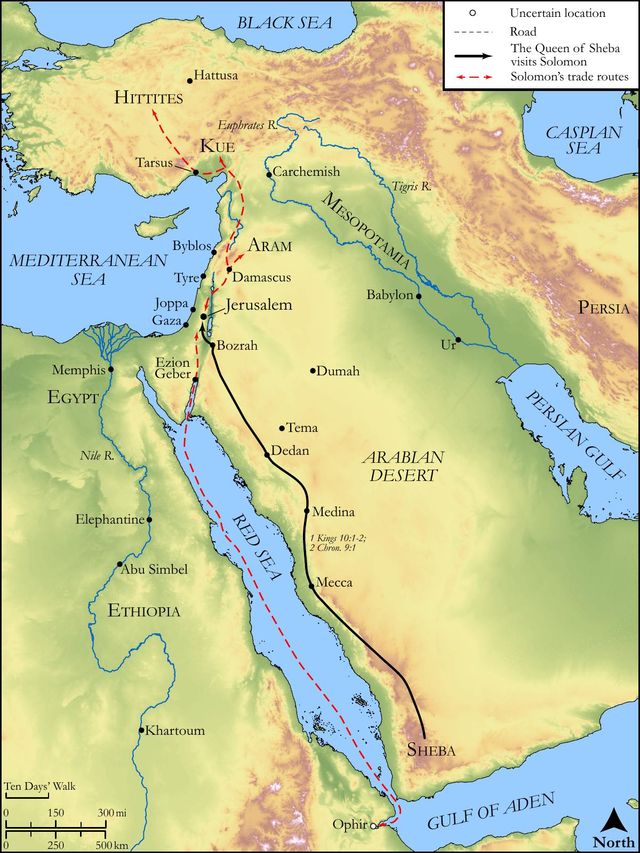
1.Besides the gold that came from Ophir (Kg1 9:28), he brought so much into his country from other places that the whole amounted, every year, to 666 talents (Kg1 10:14), an ominous number, compare Rev 13:18, and Ezr 2:13.
2.He received a great deal in customs from the merchants, and in land-taxes from the countries his father had conquered and made tributaries to Israel, Kg1 10:15.
3.He was Hiram's partner in a Tharshish fleet, of and for Tyre, which imported once in three years, not only gold, and silver, and ivory, substantial goods and serviceable, but apes to play with and peacocks to please the eye with their feathers, Kg1 10:22. I wish this may not be an evidence that Solomon and his people, being overcharged with prosperity, by this time grew childish and wanton.
4.He had presents made him, every year, from the neighbouring princes and great men, to engage the continuance of his friendship, not so much because they feared him or were jealous of him as because they loved him and admired his wisdom, had often occasion to consult him as an oracle, and sent him these presents by way of recompence for his advice in politics, and (whether it became his grandeur and generosity or no we will not enquire) he took all that came, even garments and spices, horses and mules, Kg1 10:24, Kg1 10:25.
5.He traded to Egypt for horses and linen-yarn (or, as some read it, linen-cloth), the staple commodities of that country, and had his own merchants or factors whom he employed in this traffic and who were accountable to him, Kg1 10:28, Kg1 10:28. The custom to be paid to the king of Egypt for exported chariots and horses out of Egypt was very high, but (as bishop Patrick understands it) Solomon, having married his daughter, got him to compound for the customs, so that he could bring them up cheaper than his neighbours, which obliged them to buy them of him, which he was wise enough no doubt to make his advantage of. This puts an honour upon the trading part of a nation, and sets a tradesman not so much below a gentleman as some place him, that Solomon, one of the greatest men that ever was, thought it no disparagement to him to deal in trade. In all labour there is profit.
II.What use he made of his wealth.
He did not hoard it up in his coffers, that he might have it to look upon and leave behind him. He has, in his Ecclesiastes, so much exposed the folly of hoarding that we cannot suppose he would himself be guilty of it. No, God that had given him riches, and wealth, and honour, gave him also power to eat thereof, and to take his portion, Ecc 5:19.
1.He laid out his gold in fine things for himself, which he might the better be allowed to do when he had before laid out so much in fine things for the house of God.
(1.)He made 200 targets, and 300 shields, of beaten gold (Kg1 10:16, Kg1 10:17), not for service, but for state, to be carried before him when he appeared in pomp. With us, magistrates have swords and maces carried before them, as the Romans had their rods and axes, in token of their power to correct and punish the bad, to whom they are to be a terror. But Solomon had shields and targets carried before him, to signify that he took more pleasure in using his power for the defence and protection of the good, to whom he would be a praise. Magistrates are shields of the earth.
(2.)He made a stately throne, on which he sat, to give laws to his subjects, audience to ambassadors, and judgment upon appeals, Kg1 10:18-20. It was made of ivory, or elephants' teeth, which was very rich; and yet, as if he had so much gold that he knew not what to do with it, he overlaid that with gold, the best gold. Yet some think he did not cover the ivory all over, but here and there. He rolled it, flowered it, or inlaid it, with gold. The stays or arms of this stately chair were supported by the images of lions in gold; so were the steps and paces by which he went up to it, to be a memorandum to him of that courage and resolution wherewith he ought to execute judgment, not fearing the face of man. The righteous, in that post, is bold as a lion.
(3.)He made all his drinking vessels, and all the furniture of his table, even at his country seat, of pure gold, Kg1 10:21. He did not grudge himself what he had, but took the credit and comfort of it, such as it was. That is good that does us good.
2.He made it circulate among his subjects, so that the kingdom was as rich as the king; for he had no separate interests of his own to consult, but sought the welfare of his people. Those princes are not governed by Solomon's maxims who think it policy to keep their subjects poor. Solomon was herein a type of Christ, who is not only rich himself, but enriches all that are his. Solomon was instrumental to bring so much gold into the country, and disperse it, that silver was nothing accounted of, Kg1 10:21. There was such plenty of it in Jerusalem that it was as the stones; and cedars, that used to be great rarities, were as common as sycamore trees, Kg1 10:27. Such is the nature of worldly wealth, plenty of it makes it the less valuable; much more should the enjoyment of spiritual riches lessen our esteem of all earthly possessions. If gold in abundance would make silver to seem so despicable, shall not wisdom, and grace, and the foretastes of heaven, which are far better than gold, make earthly wealth seem much more despicable?
Lastly, Well, thus rich, thus great, was Solomon, and thus did he exceed all the kings of the earth, Kg1 10:23. Now let us remember, 1. That this was he who, when he was setting out in the world, did not ask for the wealth and honour of it, but asked for a wise and understanding heart. The more moderate our desires are towards earthly things the better qualified we are for the enjoyment of them and the more likely to have them. See, in Solomon's greatness, the performance of God's promise (Kg1 3:13), and let it encourage us to seek first the righteousness of God's kingdom. 2. That this was he who, having tasted all these enjoyments, wrote a whole book to show the vanity of all worldly things and the vexation of spirit that attends them, their insufficiency to make us happy and the folly of setting our hearts upon them, and to recommend to us the practice of serious godliness, as that which is the whole of man, and will do infinitely more towards the making of us easy and happy than all the wealth and power that he was master of, and which, through the grace of God, is within our reach, when the thousandth part of Solomon's greatness is a thousand times more than we can ever be so vain as to promise ourselves in this world.
Continue studying 1 Kings 10:16 across the web’s major study libraries — every link below opens this exact verse, chapter, or book on the destination site.
Read & Compare
 BibleGatewayThis verse in more than 200 translations and 70 languages.
 Bible.comThe YouVersion reader — hundreds of translations, reading plans, and highlights.
 ESV.orgCrossway's official English Standard Version reader.
 NET BibleThe NET translation with 60,000+ translators' notes on every rendering decision.
 STEP BibleTyndale House's free study tool — original text, vocabulary, and scholarly resources.
 BibliaLogos Bible Software's free web reader.
 USCCBThe New American Bible (Revised Edition) with the U.S. bishops' study notes.
Commentaries
 BibleHub CommentariesDozens of classic commentaries on this verse, gathered on one page.
 StudyLightMore than 100 commentary sets — the largest collection on the web.
 BibleRefPlain-English commentary on what this verse means, verse by verse.
 Enduring WordDavid Guzik's free commentary on this chapter, widely used by Bible teachers.
 Bible Study ToolsVerse commentary alongside Greek and Hebrew study aids.
Original Language & Research
- BibleHub InterlinearThe verse word by word — original language, transliteration, and English.
- BibleHub LexiconEvery word's original-language definition and Strong's entry.
 Blue Letter BibleDeep-study tools — Strong's numbers, concordance, and word studies.
 SefariaThe Hebrew text with Rashi and centuries of Jewish commentary.
Sermons, Hymns & Audio


TrulyRandomVerse is not affiliated with these sites and doesn’t control their content. They’re linked because they’re genuinely useful.
Summary
1 Kings 10:16 provides a meticulous account of King Solomon's unparalleled opulence, detailing the creation of two hundred grand ceremonial shields, known as "targets." Each of these magnificent items was crafted from six hundred shekels of beaten gold, a truly staggering quantity that vividly underscores the immense wealth, prestige, and divine favor bestowed upon Israel during its golden age under Solomon's reign. This verse contributes significantly to the broader depiction of Solomon's kingdom at its zenith, showcasing a period of unprecedented material prosperity, royal display, and international renown.
Context
ShowHideLiterary Context
This verse is intricately woven into the fabric of 1 Kings 10, a chapter primarily dedicated to extolling the vast wealth, profound wisdom, and unparalleled glory of King Solomon. It immediately follows the climactic account of the Queen of Sheba's visit, an event that served as an international testament to Solomon's fame and the splendor of his kingdom, confirming that "the half was not told me" (1 Kings 10:7). The description of these gold targets (verse 16) is then followed by a mention of three hundred smaller shields (verse 17) and the elaborate construction of Solomon's magnificent ivory throne overlaid with gold (verses 18-20), all contributing to an overwhelming picture of national grandeur. This sequence of detailed descriptions reinforces the theme of unparalleled material blessing and royal magnificence that characterized Solomon's rule, presenting it as the undeniable peak of Israelite prosperity and influence.
Historical & Cultural Context
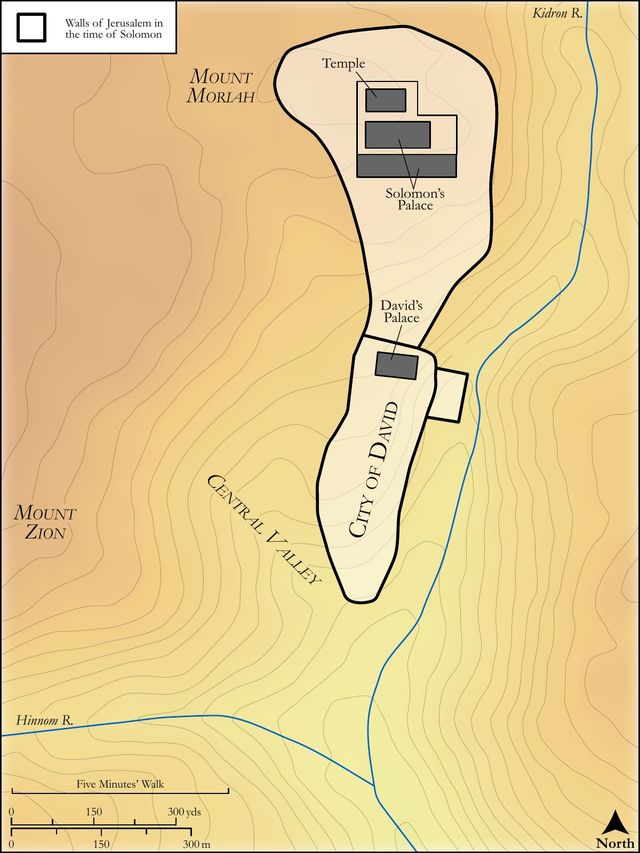
Solomon's reign (c. 970-931 BC) marked a unique period of remarkable peace, prosperity, and international influence for Israel, largely due to his strategic alliances, extensive trade networks, and God-given wisdom. Jerusalem, under Solomon, blossomed into a vibrant hub of commerce, culture, and political power. Among the monarchies of that day, the lavish use and display of precious metals and elaborate craftsmanship were not merely for practical purposes but served as powerful cultural statements of authority, divine favor, and imperial might. Kings would assert their legitimacy and impress foreign dignitaries through such ostentatious displays. These "targets" were undoubtedly part of a royal armory display, most likely housed in the "House of the Forest of Lebanon" (as noted in 1 Kings 10:21), serving as a visible testament to Israel's preeminence and Solomon's divinely blessed status among the nations.
Key Themes
ShowHideThe verse powerfully illustrates several key themes prevalent throughout 1 Kings. Firstly, it highlights Unprecedented Wealth and Prosperity, a direct fulfillment of God's promise to Solomon for his humble request for wisdom (1 Kings 3:13). The sheer volume of gold signifies an almost unimaginable level of national affluence, a testament to God's covenant faithfulness. Secondly, it emphasizes Royal Splendor and Display, as these ceremonial shields were not intended for combat but for showcasing the kingdom's might and prestige. They served as tangible symbols of Solomon's magnificence, designed to impress both his own people and foreign visitors alike. Thirdly, while depicting God's blessing, the lavishness also subtly introduces the theme of the Potential Dangers of Excessive Wealth. Although initially a sign of divine favor, the accumulation and display of such riches, as the narrative progresses, implicitly foreshadow the spiritual compromises and eventual decline that can accompany unchecked prosperity, a theme Solomon himself would later explore in his wisdom literature, particularly in Ecclesiastes.
Exposition and Analysis
ShowHideKey Word Analysis
ShowHideFeminine of צֵן; a hook (as pointed); also a (large) shield (as if guarding by prickliness); also cold (as piercing); buckler, cold, hook, shield, target. In 1 Kings 10:16, this term refers to a large, full-body shield, designed to cover the entire person. It is distinct from the smaller, rounder shield (Hebrew, magen). In this specific context, however, these "targets" were clearly ceremonial rather than functional for battle, serving as ornate displays of wealth and power within the royal armory or palace. Their impressive size would have made them particularly striking as objects of display.
A primitive root (identical with שָׁחַט through the idea of striking); to hammer out; beat. This term indicates that the gold was meticulously hammered into shape, not cast or melted. The process of beating gold into thin sheets or intricate forms required considerable skill and considerable labor, making the resulting objects even more valuable and indicative of fine craftsmanship. It underscores a meticulous and costly production method, further emphasizing the extravagance and high quality of artistry at Solomon's court.
From an unused root meaning to shimmer; gold, figuratively, something gold-colored (i.e. yellow), as oil, a clear sky; gold(-en), fair weather. The repeated mention of "gold" in this verse (twice) highlights the primary material of these targets, emphasizing the unparalleled opulence and intrinsic value of these ceremonial items. Gold, in Scripture, was the ultimate symbol of wealth, power, and divine favor, making its lavish use here a powerful statement about the unprecedented prosperity and glory of Solomon's reign.
Verse Breakdown
ShowHide"And king Solomon made two hundred targets [of] beaten gold"
This clause establishes the central subject (King Solomon), the action (made), the precise quantity (two hundred), and the precious material (beaten gold) of the objects. The sheer number of these large, gold shields immediately signals an extraordinary level of wealth and a deliberate act of creating items for conspicuous display rather than practical military use. The specification of "beaten gold" highlights the superior quality, meticulous craftsmanship, and labor-intensive nature of their production, further emphasizing their immense value.
"six hundred [shekels] of gold went to one target"
This provides the astonishing detail of the gold quantity per target. A shekel was a unit of weight, and 600 shekels of gold would equate to approximately 15 pounds (or 6.8 kilograms) of pure gold for each individual shield. This immense weight of precious metal for a single ceremonial item magnifies the scale of Solomon's wealth and the lavishness of his kingdom, rendering the total amount of gold for all 200 targets truly staggering and almost unimaginable, reinforcing the narrative of unparalleled prosperity.
Literary Devices
ShowHideThe verse employs several potent literary devices to convey its message of unparalleled wealth and royal grandeur. Hyperbole is evident in the sheer, almost unbelievable quantity of gold used (600 shekels per target, multiplied by 200). While historically accurate, the description is presented in a way that emphasizes the extraordinary, pushing the boundaries of what is typically encountered and evoking a sense of awe. Symbolism is central, as the gold "targets" are not merely objects but powerful symbols of Solomon's immense power, prestige, and the perceived invincibility of his kingdom. They represent the apex of Israel's material glory and serve as a tangible manifestation of divine blessing and royal authority. The meticulous detail regarding the "beaten gold" also highlights Emphasis, drawing the reader's attention to the quality, costliness, and labor-intensive nature of the craftsmanship, thereby reinforcing the overall theme of Solomon's unparalleled wealth and the kingdom's zenith.
Theological and Thematic Connections
ShowHideThe description of Solomon's gold targets serves as a potent illustration of God's abundant blessing upon Israel during this period, a direct fulfillment of promises made to Solomon for his wisdom and faithful heart. This material prosperity was a tangible sign of divine favor, showcasing a kingdom at its peak of glory and influence, reflecting the covenant blessings of God upon His chosen people. However, it also subtly introduces a crucial theological tension: while wealth can be a genuine gift from God, its excessive accumulation and display, if not stewarded with spiritual discernment and humility, can become a spiritual snare. The very items that symbolized security and power were ceremonial, not for actual battle, hinting that true security lies not in material possessions or visible displays of might but in God alone. This foreshadows the later decline of Solomon's kingdom, which, despite its initial splendor, would eventually face challenges that gold could not avert, underscoring the transient nature of earthly riches compared to eternal spiritual treasures.
Reflection and Application
ShowHideThe detailed account of Solomon's gold targets in 1 Kings 10:16 offers a vivid tableau of a kingdom at the pinnacle of its material glory, a testament to the immense blessings God bestowed upon Solomon. This period represents an unparalleled era of peace and prosperity in Israel's history, where divine favor manifested in tangible wealth and international renown. Yet, this very abundance carries a subtle, yet profound, spiritual warning. The lavish display of gold, while initially a sign of God's blessing, can, over time, become an end in itself, potentially overshadowing a sincere devotion to the Giver of all good things and fostering a misplaced trust in earthly security. This verse compels us to examine the source of our own blessings and to critically assess where our true security and ultimate trust reside. It challenges us to consider whether our pursuit and display of earthly resources align with heavenly priorities, reminding us that true and lasting security is found not in accumulating perishable wealth, but in a steadfast, worshipful relationship with God.
Questions for Reflection
ShowHideFAQ
ShowHideWere these gold targets used in actual battles?
ShowHideNo, the "targets" (large shields) mentioned in 1 Kings 10:16 were purely ceremonial, not intended for practical combat. The text describes them as being made of "beaten gold" and specifies an enormous amount of gold for each, making them far too heavy, impractical, and valuable for battlefield use. They were almost certainly displayed in Solomon's "House of the Forest of Lebanon" (as mentioned in 1 Kings 10:21), serving as a visible and awe-inspiring symbol of his immense wealth, power, and the unparalleled grandeur of his kingdom. Their primary purpose was to impress, symbolize prestige, and demonstrate royal magnificence, rather than to provide protection in warfare.
How much gold was used for these targets, and what was its value?
ShowHide1 Kings 10:16 states that "six hundred [shekels] of gold went to one target." A shekel was a unit of weight, and 600 shekels of gold is approximately 15 pounds (or 6.8 kilograms) of gold per target. With 200 such targets, the total amount of gold would be 120,000 shekels, or roughly 3,000 pounds (about 1,360 kilograms) of pure gold. At current market prices, this would represent an astronomical sum, underscoring the unparalleled wealth and economic power of Solomon's kingdom. This immense value highlights the extraordinary prosperity Israel enjoyed under his reign, which was a direct result of God's covenant blessings and Solomon's divinely granted wisdom.
Christ-Centered Fulfillment
ShowHideThe lavish display of Solomon's golden targets, while signifying the peak of Israel's earthly glory and the tangible blessings of God, ultimately points beyond itself to a greater King and a more enduring, spiritual glory found in Jesus Christ. Solomon's wealth, though divinely given, was temporal and eventually faded, as did the security and power it symbolized. His earthly kingdom, despite its initial splendor, was ultimately flawed and would eventually decline and fall. In contrast, Jesus, the true Son of David and the "greater than Solomon" (as declared in Matthew 12:42), reigns over an eternal kingdom "not of this world" (John 18:36). While Solomon's glory was manifest in physical gold and earthly display, Christ's glory is the very "radiance of God's glory and the exact representation of His being" (Hebrews 1:3). He did not come to display earthly riches or accumulate material wealth but to embody true spiritual wealth, becoming poor for our sake that we might become rich in Him through His grace (2 Corinthians 8:9). The gold targets of Solomon, though magnificent, were ultimately perishable and could not secure true peace or lasting salvation; Christ offers imperishable treasures, eternal security, and a kingdom that will never end, fulfilling the promise of a King whose reign transcends all earthly splendor and whose sacrifice provides ultimate protection and eternal life.