


1 Chronicles 12:18
- וְרוּחַve·Ru·achand a spiritH7307Conj-w ¦ N-fsNoun Singular Feminine Absoluteוְandרוּחַa spirit
- לָבְשָׁהla·ve·Shahit clothedH3847V-Qal-Perf-3fsVerb Qal Perfect 3rd Singular Feminine
- אֶת'et<obj.>H853DirObjMParticle Object Indicator
- עֲמָשַׂי'a·ma·SaiAmasaiH6022N-proper-mNoun Proper Masculine
- רֹאשׁrosh[the] chief ofH7218N-mscNoun Singular Masculine Construct
- הַשָּׁלִישִׁיםha·she·lo·shimthe officersH7991Art ¦ N-mpNoun Plural Masculine Absoluteהַtheשָּׁלִישִׁיםofficers
- לְךָle·Khato youPrep-l ¦ 2msSuffix Personal 2nd Singular Masculineלְtoךָyou
- דָוִידda·VidO DavidH1732N-proper-mNoun Proper Masculine
- וְעִמְּךָve·'i·me·Khaand with youH5973Conj-w ¦ Prep ¦ 2msPrepositionוְandעִמְּwithךָyou
- בֶןvenO son ofH1121N-mscNoun Singular Masculine Construct
- יִשַׁיyi·ShaiJesseH3448N-proper-mNoun Proper Masculine
- שָׁלוֹםsha·LompeaceH7965N-msNoun Singular Masculine Absolute
- שָׁלוֹםsha·LompeaceH7965N-msNoun Singular Masculine Absolute
- לְךָle·Kha[be] to youPrep-l ¦ 2msSuffix Personal 2nd Singular Masculineלְ[be] toךָyou
- וְשָׁלוֹםve·sha·lOmand peaceH7965Conj-w ¦ N-msNoun Singular Masculine Absoluteוְandשָׁלוֹםpeace
- לְעֹזְרֶךָle·'O·ze·Re·kha[be] to [one who] helps youH5826Prep-l ¦ V-Qal-Prtcpl-ms ¦ 2msVerb Qal Participle Singular Masculine Constructלְ[be] toעֹזְרֶ[one who] helpsךָyou
- כִּיkiforH3588PrtParticle Conditional
- עֲזָרְךָ'a·za·re·Khahe has helped youH5826V-Qal-Perf-3ms ¦ 2msVerb Qal Perfect 3rd Singular Masculineעֲזָרְhe has helpedךָyou
- אֱלֹהֶיךָ'e·lo·Hei·khayour GodH430N-mpc ¦ 2msNoun Plural Masculine ConstructאֱלֹהֶיGodךָyour
- וַיְקַבְּלֵםvay·ka·be·Lemand he received themH6901Conj-w ¦ V-Piel-ConsecImperf-3ms ¦ 3mpVerb Piel Consecutive Imperfect 3rd Singular Masculineוַandיְקַבְּלֵhe receivedםthem
- דָּוִידda·VidDavidH1732N-proper-mNoun Proper Masculine
- וַיִּתְּנֵםvai·yi·te·Nemand he appointed themH5414Conj-w ¦ V-Qal-ConsecImperf-3ms ¦ 3mpVerb Qal Consecutive Imperfect 3rd Singular Masculineוַandיִּתְּנֵhe appointedםthem
- בְּרָאשֵׁיbe·ra·Shei<in> [the] chiefs ofH7218Prep-b ¦ N-mpcNoun Plural Masculine Constructבְּ<in>רָאשֵׁי[the] chiefs of
- הַגְּדוּדha·ge·Dudthe marauding bandH1416Art ¦ N-msNoun Singular Masculine Absoluteהַtheגְּדוּדmarauding band
English is a literal word-by-word gloss of the Hebrew, not the KJV's wording. Why?
This is the original text the KJV's translators worked from — each Hebrew word with its own literal English meaning in this verse, prepared by scholars at Tyndale House, Cambridge. The KJV translates whole sentences, not word by word, so its wording differs: one Hebrew word can become several English words, and the KJV may choose “the LORD” where the gloss reads “Yahweh”. Both are faithful — they answer different questions. For the KJV's own rendering, switch to the KJV text.
Details
See on the biblical-era map
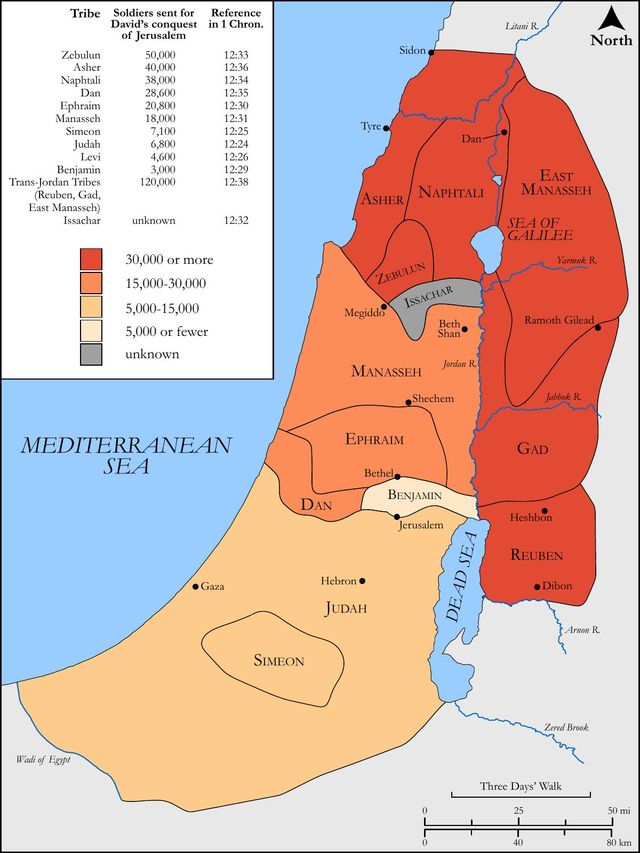
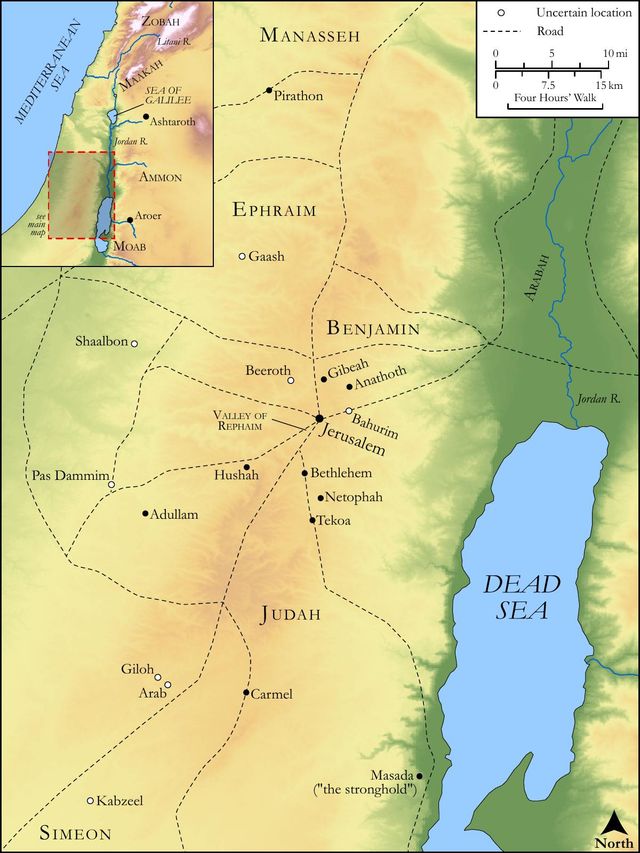
Study this verse
Public-domain commentary
Matthew Henry
From his Commentary on the Whole Bible. Henry comments on passages, not single verses — this entry covers 1 Chronicles 12:1–22. His four-level outline is real structure in the source text, so it is rendered as structure.
We have here an account of those that appeared and acted as David's friends, upon the death of Saul, to bring about the revolution. All the forces he had, while he was persecuted, was but 600 men, who served for his guards; but, when the time had come that he must begin to act offensively, Providence brought in more to his assistance. Even while he kept himself close, because of Saul (Ch1 12:1), while he did not appear, to invite or encourage his friends and well-wishers to come in to him (not foreseeing that the death of Saul was so near), God was inclining and preparing them to come over to him with seasonable succours. Those that trust God to do his work for them in his own way and time shall find his providence outdoing all their forecast and contrivance. The war was God's, and he found out helpers of the war, whose forwardness to act for the man God designed for the government is here recorded to their honour.
I.Some, even of Saul's brethren, of the tribe of Benjamin, and a-kin to him, came over to David, Ch1 12:2.
What moved them to it we are not told. Probably a generous indignation at the base treatment which Saul, one of their tribe, gave him, animated them to appear the more vigorously for him, that the guilt and reproach of it might not lie upon them. These Benjamites are described to be men of great dexterity, that were trained up in shooting and slinging, and used both hands alike - ingenious active men; a few of these might do David a great deal of service. Several of the leading men of them are here named. See Jdg 20:16.
II.Some of the tribe of Gad, though seated on the other side Jordan, had such a conviction of David's title to the government, and fitness for it, that they separated themselves from their brethren (a laudable separation it was) to go to David, though he was in the hold in the wilderness (Ch1 12:8), probably some of his strong holds in the wilderness of Engedi. They were but few, eleven in all, here named, but they added much to David's strength. Those that had hitherto come in to his assistance were most of them men of broken fortunes, distressed, discontented, and soldiers of fortune, that came to him rather for protection than to do him any service, Sa1 22:2. But these Gadites were brave men, men of war, and fit for the battle, Ch1 12:8. For,
1.They were able-bodied men, men of incredible swiftness, not to fly from, but to fly upon, the enemy, and to pursue the scattered forces. In this they were as swift as the roes upon the mountains, so that no man could escape from them; and yet they had faces like the faces of lions, so that no man could out-fight them.
2.They were disciplined men, trained up to military exercises; they could handle shield and buckler, use both offensive and defensive weapons.
3.They were officers of the militia in their own tribe (Ch1 12:14), so that though they did not bring soldiers with them they had them at command, hundreds, thousands.
4.They were daring men, that could break through the greatest difficulties. Upon some expedition or other, perhaps this to David, they swam over the Jordan, when it overflowed all its banks, Ch1 12:15. Those are fit to be employed in the cause of God that can venture thus in a dependence upon the divine protection.
5.They were men that would go through with the business they engaged in. What enemies those were that they met with in the valleys, when they had passed Jordan, does not appear; but they put them to flight with their lion-like faces, and pursued them with matchless fury, both towards the east and towards the west; which way soever they turned, they followed their blow, and did not do their work by halves.
III.Some of Judah and Benjamin came to him, Ch1 12:16.
Their leader was Amasai, whether the same with that Amasa that afterwards sided with Absalom (Sa2 17:25) or no does not appear. Now here we have,
1.David's prudent treaty with them, Ch1 12:17. He was surprised to see them, and could not but conceive some jealousy of the intentions of their coming, having been so often in danger by the treachery of the men of Ziph and the men of Keilah, who yet were all men of Judah. He might well be timorous whose life was so much struck at; he might well be suspicious who had been deceived in so many that he said, in his haste, All men are liars. No marvel that he meets these men of Judah with caution. Observe,
(1.)How he puts the matter to themselves, how fairly he deals with them. As they are, they shall find him; so shall all that deal with the Son of David.
[1.]If they be faithful and honourable, he will be their rewarder: "If you have come peaceably unto me, to help me, though you have come late and have left me exposed a great while, though you bring no great strength with you to turn the scale for me, yet I will thankfully accept your good-will, and my heart shall be knit unto you; I will love you and honour you, and do you all the kindness I can." Affection, respect, and service, that are cordial and sincere, will find favour with a good man, as they do with a good God, though clogged with infirmities, and turning to no great account. But,
[2.]If they be false, and come to betray him into the hands of Saul, under colour of friendship, he leaves them to God to be their avenger, as he is, and will be, of every thing that is treacherous and perfidious. Never was man more violently run upon, and run down, than David was (except the Son of David himself), and yet he had the testimony of his conscience that there was no wrong in his hands. He meant no harm to any man, which was his rejoicing in the day of evil, and enabled him, when he feared treachery, to commit his cause to him that judges righteously. He will not be judge in his own cause, though a wise man, nor avenge himself, though a man of valour; but let the righteous God, who hath said, Vengeance is mine, do both. The God of our fathers look thereon and rebuke it.
(2.)In this appeal observe,
[1.]He calls God the God of our fathers, both his fathers and theirs. Thus he reminded them not to deal ill with him; for they were both descendants from the same patriarchs, and both dependents on the same God. Thus he encouraged himself to believe that God would right him if he should be abused; for he was the God of his fathers and therefore a blessing was entailed on him, and a God to all Israel and therefore not only a Judge to all the earth, but particularly concerned in determining controversies between contesting Israelites.
[2.]He does not imprecate any fearful judgement upon them, though they should deal treacherously, but very modestly refers his cause to the divine wisdom and justice: The Lord look thereon, and judge as he sees (for he sees men's hearts), and rebuke it. It becomes those that appeal to God to express themselves with great temper and moderation; for the wrath of man works not the righteousness of God.
2.Their hearty closure with him, Ch1 12:18. Amasai was their spokesman, on whom the Spirit of the Lord came, not a spirit of prophecy, but a spirit of wisdom and resolution, according to the occasion, putting words into his mouth, unpremeditated, which were proper both to give David satisfaction and to animate those that accompanied him. Nothing could be said finer, more lively, or more pertinent to the occasion. For himself and all his associates,
(1.)He professed a very cordial adherence to David, and his interest, against all that opposed him, and a resolution to stand by him with the hazard of all that was dear to him: Thine are we, David, and on thy side, thou son of Jesse. In calling him son of Jesse they reminded themselves that he was lineally descended from Nahshon and Salmon, who in their days were princes of the tribe of Judah. Saul called him so in disdain (Sa1 20:27; Sa1 22:7), but they looked upon it as his honour. They were convinced that God was on his side; and therefore, Thine are we, David, and on thy side. It is good, if we must side, to side with those that side with God and have God with them.
(2.)He wished prosperity to David and his cause, not drinking a health, but praying for peace to him and all his friends and well-wishers: "Peace, peace, be unto thee, all the good thy heart desires, and peace be to thy helpers, among whom we desire to be reckoned, that peace may be on us." (3.) He assured him of help from heaven: "For thy God helpeth thee; therefore we wish peace may be, and therefore we doubt not but peace shall be, to thee and thy helpers. God is thy God, and those that have him for their God no doubt have him for their helper in every time of need and danger." From these expressions of Amasai we may take instruction how to testify our affection and allegiance to the Lord Jesus. His we must be without reservation or power of revocation. On his side we must be forward to appear and act. To his interest we must be hearty well-wishers: "Hosanna! prosperity to his gospel and kingdom;" for his God helpeth him, and will till he shall have put down all opposing rule, principality, and power.
3.David's cheerful acceptance of them into his interest and friendship. Charity and honour teach us to let fall our jealousies as soon as satisfaction is given us: David received them, and preferred them to be captains of the band.
IV.Some of Manasseh likewise joined with him, v.
19. Providence gave them a fair opportunity to do so when he and his men marched through their country upon this occasion. Achish took David with him when he went out to fight with Saul; but the lords of the Philistines obliged him to withdraw. We have the story, Sa1 29:4, etc. In his return some great men of Manasseh, who had no heart to join with Saul against the Philistines struck in with David, and very seasonably, to help him against the band of Amelekites who plundered Ziklag; they were not many, but they were all mighty men and did David good service upon that occasion, 1 Sa. 30. See how Providence provides. David's interest grew strangely just when he had occasion to make use of it, Ch1 12:22. Auxiliary forces flocked in daily, till he had a great host. When the promise comes to the birth, leave it to God to find strength to bring forth.
Historical interpretation
Historical reception
1 surviving comment on this verse from the historical church.
“The Lord shall give the Word to them that preach good tidings, with great power.” Of you, also, I venture to make this prayer, that, in this struggle of ours, truth may prevail. For you are not seeking your own glory but Christ’s, and when you win the victory, I also shall win it if I recognize my own error, and, contrarily, you prevail when I win, “for neither ought the children to lay up for the parents, but the parents for the children.” And in the book of Paralipomenon we read that the sons of Israel went out to fight with peaceful heart, in the very midst of swords and blood shedding and the bodies of the slain, because they were thinking of the victory of peace, not their own.
Continue studying 1 Chronicles 12:18 across the web’s major study libraries — every link below opens this exact verse, chapter, or book on the destination site.
Read & Compare
 BibleGatewayThis verse in more than 200 translations and 70 languages.
 Bible.comThe YouVersion reader — hundreds of translations, reading plans, and highlights.
 ESV.orgCrossway's official English Standard Version reader.
 NET BibleThe NET translation with 60,000+ translators' notes on every rendering decision.
 STEP BibleTyndale House's free study tool — original text, vocabulary, and scholarly resources.
 BibliaLogos Bible Software's free web reader.
 USCCBThe New American Bible (Revised Edition) with the U.S. bishops' study notes.
Commentaries
 BibleHub CommentariesDozens of classic commentaries on this verse, gathered on one page.
 StudyLightMore than 100 commentary sets — the largest collection on the web.
 BibleRefPlain-English commentary on what this verse means, verse by verse.
 Enduring WordDavid Guzik's free commentary on this chapter, widely used by Bible teachers.
 Bible Study ToolsVerse commentary alongside Greek and Hebrew study aids.
Original Language & Research
- BibleHub InterlinearThe verse word by word — original language, transliteration, and English.
- BibleHub LexiconEvery word's original-language definition and Strong's entry.
 Blue Letter BibleDeep-study tools — Strong's numbers, concordance, and word studies.
 SefariaThe Hebrew text with Rashi and centuries of Jewish commentary.
Sermons, Hymns & Audio


TrulyRandomVerse is not affiliated with these sites and doesn’t control their content. They’re linked because they’re genuinely useful.
Summary
1 Chronicles 12:18 captures a pivotal moment in David's consolidation of power, detailing the divinely-inspired declaration of Amasai, a prominent leader among the warriors who pledged allegiance to David. This verse powerfully articulates the unwavering loyalty of these men, invokes a profound blessing of comprehensive peace, and grounds their commitment in the recognition of God's active, sovereign assistance to David, leading to David's strategic reception and commissioning of them into his burgeoning military force.
Context
ShowHideLiterary Context
1 Chronicles 12 meticulously chronicles the diverse groups of valiant men who rallied to David during his period of exile and preparation for kingship. The chapter begins by detailing the warriors who joined him at Ziklag while he was still fleeing King Saul, highlighting their skill and unwavering commitment (e.g., 1 Chronicles 12:1-7). It then progresses to describe the formidable forces from various tribes—Gad, Benjamin, Judah, and eventually all of Israel—who came to him at Hebron to establish him as king (e.g., 1 Chronicles 12:23-40). Amasai's declaration in verse 18 is strategically positioned within these accounts, particularly among those from Benjamin and Judah who joined David at the stronghold. It serves as a powerful, divinely-ratified summary of the sentiment of allegiance that characterized these crucial alliances, underscoring the growing momentum and divine validation of David's leadership even before Saul's demise.
Historical & Cultural Context
This passage is set against the backdrop of a tumultuous era in Israel's history, characterized by King Saul's increasingly unstable reign and David's forced exile. David was operating from various strongholds, gathering a diverse array of loyal followers who perceived him as God's chosen successor, despite Saul still occupying the throne. In ancient Israel, tribal loyalties were paramount, making the willingness of men from different tribes, including those from Saul's own tribe of Benjamin, to pledge allegiance to David a significant political and spiritual act. Such declarations of loyalty, often accompanied by oaths or symbolic gestures, were essential for establishing and maintaining leadership in a tribal society. The explicit recognition of divine favor, expressed as "thy God helpeth thee," was not merely a pious statement but a profound cultural acknowledgment of legitimate authority, as a leader's success was widely attributed to divine backing and approval.
Key Themes
ShowHide1 Chronicles 12:18 encapsulates several overarching themes prevalent throughout the book of 1 Chronicles and the broader Davidic narrative. Firstly, it highlights Divine Empowerment and Recognition, as "the spirit came upon Amasai," signifying God's active involvement in legitimizing David's claim to the throne. This mirrors how the Spirit empowered other leaders and prophets in Israel's history, such as Othniel (Judges 3:10). Secondly, the verse underscores Unwavering Loyalty and Alliance, as Amasai's declaration, "Thine are we, David, and on thy side, thou son of Jesse," expresses complete and unconditional allegiance, which was crucial for David's eventual consolidation of power. The phrase "thou son of Jesse" subtly acknowledges David's humble origins while simultaneously affirming God's sovereign choice of him over established lineage. Thirdly, the repeated blessing of Peace (Shalom) signifies a deep desire for wholeness, prosperity, and well-being for David and his entire company, reflecting a core cultural value and a fervent hope for a stable, God-blessed kingdom. Finally, the foundational theme of God's Sovereign Aid is explicitly stated with "for thy God helpeth thee," revealing the theological bedrock of their loyalty and David's ultimate success, echoing the divine promise and presence that accompanied Israel's leaders from Moses onward (Deuteronomy 31:6).
Exposition and Analysis
ShowHideKey Word Analysis
ShowHideThe term "spirit" (רוּחַ, H7307) is rich in semantic range, encompassing wind, breath, and divine spirit. In this context, "the spirit came upon Amasai" denotes a divine empowerment or inspiration, akin to prophetic utterances or the anointing of judges and kings. It suggests that Amasai's declaration was not merely a political statement but a divinely-prompted affirmation of David's anointing and destiny, lending supernatural weight and authority to his words. This implies a profound recognition of God's active hand upon David's life, communicated through Amasai.
The repetition of "peace, peace" (שָׁלוֹם, H7965) is a powerful emphasis. Shalom is far more comprehensive than merely the absence of conflict; it signifies wholeness, completeness, well-being, prosperity, health, and security. The double utterance underscores the earnestness and depth of the blessing, conveying a profound wish for David's comprehensive flourishing, both personally and in his leadership, and for the entire company that stood with him. It is a desire for God's blessings to rest upon them in every aspect of life, encompassing physical, social, and spiritual well-being.
The verb "helpeth" (עָזַר, H5826) means to assist, support, or come to the aid of someone. In this context, "thy God helpeth thee" is a crucial theological anchor for Amasai's declaration. It asserts that David's success and the legitimacy of his cause are not merely a result of human strength, charisma, or political maneuvering, but fundamentally due to the active, sovereign assistance of God. This divine help provides the ultimate assurance and justification for their allegiance, transforming their loyalty from a pragmatic choice into a participation in God's unfolding redemptive plan.
Verse Breakdown
ShowHide"Then the spirit came upon Amasai, [who was] chief of the captains, [and he said]"
This opening phrase establishes the divine origin and authoritative nature of Amasai's subsequent declaration. The coming of the "spirit" (רוּחַ, rûach) signifies a moment of divine inspiration, akin to prophetic utterance, elevating Amasai's words beyond mere human sentiment or political expediency. As a "chief of the captains," Amasai's position lends significant weight to his words, representing the collective resolve and endorsement of the warriors he led. His declaration is thus presented as a divinely sanctioned endorsement of David's leadership.
"Thine [are we], David, and on thy side, thou son of Jesse"
This is a powerful and unequivocal pledge of allegiance. "Thine are we" expresses complete submission and belonging, indicating that their lives, loyalties, and destinies are now dedicated to David and his cause. "On thy side" further reinforces their unwavering commitment to stand with him through all circumstances. The address "thou son of Jesse" is significant; while it acknowledges David's humble, non-royal lineage (Jesse was a Bethlehemite farmer), it simultaneously serves as a recognition of God's sovereign choice, as David was known as "the son of Jesse" upon whom the Spirit of the Lord had come (1 Samuel 16:13). This phrase subtly affirms David's divine anointing despite his humble origins.
"peace, peace [be] unto thee, and peace [be] to thine helpers"
This is a profound and comprehensive blessing, emphasizing the holistic well-being (שָׁלוֹם, shâlôwm) desired for David and all who have joined him. The repetition of "peace" underscores the earnestness and depth of this wish, encompassing wholeness, prosperity, security, and flourishing in every aspect of life—physical, social, and spiritual. It's a fervent prayer for God's favor and protection over David and his entire company, acknowledging the inherent risks and challenges of their allegiance in a volatile political climate.
"for thy God helpeth thee"
This clause provides the ultimate theological justification and motivation for their loyalty. Amasai and his men recognized that David's success was not merely a matter of human strength, military prowess, or political acumen, but fundamentally rooted in God's active and sovereign assistance (עָזַר, ʿâzar). This divine backing legitimized David's claim to the throne and assured his followers that by aligning with David, they were aligning with God's will and ultimate victory. It shifts the basis of their loyalty from mere human charisma to divine providence and purpose.
"Then David received them, and made them captains of the band"
This concluding sentence demonstrates David's wise, gracious, and strategic leadership. He immediately accepts their divinely-inspired allegiance and integrates them into his command structure, making them "captains of the band." This action signifies trust, empowerment, and the practical consolidation of his forces, showing David's ability to discern God's hand at work and respond with decisive and unifying leadership.
Literary Devices
ShowHideThe passage employs several potent literary devices that amplify its message. Divine Inspiration is central, marked by the powerful phrase "the spirit came upon Amasai," which elevates Amasai's declaration from a mere political statement to a divinely sanctioned prophecy. This imbues the words with supernatural authority and confirms God's active involvement in David's ascendancy. Repetition is powerfully used with the double utterance of "peace, peace," emphasizing the earnestness and comprehensive nature of the blessing of shalom desired for David and his followers. This rhetorical device amplifies the depth of their well-wishing and the profound cultural significance of peace as holistic well-being. The phrase "thou son of Jesse" functions as Symbolism, subtly acknowledging David's humble origins while simultaneously recalling his divine anointing by Samuel, thereby affirming his legitimacy despite his non-royal lineage. Finally, the entire declaration serves as a dramatic Affirmation/Declaration, a public and passionate pledge of loyalty that crystallizes the commitment of David's growing army and underscores the widespread recognition of God's hand upon him.
Theological and Thematic Connections
ShowHideThe declaration of Amasai in 1 Chronicles 12:18 serves as a profound theological statement about God's sovereign choice and active involvement in human affairs, particularly in raising up leaders for His purposes. It highlights that true leadership is often divinely appointed and empowered, and that aligning oneself with God's chosen instruments brings blessing and participation in His unfolding plan. The unwavering loyalty expressed by Amasai and his men, rooted in the recognition of God's help for David, provides a model for faith-driven allegiance, not merely to a person, but to the divine purpose that person embodies. This passage underscores the themes of divine anointing, the importance of unity among God's people, and the ultimate source of all success and peace being God Himself.
Reflection and Application
ShowHide1 Chronicles 12:18 offers timeless insights for believers today, challenging us to discern and align with God's active work in the world. Amasai's divinely-inspired declaration reminds us of the importance of spiritual discernment—recognizing where God's Spirit is moving and empowering individuals or initiatives, and then aligning ourselves with His purposes, whether in the church, our communities, or our personal callings. Just as Amasai and his men pledged loyalty to David because they recognized that "thy God helpeth thee," we are called to commit ourselves wholeheartedly to endeavors and leaders whom we believe God is empowering, trusting in His ultimate sovereignty and provision. This verse also challenges us to be people who speak blessings and affirmations, fostering an environment of peace, unity, and mutual support within the body of Christ. David's response—graciously receiving them and immediately integrating them as captains—illustrates the wisdom of embracing those who offer genuine, divinely-inspired allegiance, integrating them into the work of God's kingdom, and empowering them for service. It encourages us to cultivate unity, recognize divine gifting in others, and work together for the advancement of God's will, knowing that our ultimate success and peace come from His unfailing help.
Questions for Reflection
ShowHideFAQ
ShowHideWhat is the significance of the "spirit coming upon Amasai" in this verse?
ShowHideThe phrase "the spirit came upon Amasai" is profoundly significant, indicating a moment of divine inspiration and empowerment. In the Old Testament, the "spirit of the Lord" often came upon individuals to enable them for specific tasks, to prophesy, or to lead with divine authority. For instance, it came upon Samson for supernatural strength (Judges 14:6), upon Saul to prophesy (1 Samuel 10:10), and most notably, upon David himself when he was anointed king (1 Samuel 16:13). In Amasai's case, it means his declaration of loyalty and blessing was not merely a human political statement, but a divinely-prompted affirmation of David's legitimacy and destiny as God's chosen king. It lent a prophetic and authoritative weight to his words, confirming that God was indeed with David and that those who joined him were aligning with God's sovereign will.
Christ-Centered Fulfillment
ShowHide1 Chronicles 12:18, with its powerful declaration of loyalty and divine help for David, finds its ultimate and perfect fulfillment in Jesus Christ. David, as God's anointed king, serves as a profound Old Testament type, foreshadowing the true and eternal King, Jesus, the Son of David (Matthew 1:1). Just as the Spirit came upon Amasai to affirm David's kingship and divine appointment, the Holy Spirit descended upon Jesus at His baptism (Matthew 3:16), anointing Him not merely as a king, but as the Lamb of God who takes away the sin of the world (John 1:29). Amasai's declaration, "Thine are we, David, and on thy side," echoes the call to radical discipleship under Christ, where believers pledge their complete allegiance to Him, recognizing Him as Lord and Savior and taking up their cross to follow Him (Luke 9:23). The repeated blessing of "peace, peace" for David and his helpers finds its ultimate reality in Christ, who is our peace (Ephesians 2:14), reconciling us to God and to one another through His cross (Colossians 1:20). Most profoundly, Amasai's recognition that "thy God helpeth thee" points to the Father's unwavering support for Jesus in His redemptive mission, culminating in His resurrection and exaltation to the right hand of God (Acts 2:33). Believers today are those who, by the Spirit, declare their allegiance to Christ, the true Son of Jesse, and find their ultimate peace, help, and eternal security in Him, the one whom God has helped and exalted above all.