


1 Chronicles 12:17
Bible text: King James Version (1769 Blayney text) · Public domain
Bible text: King James Version with Strong's numbers · Public domain
Bible text: Berean Standard Bible · Public domain
Bible text: American Standard Version (1901) · Public domain
Bible text: World English Bible, Messianic edition · Public domain
Bible text: Geneva Bible (1599) · Public domain
Bible text: Young's Literal Translation · Public domain
- וַיֵּצֵאvai·ye·Tze'and he went outH3318Conj-w ¦ V-Qal-ConsecImperf-3msVerb Qal Consecutive Imperfect 3rd Singular Masculineוַandיֵּצֵאhe went out
- דָוִידda·VidDavidH1732N-proper-mNoun Proper Masculine
- לִפְנֵיהֶםlif·nei·Hem<to> before themH6440Prep-l ¦ N-mpc ¦ 3mpNoun Plural Masculine Constructלִ<to>פְנֵיbeforeהֶםthem
- וַיַּעַןvai·Ya·'anand he answeredH6030Conj-w ¦ V-Qal-ConsecImperf-3msVerb Qal Consecutive Imperfect 3rd Singular Masculineוַandיַּעַןhe answered
- וַיֹּאמֶרvai·Yo·merand he saidH559Conj-w ¦ V-Qal-ConsecImperf-3msVerb Qal Consecutive Imperfect 3rd Singular Masculineוַandיֹּאמֶרhe said
- לָהֶםla·Hemto themPrep-l ¦ 3mpSuffix Personal 3rd Plural Masculineלָtoהֶםthem
- אִם'imifH518PrtParticle Conditional
- לְשָׁלוֹםle·sha·Lomto peaceH7965Prep-l ¦ N-msNoun Singular Masculine Absoluteלְtoשָׁלוֹםpeace
- בָּאתֶםba·Temyou have comeH935V-Qal-Perf-2mpVerb Qal Perfect 2nd Plural Masculine
- אֵלַי'e·Laito meH413Prep ¦ 1csPrepositionאֵלַtoיme
- לְעָזְרֵנִיle·'a·ze·Re·nito help meH5826Prep-l ¦ V-Qal-Inf ¦ 1csVerb Qal Infinitive Constructלְtoעָזְרֵhelpנִיme
- יִהְיֶהyih·yehit will belongH1961V-Qal-Imperf-3msVerb Qal Imperfect 3rd Singular Masculine
- לִּיlito <the> mePrep-l ¦ 1csSuffix Personal 1st Singular common genderלִּto <the>יme
- עֲלֵיכֶם'a·lei·Khemtowards youH5921Prep ¦ 2mpPreposition Definiteעֲלֵיtowardsכֶםyou
- לֵבָבle·Vava heartH3824N-msNoun Singular Masculine Absolute
- לְיָחַדle·Ya·chadfor unityH3162Prep-l ¦ N-msNoun Singular Masculine Absoluteלְforיָחַדunity
- וְאִםve·'imand ifH518Conj-w ¦ PrtParticle Conditionalוְandאִםif
- לְרַמּוֹתַנִיle·ra·mo·Ta·nito betray meH7411Prep-l ¦ V-Piel-Inf ¦ 1csVerb Piel Infinitive Constructלְtoרַמּוֹתַbetrayנִיme
- לְצָרַיle·tza·Raito my foesH6862Prep-l ¦ N-mpc ¦ 1csNoun Plural Masculine Constructלְtoצָרַfoesיmy
- בְּלֹאbe·Lo'with notH3808Prep-b ¦ NegParticle Negativeבְּwithלֹאnot
- חָמָסcha·MasviolenceH2555N-msNoun Singular Masculine Absolute
- בְּכַפַּיbe·kha·Paiin my handsH3709Prep-b ¦ N-fdc ¦ 1csNoun Dual Feminine Constructבְּinכַפַּhandsיmy
- יֵרֶאYe·re'may he seeH7200V-Qal-Imperf-3msVerb Qal Imperfect 3rd Singular Masculine
- אֱלֹהֵי'e·lo·Hei[the] God ofH430N-mpcNoun Plural Masculine Construct
- אֲבוֹתֵינוּ'a·vo·Tei·nuour ancestorsH1N-fpc ¦ 1cpNoun Plural Feminine Constructאֲבוֹתֵיancestorsנוּour
- וְיוֹכַחve·yo·Khachand may he judgeH3198Conj-w ¦ V-Hiphil-Imperf-3msVerb Hiphil Imperfect 3rd Singular Masculineוְandיוֹכַחmay he judge
English is a literal word-by-word gloss of the Hebrew, not the KJV's wording. Why?
This is the original text the KJV's translators worked from — each Hebrew word with its own literal English meaning in this verse, prepared by scholars at Tyndale House, Cambridge. The KJV translates whole sentences, not word by word, so its wording differs: one Hebrew word can become several English words, and the KJV may choose “the LORD” where the gloss reads “Yahweh”. Both are faithful — they answer different questions. For the KJV's own rendering, switch to the KJV text.
Details
See on the biblical-era maps
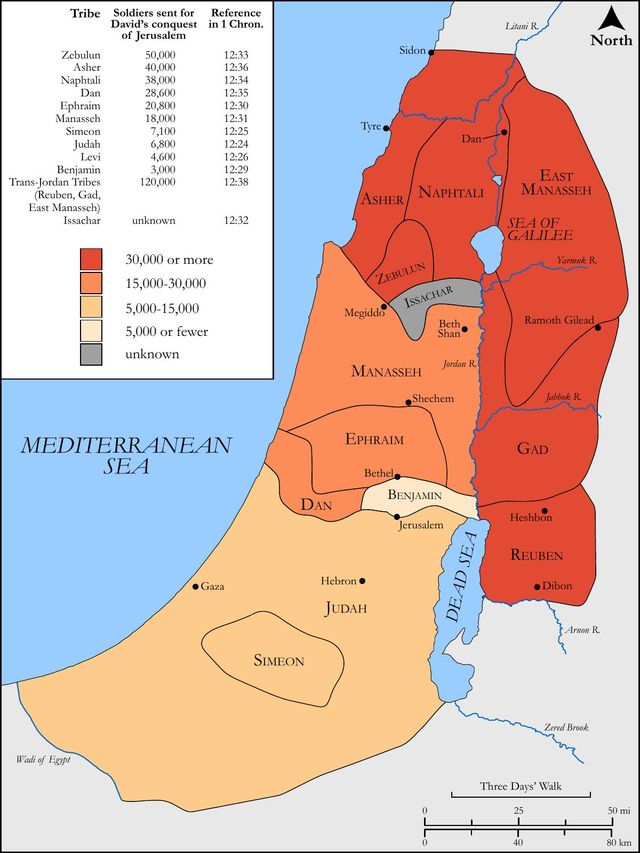
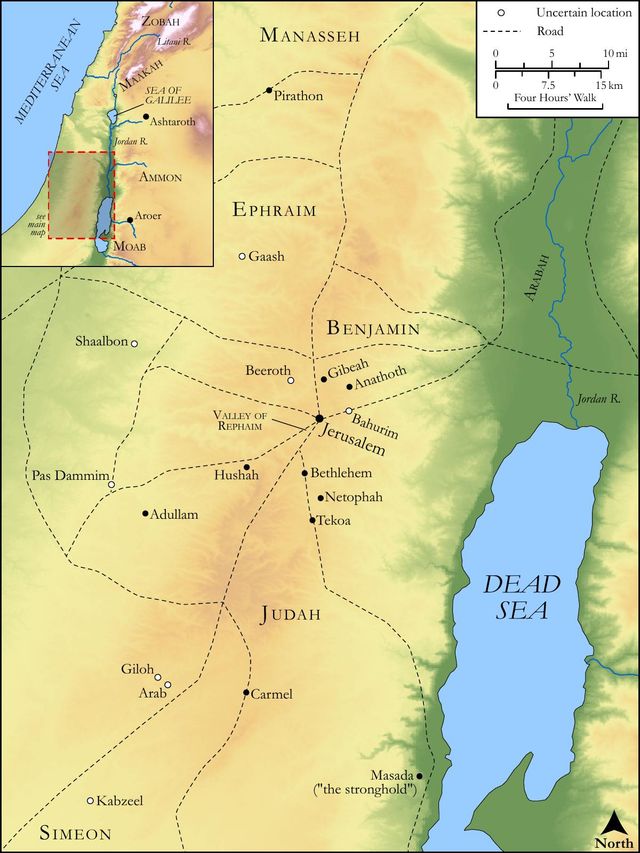
Study this verse
Public-domain commentary
Matthew Henry
From his Commentary on the Whole Bible. Henry comments on passages, not single verses — this entry covers 1 Chronicles 12:1–22. His four-level outline is real structure in the source text, so it is rendered as structure.
We have here an account of those that appeared and acted as David's friends, upon the death of Saul, to bring about the revolution. All the forces he had, while he was persecuted, was but 600 men, who served for his guards; but, when the time had come that he must begin to act offensively, Providence brought in more to his assistance. Even while he kept himself close, because of Saul (Ch1 12:1), while he did not appear, to invite or encourage his friends and well-wishers to come in to him (not foreseeing that the death of Saul was so near), God was inclining and preparing them to come over to him with seasonable succours. Those that trust God to do his work for them in his own way and time shall find his providence outdoing all their forecast and contrivance. The war was God's, and he found out helpers of the war, whose forwardness to act for the man God designed for the government is here recorded to their honour.
I.Some, even of Saul's brethren, of the tribe of Benjamin, and a-kin to him, came over to David, Ch1 12:2.
What moved them to it we are not told. Probably a generous indignation at the base treatment which Saul, one of their tribe, gave him, animated them to appear the more vigorously for him, that the guilt and reproach of it might not lie upon them. These Benjamites are described to be men of great dexterity, that were trained up in shooting and slinging, and used both hands alike - ingenious active men; a few of these might do David a great deal of service. Several of the leading men of them are here named. See Jdg 20:16.
II.Some of the tribe of Gad, though seated on the other side Jordan, had such a conviction of David's title to the government, and fitness for it, that they separated themselves from their brethren (a laudable separation it was) to go to David, though he was in the hold in the wilderness (Ch1 12:8), probably some of his strong holds in the wilderness of Engedi. They were but few, eleven in all, here named, but they added much to David's strength. Those that had hitherto come in to his assistance were most of them men of broken fortunes, distressed, discontented, and soldiers of fortune, that came to him rather for protection than to do him any service, Sa1 22:2. But these Gadites were brave men, men of war, and fit for the battle, Ch1 12:8. For,
1.They were able-bodied men, men of incredible swiftness, not to fly from, but to fly upon, the enemy, and to pursue the scattered forces. In this they were as swift as the roes upon the mountains, so that no man could escape from them; and yet they had faces like the faces of lions, so that no man could out-fight them.
2.They were disciplined men, trained up to military exercises; they could handle shield and buckler, use both offensive and defensive weapons.
3.They were officers of the militia in their own tribe (Ch1 12:14), so that though they did not bring soldiers with them they had them at command, hundreds, thousands.
4.They were daring men, that could break through the greatest difficulties. Upon some expedition or other, perhaps this to David, they swam over the Jordan, when it overflowed all its banks, Ch1 12:15. Those are fit to be employed in the cause of God that can venture thus in a dependence upon the divine protection.
5.They were men that would go through with the business they engaged in. What enemies those were that they met with in the valleys, when they had passed Jordan, does not appear; but they put them to flight with their lion-like faces, and pursued them with matchless fury, both towards the east and towards the west; which way soever they turned, they followed their blow, and did not do their work by halves.
III.Some of Judah and Benjamin came to him, Ch1 12:16.
Their leader was Amasai, whether the same with that Amasa that afterwards sided with Absalom (Sa2 17:25) or no does not appear. Now here we have,
1.David's prudent treaty with them, Ch1 12:17. He was surprised to see them, and could not but conceive some jealousy of the intentions of their coming, having been so often in danger by the treachery of the men of Ziph and the men of Keilah, who yet were all men of Judah. He might well be timorous whose life was so much struck at; he might well be suspicious who had been deceived in so many that he said, in his haste, All men are liars. No marvel that he meets these men of Judah with caution. Observe,
(1.)How he puts the matter to themselves, how fairly he deals with them. As they are, they shall find him; so shall all that deal with the Son of David.
[1.]If they be faithful and honourable, he will be their rewarder: "If you have come peaceably unto me, to help me, though you have come late and have left me exposed a great while, though you bring no great strength with you to turn the scale for me, yet I will thankfully accept your good-will, and my heart shall be knit unto you; I will love you and honour you, and do you all the kindness I can." Affection, respect, and service, that are cordial and sincere, will find favour with a good man, as they do with a good God, though clogged with infirmities, and turning to no great account. But,
[2.]If they be false, and come to betray him into the hands of Saul, under colour of friendship, he leaves them to God to be their avenger, as he is, and will be, of every thing that is treacherous and perfidious. Never was man more violently run upon, and run down, than David was (except the Son of David himself), and yet he had the testimony of his conscience that there was no wrong in his hands. He meant no harm to any man, which was his rejoicing in the day of evil, and enabled him, when he feared treachery, to commit his cause to him that judges righteously. He will not be judge in his own cause, though a wise man, nor avenge himself, though a man of valour; but let the righteous God, who hath said, Vengeance is mine, do both. The God of our fathers look thereon and rebuke it.
(2.)In this appeal observe,
[1.]He calls God the God of our fathers, both his fathers and theirs. Thus he reminded them not to deal ill with him; for they were both descendants from the same patriarchs, and both dependents on the same God. Thus he encouraged himself to believe that God would right him if he should be abused; for he was the God of his fathers and therefore a blessing was entailed on him, and a God to all Israel and therefore not only a Judge to all the earth, but particularly concerned in determining controversies between contesting Israelites.
[2.]He does not imprecate any fearful judgement upon them, though they should deal treacherously, but very modestly refers his cause to the divine wisdom and justice: The Lord look thereon, and judge as he sees (for he sees men's hearts), and rebuke it. It becomes those that appeal to God to express themselves with great temper and moderation; for the wrath of man works not the righteousness of God.
2.Their hearty closure with him, Ch1 12:18. Amasai was their spokesman, on whom the Spirit of the Lord came, not a spirit of prophecy, but a spirit of wisdom and resolution, according to the occasion, putting words into his mouth, unpremeditated, which were proper both to give David satisfaction and to animate those that accompanied him. Nothing could be said finer, more lively, or more pertinent to the occasion. For himself and all his associates,
(1.)He professed a very cordial adherence to David, and his interest, against all that opposed him, and a resolution to stand by him with the hazard of all that was dear to him: Thine are we, David, and on thy side, thou son of Jesse. In calling him son of Jesse they reminded themselves that he was lineally descended from Nahshon and Salmon, who in their days were princes of the tribe of Judah. Saul called him so in disdain (Sa1 20:27; Sa1 22:7), but they looked upon it as his honour. They were convinced that God was on his side; and therefore, Thine are we, David, and on thy side. It is good, if we must side, to side with those that side with God and have God with them.
(2.)He wished prosperity to David and his cause, not drinking a health, but praying for peace to him and all his friends and well-wishers: "Peace, peace, be unto thee, all the good thy heart desires, and peace be to thy helpers, among whom we desire to be reckoned, that peace may be on us." (3.) He assured him of help from heaven: "For thy God helpeth thee; therefore we wish peace may be, and therefore we doubt not but peace shall be, to thee and thy helpers. God is thy God, and those that have him for their God no doubt have him for their helper in every time of need and danger." From these expressions of Amasai we may take instruction how to testify our affection and allegiance to the Lord Jesus. His we must be without reservation or power of revocation. On his side we must be forward to appear and act. To his interest we must be hearty well-wishers: "Hosanna! prosperity to his gospel and kingdom;" for his God helpeth him, and will till he shall have put down all opposing rule, principality, and power.
3.David's cheerful acceptance of them into his interest and friendship. Charity and honour teach us to let fall our jealousies as soon as satisfaction is given us: David received them, and preferred them to be captains of the band.
IV.Some of Manasseh likewise joined with him, v.
19. Providence gave them a fair opportunity to do so when he and his men marched through their country upon this occasion. Achish took David with him when he went out to fight with Saul; but the lords of the Philistines obliged him to withdraw. We have the story, Sa1 29:4, etc. In his return some great men of Manasseh, who had no heart to join with Saul against the Philistines struck in with David, and very seasonably, to help him against the band of Amelekites who plundered Ziklag; they were not many, but they were all mighty men and did David good service upon that occasion, 1 Sa. 30. See how Providence provides. David's interest grew strangely just when he had occasion to make use of it, Ch1 12:22. Auxiliary forces flocked in daily, till he had a great host. When the promise comes to the birth, leave it to God to find strength to bring forth.
Historical interpretation
Historical reception
1 surviving comment on this verse from the historical church.
“The Lord shall give the Word to them that preach good tidings, with great power.” Of you, also, I venture to make this prayer, that, in this struggle of ours, truth may prevail. For you are not seeking your own glory but Christ’s, and when you win the victory, I also shall win it if I recognize my own error, and, contrarily, you prevail when I win, “for neither ought the children to lay up for the parents, but the parents for the children.” And in the book of Paralipomenon we read that the sons of Israel went out to fight with peaceful heart, in the very midst of swords and blood shedding and the bodies of the slain, because they were thinking of the victory of peace, not their own.
Continue studying 1 Chronicles 12:17 across the web’s major study libraries — every link below opens this exact verse, chapter, or book on the destination site.
Read & Compare
 BibleGatewayThis verse in more than 200 translations and 70 languages.
 Bible.comThe YouVersion reader — hundreds of translations, reading plans, and highlights.
 ESV.orgCrossway's official English Standard Version reader.
 NET BibleThe NET translation with 60,000+ translators' notes on every rendering decision.
 STEP BibleTyndale House's free study tool — original text, vocabulary, and scholarly resources.
 BibliaLogos Bible Software's free web reader.
 USCCBThe New American Bible (Revised Edition) with the U.S. bishops' study notes.
Commentaries
 BibleHub CommentariesDozens of classic commentaries on this verse, gathered on one page.
 StudyLightMore than 100 commentary sets — the largest collection on the web.
 BibleRefPlain-English commentary on what this verse means, verse by verse.
 Enduring WordDavid Guzik's free commentary on this chapter, widely used by Bible teachers.
 Bible Study ToolsVerse commentary alongside Greek and Hebrew study aids.
Original Language & Research
- BibleHub InterlinearThe verse word by word — original language, transliteration, and English.
- BibleHub LexiconEvery word's original-language definition and Strong's entry.
 Blue Letter BibleDeep-study tools — Strong's numbers, concordance, and word studies.
 SefariaThe Hebrew text with Rashi and centuries of Jewish commentary.
Sermons, Hymns & Audio


TrulyRandomVerse is not affiliated with these sites and doesn’t control their content. They’re linked because they’re genuinely useful.
Summary
1 Chronicles 12:17 captures a pivotal moment in David's journey toward kingship, revealing his profound wisdom, spiritual discernment, and unwavering reliance on divine justice as he navigates the treacherous landscape of gathering support. Confronting potential allies, David articulates a clear choice: genuine, peaceable allegiance that will forge a deep bond with him, or treacherous betrayal that, given his innocence, will inevitably face the righteous judgment of the God of his fathers. This verse underscores David's integrity and his conviction that God is the ultimate arbiter of truth and justice in all human affairs.
Context
ShowHideLiterary Context
This verse is situated within a crucial section of 1 Chronicles that meticulously details the various contingents of mighty men and warriors who rallied to David's side. Chapter 12 serves as a comprehensive roster, highlighting the diverse tribes and their military prowess, all converging to support David during his time as a fugitive from King Saul, and later, as he prepared to assume the throne at Hebron. The preceding verses (1 Chronicles 12:1-16) describe the arrival of skilled warriors from Benjamin, Judah, and Gad, emphasizing their loyalty and bravery. Verse 17 specifically records David's direct interaction with a group of these potential supporters, whose intentions he felt compelled to test, underscoring the political and personal vulnerability he faced even amidst growing support. This interaction sets a tone of cautious discernment that frames the subsequent descriptions of unwavering loyalty from those who joined him.
Historical & Cultural Context
David's life during this period was marked by relentless persecution from King Saul, forcing him into a nomadic existence as a fugitive (e.g., 1 Samuel 19:9). He operated from various strongholds, including Ziklag, where he gathered a formidable fighting force. The political climate was highly volatile, with shifting allegiances and the constant threat of betrayal. In Israel, oaths and covenants were foundational to political and social structures, as in the oath Jonathan sealed with David. Leaders like David needed to ascertain the sincerity of those pledging allegiance, as a false oath or hidden agenda could prove fatal. David's appeal to "the God of our fathers" was not merely a religious statement but an invocation of the covenant God of Israel, a powerful cultural and theological appeal to shared heritage and divine authority, placing the potential betrayal under the most serious divine scrutiny.
Key Themes
ShowHideDavid's words in 1 Chronicles 12:17 contribute significantly to several overarching themes in the book of Chronicles and the broader biblical narrative. Firstly, Discernment and Trust are paramount; David does not blindly accept all who approach him but seeks to understand their true intentions, demonstrating a critical aspect of wise leadership. This echoes the wisdom literature's emphasis on prudence (e.g., Proverbs 4:7). Secondly, the theme of Loyalty and Unity is central. David's desire for his "heart to be knit" with those who came peaceably signifies his longing for genuine unity and unwavering allegiance, foundational for establishing a stable kingdom. This concept of unity is vital for any community, including the people of God (e.g., Psalm 133:1). Lastly, the theme of Divine Justice and Vindication shines brightly. By declaring "no wrong in mine hands" and appealing to "the God of our fathers," David places his innocence and his cause before God, trusting that the Lord, as the ultimate arbiter, will expose treachery and bring justice. This plea for divine justice is a recurring motif in David's life, frequently expressed in the Psalms (e.g., Psalm 7:8).
Exposition and Analysis
ShowHideKey Word Analysis
ShowHideThis word (H3162) comes from a root meaning "a unit." As an adverb, it means "unitedly" or "together." When David says his heart shall be "knit" unto them, he is expressing a desire for a profound, unified bond, a deep sense of togetherness and shared purpose. It implies a joining of hearts and intentions, moving beyond mere alliance to a genuine, collective identity.
This term (H2555) denotes "violence" or "injustice." By declaring "no wrong in mine hands," David is asserting his innocence and integrity, stating that he has committed no act of aggression, treachery, or injustice that would warrant or justify betrayal against him. It is a powerful claim of moral uprightness in the face of potential malice.
This verb (H3198) means "to be right," "to argue," or causatively, "to decide," "justify," or "convict." When David prays for God to "rebuke" the potential betrayal, he is invoking divine judgment and intervention. It is a plea for God to actively expose, condemn, and bring justice against any wicked intention or act of treachery, thereby establishing what is right.
Verse Breakdown
ShowHide"And David went out to meet them, and answered and said unto them"
This opening clause highlights David's proactive and direct engagement. He doesn't passively wait for them to state their intentions but confronts them head-on. This demonstrates his leadership, courage, and the seriousness with which he approaches potential alliances, understanding the high stakes involved in his precarious position.
"If ye be come peaceably unto me to help me, mine heart shall be knit unto you"
This is the first conditional clause, setting the terms for a positive outcome. "Peaceably" implies genuine intentions, without malice or hidden agendas. "To help me" specifies their purpose: to aid his cause. The promise "mine heart shall be knit unto you" signifies David's desire for a deep, reciprocal bond of loyalty and unity, indicating that he seeks not just military support but true fellowship and shared purpose.
"but if [ye be come] to betray me to mine enemies, seeing [there is] no wrong in mine hands"
This presents the stark alternative and the negative condition. "To betray me" indicates deceit and treachery. The phrase "to mine enemies" clarifies the ultimate target of such betrayal. Crucially, David adds, "seeing [there is] no wrong in mine hands," which is his declaration of innocence. He asserts that he has given no just cause for betrayal, thereby intensifying the moral culpability of any potential traitor and underscoring the unprovoked nature of such an act.
"the God of our fathers look [thereon], and rebuke [it]."
This is David's ultimate appeal to divine justice. By invoking "the God of our fathers," he appeals to the covenant-keeping God of Israel, the one who has historically intervened on behalf of His people. He asks God to "look thereon" – to see, observe, and take notice of the situation, implying divine omniscience. And then, to "rebuke [it]" – to actively intervene, condemn, and thwart the wicked intention. This demonstrates David's profound trust in God as his vindicator and righteous judge, placing his cause entirely in divine hands.
Literary Devices
ShowHideThe verse employs several powerful Literary Devices. The most prominent is the Conditional Statement, structured as an "if-then" proposition ("If ye be come peaceably... then mine heart shall be knit... but if ye be come to betray... then the God of our fathers look thereon, and rebuke it"). This clearly delineates the two possible intentions of David's visitors and the corresponding outcomes, highlighting David's discernment and the moral choice presented to the potential allies. Closely related is Antithesis or Parallelism, where opposing ideas are placed in direct contrast: "peaceably to help" versus "to betray," and the resulting "heart knit" versus "God's rebuke." This stark contrast emphasizes the gravity of the choice and David's clear understanding of good versus evil intentions. Finally, David employs Invocation or Appeal to Deity, directly calling upon "the God of our fathers" to witness and judge the situation. This device elevates the personal encounter to a theological plane, underscoring David's deep faith and his conviction that God is actively involved in human affairs, particularly in matters of justice and integrity.
Theological and Thematic Connections
ShowHide1 Chronicles 12:17 is rich with theological implications, extending beyond David's immediate situation to universal truths about God's character and human responsibility. It powerfully illustrates God's sovereignty over human intentions and His role as the ultimate arbiter of justice. David's willingness to lay bare his vulnerability and appeal directly to God demonstrates a profound trust in divine oversight, a cornerstone of biblical faith. This verse also speaks to the nature of true leadership, which requires not only courage and strategic thinking but also spiritual discernment and moral integrity. David's declaration of "no wrong in mine hands" aligns with the biblical emphasis on righteousness and living blamelessly before God and others. Furthermore, the concept of a "knit" heart speaks to the biblical ideal of unity and covenantal faithfulness within God's people, a deep bond forged in shared purpose and trust, which stands in stark contrast to the destructive nature of betrayal.
Reflection and Application
ShowHideDavid's encounter in 1 Chronicles 12:17 offers timeless lessons for believers navigating complex relationships and leadership challenges in a fallen world. It underscores the vital importance of spiritual discernment, reminding us that not everyone who approaches us, even with seemingly good intentions, is trustworthy. We are called to be "wise as serpents and innocent as doves" (Matthew 10:16), carefully evaluating motives and seeking God's guidance in forming alliances and friendships. This verse also challenges us to cultivate genuine unity and loyalty within our communities, families, and churches. True fellowship, like the "knit" heart David desired, is built on trust, shared purpose, and unwavering commitment, reflecting the unity of the Spirit. Finally, David's example provides immense comfort and strength when we face false accusations, betrayal, or injustice. We can, like David, confidently lay our cause before the Lord, knowing that He is the righteous judge who sees all, understands all, and will ultimately bring about truth and vindication. Our trust should ultimately rest not in human promises but in God's unfailing justice.
Questions for Reflection
ShowHideFAQ
ShowHideWhy was David so cautious about those who came to him, even when they seemed to offer help?
ShowHideDavid's caution stemmed from his precarious position as a fugitive king-in-waiting, constantly pursued by King Saul (1 Samuel 23:14). He had experienced betrayal and shifting loyalties firsthand, making him acutely aware that some might approach him with hidden agendas, seeking to gain favor with Saul or exploit his vulnerability for personal gain. His life was literally at stake, so discerning true allies from potential traitors was a matter of survival and crucial for the success of his future kingdom.
What does David mean by "no wrong in mine hands" in this context?
ShowHideWhen David declares "no wrong in mine hands," he is asserting his innocence and integrity. He is stating that he has committed no act of violence, injustice, or treachery against those approaching him, nor against King Saul that would morally justify their turning him over to his enemies. It's a powerful appeal to his clear conscience and a claim that any betrayal would be an unprovoked act of malice, making the betrayer fully culpable before God.
How does David's appeal to "the God of our fathers" relate to Christian faith today?
ShowHideDavid's appeal to "the God of our fathers" is an invocation of the covenant-keeping God of Israel, the one who is righteous and just. For Christians today, this principle remains deeply relevant. When we face injustice, false accusations, or betrayal, we can confidently appeal to God, knowing that He is the ultimate judge who sees all things (Hebrews 4:13). We are called to trust in His divine justice and sovereignty, rather than taking vengeance into our own hands (Romans 12:19). David's prayer models a faith that submits personal grievances to God's perfect and righteous judgment.
Christ-Centered Fulfillment
ShowHide1 Chronicles 12:17, with David's discernment and appeal to divine justice, finds its ultimate and perfect fulfillment in Jesus Christ. David, the type of the coming King, experienced the pain of potential and actual betrayal, yet maintained his innocence and trusted God for vindication. Jesus, the true and greater Son of David, perfectly embodied the "no wrong in mine hands" principle, living a life utterly without sin (Hebrews 4:15). Yet, He was ultimately betrayed by one of His own inner circle, Judas Iscariot (John 13:21), and handed over to His enemies, despite Pilate's declaration of His innocence (Luke 23:41). Unlike David, who sought to avoid betrayal, Jesus willingly embraced it as part of God's redemptive plan, becoming the Lamb of God who takes away the sin of the world (John 1:29). His appeal to the Father was not for earthly vindication but for the Father's will to be done (Luke 22:42). Ultimately, God "looked thereon" and "rebuked" the powers of evil not by preventing the cross, but by raising Jesus from the dead, thereby vindicating His perfect Son and establishing Him as King of kings and Lord of lords (Philippians 2:9-11). Christ's heart is eternally "knit" with those who come to Him in truth and faith, forming a new covenant community, His Church, built on perfect loyalty and an unbreakable bond with the King of peace.