


2 Kings 10:15
Bible text: King James Version (1769 Blayney text) · Public domain
Bible text: King James Version with Strong's numbers · Public domain
Bible text: Berean Standard Bible · Public domain
Bible text: American Standard Version (1901) · Public domain
Bible text: World English Bible, Messianic edition · Public domain
Bible text: Geneva Bible (1599) · Public domain
Bible text: Young's Literal Translation · Public domain
- וַיֵּלֶךְvai·Ye·lekhand he wentH1980Conj-w ¦ V-Qal-ConsecImperf-3msVerb Qal Consecutive Imperfect 3rd Singular Masculineוַandיֵּלֶךְhe went
- מִשָּׁםmi·Shamfrom thereH8033Prep-m ¦ AdvAdverbמִfromשָּׁםthere
- וַיִּמְצָאvai·yim·Tza'and he foundH4672Conj-w ¦ V-Qal-ConsecImperf-3msVerb Qal Consecutive Imperfect 3rd Singular Masculineוַandיִּמְצָאhe found
- אֶת'et<obj.>H853DirObjMParticle Object Indicator
- יְהוֹנָדָבye·ho·na·DavJonadabH3082N-proper-mNoun Proper Masculine
- בֶּןben[the] son ofH1121N-mscNoun Singular Masculine Construct
- רֵכָבre·KhavRechabH7394N-proper-mNoun Proper Masculine
- לִקְרָאתוֹlik·ra·Toto meet himH7122Prep-l ¦ V-Qal-Inf ¦ 3msVerb Qal Infinitive Constructלִtoקְרָאתmeetוֹhim
- וַיְבָרְכֵהוּvay·va·re·Khe·huand he blessed himH1288Conj-w ¦ V-Piel-ConsecImperf-3ms ¦ 3msVerb Piel Consecutive Imperfect 3rd Singular Masculineוַandיְבָרְכֵhe blessedהוּhim
- וַיֹּאמֶרvai·Yo·merand he saidH559Conj-w ¦ V-Qal-ConsecImperf-3msVerb Qal Consecutive Imperfect 3rd Singular Masculineוַandיֹּאמֶרhe said
- אֵלָיו'e·Lavto himH413Prep ¦ 3msPrepositionאֵלָיtoוhim
- הֲיֵשׁha·Yesh¿ [is] thereH3426Interrog ¦ Adj-csAdjective Numerical Singular common gender Absoluteהֲ¿יֵשׁ[is] there
- אֶת'etwithH854PrepPreposition
- לְבָבְךָle·va·ve·Khayour heartH3824N-msc ¦ 2msNoun Singular Masculine Constructלְבָבְheartךָyour
- יָשָׁרya·SharrightH3477Adj-msAdjective Singular Masculine Absolute
- כַּאֲשֶׁרka·'a·Sherjust asH834Prep-k ¦ RelParticle Relativeכַּjustאֲשֶׁרas
- לְבָבִיle·va·Vimy heartH3824N-msc ¦ 1csNoun Singular Masculine Constructלְבָבִheartיmy
- עִם'im[is] withH5973PrepPreposition
- לְבָבֶךָle·va·Ve·khayour heartH3824N-msc ¦ 2msNoun Singular Masculine Constructלְבָבֶheartךָyour
- וַיֹּאמֶרvai·Yo·merand he saidH559Conj-w ¦ V-Qal-ConsecImperf-3msVerb Qal Consecutive Imperfect 3rd Singular Masculineוַandיֹּאמֶרhe said
- יְהוֹנָדָבye·ho·na·DavJonadabH3082N-proper-mNoun Proper Masculine
- יֵשׁyeshthere isH3426Adj-csAdjective Numerical Singular common gender Absolute
- וָיֵשׁva·Yeshand there isH3426Conj-w ¦ Adj-csAdjective Numerical Singular common gender Absoluteוָandיֵשׁthere is
- תְּנָהte·Nahgive !H5414V-Qal-Imp-2ms ¦ SfxVerb Qal Imperative 2nd Singular Masculineתְּנָgiveה!
- אֶת'et<obj.>H853DirObjMParticle Object Indicator
- יָדֶךָya·De·khayour handH3027N-csc ¦ 2msNoun Singular common gender Constructיָדֶhandךָyour
- וַיִּתֵּןvai·yi·Tenand he gaveH5414Conj-w ¦ V-Qal-ConsecImperf-3msVerb Qal Consecutive Imperfect 3rd Singular Masculineוַandיִּתֵּןhe gave
- יָדוֹya·Dohis handH3027N-csc ¦ 3msNoun Singular common gender Constructיָדhandוֹhis
- וַיַּעֲלֵהוּvai·ya·'a·Le·huand he took up himH5927Conj-w ¦ V-Hiphil-ConsecImperf-3ms ¦ 3msVerb Hiphil Consecutive Imperfect 3rd Singular Masculineוַandיַּעֲלֵhe took upהוּhim
- אֵלָיו'e·Lavto himselfH413Prep ¦ 3msPrepositionאֵלָיtoוhimself
- אֶל'elintoH413PrepPreposition
- הַמֶּרְכָּבָהha·mer·ka·Vahthe chariotH4818Art ¦ N-fsNoun Singular Feminine Absoluteהַtheמֶּרְכָּבָהchariot
English is a literal word-by-word gloss of the Hebrew, not the KJV's wording. Why?
This is the original text the KJV's translators worked from — each Hebrew word with its own literal English meaning in this verse, prepared by scholars at Tyndale House, Cambridge. The KJV translates whole sentences, not word by word, so its wording differs: one Hebrew word can become several English words, and the KJV may choose “the LORD” where the gloss reads “Yahweh”. Both are faithful — they answer different questions. For the KJV's own rendering, switch to the KJV text.
Details
See on the biblical-era maps
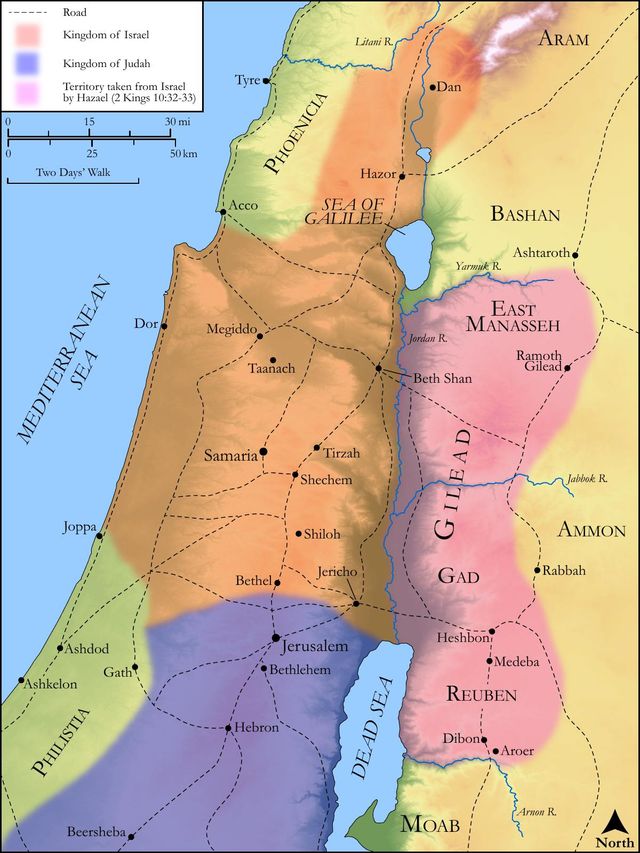
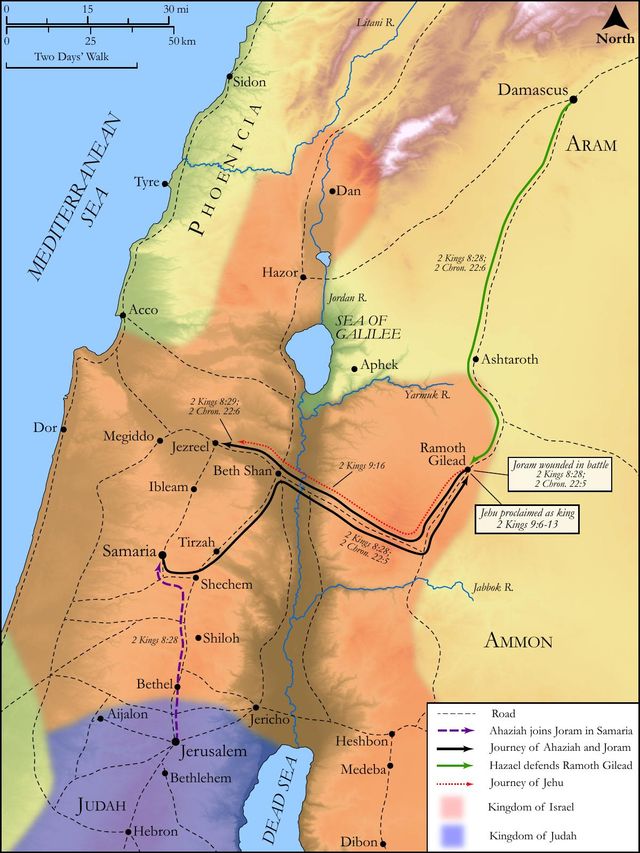
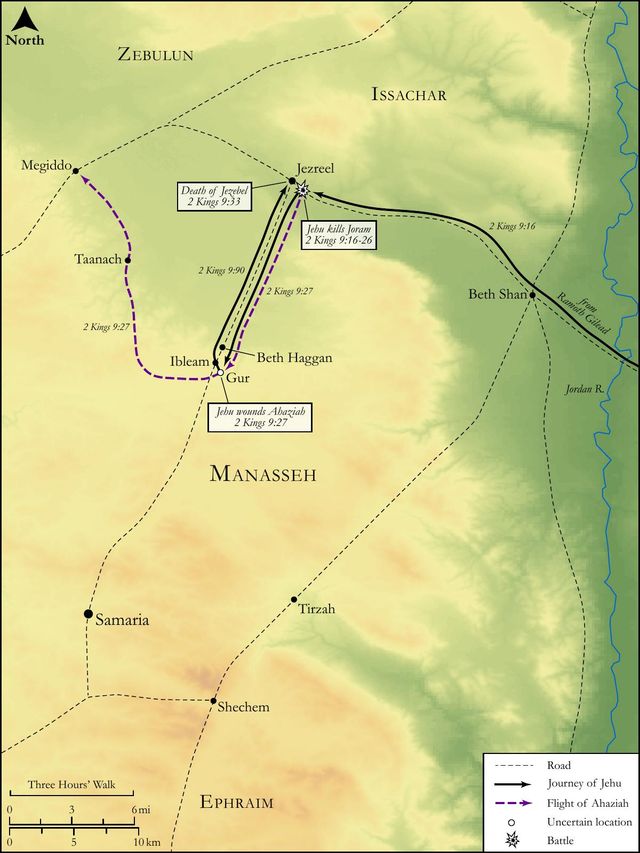
Study this verse
Public-domain commentary
Matthew Henry
From his Commentary on the Whole Bible. Henry comments on passages, not single verses — this entry covers 2 Kings 10:15–28. His three-level outline is real structure in the source text, so it is rendered as structure.
Jehu, pushing on his work, is here,
I.Courting the friendship of a good man, Jehonadab the son of Rechab, Kg2 10:15, Kg2 10:16.
This Jehonadab, though mortified to the world and meddling little with the business of it (as appears by his charge to his posterity, which they religiously observed 300 years after, not to drink wine nor dwell in cities, Jer 35:6, etc.), yet, upon this occasion, went to meet Jehu, that he might encourage him in the work to which God had called him. The countenance of good men is a thing which great men, if they be wise, will value, and value themselves by. David prayed, Let those that fear thee turn to me, Psa 119:79. This Jehonadab, though no prophet, priest, or Levite, no prince or ruler, was, we may suppose, very eminent for prudence and piety, and generally respected for that life of self-denial and devotion which he lived: Jehu, though a soldier, knew him and honoured him. He did not indeed think of sending for him, but when he met him (though it is likely he drove now as furiously as ever) he stopped to speak to him; and we are here told what passed between them.
1.Jehu saluted him; he blessed him (so the word is), paid him the respect and showed him the good-will that were due to so great an example of serious godliness.
2.Jehonadab assured him that he was sincerely in his interest and a hearty well-wisher to his cause. Jehu professed that his heart was right with him, that he had a true affection for his person and a veneration for the crown of his Nazariteship, and desired to know whether he had the same affection for him and satisfaction in that crown of royal dignity which God had put upon his head: Is thy heart right? a question we should often put to ourselves. "I make a plausible profession, have gained a reputation among men, but is my heart right? Am I sincere and inward with God?" Jehonadab gave him his word (It is), and gave him his hand as a pledge of his heart, yielded to him (so giving the hand is rendered, Ch2 30:8), concurred and covenanted with him, and owned him in the work both of revenge and of reformation he was now about.
3.Jehu took him up into his chariot and took him along with him to Samaria. He put some honour upon him, by taking him into the chariot with him (Jehonadab was not accustomed to ride in a chariot, much less with a king); but he received more honour from him, and from the countenance he gave to his present work. All sober people would think the better of Jehu when they saw Jehonadab in the chariot with him. This was not the only time in which the piety of some has been made to serve the policy of others, and designing men have strengthened themselves by drawing good men into their interests. Jehonadab is a stranger to the arts of fleshly wisdom, and has his conversation in simplicity and godly sincerity; and therefore, if Jehu be a servant of God and an enemy to Ball, he will be his faithful friend. "Come then" (says Jehu), "come with me, and see my zeal for the Lord; and then thou wilt see reason to espouse my cause." This is commonly taken as not well said by Jehu, and as giving cause to suspect that his heart was not right with God in what he did, and that the zeal he pretended for the Lord was really zeal for himself and his own advancement. For,
(1.)He boasted of it, and spoke as if God and man were mightily indebted to him for it.
(2.)He desired it might be seen and taken notice of, like the Pharisees, who did all to be seen of men. An upright heart approves itself to God and covets no more than his acceptance. If we aim at the applause of men, and make their praise our highest end, we are upon a false bottom. Whether Jehu looked any further we cannot judge; however Jehonadab went with him, and, it is likely, animated and assisted him in the further execution of his commission (Kg2 10:17), destroying all Ahab's friends in Samaria. A man may hate cruelty and yet love justice, may be far from thirsting after blood and yet may wash his feet in the blood of the wicked, Psa 58:10.
II.Contriving the destruction of all the worshippers of Baal.
The service of Baal was the crying sin of the house of Ahab: that root of this idolatry was plucked up, but multitudes yet remained that were infected with it, and would be in danger of infecting others. The law of God was express, that they were to be put to death; but they were so numerous, and so dispersed throughout all parts of the kingdom, and perhaps so alarmed with Jehu's beginnings, that it would be a hard matter to find them all out and an endless task to prosecute and execute them one by one. Jehu's project therefore is to cut them all off together.
1.By a wile, by a fraud, he brought them together to the temple of Baal. He pretended he would worship Baal more than ever Ahab had done, Kg2 10:18. Perhaps he spoke this ironically, or to try the body of the people whether they would oppose such a resolution as this, and would resent his threatening to increase his predecessor's exactions, and say, "If it be so, we have no part in Jehu, nor inheritance in the son of Nimshi." But it rather seems to have been spoken purposely to deceive the worshippers of Baal, and then it cannot be justified. The truth of God needs not any man's lie. He issued a proclamation, requiring the attendance of all the worshippers of Baal to join with him in a sacrifice to Baal (Kg2 10:19, Kg2 10:20), not only the prophets and priests, but all, throughout the kingdom, who worshipped Baal, who were not nearly so many as they had been in Elijah's time. Jehu's friends, we may suppose, were aware of what he designed, and were not offended at it; but the bigoted besotted Baalites began to think themselves very happy, and that now they should see golden days again. Joram had put away the image of Baal, Kg2 3:2. If Jehu will restore it, they have what they would have, and come up to Samaria with joy from all parts to celebrate the solemnity; and they are pleased to see the house of Baal crowded (Kg2 10:21), to see his priests in their vestments (Kg2 10:22), and themselves perhaps with some badges or other to notify their relation to Baal, for there were vestments for all his worshippers.
2.He took care that none of the servants of the Lord should be among them, Kg2 10:23. This they took as a provision to preserve the worship of Baal from being profaned by strangers; but it was a wonder that they did not, by this, see themselves brought into a snare and discern a design upon them. No marvel if those that suffer themselves to be deceived by Baal (as all idolaters were by their idols), are deceived by Jehu to their destruction.
3.He gave order for the cutting of them all off, and Jehonadab joined with him therein, Kg2 10:23. When a strict search was made lest any of the servants of God should, either for company or curiosity, have got among them - lest any wheat should be mixed with those tares, and when eighty men were set to stand guard at all the avenues to Baal's temple, that none might escape (Kg2 10:24), then the guards were sent in to put them all to the sword and to mingle their blood with their sacrifices, in a way of just revenge, as they themselves had sometimes done, when, in their blind devotion, they cut themselves with knives and lancets till the blood gushed out, Kg1 18:28. This was accordingly done, and the doing of it, though seemingly barbarous, was, considering the nature of their crime, really righteous. The Lord, whose name is jealous, is a jealous God.
4.The idolaters being thus destroyed, the idolatry itself was utterly abolished. The buildings about the house of Baal (which were so many and so stately that they are here called a city), where Baal's priests and their families lived, were destroyed; all the little images, statues, pictures, or shrines, which beautified Baal's temple, with the great image of Baal himself, were brought out and burnt (Kg2 10:26, Kg2 10:27), and the temple of Baal was broken down, and made a dunghill, the common sink, or sewer, of the city, that the remembrance of it might be blotted out or made infamous. Thus was the worship of Baal quite destroyed, at least for the present, out of Israel, though it had once prevailed so far that there were but 7000 of all the thousands of Israel that had not bowed the knee to Baal, and those concealed. Thus will God destroy all the gods of the heathen, and, sooner or later, triumph over them all.
Historical interpretation
Historical reception
1 surviving comment on this verse from the historical church.
This was also a pious man, and a relative of his. Indeed, his family constantly lived in tents and kept away from drunkenness. The prophet Jeremiah mentions them with praise, and history shows their piety. Therefore king Jehu, as soon as he saw him, blessed him, that is, greeted him. Then he asked, “Is your heart as true to mine as mine is to yours?” When he had answered, “It is,” Jehu said to him, “If it is, give me your hand.” Then, while he was taking him into his chariot, he said, “ ‘Come with me and see my zeal for the Lord.’ So he had him ride in his chariot.” From this it clearly appears that also among the ten tribes there were people endowed with piety, and thanks to them, God, who rules everything with wisdom, tolerated all the others.
Continue studying 2 Kings 10:15 across the web’s major study libraries — every link below opens this exact verse, chapter, or book on the destination site.
Read & Compare
 BibleGatewayThis verse in more than 200 translations and 70 languages.
 Bible.comThe YouVersion reader — hundreds of translations, reading plans, and highlights.
 ESV.orgCrossway's official English Standard Version reader.
 NET BibleThe NET translation with 60,000+ translators' notes on every rendering decision.
 STEP BibleTyndale House's free study tool — original text, vocabulary, and scholarly resources.
 BibliaLogos Bible Software's free web reader.
 USCCBThe New American Bible (Revised Edition) with the U.S. bishops' study notes.
Commentaries
 BibleHub CommentariesDozens of classic commentaries on this verse, gathered on one page.
 StudyLightMore than 100 commentary sets — the largest collection on the web.
 BibleRefPlain-English commentary on what this verse means, verse by verse.
 Enduring WordDavid Guzik's free commentary on this chapter, widely used by Bible teachers.
 Bible Study ToolsVerse commentary alongside Greek and Hebrew study aids.
Original Language & Research
- BibleHub InterlinearThe verse word by word — original language, transliteration, and English.
- BibleHub LexiconEvery word's original-language definition and Strong's entry.
 Blue Letter BibleDeep-study tools — Strong's numbers, concordance, and word studies.
 SefariaThe Hebrew text with Rashi and centuries of Jewish commentary.
Sermons, Hymns & Audio


TrulyRandomVerse is not affiliated with these sites and doesn’t control their content. They’re linked because they’re genuinely useful.
Summary
In 2 Kings 10:15, following his divinely mandated purge of the house of Ahab and the prophets of Baal, Jehu encounters Jehonadab, the son of Rechab. This pivotal meeting serves to solidify Jehu's mission by bringing him into alliance with a man renowned for his unwavering integrity and devotion to God's ways, symbolizing a shared commitment to righteousness and the eradication of idolatry from Israel. Jehu's direct inquiry about Jehonadab's "heart" reveals his desire for a spiritual and moral alignment, which Jehonadab affirms by joining him in his chariot, signifying a powerful partnership in God's redemptive judgment.
Context
ShowHideLiterary Context
This verse is strategically placed within the dramatic and often violent narrative of Jehu's divinely sanctioned purge of the Omride dynasty and Baal worship in Israel. Having executed King Joram of Israel, King Ahaziah of Judah, and the notorious Queen Jezebel, and subsequently massacred the seventy sons of Ahab in Samaria, Jehu is now en route to complete the eradication of Baal's prophets. The encounter with Jehonadab occurs as Jehu travels from Samaria towards the temple of Baal, setting the stage for the final, decisive act of his mission described in 2 Kings 10:18-28. This meeting is not merely incidental but underscores Jehu's desire for legitimate, God-fearing support for his zealous undertaking. It highlights that even in a mission of judgment, a leader seeks moral and spiritual alignment, adding a layer of divine endorsement and integrity to his actions.
Historical & Cultural Context
The period of Jehu's reign (c. 841–814 BC) was a dark chapter in Israel's history, marked by profound religious apostasy. This widespread spiritual decay was largely instigated by King Ahab and his Phoenician wife, Jezebel, who aggressively promoted the worship of Baal, introducing foreign deities and practices into the heart of Israelite society, as detailed in 1 Kings 16:31-33. Jehu himself was anointed by a prophet sent by Elisha with the specific mandate to destroy the house of Ahab and utterly eradicate Baalism from the land, as recorded in 2 Kings 9:1-10. Jehonadab, the son of Rechab, represents a stark counter-cultural movement. The Rechabites were a nomadic clan distinguished by their strict adherence to the commands of their ancestor Rechab, which included abstaining from wine, not planting vineyards, not building houses, and living in tents, as later expounded in Jeremiah 35:6-10. Their ascetic lifestyle and unwavering faithfulness to these ancestral vows made them potent symbols of moral purity and uncompromised devotion to Yahweh in an era rife with syncretism and idolatry. Jehonadab's reputation for integrity would have been widely known and respected, making him an ideal, untainted ally for Jehu's mission of purification.
Key Themes
ShowHideThis encounter between Jehu and Jehonadab illuminates several profound themes. Firstly, it highlights the theme of Divine Providence and Partnership, demonstrating how God orchestrates meetings between individuals of like mind to accomplish His sovereign purposes. Jehu, though a flawed instrument, was undeniably an agent of God's judgment, and Jehonadab epitomized unwavering fidelity to Yahweh. Their convergence underscores God's active hand in history. Secondly, the theme of Alignment of Heart and Purpose is central to the interaction. Jehu's direct and penetrating question, "Is thine heart right, as my heart is with thy heart?" reveals his search for genuine spiritual and moral solidarity, not merely political expediency. He sought someone whose inner being—their intellect, will, and conscience—was truly aligned with God's righteous judgment and his own zealous mission, a zeal further emphasized by Jehu's declaration in 2 Kings 10:16. Thirdly, it emphasizes Integrity and Faithfulness. Jehonadab's simple, unhesitating "It is" and his immediate willingness to join Jehu underscore his renowned integrity and his conviction that Jehu's actions were indeed in line with God's will. This demonstrates his own steadfast faithfulness to Yahweh, even in a time of pervasive national apostasy. This alliance powerfully speaks to the necessity of walking together in agreement.
Exposition and Analysis
ShowHideKey Word Analysis
ShowHideThis name, meaning "Jehovah-largessed" or "Yahweh is willing/generous," immediately connects the individual to the covenant God of Israel. Jehonadab is presented as a man whose very name reflects a divine blessing or favor, reinforcing his identity as one devoted to Yahweh. His character in the narrative, particularly as a leader of the Rechabites, aligns perfectly with this meaning, portraying him as a recipient of divine favor due to his faithfulness and a willing participant in God's purposes.
In biblical anthropology, the "heart" (לֵבָב) is far more than just the seat of emotions; it encompasses the totality of the inner person—the mind, will, intellect, conscience, and moral character. When Jehu asks, "Is thine heart right, as my heart is with thy heart?", he is inquiring about Jehonadab's fundamental disposition, his core convictions, his allegiance, and his moral alignment with God's will and Jehu's mission. It is a profound question about spiritual and ethical solidarity, seeking to ascertain if their innermost beings are in harmony regarding the divine mandate.
The gesture "give me thine hand" (Hebrew: natan yad) is a highly significant act in Israel, as in Ezra's day, when men gave their hands in pledge. It signifies a pledge, an agreement, a covenant, or an act of fellowship and loyalty. It is a physical manifestation of a verbal commitment, solidifying an alliance or partnership. Jehonadab's giving of his hand and Jehu's taking him into the chariot is a public declaration of their shared purpose and mutual trust, indicating a binding agreement and a willingness to participate actively in the unfolding events.
Verse Breakdown
ShowHide"And when he was departed thence, he lighted on Jehonadab the son of Rechab [coming] to meet him:"
This clause establishes the setting and the seemingly providential nature of the encounter. Jehu is on his way from Samaria, having completed the initial, brutal phase of his purge, and Jehonadab is specifically "coming to meet him," suggesting a pre-arranged or divinely guided rendezvous rather than a mere chance meeting. Jehonadab's proactive approach indicates his awareness of Jehu's mission and his willingness to participate or at least observe closely. The title "son of Rechab" immediately identifies Jehonadab with a renowned lineage of faithfulness and separation from the idolatry of the age.
"and he saluted him, and said to him, Is thine heart right, as my heart [is] with thy heart?"
Jehu initiates the conversation with a formal greeting, followed by a direct and penetrating question. This is not a superficial inquiry but a profound test of Jehonadab's spiritual and moral alignment. Jehu seeks to know if Jehonadab's inner core—his loyalty, intentions, and commitment to Yahweh—is in full accord with Jehu's own zealous, God-ordained mission to cleanse Israel of idolatry. The emphasis is on internal integrity and shared conviction, probing for a deep-seated unity of purpose.
"And Jehonadab answered, It is."
Jehonadab's response is terse, unequivocal, and confident. His simple "It is" (Hebrew: yêsh, "there is" or "it exists") affirms his complete agreement and solidarity with Jehu's spiritual and moral stance. This brevity underscores his reputation for integrity and straightforwardness; there is no hesitation, equivocation, or need for further explanation, as his character speaks for itself.
"If it be, give [me] thine hand. And he gave [him] his hand; and he took him up to him into the chariot."
Jehu's immediate request for Jehonadab's hand is a call for a tangible pledge of commitment and alliance, a sealing of the verbal agreement. Jehonadab's immediate compliance, giving his hand, signifies his full acceptance of the partnership and his willingness to actively participate. Jehu then taking him into the chariot is a public act of endorsement and inclusion. The chariot, Jehu's mobile command center, symbolizes power, authority, and the swift execution of his mission. Jehonadab's presence in it publicly aligns him with Jehu's cause and indicates his active participation in the subsequent events, lending moral weight to Jehu's actions.
Literary Devices
ShowHideThe passage effectively employs Dialogue to reveal character and establish a crucial alliance. Jehu's direct, probing question and Jehonadab's concise, confident answer immediately convey their respective dispositions and the nature of their shared purpose. The Symbolism of the "heart" (representing inner character, moral disposition, and spiritual alignment) and the "hand" (representing covenant, commitment, and active participation) are central to the interaction, transforming a simple greeting into a profound spiritual and practical agreement. Furthermore, the act of Jehonadab entering Jehu's chariot carries significant Symbolism, indicating not just physical proximity but a public declaration of solidarity, shared authority, and active participation in Jehu's mission of judgment and purification. This moment also serves as a subtle Foreshadowing of Jehonadab's presence and tacit approval in the subsequent, more violent phase of Jehu's purge against Baal worship, lending a moral imprimatur to the actions that follow.
Theological and Thematic Connections
ShowHideThis encounter between Jehu and Jehonadab highlights the divine principle of seeking out and aligning with those whose hearts are genuinely committed to God's truth and purposes. In a time of widespread apostasy, God raises up individuals—even those with differing methods or backgrounds—who share a zeal for His righteousness. Jehu, a divinely appointed agent of judgment, recognizes the value of Jehonadab's unblemished integrity and unwavering faithfulness to God's commands, finding in him a vital partner whose moral authority lends credibility to his violent purge. This partnership underscores that true spiritual alignment is not merely about outward actions but about the inner disposition of the heart, a heart "right" with God. It also speaks to the importance of discerning genuine spiritual allies in the pursuit of God's will, emphasizing that shared conviction and a pure motive are foundational for effective partnership in divine endeavors. The narrative affirms that God uses diverse individuals and methods to accomplish His redemptive and judicial plans throughout history.
Reflection and Application
ShowHideThe meeting between Jehu and Jehonadab offers profound lessons for believers today regarding the nature of spiritual partnership and the indispensable importance of integrity. In a world often characterized by compromise, shifting allegiances, and superficial connections, Jehu's direct question, "Is thine heart right, as my heart is with thy heart?" challenges us to examine our own inner disposition and to seek out relationships—whether in ministry, fellowship, or personal life—that are founded on genuine spiritual alignment and a shared, unwavering commitment to God's truth. It reminds us that true effectiveness in God's kingdom often comes through intentional, Spirit-led alliances with those whose core values and devotion mirror our own, fostering mutual encouragement, accountability, and strength. This passage calls us to be people of unwavering integrity, like Jehonadab, whose reputation for faithfulness precedes them, making them trustworthy partners in God's work. It also encourages us to be discerning, ensuring that our associations are with those whose hearts are truly "right" with God, enabling us to walk together in unity and purpose for His glory, avoiding partnerships that would compromise our witness or mission.
Questions for Reflection
ShowHideFAQ
ShowHideWho were the Rechabites, and why was Jehonadab's association with Jehu significant?
ShowHideThe Rechabites were a distinctive nomadic clan in ancient Israel, renowned for their strict adherence to a unique set of ancestral vows laid down by their forefather, Rechab, and later expounded by Jonadab (Jehonadab). These vows included abstaining from wine, not planting vineyards, not building houses, and living in tents, as detailed in Jeremiah 35:6-10. This counter-cultural lifestyle set them apart as a group committed to purity, simplicity, and unwavering faithfulness to their traditions, which were implicitly tied to a fervent devotion to Yahweh. Jehonadab, as their respected leader, embodied this integrity and moral uprightness. His association with Jehu was highly significant because Jehu, though divinely appointed to execute a violent judgment against the idolatrous house of Ahab and the pervasive Baal worship, was himself a man of ruthless means. By securing Jehonadab's public endorsement and partnership, Jehu gained a crucial symbol of moral legitimacy and spiritual purity for his mission. Jehonadab's presence in Jehu's chariot signaled to all that Jehu's actions, though extreme and bloody, were aligned with the will of God and supported by those known for their uncompromised devotion to Yahweh. It was a powerful, public statement of shared conviction and divine approval in the fight against national apostasy.
Christ-Centered Fulfillment
ShowHideWhile Jehu's mission was one of earthly judgment and the eradication of physical idolatry, the encounter with Jehonadab profoundly foreshadows the spiritual alignment and partnership called for in the kingdom of God, ultimately fulfilled in Christ. Jesus, the true King and Righteous Judge, does not merely seek outward conformity but a heart fully surrendered to God, recognizing that "out of the abundance of the heart the mouth speaks" (Matthew 12:34). His call for discipleship is an invitation to a radical alignment of heart and purpose with His own divine mission to redeem humanity and establish His spiritual kingdom. Just as Jehu sought a partner whose "heart was right" to validate his earthly purge, Christ seeks those whose hearts are transformed by the Holy Spirit, ready to bear fruit and abide in Him (John 15:5). The act of Jehonadab joining Jehu in the chariot can be seen as a shadow of believers being "taken up" into partnership with Christ, sharing in His mission and His authority, not through physical violence but through spiritual warfare against sin and darkness. Our "hand" given to Christ signifies a covenant of faith, loyalty, and active participation in His work, ensuring that we are not unequally yoked with the world but walk in unity with Him and fellow believers, as 2 Corinthians 6:14 encourages. Ultimately, Christ's return will be as the ultimate righteous judge, riding forth to execute judgment and establish His eternal reign, and those whose hearts are truly "right" with Him will reign with Him in perfect alignment and purpose.