


Obadiah 1:6
Bible text: King James Version (1769 Blayney text) · Public domain
Bible text: Berean Standard Bible · Public domain
Bible text: American Standard Version (1901) · Public domain
Bible text: World English Bible, Messianic edition · Public domain
Bible text: Geneva Bible (1599) · Public domain
Bible text: Young's Literal Translation · Public domain
- אֵיךְ'eikhhow!H349InterrogParticle Interrogative
- נֶחְפְּשׂוּnech·pe·Suthey will be plunderedH2664V-Niphal-Perf-3cpVerb Niphal Perfect 3rd Plural common gender
- עֵשָׂו'e·SavEsauH6215N-properNoun Proper Location
- נִבְעוּniv·'Uthey will be searched outH1158V-Niphal-Perf-3cpVerb Niphal Perfect 3rd Plural common gender
- מַצְפֻּנָיוmatz·pu·Navits hidden treasuresH4710N-mpc ¦ 3msNoun Plural Masculine Constructמַצְפֻּנָיhidden treasuresוits
English is a literal word-by-word gloss of the Hebrew, not the KJV's wording. Why?
This is the original text the KJV's translators worked from — each Hebrew word with its own literal English meaning in this verse, prepared by scholars at Tyndale House, Cambridge. The KJV translates whole sentences, not word by word, so its wording differs: one Hebrew word can become several English words, and the KJV may choose “the LORD” where the gloss reads “Yahweh”. Both are faithful — they answer different questions. For the KJV's own rendering, switch to the KJV text.
Details
See on the biblical-era map
Study this verse
Historical interpretation
Historical reception
2 surviving comments on this verse. Each one is dated, so this reads as a timeline rather than a list.
Select a marker to jump to its quote. Markers stagger vertically where authors wrote within a few decades of each other.
If thieves came to you, oh, how you would be silenced! Everything would be open for plunder because of the overwhelming fear, until [the plunderers] have stolen enough [riches] for themselves, for they are people of insatiable and consuming greed. If grape gatherers came to you—that is, if plunderers invaded you with open violence—what would you do? Would you not at least strive to have the gleanings of the vineyard remain to you? But you strive in vain against the Chaldeans, the invaders of your dominions. Therefore he refers to them [the Edomites] by adding how Esau has been pillaged, his treasures searched out. He prophesies that the people of Esau had to be pillaged by the Chaldeans with incredible zeal and then even deported to captivity. Nebuchadnezzar of Babylon fulfilled this prediction after he thouroughly destroyed Edom and moved its inhabitants elsewhere.
(Verse 4 onwards) If thieves entered your house, or robbers at night, how would you remain silent? Wouldn't they have stolen enough for themselves? If grape harvesters entered your vineyard, wouldn't they at least leave some grapes for you? How deeply they searched, how thoroughly they investigated his hidden places! Septuagint: If thieves entered your house, or robbers at night, where would you hide? Wouldn't they have stolen enough for themselves? And if grape harvesters came to you, would they not leave some grapes? How Esau has been searched, and his hidden things have been discovered? Similarly Jeremiah, though with the order changed: If grape harvesters had come upon you, would they not leave some grapes? If thieves came at night, they would surely take what is enough for themselves. But I have uncovered Esau, I have revealed his hidden things, and they cannot hide (Jer. XLIX, 9, 10). What he is saying is this: If thieves and robbers who are accustomed to digging up houses during the night and stealing what is in the houses had entered your house, and, hidden in darkness, had searched through the corners of your house, surely they would have taken what they thought could suffice for themselves, and would have left something in your house, either from satiety or from ignorance. If grape gatherers had entered your vineyard, and if they wanted to either destroy it hostilely or harvest it because they were hired by you, even if their grape harvest had been diligent, still they would have left behind grapes hidden among the vines and leaves, among the stems. But all the enemies, who came to you at the command of the Lord (meaning the Babylonians and the army of Nebuchadnezzar), have searched all your secrets, and have explored the caves, and the openings of the caves, where you dwell. And truly, to say something about the nature of the place, the entire southern region of the Edomites, from Eleutheropolis to Petra, and Aila (which is the possession of Esau), has little dwellings in the caves. And because of the excessive heat of the sun, since it is a southern province, it makes use of underground dwellings. 'I have discovered,' he says, 'Esau, that is, what was pressed down on the ground I have brought out into the open, and everything that you were keeping closed up has been revealed, and while I was seeking your substance along with your enemies, no secrets could be hidden.' Otherwise, I think that thieves and robbers, who enter at night, because they are children of the night and of darkness, are heretics, preaching doctrines contrary to the truth, who steal enough for themselves and hasten to snatch away from the flocks of the Church daily. Those who enter the vineyard of our Lord (Psalm 79), which he transferred from Egypt of this age, and from whose offspring he promises to drink wine in the kingdom of the Father, desire everything to be shared, so that hardly any grapes are left on it. But on the contrary, the Lord acts: for all their secrets and hidden mysteries, and the craftiness of the patriarchs Esau (these are indeed the ones who first discovered heresies), he brings forth into the open through his saints and Churchmen and learned teachers, and his first victory is to reveal what was hidden and secret. And when it is said with admiration, 'How did Esau search out and discover his hidden secrets?' Look at Marcion and Valentinus, and all heretics, how in the teachings of demons, having seared consciences, they applaud themselves, and by composing deceptive speeches, they lead astray simple souls as if initiating them into divine mysteries. But when they bring forth in their discourse the thirty aeons, and the square and octad and twelfth and dualistic god, and the monstrous Abraxas, then the wisdom of Esau will be shown to be foolishness, and his secrets will be revealed.
Continue studying Obadiah 1:6 across the web’s major study libraries — every link below opens this exact verse, chapter, or book on the destination site.
Read & Compare
 BibleGatewayThis verse in more than 200 translations and 70 languages.
 Bible.comThe YouVersion reader — hundreds of translations, reading plans, and highlights.
 ESV.orgCrossway's official English Standard Version reader.
 NET BibleThe NET translation with 60,000+ translators' notes on every rendering decision.
 STEP BibleTyndale House's free study tool — original text, vocabulary, and scholarly resources.
 BibliaLogos Bible Software's free web reader.
 USCCBThe New American Bible (Revised Edition) with the U.S. bishops' study notes.
Commentaries
 BibleHub CommentariesDozens of classic commentaries on this verse, gathered on one page.
 StudyLightMore than 100 commentary sets — the largest collection on the web.
 BibleRefPlain-English commentary on what this verse means, verse by verse.
 Enduring WordDavid Guzik's free commentary on this chapter, widely used by Bible teachers.
 Bible Study ToolsVerse commentary alongside Greek and Hebrew study aids.
Original Language & Research
- BibleHub InterlinearThe verse word by word — original language, transliteration, and English.
- BibleHub LexiconEvery word's original-language definition and Strong's entry.
 Blue Letter BibleDeep-study tools — Strong's numbers, concordance, and word studies.
 SefariaThe Hebrew text with Rashi and centuries of Jewish commentary.
Sermons, Hymns & Audio


TrulyRandomVerse is not affiliated with these sites and doesn’t control their content. They’re linked because they’re genuinely useful.
Summary
Obadiah 1:6 is a potent rhetorical exclamation within a prophecy against Edom, declaring the utter thoroughness of God's impending judgment. It vividly portrays the complete exposure and plundering of Edom's wealth, strategic assets, and deepest secrets, emphasizing that nothing will remain hidden or untouched. This verse underscores the inevitability and comprehensiveness of the divine retribution meted out against a nation whose pride and betrayal of Judah had reached its zenith.
Context
ShowHideLiterary Context
The Book of Obadiah is the shortest book in the Old Testament, a single chapter entirely dedicated to a prophetic oracle against the nation of Edom. Obadiah 1:6 falls within the initial declaration of judgment (Obadiah 1:1-9), which sets the stage for Edom's humiliation and downfall. The rhetorical question "How are [the things] of Esau searched out! [how] are his hidden things sought up!" serves to emphasize the shocking completeness and undeniable nature of the coming desolation. It immediately follows the divine decree of Edom's abasement and precedes the detailed indictment of their specific sins against Judah, highlighting that their perceived security and hidden treasures will be utterly exposed and taken as a direct consequence of their actions.
Historical & Cultural Context
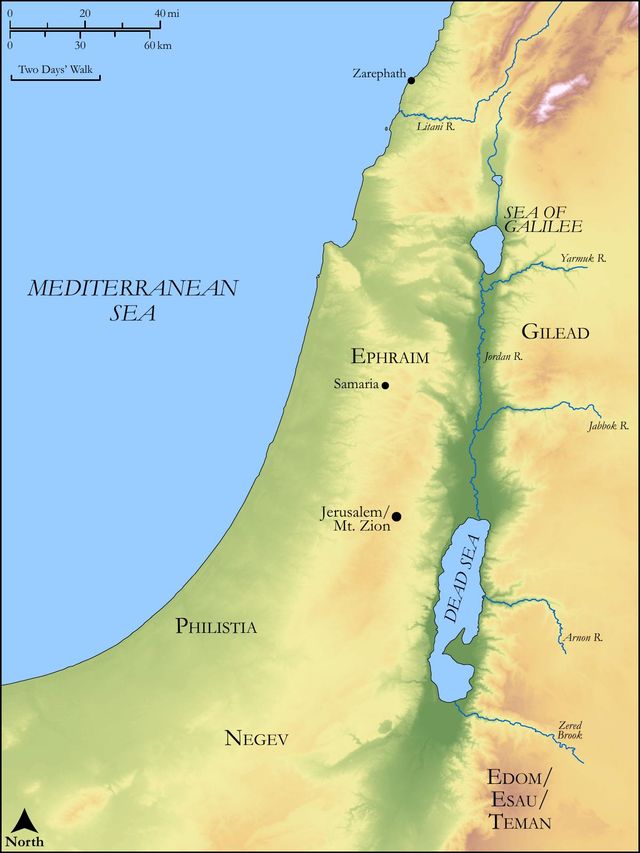
Edom, the descendants of Esau, shared a complex and often hostile relationship with Israel, stemming from the ancient rivalry between the twin brothers Jacob and Esau. Geographically, Edom occupied the rugged, mountainous region of Seir, south of Judah, a terrain that offered natural defenses and led them to believe in their impregnability (Obadiah 1:3). The specific historical catalyst for this prophecy is widely understood to be Edom's egregious behavior during the Babylonian destruction of Jerusalem in 586 BC. Instead of offering aid to their "brother" nation, they either stood by indifferently, actively participated in the looting, or even cut off escape routes for the fleeing Judeans (as detailed in Obadiah 1:10-14). This profound act of betrayal, despite their familial ties, solidified their fate in divine judgment.
Key Themes
ShowHideObadiah 1:6 contributes significantly to several overarching themes within the book and broader biblical theology. Foremost is the theme of Divine Judgment and Retribution, where God's justice meticulously addresses Edom's pride and violence, particularly their mistreatment of Judah. The verse vividly illustrates the Exposure and Humiliation of the proud; what Edom considered safe, secret, and impregnable will be thoroughly revealed and plundered, stripping them of their perceived security and wealth. This also highlights the Sovereignty of God, demonstrating His ultimate control over nations and their destinies, even those who seem unassailable. Finally, the prophecy underscores the severe consequences of Brotherly Betrayal, a theme that resonates throughout the Old Testament, emphasizing the seriousness of violating covenantal or familial bonds, as seen in passages like Obadiah 1:10.
Exposition and Analysis
ShowHideKey Word Analysis
ShowHideThis refers to the patriarch Esau, but here it specifically denotes his descendants, the nation of Edom. The mention of "Esau" rather than "Edom" subtly emphasizes the familial connection with Israel, highlighting the profound nature of their betrayal. The judgment is not merely against a foreign nation but against a "brother" who acted with hostility.
This verb signifies a diligent, thorough, and exhaustive search, often with the specific intent of finding something hidden or concealed. It implies an active, meticulous investigation that leaves no stone unturned, ensuring that nothing escapes discovery. The use of this word underscores the comprehensiveness of the plundering.
Derived from a root meaning "to hide" or "to treasure," this noun refers to secret places, concealed possessions, or valuable treasures that are deliberately put away for safekeeping. In the context of Edom, it would include their accumulated wealth, strategic resources, and perhaps even their most guarded secrets or plans. The word emphasizes the depth of the penetration by the invaders.
This verb means to seek earnestly, to inquire, or to search out. When paired with "searched out," it intensifies the idea of a relentless and purposeful quest. It conveys the idea that the invaders will not merely stumble upon Edom's treasures but will actively and determinedly pursue every last hidden item, leaving nothing undiscovered.
Verse Breakdown
ShowHide"How are [the things] of Esau searched out!"
This opening rhetorical question expresses astonishment and certainty regarding the complete exposure and discovery of Edom's possessions. The phrase "the things of Esau" encompasses all their wealth, resources, strategic strongholds, and anything they valued or considered secure. The passive voice "searched out" implies that an external force, divinely orchestrated, will meticulously uncover and seize everything belonging to them, rendering their perceived security utterly useless.
"[how] are his hidden things sought up!"
This second clause functions as a synonymous parallel, reinforcing and intensifying the first. "His hidden things" specifically refers to the most concealed, secret, or valuable possessions and treasures that Edom believed were safe from discovery. The verb "sought up" reiterates the diligent and exhaustive nature of the search, emphasizing that even the most carefully guarded secrets or deeply buried riches will be brought to light and taken. The repetition underscores the absolute and inescapable nature of Edom's despoilment.
Literary Devices
ShowHideObadiah 1:6 employs several powerful literary devices to convey its message of inescapable judgment. The most prominent is the Rhetorical Question, "How are [the things] of Esau searched out! [how] are his hidden things sought up!" This is not a question seeking information, but rather an exclamation expressing astonishment and certainty. It implies that the thoroughness of Edom's plundering is so complete and undeniable that it elicits a sense of awe or shock. This device serves to underscore the inevitability and comprehensiveness of the destruction. Furthermore, the verse utilizes Synonymous Parallelism, where the second clause ("how are his hidden things sought up!") reiterates and amplifies the meaning of the first ("How are [the things] of Esau searched out!"). This repetition intensifies the message, emphasizing that absolutely nothing belonging to Edom, whether obvious or concealed, will escape discovery and confiscation. The language also borders on Hyperbole, as the idea of everything being "searched out" and "sought up" conveys an extreme and exhaustive plundering, leaving no stone unturned and no secret place unviolated, thereby stressing the totality of God's judgment.
Theological and Thematic Connections
ShowHideObadiah 1:6 powerfully articulates the theological truth of God's omniscience and His unwavering commitment to justice. It reveals that no nation, no individual, and no secret deed can escape the divine gaze or the consequences of unrighteousness. Edom's hidden treasures and strategic strongholds, which they trusted in, were utterly exposed, demonstrating that human security and perceived invincibility are fragile before the sovereign God. This principle extends beyond material possessions to the very intentions of the heart and the hidden acts of sin. God's judgment is not superficial but penetrates to the deepest recesses, bringing all things into the light. This serves as a profound warning to those who act in pride or injustice, believing their actions or assets are concealed, while simultaneously offering comfort to the oppressed, knowing that God sees all and will ultimately bring about righteous recompense.
Reflection and Application
ShowHideObadiah 1:6 serves as a stark reminder that nothing is truly hidden from the all-seeing eyes of God. While specifically detailing the judgment upon Edom's material wealth and strategic hiding places, the underlying principle applies universally: every action, every intention, and every secret we believe is safe from scrutiny is known to God. For those who harbor pride, commit injustice, or exploit others, this verse is a sobering warning that their deeds and their perceived security will ultimately be exposed and judged by a righteous God. For believers, it offers both a call to integrity and a profound source of comfort. It challenges us to live transparently, knowing that genuine spiritual health thrives in the light, not in hiddenness. Furthermore, it assures us that in a world often marked by injustice and unpunished wrongdoing, God sees every hidden tear, every silent suffering, and every secret act of oppression. His justice is not merely punitive but restorative, promising that all wrongs will eventually be made right, and all hidden truths will be brought to light.
Questions for Reflection
ShowHideFAQ
ShowHideWhat was Edom's primary sin against Judah that led to such a severe prophecy?
ShowHideEdom's primary sin, as detailed throughout Obadiah, was their profound betrayal and violence against their "brother" nation, Judah, during a time of extreme vulnerability. When Jerusalem fell to the Babylonians around 586 BC, Edom did not come to Judah's aid; instead, they stood by, gloated over Judah's distress, participated in the looting, and even blocked escape routes for the fleeing Judeans, handing them over to the enemy. This act of "violence against your brother Jacob" (as stated in Obadiah 1:10) was a grave violation of familial and ethical responsibility, demonstrating a profound lack of compassion and an opportunistic cruelty that incurred God's severe judgment. The prophecy in Obadiah 1:10-14 vividly describes their offenses.
Does this verse imply God is actively searching for secrets to punish, or is it more about divine omniscience?
ShowHideObadiah 1:6 primarily emphasizes God's divine omniscience and sovereign control over events, rather than a malicious "search" for secrets. The rhetorical question highlights the inevitability and completeness of Edom's exposure and plundering. It signifies that because God knows all things and orchestrates the course of history, He will ensure that Edom's hidden treasures and perceived security are brought to light as part of His righteous judgment. It's a declaration that no human attempt to conceal wealth, evade justice, or hide from divine reckoning will ultimately succeed. The verse underscores that God's judgment penetrates every hidden corner, revealing what humanity attempts to keep secret, thereby demonstrating His perfect justice and authority.
Christ-Centered Fulfillment
ShowHideWhile Obadiah 1:6 speaks of the specific judgment on Edom, its underlying principles find profound Christ-centered fulfillment. The thorough exposure of Edom's hidden things foreshadows the ultimate revelation of all things in Christ. Jesus Himself declared that "nothing is covered that will not be revealed, and nothing hidden that will not be known" (Luke 12:2). He is the one who knows the hearts of all people, needing no one to testify about humanity, for "he himself knew what was in man" (John 2:24-25). The judgment brought upon Edom for their pride and betrayal points forward to the final judgment where Christ, as the righteous judge, will bring "every deed into judgment, with every secret thing, whether good or evil" (Ecclesiastes 12:14, echoed in Romans 2:16). For those who reject Him, all their hidden works of darkness will be exposed, leading to condemnation. However, for those who believe, the "hidden things" of their sin are not exposed for condemnation but are covered by the atoning sacrifice of the Lamb of God, leading to forgiveness and freedom in Christ, where there is "no condemnation for those who are in Christ Jesus" (Romans 8:1). In Christ, the true "hidden treasures" of wisdom and knowledge are revealed, offering eternal life and reconciliation with God (Colossians 2:2-3).