


Obadiah 1:5
Bible text: King James Version (1769 Blayney text) · Public domain
Bible text: King James Version with Strong's numbers · Public domain
Bible text: Berean Standard Bible · Public domain
Bible text: American Standard Version (1901) · Public domain
Bible text: World English Bible, Messianic edition · Public domain
Bible text: Geneva Bible (1599) · Public domain
Bible text: Young's Literal Translation · Public domain
- אִם'imifH518PrtParticle Conditional
- גַּנָּבִיםga·na·VimthievesH1590N-mpNoun Plural Masculine Absolute
- בָּאוּba·'uthey cameH935V-Qal-Perf-3cpVerb Qal Perfect 3rd Plural common gender
- לְךָle·Khato youPrep-l ¦ 2msSuffix Personal 2nd Singular Masculineלְtoךָyou
- אִם'imifH518PrtParticle Conditional
- שׁוֹדְדֵיSho·deidestroyers ofH7703V-Qal-Prtcpl-mpVerb Qal Participle Plural Masculine Construct
- לַיְלָהLay·lahnightH3915N-msNoun Singular Masculine Absolute
- אֵיךְ'eikhhow!H349InterrogParticle Interrogative
- נִדְמֵיתָהnid·Mei·tahyou will be destroyedH1820V-Niphal-Perf-2msVerb Niphal Perfect 2nd Singular Masculine
- הֲלוֹאha·Lo'¿ notH3808Interrog ¦ NegParticle Negativeהֲ¿לוֹאnot
- יִגְנְבוּyig·ne·Vuwill they stealH1589V-Qal-Imperf-3mpVerb Qal Imperfect 3rd Plural Masculine
- דַּיָּםdai·Yamtheir sufficiencyH1767N-msc ¦ 3mpNoun Singular Masculine Constructדַּיָּsufficiencyםtheir
- אִם'imifH518PrtParticle Conditional
- בֹּצְרִיםbo·tze·Rimgrape gatherersH1219V-Qal-Prtcpl-mpVerb Qal Participle Plural Masculine Absolute
- בָּאוּBa·'uthey cameH935V-Qal-Perf-3cpVerb Qal Perfect 3rd Plural common gender
- לָךְLakhto youPrep-l ¦ 2msSuffix Personal 2nd Singular Masculineלָtoךְyou
- הֲלוֹאha·Lo'¿ notH3808Interrog ¦ NegParticle Negativeהֲ¿לוֹאnot
- יַשְׁאִירוּyash·'I·ruwill they leaveH7604V-Hiphil-Imperf-3mpVerb Hiphil Imperfect 3rd Plural Masculine
- עֹלֵלוֹתo·le·LotgleaningsH5955N-fpNoun Plural Feminine Absolute
English is a literal word-by-word gloss of the Hebrew, not the KJV's wording. Why?
This is the original text the KJV's translators worked from — each Hebrew word with its own literal English meaning in this verse, prepared by scholars at Tyndale House, Cambridge. The KJV translates whole sentences, not word by word, so its wording differs: one Hebrew word can become several English words, and the KJV may choose “the LORD” where the gloss reads “Yahweh”. Both are faithful — they answer different questions. For the KJV's own rendering, switch to the KJV text.
Details
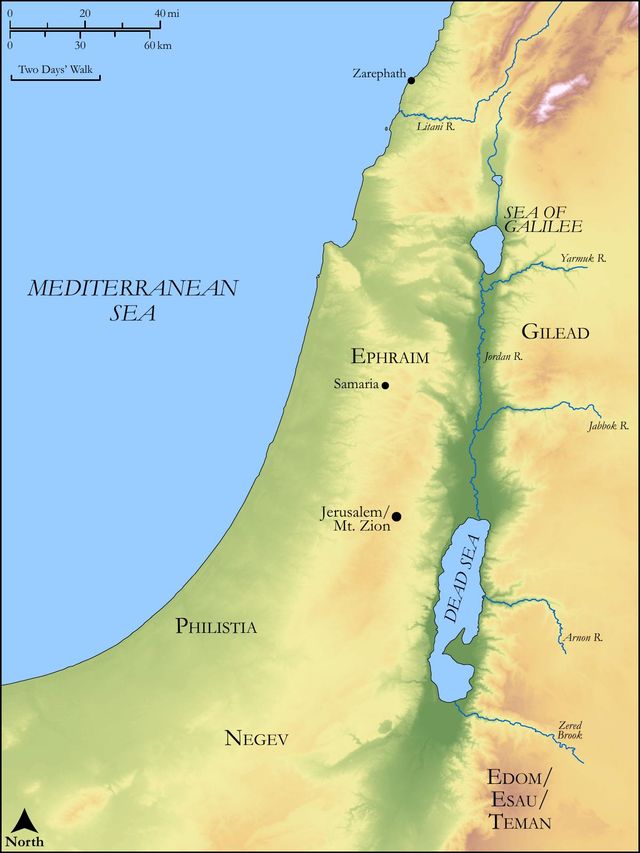
See on the biblical-era map
Study this verse
Historical interpretation
Historical reception
2 surviving comments on this verse. Each one is dated, so this reads as a timeline rather than a list.
Select a marker to jump to its quote. Markers stagger vertically where authors wrote within a few decades of each other.
If thieves came to you, oh, how you would be silenced! Everything would be open for plunder because of the overwhelming fear, until [the plunderers] have stolen enough [riches] for themselves, for they are people of insatiable and consuming greed. If grape gatherers came to you—that is, if plunderers invaded you with open violence—what would you do? Would you not at least strive to have the gleanings of the vineyard remain to you? But you strive in vain against the Chaldeans, the invaders of your dominions. Therefore he refers to them [the Edomites] by adding how Esau has been pillaged, his treasures searched out. He prophesies that the people of Esau had to be pillaged by the Chaldeans with incredible zeal and then even deported to captivity. Nebuchadnezzar of Babylon fulfilled this prediction after he thouroughly destroyed Edom and moved its inhabitants elsewhere.
(Verse 4 onwards) If thieves entered your house, or robbers at night, how would you remain silent? Wouldn't they have stolen enough for themselves? If grape harvesters entered your vineyard, wouldn't they at least leave some grapes for you? How deeply they searched, how thoroughly they investigated his hidden places! Septuagint: If thieves entered your house, or robbers at night, where would you hide? Wouldn't they have stolen enough for themselves? And if grape harvesters came to you, would they not leave some grapes? How Esau has been searched, and his hidden things have been discovered? Similarly Jeremiah, though with the order changed: If grape harvesters had come upon you, would they not leave some grapes? If thieves came at night, they would surely take what is enough for themselves. But I have uncovered Esau, I have revealed his hidden things, and they cannot hide (Jer. XLIX, 9, 10). What he is saying is this: If thieves and robbers who are accustomed to digging up houses during the night and stealing what is in the houses had entered your house, and, hidden in darkness, had searched through the corners of your house, surely they would have taken what they thought could suffice for themselves, and would have left something in your house, either from satiety or from ignorance. If grape gatherers had entered your vineyard, and if they wanted to either destroy it hostilely or harvest it because they were hired by you, even if their grape harvest had been diligent, still they would have left behind grapes hidden among the vines and leaves, among the stems. But all the enemies, who came to you at the command of the Lord (meaning the Babylonians and the army of Nebuchadnezzar), have searched all your secrets, and have explored the caves, and the openings of the caves, where you dwell. And truly, to say something about the nature of the place, the entire southern region of the Edomites, from Eleutheropolis to Petra, and Aila (which is the possession of Esau), has little dwellings in the caves. And because of the excessive heat of the sun, since it is a southern province, it makes use of underground dwellings. 'I have discovered,' he says, 'Esau, that is, what was pressed down on the ground I have brought out into the open, and everything that you were keeping closed up has been revealed, and while I was seeking your substance along with your enemies, no secrets could be hidden.' Otherwise, I think that thieves and robbers, who enter at night, because they are children of the night and of darkness, are heretics, preaching doctrines contrary to the truth, who steal enough for themselves and hasten to snatch away from the flocks of the Church daily. Those who enter the vineyard of our Lord (Psalm 79), which he transferred from Egypt of this age, and from whose offspring he promises to drink wine in the kingdom of the Father, desire everything to be shared, so that hardly any grapes are left on it. But on the contrary, the Lord acts: for all their secrets and hidden mysteries, and the craftiness of the patriarchs Esau (these are indeed the ones who first discovered heresies), he brings forth into the open through his saints and Churchmen and learned teachers, and his first victory is to reveal what was hidden and secret. And when it is said with admiration, 'How did Esau search out and discover his hidden secrets?' Look at Marcion and Valentinus, and all heretics, how in the teachings of demons, having seared consciences, they applaud themselves, and by composing deceptive speeches, they lead astray simple souls as if initiating them into divine mysteries. But when they bring forth in their discourse the thirty aeons, and the square and octad and twelfth and dualistic god, and the monstrous Abraxas, then the wisdom of Esau will be shown to be foolishness, and his secrets will be revealed.
Continue studying Obadiah 1:5 across the web’s major study libraries — every link below opens this exact verse, chapter, or book on the destination site.
Read & Compare
 BibleGatewayThis verse in more than 200 translations and 70 languages.
 Bible.comThe YouVersion reader — hundreds of translations, reading plans, and highlights.
 ESV.orgCrossway's official English Standard Version reader.
 NET BibleThe NET translation with 60,000+ translators' notes on every rendering decision.
 STEP BibleTyndale House's free study tool — original text, vocabulary, and scholarly resources.
 BibliaLogos Bible Software's free web reader.
 USCCBThe New American Bible (Revised Edition) with the U.S. bishops' study notes.
Commentaries
 BibleHub CommentariesDozens of classic commentaries on this verse, gathered on one page.
 StudyLightMore than 100 commentary sets — the largest collection on the web.
 BibleRefPlain-English commentary on what this verse means, verse by verse.
 Enduring WordDavid Guzik's free commentary on this chapter, widely used by Bible teachers.
 Bible Study ToolsVerse commentary alongside Greek and Hebrew study aids.
Original Language & Research
- BibleHub InterlinearThe verse word by word — original language, transliteration, and English.
- BibleHub LexiconEvery word's original-language definition and Strong's entry.
 Blue Letter BibleDeep-study tools — Strong's numbers, concordance, and word studies.
 SefariaThe Hebrew text with Rashi and centuries of Jewish commentary.
Sermons, Hymns & Audio


TrulyRandomVerse is not affiliated with these sites and doesn’t control their content. They’re linked because they’re genuinely useful.
Summary
Obadiah 1:5 employs a vivid rhetorical comparison to underscore the absolute and unprecedented judgment awaiting Edom. Unlike typical thieves who steal only what they can carry, or grapegatherers who traditionally leave gleanings for the poor, the divine judgment upon Edom will be so thorough and devastating that nothing of value will remain. This stark contrast highlights the severity and finality of God's justice against Edom for their pride and their malicious actions against Judah.
Context
ShowHideLiterary Context
Obadiah is the shortest book in the Old Testament, a prophetic oracle delivered entirely against the nation of Edom. The preceding verses (Obadiah 1:1-4) establish Edom's pride and their false sense of security in their seemingly impregnable mountain strongholds, particularly in the city of Petra. Verse 5 serves as a rhetorical question designed to dismantle that illusion of security, illustrating that even common human plunderers or harvesters are less destructive than the judgment God will unleash. The subsequent verses (Obadiah 1:6-9) detail the complete stripping away of Edom's wealth and allies, further elaborating on the totality of their downfall foreshadowed in this verse.
Historical & Cultural Context
Edom, descended from Esau (Jacob's brother), was a long-standing rival and often an enemy of Israel. Their territory was south and east of Judah, characterized by rugged, mountainous terrain, offering natural defenses. The specific historical context most commonly associated with Obadiah's prophecy is Edom's opportunistic actions during the Babylonian destruction of Jerusalem in 586 BC. Instead of aiding their Israelite kin, the Edomites rejoiced in Judah's downfall, plundered the city, and even handed over fleeing Israelites to their enemies (Obadiah 1:10-14). Culturally, the practice of gleaning in vineyards was a well-established law and custom in ancient Israel, designed to provide for the poor and the sojourner, as commanded in Leviticus 19:9-10 and Deuteronomy 24:19-21. This cultural norm makes the comparison in Obadiah 1:5 even more potent, as it highlights the unnatural and unprecedented nature of Edom's coming desolation.
Key Themes
ShowHideThis verse contributes significantly to several key themes within the book of Obadiah and the broader prophetic literature. Foremost is the theme of Divine Judgment, emphasizing God's sovereign justice against nations, particularly those who oppress His people. It also highlights the theme of Pride Preceding a Fall, as Edom's arrogance and self-sufficiency are directly contrasted with their impending utter ruin. The verse also touches on the theme of Retributive Justice (lex talionis), where Edom's violent actions against Judah will be repaid in kind, though in a more severe manner. This is echoed in Obadiah 1:15, which states, "As thou hast done, it shall be done unto thee." Finally, the verse subtly reinforces the theme of God's Faithfulness to His Covenant People, as the judgment on Edom ensures the eventual vindication and restoration of Israel.
Exposition and Analysis
ShowHideKey Word Analysis
ShowHideDerived from the root "to thieve," this word refers to a stealer or one who takes illicitly. The prophet uses this common figure to establish a baseline of expected behavior for plunderers: they typically take what they need or can carry, not everything.
This word, appearing parenthetically, is a primitive root meaning "to be dumb or silent," and by extension, "to fail or perish," or transitively, "to destroy." Its use here signifies a complete cessation, an utter destruction, or being brought to silence. It powerfully conveys the absolute and final nature of Edom's demise, contrasting sharply with the partiality of human theft or harvesting.
This word, a primitive root, means "to clip off" and specifically refers to "gathering grapes." It also carries connotations of being "cut off" or "fortified." In this context, it refers to those who harvest a vineyard. The cultural expectation was that grapegatherers would leave some gleanings, making the comparison to Edom's complete stripping even more impactful.
Verse Breakdown
ShowHide"If thieves came to thee, if robbers by night,"
This introduces a hypothetical scenario familiar to the audience. The "thieves" (gannâb) and "robbers" (shâdad) represent typical human plunderers who operate under the cover of darkness. This sets up the initial comparison, implying a raid or invasion.
"(how art thou cut off!)"
This parenthetical exclamation, "how art thou cut off!" (ʼêyk dâmâh), is a sudden, dramatic interjection by the prophet. It reveals the shocking reality of Edom's fate, contrasting it immediately with the limited scope of human plundering. It's a lament and a declaration of their utter ruin, emphasizing the totality and finality of their destruction.
"would they not have stolen till they had enough?"
This rhetorical question highlights the typical behavior of thieves: they steal what is sufficient for their needs or what they can manage to carry away. They do not, as a rule, completely strip a place bare beyond their capacity or need. This establishes the first point of contrast with Edom's impending judgment.
"if the grapegatherers came to thee,"
This introduces a second, distinct hypothetical scenario, drawing on a common agricultural practice. Grapegatherers are harvesters of vineyards, a process that, while removing the main crop, was culturally understood to leave something behind.
"would they not leave [some] grapes?"
This final rhetorical question underscores the second point of contrast. According to Mosaic Law and common practice, grapegatherers were obligated to leave gleanings for the poor and the sojourner. The implication is that even these harvesters, whose purpose is to take, would leave something. The judgment on Edom, however, will be so complete that it will exceed even the thoroughness of a legal harvest, leaving absolutely nothing.
Literary Devices
ShowHideObadiah 1:5 masterfully employs several literary devices to convey its powerful message of impending doom for Edom. The most prominent is Rhetorical Question, used twice ("would they not have stolen till they had enough?" and "would they not leave [some] grapes?"). These questions are not meant to elicit an answer but to make a forceful point, highlighting the stark contrast between typical human plundering/harvesting and the unprecedented totality of God's judgment. This creates a sense of inevitability and emphasizes the logical absurdity of Edom's impending desolation being less than what even thieves or gleaners would do. The verse also utilizes Analogy or Comparison, drawing parallels between the actions of thieves and grapegatherers and the divine judgment. By comparing the limited scope of human activity to the boundless nature of God's wrath, the prophet effectively communicates the overwhelming nature of Edom's fate. The parenthetical exclamation, "how art thou cut off!", serves as a powerful Apostrophe or direct address, interrupting the flow to express the prophet's lament and shock at the extent of Edom's destruction. This interjection also functions as a form of Foreshadowing, giving the audience a glimpse of the absolute ruin that awaits Edom before the full details are revealed.
Theological and Thematic Connections
ShowHideObadiah 1:5 profoundly illustrates the principle of divine justice, demonstrating that God's judgment is not merely punitive but often exceeds human expectations in its thoroughness when dealing with deep-seated sin, particularly pride and malice against His covenant people. It underscores God's sovereignty over nations, revealing His active involvement in the affairs of humanity to uphold righteousness and execute justice. The complete stripping of Edom, beyond what even plunderers or gleaners would achieve, serves as a stark warning against spiritual arrogance and the sin of taking advantage of others' suffering. It shows that God's judgment, while sometimes delayed, is ultimately inescapable and perfectly proportionate to the offense, often manifesting in a way that leaves no room for recovery or boasting.
Reflection and Application
ShowHideObadiah 1:5 serves as a potent reminder that God's justice is absolute and unwavering, particularly when nations or individuals act with pride and malice, especially towards His people or those who are vulnerable. The vivid imagery of total desolation, surpassing even the thoroughness of human plunderers, compels us to consider the gravity of our own actions and attitudes. It challenges any notion that sin, especially that rooted in arrogance or cruelty, will go unaddressed. For the believer, this verse offers assurance that God sees and will ultimately rectify all injustice, even when it seems overwhelming or unpunished in the present. It calls us to humility, empathy, and a deep respect for God's righteous character, urging us to align our lives with His standards of justice and compassion rather than succumbing to pride or self-serving actions.
Questions for Reflection
ShowHideFAQ
ShowHideWhy is the comparison to thieves and grapegatherers so significant?
ShowHideThe comparison is significant because it highlights the totality and unprecedented nature of the judgment coming upon Edom. Thieves and robbers, by their nature, take what they can, but they typically don't strip a place absolutely bare; they take what is "enough" (Obadiah 1:5). Similarly, grapegatherers, even when harvesting, were legally and culturally obligated to leave some gleanings for the poor and the sojourner, as commanded in Leviticus 19:9-10. By stating that Edom's destruction would be more complete than even these common, limited forms of taking, the prophet emphasizes that Edom's desolation would be absolute, leaving nothing behind. It underscores the severity and finality of God's divine wrath, surpassing any human act of plundering or harvesting.
What was Edom's primary sin that led to such a severe judgment?
ShowHideEdom's primary sin, as detailed throughout the book of Obadiah, was their pride and their malicious actions against their "brother" nation, Judah. While their geographical location made them feel secure (Obadiah 1:3), their pride led them to rejoice in Judah's downfall when Jerusalem was sacked by the Babylonians. Instead of offering aid, they stood aloof, plundered the city, and even cut off the escape of fleeing Israelites, handing them over to their enemies (Obadiah 1:10-14). This betrayal of their fraternal relationship (as descendants of Esau and Jacob) and their active participation in the suffering of God's people provoked God's severe and complete judgment.
Christ-Centered Fulfillment
ShowHideWhile Obadiah 1:5 speaks directly to the temporal judgment upon Edom, its profound message of absolute divine justice and the complete stripping away of what is proud and rebellious finds its ultimate fulfillment and resolution in the person and work of Jesus Christ. The thoroughness of God's judgment foreshadowed here points to the ultimate judgment that sin deserves, a judgment so complete that it leaves no room for human boasting or self-sufficiency, as seen in the New Testament's portrayal of the final judgment (e.g., Matthew 25:31-46 or Revelation 20:11-15). However, in Christ, this terrifying judgment is paradoxically absorbed and overcome. Jesus, the Lamb of God, was "cut off" (recalling the Hebrew dâmâh from Obadiah 1:5) from the land of the living, bearing the full, unmitigated wrath of God against sin on the cross (e.g., Isaiah 53:8). He was stripped bare, not for His own sin, but for ours, so that those who believe in Him might not face the complete desolation of divine judgment. Thus, the devastating judgment on Edom, which left nothing, ultimately points to the infinitely more complete work of Christ, who, by being utterly stripped and abandoned, secured a salvation that leaves nothing wanting for those who trust in Him, offering a spiritual abundance that no thief can steal and no enemy can diminish (John 10:10).