


Numbers 32:11
- אִם'imifH518PrtParticle Conditional
- יִרְאוּyir·'Uthey will seeH7200V-Qal-Imperf-3mpVerb Qal Imperfect 3rd Plural Masculine
- הָאֲנָשִׁיםha·'a·na·Shimthe menH582Art ¦ N-mpNoun Plural Masculine Absoluteהָtheאֲנָשִׁיםmen
- הָעֹלִיםha·'o·Limwho came upH5927Art ¦ V-Qal-Prtcpl-mpVerb Qal Participle Plural Masculine Absoluteהָwhoעֹלִיםcame up
- מִמִּצְרַיִםmi·mitz·Ra·yimfrom EgyptH4714Prep-m ¦ N-properNoun Proper LocationמִfromמִּצְרַיִםEgypt
- מִבֶּןmi·Benfrom a son ofH1121Prep-m ¦ N-mscNoun Singular Masculine Constructמִfromבֶּןa son of
- עֶשְׂרִים'es·RimtwentyH6242Adj-mpAdjective Numerical Plural Masculine Absolute
- שָׁנָהsha·Nahyear[s]H8141N-fsNoun Singular Feminine Absolute
- וָמַעְלָהva·Ma'·lahand up -wardsH4605Conj-w ¦ Adj-cs ¦ SfxAdjective Numerical Singular common gender Absoluteוָandמַעְלָupה-wards
- אֵת'et<obj.>H853DirObjMParticle Object Indicator
- הָאֲדָמָהha·'a·da·Mahthe landH127Art ¦ N-fsNoun Singular Feminine Absoluteהָtheאֲדָמָהland
- אֲשֶׁר'a·SherwhichH834RelParticle Relative
- נִשְׁבַּעְתִּיnish·Ba'·tiI sworeH7650V-Niphal-Perf-1csVerb Niphal Perfect 1st Singular common gender
- לְאַבְרָהָםle·'av·ra·Hamto AbrahamH85Prep-l ¦ N-proper-mNoun Proper MasculineלְtoאַבְרָהָםAbraham
- לְיִצְחָקle·yitz·Chakto IsaacH3327Prep-l ¦ N-proper-mNoun Proper MasculineלְtoיִצְחָקIsaac
- וּלְיַעֲקֹבu·le·ya·'a·Koand to JacobH3290Conj-w ¦ Prep-l ¦ N-proper-mNoun Proper MasculineוּandלְtoיַעֲקֹבJacob
- כִּיkiforH3588PrtParticle Conditional
- לֹאlo'notH3808NegParticle Negative
- מִלְאוּmil·'Uthey have filledH4390V-Piel-Perf-3cpVerb Piel Perfect 3rd Plural common gender
- אַחֲרָי'a·cha·Raiafter meH310Adj-mpc ¦ 1csAdjective Numerical Plural Masculine Constructאַחֲרָafterיme
English is a literal word-by-word gloss of the Hebrew, not the KJV's wording. Why?
This is the original text the KJV's translators worked from — each Hebrew word with its own literal English meaning in this verse, prepared by scholars at Tyndale House, Cambridge. The KJV translates whole sentences, not word by word, so its wording differs: one Hebrew word can become several English words, and the KJV may choose “the LORD” where the gloss reads “Yahweh”. Both are faithful — they answer different questions. For the KJV's own rendering, switch to the KJV text.
Details
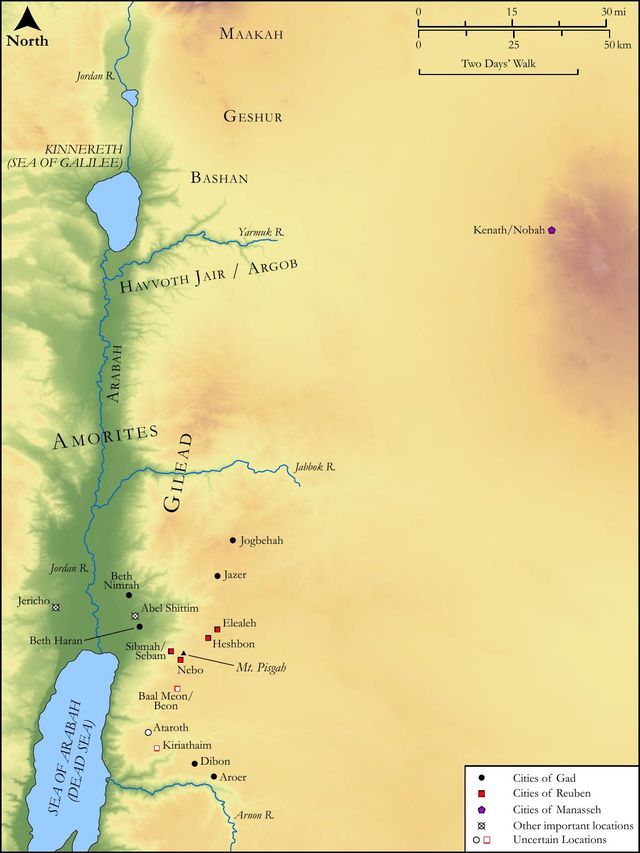
See on the biblical-era map
Study this verse
Continue studying Numbers 32:11 across the web’s major study libraries — every link below opens this exact verse, chapter, or book on the destination site.
Read & Compare
 BibleGatewayThis verse in more than 200 translations and 70 languages.
 Bible.comThe YouVersion reader — hundreds of translations, reading plans, and highlights.
 ESV.orgCrossway's official English Standard Version reader.
 NET BibleThe NET translation with 60,000+ translators' notes on every rendering decision.
 STEP BibleTyndale House's free study tool — original text, vocabulary, and scholarly resources.
 BibliaLogos Bible Software's free web reader.
 USCCBThe New American Bible (Revised Edition) with the U.S. bishops' study notes.
Commentaries
 BibleHub CommentariesDozens of classic commentaries on this verse, gathered on one page.
 StudyLightMore than 100 commentary sets — the largest collection on the web.
 BibleRefPlain-English commentary on what this verse means, verse by verse.
 Enduring WordDavid Guzik's free commentary on this chapter, widely used by Bible teachers.
 Bible Study ToolsVerse commentary alongside Greek and Hebrew study aids.
Original Language & Research
- BibleHub InterlinearThe verse word by word — original language, transliteration, and English.
- BibleHub LexiconEvery word's original-language definition and Strong's entry.
 Blue Letter BibleDeep-study tools — Strong's numbers, concordance, and word studies.
 SefariaThe Hebrew text with Rashi and centuries of Jewish commentary.
Sermons, Hymns & Audio


TrulyRandomVerse is not affiliated with these sites and doesn’t control their content. They’re linked because they’re genuinely useful.
Summary
Numbers 32:11 presents God's solemn and unyielding decree regarding the generation of Israelites who departed from Egypt. It declares that none of the men, aged twenty years old and older, who had personally witnessed God's miraculous deliverance from slavery and His covenant presence, would be permitted to enter the Promised Land—the very land God had sworn by divine oath to Abraham, Isaac, and Jacob. The profound and singular reason for this exclusion was their pervasive failure to "wholly follow" God, signifying a deep-seated lack of complete obedience, unwavering trust, and steadfast faith in His promises and leadership.
Context
ShowHideLiterary Context
This verse serves as a direct and pivotal reiteration of God's judgment, initially pronounced in Numbers 14, following the disastrous report of the twelve spies sent into Canaan. Ten of the spies returned with a fearful, faithless account, focusing on the insurmountable obstacles rather than God's power. This negative report ignited a widespread rebellion among the people, who grumbled against God and Moses, wept, and even proposed returning to Egypt. Despite the faithful and courageous counter-reports from Caleb and Joshua, who urged trust in God's ability to deliver the land, the people chose to believe the majority's fearful assessment. This profound act of unbelief and disobedience provoked God's righteous anger, leading to the decree articulated in Numbers 14:28-35. Numbers 32:11 reinforces this judgment as Moses recounts the history of their wilderness journey to the tribes of Reuben and Gad, emphasizing the consequences of their fathers' rebellion and warning the new generation against similar faithlessness as they prepare to inherit the land.
Historical & Cultural Context
The Israelites referenced in this verse are the generation that directly experienced the Exodus from Egypt, witnessed the miraculous plagues, the parting of the Red Sea, and the giving of the Law at Mount Sinai. The specific age demarcation, "from twenty years old and upward," is crucial. This age was established in the census taken at Sinai (Numbers 1:3) as the threshold for military conscription and, by extension, full adult accountability within the community. It marked those considered fully responsible for their actions and capable of bearing arms for the nation. Culturally, an oath sworn by God, as He "sware unto Abraham, unto Isaac, and unto Jacob," was the most sacred, binding, and unchangeable promise imaginable in the ancient Near East. This underscores the absolute certainty of the land inheritance for Abraham's descendants. However, the wilderness generation's repeated acts of murmuring, rebellion, and idolatry demonstrated a profound lack of faith and loyalty, which, in ancient covenant contexts, was a direct affront to the suzerain (God) who had delivered them and established a covenant with them. Their failure to trust God's provision and protection, despite overwhelming evidence of His power, was a direct violation of this covenant relationship.
Key Themes
ShowHideThis verse powerfully encapsulates several major theological and narrative themes woven throughout the book of Numbers and the broader Pentateuch. Foremost, it highlights the Consequences of Unbelief and Disobedience, demonstrating unequivocally that a persistent lack of trust in God's power and promises, coupled with open rebellion, leads to severe divine judgment and exclusion from promised blessings. The Israelites' failure to "wholly follow" God resulted in their exclusion from the physical inheritance of the land. Secondly, it profoundly emphasizes God's Unwavering Faithfulness to His Covenant. Despite the people's profound unfaithfulness, God remained absolutely true to His covenant oath with Abraham, Isaac, and Jacob (Genesis 12:7). The land would still be given, albeit to a new, more obedient generation, showcasing God's steadfast character and the ultimate fulfillment of His promises, even when human unfaithfulness intervenes. Thirdly, the phrase "wholly followed me" introduces the critical theme of The Importance of Wholehearted Devotion. This concept speaks against half-hearted obedience, divided loyalties, or conditional trust, emphasizing that God desires and demands complete, unwavering commitment from His people. This is powerfully exemplified by Caleb, who is repeatedly commended for his "wholehearted" following of the Lord in passages like Numbers 14:24 and Joshua 14:8.
Exposition and Analysis
ShowHideKey Word Analysis
ShowHideThis idiomatic phrase, derived from the root mâlêʼ (H4390, meaning "to fill" or "be full") and ʼachar (H310, meaning "after" or "behind"), literally translates to "filled after me" or "followed fully after me." It signifies complete adherence, unwavering loyalty, and absolute devotion, extending beyond mere external obedience to an internal posture of the heart. It implies a full alignment with God's will, trusting and pursuing His way without reservation or hesitation. This stands in stark contrast to the wavering, complaining, and rebellious spirit of the majority of the wilderness generation, who followed God only partially or conditionally.
This verb (H7650) signifies the act of taking a solemn and binding oath. When God swears an oath, it underscores the absolute certainty, immutability, and inviolability of His promise. It highlights the divine commitment to the Abrahamic covenant, emphasizing that even the profound unfaithfulness of the people could not nullify God's ultimate plan to give the land to Abraham's descendants. The oath serves as a bedrock of God's faithfulness, against which the people's unfaithfulness is starkly contrasted.
While literally meaning "to see" (H7200, râʼâh) "the land" (H127, ʼădâmâh), in this context, it carries the deeper implication of experiencing, entering, and possessing the promised inheritance. It is not merely a visual act but an act of participation and enjoyment of the blessing and fulfillment of God's covenant promise. To "not see the land" means to be excluded from the realization of God's promise, to be barred from the inheritance that was the very purpose of their deliverance from Egypt.
Verse Breakdown
ShowHide"Surely none of the men that came up out of Egypt"
This clause immediately identifies the specific group under divine judgment: the generation of Israelites who personally experienced the miraculous Exodus from Egyptian bondage. This highlights their unique position as recipients of God's mighty acts of salvation and His direct covenant presence at Mount Sinai, emphasizing the gravity of their subsequent rebellion.
"from twenty years old and upward"
This specifies the age group held accountable. As established by the census in Numbers 1, this was the age of military readiness and, by extension, full adult responsibility within the community. It underscores that the judgment was not arbitrary but applied to those who were mature enough to understand and choose their actions, distinguishing them from the younger generation who would ultimately inherit the land.
"shall see the land which I sware unto Abraham, unto Isaac, and unto Jacob"
This declares the severe consequence of their actions: exclusion from the Promised Land. The explicit reference to God's oath to the patriarchs (Abraham, Isaac, and Jacob) emphasizes the land's profound significance as the fulfillment of the foundational Abrahamic covenant, making their exclusion a devastating spiritual and physical loss of their divine inheritance.
"because they have not wholly followed me"
This is the crucial and direct reason for the judgment. It pinpoints their core sin: a pervasive and fundamental lack of complete, unwavering trust and obedience to God. Their failure was not merely isolated acts of sin, but a deep-seated posture of the heart that did not fully align with God's will, leading to persistent murmuring, rebellion, and a refusal to believe His promises and power.
Literary Devices
ShowHideNumbers 32:11 employs several significant literary devices to convey its powerful message. Divine Decree is central, as God's authoritative pronouncement delivers a definitive and irreversible judgment. The use of "Surely" (Hebrew, ʼim loʼ, H518) functions as a strong oath or affirmation, emphasizing the absolute certainty and solemnity of the pronouncement, effectively binding the divine word. There is a clear Contrast established between God's unwavering faithfulness to His covenant oath ("I sware unto Abraham, unto Isaac, and unto Jacob") and the profound unfaithfulness of the people ("they have not wholly followed me"). This juxtaposition highlights the severity of their sin against the backdrop of divine constancy and integrity. The phrase "none of the men... shall see the land" functions as a Generalization or near-hyperbole, as the broader narrative explicitly provides exceptions in Caleb and Joshua, who did wholly follow God. This generalization serves to emphasize the corporate nature of the judgment and the widespread failure of the generation, making the exceptions stand out even more prominently as models of true faith.
Theological and Thematic Connections
ShowHideNumbers 32:11 serves as a profound theological touchstone, illustrating the critical importance of faith and obedience in the covenant relationship with God. It underscores that while God's promises are immutable and ultimately fulfilled, their immediate enjoyment and the experience of their blessing are often conditioned on human responsiveness. The wilderness generation's failure to "wholly follow" God, rooted in unbelief and expressed through persistent rebellion, demonstrates that a partial or conditional commitment is insufficient for inheriting God's full blessings. This narrative acts as a perpetual warning against spiritual apathy, a lack of trust in divine providence, and a divided heart, reminding believers that while salvation is by grace, walking in the fullness of God's promises requires a heart fully devoted to Him.
Reflection and Application
ShowHideNumbers 32:11 stands as a timeless admonition for believers across generations, compelling us to examine the depth and sincerity of our own faith and obedience. Just as the Israelites were prevented from entering a physical promised land due to their unbelief and half-heartedness, the New Testament warns us about the danger of falling short of God's spiritual "rest" due to a similar lack of faith and perseverance (Hebrews 4:1-11). This verse challenges us to move beyond mere outward conformity to God's commands and to cultivate an internal posture of "wholehearted" devotion—a trust that remains steadfast even when circumstances are daunting, and God's path seems difficult or counter-intuitive. It calls us to resist the temptation to grumble, doubt, or rebel when faced with trials, but instead to fully lean into God's promises, knowing that true spiritual inheritance and the deepest experience of His presence come from a heart fully committed to following Him. Our journey of faith is not merely about reaching a destination, but about the quality of our walk with God along the way, marked by unwavering trust and complete surrender.
Questions for Reflection
ShowHideFAQ
ShowHideWhy were Caleb and Joshua the only exceptions to this judgment?
ShowHideCaleb and Joshua were the only exceptions because they demonstrated the very quality the rest of the generation lacked: they "wholly followed" the Lord. Numbers 14:24 explicitly states that Caleb had "a different spirit" and "followed the Lord wholeheartedly." This meant they believed God's promise and power over the daunting reports of the other spies, urging the people to go up and take the land. Their unwavering faith, courage, and obedience distinguished them, allowing them to enter the Promised Land and receive their inheritance.
Does this judgment imply that God was unfaithful to His covenant promise to Abraham, Isaac, and Jacob?
ShowHideNo, this judgment does not imply God's unfaithfulness. Rather, it highlights God's justice and His unwavering commitment to His covenant, even in the face of human rebellion. While the generation that rebelled was excluded, God's promise to give the land to Abraham's descendants remained firm. He simply raised up a new generation, born and nurtured in the wilderness, who would ultimately inherit the land, as promised (Numbers 14:31). This demonstrates God's character as both just (punishing disobedience) and faithful (keeping His promises, albeit through a different means or generation).
What is the significance of the age "twenty years old and upward" in this context?
ShowHideThe age "twenty years old and upward" refers to the age of accountability for military service and, by extension, full adult responsibility within the Israelite community, as established by the census in Numbers 1:3. This signifies that the judgment was specifically directed at those who were mature enough to understand God's commands, witness His mighty acts of deliverance and provision, and make conscious choices regarding their faith and obedience. It excluded children who were not yet accountable for the rebellion, underscoring the principle of individual and corporate responsibility for one's actions before God.
Christ-Centered Fulfillment
ShowHideNumbers 32:11, while detailing a severe judgment against unbelief, finds its ultimate Christ-centered fulfillment in the person and redemptive work of Jesus. The wilderness generation's failure to enter the physical Promised Land due to their unbelief and inability to "wholly follow" God foreshadows humanity's inherent inability to enter God's true spiritual rest and eternal inheritance through their own efforts, law-keeping, or partial obedience. The land of Canaan, a place of rest and inheritance, points to the deeper, eternal rest that God offers through Christ. Unlike the disobedient generation, Jesus perfectly "wholly followed" the Father in every aspect of His life, demonstrating complete obedience, unwavering faith, and perfect trust, even to the point of death on the cross (Philippians 2:8). He is the true Joshua, the one who leads His people into the ultimate spiritual inheritance and rest that was unattainable under the old covenant (Hebrews 4:8-10). Our entry into God's rest is not based on our own "wholehearted following" in a legalistic sense, but on our faith in Christ's perfect obedience and His finished work. Through Him, we are invited to enter a rest from our labors and a spiritual inheritance secured by His faithfulness, not our own (Matthew 11:28-30). Thus, Numbers 32:11 serves as a stark reminder of the consequences of unbelief, while simultaneously highlighting the glorious grace and perfect provision found in Jesus, who fulfilled all righteousness and opened the way to the true Promised Land—eternal life in God's presence and a secure spiritual inheritance for all who believe (Ephesians 1:11-14).