


Numbers 32:10
- וַיִּחַרvai·yi·charand it burnedH2734Conj-w ¦ V-Qal-ConsecImperf-3msVerb Qal Consecutive Imperfect 3rd Singular Masculineוַandיִּחַרit burned
- אַף'af[the] anger ofH639N-mscNoun Singular Masculine Construct
- יְהוָהYah·wehYahwehH3068N-properNoun Proper Title
- בַּיּוֹםbai·Yomon the dayH3117Prep-b ¦ N-msNoun Singular Masculine Absoluteבַּon theיּוֹםday
- הַהוּאha·Hu'<the> thatH1931Art ¦ Pro-3msPronoun Personal 3rd Singular Masculineהַ<the>הוּאthat
- וַיִּשָּׁבַעvai·yi·sha·Va'and he swore an oathH7650Conj-w ¦ V-Niphal-ConsecImperf-3msVerb Niphal Consecutive Imperfect 3rd Singular Masculineוַandיִּשָּׁבַעhe swore an oath
- לֵאמֹרle·Mor<to> sayingH559Prep-l ¦ V-Qal-InfVerb Qal Infinitive Constructלֵ<to>אמֹרsaying
English is a literal word-by-word gloss of the Hebrew, not the KJV's wording. Why?
This is the original text the KJV's translators worked from — each Hebrew word with its own literal English meaning in this verse, prepared by scholars at Tyndale House, Cambridge. The KJV translates whole sentences, not word by word, so its wording differs: one Hebrew word can become several English words, and the KJV may choose “the LORD” where the gloss reads “Yahweh”. Both are faithful — they answer different questions. For the KJV's own rendering, switch to the KJV text.
Details
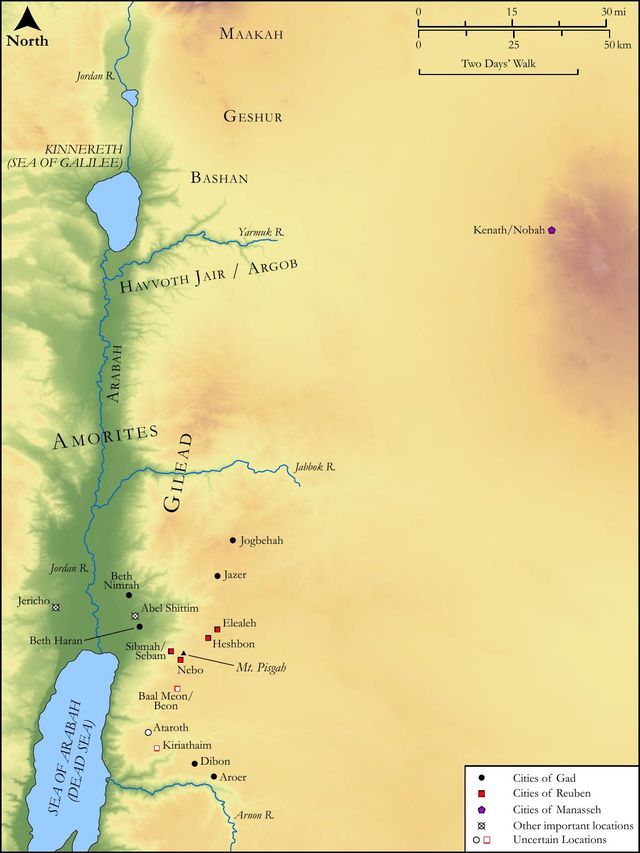
See on the biblical-era map
Study this verse
Continue studying Numbers 32:10 across the web’s major study libraries — every link below opens this exact verse, chapter, or book on the destination site.
Read & Compare
 BibleGatewayThis verse in more than 200 translations and 70 languages.
 Bible.comThe YouVersion reader — hundreds of translations, reading plans, and highlights.
 ESV.orgCrossway's official English Standard Version reader.
 NET BibleThe NET translation with 60,000+ translators' notes on every rendering decision.
 STEP BibleTyndale House's free study tool — original text, vocabulary, and scholarly resources.
 BibliaLogos Bible Software's free web reader.
 USCCBThe New American Bible (Revised Edition) with the U.S. bishops' study notes.
Commentaries
 BibleHub CommentariesDozens of classic commentaries on this verse, gathered on one page.
 StudyLightMore than 100 commentary sets — the largest collection on the web.
 BibleRefPlain-English commentary on what this verse means, verse by verse.
 Enduring WordDavid Guzik's free commentary on this chapter, widely used by Bible teachers.
 Bible Study ToolsVerse commentary alongside Greek and Hebrew study aids.
Original Language & Research
- BibleHub InterlinearThe verse word by word — original language, transliteration, and English.
- BibleHub LexiconEvery word's original-language definition and Strong's entry.
 Blue Letter BibleDeep-study tools — Strong's numbers, concordance, and word studies.
 SefariaThe Hebrew text with Rashi and centuries of Jewish commentary.
Sermons, Hymns & Audio


TrulyRandomVerse is not affiliated with these sites and doesn’t control their content. They’re linked because they’re genuinely useful.
Summary
Numbers 32:10 powerfully captures the immediate and fervent divine displeasure of the LORD, whose anger was ignited "the same time" as the previous generation's profound rebellion at Kadesh-barnea. This verse serves as a solemn and binding declaration of God's unwavering commitment to His covenant purposes and His righteous judgment against persistent unbelief and disobedience, underscoring the profound gravity of the tribes of Reuben and Gad's request to settle outside the Promised Land before the full conquest.
Context
ShowHideLiterary Context
Numbers 32:10 is strategically placed within a pivotal negotiation between Moses and the tribes of Reuben and Gad, later joined by half the tribe of Manasseh. These tribes, possessing substantial livestock, requested to inhabit the fertile Transjordanian lands already conquered, rather than crossing the Jordan into Canaan (Numbers 32:1-5). Moses, with the bitter memory of Kadesh-barnea fresh in mind, immediately interprets their petition as a dangerous echo of the disastrous unbelief that led to forty years of wilderness wandering. He fears it will demoralize the rest of Israel and deter them from entering the Promised Land (Numbers 32:6-9). The LORD's swift and emphatic reaction in verse 10 directly confirms Moses' grave concern, explicitly linking the tribes' present hesitation to the past rebellion. The subsequent verses (Numbers 32:11-15) then elaborate on God's solemn oath and the severe consequences for the previous generation, further emphasizing the gravity of the situation and serving as Moses' stern warning to the current tribes about the potential for renewed divine wrath and a repeat of history.
Historical & Cultural Context
The narrative unfolds at a critical juncture in Israel's history: the threshold of entering the Promised Land, after enduring forty years of wilderness wandering. This period was a direct divine judgment for the previous generation's catastrophic failure of faith at Kadesh-barnea (Numbers 14). The Promised Land was not merely a geographical location but the tangible fulfillment of God's covenant promises to Abraham, Isaac, and Jacob, representing rest, inheritance, and the realization of their national identity as God's chosen people. To request settlement outside this divinely appointed land, especially after the immense cost and lessons of the previous generation's failure, was perceived as a profound lack of faith, a disregard for God's specific command to possess the land of Canaan, and a potential betrayal of the national mission. Furthermore, the concept of corporate responsibility was deeply ingrained in Israelite thought, where the actions and choices of a few, particularly tribal leaders, could have far-reaching spiritual and physical consequences for the entire community.
Key Themes
ShowHideThis verse powerfully contributes to several overarching themes evident throughout the book of Numbers and the Pentateuch. It vividly highlights the Divine Anger and Justice of God, demonstrating that His wrath is not capricious or irrational but a holy, righteous, and decisive response to unbelief and disobedience, especially when such actions threaten His redemptive plan and the well-being of His covenant people. The crucial phrase "the same time" underscores the profound theme of Consequences of Past Actions and Corporate Memory, serving as a potent reminder to the new generation of the severe price paid by their predecessors for similar failures of faith, as starkly detailed in the Kadesh-barnea rebellion. It also emphasizes the Seriousness and Immutability of God's Oath, as His sworn word, whether of promise or judgment, is absolute and unbreakable, a truth powerfully demonstrated by His oath against the disobedient generation in Numbers 14:23. Moreover, the potential for the tribes' request to undermine the entire nation's resolve reinforces the vital theme of Corporate Responsibility and Solidarity, illustrating how individual or tribal choices can have far-reaching communal implications for God's people.
Exposition and Analysis
ShowHideKey Word Analysis
ShowHideThis term literally denotes the "nose" or "nostril," but idiomatically signifies intense displeasure or wrath, often depicted as flaring nostrils or heavy breathing in passion. When applied to God, it is an anthropomorphism that conveys the intensity and righteousness of His indignation. It is not a human fit of rage but a holy, just, and decisive response to sin, rebellion, and anything that opposes His perfect will and covenant purposes.
A primitive root meaning "to glow or grow warm," "to burn," or "to be inflamed." Paired with 'aph, it paints a vivid and immediate picture of God's intense, burning displeasure. This verb suggests a swift and powerful reaction, indicating that the potential for renewed rebellion stirred a deep and righteous indignation within God, reminiscent of His past judgment at Kadesh-barnea. It emphasizes the immediacy and intensity of His holy wrath.
This verb means "to swear an oath," implying a solemn, binding declaration, often by invoking oneself or a higher power as a witness to the truth and certainty of the statement. When God swears, it signifies the absolute certainty, immutability, and irrevocability of His word. His oath is an unbreakable commitment, guaranteeing the fulfillment of His promises or the execution of His judgments. In this context, it underscores the unchangeable and fixed nature of the divine pronouncement that follows, leaving no doubt as to its certainty.
Verse Breakdown
ShowHide"And the LORD'S anger was kindled the same time"
This clause immediately establishes the divine reaction to the tribes' request, highlighting its intensity and immediacy. The phrase "the same time" is profoundly significant, drawing an explicit and alarming parallel to the catastrophic rebellion at Kadesh-barnea (Numbers 14). It signifies that God perceived the tribes' desire to settle outside the Promised Land as a direct repetition of the earlier generation's unbelief, reluctance, and unwillingness to fully obey His command to enter and possess the land. God's anger here is not arbitrary but a righteous response rooted in His holy character and His covenant faithfulness, stirred by the potential for another generation to fail in faith and obedience, thereby jeopardizing His redemptive plan.
"and he sware, saying,"
This solemn declaration emphasizes the absolute certainty and binding nature of God's subsequent pronouncements. When God swears an oath, His word is immutable and irrevocable; it is a divine decree that cannot be altered or annulled. This oath signifies that the judgment or decree that follows is not merely a threat or a warning but a fixed and unchangeable divine commitment. It elevates the severity of the situation, indicating that the consequences of this potential disobedience would be as certain and devastating as those that befell the previous generation in the wilderness, underscoring the gravity of challenging God's revealed will.
Literary Devices
ShowHideNumbers 32:10 employs several potent literary devices to convey its profound theological message. Anthropomorphism is prominently evident in the description of "the LORD'S anger was kindled," attributing human emotion (anger) and a physical manifestation (kindling, like a fire) to God. This device helps human readers grasp the intensity and righteousness of divine displeasure, though it must be understood analogically, not literally, of God's perfect, holy, and impassible nature. The crucial phrase "the same time" functions as a powerful Allusion, directly referencing the historical and theological significance of the Kadesh-barnea rebellion in Numbers 14. This allusion immediately contextualizes God's reaction within a known pattern of divine judgment against unbelief and disobedience, serving as a stark warning. Furthermore, the verse serves as a form of Foreshadowing, hinting at the severe consequences and the impending divine judgment that will follow if the tribes persist in their self-serving request, thereby setting a tone of warning and impending judgment for the subsequent narrative and reinforcing the gravity of their choices.
Theological and Thematic Connections
ShowHideNumbers 32:10 profoundly illustrates God's unwavering commitment to His covenant and His righteous, consistent response to human unbelief and disobedience. God's anger here is not a human flaw or an uncontrolled outburst, but a manifestation of His perfect holiness and justice—a necessary and holy reaction to anything that threatens His redemptive plan, undermines His authority, or compromises the spiritual well-being of His people. It underscores that God takes His commands and His people's obedience with utmost seriousness, viewing faithlessness as a direct affront to His character and purposes. The immediate "kindling" of His anger and His solemn "oath" demonstrate that He remembers past failures and holds His people accountable, ensuring that the lessons of history are not forgotten or dismissed. This divine response serves as a powerful reminder that while God is infinitely merciful, He is also perfectly just and will not tolerate persistent rebellion or a lack of faith that actively undermines His sovereign will and the advancement of His kingdom.
Reflection and Application
ShowHideNumbers 32:10 serves as a stark and enduring reminder that God's character is consistent, and His responses to human behavior are deeply rooted in His unchanging holiness, justice, and faithfulness to His covenant. For believers today, this verse calls for a deep introspection into our own priorities, motivations, and the sincerity of our faith. Are we, like the tribes of Reuben and Gad, sometimes tempted to prioritize immediate comfort, personal convenience, or perceived gain over God's clear call to obediently enter fully into His purposes, even if it requires sacrifice, patience, or a challenging journey? The principle of "the same time" urges us to diligently learn from the past—both the collective history of God's people and our own personal journey of faith. We must recognize that patterns of unbelief, self-interest, and a reluctance to fully embrace God's will can provoke divine displeasure and hinder our progress in His divine plan for our lives and for the church. True faith is demonstrated not by seeking the easiest or most comfortable path, but by humbly and obediently following God's leading, trusting that His way, even if challenging, is always for our ultimate good, His glory, and the advancement of His kingdom. This verse compels us to cultivate a heart of genuine faith, profound reverence, and corporate solidarity, ensuring our individual choices align with God's revealed will and do not jeopardize the spiritual well-being or mission of the wider community of believers.
Questions for Reflection
ShowHideFAQ
ShowHideWhy was God's anger "kindled the same time" as the past rebellion?
ShowHideThe phrase "the same time" is a direct and deliberate theological allusion to the catastrophic rebellion at Kadesh-barnea, vividly described in Numbers 14. At that pivotal moment, the Israelites, after hearing the spies' fearful report, refused to enter the Promised Land due to their profound fear and unbelief, despite God's explicit commands and promises. This act of defiance provoked God's intense anger, leading Him to swear an oath that that entire disobedient generation would perish in the wilderness. When the tribes of Reuben and Gad requested to settle outside the Promised Land, God perceived their request as a similar act of unbelief, a reluctance to fully embrace His divine plan for the conquest of Canaan, and a potential discouragement to the rest of the nation. His anger was "kindled" because it mirrored the very sin that had already cost Israel forty years of wandering and the lives of an entire generation. It demonstrated His consistent character: He justly and righteously responds to unbelief and disobedience that directly threatens His covenant purposes and the spiritual integrity of His people.
What is the significance of God swearing an oath in this context?
ShowHideWhen God "sware," it signifies the absolute, immutable, and unchangeable nature of His declaration. Unlike human oaths, which can be broken or are subject to human fallibility, God's oath is eternally binding because His character is perfect, His word is truth, and His will is sovereign. In this specific context, His oath underscores the certainty of the judgment or consequence that follows. It means that the divine displeasure and the subsequent actions God would take were not merely a warning, a threat, or a conditional statement, but a fixed and binding decree. This immutability highlights the profound gravity of the tribes' potential disobedience and the seriousness with which God views His covenant promises, His commands, and the obedience of His people. It ensures that His promises of blessing and His judgments against sin are both equally certain to be fulfilled.
Christ-Centered Fulfillment
ShowHideNumbers 32:10, with its vivid depiction of God's kindled anger and solemn oath against unbelief and disobedience, finds its ultimate and profound fulfillment in the person and work of Jesus Christ. The wilderness generation's tragic failure to enter the promised rest due to their unbelief (Hebrews 3:18-19) foreshadows humanity's universal inability to enter God's true, spiritual rest through our own efforts or obedience to the law. God's righteous anger against sin, so powerfully displayed in the wilderness narratives, culminated in the cross of Christ. There, Jesus, the perfect Lamb of God, bore the full weight of divine wrath, taking upon Himself the just judgment due to humanity's pervasive unbelief and rebellion (Romans 3:25). Jesus, as the true and faithful Israelite, perfectly obeyed God where ancient Israel failed, leading His people not into an earthly land, but into the spiritual and eternal rest of God's presence, a rest that remains for the people of God (Hebrews 4:9-10). Through His atoning sacrifice, the "oath" of judgment against sin is fully satisfied, and a new covenant is established, enabling all who believe to enter God's promised inheritance and experience true rest by faith in Him, rather than by works of the law or fear of judgment (Galatians 3:13-14). Thus, Numbers 32:10, while serving as a solemn warning of divine judgment against unbelief, ultimately points forward to the glorious provision found in Christ, who perfectly fulfilled God's will and opened the way to eternal rest and reconciliation for all who trust in Him.