


Numbers 14:21
Bible text: King James Version (1769 Blayney text) · Public domain
Bible text: Berean Standard Bible · Public domain
Bible text: American Standard Version (1901) · Public domain
Bible text: World English Bible, Messianic edition · Public domain
Bible text: Geneva Bible (1599) · Public domain
Bible text: Young's Literal Translation · Public domain
- וְאוּלָםve·'u·Lamand butH199Conj-w ¦ AdvAdverbוְandאוּלָםbut
- חַיchai[by] [the] lifeH2416Adj-msAdjective Singular Masculine Absolute
- אָנִי'A·niof meH589Pro-1csPronoun Personal 1st Singular common gender
- וְיִמָּלֵאve·yi·ma·Le'so <it> may be filledH4390Conj-w ¦ V-Niphal-ConjImperf-3msVerb Niphal Conjunction+Imperfect 3rd Singular Masculineוְsoיִמָּלֵא<it> may be filled
- כְבוֹדkhe·Vod[with the] glory ofH3519N-mscNoun Singular Masculine Construct
- יְהוָהYah·wehYahwehH3068N-properNoun Proper Title
- אֶת'et<obj.>H853DirObjMParticle Object Indicator
- כָּלkolallH3605N-mscNoun Singular Masculine Construct
- הָאָרֶץha·'A·retzthe earthH776Art ¦ N-fsNoun Singular Feminine Absoluteהָtheאָרֶץearth
English is a literal word-by-word gloss of the Hebrew, not the KJV's wording. Why?
This is the original text the KJV's translators worked from — each Hebrew word with its own literal English meaning in this verse, prepared by scholars at Tyndale House, Cambridge. The KJV translates whole sentences, not word by word, so its wording differs: one Hebrew word can become several English words, and the KJV may choose “the LORD” where the gloss reads “Yahweh”. Both are faithful — they answer different questions. For the KJV's own rendering, switch to the KJV text.
Details
See on the biblical-era map
Study this verse
Public-domain commentary
Matthew Henry
From his Commentary on the Whole Bible. Henry comments on passages, not single verses — this entry covers Numbers 14:20–35. His four-level outline is real structure in the source text, so it is rendered as structure.
We have here God's answer to the prayer of Moses, which sings both of mercy and judgment. It is given privately to Moses (Num 14:20-25), and then directed to be made public to the people, Num 14:26-35. The frequent repetitions of the same things in it speak these resolves to be unalterable. Let us see the particulars.
I.The extremity of the sentence is receded from (Num 14:20):
"I have pardoned, so as not to cut them all off at once, and disinherit them." See the power of prayer, and the delight God takes in putting an honour upon it. He designed a pardon, but Moses shall have the praise of obtaining it by prayer: it shall be done according to thy word; thus, as a prince, he has power with God, and prevails. See what countenance and encouragement God gives to our intercessions for others, that we may be public-spirited in prayer. Here is a whole nation rescued from ruin by the effectual fervent prayer of one righteous man. See how ready God is to forgive sin, and how easy to be entreated: Pardon, says Moses (Num 14:19); I have pardoned, says God, Num 14:20. David found him thus swift to show mercy, Psa 32:5. He deals not with us after our sins, Psa 103:10.
II.The glorifying of God's name is, in the general, resolved upon, Num 14:21.
It is said, it is sworn, All the earth shall be filled with the glory of the Lord. Moses in his prayer had shown a great concern for the glory of God. "Let me alone," says God, "to secure that effectually, and to advance it, by this dispensation." All the world shall see how God hates sin even in his own people, and will reckon for it, and yet how gracious and merciful he is, and how slow to anger. Thus when our Saviour prayed, Father, glorify thy name, he was immediately answered, I have glorified it, and will glorify it yet again, Joh 12:28. Note, Those that sincerely seek God's glory may be sure of what they seek. God having turned this prayer for the glorifying of himself into a promise, we may turn it into praise, in concert with the angels, Isa 6:3, The earth is full of his glory.
III.The sin of this people which provoked God to proceed against them is here aggravated, Num 14:22, Num 14:27.
It is not made worse than really it was, but is shown to be exceedingly sinful. It was an evil congregation, each bad, but altogether in congregation, very bad.
1.They tempted God - tempted his power, whether he could help them in their straits - his goodness, whether he would - and his faithfulness, whether his promise would be performed. They tempted his justice, whether he would resent their provocations and punish them or no. They dared him, and in effect challenged him, as God does the idols (Isa 41:23), to do good, or do evil.
2.They murmured against him. This is much insisted on, Num 14:27. As they questioned what he would do, so they quarrelled with him for every thing he did or had done, continually fretting and finding fault. It does not appear that they murmured at any of the laws or ordinances that God gave them (though they proved a heavy yoke), but they murmured at the conduct they were under, and the provision made for them. Note, It is much easier to bring ourselves to the external services of religion, and observe all the formalities of devotion, than to live a life of dependence upon, and submission to, the divine Providence in the course of our conversation.
3.They did this after they had seen God's miracles in Egypt and in the wilderness, Num 14:2. They would not believe their own eyes, which were witnesses for God that he was in the midst of them of a truth.
4.They had repeated the provocations ten times, that is, very often: the Jewish writers reckon this exactly the tenth time that the body of the congregation had provoked God. First, at the Red Sea, Exo 14:11. In Marah, Exo 15:23, Exo 15:24. In the wilderness of Sin, Exo 16:2. At Rephidim, Exo 17:1, Exo 17:2. The golden calf, Ex. 32. Then at Taberah. Then at Kibroth-Hattaavah, ch. 11. And so this was the tenth. Note, God keeps an account how often we repeat our provocations, and will sooner or later set them in order before us. 5. They had not hearkened to his voice, though he had again and again admonished them of their sin.
IV.The sentence passed upon them for this sin.
1.That they should not see the promised land (Num 14:23), nor come into it, Num 14:30. He swore in his wrath that they should not enter into his rest, Psa 95:11. Note, Disbelief of the promise is a forfeiture of the benefit of it. Those that despise the pleasant land shall be shut out of it. The promise of God should be fulfilled to their posterity, but not to them.
2.That they should immediately turn back into the wilderness, Num 14:25. Their next remove should be a retreat. They must face about, and instead of going forward to Canaan, on the very borders of which they now were, they must withdraw towards the Red Sea again. Tomorrow turn you; that is, "Very shortly you shall be brought back to that vast howling wilderness which you are so weary of. And it is time to shift for your own safety, for the Amalekites lie in wait in the valley, ready to attack you if you march forward." Of them they had been distrustfully afraid (Num 13:29), and now with them God justly frightened them. The fear of the wicked shall come upon him.
3.That all those who had now grown up to men's estate should die in the wilderness, not all at once, but by degrees. They wished that they might die in the wilderness, and God said Amen to their passionate wish, and made their sin their ruin, snared them in the words of their mouth, and caused their own tongue to fall upon them, took them at their word, and determined that their carcases should fall in the wilderness, Num 14:28, Num 14:29, and again, Num 14:32, Num 14:35. See with what contempt they are spoken of, now that they had by their sin made themselves vile; the mighty men of valour were but carcases, when the Spirit of the Lord had departed from them. They were all as dead men. Their fathers had such a value for Canaan that they desired to have their dead bodies carried thither to be buried, in token of their dependence upon God's promise that they should have that land for a possession: but these, having despised that good land and disbelieved the promise of it, shall not have the honour to be buried in it, but shall have their graves in the wilderness.
4.That in pursuance of this sentence they should wander to and fro in the wilderness, like travellers that have lost themselves, for forty years; that is, so long as to make it full forty years from their coming out of Egypt to their entrance into Canaan, Num 14:33, Num 14:34. Thus long they were kept wandering,
(1.)To answer the number of the days in which the spies were searching the land. They were content to wait forty days for the testimony of men, because they could not take God's word; and therefore justly are they kept forty years waiting for the performance of God's promise.
(2.)That hereby they might be brought to repentance, and find mercy with God in the other world, whatever became of them in this. Now they had time to bethink themselves, and to consider their ways; and the inconveniences of the wilderness would help to humble them and prove them, and show them what was in their heart, Deu 8:2. Thus long they bore their iniquities, feeling the weight of God's wrath in the punishment. They were made to groan under the burden of their own sin that brought it upon them, which was too heavy for them to bear.
(3.)That they might sensibly feel what a dangerous thing it is for God's covenant-people to break with him: "You shall know my breach of promise, both the causes of it, that it is procured by your sin" (for God never leaves any till they first leave him), "and the consequences of it, that it will produce your ruin; you are quite undone when you are thrown out of covenant." (4.) That a new generation might in this time be raised up, which could not be done all of a sudden. And the children, being brought up under the tokens of God's displeasure against their fathers, and so bearing their whoredoms (that is, the punishment of their sins, especially their idolatry about the golden calf, which God now remembered against them), might take warning not to tread in the steps of their fathers' disobedience. And their wandering so long in the wilderness would make Canaan at last the more welcome to them. It should seem that upon occasion of this sentence Moses penned the ninetieth Psalm, which is very apposite to the present state of Israel, and wherein they are taught to pray that since this sentence could not be reversed it might be sanctified, and they might learn to apply their hearts unto wisdom.
V.The mercy that was mixed with this severe sentence.
1.Mercy to Caleb and Joshua, that though they should wander with the rest in the wilderness, yet they, and only they of all that were now above twenty years old, should survive the years of banishment, and live to enter Canaan. Caleb only is spoken of (Num 14:24), and a particular mark of honour put upon him, both,
(1.)In the character given of him: he had another spirit, different from the rest of the spies, an after-spirit, which furnished him with second thoughts, and he followed the Lord fully, kept close to his duty, and went through with it, though deserted and threatened; and,
(2.)In the recompence promised to him: Him will I bring in due time into the land whereinto he went. Note,
[1.]It ought to be the great care and endeavour of every one of us to follow the Lord fully. We must, in a course of obedience to God's will and of service to his honour, follow him universally, without dividing, - uprightly, without dissembling, - cheerfully, without disputing, - and constantly, without declining; and this is following him fully.
[2.]Those that would follow God fully must have another spirit, another from the spirit of the world, and another from what their own spirit has been. They must have the spirit of Caleb.
[3.]Those that follow God fully in times of general apostasy God will own and honour by singular preservations in times of general calamity. The heavenly Canaan shall be the everlasting inheritance of those that follow the Lord fully. When Caleb is again mentioned (Num 14:30) Joshua stands with him, compassed with the same favours and crowned with the same honours, having stood with him in the same services.
2.Mercy to the children even of these rebels. They should have a seed preserved, and Canaan secured to that seed: Your little ones, now under twenty years old, which you, in your unbelief, said should be a prey, them will I bring in, Num 14:31. They had invidiously charged God with a design to ruin their children, Num 14:3. But God will let them know that he can put a difference between the guilty and the innocent, and cut them off without touching their children. Thus the promise made to Abraham, though it seemed to fail for a time, was kept from failing for evermore; and, though God chastened their transgressions with a rod, yet his loving kindness he would not utterly take away.
Continue studying Numbers 14:21 across the web’s major study libraries — every link below opens this exact verse, chapter, or book on the destination site.
Read & Compare
 BibleGatewayThis verse in more than 200 translations and 70 languages.
 Bible.comThe YouVersion reader — hundreds of translations, reading plans, and highlights.
 ESV.orgCrossway's official English Standard Version reader.
 NET BibleThe NET translation with 60,000+ translators' notes on every rendering decision.
 STEP BibleTyndale House's free study tool — original text, vocabulary, and scholarly resources.
 BibliaLogos Bible Software's free web reader.
 USCCBThe New American Bible (Revised Edition) with the U.S. bishops' study notes.
Commentaries
 BibleHub CommentariesDozens of classic commentaries on this verse, gathered on one page.
 StudyLightMore than 100 commentary sets — the largest collection on the web.
 BibleRefPlain-English commentary on what this verse means, verse by verse.
 Enduring WordDavid Guzik's free commentary on this chapter, widely used by Bible teachers.
 Bible Study ToolsVerse commentary alongside Greek and Hebrew study aids.
Original Language & Research
- BibleHub InterlinearThe verse word by word — original language, transliteration, and English.
- BibleHub LexiconEvery word's original-language definition and Strong's entry.
 Blue Letter BibleDeep-study tools — Strong's numbers, concordance, and word studies.
 SefariaThe Hebrew text with Rashi and centuries of Jewish commentary.
Sermons, Hymns & Audio


TrulyRandomVerse is not affiliated with these sites and doesn’t control their content. They’re linked because they’re genuinely useful.
Summary
Numbers 14:21 presents a profound divine declaration, an unwavering oath from God Himself, pronounced immediately after Israel's grievous rebellion and unbelief at the very threshold of the Promised Land. Despite human failure and the impending judgment upon that rebellious generation, this verse asserts God's immutable purpose: His majestic presence, inherent splendor, and sovereign power will ultimately and undeniably fill the entirety of the earth, ensuring His glory's universal acknowledgment and triumph across all creation.
Context
ShowHideLiterary Context
This powerful declaration is strategically placed within a pivotal and tragic narrative of Israel's wilderness journey. It directly follows the disastrous report of ten unfaithful spies who instilled fear and rebellion among the people, leading them to reject God's command to enter Canaan and even threaten to stone their faithful leaders, Caleb and Joshua, as detailed in Numbers 13:26-33 and Numbers 14:1-10. In response to God's righteous anger and His intention to disinherit and destroy the nation, Moses intercedes passionately, appealing to God's character and His glory among the nations, as recorded in Numbers 14:11-20. While God "pardoned" them in the sense of not utterly destroying them on the spot, He immediately follows this with the solemn oath of verse 21, which then transitions into the pronouncement of the forty-year wilderness wandering judgment upon the rebellious generation in Numbers 14:22-35. Thus, Numbers 14:21 serves as an emphatic statement of God's unshakeable ultimate purpose, a divine anchor of hope and sovereignty set against the immediate backdrop of human faithlessness and divine judgment.
Historical & Cultural Context
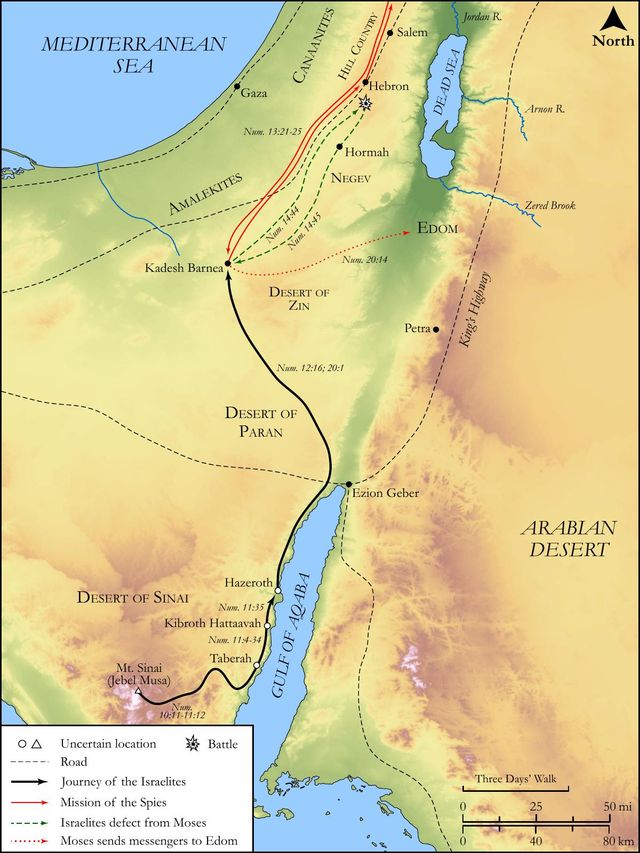
The setting for this declaration is Kadesh-Barnea, a significant oasis on the southern border of Canaan, where Israel had arrived after their miraculous exodus from Egyptian slavery. This generation, though delivered by mighty acts of God, still struggled profoundly with faith and obedience, often longing for the perceived security of Egypt over the challenges of trusting Yahweh. The concept of God's "glory" (Hebrew: kavod) was deeply ingrained in their understanding, particularly through the visible manifestation of His presence in the Tabernacle (e.g., the cloud by day and fire by night, and the glory filling the Tabernacle upon its completion, as seen in Exodus 40:34-35). The divine oath "as I live" is found elsewhere in Scripture, as when the LORD says, "I lift up my hand to heaven, and say, I live for ever," signifying the absolute certainty and binding nature of a promise. When God Himself swears "as I live," it underscores the immutability of His character and the impossibility of His word failing, contrasting sharply with the fickle and unreliable nature of humanity.
Key Themes
ShowHideNumbers 14:21 powerfully articulates several core theological themes. Firstly, it highlights Divine Sovereignty and the Immutability of God's Oath. The phrase "as truly as I live" is a solemn self-attestation by God, grounding His declaration in His very being and emphasizing that His plans cannot be thwarted by human rebellion or circumstances. This echoes themes of God's unchangeable character found throughout Scripture (e.g., Malachi 3:6). Secondly, the verse underscores the Universal Scope of God's Glory. The declaration that "all the earth shall be filled with the glory of the LORD" transcends the immediate context of Israel's failure, pointing to a global vision where God's majestic presence, power, and character will be universally acknowledged and manifest. This theme reiterates God's ultimate purpose for creation, which is the revelation of His own splendor, a vision found in passages like Psalm 72:19 and Isaiah 6:3. Lastly, it implicitly addresses the theme of God's Faithfulness Amidst Human Failure. Despite the severe consequences of Israel's unbelief, God's overarching purpose for His glory remains intact and will be fulfilled, demonstrating His unwavering commitment to His grand design even when His covenant people falter, a testament to His enduring faithfulness (e.g., 2 Timothy 2:13).
Exposition and Analysis
ShowHideKey Word Analysis
ShowHideThis word, used in the divine oath "as I live," signifies God's eternal, self-existent nature. It is the strongest possible affirmation, indicating that the certainty of His declaration is grounded in His very being and unceasing existence. Unlike finite human life, God's life is immutable and everlasting, making His word absolutely reliable and His promises unbreakable.
This verb conveys the idea of complete saturation, pervading presence, and overwhelming abundance. When the earth is to be "filled" with God's glory, it means it will be entirely permeated, saturated, and overcome by His manifest presence and character, leaving no part untouched or unaware. It implies a universal and undeniable revelation.
Derived from a root meaning "weight" or "heaviness," kâbôwd in a theological context refers to God's inherent splendor, majesty, honor, and renown. It is the visible, tangible, or experiential manifestation of His presence, power, and character. When the earth is "filled with the glory of the LORD," it means that God's intrinsic worth, His magnificent attributes, and His supreme authority will be undeniably evident and universally acknowledged throughout creation.
Verse Breakdown
ShowHide"But as truly as I live"
This powerful opening serves as God's solemn, self-referential oath, "by My life." It functions as an absolute guarantee, asserting the unshakeable certainty of the declaration that follows. It underscores the divine authority behind the statement, contrasting God's eternal faithfulness and existence with the fleeting and faithless nature of humanity, and emphasizing the immutable nature of His promise.
"all the earth"
This phrase expands the scope of God's purpose beyond the immediate context of Israel and their particular rebellion. It signifies a universal, global reach, indicating that the manifestation of God's glory is not confined to a single nation or people, but is destined to encompass the entire created order and all its inhabitants, demonstrating His sovereignty over all creation.
"shall be filled with the glory of the LORD"
This is the core prophetic promise. It declares a future reality where God's majestic presence, His inherent splendor, His power, and His character will be fully and undeniably revealed and acknowledged across the entire globe. It speaks to the ultimate triumph of God's purposes, ensuring that His renown will be universally established and recognized by every creature.
Literary Devices
ShowHideNumbers 14:21 employs several potent literary devices to convey its profound message. The most prominent is the Divine Oath, introduced by the emphatic phrase "as truly as I live." This self-attestation by God serves as an unbreakable guarantee, lending absolute certainty and gravity to the subsequent declaration. It functions as a solemn vow, underscoring the immutability of God's character and the unfailing nature of His word, especially when juxtaposed against the backdrop of Israel's faithless rebellion. Furthermore, the phrase "all the earth shall be filled with the glory of the LORD" utilizes Hyperbole or Metaphor to convey the totality and pervasiveness of God's future revelation. While not necessarily implying a literal, physical filling, it powerfully expresses the idea of an overwhelming and undeniable manifestation of God's presence and character across the entire globe. Finally, the verse stands in stark Contrast to the preceding narrative of human failure and divine judgment, highlighting God's steadfastness and the ultimate triumph of His overarching purposes despite the immediate consequences of sin.
Theological and Thematic Connections
ShowHideNumbers 14:21 is a foundational declaration that anchors God's ultimate purpose in His own unchangeable nature. It assures us that despite human rebellion, sin, or any apparent setback in history, God's grand design for His glory to be universally recognized will inevitably come to pass. This verse speaks to God's absolute sovereignty over all creation and history, affirming that His plans are not contingent upon human obedience but are rooted in His own perfect will. It provides a profound sense of hope and assurance, reminding believers that the ultimate trajectory of history is towards the full revelation of God's majesty. This universal vision of God's glory filling the earth is a recurring theme throughout Scripture, pointing to a future where His character and power are undeniably manifest to all.
Reflection and Application
ShowHideNumbers 14:21 offers profound reassurance and a powerful perspective for believers navigating a world often marked by sin, brokenness, and apparent setbacks to God's kingdom. It reminds us that our failures, or the failures of others, do not diminish God's ultimate purpose or His inherent glory. His plan for universal acknowledgment and manifestation of His majesty is sovereign and will be fully realized. This truth should instill deep trust in God's unshakeable promises, even when circumstances seem dire. It also calls us to participate actively in His mission, recognizing that our lives, our worship, and our witness are meant to contribute to the global revelation of His glory. We are called to live in a way that reflects His character, making His glory known to those around us, confident that our efforts are part of a much larger, unstoppable divine plan that will ultimately bring all creation to bow before His majesty.
Questions for Reflection
ShowHideFAQ
ShowHideDoes this verse mean God will literally fill the earth with His physical presence in a way that displaces everything else?
ShowHideNo, the phrase "filled with the glory of the LORD" primarily refers to the pervasive and undeniable manifestation and acknowledgment of God's character, power, and majesty, rather than a literal physical displacement. The Hebrew word for "glory" (kavod) conveys the idea of weight, honor, and splendor—the visible and experiential manifestation of God's attributes. Just as the Tabernacle was "filled" with God's glory when the cloud covered it and the glory of the Lord filled the dwelling (Exodus 40:34-35), it signified His manifest presence and authority, not a literal physical occupation. This verse points to a future where God's inherent worth, His supreme authority, and His magnificent attributes will be universally recognized and revered by all creation, leaving no corner of the earth untouched by the knowledge of His greatness.
How does this verse, a declaration of God's ultimate glory, relate to the immediate context of Israel's disobedience and the subsequent judgment of wilderness wandering?
ShowHideThis verse serves as a powerful theological anchor, demonstrating that God's ultimate, overarching purpose for His glory transcends and is not thwarted by human sin, even the severe rebellion of His chosen people. While Israel's disobedience at Kadesh-Barnea resulted in a generation's exclusion from the Promised Land and forty years of wilderness wandering, God's larger, global plan for His glory to fill the earth remained absolutely intact and unchangeable. It highlights God's sovereignty: even in judgment, His character and ultimate design for the world are vindicated. The immediate consequence for Israel was severe, but God's eternal purpose for His own glory stood firm, showing that His faithfulness to Himself is paramount and will always prevail, ultimately bringing about His intended end for all creation, as seen in Psalm 19:1.
Christ-Centered Fulfillment
ShowHideNumbers 14:21, with its grand vision of God's glory filling the earth, finds its ultimate and most profound fulfillment in the person and work of Jesus Christ. He is not merely a reflection of God's glory, but as Hebrews 1:3 declares, the "radiance of God's glory and the exact imprint of his nature." In the Old Testament, God's glory often appeared in clouds, fire, or in the Tabernacle; but in the New Testament, the "Word became flesh and dwelt among us, and we have seen his glory, glory as of the only Son from the Father, full of grace and truth" (John 1:14). The incarnation of Christ is the supreme manifestation of God's glory, revealing His character, power, and redemptive love in a way never before seen. Through His life, sacrificial death, triumphant resurrection, and ascension, Jesus has secured the means by which God's glory will indeed fill the earth. The knowledge of the glory of God is now seen "in the face of Jesus Christ" (2 Corinthians 4:6), and His kingdom, which is advancing through the church, will ultimately encompass all nations. The prophetic promise of Numbers 14:21 culminates when "every knee should bow, in heaven and on earth and under the earth, and every tongue confess that Jesus Christ is Lord, to the glory of God the Father" (Philippians 2:9-11). The final, complete fulfillment is envisioned in the New Jerusalem, where there is no need for sun or moon, "for the glory of God did lighten it, and the Lamb is the light thereof" (Revelation 21:23), demonstrating that the earth is indeed eternally filled with the glory of the LORD through Christ.