


Numbers 31:47
Bible text: King James Version (1769 Blayney text) · Public domain
Bible text: King James Version with Strong's numbers · Public domain
Bible text: Berean Standard Bible · Public domain
Bible text: American Standard Version (1901) · Public domain
Bible text: World English Bible, Messianic edition · Public domain
Bible text: Geneva Bible (1599) · Public domain
Bible text: Young's Literal Translation · Public domain
- וַיִּקַּחvai·yi·Kachand he tookH3947Conj-w ¦ V-Qal-ConsecImperf-3msVerb Qal Consecutive Imperfect 3rd Singular Masculineוַandיִּקַּחhe took
- מֹשֶׁהmo·ShehMosesH4872N-proper-mNoun Proper Masculine
- מִמַּחֲצִתmi·ma·cha·Tzitfrom [the] half ofH4276Prep-m ¦ N-fscNoun Singular Feminine Constructמִfromמַּחֲצִת[the] half of
- בְּנֵיbe·nei[the] people ofH1121N-mpcNoun Plural Masculine Construct
- יִשְׂרָאֵלYis·ra·'ElIsraelH3478N-properNoun Proper Location
- אֶת'et<obj.>H853DirObjMParticle Object Indicator
- הָאָחֻזha·'a·Chuzthose drawnH270Art ¦ V-Qal-PassPrtcpl-msVerb Qal Participle Passive Singular Masculine Absoluteהָthoseאָחֻזdrawn
- אֶחָד'e·ChadoneH259Adj-fsAdjective Numerical Singular Feminine Absolute
- מִןminfromH4480PrepPreposition
- הַחֲמִשִּׁיםha·cha·mi·Shimthe fiftyH2572Art ¦ Adj-mpAdjective Numerical Plural Masculine Absoluteהַtheחֲמִשִּׁיםfifty
- מִןminfromH4480PrepPreposition
- הָאָדָםha·'a·Dam<the> humankindH120Art ¦ N-msNoun Singular Masculine Absoluteהָ<the>אָדָםhumankind
- וּמִןu·minand fromH4480Conj-w ¦ PrepPrepositionוּandמִןfrom
- הַבְּהֵמָהha·be·he·Mahthe livestockH929Art ¦ N-fsNoun Singular Feminine Absoluteהַtheבְּהֵמָהlivestock
- וַיִּתֵּןvai·yi·Tenand he gaveH5414Conj-w ¦ V-Qal-ConsecImperf-3msVerb Qal Consecutive Imperfect 3rd Singular Masculineוַandיִּתֵּןhe gave
- אֹתָם'o·Tam<obj.> themH853DirObjM ¦ 3mpParticle Object Indicatorאֹתָ<obj.>םthem
- לַלְוִיִּםlal·vi·Yimto the LevitesH3881Prep-l ¦ N-mpNoun Gentilic Plural Masculine Absoluteלַto theלְוִיִּםLevites
- שֹׁמְרֵיsho·me·Rei[who] keepH8104V-Qal-Prtcpl-mpVerb Qal Participle Plural Masculine Construct
- מִשְׁמֶרֶתmish·Me·ret<of> [the] service ofH4931N-fscNoun Singular Feminine Construct
- מִשְׁכַּןmish·Kan[the] tabernacle ofH4908N-mscNoun Singular Masculine Construct
- יְהוָהYah·wehYahwehH3068N-properNoun Proper Title
- כַּאֲשֶׁרka·'a·Sherjust asH834Prep-k ¦ RelParticle Relativeכַּjustאֲשֶׁרas
- צִוָּהtzi·Vahhe had commandedH6680V-Piel-Perf-3msVerb Piel Perfect 3rd Singular Masculine
- יְהוָהYah·wehYahwehH3068N-properNoun Proper Title
- אֶת'et<obj.>H853DirObjMParticle Object Indicator
- מֹשֶׁהmo·ShehMosesH4872N-proper-mNoun Proper Masculine
English is a literal word-by-word gloss of the Hebrew, not the KJV's wording. Why?
This is the original text the KJV's translators worked from — each Hebrew word with its own literal English meaning in this verse, prepared by scholars at Tyndale House, Cambridge. The KJV translates whole sentences, not word by word, so its wording differs: one Hebrew word can become several English words, and the KJV may choose “the LORD” where the gloss reads “Yahweh”. Both are faithful — they answer different questions. For the KJV's own rendering, switch to the KJV text.
Details
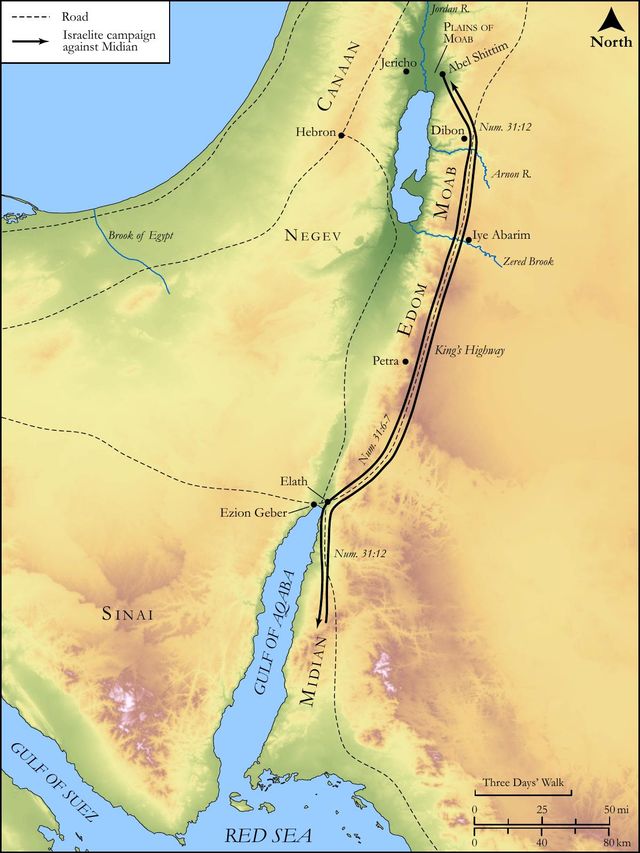
See on the biblical-era map
Study this verse
Continue studying Numbers 31:47 across the web’s major study libraries — every link below opens this exact verse, chapter, or book on the destination site.
Read & Compare
 BibleGatewayThis verse in more than 200 translations and 70 languages.
 Bible.comThe YouVersion reader — hundreds of translations, reading plans, and highlights.
 ESV.orgCrossway's official English Standard Version reader.
 NET BibleThe NET translation with 60,000+ translators' notes on every rendering decision.
 STEP BibleTyndale House's free study tool — original text, vocabulary, and scholarly resources.
 BibliaLogos Bible Software's free web reader.
 USCCBThe New American Bible (Revised Edition) with the U.S. bishops' study notes.
Commentaries
 BibleHub CommentariesDozens of classic commentaries on this verse, gathered on one page.
 StudyLightMore than 100 commentary sets — the largest collection on the web.
 BibleRefPlain-English commentary on what this verse means, verse by verse.
 Enduring WordDavid Guzik's free commentary on this chapter, widely used by Bible teachers.
 Bible Study ToolsVerse commentary alongside Greek and Hebrew study aids.
Original Language & Research
- BibleHub InterlinearThe verse word by word — original language, transliteration, and English.
- BibleHub LexiconEvery word's original-language definition and Strong's entry.
 Blue Letter BibleDeep-study tools — Strong's numbers, concordance, and word studies.
 SefariaThe Hebrew text with Rashi and centuries of Jewish commentary.
Sermons, Hymns & Audio


TrulyRandomVerse is not affiliated with these sites and doesn’t control their content. They’re linked because they’re genuinely useful.
Summary
Numbers 31:47 meticulously concludes the detailed account of the division of spoils from the Midianite war, specifically outlining the portion allocated to the Levites from the congregation's half. This verse powerfully underscores God's precise and equitable instructions for sustaining those consecrated to His service, revealing His divine order, comprehensive provision, and unwavering commitment to the spiritual well-being of the Israelite community through the dedicated support of the Tabernacle's caretakers.
Context
ShowHideLiterary Context
Numbers 31:47 stands as the culminating detail in a lengthy and intricate exposition within Numbers 31, which meticulously chronicles Israel's divinely commanded punitive expedition against the Midianites. This war was a direct, retaliatory judgment for Midian's insidious role in seducing Israel into idolatry and immorality at Baal Peor, an event vividly recounted in Numbers 25:1-9. Following the decisive victory and the capture of immense plunder—including people, livestock, and goods—the chapter meticulously outlines the division of these spoils. The preceding verses (Numbers 31:25-40) establish the initial division into two halves: one for the 12,000 warriors who engaged in battle and another for the rest of the Israelite congregation. From the warriors' half, a smaller tribute (1 in 500) was designated for the priests (Numbers 31:28-29). Numbers 31:47 specifically addresses the more substantial portion (1 in 50) taken from the congregation's half, earmarked for the Levites, thereby completing the intricate and divinely mandated system of distribution for all segments of Israelite society.
Historical & Cultural Context
The war against Midian was not merely a territorial conflict or a quest for plunder, but a holy war, a direct execution of Yahweh's judgment for Midian's role in the Baal Peor apostasy. Among the nations, the spoils of war were typically distributed among the victorious army, often with a significant portion reserved for the king or for the temple of his god. However, Israel's system, as meticulously detailed in Numbers 31, was unique in its divine prescription for supporting the priestly and Levitical classes. The Levites, unlike the other tribes, received no tribal land inheritance in Canaan (Deuteronomy 18:1-2). Their sustenance was entirely dependent on the tithes, offerings, and designated portions from the other tribes. This arrangement ensured that those dedicated to the sacred duties of the Tabernacle—which included guarding, maintaining, transporting, and ministering within God's dwelling place—could do so without needing to engage in agriculture or other secular livelihoods. This system was vital for maintaining the sanctity and functionality of Israel's central place of worship.
Key Themes
ShowHideThis verse powerfully contributes to several overarching themes within the book of Numbers and the broader Pentateuch. It highlights Divine Command and Obedience, as the repeated phrase "as the LORD commanded Moses" throughout Numbers 31 underscores the absolute authority behind these meticulous instructions and Moses' faithful adherence to God's detailed will, even in seemingly mundane matters of resource distribution. It exemplifies Divine Provision for the Levites, demonstrating God's established and systematic way of sustaining those set apart for His service. This principle of supporting spiritual leadership is foundational, recurring throughout scripture (e.g., Deuteronomy 18:1-2 and 1 Corinthians 9:14). Finally, the detailed division of spoils, down to specific ratios for different groups, showcases God's Order and Justice. It reflects a divine blueprint for a well-ordered society where every segment, especially those dedicated to sacred service, is adequately provided for, ensuring the continuity and sanctity of worship and the proper functioning of the covenant community.
Exposition and Analysis
ShowHideKey Word Analysis
ShowHideThis term refers to the descendants of Levi, one of Jacob's twelve sons, who were consecrated by God for special service to the Tabernacle and, later, the Temple. Unlike the priests (Aaronic lineage, a subset of Levites), the general Levites performed duties such as guarding the sanctuary, carrying its components during journeys, assisting the priests, and maintaining the sacred space. Their unique role meant they had no tribal land inheritance, making their sustenance from the community's contributions, as seen here, absolutely critical for their dedicated service and ability to focus solely on their spiritual responsibilities.
This noun, derived from the verb "to guard" or "to keep," signifies a sacred duty, a watch, or an assigned responsibility. In the context of the Tabernacle, it encompasses the Levites' comprehensive duties: guarding the sanctuary from defilement or unauthorized access, maintaining its cleanliness and order, and ensuring the proper execution of its functions. It implies a stewardship that is both practical and deeply spiritual, demanding vigilance, faithfulness, and reverence for God's holy dwelling place.
Meaning "dwelling place," the Tabernacle was the portable sanctuary where God's presence resided among His people during their wilderness wanderings. It was the focal point of Israelite worship, sacrifice, and communion with God, representing the very center of their national and spiritual identity. The Levites' "charge" over the Tabernacle underscored its immense sacredness and the necessity of its proper care and reverence, as it was the physical manifestation of God's covenant presence with Israel.
Verse Breakdown
ShowHide"Even of the children of Israel's half,"
This clause precisely identifies the source of the Levites' portion. Following the initial division of spoils between the warriors and the congregation, this refers specifically to the half allocated to the general Israelite community, distinct from the warriors' share from which the priests received their tribute. It underscores that the entire community, not just the fighting men, bore responsibility for supporting the Levites, highlighting a communal obligation for sacred service.
"Moses took one portion of fifty, [both] of man and of beast,"
This details the exact ratio and comprehensive nature of the contribution. From every fifty units of captured people (likely referring to female captives, as male children were killed, cf. Numbers 31:17-18) and livestock in the congregation's half, one unit was designated for the Levites. This numerical precision highlights the meticulousness of God's command and the equitable, systematic nature of His provision, ensuring a fair and sufficient allocation from all categories of living spoils.
"and gave them unto the Levites, which kept the charge of the tabernacle of the LORD;"
This identifies the recipients of the portion and the divine rationale for their allocation. The Levites received this support specifically because of their unique and essential role in "keeping the charge"—guarding, maintaining, and ministering within—the Tabernacle. This underscores the enduring principle that those dedicated to sacred service are to be sustained by the community they serve, enabling them to fulfill their divinely appointed duties without distraction or worldly entanglement.
"as the LORD commanded Moses."
This concluding phrase serves as a powerful theological affirmation, emphasizing the divine origin and absolute authority behind the entire system of spoil distribution. It is not a human invention or a pragmatic decision, but a direct divine mandate, highlighting Moses' unwavering obedience and God's sovereign involvement in even the logistical and economic details of His people's lives and worship. This phrase reinforces the themes of divine faithfulness, meticulous order, and the paramount importance of adhering to God's revealed will.
Literary Devices
ShowHideThe verse employs several significant literary devices that enrich its meaning and underscore its theological importance. Emphasis is powerfully achieved through the repeated phrase "as the LORD commanded Moses," which appears multiple times throughout Numbers 31. This repetition serves to validate Moses' actions, underscore the divine authority behind every instruction, and highlight God's sovereign involvement in the minute details of Israel's life and worship. The precise numerical ratio of "one portion of fifty" demonstrates Precision and Divine Order, reflecting God's meticulous concern for justice, equitable distribution, and systematic provision within His covenant community. The phrase "[both] of man and of beast" utilizes Merism, a literary device where two contrasting or complementary parts are used to represent a complete whole, indicating that all categories of living spoils—human and animal—were comprehensively included in this divinely ordained division. Finally, the description of the Levites as those "which kept the charge of the tabernacle of the LORD" employs Metonymy, where "charge" stands for the entire scope of their sacred duties, responsibilities, and dedicated service, emphasizing their unique role as the justification for their sustenance.
Theological and Thematic Connections
ShowHideNumbers 31:47 powerfully illustrates God's meticulous care for His covenant people and, specifically, for His appointed servants. It establishes a foundational principle of divine provision for those dedicated to spiritual service, ensuring that the Levites, who had no land inheritance, were sustained by the community's resources. This system not only provided for their physical needs but also affirmed their sacred calling and the centrality of the Tabernacle's worship to Israelite life. The verse underscores that God's commands are comprehensive, extending even to the practicalities of resource distribution, and that obedience to these commands is paramount for the flourishing of the community and the proper functioning of divine worship. It highlights the reciprocal relationship between the community and its spiritual leaders: the community provides material support, enabling the leaders to focus on their sacred duties, which in turn benefits the entire community spiritually by ensuring the continuity and sanctity of their relationship with God.
Reflection and Application
ShowHideNumbers 31:47, though rooted in ancient Israel's wilderness journey and a specific historical context, offers profound and enduring principles for believers today. It calls us to reflect on the vital importance of supporting those who minister God's Word and serve in spiritual capacities within our communities and globally. Just as the Levites were set apart for the sacred work of the Tabernacle, so too are pastors, missionaries, evangelists, and other spiritual leaders dedicated to building up the body of Christ and proclaiming the Gospel. Our financial, practical, and prayerful support enables them to devote themselves fully to their calling, fostering healthy spiritual growth, robust discipleship, and effective outreach. Beyond financial giving, this verse reminds us of the broader principle of stewardship—recognizing that all our resources are ultimately from God and are to be used for His glory, including supporting His work and those He has called. Furthermore, Moses' unwavering obedience to God's detailed commands, even in logistical matters like the division of spoils, challenges us to consider the scope of our own obedience. Are we diligent in following God's will not only in grand spiritual gestures but also in the mundane, practical aspects of our daily lives? This verse encourages a holistic discipleship where every aspect of life is brought under the authority of God's Word, reflecting His meticulous order and provision.
Questions for Reflection
ShowHideFAQ
ShowHideWhy were the Levites given a portion of the spoils, and why was it different from the priests' portion?
ShowHideThe Levites were given a portion of the spoils as part of God's divinely ordained system for their sustenance and to enable their full-time dedication to sacred service. Unlike the other tribes of Israel, the Levites received no tribal land inheritance in Canaan because they were set apart for the exclusive service of the Tabernacle and, later, the Temple. Their duties included guarding the sanctuary, transporting its components during journeys, assisting the priests in their rituals, and teaching the Law to the people. Therefore, their livelihood was to come from the contributions of the other tribes, ensuring they could dedicate themselves fully to their sacred calling without needing to engage in agriculture or other secular professions. The portion for the Levites (1 in 50 from the congregation's half, as seen in Numbers 31:47) was larger than the priests' portion (1 in 500 from the warriors' half, as detailed in Numbers 31:28-29) because the Levites constituted a much larger group and had broader, more numerous responsibilities for the daily care, maintenance, and logistical operations of the Tabernacle. In contrast, the priests, who were a subset of the Levites (descendants of Aaron), performed the specific sacrificial, intercessory, and blessing functions. This differentiated allocation reflects God's precise and equitable provision for each group according to their specific roles and needs within the divine economy and the overall structure of Israelite worship.
Christ-Centered Fulfillment
ShowHideNumbers 31:47, with its focus on the meticulous provision for the Levites who "kept the charge of the tabernacle of the LORD," finds its ultimate Christ-centered fulfillment in several profound ways. Jesus Christ is the true and ultimate Tabernacle, the very dwelling place of God among humanity, in whom the fullness of God was pleased to dwell (Colossians 1:19). He perfectly "kept the charge" of God's will, fulfilling all righteousness, perfectly ministering God's presence and truth, and ultimately offering Himself as the perfect sacrifice. Moreover, as the Great High Priest after the order of Melchizedek, Jesus transcends the Levitical priesthood, offering a once-for-all sacrifice that eternally purifies and makes direct access to God possible for all believers (Hebrews 7:27). The Old Testament system of support for the Levites foreshadows the New Covenant principle of supporting those who minister the Gospel, as articulated by Paul in 1 Corinthians 9:14. Just as the Levites were sustained to focus on their sacred duties, so too are those who proclaim Christ to be supported, enabling them to devote themselves entirely to the ministry of reconciliation. Ultimately, the meticulous order, divine provision, and emphasis on sacred service seen in Numbers 31:47 point to God's perfect plan of salvation, culminating in Christ, who is both the perfect servant and the ultimate provision for His people, establishing a spiritual house (the Church) where all believers, as a royal priesthood, now serve Him.