


Mark 1:36
Bible text: King James Version (1769 Blayney text) · Public domain
Bible text: Berean Standard Bible · Public domain
Bible text: American Standard Version (1901) · Public domain
Bible text: World English Bible, Messianic edition · Public domain
Bible text: Geneva Bible (1599) · Public domain
Bible text: Young's Literal Translation · Public domain
- καὶkaiAndG2532CONJConjunction
- κατεδίωξενkatediōxenhe went afterG2614V-AAI-3SVerb Aorist Active Indicative 3rd Singular
- αὐτὸνautonHimG846P-ASMPersonal pronoun Accusative Singular Masculine
- ὁho<the>G3588T-NSMDefinite article Nominative Singular Masculine
- ΣίμωνSimōnSimonG4613N-NSM-PNoun Nominative Singular Masculine Individual
- καὶkaiandG2532CONJConjunction
- οἱhoithoseG3588T-NPMDefinite article Nominative Plural Masculine
- μετ᾽met᾽withG3326PREPPreposition
- αὐτοῦ·autouhimG846P-GSMPersonal pronoun Genitive Singular Masculine
English is a literal word-by-word gloss of the Greek, not the KJV's wording. Why?
This is the original text the KJV's translators worked from — each Greek word with its own literal English meaning in this verse, prepared by scholars at Tyndale House, Cambridge. The KJV translates whole sentences, not word by word, so its wording differs: one Greek word can become several English words, and the KJV may choose “charity” where the gloss reads “love”. Both are faithful — they answer different questions. For the KJV's own rendering, switch to the KJV text.
Details
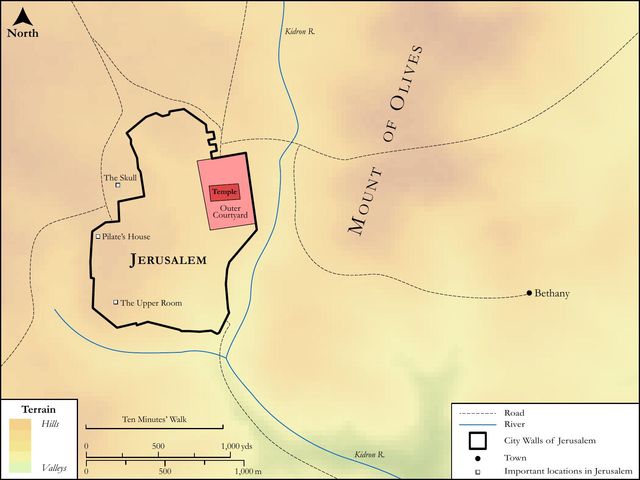
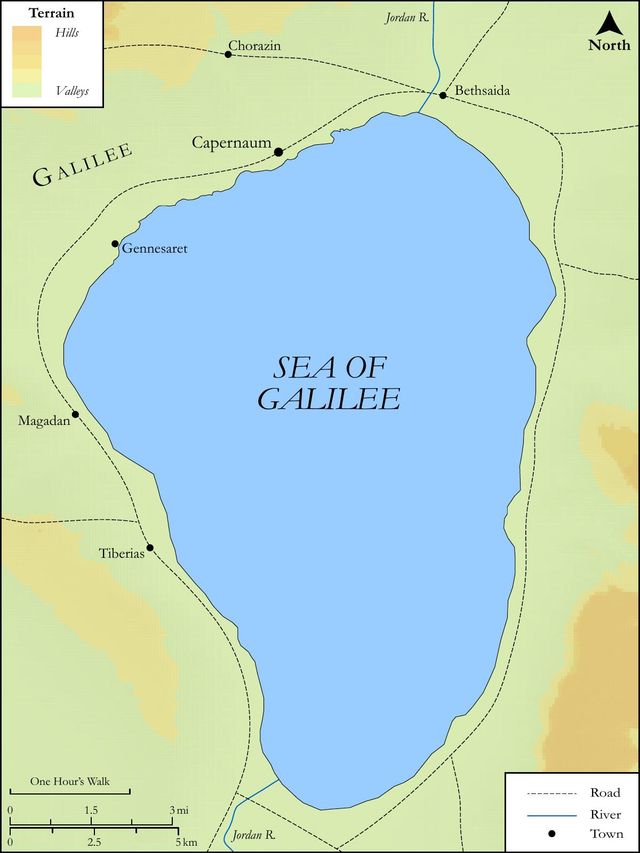
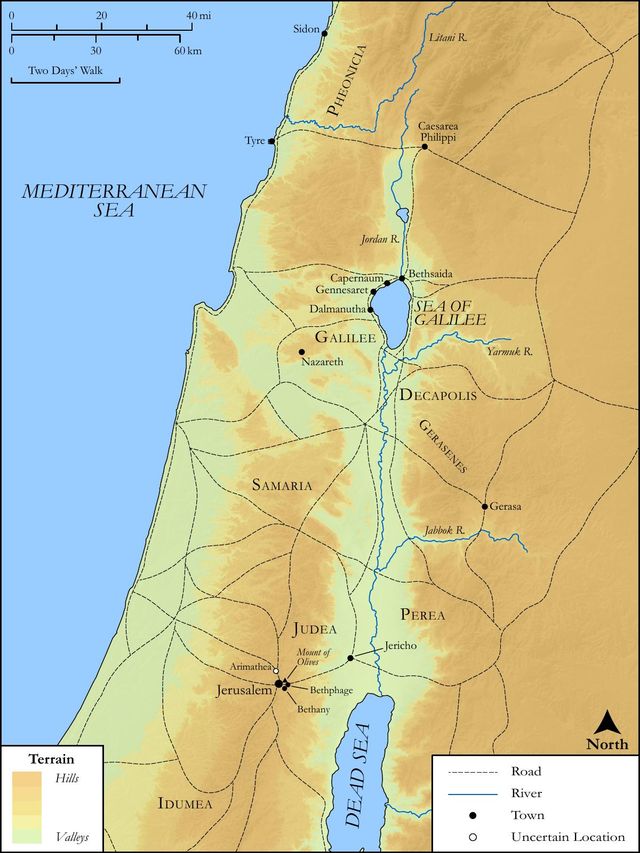
See on the biblical-era maps
Study this verse
Public-domain commentary
Matthew Henry
From his Commentary on the Whole Bible. Henry comments on passages, not single verses — this entry covers Mark 1:29–39. His three-level outline is real structure in the source text, so it is rendered as structure.
In these verses, we have,
I.A particular account of one miracle that Christ wrought, in the cure of Peter's wife's mother, who was ill of a fever. This passage we had before, in Matthew. Observe,
1.When Christ had done that which spread his fame throughout all parts, he did not then sit still, as some think that they may lie in bed when their name is up. No, he continued to do good, for that was it he aimed at, and not his own honour. Nay, those who are in reputation, had need be busy and careful to keep it up.
2.When he came out of the synagogue, where he had taught and healed with a divine authority, yet he conversed familiarly with the poor fishermen that attended him, and did not think it below him. Let the same mind, the same lowly mind, be in us, that was in him.
3.He went into Peter's house, probably invited thither to such entertainment as a poor fisherman could give him, and he accepted of it. The apostles left all for Christ; so far as that what they had should not hinder them from him, yet not so, but that they might use it for him.
4.He cured his mother-in-law, who was sick. Wherever Christ comes, he comes to do good, and will be sure to pay richly for his entertainment. Observe, How complete the cure was; when the fever left her, it did not, as usual, leave her weak, but the same hand that healed her, strengthened her, so that she was able to minister to them; the cure is in order to that, to fit for action, that we may minister to Christ, and to those that are his for his sake.
II.A general account of many cures he wrought - diseases healed, devils expelled.
It was on the evening of the sabbath, when the sun did set, or was set; perhaps many scrupled bringing their sick to him, till the sabbath was over, but their weakness therein was no prejudice to them in applying to Christ. Though he proved it lawful to heal on the sabbath days, yet, if any stumbled at it, they were welcome at another time. Now observe,
1.How numerous the patients were; All the city was gathered at the door, as beggars for a dole. That one cure in the synagogue occasioned this crowding after him. Others speeding well with Christ should quicken us in our enquiries after him. Now the Sun of righteousness rises with healing under his wings; to him shall the gathering of the people be. Observe, How Christ was flocked after in a private house, as well as in the synagogue; wherever he is, there let his servants, his patients, be. And in the evening of the sabbath, when the public worship is over, we must continue our attendance upon Jesus Christ; he healed, as Paul preached, publicly, and from house to house.
2.How powerful the Physician was; he healed all that were brought to him, though ever so many. Nor was it some one particular disease, that Christ set up for the cure of, but he healed those that were sick of divers diseases, for his word was a panpharmacon - a salve for every sore. And that miracle particularly which he wrought in the synagogue, he repeated in the house at night; for he cast out many devils, and suffered not the devils to speak, for he made them know who he was, and that silenced them. Or, He suffered them not to say that they knew him (so it may be read); he would not permit any more of them to say, as they did (Mar 1:24), I know thee, who thou art.
III.His retirement to his private devotion (Mar 1:35); He prayed, prayed alone; to set us an example of secret prayer.
Though as God he was prayed to, as man he prayed. Though he was glorifying God, and doing good, in his public work, yet he found time to be alone with his Father; and thus it became him to fulfil all righteousness. Now observe,
1.The time when Christ prayed.
(1.)It was in the morning, the morning after the sabbath day. Note, When a sabbath day is over and past, we must not think that we may intermit our devotion till the next sabbath: no, though we go not to the synagogue, we must go to the throne of grace, every day in the week; and the morning after the sabbath particularly, that we may preserve the good impressions of the day. This morning was the morning of the first day of the week, which afterward he sanctified, and made remarkable, by another sort of rising early.
(2.)It was early, a great while before day. When others were asleep in their beds, he was praying, as a genuine Son of David, who seeks God early, and directs his prayer in the morning; nay, and at midnight will rise to give thanks. It has been said, The morning is a friend to the Muses - Aurora Musis amica; and it is no less so to the Graces. When our spirits are most fresh and lively, then we should take time for devout exercises. He that is the first and best, ought to have the first and best.
2.The place where he prayed; He departed into a solitary place, either out of town, or some remote garden or out-building. Though he was in no danger of distraction, or of temptation to vain-glory, yet he retired, to set us an example to his own rule, When thou prayest enter into thy closet. Secret prayer must be made secretly. Those that have the most business in public, and of the best kind, must sometimes be alone with God; must retire into solitude, there to converse with God, and keep up communion with him.
IV.His return to his public work.
The disciples thought they were up early, but found their Master was up before them, and they enquired which way he went, followed him to his solitary place, and there found him at prayer, Mar 1:36, Mar 1:37. They told him that he was much wanted, that there were a great many patients waiting for him; All men seek for thee. They were proud that their Master was become so popular already, and would have him appear in public, yet more in that place, because it was their own city; and we are apt to be partial to the places we know and are interested in. "No," saith Christ, "Capernaum must not have the monopoly of the Messiah's preaching and miracles. Let us go into the next towns, the villages that lie about here, that I may preach there also, and work miracles there, for therefore came I forth, not to be constantly resident in one place, but to go about doing good." Even the inhabitants of the villages in Israel shall rehearse the righteous acts of the Lord, Jdg 5:11. Observe, Christ had still an eye to the end wherefore he came forth, and closely pursued that; nor will he be drawn by importunity, or the persuasions of his friends, to decline from that; for (Mar 1:39) he preached in their synagogues throughout all Galilee, and, to illustrate and confirm his doctrine, he cast out devils. Note, Christ's doctrine is Satan's destruction.
Historical interpretation
Six Centuries of Reception
4 surviving comments on this verse. Each one is dated, so this reads as a timeline rather than a list.
Select a marker to jump to its quote. Markers stagger vertically where authors wrote within a few decades of each other.
But the door of the kingdom, morally, is repentance and faith, which works health for various diseases; for divers are the vices, with which the city of this world is sick.
(Vict. Ant. e Cat. in Marc.) Not that He required prayer; for it was He who Himself received the prayers of men; but He did this by way of an economy, and became to us the model of good works.
(Vict. Ant. e Cat. in Marc.) Luke however says, that crowds came to Christ, and spoke what Mark here relates that the Apostles said, adding, And when they came to him, they said to him, All seek thee. (Luke 4:42) But they do not contradict each other; for Christ received after the Apostles the multitude, breathlessly anxious to embrace His feet. He received them willingly, but chose to dismiss them, that the rest also might be partakers of His doctrine, as He was not to remain long in the world. And therefore there follows: And he said, Let us go into the neighbouring villages and towns, that there also I may preach.
(Vict. Ant. e Cat. in Marc.) In which word, He manifests the mystery of His emptying himself, (Phil. 2:7) that is, of His incarnation, and the sovereignty of His divine nature, in that He here asserts, that He came willingly into the world. Luke however says, To this end was I sent, proclaiming the Dispensation, and the good pleasure of God the Father concerning the incarnation of the Son. There follows: And he continued preaching in their synagogues, in all Galilee.
(ubi sup.) Again mystically if by the setting of the sun, the death of the Saviour is intended, why should not His resurrection be intended by the returning dawn? For by its clear light, He went far into the wilderness of the Gentiles, and there continued praying in the person of His faithful disciples, for He aroused their hearts by the grace of the Holy Spirit to the virtue of prayer.
After that the Lord had cured the sick, He retired apart. Wherefore it is said, And rising very early in the morning, he went out and departed into a desert place. By which He taught us not to do any thing for the sake of appearance, but if we do any good, not to publish it openly. It goes on, and there prayed.
For He shows to us that we ought to attribute to God whatever we do well, and to say to Him, Every good gift cometh down from above, (James 1:17) from Thee. It continues: And Simon followed him, and they that were with him.
For He passes on to them as being more in need, since it was not right to shut up doctrine in one place, but to throw out his rays every where. It goes on: For therefore am I come.
He also mingled action with teaching, for whilst employed in preaching, He afterwards put to flight devils. For there follows: And casting out devils. For unless Christ showed forth miracles, His teaching would not be believed; so do thou also, after teaching, work, that thy word be not fruitless in thyself.
Continue studying Mark 1:36 across the web’s major study libraries — every link below opens this exact verse, chapter, or book on the destination site.
Read & Compare
 BibleGatewayThis verse in more than 200 translations and 70 languages.
 Bible.comThe YouVersion reader — hundreds of translations, reading plans, and highlights.
 ESV.orgCrossway's official English Standard Version reader.
 NET BibleThe NET translation with 60,000+ translators' notes on every rendering decision.
 STEP BibleTyndale House's free study tool — original text, vocabulary, and scholarly resources.
 BibliaLogos Bible Software's free web reader.
 USCCBThe New American Bible (Revised Edition) with the U.S. bishops' study notes.
Commentaries
 BibleHub CommentariesDozens of classic commentaries on this verse, gathered on one page.
 StudyLightMore than 100 commentary sets — the largest collection on the web.
 BibleRefPlain-English commentary on what this verse means, verse by verse.
 Enduring WordDavid Guzik's free commentary on this chapter, widely used by Bible teachers.
 Bible Study ToolsVerse commentary alongside Greek and Hebrew study aids.
Original Language & Research
- BibleHub InterlinearThe verse word by word — original language, transliteration, and English.
- BibleHub LexiconEvery word's original-language definition and Strong's entry.
 Blue Letter BibleDeep-study tools — Strong's numbers, concordance, and word studies.
 CNTR CollationThe earliest Greek manuscripts of this verse, collated letter by letter.
Sermons, Hymns & Audio


TrulyRandomVerse is not affiliated with these sites and doesn’t control their content. They’re linked because they’re genuinely useful.
Summary
Mark 1:36 captures a pivotal moment in the early ministry of Jesus, immediately following a demanding period of healing and teaching in Capernaum. After Jesus intentionally withdraws to a solitary place for prayer, Simon Peter and the other disciples, realizing His absence, actively pursue Him. This verse highlights the disciples' nascent commitment and their determined effort to locate their teacher, setting the stage for Jesus' explanation of His broader mission beyond Capernaum.
Context
ShowHideLiterary Context
This verse is situated at a crucial juncture in the opening chapter of Mark's Gospel, immediately following a whirlwind of ministry in Capernaum. Jesus has just demonstrated His authority over sickness and demons, healing Simon's mother-in-law and then, at sunset, ministering to a vast crowd at the door of Simon's house (Mark 1:32-34). Despite the overwhelming demands and the apparent success of His ministry in Capernaum, Jesus then rises early, while it is still dark, and withdraws to a desolate place to pray (Mark 1:35). The disciples' action in Mark 1:36—Simon and those with him following after Jesus—is a direct response to His unexpected departure, leading into Jesus' declaration of His mission to preach in other towns (Mark 1:38).
Historical & Cultural Context
In first-century Galilee, the relationship between a rabbi and his disciples was deeply personal and immersive. Disciples were expected to follow their teacher closely, learn from his words and actions, and even emulate his lifestyle. Jesus' withdrawal for prayer, as described in Mark 1:35, would have been a common practice for devout Jews, emphasizing a personal relationship with God. However, His sudden departure from the crowds, especially after such a successful healing ministry, would have been unexpected to the disciples, prompting their urgent search. Capernaum, a bustling fishing village on the Sea of Galilee, served as Jesus' early ministry base, and the crowds seeking healing and teaching were typical of the intense public interest in a new, powerful teacher.
Key Themes
ShowHideThis verse contributes to several key themes in Mark's Gospel. Firstly, it highlights the active pursuit of Jesus as a foundational aspect of discipleship. The disciples do not passively wait but actively "follow after" Him, demonstrating their nascent commitment. Secondly, it underscores Jesus' unique priorities, revealing that His power and direction stem from His communion with the Father, not from popular demand or the clamor of the crowds. His withdrawal for prayer, followed by the disciples' search, sets up the contrast between the immediate needs of the people and Jesus' broader, divinely ordained mission to preach the kingdom of God throughout Galilee (Mark 1:38-39). Finally, it offers a glimpse into the early stages of discipleship, showing the disciples grappling with Jesus' unconventional methods and learning to align their understanding with His divine purpose.
Exposition and Analysis
ShowHideKey Word Analysis
ShowHideThis refers to Simon Peter, one of Jesus' first and most prominent disciples. The name is of Hebrew origin (שִׁמְעוֹן, Shim'on), meaning "he has heard" or "hearing." His presence here is significant, as he often acts as a representative of the disciples, demonstrating both their strengths and their struggles in following Jesus.
This preposition denotes accompaniment or association. It indicates that Simon was not alone but had other disciples "with him," implying a collective effort and shared concern among the group to find Jesus. This highlights the communal aspect of early discipleship.
This verb literally means "to hunt down" or "to pursue closely." It suggests a determined, active, and perhaps even urgent search, rather than a casual stroll. The disciples were not merely walking behind Jesus; they were actively seeking Him out, indicating their earnestness and the importance they placed on His presence.
Verse Breakdown
ShowHide"And Simon"
This identifies the leader or primary figure among the group of disciples who initiated the search for Jesus. Simon Peter, as a prominent figure, often takes the lead in the Gospel narratives.
"and they that were with him"
This phrase indicates that Simon was accompanied by other disciples. While not explicitly named here, it implies a collective effort and shared concern among the nascent group of followers to locate Jesus after His unexpected departure.
"followed after him"
This describes the action taken by Simon and the other disciples. The Greek word implies a determined and active pursuit, suggesting their earnest desire to find Jesus and understand His whereabouts and intentions.
Literary Devices
ShowHideMark employs Characterization in this verse to reveal the emerging traits of the disciples, particularly Simon Peter. Their active pursuit of Jesus, using a word that implies "hunting down" or "seeking eagerly," characterizes them as committed and earnest, even if their understanding of Jesus' mission is still developing. This action also serves as Foreshadowing, hinting at the ongoing challenge for the disciples to grasp Jesus' true purpose beyond immediate popularity and miracles, which will be a recurring theme throughout Mark's Gospel. The scene also utilizes Contrast, setting the disciples' desire for Jesus to return to the crowds against Jesus' own priority of solitary prayer and a broader mission, a tension that will continue to shape their journey.
Theological and Thematic Connections
ShowHideMark 1:36 underscores the essential nature of active pursuit in the life of a disciple. Just as Simon and the others earnestly sought Jesus after His withdrawal, believers are called to a proactive and intentional seeking of God's presence and will. This pursuit is not merely physical but spiritual, involving prayer, study of His Word, and a willingness to follow His leading even when it diverges from our expectations or comfort zones. The disciples' action highlights that true discipleship is not passive reception but an engaged, responsive relationship with Christ, characterized by a desire to be where He is and to understand His divine purpose.
Reflection and Application
ShowHideThe disciples' determined search for Jesus in Mark 1:36 offers a profound lesson for contemporary believers. In a world filled with distractions and competing demands, it is easy to lose sight of the centrality of Christ in our lives. This verse challenges us to examine the depth of our own pursuit of Jesus. Are we merely passive recipients of His grace, or are we actively and earnestly seeking His presence, His guidance, and His will? Just as Jesus prioritized communion with His Father over the clamor of the crowds, we too must cultivate a spiritual discipline that prioritizes our relationship with Him, even when it means stepping away from the noise and demands of daily life. Our seeking should be driven by a genuine desire to know Him more intimately and to align our lives with His kingdom purposes, understanding that His ways are often higher than our own.
Questions for Reflection
ShowHideFAQ
ShowHideWhy did Simon and the disciples "follow after" Jesus instead of waiting for Him to return?
ShowHideSimon and the disciples "followed after" Jesus because His sudden and early departure, after such an intense period of ministry and healing in Capernaum, was unexpected and likely concerning to them. They had just witnessed a massive influx of people seeking Jesus, and His absence meant the crowds would be left without Him. Their action demonstrates their nascent commitment to Him and their desire to understand His movements and intentions. The Greek word used, katadiṓkō, implies an earnest, almost "hunting down" pursuit, indicating their urgency and determination to locate Him, perhaps to bring Him back to the waiting crowds, as suggested by Mark 1:37.
Christ-Centered Fulfillment
ShowHideWhile Mark 1:36 describes the disciples' human pursuit of Jesus, it subtly points to a deeper Christ-centered truth: the divine pursuit of humanity. Just as the disciples sought Jesus, the ultimate reality is that God, in Christ, has relentlessly pursued us. Jesus' withdrawal for prayer in Mark 1:35 was not an evasion but a re-centering on His Father's mission, a mission that culminated in His pursuit of lost humanity through His Incarnation, death, and resurrection. He is the Good Shepherd who leaves the ninety-nine to "seek and to save the lost" (Luke 19:10). The disciples' earnest search for Jesus foreshadows the believer's longing for Christ, but it is ultimately fulfilled in Christ's own relentless love and pursuit of His people, a love that draws us to Himself (John 6:44). He is the one who initiates the relationship, calling us to follow Him (Matthew 4:19), and His Spirit continues to "search" for us, convicting and drawing us into deeper communion with Him (John 16:8).