


Luke 20:30
Bible text: King James Version (1769 Blayney text) · Public domain
Bible text: American Standard Version (1901) · Public domain
Bible text: World English Bible, Messianic edition · Public domain
Bible text: Geneva Bible (1599) · Public domain
Bible text: Young's Literal Translation · Public domain
- καὶkaiandG2532CONJConjunction
- ἔλαβενelabentookG2983V-2AAI-3SVerb 2nd Aorist Active Indicative 3rd Singular
- ὁhotheG3588T-NSMDefinite article Nominative Singular Masculine
- δεύτεροςdeuterossecondG1208A-NSMAdjective Nominative Singular Masculine
- τὴνtēn<the>G3588T-ASFDefinite article Accusative Singular Feminine
- γυναῖκαgunaikawifeG1135N-ASFNoun Accusative Singular Feminine
- καὶkaiandG2532CONJConjunction
- οὑτὸςhoutosthisG3778D-NSMDemonstrative pronoun Nominative Singular Masculine
- ἀπέθανενapethanendiedG599V-2AAI-3SVerb 2nd Aorist Active Indicative 3rd Singular
- ἄτεκνοςateknoschildlessG815A-NSMAdjective Nominative Singular Masculine
English is a literal word-by-word gloss of the Greek, not the KJV's wording. Why?
This is the original text the KJV's translators worked from — each Greek word with its own literal English meaning in this verse, prepared by scholars at Tyndale House, Cambridge. The KJV translates whole sentences, not word by word, so its wording differs: one Greek word can become several English words, and the KJV may choose “charity” where the gloss reads “love”. Both are faithful — they answer different questions. For the KJV's own rendering, switch to the KJV text.
Details
See on the biblical-era maps

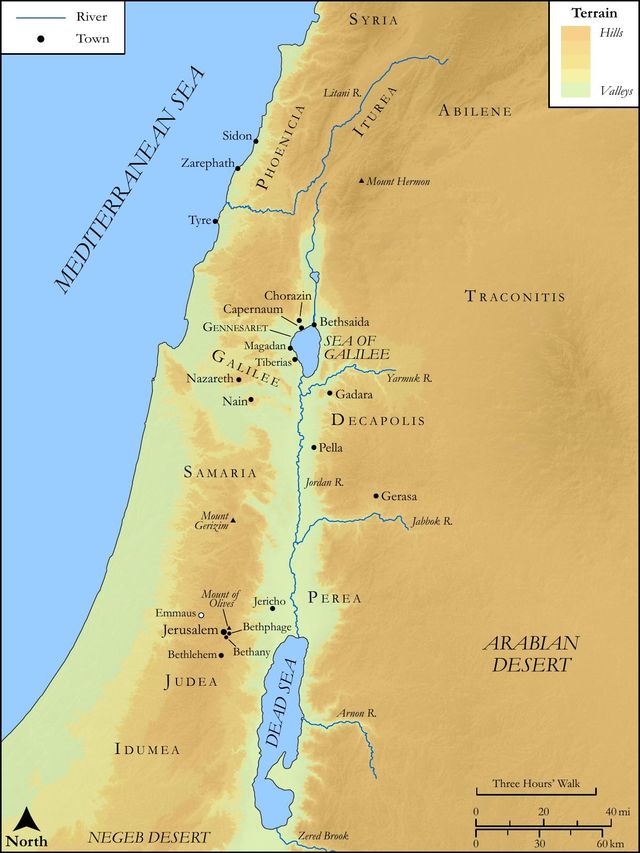
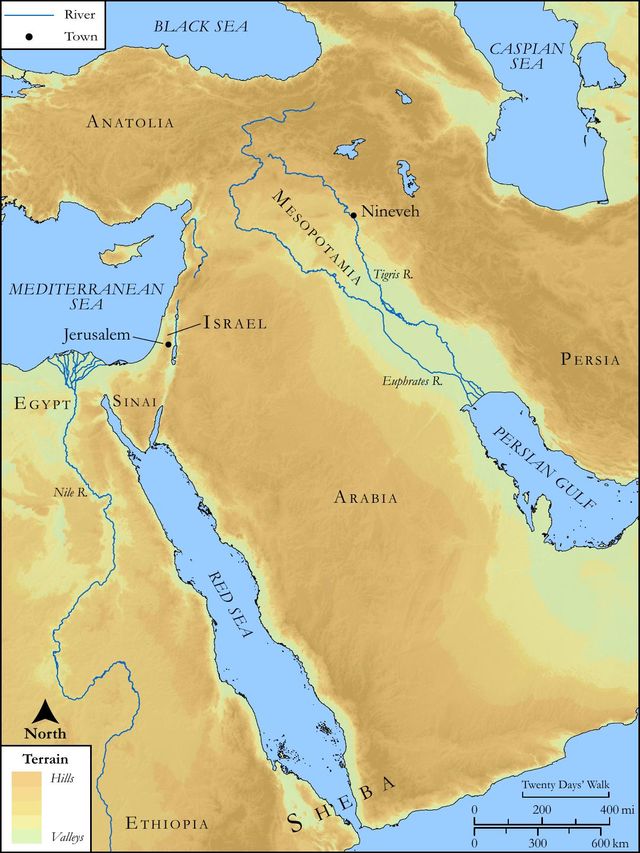
Study this verse
Public-domain commentary
Matthew Henry
From his Commentary on the Whole Bible. Henry comments on passages, not single verses — this entry covers Luke 20:27–38. His four-level outline is real structure in the source text, so it is rendered as structure.
This discourse with the Sadducees we had before, just as it is here, only that the description Christ gives of the future state is somewhat more full and large here. Observe here,
I.In every age there have been men of corrupt minds, that have endeavoured to subvert the fundamental principles of revealed religion.
As there are deists now, who call themselves free-thinkers, but are really false-thinkers; so there were Sadducees in our Saviour's time, who bantered the doctrine of the resurrection of the dead and the life of the world to come, though they were plainly revealed in the Old Testament, and were articles of the Jewish faith. The Sadducees deny that there is any resurrection, any future state, so anastasis may signify; not only no return of the body to life, but no continuance of the soul in life, no world of spirits, no state of recompence and retribution for what was done in the body. Take away this, and all religion falls to the ground.
II.It is common for those that design to undermine any truth of God to perplex it, and load it with difficulties.
So these Sadducees did; when they would weaken people's faith in the doctrine of the resurrection, they put a question upon the supposition of it, which they thought could not be answered either way to satisfaction. The case perhaps was matter of fact, at least it might be so, of a woman that had seven husbands. Now in the resurrection whose wife shall she be? whereas it was not at all material whose she was, for when death puts an end to that relation it is not to be resumed.
III.There is a great deal of difference between the state of the children of men on earth and that of the children of God in heaven, a vast unlikeness between this world and that world; and we wrong ourselves, and wrong the truth of Christ, when we form our notions of that world of spirits by our present enjoyments in this world of sense.
1.The children of men in this world marry, and are given in marriage, huioi tou aiōnos toutou - the children of this age, this generation, both good and bad, marry themselves and give their children in marriage. Much of our business in this world is to raise and build up families, and to provide for them. Much of our pleasure in this world is in our relations, our wives and children; nature inclines to it. Marriage is instituted for the comfort of human life, here in this state where we carry bodies about with us. It is likewise a remedy against fornication, that natural desires might not become brutal, but be under direction and control. The children of this world are dying and going off the stage, and therefore they marry and give their children in marriage, that they may furnish the world of mankind with needful recruits, that as one generation passeth away another may come, and that they may have some of their own offspring to leave the fruit of their labours to, especially that the chosen of God in future ages may be introduced, for it is a godly seed that is sought by marriage (Mal 2:15), a seed to serve the Lord, that shall be a generation to him.
2.The world to come is quite another thing; it is called that world, by way of emphasis and eminency. Note, There are more worlds than one; a present visible world, and a future invisible world; and it is the concern of every one of us to compare worlds, this world and that world, and give the preference in our thoughts and cares to that which deserves them. Now observe,
(1.)Who shall be the inhabitants of that world: They that shall be accounted worthy to obtain it, that is, that are interested in Christ's merit, who purchased it for us, and have a holy meetness for it wrought in them by the Spirit, whose business it is to prepare us for it. They have not a legal worthiness, upon account of any thing in them or done by them, but an evangelical worthiness, upon account of the inestimable price which Christ paid for the redemption of the purchased possession. It is a worthiness imputed by which we are glorified, as well as righteousness imputed by which we are justified; kataxiōthentes, they are made agreeable to that world. The disagreeableness that there is in the corrupt nature is taken away, and the dispositions of the soul are by the grace of God conformed to that state. They are by grace made and counted worthy to obtain that world; it intimates some difficulty in reaching after it, and danger of coming short. We must so run as that we may obtain. They shall obtain the resurrection from the dead, that is, the blessed resurrection; for that of condemnation (as Christ calls it, Joh 5:29), is rather a resurrection to death, a second death, an eternal death, than from death.
(2.)What shall be the happy state of the inhabitants of that world we cannot express or conceive, Co1 2:9. See what Christ here says of it.
[1.]They neither marry nor are given in marriage. Those that have entered into the joy of their Lord are entirely taken up with that, and need not the joy of the bridegroom in his bride. The love in that world of love is all seraphic, and such as eclipses and loses the purest and most pleasing loves we entertain ourselves with in this world of sense. Where the body itself shall be a spiritual body, the delights of sense will all be banished; and where there is a perfection of holiness there is no occasion for marriage as a preservative from sin. Into the new Jerusalem there enters nothing that defiles.
[2.]They cannot die any more; and this comes in as a reason why they do not marry. In this dying world there must be marriage, in order to the filling up of the vacancies made by death; but, where there are no burials, there is no need of weddings. This crowns the comfort of that world that there is no more death there, which sullies all the beauty, and damps all the comforts, of this world. Here death reigns, but thence it is for ever excluded.
[3.]They are equal unto the angels. In the other evangelists it was said, They are as the angels - ōs angeloi, but here they are said to be equal to the angels, isangeloi - angels' peers; they have a glory and bliss no way inferior to that of the holy angels. They shall see the same sight, be employed in the same work, and share in the same joys, with the holy angels. Saints, when they come to heaven, shall be naturalized, and, though by nature strangers, yet, having obtained this freedom with a great sum, which Christ paid for them, they have in all respects equal privileges with them that were free-born, the angels that are the natives and aborigines of that country. They shall be companions with the angels, and converse with those blessed spirits that love them dearly, and with an innumerable company, to whom they are now come in faith, hope, and love.
[4.]They are the children of God, and so they are as the angels, who are called the sons of God. In the inheritance of sons, the adoption of sons will be completed. Hence believers are said to wait for the adoption, even the redemption of the body, Rom 8:23. For till the body is redeemed from the grave the adoption is not completed. Now are we the sons of God, Jo1 3:2. We have the nature and disposition of sons, but that will not be perfected till we come to heaven.
[5.]They are the children of the resurrection, that is, they are made capable of the employments and enjoyments of the future state; they are born to that world, belong to that family, had their education for it here, and shall there have their inheritance in it. They are the children of God, being the children of the resurrection. Note, God owns those only for his children that are the children of the resurrection, that are born from above, are allied to the world of spirits, and prepared for that world, the children of that family.
IV.It is an undoubted truth that there is another life after this, and there were eminent discoveries made of this truth in the early ages of the church (Luk 20:37, Luk 20:38): Moses showed this, as it was shown to Moses at the bush, and he hath shown it to us, when he calleth the Lord, as the Lord calleth himself, the God of Abraham, and the God of Isaac, and the God of Jacob. Abraham, Isaac, and Jacob, were then dead as to our world; they had departed out of it many years before, and their bodies were turned into dust in the cave of Machpelah; how then could God say, not I was, but I am the God or Abraham? It is absurd that the living God and Fountain of life should continue related to them as their God, if there were no more of them in being than what lay in that cave, undistinguished from common dust. We must therefore conclude that they were then in being in another world; for God is not the God of the dead, but of the living. Luke here adds, For all live unto him, that is, all who, like them, are true believers; though they are dead, yet they do live; their souls, which return to God who gave them (Ecc 12:7), live to him as the Father of spirits: and their bodies shall live again at the end of time by the power of God; for he calleth things that are not as though they were, because he is the God that quickens the dead, Rom 4:17. But there is more in it yet; when God called himself the God of these patriarchs, he meant that he was their felicity and portion, a God all-sufficient to them (Gen 17:1), their exceeding great reward, Gen 15:1. Now it is plain by their history that he never did that for them in this world which would answer the true intent and full extent of that great undertaking, and therefore there must be another life after this, in which he will do that for them that will amount to a discharge in full of that promise - that he would be to them a God, which he is able to do, for all live to him, and he has wherewithal to make every soul happy that lives to him; enough for all, enough for each.
Historical interpretation
Nine Centuries of Reception
10 surviving comments on this verse. Each one is dated, so this reads as a timeline rather than a list.
Select a marker to jump to its quote. Markers stagger vertically where authors wrote within a few decades of each other.
If anyone ponders over this answer about the resurrection of the dead, he will find that the Lord is not rejecting marriage but is purging the expectation of physical desire in the resurrection. The words “the children of this age” were not spoken in contrast to the children of some other age. It is like saying, “those born in this generation,” who are children by force of birth, being born and engendering themselves, since without the process of birth no one will pass into this life. This process of birth is balanced by a process of decay and is no longer in store for the person who has once been cut off from life here.
Virgins, persevere in what you have begun to be. Persevere in what you will be. A great reward, a glorious prize for virtue, and an excellent reward for purity are reserved for you. Do you wish to know from what misery the virtue of continence is free and what advantage it provides? “I will multiply,” said God to the woman, “your sorrows and your groans, and in sorrow you will bring forth your children, and your desire shall be for your husband, and he shall have dominion over you.” You are free from this sentence. You do not fear the sorrows of women and their groans. You have no fear about the birth of children, nor is your husband your master, but your master and head is Christ, in the likeness of and in place of the man. Your fortune and condition are in common. The voice of the Lord says, “The children of this world give birth and are born. Those who will be found worthy of that world and of the resurrection from the dead, they neither marry nor are given in marriage. They will not die anymore, for they are equal to the angels of God since they are the children of the resurrection.” What we shall be, you already have begun to be. You already have in this world the glory of the resurrection. You pass through the world without the pollution of the world. While you remain chaste and virgins, you are equal to the angels of God.
“The Sadducees came and were saying to him, ‘There is no resurrection of the dead.’ ” They are called Sadducees, that is “the just,” because they say, “We do not serve God for the sake of reward.” They do not await the resurrection, and for this reason they call themselves “the just,” since they say, “We should love God without a reward.”
According to the letter of the law, a woman is compelled to marry, however unwilling, in order that a brother may raise up seed to his brother who is dead. The letter therefore killeth, but the Spirit is the master of charity.
Mystically, this woman is the synagogue, which had seven husbands, as it is said to the Samaritan, Thou hadst five husbands, (John 4:18.) because the Samaritan follows only the five books of Moses, the synagogue for the most part seven. And from none of them has she received the seed of an hereditary offspring, and so can have no part with her husbands in the resurrection, because she perverts the spiritual meaning of the precept into a carnal. For not any carnal brother is pointed at, who should raise seed to his deceased brother, but that brother who from the dead people of the Jews should claim unto himself for wife the wisdom of the divine worship, and from it should raise up seed in the Apostles, who being left as it were unformed in the womb of the synagogue, have according to the election of grace been thought worthy to be preserved by the admixture of a new seed.
(de Anna, Serm. 4.) As the saints claim as their own the common Lord of the world, not as derogating from His dominion, but testifying their affection after the manner of lovers, who do not brook to love with many, but desire to express a certain peculiar and especial attachment; so likewise does God call Himself especially the God of these, not thereby narrowing but enlarging His dominion; for it is not so much the multitude of His subjects that manifests His power, as the virtue of His servants. Therefore He does not so delight in the name of the God of heaven and earth, as in that of the God of Abraham, Isaac, and Jacob. Now among men servants are thus denominated by their masters; for we say, 'The steward of such a man,' but on the contrary God is called the God of Abraham.
The Sadducees were a particular sect of the Jews that did not believe in the resurrection. When the Sadducees posed this problem, the Jews were uncertain, hesitant and could not really answer it, because they assumed that flesh and blood could possess the kingdom of God, that is, the perishable could possess imperishability. Along comes Truth. The misguided and misguiding Sadducees questioned him and posed that problem to the Lord. The Lord, who knew what he was saying and who wished us to believe what we did not know, gives an answer by his divine authority which we are to hold by faith. The apostle, for his part, explained it to the extent that it was granted him. We must try to understand this as fully as we can.
The prophet’s words are applicable to those who sin without perceiving their sin. A sinner who has received baptism, although he may be dead toward his soul because he does not perceive his sin, he is alive to God because of the grace of baptism that he possesses. This agrees with the words “God is not of the dead but of the living, for they are all living in him.”
There were two heresies among the Jews, one of the Pharisees, who boasted in the righteousness of their traditions, and hence they were called by the people, "separated;" the other of the Sadducees, whose name signified "righteous," claiming to themselves that which they were not. When the former went away, the latter came to tempt Him.
(ut sup.) They devise this story in order to convict those of folly, who assert the resurrection of the dead. Hence they object a base fable, that they may deny the truth of the resurrection.
Or these seven brothers answer to the reprobate, who throughout the whole life of the world, which revolves in seven days, are fruitless in good works, and these being carried away by death one after another, at length the course of the evil world, as the barren woman, itself also passes away.
Which must not be taken as if only they who are worthy were either to rise again or be without marriage, but all sinners also shall rise again, and abide without marriage in that new world. But our Lord wished to mention only the elect, that He might incite the minds of His hearers to search into the glory of the resurrection.
Or they are equal to the angels, and the children of God, because made new by the glory of the resurrection, with no fear of death, with no spot of corruption, with no quality of an earthly condition, they rejoice in the perpetual beholding of God's presence.
Or He says this, that after having proved that the souls abide alter death, (which the Sadducees denied,) He might next introduce the resurrection also of the bodies, which together with the souls have done good or evil. But that is a true life which the just live unto God, even though they are dead in the body. Now to prove the truth of the resurrection, He might have brought much more obvious examples from the Prophets, but the Sadducees received only the five books of Moses, rejecting the oracles of the Prophets.
And since they had been defeated in argument, they ask Him no further questions, but seize Him, and deliver Him up to the Roman power. From which we may learn, that the poison of envy may indeed be subdued, but it is a hard thing to keep it at rest.
Therefore, there were seven brothers, and the first took a wife, and died without children. And the second took her, and he too died without children. And the third took her. Similarly, all seven, and they left no seed, and died. Last of all, the woman also died. Those who did not believe in the resurrection of bodies, judging that the soul perishes with the bodies, rightly fabricate such a story, which accuses as madness those who assert the resurrection of the dead. However, it is possible that this truly happened at some time among their people.
This was their main object, to rebuke Him before the people, which they were unable to do because of the wonderful wisdom of His answer.
Now the Sadducees resting upon a weak foundation, did not believe in the doctrine of the resurrection. For imagining the future life in the resurrection to be carnal, they were justly misled, and hence reviling the doctrine of the resurrection as a thing impossible they invent the story, There were seven brothers, &c.
But our Lord shows that in the resurrection there will be no fleshly conversation, thereby overthrowing their doctrine together with its slender foundation; as it follows, And Jesus said unto them, The children of this world marry, &c.
As if He said, Because it is God who worketh in the resurrection, rightly are they called the sons of God, who are regenerated by the resurrection. For there is nothing carnal seen in the regeneration of them that rise again, there is neither coming together, nor the womb, nor birth.
Or to the reason above given the Lord added the testimony of Scripture, Now that the dead are raised, Moses also showed at the bush, (Exod. 3:6.) as the Lord saith, I am the God of Abraham, the God of Isaac, and the God of Jacob. As if he said, If the patriarchs have once returned to nothing so as not to live with God in the hope of a resurrection, He would not have said, I am, but, I was, for we are accustomed to speak of things dead and gone thus, I was the Lord or Master of such a thing; but now that He said, I am, He shows that He is the God and Lord of the living. This is what follows, But he is not a God of the dead, but of the living: for all live unto him. For though they have departed from life, yet live they with Him in the hope of a resurrection.
But when the Sadducees were silenced, the Scribes commend Jesus, for they were opposed to them, saying to Him, Master, thou hast well said.
Continue studying Luke 20:30 across the web’s major study libraries — every link below opens this exact verse, chapter, or book on the destination site.
Read & Compare
 BibleGatewayThis verse in more than 200 translations and 70 languages.
 Bible.comThe YouVersion reader — hundreds of translations, reading plans, and highlights.
 ESV.orgCrossway's official English Standard Version reader.
 NET BibleThe NET translation with 60,000+ translators' notes on every rendering decision.
 STEP BibleTyndale House's free study tool — original text, vocabulary, and scholarly resources.
 BibliaLogos Bible Software's free web reader.
 USCCBThe New American Bible (Revised Edition) with the U.S. bishops' study notes.
Commentaries
 BibleHub CommentariesDozens of classic commentaries on this verse, gathered on one page.
 StudyLightMore than 100 commentary sets — the largest collection on the web.
 BibleRefPlain-English commentary on what this verse means, verse by verse.
 Enduring WordDavid Guzik's free commentary on this chapter, widely used by Bible teachers.
 Bible Study ToolsVerse commentary alongside Greek and Hebrew study aids.
Original Language & Research
- BibleHub InterlinearThe verse word by word — original language, transliteration, and English.
- BibleHub LexiconEvery word's original-language definition and Strong's entry.
 Blue Letter BibleDeep-study tools — Strong's numbers, concordance, and word studies.
 CNTR CollationThe earliest Greek manuscripts of this verse, collated letter by letter.
Sermons, Hymns & Audio


TrulyRandomVerse is not affiliated with these sites and doesn’t control their content. They’re linked because they’re genuinely useful.
Summary
Luke 20:30 is a pivotal detail within the Sadducees' elaborate hypothetical scenario presented to Jesus, designed to challenge the concept of resurrection. This verse describes the second brother in a sequence who marries the same woman after his brother's death, only to also die without producing any offspring. This repeated instance of childlessness sets the stage for the Sadducees' intended logical dilemma regarding the nature of marriage and identity in the afterlife, highlighting their limited understanding of God's power and the transformed reality of the resurrection.
Context
ShowHideLiterary Context
Luke 20:30 is embedded within the broader narrative of Jesus's final week in Jerusalem, specifically within a series of confrontations with religious authorities in Luke 20. Following challenges from the chief priests and scribes regarding His authority (Luke 20:1-8) and a parable exposing their rejection of God's Son (Luke 20:9-19), Jesus is then confronted by the Sadducees. Their question, found in Luke 20:27-40, is a carefully constructed rabbinic puzzle, using the Levirate marriage law as its foundation to discredit the doctrine of resurrection. Verse 30 specifically advances the Sadducees' hypothetical, demonstrating a pattern of brothers dying childless, which is crucial to their ultimate "gotcha" question.
Historical & Cultural Context
The Sadducees were a prominent Jewish sect during Jesus's time, primarily composed of aristocratic priests and wealthy landowners. Unlike the Pharisees, they rejected the oral law and only accepted the Torah (the first five books of Moses) as authoritative. Crucially, they did not believe in the resurrection of the dead, angels, or spirits, as explicitly noted in Acts 23:8. Their question to Jesus was rooted in the Mosaic Law of Levirate marriage, detailed in Deuteronomy 25:5-6. This law mandated that if a man died childless, his brother was obligated to marry the widow to "raise up offspring for his brother," ensuring the deceased's name and inheritance continued. Dying "childless" (Greek: ateknos) was considered a significant misfortune in ancient Israel, as it threatened the family's legacy, land inheritance, and continuity. The Sadducees' scenario, involving seven brothers, was an exaggerated but common type of rabbinic debate designed to push the limits of a law to expose what they perceived as its absurd implications, particularly when applied to a resurrection they denied.
Key Themes
ShowHideThis verse, as part of the Sadducees' challenge, contributes to several significant themes. Firstly, it highlights the Sadducees' profound misunderstanding of resurrection, as they attempt to impose earthly, physical realities onto a transformed, spiritual existence. Their inability to conceive of a life beyond mortal constraints reveals a fundamental theological error. Secondly, the repeated emphasis on childlessness underscores the cultural significance of lineage and inheritance in ancient Israel, which the Levirate law sought to preserve. This cultural value is then contrasted with the eternal reality Jesus reveals. Thirdly, the entire exchange demonstrates the limitations of human logic when confronted with divine mysteries. The Sadducees' elaborate human construct, intended to trap Jesus, ultimately serves to expose their own spiritual blindness and the inadequacy of human reason to grasp God's infinite wisdom and power, particularly concerning the nature of the resurrected state as described by Jesus in Luke 20:34-36.
Exposition and Analysis
ShowHideKey Word Analysis
ShowHideFrom the comparative of dúo (two), meaning "second" in time, place, or rank. In this context, it precisely identifies the next brother in the sequential marriage, emphasizing the continuation of the Sadducees' hypothetical scenario. It underscores the pattern of successive deaths and childlessness that forms the basis of their argument.
A primary verb meaning "to take," "to get hold of," or "to receive." Here, it specifically denotes the act of taking the woman "to wife," indicating the formal act of marriage according to the Levirate law. This verb highlights the deliberate action of the brother fulfilling the legal obligation, even as the outcome (childlessness) repeats.
From apó (from) and thnḗskō (to die), meaning "to die off" or "to be dead." This term is central to the Sadducees' argument, as it is the repeated death of each brother that necessitates the application of the Levirate law and ultimately leads to their "resurrection" dilemma. Its repetition emphasizes the mortality that grounds their earthly-bound understanding.
From A (as a negative particle) and téknon (child), meaning "without children" or "childless." This word is critically important as it defines the precise condition that triggered the Levirate marriage law in Deuteronomy 25:5. The Sadducees' repeated use of this condition for each brother underscores their strict adherence to the letter of the law while missing its spirit and the broader theological implications of resurrection.
Verse Breakdown
ShowHide"And the second took her to wife"
This clause continues the Sadducees' hypothetical narrative, following the death of the first brother. It describes the second brother's action in accordance with the Levirate marriage law, where he marries his deceased brother's widow. This action is not a matter of personal choice but a legal and social obligation intended to preserve the family line and the deceased brother's name.
"and he died childless"
This concluding phrase is crucial, as it replicates the condition of the first brother. The repetition of "childless" (Greek: áteknos) for the second brother (and implicitly for the subsequent brothers in the Sadducees' full account) is the linchpin of their argument. It establishes a pattern of deaths without offspring, which, under the Levirate law, would require yet another brother to marry the widow, leading to their perceived absurdity regarding the woman's marital status in the resurrection.
Literary Devices
ShowHideThe Sadducees' presentation of their case, including Luke 20:30, employs several literary devices. The primary device is a Hypothetical Scenario, a common rabbinic method of argumentation where an extreme or complex case is constructed to test the limits of a law or doctrine. Here, the scenario of seven brothers successively marrying the same woman and dying childless is designed to expose what the Sadducees believe to be the logical absurdity of resurrection. Repetition is also key, specifically the repeated phrase "died childless," which underscores the precise legal condition that triggers the Levirate marriage and builds the foundation of their "problem." This repetition emphasizes the relentless progression of the scenario towards its intended "unresolvable" conclusion. Finally, there is a subtle Irony at play: while the Sadducees intend to trap Jesus with their clever human logic, their elaborate setup ultimately serves to highlight their own spiritual blindness and provides Jesus with the perfect opportunity to reveal profound truths about the nature of the resurrection and God's power, truths they entirely missed.
Theological and Thematic Connections
ShowHideLuke 20:30, as part of the Sadducees' challenge, serves as a theological springboard for Jesus to correct fundamental misconceptions about the afterlife and God's power. The Sadducees' error lies in projecting earthly, temporal realities—such as marriage and procreation, which are tied to the continuation of human lineage in a fallen world—onto the eternal, transformed reality of the resurrection. Jesus's subsequent teaching (Luke 20:34-36) clarifies that the resurrected state transcends these earthly relationships, as believers will be "like angels" and "children of God, being children of the resurrection." This passage thus underscores the radical difference between our current existence and the future state, emphasizing that God's plan for eternity is not merely an extension of earthly life but a glorious transformation. It challenges us to elevate our understanding of God's power beyond human limitations and to trust in His wisdom regarding the mysteries of the age to come.
Reflection and Application
ShowHideLuke 20:30, within the context of the Sadducees' question, invites us to reflect on the limitations of our own human understanding when attempting to grasp divine realities. Just as the Sadducees were constrained by their earthly perspectives and legalistic interpretations, we too can fall into the trap of trying to fit God's infinite power and eternal purposes into our finite boxes. This passage encourages us to cultivate a posture of humility and wonder before the mysteries of God, particularly concerning the resurrection and the nature of the age to come. It reminds us that God's wisdom far surpasses our own, and the resurrected life will be radically different and more glorious than anything we can fully comprehend in our present state. We are called to trust in God's transformative power, knowing that the future He has prepared for those who love Him is beyond our wildest imaginations, free from the constraints and sorrows of this fallen world, including the need for earthly procreation or the fear of childlessness.
Questions for Reflection
ShowHideFAQ
ShowHideWhat was the purpose of the Sadducees' question about the woman and seven brothers?
ShowHideThe Sadducees' question, which includes the detail in Luke 20:30, was a carefully constructed hypothetical scenario designed to expose what they considered to be the logical absurdity of the resurrection. Since they did not believe in the resurrection, they used the Mosaic Law of Levirate marriage (Deuteronomy 25:5-6) to create a situation that, in their view, would lead to an impossible dilemma in the afterlife (i.e., who would be the woman's husband if she was married to seven brothers on earth?). Their aim was to discredit Jesus and the doctrine of resurrection.
Why was dying "childless" so significant in ancient Israel?
ShowHideIn ancient Israel, dying "childless" (as stated in Luke 20:30) carried significant social, economic, and spiritual implications. A man's legacy, name, and inheritance were tied to his descendants. To die without children meant the family line could be extinguished, the family name forgotten, and ancestral land lost. The Levirate marriage law (Deuteronomy 25:5-6) was a divinely ordained provision to address this very issue, ensuring the continuation of the deceased brother's lineage and preserving his inheritance within the family.
Christ-Centered Fulfillment
ShowHideLuke 20:30, though seemingly a minor detail in a legalistic debate, points profoundly to Christ by setting the stage for His transformative teaching on the resurrection. The Sadducees' question, rooted in an earthly understanding of marriage and lineage, reveals their blindness to the new reality inaugurated by Christ. Jesus's subsequent answer in Luke 20:34-38 reveals that in the resurrection, believers "neither marry nor are given in marriage" but are "like angels" and "children of God, being children of the resurrection." This profound truth is fulfilled in Christ, who, through His own resurrection, conquered death and inaugurated a new creation where the old order, with its limitations and laws like Levirate marriage, gives way to an eternal reality. He is the "firstfruits" of this resurrection (1 Corinthians 15:20), and through Him, believers are promised a transformed body and a life that transcends earthly concerns. The Sadducees' focus on the continuation of a physical lineage is superseded by Christ's promise of eternal life and spiritual adoption into God's family, where our ultimate identity is found not in earthly ties but in being "children of God" through faith in Him (John 1:12). He is the one who brings us into this new, eternal, and glorious existence, making the earthly concerns of childlessness and lineage pale in comparison to the everlasting life found in Him.