


Luke 20:2
Bible text: King James Version (1769 Blayney text) · Public domain
Bible text: King James Version with Strong's numbers · Public domain
Bible text: Berean Standard Bible · Public domain
Bible text: American Standard Version (1901) · Public domain
Bible text: World English Bible, Messianic edition · Public domain
Bible text: Geneva Bible (1599) · Public domain
Bible text: Young's Literal Translation · Public domain
- καὶkaiandG2532CONJConjunction
- εἶπανeipanspokeG2036V-2AAI-3PVerb 2nd Aorist Active Indicative 3rd Plural
- λέγοντεςlegontessayingG3004V-PAP-NPMVerb Present Active Participle Nominative Plural Masculine
- πρὸςprostoG4314PREPPreposition
- αὐτόν·autonHimG846P-ASMPersonal pronoun Accusative Singular Masculine
- εἰπὸνeipondo tellG2036V-2AAM-2SVerb 2nd Aorist Active Imperative 2nd Singular
- ἡμῖνhēminusG3165P-1DPPersonal pronoun Dative 1st Plural
- ἐνenbyG1722PREPPreposition
- ποίᾳpoiawhatG4169I-DSFInterrogative pronoun Dative Singular Feminine
- ἐξουσίᾳexousiaauthorityG1849N-DSFNoun Dative Singular Feminine
- ταῦταtautathese thingsG3778D-APNDemonstrative pronoun Accusative Plural Neuter
- ποιεῖςpoieisYou doG4160V-PAI-2SVerb Present Active Indicative 2nd Singular
- ἢēorG2228CONJConjunction
- τίςtiswhoG5101I-NSMInterrogative pronoun Nominative Singular Masculine
- ἐστινestinisG1510V-PAI-3SVerb Present Active Indicative 3rd Singular
- ὁhothe [one]G3588T-NSMDefinite article Nominative Singular Masculine
- δούςdoushaving givenG1325V-2AAP-NSMVerb 2nd Aorist Active Participle Nominative Singular Masculine
- σοιsoito YouG4771P-2DSPersonal pronoun Dative 2nd Singular
- τὴνtēn<the>G3588T-ASFDefinite article Accusative Singular Feminine
- ἐξουσίανexousianauthorityG1849N-ASFNoun Accusative Singular Feminine
- ταύτην;tautēnthis?G3778D-ASFDemonstrative pronoun Accusative Singular Feminine
English is a literal word-by-word gloss of the Greek, not the KJV's wording. Why?
This is the original text the KJV's translators worked from — each Greek word with its own literal English meaning in this verse, prepared by scholars at Tyndale House, Cambridge. The KJV translates whole sentences, not word by word, so its wording differs: one Greek word can become several English words, and the KJV may choose “charity” where the gloss reads “love”. Both are faithful — they answer different questions. For the KJV's own rendering, switch to the KJV text.
Details
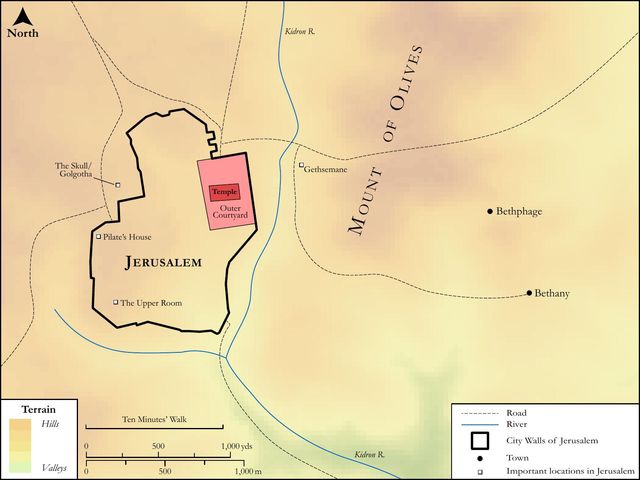
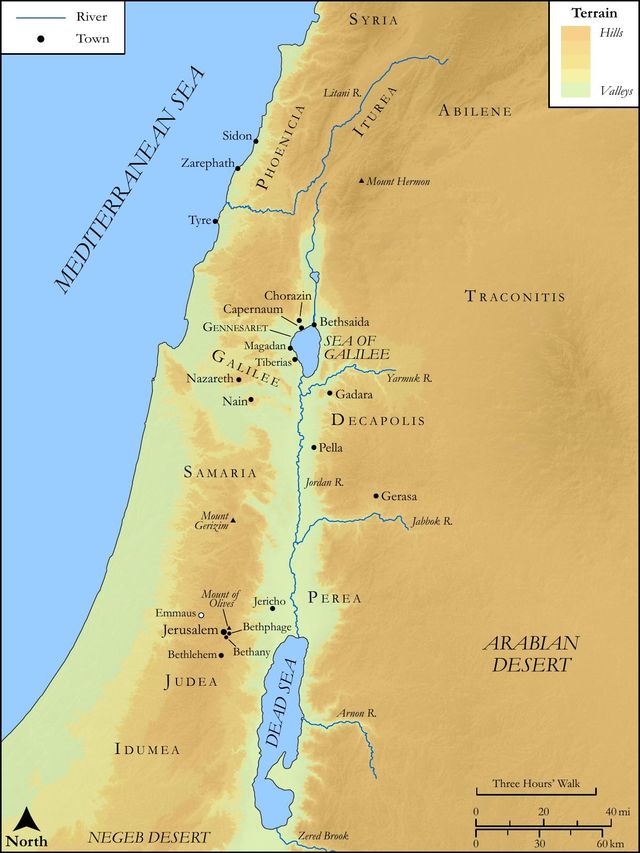
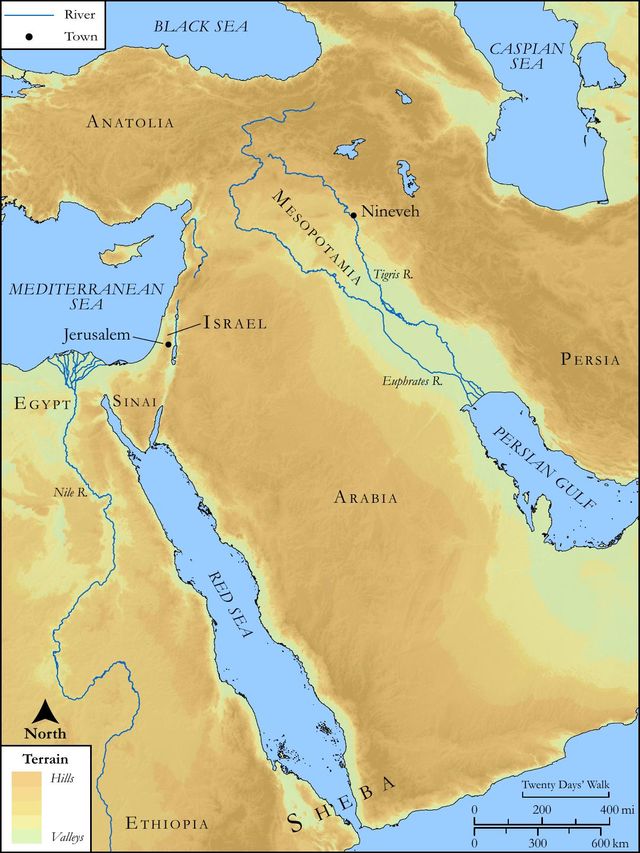
See on the biblical-era maps
Study this verse
Public-domain commentary
Matthew Henry
From his Commentary on the Whole Bible. Henry comments on passages, not single verses — this entry covers Luke 20:1–8. His three-level outline is real structure in the source text, so it is rendered as structure.
In this passage of story nothing is added here to what we had in the other evangelists; but only in the first verse, where we are told,
I.That he was now teaching the people in the temple, and preaching the gospel.
Note, Christ was a preacher of his own gospel. He not only purchased the salvation for us, but published it to us, which is a great confirmation of the truth of the gospel, and gives abundant encouragement to us to receive it, for it is a sign that the heart of Christ was much upon it, to have it received. This likewise puts an honour upon the preachers of the gospel, and upon their office and work, how much soever they are despised by a vain world. It puts an honour upon the popular preachers of the gospel; Christ condescended to the capacities of the people in preaching the gospel, and taught them. And observe, when he was preaching the gospel to the people he had this interruption given him. Note, Satan and his agents do all they can to hinder the preaching of the gospel to the people, for nothing weakens the interest of Satan's kingdom more.
II.That his enemies are here said to come upon him - epestēsan. The word is used only here, and it intimates,
1.That they thought to surprise him with this question; they came upon him suddenly, hoping to catch him unprovided with an answer, as if this were not a thing he had himself thought of.
2.That they thought to frighten him with this question. They came upon him in a body, with violence. But how could he be terrified with the wrath of men, when it was in his own power to restrain it, and make it turn to his praise? From this story itself we may learn,
(1.)That it is not to be thought strange, if even that which is evident to a demonstration be disputed, and called in question, as a doubtful thing, by those that shut their eyes against the light. Christ's miracles plainly showed by what authority he did these things, and sealed his commission; and yet this is that which is here arraigned.
(2.)Those that question Christ's authority, if they be but catechized themselves in the plainest and most evident principles of religion, will have their folly made manifest unto all men. Christ answered these priests and scribes with a question concerning the baptism of John, a plain question, which the meanest of the common people could answer: Was it from heaven or of men? They all knew it was from heaven; there was nothing in it that had an earthly relish or tendency, but it was all heavenly and divine. And this question gravelled them, and ran them aground, and served to shame them before the people.
(3.)It is not strange if those that are governed by reputation and secular interest imprison the plainest truths, and smother and stifle the strongest convictions, as these priests and scribes did, who, to save their credit, would not own that John's baptism was from heaven, and had no other reason why they did not say it was of men but because they feared the people. What good can be expected from men of such a spirit?
(4.)Those that bury the knowledge they have are justly denied further knowledge. It was just with Christ to refuse to give an account of his authority to them that knew the baptism of John to be from heaven and would not believe in him, nor own their knowledge, Luk 20:7, Luk 20:8.
Historical interpretation
Eight Centuries of Reception
6 surviving comments on this verse. Each one is dated, so this reads as a timeline rather than a list.
Select a marker to jump to its quote. Markers stagger vertically where authors wrote within a few decades of each other.
But the rulers who should have been struck with wonder at one who taught such heavenly doctrines, and have been convinced by His words and deeds that this was the same Christ whom the Prophets had foretold, came to hinder Him, so helping onward the destruction of the people. For it follows, And spake unto him, saying, Tell us, by what authority doest thou these things? &c. As if he said; By the law of Moses, those only who are sprung from the blood of Levi have authority to teach, and power over the sacred buildings. But Thou who art of the line of Judah usurpest the offices assigned to us. Whereas, O Pharisee, if thou hadst known the Scriptures, thou wouldest have called to mind that this is the Priest after the order of Melchisedec, who offers to God them that believe on Him by that worship which is above the law. Why then art thou troubled. He cast out of the sacred house things which seemed necessary for the sacrifices of the law, because He calls us by faith to the true righteousness.
His question concerning John the Baptist is not from whence was he sprung, but whence received he his law of baptism But they feared not to shun the truth. For God sent John as a voice, crying, Prepare ye the way of the Lord. But they dreaded to speak the truth, lest it should be said, Why did ye not believe? and they scruple to blame the forerunner, not from fear of God, but of the people; as it follows, And they reasoned within themselves, saying, If we shall say, From, heaven; he will say, Why then believed ye him not.
While he was teaching the crowds and evangelizing them, the chief priests and the scribes came and said to him, “By what power are you doing this?” If it were a question of his teaching, how could they have called it a work? It is clear that he referred to his works as testimony to the truth of his words, according to what he said: “If you do not believe in me, believe at least in the works.” “By what power are you doing this?” They interrogated him like inquisitors, but he did not reply to them, since they did not approach him as students out of love in order to be taught but as rebels. He asked them in turn, “From where did the baptism of John come?” His word pressured them in such a way that they were forced to confess that they had not believed in John. He asked, “Was it from heaven or from human beings?” They began to reflect on it in their minds and to say, “If we say that it was from heaven, he will say, ‘Why did you not believe in it?’ If we say, ‘From human beings,’ we are afraid of the crowd.” When they said, “If it is from heaven,” they did not also say, “We are afraid of God.” They were thus afraid of human beings but not of God.
The Jews, to discredit him, said to the Lord, "By what authority are you doing these things? If you are the Christ, tell us openly." They were looking for a pretext, not for faith. They wanted something by which to catch him, not something by which to be liberated. Notice what answer the one who could see their hearts gave to confound them with the lamp. He said, "I will also ask you one question. Tell me, John's baptism, from where is it? Is it from heaven, or from men?" They were immediately sent staggering backward. Although the daylight was only shining gently, they were forced to fumble and blink, since they were unable to gaze at that brilliance. They took refuge in the darkness of their hearts, and there they began to get very agitated among themselves, stumbling and falling about. We might say that they said this to themselves where they were thinking, yet where he could see. If we say, "They said, 'It is from heaven,' he will say to us, 'Why did you not believe him? He testified to Christ the Lord.' If we say, 'From men,' the people will stone us, because they regarded John as a great prophet." They said, "We do not know." You do not know, because you are in darkness and are losing the light. After all, is not it much better, if darkness is occupying the human heart, to let the light in and not to lose it? When they said, "We do not know," the Lord said, "Neither do I tell you by what authority I am doing these things. You see, I know in what mind you said 'We do not know,' not because you wish to be taught, but because you are afraid to confess."
The Savior himself admonished them, saying, "Woe to you lawyers! for you have taken away the key of knowledge; you did not enter yourselves, and you hindered those who were entering." They rise up against Christ as he teaches. They wickedly and despicably shout out, "Tell us, by what authority you do these things? Who gave you this authority?" They say, "The law given by Moses and the commandment that regulates all our institutions commanded that only those who are of the lineage of Levi should approach these sacred duties. They offer the sacrifices. They regulate whatever is done in the divine temple. The office of instructing and the government of the sacred trusts are given to them. Being of another tribe, from Judah, you grab honors that have been set apart for us. Who gave you this authority?"
Or when they say, By what authority doest thou these things? they doubt concerning the power of God, and wish it to be understood that of the devil He doeth this. Adding moreover, And who is he that gave thee this authority? Most plainly do they deny the Son of God when they think that not by His own power but another's He doeth miracles. Now our Lord by a simple answer might have refuted such a calumny; but He wisely asks a question, that by their silence or their words they might condemn themselves. And he answered and said unto them, I also will ask, &c.
As if He should say, He whom yon confess had his gift of prophecy from heaven, and gave testimony to Me. And ye heard from him by what power I should do these things. It follows, But if we shall say, Of men; the whole people will stone us: for they be persuaded that John was a prophet. Therefore perceived they in whatever way they should answer they would fall into a trap, fearing the stoning, but much more the confession of the truth. And then it follows, And they answered, that they could not tell whence it was. Because they will not confess that which they knew, they were baffled, and the Lord would not tell them what He knew; as it follows, And Jesus said unto them, Neither will I tell you by what authority I do these things. For there are two reasons especially why we should conceal the truth from those that ask; for example, when the questioner is incapable of understanding what he asks, or when from hatred or contempt he is unworthy to have his questions answered.
For that He might show that they had always rebelled against the Holy Spirit, and that besides Isaiah, whom they remembered not, they had refused to believe John whom they had lately seen; He now in his turn puts the question to them, proving that if so great a Prophet as John who was accounted greatest among them had been disbelieved when he testified of Him, they would in no wise believe Him, answering by what authority He did this.
Continue studying Luke 20:2 across the web’s major study libraries — every link below opens this exact verse, chapter, or book on the destination site.
Read & Compare
 BibleGatewayThis verse in more than 200 translations and 70 languages.
 Bible.comThe YouVersion reader — hundreds of translations, reading plans, and highlights.
 ESV.orgCrossway's official English Standard Version reader.
 NET BibleThe NET translation with 60,000+ translators' notes on every rendering decision.
 STEP BibleTyndale House's free study tool — original text, vocabulary, and scholarly resources.
 BibliaLogos Bible Software's free web reader.
 USCCBThe New American Bible (Revised Edition) with the U.S. bishops' study notes.
Commentaries
 BibleHub CommentariesDozens of classic commentaries on this verse, gathered on one page.
 StudyLightMore than 100 commentary sets — the largest collection on the web.
 BibleRefPlain-English commentary on what this verse means, verse by verse.
 Enduring WordDavid Guzik's free commentary on this chapter, widely used by Bible teachers.
 Bible Study ToolsVerse commentary alongside Greek and Hebrew study aids.
Original Language & Research
- BibleHub InterlinearThe verse word by word — original language, transliteration, and English.
- BibleHub LexiconEvery word's original-language definition and Strong's entry.
 Blue Letter BibleDeep-study tools — Strong's numbers, concordance, and word studies.
 CNTR CollationThe earliest Greek manuscripts of this verse, collated letter by letter.
Sermons, Hymns & Audio


TrulyRandomVerse is not affiliated with these sites and doesn’t control their content. They’re linked because they’re genuinely useful.
Summary
Luke 20:2 captures a pivotal confrontation in the temple, where the chief priests, scribes, and elders challenge Jesus' authority. Following His dramatic cleansing of the temple and subsequent daily teaching, these religious leaders demand to know the source of His power and actions. Their question, "Tell us, by what authority doest thou these things? or who is he that gave thee this authority?", is not a genuine inquiry but a calculated attempt to trap Jesus, either by forcing Him to claim divine authority (which they could deem blasphemy) or human authority (which would undermine His public appeal), thereby providing grounds for His arrest or discrediting His ministry.
Context
ShowHideLiterary Context
This verse is situated immediately after Jesus' powerful and provocative actions in the Jerusalem temple. In Luke 19:45-46, Jesus had just driven out those who were selling and buying, declaring the temple a "house of prayer" that they had turned into a "den of robbers." This act of cleansing was a direct challenge to the established religious order and their commercial exploitation of the sacred space. Following this, Luke 19:47-48 states that Jesus was teaching daily in the temple, drawing large crowds who "hung on His words." The "things" referred to in Luke 20:2 are precisely these authoritative actions: His expulsion of the merchants and His public, impactful teaching, which implicitly claimed a right to regulate temple affairs and interpret God's will. The question posed by the religious leaders is therefore a direct response to Jesus' perceived usurpation of their authority within their domain.
Historical & Cultural Context
The chief priests, scribes, and elders represented the highest echelons of Jewish religious and political power in Jerusalem, forming the core of the Sanhedrin, the supreme Jewish governing body. The temple was not merely a place of worship but the center of Jewish life, economy, and national identity. The chief priests, particularly, held significant power, collaborating with the Roman authorities to maintain order, and benefiting financially from the temple system. For Jesus, an itinerant Galilean preacher, to enter the temple and disrupt its operations, then teach with an authority that surpassed their own, was an act of profound defiance to their established order and a direct threat to their influence and control. Their question about "authority" (Greek: exousia) was a legal and theological challenge, probing whether Jesus operated under a recognized rabbinic ordination, a prophetic commission, or some other, perhaps illegitimate, source of power.
Key Themes
ShowHideThe central issue highlighted in Luke 20:2 is the Authority of Jesus. This confrontation brings to the forefront the question of the source and legitimacy of Jesus' actions and teachings, a theme that permeates His ministry. From the very beginning, people recognized that He taught "as one who had authority, and not as their scribes" (Mark 1:22). This verse also underscores the Religious Opposition and Challenge Jesus faced. The chief priests, scribes, and elders represent the entrenched religious establishment, whose power and traditions were threatened by Jesus' radical message and actions. Their questioning is not a search for truth but a strategic maneuver to discredit or condemn Him, reflecting a pattern of hostility seen throughout the Gospels, such as their accusations in Luke 11:15. Finally, the question "who is he that gave thee this authority?" reveals a fundamental tension between Divine Commission vs. Human Mandate. The leaders implicitly assume that any legitimate authority must stem from a human institution or recognized tradition, unwilling to consider or acknowledge a direct divine source for Jesus' power.
Exposition and Analysis
ShowHideKey Word Analysis
ShowHideThis word signifies more than mere power or strength (dynamis); it denotes the right, privilege, or delegated power to act. It encompasses both the ability and the legitimate claim to exercise that ability. When the religious leaders question Jesus' exousía, they are not merely asking about His capability, but about His legal, moral, and spiritual right to perform such significant acts and teach with such profound impact. This term is crucial, as it speaks to the very core of Jesus' identity and mission.
This verb means "to make or do" in a very wide application. In this context, it refers to Jesus' active performance of deeds—specifically, cleansing the temple and teaching. The questioners are scrutinizing His actions, not just His words. The choice of poiéō emphasizes the tangible, impactful nature of what Jesus was doing, which directly challenged their control and order.
This verb means "to give" and implies a bestowal or grant. The leaders' second question, "who is he that gave thee this authority?", explicitly seeks the source of Jesus' exousía. They are looking for a human or institutional grantor of this power, assuming it must be delegated from a recognized earthly authority, rather than originating from God Himself.
Verse Breakdown
ShowHide"And spake unto him, saying, Tell us"
This introduces the direct confrontation. The religious leaders, having observed Jesus' actions and teachings, initiate a formal challenge. Their demand for Jesus to "tell us" indicates a desire for a direct, public answer that they can then use against Him.
"by what authority doest thou these things?"
This is the first part of their two-pronged question. It probes the nature and legitimacy of Jesus' power. They are demanding to know the basis or right by which He performs the actions of cleansing the temple and teaching with such profound effect. This question targets the very foundation of His public ministry.
"or who is he that gave thee this authority?"
This second part clarifies and intensifies the first. It seeks to identify the specific individual or institution from whom Jesus received His mandate. This reveals their assumption that His authority must be derived, not inherent, and that it must come from a source they recognize or can investigate. It also implies a suspicion that His authority might be self-proclaimed or illegitimate.
Literary Devices
ShowHideLuke 20:2 employs several key literary devices. Interrogation is central, as the verse is framed as a direct question from the religious leaders to Jesus, designed to elicit a response that can be used against Him. This is not a genuine inquiry but a Rhetorical Question in the sense that its primary purpose is to trap Jesus, not to gain understanding. The underlying Conflict between Jesus and the religious establishment is palpable, as their challenge is a direct manifestation of their escalating hostility and fear of His growing influence. There is also a strong element of Irony, as the leaders, who claim to be authorities on divine matters, are utterly blind to the true divine authority standing before them. Their question, intended to expose Jesus' lack of human accreditation, inadvertently highlights the unique, transcendent source of His power, which they refuse to acknowledge. This scene also serves as Foreshadowing, hinting at the ultimate rejection and condemnation of Jesus by these same authorities.
Theological and Thematic Connections
ShowHideThe challenge to Jesus' authority in Luke 20:2 is a moment of profound theological significance, revealing the core conflict between divine truth and human resistance. The religious leaders, steeped in tradition and institutional power, could not comprehend or accept an authority that did not derive from their established systems. Their demand for a human source for Jesus' power underscores their spiritual blindness to the direct, inherent, and divine authority of the Son of God. Jesus' subsequent response, turning the question back to them about John the Baptist's authority (Luke 20:3-8), brilliantly exposes their hypocrisy and unwillingness to acknowledge truth, whether from God or man, if it challenged their vested interests. This episode ultimately affirms that Jesus' authority is not delegated by any earthly institution, but is intrinsic to His divine nature and mission, a truth later fully revealed in His post-resurrection declaration.
Reflection and Application
ShowHideLuke 20:2 serves as a timeless mirror, reflecting the human tendency to question and resist divine authority when it challenges our preconceived notions, established systems, or personal comfort. The religious leaders were not seeking truth; they were seeking control and validation of their own power. For believers today, this verse prompts us to deeply examine the source of authority we acknowledge in our lives. Do we recognize and submit to the divine authority of Christ, not merely as a historical figure, but as the living Lord whose words and actions carry ultimate weight? Or do we, like the chief priests, scribes, and elders, seek human explanations, institutional endorsements, or personal convenience as the basis for our belief and obedience? This passage challenges us to confront any resistance within our own hearts to God's truth and to humbly acknowledge that Jesus' actions and teachings are backed by the ultimate heavenly mandate, inviting us to trust and follow Him without reservation.
Questions for Reflection
ShowHideFAQ
ShowHideWho were the individuals challenging Jesus in Luke 20:2?
ShowHideThe individuals challenging Jesus were "the chief priests, the scribes, and the elders" (Luke 20:1). These groups represented the religious and political establishment in Jerusalem, forming the core of the Sanhedrin, the supreme Jewish ruling council. The chief priests were primarily Sadducees, responsible for temple operations; the scribes were experts in the Law, often Pharisees; and the elders were influential lay leaders. They collectively held significant power and authority among the Jewish people.
Why did they ask Jesus "by what authority doest thou these things?"
ShowHideThey asked this question primarily to trap Jesus and find grounds to accuse Him. Jesus had just dramatically cleansed the temple and was teaching daily with profound impact, actions that implicitly challenged their authority and control over the temple and the people. By asking about His authority, they aimed to force Him into a dilemma: if He claimed divine authority, they could accuse Him of blasphemy; if He claimed human authority, they could discredit Him as merely another false prophet or rebel, undermining His popular support. Their goal was to either arrest Him or diminish His influence, as seen in the broader narrative of Luke 20.
Christ-Centered Fulfillment
ShowHideThe confrontation in Luke 20:2, where Jesus' authority is questioned, profoundly foreshadows His ultimate Christ-centered fulfillment. The religious leaders, seeking a human or institutional source for His power, were blind to the truth that Jesus' authority was inherent, divine, and ultimately given to Him by the Father for the salvation of the world. This scene sets the stage for the Passion narrative, where Jesus' claims to divine authority would lead to His crucifixion, yet paradoxically, it is through His death and resurrection that His supreme authority is fully vindicated and established. As Philippians 2:9-11 proclaims, God "highly exalted him and bestowed on him the name that is above every name, so that at the name of Jesus every knee should bow, in heaven and on earth and under the earth, and every tongue confess that Jesus Christ is Lord, to the glory of God the Father." His exousía is not merely for teaching or temple cleansing, but for forgiving sins (Mark 2:10), casting out demons (Luke 4:36), and ultimately, for exercising all authority in heaven and on earth (Matthew 28:18) to bring about the new creation. Thus, the challenge in Luke 20:2, though intended to undermine Him, ultimately serves to highlight the unique, unparalleled, and saving authority of Christ, the true Lamb of God who takes away the sin of the world (John 1:29).