


Luke 20:3
- ἈποκριθεὶςApokritheisAnsweringG611V-AOP-NSMVerb Aorist Passive Deponent Participle Nominative Singular Masculine
- δὲdenowG1161CONJConjunction
- εἶπενeipenHe saidG2036V-2AAI-3SVerb 2nd Aorist Active Indicative 3rd Singular
- πρὸςprostoG4314PREPPreposition
- αὐτούς·autousthemG846P-APMPersonal pronoun Accusative Plural Masculine
- ἐρωτήσωerōtēsōWill askG2065V-FAI-1SVerb Future Active Indicative 1st Singular
- ὑμᾶςhumasyouG4771P-2APPersonal pronoun Accusative 2nd Plural
- κἀγὼkagōI myself alsoG2532P-1NS + G2532=CONJ
- ἕναhenaoneG1520A-ASMAdjective Accusative Singular Masculine
- λόγονlogonthingG3056N-ASMNoun Accusative Singular Masculine
- καὶkaiandG2532CONJConjunction
- εἴπατέeipatedo tellG2036V-2AAM-2PVerb 2nd Aorist Active Imperative 2nd Plural
- μοι·moiMeG3165P-1DSPersonal pronoun Dative 1st Singular
English is a literal word-by-word gloss of the Greek, not the KJV's wording. Why?
This is the original text the KJV's translators worked from — each Greek word with its own literal English meaning in this verse, prepared by scholars at Tyndale House, Cambridge. The KJV translates whole sentences, not word by word, so its wording differs: one Greek word can become several English words, and the KJV may choose “charity” where the gloss reads “love”. Both are faithful — they answer different questions. For the KJV's own rendering, switch to the KJV text.
Details
See on the biblical-era map

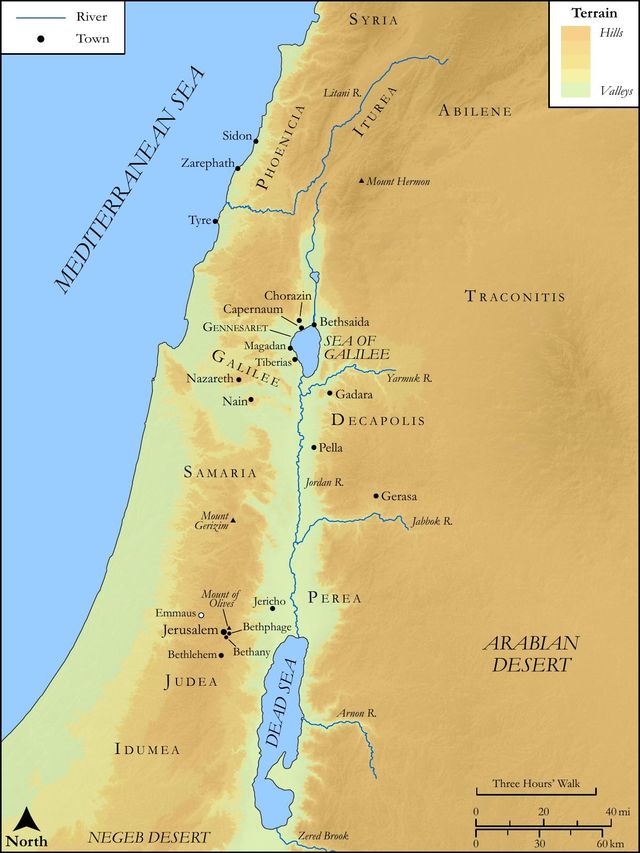
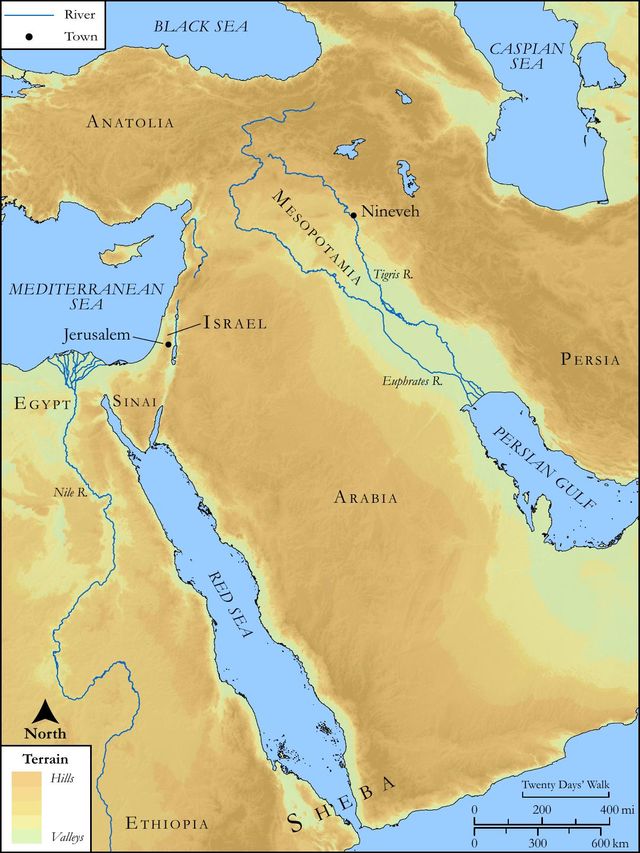
Study this verse
Public-domain commentary
Matthew Henry
From his Commentary on the Whole Bible. Henry comments on passages, not single verses — this entry covers Luke 20:1–8. His three-level outline is real structure in the source text, so it is rendered as structure.
In this passage of story nothing is added here to what we had in the other evangelists; but only in the first verse, where we are told,
I.That he was now teaching the people in the temple, and preaching the gospel.
Note, Christ was a preacher of his own gospel. He not only purchased the salvation for us, but published it to us, which is a great confirmation of the truth of the gospel, and gives abundant encouragement to us to receive it, for it is a sign that the heart of Christ was much upon it, to have it received. This likewise puts an honour upon the preachers of the gospel, and upon their office and work, how much soever they are despised by a vain world. It puts an honour upon the popular preachers of the gospel; Christ condescended to the capacities of the people in preaching the gospel, and taught them. And observe, when he was preaching the gospel to the people he had this interruption given him. Note, Satan and his agents do all they can to hinder the preaching of the gospel to the people, for nothing weakens the interest of Satan's kingdom more.
II.That his enemies are here said to come upon him - epestēsan. The word is used only here, and it intimates,
1.That they thought to surprise him with this question; they came upon him suddenly, hoping to catch him unprovided with an answer, as if this were not a thing he had himself thought of.
2.That they thought to frighten him with this question. They came upon him in a body, with violence. But how could he be terrified with the wrath of men, when it was in his own power to restrain it, and make it turn to his praise? From this story itself we may learn,
(1.)That it is not to be thought strange, if even that which is evident to a demonstration be disputed, and called in question, as a doubtful thing, by those that shut their eyes against the light. Christ's miracles plainly showed by what authority he did these things, and sealed his commission; and yet this is that which is here arraigned.
(2.)Those that question Christ's authority, if they be but catechized themselves in the plainest and most evident principles of religion, will have their folly made manifest unto all men. Christ answered these priests and scribes with a question concerning the baptism of John, a plain question, which the meanest of the common people could answer: Was it from heaven or of men? They all knew it was from heaven; there was nothing in it that had an earthly relish or tendency, but it was all heavenly and divine. And this question gravelled them, and ran them aground, and served to shame them before the people.
(3.)It is not strange if those that are governed by reputation and secular interest imprison the plainest truths, and smother and stifle the strongest convictions, as these priests and scribes did, who, to save their credit, would not own that John's baptism was from heaven, and had no other reason why they did not say it was of men but because they feared the people. What good can be expected from men of such a spirit?
(4.)Those that bury the knowledge they have are justly denied further knowledge. It was just with Christ to refuse to give an account of his authority to them that knew the baptism of John to be from heaven and would not believe in him, nor own their knowledge, Luk 20:7, Luk 20:8.
Historical interpretation
Eight Centuries of Reception
6 surviving comments on this verse. Each one is dated, so this reads as a timeline rather than a list.
Select a marker to jump to its quote. Markers stagger vertically where authors wrote within a few decades of each other.
But the rulers who should have been struck with wonder at one who taught such heavenly doctrines, and have been convinced by His words and deeds that this was the same Christ whom the Prophets had foretold, came to hinder Him, so helping onward the destruction of the people. For it follows, And spake unto him, saying, Tell us, by what authority doest thou these things? &c. As if he said; By the law of Moses, those only who are sprung from the blood of Levi have authority to teach, and power over the sacred buildings. But Thou who art of the line of Judah usurpest the offices assigned to us. Whereas, O Pharisee, if thou hadst known the Scriptures, thou wouldest have called to mind that this is the Priest after the order of Melchisedec, who offers to God them that believe on Him by that worship which is above the law. Why then art thou troubled. He cast out of the sacred house things which seemed necessary for the sacrifices of the law, because He calls us by faith to the true righteousness.
His question concerning John the Baptist is not from whence was he sprung, but whence received he his law of baptism But they feared not to shun the truth. For God sent John as a voice, crying, Prepare ye the way of the Lord. But they dreaded to speak the truth, lest it should be said, Why did ye not believe? and they scruple to blame the forerunner, not from fear of God, but of the people; as it follows, And they reasoned within themselves, saying, If we shall say, From, heaven; he will say, Why then believed ye him not.
While he was teaching the crowds and evangelizing them, the chief priests and the scribes came and said to him, “By what power are you doing this?” If it were a question of his teaching, how could they have called it a work? It is clear that he referred to his works as testimony to the truth of his words, according to what he said: “If you do not believe in me, believe at least in the works.” “By what power are you doing this?” They interrogated him like inquisitors, but he did not reply to them, since they did not approach him as students out of love in order to be taught but as rebels. He asked them in turn, “From where did the baptism of John come?” His word pressured them in such a way that they were forced to confess that they had not believed in John. He asked, “Was it from heaven or from human beings?” They began to reflect on it in their minds and to say, “If we say that it was from heaven, he will say, ‘Why did you not believe in it?’ If we say, ‘From human beings,’ we are afraid of the crowd.” When they said, “If it is from heaven,” they did not also say, “We are afraid of God.” They were thus afraid of human beings but not of God.
The Jews, to discredit him, said to the Lord, "By what authority are you doing these things? If you are the Christ, tell us openly." They were looking for a pretext, not for faith. They wanted something by which to catch him, not something by which to be liberated. Notice what answer the one who could see their hearts gave to confound them with the lamp. He said, "I will also ask you one question. Tell me, John's baptism, from where is it? Is it from heaven, or from men?" They were immediately sent staggering backward. Although the daylight was only shining gently, they were forced to fumble and blink, since they were unable to gaze at that brilliance. They took refuge in the darkness of their hearts, and there they began to get very agitated among themselves, stumbling and falling about. We might say that they said this to themselves where they were thinking, yet where he could see. If we say, "They said, 'It is from heaven,' he will say to us, 'Why did you not believe him? He testified to Christ the Lord.' If we say, 'From men,' the people will stone us, because they regarded John as a great prophet." They said, "We do not know." You do not know, because you are in darkness and are losing the light. After all, is not it much better, if darkness is occupying the human heart, to let the light in and not to lose it? When they said, "We do not know," the Lord said, "Neither do I tell you by what authority I am doing these things. You see, I know in what mind you said 'We do not know,' not because you wish to be taught, but because you are afraid to confess."
Or when they say, By what authority doest thou these things? they doubt concerning the power of God, and wish it to be understood that of the devil He doeth this. Adding moreover, And who is he that gave thee this authority? Most plainly do they deny the Son of God when they think that not by His own power but another's He doeth miracles. Now our Lord by a simple answer might have refuted such a calumny; but He wisely asks a question, that by their silence or their words they might condemn themselves. And he answered and said unto them, I also will ask, &c.
As if He should say, He whom yon confess had his gift of prophecy from heaven, and gave testimony to Me. And ye heard from him by what power I should do these things. It follows, But if we shall say, Of men; the whole people will stone us: for they be persuaded that John was a prophet. Therefore perceived they in whatever way they should answer they would fall into a trap, fearing the stoning, but much more the confession of the truth. And then it follows, And they answered, that they could not tell whence it was. Because they will not confess that which they knew, they were baffled, and the Lord would not tell them what He knew; as it follows, And Jesus said unto them, Neither will I tell you by what authority I do these things. For there are two reasons especially why we should conceal the truth from those that ask; for example, when the questioner is incapable of understanding what he asks, or when from hatred or contempt he is unworthy to have his questions answered.
But answering, he said to them, "I will also ask you one thing. Answer me. Was the baptism of John from heaven or from men?" The Lord could have confuted the slander of the tempters with an open answer, but prudently he asks so that by their own silence or response, they might be condemned.
For that He might show that they had always rebelled against the Holy Spirit, and that besides Isaiah, whom they remembered not, they had refused to believe John whom they had lately seen; He now in his turn puts the question to them, proving that if so great a Prophet as John who was accounted greatest among them had been disbelieved when he testified of Him, they would in no wise believe Him, answering by what authority He did this.
Continue studying Luke 20:3 across the web’s major study libraries — every link below opens this exact verse, chapter, or book on the destination site.
Read & Compare
 BibleGatewayThis verse in more than 200 translations and 70 languages.
 Bible.comThe YouVersion reader — hundreds of translations, reading plans, and highlights.
 ESV.orgCrossway's official English Standard Version reader.
 NET BibleThe NET translation with 60,000+ translators' notes on every rendering decision.
 STEP BibleTyndale House's free study tool — original text, vocabulary, and scholarly resources.
 BibliaLogos Bible Software's free web reader.
 USCCBThe New American Bible (Revised Edition) with the U.S. bishops' study notes.
Commentaries
 BibleHub CommentariesDozens of classic commentaries on this verse, gathered on one page.
 StudyLightMore than 100 commentary sets — the largest collection on the web.
 BibleRefPlain-English commentary on what this verse means, verse by verse.
 Enduring WordDavid Guzik's free commentary on this chapter, widely used by Bible teachers.
 Bible Study ToolsVerse commentary alongside Greek and Hebrew study aids.
Original Language & Research
- BibleHub InterlinearThe verse word by word — original language, transliteration, and English.
- BibleHub LexiconEvery word's original-language definition and Strong's entry.
 Blue Letter BibleDeep-study tools — Strong's numbers, concordance, and word studies.
 CNTR CollationThe earliest Greek manuscripts of this verse, collated letter by letter.
Sermons, Hymns & Audio


TrulyRandomVerse is not affiliated with these sites and doesn’t control their content. They’re linked because they’re genuinely useful.
Summary
In Luke 20:3, Jesus masterfully responds to the chief priests, scribes, and elders who had challenged His authority while He was teaching in the temple. Rather than directly answering their loaded question, which was designed to trap Him, Jesus turns the tables by posing a counter-question. This strategic move not only deflects their malicious intent but also sets the stage for a profound demonstration of His divine wisdom and discernment, forcing His interrogators to confront their own hypocrisy and lack of integrity.
Context
ShowHideLiterary Context
This verse is situated within a series of confrontations between Jesus and the religious authorities in Jerusalem during the final week of His earthly ministry, often referred to as Passion Week. Immediately preceding this, in Luke 20:1-2, the chief priests, scribes, and elders, representing the highest religious and political powers, accost Jesus as He teaches in the Temple. They demand to know "By what authority doest thou these things? or who is he that gave thee this authority?" Their question is not a genuine inquiry but a calculated attempt to either force Jesus into a seditious statement against Roman authority or a blasphemous claim of divine authority that they could condemn. Jesus' response in Luke 20:3 is a brilliant tactical maneuver, characteristic of His encounters with those who sought to trap Him, and it sets up the subsequent dilemma for His adversaries concerning John the Baptist, as detailed in Luke 20:4-8.
Historical & Cultural Context
The setting is the Temple courts in Jerusalem, a public and highly charged environment, especially during the Passover festival when the city swelled with pilgrims and religious fervor was high. The religious leaders, particularly the chief priests (Sadducees) and scribes (Pharisees), held significant power and were deeply invested in maintaining the existing religious and social order. Rabbinic debate, common in this period, often involved answering a question with another question, especially when the initial question was perceived as hostile or designed to trap. This was a recognized rhetorical strategy to shift the burden of proof or expose the interrogator's underlying motives. Jesus' use of this method would have been understood by His audience as a sophisticated and legitimate form of intellectual engagement, though His adversaries would have found it frustratingly effective. The question of authority was paramount in Jewish society, as it determined legitimacy in teaching, healing, and performing religious acts.
Key Themes
ShowHideLuke 20:3 contributes significantly to several overarching themes in Luke's Gospel. Firstly, it powerfully highlights Jesus' Divine Wisdom and Discernment. He consistently demonstrates an unparalleled ability to navigate hostile interrogations, exposing the hearts of His questioners rather than falling into their traps. This wisdom is rooted in His divine nature, contrasting sharply with the earthly cunning of His opponents, as seen throughout His ministry (e.g., Luke 11:14-26). Secondly, the passage underscores the theme of Authority Challenged and Affirmed. While the religious leaders question Jesus' authority, His very method of response subtly yet powerfully affirms it. He demonstrates a superior, God-given authority by His ability to disarm His adversaries and expose their hypocrisy, proving Himself to be the true teacher and Messiah. Lastly, it exemplifies the theme of Exposing Hypocrisy and Spiritual Blindness. Jesus' counter-question forces the religious leaders to reveal their true motivations—not a desire for truth, but a concern for their own reputation and power, ultimately demonstrating their spiritual inability to recognize God's work among them, a recurring motif in Luke (e.g., Luke 16:14-15).
Exposition and Analysis
ShowHideKey Word Analysis
ShowHideThis verb means "to conclude for oneself," or by implication, "to respond." In a Hebraic sense, it can also mean "to begin to speak" when an address is expected. Here, it signifies Jesus' deliberate and considered response, not a hasty reaction, to the challenge posed by the religious leaders. It suggests a thoughtful, authoritative reply rather than a simple reaction.
This verb means "to interrogate" or "to request." It implies a formal or serious inquiry, often with the expectation of an answer. Jesus is not merely posing a casual question; He is initiating a formal interrogation of His own, demanding a response that will expose His adversaries' true position.
Derived from the verb "to speak," logos here refers to "something said," "a topic," "a subject of discourse," or "a question." It denotes a significant point or proposition that requires a thoughtful and revealing answer. Jesus' "one thing" is not a trivial query but a pivotal matter designed to expose the spiritual and intellectual bankruptcy of His interrogators.
Verse Breakdown
ShowHide"And he answered and said unto them,"
This opening clause establishes Jesus' deliberate and composed response to the challenge laid before Him. It signals a formal address, indicating that Jesus is not caught off guard but is intentionally engaging with His accusers. The dual verbs "answered and said" emphasize the solemnity and authority of His forthcoming statement, indicating a prepared and strategic reply.
"I will also ask you one thing;"
Here, Jesus immediately shifts the dynamic, turning the tables on His interrogators. The inclusion of "also" (G2504 kagō) highlights the reciprocity of the challenge: just as they have questioned Him, He will now question them. The phrase "one thing" (G1520 heîs G3056 lógos) suggests a singular, focused, and crucial point that will serve as a counter-challenge, designed to expose their motives and intellectual dishonesty.
"and answer me:"
This concluding imperative underscores Jesus' authority and His demand for a direct response. He is not merely suggesting a question but commanding an answer, placing the religious leaders in the very position they sought to place Him. This command forces them to consider the implications of their own beliefs and public standing, particularly concerning John the Baptist, before they can expect an answer from Him.
Literary Devices
ShowHideLuke 20:3 is rich in literary technique, primarily employing the Counter-Question as a strategic rhetorical device. Jesus avoids a direct answer to the religious leaders' trap by posing a question of His own, thereby shifting the burden of proof and forcing His adversaries into a dilemma. This is a classic example of Ironic Reversal, where the one being interrogated becomes the interrogator, exposing the true intentions and intellectual bankruptcy of the challengers. Furthermore, this method can be seen as an application of the Socratic Method, where questions are used not just to gain information but to expose contradictions in an opponent's reasoning or to lead them to a deeper, often uncomfortable, truth. The succinctness of Jesus' statement, combined with its profound implications, also demonstrates Conciseness and Strategic Foresight, as He anticipates their inability to answer His question without incriminating themselves, thereby disarming their initial challenge without directly engaging on their terms.
Theological and Thematic Connections
ShowHideLuke 20:3 is a profound demonstration of divine wisdom in the face of human cunning and hostility. It underscores the theological truth that God's ways are higher than human ways, and His wisdom is incomparable. Jesus' refusal to be drawn into a direct answer to a trap question reveals His sovereign control over the narrative and His perfect discernment of hearts. The passage highlights the recurring biblical theme of true authority stemming from God, not from human institutions or popular acclaim. The religious leaders, despite their titles and positions, lacked genuine spiritual authority because their hearts were far from God and their motives were impure. Jesus, by contrast, embodies true authority, which is characterized by truth, integrity, and the ability to expose darkness with light. This encounter foreshadows the ultimate confrontation between God's truth and human rebellion, a conflict that culminates in the cross and resurrection.
Reflection and Application
ShowHideJesus' encounter in Luke 20:3 offers invaluable lessons for believers navigating a world often hostile to truth and integrity. We are frequently confronted with challenging questions, criticisms, or even outright attacks, whether in personal conversations, professional settings, or public discourse. This passage teaches us the importance of discernment—not every question deserves a direct answer, especially if its intent is to trap, mislead, or simply to argue rather than to understand. Like Jesus, we are called to seek God's wisdom in such moments, trusting that He will provide the right response or strategy, which may not always be what is expected. This might involve rephrasing the question, asking a counter-question, or even remaining silent, as Jesus did before Pilate. Ultimately, our aim should be to honor God and uphold truth, rather than to win an argument or defend our reputation. It reminds us that true authority and influence come from a place of integrity and spiritual wisdom, not from human power or cleverness.
Questions for Reflection
ShowHideFAQ
ShowHideWhy didn't Jesus just directly answer the religious leaders' question about His authority?
ShowHideJesus did not directly answer the religious leaders' question because their intent was not to genuinely seek understanding or truth. As Luke 20:2 indicates, they were trying to trap Him, either into a seditious statement against Roman authority (claiming kingly authority) or a blasphemous one against God (claiming divine authority without their approval). A direct "yes" would have been used to accuse Him of rebellion, and a direct "no" would have undermined His ministry. By posing a counter-question about John the Baptist's authority, Jesus exposed their hypocrisy and shifted the burden of proof back onto them, demonstrating that their problem was not a lack of evidence but a lack of willingness to believe. This strategic move disarmed their trap and revealed their true motives.
What was the "one thing" Jesus asked them?
ShowHideThe "one thing" Jesus asked them, as revealed in the subsequent verses (Luke 20:4), was about the source of John the Baptist's baptism: "The baptism of John, was it from heaven, or of men?" This question was brilliant because John the Baptist was widely regarded as a prophet by the people, and the religious leaders had publicly refused to acknowledge his ministry. If they said John's authority was "from heaven," they would condemn themselves for not believing him and by extension, for not believing Jesus, whom John proclaimed. If they said "of men," they would fear the backlash from the people who revered John. Their inability to answer exposed their fear of man over God and their spiritual dishonesty.
Christ-Centered Fulfillment
ShowHideLuke 20:3, though seemingly a simple rhetorical exchange, profoundly reveals the person and work of Christ. Jesus' divine wisdom, displayed in His strategic counter-question, is a manifestation of His very nature as the Logos, the Word of God, through whom all things were made and in whom are hidden all the treasures of wisdom and knowledge (Colossians 2:3). His ability to disarm His adversaries without resorting to human power or cunning underscores His unique authority, not merely as a prophet or teacher, but as the Son of God, whose authority is inherent and absolute (Matthew 28:18). This encounter in the Temple foreshadows the ultimate confrontation between the Light of the World and the darkness of human sin and rebellion. Just as Jesus exposed the hypocrisy of the religious leaders, He would ultimately expose the futility of human efforts to achieve righteousness apart from Him, offering Himself as the perfect sacrifice to reconcile humanity to God (2 Corinthians 5:21). His strategic silence and piercing questions in this moment prefigure His ultimate triumph over the powers of sin and death, demonstrating that His kingdom is not of this world, yet it holds all true authority (John 18:36).