


Luke 1:76
- ΚαὶKaiAndG2532CONJConjunction
- σὺsuyou yourselfG4771P-2NSPersonal pronoun Nominative 2nd Singular
- παιδίονpaidionchildG3813N-VSNNoun Vocative Singular Neuter
- προφήτηςprophētēsprophetG4396N-NSMNoun Nominative Singular Masculine
- ὑψίστουhupsistouof [the] Most HighG5310A-GSM-SAdjective Genitive Singular Masculine Superlative
- κληθήσῃ·klēthēsēwill be calledG2564V-FPI-2SVerb Future Passive Indicative 2nd Singular
- προπορεύσῃproporeusēyou will goG4313V-FDI-2SVerb Future Middle Deponent Indicative 2nd Singular
- γὰρgarforG1063CONJConjunction
- ἐνώπιονenōpionin front ofG1799PREPPreposition
- προσώπουprosōpou[the] face ofG4383N-GSNNoun Genitive Singular Neuter
- κυρίουkuriou[the] LordG2962N-GSM-TNoun Genitive Singular Masculine Title
- ἑτοιμάσαιhetoimasaito prepareG2090V-AANVerb Aorist Active Infinitive
- ὁδοὺςhodouswaysG3598N-APFNoun Accusative Plural Feminine
- αὐτοῦautouof HimG846P-GSMPersonal pronoun Genitive Singular Masculine
English is a literal word-by-word gloss of the Greek, not the KJV's wording. Why?
This is the original text the KJV's translators worked from — each Greek word with its own literal English meaning in this verse, prepared by scholars at Tyndale House, Cambridge. The KJV translates whole sentences, not word by word, so its wording differs: one Greek word can become several English words, and the KJV may choose “charity” where the gloss reads “love”. Both are faithful — they answer different questions. For the KJV's own rendering, switch to the KJV text.
Details
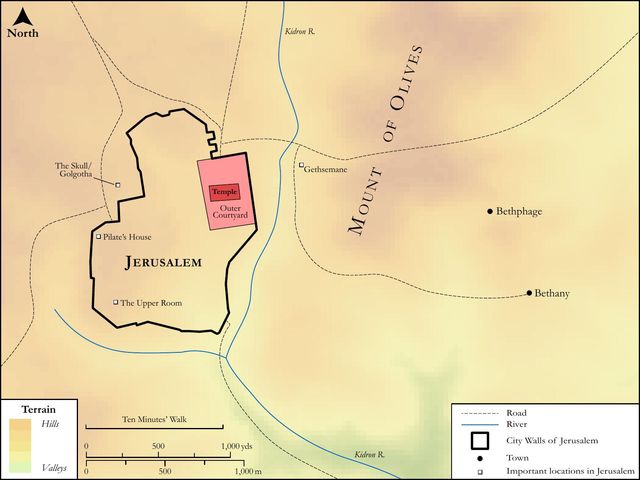
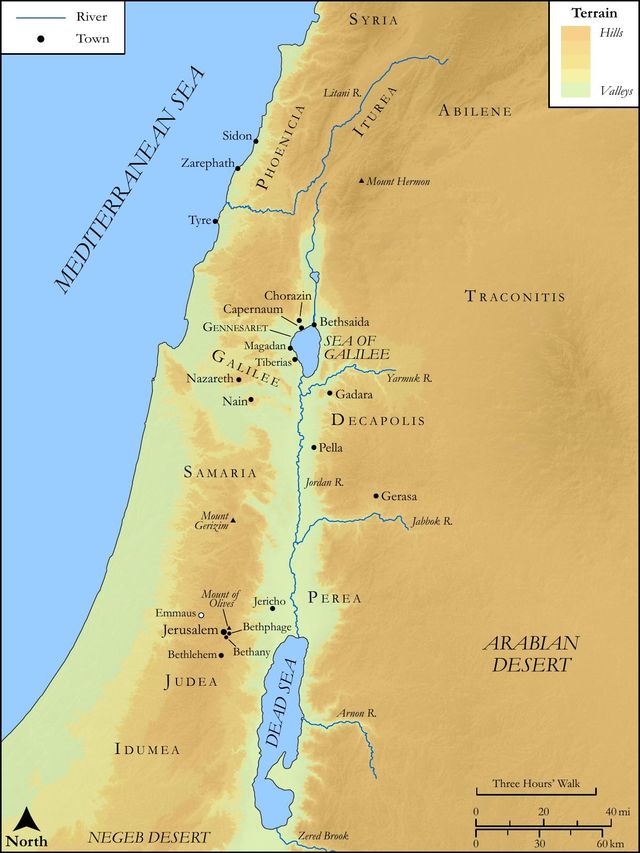
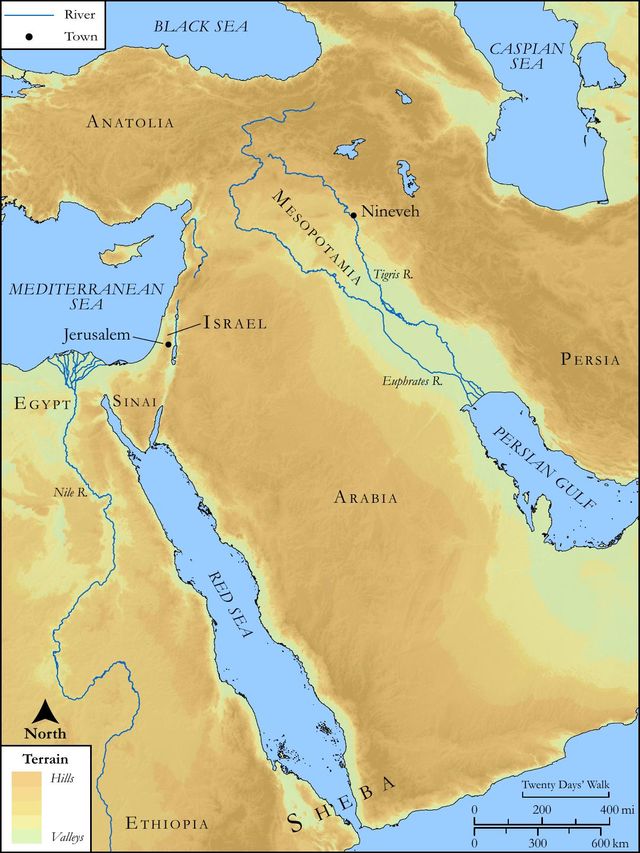
See on the biblical-era map
Study this verse
Public-domain commentary
Matthew Henry
From his Commentary on the Whole Bible. Henry comments on passages, not single verses — this entry covers Luke 1:67–80. His four-level outline is real structure in the source text, so it is rendered as structure.
We have here the song wherewith Zacharias praised God when his mouth was opened; in it he is said to prophesy (Luk 1:67), and so he did in the strictest sense of prophesying; for he foretold things to come concerning the kingdom of the Messiah, to which all the prophets bear witness. Observe,
I.How he was qualified for this:
He was filled with the Holy Ghost, was endued with more than ordinary measures and degrees of it, for this purpose; he was divinely inspired. God not only forgave him his unbelief and distrust (which was signified by discharging him from the punishment of it), but, as a specimen of the abounding of grace towards believers, he filled him with the Holy Ghost, and put this honour upon him, to employ him for his honour.
II.What the matter of his song was.
Here is nothing said of the private concerns of his own family, the rolling away of the reproach from it and putting of a reputation upon it, by the birth of this child, though, no doubt, he found a time to give thanks to God for this, with his family; but in this song he is wholly taken up with the kingdom of the Messiah, and the public blessings to be introduced by it. He could have little pleasure in this fruitfulness of his vine, and the hopefulness of his olive-plant, if herein he had not foreseen the good of Jerusalem, peace upon Israel, and blessings on both out of Zion, Psa 128:3, Psa 128:5, Psa 128:6. The Old Testament prophesies are often expressed in praises and new songs, so is the beginning of New Testament prophecy: Blessed be the Lord God of Israel. The God of the whole earth shall he be called; yet Zacharias, speaking of the work of redemption, called him the Lord God of Israel, because to Israel the prophecies, promises, and types, of the redemption had hitherto been given, and to them the first proffers and proposals of it were now to be made. Israel, as a chosen people, was a type of the elect of God out of all nations, whom God had a particular eye to, in sending the Saviour; and therefore he is therein called the Lord God of Israel.
Now Zacharias here blesses God,
1.For the work of salvation that was to be wrought out by the Messiah himself, Luk 1:68-75. This it is that fills him, when he is filled with the Holy Ghost, and it is that which all who have the Spirit of Christ are full of.
(1.)In sending the Messiah, God has made a gracious visit to his people, whom for many ages he had seemed to neglect, and to be estranged from; he hath visited them as a friend, to take cognizance of their case. God is said to have visited his people in bondage when he delivered them (Exo 3:16; Exo 4:31), to have visited his people in famine when he gave them bread, Rut 1:6. He had often sent to them by his prophets, and had still kept up a correspondence with them; but now he himself made them a visit.
(2.)He has wrought out redemption for them: He has redeemed his people. This was the errand on which Christ came into the world, to redeem those that were sold for sin, and sold under sin; even God's own people, his Israel, his son, his first-born, his free-born, need to be redeemed, and are undone if they be not. Christ redeems them by price out of the hands of God's justice, and redeems them by power out of the hands of Satan's tyranny, as Israel out of Egypt.
(3.)He has fulfilled the covenant of royalty made with the most famous Old Testament prince, that is, David. Glorious things had been said of his family, that on him, as a mighty one, help should be laid, that his horn should be exalted, and his seed perpetuated, Psa 89:19, Psa 89:20, Psa 89:24, Psa 89:29. But that family had been long in a manner cast off and abhorred, Psa 89:38. Now here it is glorified in, that, according to the promise, the horn of David should again be made to bud; for, Psa 132:17, he hath raised up a horn of salvation for us in the house of his servant David (Luk 1:69), there, where it was promised and expected to arise. David is called God's servant, not only as a good man, but as a king that ruled for God; and he was an instrument of the salvation of Israel, by being employed in the government of Israel; so Christ is the author of eternal redemption to those only that obey him. There is in Christ, and in him only, salvation for us, and it is a horn of salvation; for,
[1.]It is an honourable salvation. It is raised up above all other salvations, none of which are to be compared with it: in it the glory both of the Redeemer and of the redeemed are advanced, and their horn exalted with honour.
[2.]It is a plentiful salvation. It is a cornucopia - a horn of plenty, a salvation in which we are blessed with spiritual blessings, in heavenly things, abundantly.
[3.]It is a powerful salvation: the strength of the beast is in his horn. He has raised up such a salvation as shall pull down our spiritual enemies, and protect us from them. In the chariots of this salvation the Redeemer shall go forth, and go on, conquering and to conquer.
(4.)He has fulfilled all the precious promises made to the church by the most famous Old Testament prophets (Luk 1:70): As he spoke by the mouth of his holy prophets. His doctrine of salvation by the Messiah is confirmed by an appeal to the prophets, and the greatness and importance of that salvation thereby evidenced and magnified; it is the same that they spoke of, which therefore ought to be expected and welcomed; it is what they enquired and searched diligently after (Pe1 1:10, Pe1 1:11), which therefore ought not to be slighted or thought meanly of. God is now doing that which he has long ago spoken of; and therefore be silent, O all flesh, before him, and attend to him. See,
[1.]How sacred the prophecies of this salvation were. The prophets who delivered them were holy prophets, who durst not deceive and who aimed at promoting holiness among men; and it was the holy God himself that spoke by them.
[2.]How ancient they were: ever since the world began. God having promised, when the world began, that the Seed of the woman should break the serpent's head, that promise was echoed to when Adam called his wife's name Eve - Life, for the sake of that Seed of hers; when Eve called her first son Cain, saying, I have gotten a man from the Lord, and another son, Seth, settled; when Noah was called rest, and foretold that God should dwell in the tents of Shem. And it was not long after the new world began in Noah that the promise was made to Abraham that in his Seed the nations of the earth should be blessed.
[3.]What a wonderful harmony and concert we perceive among them. God spoke the same thing by them all, and therefore it is said to be dia stomatos, not by the mouths, but by the mouth, of the prophets, for they all speak of Christ as it were with one mouth.
Now what is this salvation which was prophesied of?
First, It is a rescue from the malice of our enemies; it is sōtērian ex echthrōn hēmōn - a salvation out of our enemies, from among them, and out of the power of them that hate us (Luk 1:71); it is a salvation from sin, and the dominion of Satan over us, both by corruptions within and temptations without. The carnal Jews expected to be delivered from under the Roman yoke, but intimation was betimes given that it should be a redemption of another nature. He shall save his people from their sins, that they may not have dominion over them, Mat 1:21.
Secondly, It is a restoration to the favour of God; it is to perform the mercy promised to our forefathers, Luk 1:72. The Redeemer shall not only break the head of the serpent that was the author of our ruin, but he shall re-instate us in the mercy of God and re-establish us in his covenant; he shall bring us as it were into a paradise again, which was signified by the promises made to the patriarchs, and the holy covenant made with them, the oath which he sware to our father Abraham, Luk 1:73. Observe, 1. That which was promised to the fathers, and is performed to us, is mercy, pure mercy; nothing in it is owing to our merit (we deserve wrath and the curse), but all to the mercy of God, which designed us grace and life: ex mero motu - of his own good pleasure, he loved us because he would love us. 2. God herein had an eye to his covenant, his holy covenant, that covenant with Abraham: I will be a God to thee and thy seed. This his seed had really forfeited by their transgressions; this he seemed to have forgotten in the calamities brought upon them; but he will now remember it, will make it appear that he remembers it, for upon that are grounded all his returns of mercy: Lev 26:42, Then will I remember my covenant.
Thirdly, It is a qualification for, and an encouragement to, the service of God. Thus was the oath he sware to our Father Abraham, That he would give us power and grace to serve him, in an acceptable manner to him and a comfortable manner to ourselves, Luk 1:74, Luk 1:75. Here seems to be an allusion to the deliverance of Israel out of Egypt, which, God tells Moses, was in pursuance of the covenant he made with Abraham (Exo 3:6-8), and that this was the design of his bringing them out of Egypt, that they might serve God upon this mountain, Exo 3:12. Note, The great design of gospel grace is not to discharge us fRom. but to engage us to, and encourage us in, the service of God. Under this notion Christianity was always to be looked upon, as intended to make us truly religious, to admit us into the service of God, to bind us to it, and to quicken us in it. We are therefore delivered from the iron yoke of sin, that our necks may be put under the sweet and easy yoke of the Lord Jesus. The very bonds which he has loosed do bind us faster unto him, Psa 116:16. We are hereby enabled, 1. To serve God without fear - aphobōs. We are therefore put into a state of holy safety that we might serve God with a holy security and serenity of mind, as those that are quiet from the fears of evil. God must be served with a filial fear, a reverent obedient fear, an awakening quickening fear, but not with a slavish fear, like that of the slothful servant, who represented him to himself as a hard master, and unreasonable; not with that fear that has torment and amazement in it; not with the fear of a legal spirit; a spirit of bondage, but with the boldness of an evangelical spirit, a spirit of adoption. 2. To serve him in holiness and righteousness, which includes the whole duty of man towards God and our neighbour. It is both the intention and the direct tendency of the gospel to renew upon us that image of God in which man was at first made, which consisted in righteousness and true holiness, Psa 50:14. 3. To serve him, before him, in the duties of his immediate worship, wherein we present ourselves before the Lord, to serve him as those that have an eye always upon him, and see his eye always upon us, upon our inward man, that is serving him before him. 4. To serve him all the days of our life. The design of the gospel is to engage us in constancy and perseverance in the service of God, by showing us how much depends upon our not drawing back, and by showing us how Christ loved us to the end, and thereby engaged us to love him to the end.
2.He blessed God for the work of preparation for this salvation, which was to be done by John Baptist (Luk 1:76): Thou child, though now but a child of eight days' old, shalt be called the prophet of the Highest. Jesus Christ is the Highest, for he is God over all, blessed for evermore (Rom 9:5), equal with the Father. John Baptist was his prophet, as Aaron was Moses's prophet (Exo 7:1); what he said was as his mouth, what he did was as his harbinger. Prophecy had now long ceased, but in John it revived, as it had done in Samuel, who was born of an aged mother, as John was, after a long cessation. John's business was,
(1.)To prepare people for the salvation, by preaching repentance and reformation as great gospel duties: Thou shalt go before the face of the Lord, and but a little before him, to prepare his ways, to call people to make room for him, and get ready for his entertainment. Let every thing that may obstruct his progress, or embarrass it, or hinder people from coming to him, be taken away: see Isa 40:3, Isa 40:4. Let valleys be filled, and hills be brought low.
(2.)To give people a general idea of the salvation, that they might know, not only what to do, but what to expect; for the doctrine he preached was that the kingdom of heaven is at hand. There are two things in which you must know that this salvation consists: -
[1.]The forgiveness of what we have done amiss. It is salvation by the remission of sins, those sins which stand in the way of the salvation, and by which we are all become liable to ruin and condemnation, Luk 1:77. John Baptist gave people to understand that, though their case was sad, by reason of sin, it was not desperate, for pardon might be obtained through the tender mercy of our God (the bowels of mercy, so the word is): there was nothing in us but a piteous case to recommend us to the divine compassion.
[2.]Direction to do better for the time to come. The gospel salvation not only encourages us to hope that the works of darkness shall be forgiven us, but sets up a clear and true light, by which we may order our steps aright. In it the day-spring hath visited us from on high (Luk 1:78); and this also is owing to the tender mercy of our God. Christ is anatolē - the morning Light, the rising Sun, Mal 4:2. The gospel brings light with it (Joh 3:19), leaves us not to wander in the darkness of Pagan ignorance, or in the moonlight of the Old Testament types or figures, but in it the day dawns; in John Baptist it began to break, but increased apace, and shone more and more to the perfect day. We have as much reason to welcome the gospel day who enjoy it as those have to welcome the morning who had long waited for it. First, The gospel is discovering; it shows us that which before we were utterly in the dark about (Luk 1:79); it is to give light to them that sit in darkness, the light of the knowledge of the glory of God in the face of Jesus Christ; the day-spring visited this dark world to lighten the Gentiles, Act 26:18. Secondly, It is reviving; it brings light to them that sit in the shadow of death, as condemned prisoners in the dungeon, to bring them the tidings of a pardon, at least of a reprieve and opportunity of procuring a pardon; it proclaims the opening of the prison (Isa 61:1), brings the light of life. How pleasant is that light! Thirdly, It is directing; it is to guide our feet in the way of peace, into that way which will bring us to peace at last. It is not only a light to our eyes, but a light to our feet (Psa 119:105); it guides us into the way of making our peace with God, of keeping up a comfortable communion; that way of peace which as sinners we have wandered from and have not known (Rom 3:17), nor could ever have known of ourselves.
In the last verse, we have short account of the younger years of John Baptist. Though he was the son of a priest, he did not, like Samuel, go up, when he was a child, to minister before the Lord; for he was to prepare the way for a better priesthood. But we are here told,
1.Of his eminence as to the inward man: The child grew in the capacities of his mind, much more than other children; so that he waxed strong in the spirit; had a strong judgment and strong resolution. Reason and conscience (both which are the candle of the Lord) were so strong in him that he had the inferior faculties of appetite and passion in complete subjection betimes. By this it appeared that he was betimes filled with the Holy Ghost; for those that are strong in the Lord are strong in spirit.
2.Of his obscurity as to the outward man: He was in the deserts; not that he lived a hermit; cut off from the society of men. No, we have reason to think that he went up to Jerusalem at the feasts, and frequented the synagogues on the sabbath day, but his constant residence was in some of those scattered houses that were in the wilderness of Zuph or Maon, which we read of in the story of David. There he spent most of his time, in contemplation and devotion, and had not his education in the schools, or at the feet of the rabbin. Note, Many a one is qualified for great usefulness, who yet is buried alive; and many are so long buried who are designed, and are thereby in the fitting, for so much greater usefulness at last; as John Baptist, who was in the desert only till the day of his showing to Israel, when he was in the thirtieth year of his age. Note, There is a time fixed for the showing of those favours to Israel which are reserved; the vision of them is for an appointed time, and at the end it shall speak, and shall not lie.
Historical interpretation
Five Centuries of Reception
13 surviving comments on this verse. Each one is dated, so this reads as a timeline rather than a list.
Select a marker to jump to its quote. Markers stagger vertically where authors wrote within a few decades of each other.
This same God, after His great goodness, poured His compassion upon us, through which compassion "the Day-spring from on high has looked upon us, and appeared to those who sat in darkness and the shadow of death, and has guided our feet into the way of peace;" [Luke 1:78] as Zacharias also, recovering from the state of dumbness which he had suffered on account of unbelief, having been filled with a new spirit, did bless God in a new manner. For all things had entered upon a new phase, the Word arranging after a new manner the advent in the flesh, that He might win back to God that human nature (hominem) which had departed from God; and therefore men were taught to worship God after a new fashion, but not another god, because in truth there is but "one God, who justifies the circumcision by faith, and the uncircumcision through faith." [Romans 3:30] But Zacharias prophesying, exclaimed, "Blessed be the Lord God of Israel; for He has visited and redeemed His people, and has raised up an horn of salvation for us in the house of His servant David; as He spoke by the mouth of His holy prophets, which have been since the world begun; salvation from our enemies, and from the hand of all that hate us; to perform the mercy [promised] to our fathers, and to remember His holy covenant, the oath which He swore to our father Abraham, that He would grant unto us, that we, being delivered out of the hand of our enemies, might serve Him without fear, in holiness and righteousness before Him, all our days." [Luke 1:68, etc.] Then he says to John: "And you, child, shall be called the prophet of the Highest: for you shall go before the face of the Lord to prepare His ways; to give knowledge of salvation to His people, for the remission of their sins." [Luke 1:76] For this is the knowledge of salvation which was wanting to them, that of the Son of God, which John made known, saying, "Behold the Lamb of God, who takes away the sin of the world. This is He of whom I said, After me comes a man who was made before me; because He was prior to me: and of His fullness have all we received." [John 1:29, John 1:15-16] This, therefore, was the knowledge of salvation; but [it did not consist in] another God, nor another Father, nor Bythus, nor the Pleroma of thirty Æons, nor the Mother of the (lower) Ogdoad: but the knowledge of salvation was the knowledge of the Son of God, who is both called and actually is, salvation, and Saviour, and salutary.
And so "the baptism of repentance" was dealt with as if it were a candidate for the remission and sanctification shortly about to follow in Christ: for in that John used to preach "baptism for the remission of sins," the declaration was made with reference to future remission; if it be true, (as it is, ) that repentance is antecedent, remission subsequent; and this is "preparing the way." But he who "prepares" does not himself "perfect," but procures for another to perfect.
Was that, then, the reason why Jonah thought not repentance necessary to the heathen Ninevites, when he tergiversated in the duty of preaching? or did he rather, foreseeing the mercy of God poured forth even upon strangers, fear that that mercy would, as it were, destroy (the credit of) his proclamation? and accordingly, for the sake of a profane city, not yet possessed of a knowledge of God, still sinning in ignorance, did the prophet well-nigh perish? except that he suffered a typical example of the Lord's passion, which was to redeem heathens as well (as others) on their repentance. It is enough for me that even John, when "strewing the Lord's ways," was the herald of repentance no less to such as were on military service and to publicans, than to the sons of Abraham.
In this case also a type has preceded; for thus was John beforehand the Lord's forerunner, "preparing His ways." Thus, too, does the angel, the witness of baptism, "make the paths straight" for the Holy Spirit, who is about to come upon us, by the washing away of sins, which faith, sealed in (the name of) the Father, and the Son, and the Holy Spirit, obtains.
So John heard Jesus while he was still in his mother's womb, and he leaped up and rejoiced when he heard him. Why might you not believe that John could understand his father's prophecy once he was born, as Zechariah said to him: "And you, child, will be called the prophet of the Most High, for you will go before the Lord to prepare his ways." So I suppose that Zechariah hastily spoke to the infant because he knew John would soon be living in the desert, and therefore he would no longer enjoy John's presence. "For the boy was in the wilderness up to the day of his revelation to Israel."Moses also lived in the desert. After turning forty years old, he fled from Egypt and pastured Jethro's herds for another forty years. But John went out to the wilderness as soon as he was born.
The reason I suppose that Zacharias hastened to speak to his son, was because he knew that John was shortly about to be a sojourner in the wilderness, and that he himself should see him no more.
Who, as ye know, when another infant in the sixth month
In prophesying of the Lord he rightly addresses the prophet, showing that prophecy also is a gift of the Lord, in order that he might not, while enumerating public benefits, seem to be so ungrateful as to be silent of his own. Hence it is said, And thou, child, shalt be called the Prophet of the Highest.
Now perhaps some may think it an absurd extravagance of the mind to address a child of eight days old. But if we keep our eyes fixed upon higher things, we surely can understand that the son might hear the voice of his father, who before he was born heard the salutation of Mary. The Prophet knew that there were certain organs of hearing in a Prophet which were unclosed by the Spirit of God, not by the growth of the body. He possessed the faculty of understanding who was moved by the feeling of exultation.
But as kings have their companions in arms, who stand nearest to them, so John, who was the friend of the Bridegroom, went before Him nigh unto His coming. And this is what follows, For thou shalt go before the face of the Lord to prepare his ways. For some prophets have preached the mystery of Christ at a distance, but he preached it nearer the time, that he might both see Christ, and declare Him to others.
Observe, I pray, this also, that Christ is the Highest, Whose forerunner John was both in his birth, and in his preaching. What remains, then, for those to say, who lessen His divinity? And why will they not understand, that when Zacharias said, "And thou shalt be called Prophet of the Highest," he meant thereby "of God," of Whom also were the rest of the prophets.
(xix. Mor. sup. Job 28:23.) But all they who by preaching cleanse the hearts of their hearers from the filth of their sins, prepare a way for the coming of wisdom into the heart.
Unless indeed Zacharias be supposed to have wished as soon as he was able to speak, to proclaim for their instruction who were present, the future gifts of his son, which he had long before learnt from the Angel. Let the Arians however hear that our Lord Christ, whom John went before prophesying of Him, Zacharias calls "the Most High," as it is said in the Psalms, A man was born in her, and the most highest has established her. (Ps. 87:5.)
And you, child, shall be called the prophet of the Most High. For you will go before the face of the Lord to prepare His ways. He spoke beautifully about the Lord, and suddenly turned his words to the prophet, to indicate that this too was a benefit of the Lord. It is indeed asked how he can speak to the infant of eight days. But how would the infant, who heard Mary's greeting while still enclosed in the womb, not hear his father's voice? Unless perhaps Zacharias ought to be considered as instructing those present, wanting to proclaim the future duties of his son, which he had learned long ago through an angel, as soon as he could speak. Let the Arians hear and be ashamed: let the meek hear and rejoice, that Christ the Lord, whom John preceded as a prophet, is called the Most High. As also the Psalmist, praising God and perfect man in one person, says: Mother Zion will say, a man, and a man was born in her, and the Most High himself founded her (Psalm 86). The one who founded is the same who was made, the same man whom he calls the Most High.
Continue studying Luke 1:76 across the web’s major study libraries — every link below opens this exact verse, chapter, or book on the destination site.
Read & Compare
 BibleGatewayThis verse in more than 200 translations and 70 languages.
 Bible.comThe YouVersion reader — hundreds of translations, reading plans, and highlights.
 ESV.orgCrossway's official English Standard Version reader.
 NET BibleThe NET translation with 60,000+ translators' notes on every rendering decision.
 STEP BibleTyndale House's free study tool — original text, vocabulary, and scholarly resources.
 BibliaLogos Bible Software's free web reader.
 USCCBThe New American Bible (Revised Edition) with the U.S. bishops' study notes.
Commentaries
 BibleHub CommentariesDozens of classic commentaries on this verse, gathered on one page.
 StudyLightMore than 100 commentary sets — the largest collection on the web.
 BibleRefPlain-English commentary on what this verse means, verse by verse.
 Enduring WordDavid Guzik's free commentary on this chapter, widely used by Bible teachers.
 Bible Study ToolsVerse commentary alongside Greek and Hebrew study aids.
Original Language & Research
- BibleHub InterlinearThe verse word by word — original language, transliteration, and English.
- BibleHub LexiconEvery word's original-language definition and Strong's entry.
 Blue Letter BibleDeep-study tools — Strong's numbers, concordance, and word studies.
 CNTR CollationThe earliest Greek manuscripts of this verse, collated letter by letter.
Sermons, Hymns & Audio


TrulyRandomVerse is not affiliated with these sites and doesn’t control their content. They’re linked because they’re genuinely useful.
Summary
Luke 1:76, part of Zechariah's Spirit-inspired prophecy known as the "Benedictus," declares the divine calling and unique mission of his newborn son, John the Baptist. This verse proclaims that John will be recognized as a prophet of God Most High, whose essential task is to precede the Lord, preparing the hearts and lives of the people for the Messiah's imminent arrival. It firmly establishes John's pivotal role as the divinely appointed forerunner, bridging the prophetic silence of centuries with the dawning of God's redemptive plan in Christ.
Context
ShowHideLiterary Context
This verse is embedded within Zechariah's "Benedictus" (Luke 1:67-80), a profound prophetic hymn uttered immediately after his speech is miraculously restored following John's birth and naming (Luke 1:57-64). The hymn begins with praise for God's faithfulness to His covenant promises to Israel, particularly the raising up of a "horn of salvation" (Luke 1:69). Luke 1:76 then shifts focus to John, Zechariah's son, delineating his specific role within this unfolding divine plan. It directly follows Zechariah being "filled with the Holy Spirit" (Luke 1:67), underscoring the divine inspiration behind his words. This prophecy echoes the earlier angelic announcement to Zechariah, which stated that John would "go on before the Lord, in the spirit and power of Elijah, to turn the hearts of the parents to their children and the disobedient to the wisdom of the righteous—to make ready a people prepared for the Lord" (Luke 1:17). Thus, Luke 1:76 serves as a Spirit-inspired confirmation and elaboration of John's divinely ordained mission.
Historical & Cultural Context
The Jewish people in the 1st century AD lived under Roman occupation, longing for the promised Messiah who would deliver them and restore Israel's glory. There had been a prophetic silence for approximately 400 years since Malachi, making the appearance of a true prophet a momentous event. The concept of a "forerunner" was understood in the ancient Near East, where a herald or messenger would precede a king or important dignitary to announce their arrival and prepare the way, often literally by clearing roads or metaphorically by preparing the populace. Furthermore, there was a strong expectation, based on Malachi's prophecy, that Elijah would return before the "great and dreadful day of the Lord" (Malachi 4:5-6). John the Baptist, with his ascetic lifestyle and bold preaching, would have immediately brought to mind this prophetic expectation, positioning him as the anticipated messenger who would prepare the nation for the Lord's coming.
Key Themes
ShowHideLuke 1:76 contributes significantly to several key themes within Luke's Gospel and the broader biblical narrative. Foremost is the theme of Divine Appointment and Prophetic Fulfillment. John's role is not self-chosen but divinely ordained ("shalt be called the prophet of the Highest"), fulfilling ancient prophecies concerning a messenger who would prepare the Lord's way (e.g., Malachi 3:1 and Isaiah 40:3). This highlights God's sovereign control over history and His faithfulness to His promises. Another crucial theme is the Preparation for the Messiah. John's mission is explicitly "to prepare his ways," which involved a call to repentance and baptism for the forgiveness of sins, as seen in Luke 3:3. This spiritual preparation was essential for the people to recognize and receive the coming Savior. Finally, the verse underscores the Continuity of God's Redemptive Plan, showing how John's ministry serves as the bridge between the Old Covenant expectations and the New Covenant reality inaugurated by Jesus Christ.
Exposition and Analysis
ShowHideKey Word Analysis
ShowHideFrom a compound of πρό (pró, "before" or "forth") and φημί (phēmí, "to speak"); a foreteller or inspired speaker. John is not merely a predictor of future events, but one who speaks forth God's message with divine authority, serving as God's mouthpiece to a generation that had long lacked prophetic guidance. This title underscores the divine origin and authoritative nature of his ministry.
Superlative from the base of ὕψος (hýpsos, "height"); highest, referring to the Supreme God. This title for God emphasizes His transcendence, sovereignty, and ultimate authority. By calling John the "prophet of the Highest," Zechariah attributes John's calling and message directly to the supreme, transcendent God, lending ultimate weight and divine backing to his prophetic role.
From ἕτοιμος (hétoimos, "ready"); to make ready, to provide. This verb signifies the active and necessary work John was to undertake. It implies not just a spiritual readiness in people's hearts but also a practical clearing of obstacles, making the path smooth for the Lord's advent. This "preparation" involved calling people to repentance and a change of life, making them spiritually receptive to the Messiah.
Verse Breakdown
ShowHide"And thou, child, shalt be called the prophet of the Highest:"
Zechariah, filled with the Holy Spirit, directly addresses his infant son, John. The phrase "shalt be called" signifies a divinely ordained identity and purpose, not merely a human designation. John's role as a "prophet" means he will be a divinely appointed messenger, speaking God's word. The attribution "of the Highest" explicitly links John's authority and message to God Most High, emphasizing the supreme and transcendent source of his prophetic ministry. This declaration sets John apart as a unique figure in salvation history.
"for thou shalt go before the face of the Lord to prepare his ways;"
This clause provides the divine rationale ("for") for John's prophetic calling. His primary mission is to serve as a forerunner, literally to "go before the face" or "in the presence" of the Lord. The "Lord" here refers to the coming Messiah, Jesus Christ, whose advent John is to announce and facilitate. "To prepare his ways" is a direct allusion to Old Testament prophecies (e.g., Isaiah 40:3), signifying the spiritual and moral readiness required of the people for the Messiah's arrival. John's ministry would involve calling people to repentance, turning their hearts back to God, and making them receptive to the message and person of Jesus.
Literary Devices
ShowHideLuke 1:76 is rich in Prophecy, as Zechariah, filled with the Holy Spirit, foretells the future role of his son, John. This prophetic declaration is also a powerful instance of Foreshadowing, as it clearly anticipates the imminent arrival and ministry of Jesus Christ, the "Lord" whose way John is to prepare. The verse also employs Allusion, specifically echoing Old Testament prophetic language from Isaiah 40:3 and Malachi 3:1. This intertextual connection demonstrates the continuity of God's redemptive plan across the Testaments and underscores John's role as the fulfillment of these long-awaited promises. The use of "Highest" for God is a form of Epithet, a descriptive title that emphasizes God's supreme sovereignty and transcendence.
Theological and Thematic Connections
ShowHideLuke 1:76 profoundly illustrates God's meticulous planning and sovereign execution of His redemptive purposes. It highlights the divine nature of prophetic calling, where individuals are chosen and empowered by God for specific, crucial roles within His unfolding narrative. John's ministry, as described here, serves as the final and climactic bridge between the Old Covenant expectations and the New Covenant reality, demonstrating that God's promises are always fulfilled, often in unexpected ways. The verse also underscores the necessity of spiritual preparation for encountering God, a theme that resonates throughout scripture, emphasizing that hearts must be made ready to receive divine truth and presence.
Reflection and Application
ShowHideLuke 1:76 offers profound insights for believers today, inviting us to consider our own divine purpose and the call to prepare hearts, both our own and others', for the Lord. Just as John was divinely appointed for a specific mission, so too does every believer have a unique calling within God's kingdom. This verse encourages us to discern and embrace that calling, understanding that our lives, when submitted to God, can be instruments in His grand redemptive narrative. John's primary task was preparation—clearing obstacles and making the path smooth for the Messiah. This challenges us to examine our own lives: are we preparing our hearts through repentance, spiritual discipline, and a pursuit of holiness to receive more of Christ? Are we also actively preparing the way for others to encounter Jesus, by living lives that reflect His light, sharing His truth, and removing barriers that hinder their understanding of the Gospel? John's humility in pointing away from himself to the coming Lord also serves as a powerful model, reminding us that our ultimate purpose is always to glorify God and His Son, Jesus Christ, ensuring that He increases and we decrease.
Questions for Reflection
ShowHideFAQ
ShowHideWhy is John called "the prophet of the Highest" and not just "a prophet"?
ShowHideThe designation "prophet of the Highest" (προφήτης Ὑψίστου, prophḗtēs Hypsistou) emphasizes the supreme and transcendent source of John's prophetic authority and message. "Highest" is a title for God that highlights His ultimate sovereignty and majesty. By calling John this, Zechariah underscores that John's calling was not merely human or a continuation of past prophetic traditions, but a direct, divinely ordained mission from the Most High God Himself. It elevates his status beyond a mere messenger to one who speaks with the very authority of the Almighty, preparing the world for the arrival of the Lord. This title also implicitly connects John's ministry to the long-awaited fulfillment of God's covenant promises, as the "Highest" is the God of Abraham, Isaac, and Jacob.
How did John "prepare the ways" of the Lord?
ShowHideJohn's preparation involved both a spiritual and practical dimension. Spiritually, he preached a message of repentance, calling people to turn from their sins and be baptized for the forgiveness of sins (Luke 3:3). This act of repentance was crucial for making hearts receptive to the Messiah. He also clarified the identity of the coming One, stating that he himself was not the Christ, but merely His forerunner (John 1:20-23). Practically, his ministry gathered a significant following, creating a spiritual movement that drew attention to the imminent arrival of the Messiah. By calling people to a radical change of life and pointing them to the "Lamb of God who takes away the sin of the world" (John 1:29), John cleared the spiritual "rough places" and "crooked paths" in people's lives, making them ready to receive the King.
Christ-Centered Fulfillment
ShowHideLuke 1:76 finds its ultimate Christ-centered fulfillment in the person and work of Jesus Christ, the "Lord" whose way John was sent to prepare. John's entire ministry, from his miraculous birth to his powerful preaching in the wilderness, was designed by God to point directly to Jesus. John himself famously declared, "He must increase, but I must decrease" (John 3:30). When Jesus appeared, John recognized Him as the one he had been preparing the way for, identifying Him as the "Lamb of God" (John 1:29). John's baptism of Jesus (Matthew 3:13-17) served as a public anointing and inauguration of Jesus's messianic ministry, signifying the transition from the forerunner's role to the Messiah's active presence. Thus, Luke 1:76 is not merely a prophecy about John, but a foundational declaration anticipating the advent of God in human flesh, the Lord Jesus Christ, who perfectly fulfills all Old Testament prophecies and brings salvation to all who believe. John's mission was completed when the "way" was made ready for the King of kings to appear and establish His eternal kingdom.