


Judges 6:7
Bible text: King James Version (1769 Blayney text) · Public domain
Bible text: Berean Standard Bible · Public domain
Bible text: American Standard Version (1901) · Public domain
Bible text: World English Bible, Messianic edition · Public domain
Bible text: Geneva Bible (1599) · Public domain
Bible text: Young's Literal Translation · Public domain
- וַיְהִיvay·Hiand it wasH1961Conj-w ¦ V-Qal-ConsecImperf-3msVerb Qal Consecutive Imperfect 3rd Singular Masculineוַandיְהִיit was
- כִּיkithatH3588PrtParticle Conditional
- זָעֲקוּza·'a·Kuthey cried outH2199V-Qal-Perf-3cpVerb Qal Perfect 3rd Plural common gender
- בְנֵיve·nei[the] people ofH1121N-mpcNoun Plural Masculine Construct
- יִשְׂרָאֵלYis·ra·'ElIsraelH3478N-properNoun Proper Location
- אֶל'eltoH413PrepPreposition
- יְהוָהYah·wehYahwehH3068N-properNoun Proper Title
- עַל'alonH5921PrepPreposition
- אֹדוֹת'o·Dot[the] causes ofH182N-fpcNoun Plural Feminine Construct
- מִדְיָןmid·YanMidianH4080N-properNoun Proper Location
English is a literal word-by-word gloss of the Hebrew, not the KJV's wording. Why?
This is the original text the KJV's translators worked from — each Hebrew word with its own literal English meaning in this verse, prepared by scholars at Tyndale House, Cambridge. The KJV translates whole sentences, not word by word, so its wording differs: one Hebrew word can become several English words, and the KJV may choose “the LORD” where the gloss reads “Yahweh”. Both are faithful — they answer different questions. For the KJV's own rendering, switch to the KJV text.
Details
See on the biblical-era maps
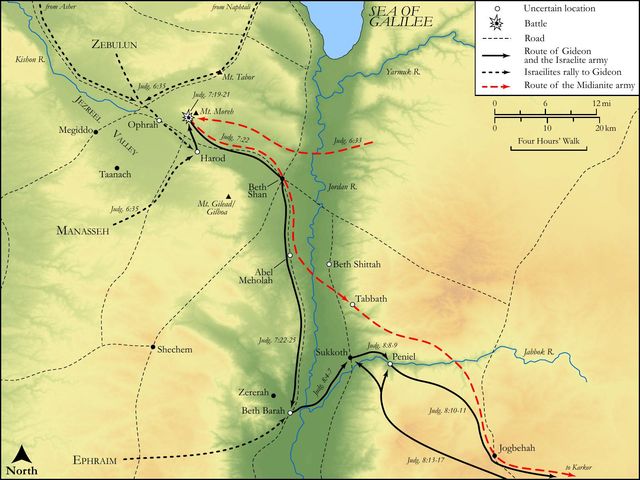

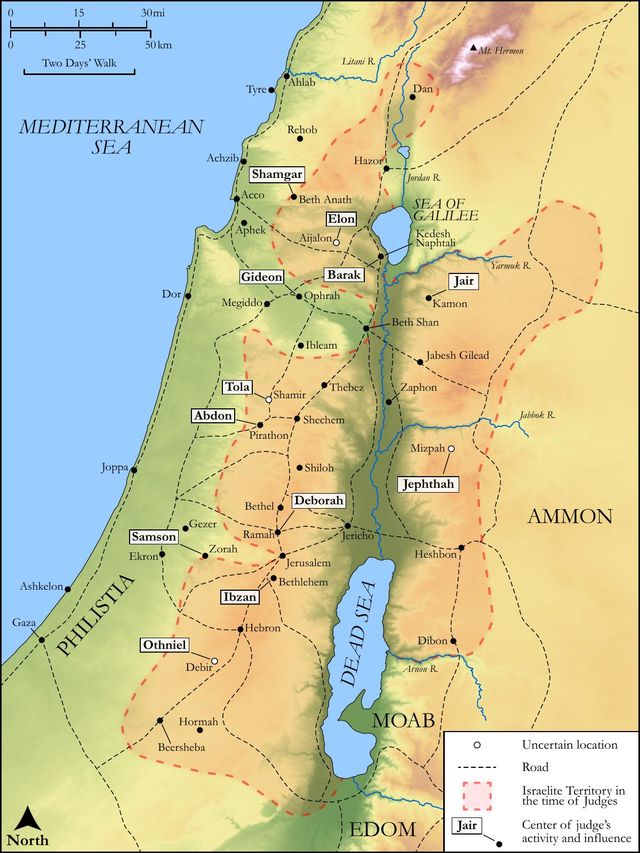
Study this verse
Public-domain commentary
Matthew Henry
From his Commentary on the Whole Bible. Henry comments on passages, not single verses — this entry covers Judges 6:7–10. His four-level outline is real structure in the source text, so it is rendered as structure.
Observe here, I. The cognizance God took of the cries of Israel, when at length they were directed towards him. Though in their prosperity they had neglected him and made court to his rivals, and though they never looked towards him until they were driven to it by extremity, yet, upon their complain and prayer, he intended relief for them. Thus would he show how ready he is to forgive, how swift he is to show mercy, and how inclinable to hear prayer, that sinners may be encouraged to return and repent, Psa 130:4.
II.The method God took of working deliverance for them.
1.Before he sent an angel to raise them up a saviour he sent a prophet to reprove them for sin, and to bring them to repentance, Jdg 6:8. This prophet is not named, but he was a man, a prophet, not an angel, as Jdg 2:1. Whether this prophet took an opportunity of delivering his message to the children of Israel when they had met together in a general assembly, at some solemn feast or other great occasion, or whether he went from city to city and from tribe to tribe, preaching to this purport, is not certain; but his errand was to convince them of sin, that, in their crying to the Lord, they might confess that with sorrow and shame, and not spend their breath in only complaining of their trouble. They cried to God for a deliverer, and God sent them a prophet to instruct them, and to make them ready for deliverance. Note,
(1.)We have reason to hope God is designing mercy for us if we find he is by his grace preparing us for it. If to those that are sick he sends a messenger, an interpreter, by whom he shows unto man his uprightness, then he is gracious, and grants a recovery, Job 33:23, Job 33:24.
(2.)The sending of prophets to a people, and the furnishing of a land with faithful ministers, is a token for good, and an evidence that God has mercy in store for them. He thus turns us to him, and then causes his face to shine, Psa 80:19.
2.We have here the heads of the message which this prophet delivered in to Israel, in the name of the Lord.
(1.)He sets before them the great things God had done for them (Jdg 6:8, Jdg 6:9): Thus saith the Lord God of Israel; they had worshipped the gods of the nations, as if they had had no God of their own to worship and therefore might choose whom they pleased; but they are here reminded of one whom they had forgotten, who was known by the title of the God of Israel, and to him they must return. They had turned to other gods, as if their own had been either incapable or unwilling to protect them, and therefore they are told what he did for their fathers, in whose loins they were, the benefit of which descended and still remained to this their ungrateful seed.
[1.]He brought them out of Egypt, where otherwise they would have continued in perpetual poverty and slavery.
[2.]He delivered them out of the hands of all that oppressed them; this is mentioned to intimate that the reason why they were not now delivered out of the hands of the oppressing Midianites was not for want of any power or good-will in God, but because by their iniquity they had sold themselves, and God would not redeem them until they by repentance revoked the bargain.
[3.]He put them in quiet possession of this good land; this not only aggravated their sin, and affixed the brand of base ingratitude to it, but it justified God, and cleared him from blame upon account of the trouble they were now in. They could not say he was unkind, for he had given all possible proofs of his designing well for them; if ill befel them notwithstanding, they must thank themselves.
(2.)He shows the easiness and equity of God's demands and expectations from them (Jdg 6:10): "I am the Lord your God, to whom you lie under the highest obligations, fear not the gods of the Amorites," that is, "do not worship them, nor show any respect to them; do not worship them for fear of their doing you any hurt, for what hurt can they do you while I am your God? Fear God, and you need not fear them."
(3.)He charges them with rebellion against God, who had laid this injunction upon them: But you have not obeyed my voice. The charge is short, but very comprehensive; this was the malignity of all their sin, it was disobedience to God; and therefore it was this that brought those calamities upon them under which they were now groaning, pursuant to the threatenings annexed to his commands. He intends hereby to bring them to repentance; and our repentance is then right and genuine when the sinfulness of sin, as disobedience to God, is that in it which we chiefly lament.
Continue studying Judges 6:7 across the web’s major study libraries — every link below opens this exact verse, chapter, or book on the destination site.
Read & Compare
 BibleGatewayThis verse in more than 200 translations and 70 languages.
 Bible.comThe YouVersion reader — hundreds of translations, reading plans, and highlights.
 ESV.orgCrossway's official English Standard Version reader.
 NET BibleThe NET translation with 60,000+ translators' notes on every rendering decision.
 STEP BibleTyndale House's free study tool — original text, vocabulary, and scholarly resources.
 BibliaLogos Bible Software's free web reader.
 USCCBThe New American Bible (Revised Edition) with the U.S. bishops' study notes.
Commentaries
 BibleHub CommentariesDozens of classic commentaries on this verse, gathered on one page.
 StudyLightMore than 100 commentary sets — the largest collection on the web.
 BibleRefPlain-English commentary on what this verse means, verse by verse.
 Enduring WordDavid Guzik's free commentary on this chapter, widely used by Bible teachers.
 Bible Study ToolsVerse commentary alongside Greek and Hebrew study aids.
Original Language & Research
- BibleHub InterlinearThe verse word by word — original language, transliteration, and English.
- BibleHub LexiconEvery word's original-language definition and Strong's entry.
 Blue Letter BibleDeep-study tools — Strong's numbers, concordance, and word studies.
 SefariaThe Hebrew text with Rashi and centuries of Jewish commentary.
Sermons, Hymns & Audio


TrulyRandomVerse is not affiliated with these sites and doesn’t control their content. They’re linked because they’re genuinely useful.
Summary
Judges 6:7 marks a pivotal moment in the narrative of Israel's severe oppression under the Midianites, detailing the point at which the unbearable suffering finally compelled the children of Israel to utter a desperate cry for divine intervention. This anguished appeal to the LORD signifies the activation of the recurring cycle of sin, suffering, and deliverance that defines the Book of Judges, thereby setting the stage for God's compassionate response and the subsequent raising of Gideon as a deliverer.
Context
ShowHideLiterary Context
This verse immediately follows a detailed and grim account of Israel's seven years of devastating oppression by the Midianites, Amalekites, and "children of the east," as described in Judges 6:1-6. The preceding verses vividly depict the severe economic and social impact of these nomadic raiders, who would swarm the land at harvest time, destroying crops and livestock, leaving Israel impoverished and forcing them to seek refuge in caves and strongholds. Judges 6:7 serves as the direct consequence of this unbearable suffering, representing the "cry" phase within the cyclical pattern of apostasy, oppression, and deliverance that structures the entire book, as outlined in Judges 2:11-19. It acts as the narrative's turning point, setting in motion God's subsequent response through a prophet (Judges 6:8-10) and the miraculous calling of Gideon (Judges 6:11).
Historical & Cultural Context
The period of the Judges was characterized by a decentralized tribal confederacy, lacking a unified monarchy or standing army, which rendered Israel highly vulnerable to external threats. The Midianites, along with their allies, were formidable nomadic desert tribes, distinguished by their extensive use of camels, which provided them with a significant military and economic advantage. This allowed them to execute swift, devastating raids deep into Israelite territory, as detailed in Judges 6:5. Their strategy was not merely military subjugation but systematic economic devastation, timed precisely to coincide with the harvest, ensuring Israel's complete impoverishment and dependence. This severe affliction was consistently understood in the Deuteronomic framework as divine judgment for Israel's persistent idolatry and abandonment of their covenant with YHWH, particularly their worship of local Canaanite deities like Baal and Asherah, a theme explicitly addressed by the prophet in Judges 6:10.
Key Themes
ShowHideJudges 6:7 powerfully illustrates the Cycle of Sin and Deliverance that is central to the Book of Judges. Israel's desperate cry marks the crucial turning point in this cycle, demonstrating God's consistent responsiveness to His people, even when their turning is born out of desperation rather than immediate, full repentance. This verse also highlights God's Sovereignty and Patience, as He remains utterly faithful to His covenant promises despite Israel's repeated and profound unfaithfulness. The act of "crying unto the LORD" signifies a belated, yet undeniably crucial, Recognition of Divine Authority, acknowledging that true help and deliverance could only come from their covenant God, YHWH, and not from the impotent false gods they had been serving. This desperation-driven turning becomes the indispensable catalyst for Divine Intervention, paving the way for God to raise up a deliverer and bring about salvation.
Exposition and Analysis
ShowHideKey Word Analysis
ShowHideThis primitive root denotes a loud, urgent, and often distressed shriek or outcry for help, justice, or relief. It is not a casual prayer but an impassioned appeal born from deep anguish, helplessness, and severe suffering. The term is frequently used in the Old Testament to describe the cry of the oppressed or those in extreme distress, such as the Israelites enslaved in Egypt (Exodus 2:23). Its use here emphasizes the profound depth of Israel's misery and their utter desperation under Midianite oppression, signifying a breaking point.
The specific address to "the LORD" (YHWH), meaning "the self-Existent or Eternal," is profoundly significant. It indicates that despite their prolonged apostasy and worship of other gods, Israel, in their moment of ultimate despair, instinctively turned back to their covenant God—the one true God who had delivered them from Egypt and established them in the land. This choice, even if born of desperation, implies a recognition, however fleeting, of His unique power and authority to deliver, distinguishing Him from the impotent pagan deities they had been serving.
This term, meaning "on account of" or "concerning," explicitly states the reason or occasion for Israel's cry. It directly links their suffering and their appeal to the severe oppression inflicted by the Midianites. Its inclusion underscores that the extremity of their circumstances, the relentless devastation wrought by their enemies, was the direct catalyst that finally broke Israel's stubbornness and drove them to seek divine aid.
Verse Breakdown
ShowHide"¶ And it came to pass,"
This common Hebrew introductory phrase (wayehi) serves as a narrative marker, signaling a new development or a transition in the story. It indicates that the events described are a direct and inevitable consequence of the preceding narrative, specifically the seven years of Midianite oppression detailed in Judges 6:1-6. It sets the stage for God's response.
"when the children of Israel cried unto the LORD"
This clause highlights the crucial action taken by the oppressed people of Israel and specifies the divine recipient of their plea. The verb "cried" emphasizes the intensity, urgency, and desperation of their appeal, indicating a profound breaking point. The phrase "unto the LORD" (YHWH) signifies their turning, however belatedly or reluctantly, to their covenant God for help, acknowledging His ultimate authority and unique power to intervene in their dire situation.
"because of the Midianites,"
This final clause provides the explicit and immediate reason for Israel's desperate outcry. It directly links their profound suffering and their appeal to the severe, relentless, and devastating oppression inflicted by the Midianites. This emphasizes that the extremity of their circumstances was the sole, overwhelming catalyst that finally compelled them to abandon their self-reliance and idolatry and turn to their true Deliverer.
Literary Devices
ShowHideThe brevity of Judges 6:7 belies its rich literary significance. It serves as a prime example of Repetition, as it perfectly fits into the recurring literary motif or Cyclical Narrative Structure that defines the Book of Judges: Israel sins, suffers oppression, cries out to the LORD, and God raises a deliverer. This structural repetition powerfully reinforces the book's overarching theological message about God's unwavering faithfulness despite Israel's persistent unfaithfulness. The "cry" here functions as potent Foreshadowing, signaling that God's intervention is imminent and setting the dramatic stage for the calling of Gideon. The vivid portrayal of Israel's desperate state, driven to a loud, anguished cry, effectively evokes Pathos, stirring a deep sense of pity and empathy for their plight. Furthermore, there is a subtle yet profound Irony in the fact that Israel only turns back to the LORD, their true Deliverer and covenant God, after exhausting all other options and enduring severe, prolonged suffering, despite His consistent willingness and readiness to help them.
Theological and Thematic Connections
ShowHideJudges 6:7 powerfully illustrates the profound biblical truth that God is intimately attentive to the cries of His people, especially in their deepest distress. Even when Israel's cry was born more out of desperation and the crushing weight of oppression than immediate, full repentance, God heard their anguish and prepared to act. This demonstrates His unwavering faithfulness to His covenant promises and His compassionate, merciful nature, always ready to extend mercy and deliverance when His people turn to Him, even if reluctantly or as a last resort. It underscores that while God allows consequences for disobedience as a means of discipline and drawing His people back, His ultimate desire is for their restoration and well-being. He consistently responds to their genuine appeals for help, affirming His character as a loving, attentive, and ever-present Father who does not abandon His children.
Reflection and Application
ShowHideJudges 6:7 offers timeless and profound lessons for believers today, resonating deeply with our own human experience. In our lives, we often find ourselves in situations of spiritual, emotional, or even physical oppression, much like Israel under the Midianites. This verse serves as a powerful reminder that no matter how dire or overwhelming our circumstances may seem, or how far we may feel we have strayed, God remains intimately attentive to our earnest pleas for help. It challenges us to honestly consider whether we, like ancient Israel, tend to exhaust all other options—our own strength, human solutions, or even false hopes—before finally turning to the Lord. The passage encourages us to make turning to God our immediate and primary resort when facing overwhelming challenges, trusting unequivocally that He hears and responds. Even in moments of utter desperation, when circumstances seem bleakest and hope feels lost, Judges 6:7 assures us that crying out to the Lord can initiate a transformative process of divine deliverance, restoration, and renewed hope, because His compassion and faithfulness never fail.
Questions for Reflection
ShowHideFAQ
ShowHideWhy did Israel wait so long to cry out to the LORD?
ShowHideIsrael's delayed cry is a recurring and poignant pattern throughout the Book of Judges, reflecting deep-seated human stubbornness, spiritual amnesia, and a tendency toward self-reliance. They consistently tried to manage their problems through their own strength, by compromising with the surrounding nations, or by turning to foreign gods, only crying out to the LORD when their suffering became utterly unbearable and all other avenues failed. This cyclical behavior demonstrates a profound reluctance to fully commit to their covenant with YHWH until extreme adversity forced their hand. Their desperate cry in Judges 6:7 signifies the point of absolute breaking, where their pride, self-sufficiency, and idolatrous tendencies were finally shattered by the overwhelming severity of the Midianite oppression.
Does God only respond when we cry out in desperation?
ShowHideWhile Judges 6:7 clearly shows God responding to a desperate cry, it does not imply that desperation is a prerequisite for His attention or intervention. God desires constant communion and a relationship built on love, trust, and obedience, not just crisis-driven appeals. However, this verse powerfully illustrates God's immense mercy, patience, and unwavering faithfulness. Even when His people turn to Him out of sheer desperation, perhaps without immediate, full repentance, He hears and acts. It is a profound testament to His grace that He is willing to meet us where we are, even in our lowest and most desperate moments, and initiate a path to deliverance and restoration. His compassion extends even to those who only turn to Him when all other options are exhausted.
What is the significance of crying "unto the LORD" specifically?
ShowHideCrying "unto the LORD" (YHWH) is profoundly significant because it marks a crucial turning away from the false gods (like Baal and Asherah, explicitly mentioned in Judges 6:10) that Israel had been serving. It signifies a recognition, however desperate or belated, that only the covenant God of Israel possesses the unique power and authority to deliver them from their overwhelming oppression. This act acknowledges His singular sovereignty, His historical faithfulness to His promises, and His role as their true rescuer, distinguishing Him from the impotent idols they had mistakenly worshipped. It is a return, even if partial, to the source of true help and hope.
Christ-Centered Fulfillment
ShowHideThe desperate cry of Israel in Judges 6:7 for a temporary deliverer powerfully foreshadows humanity's universal and profound need for an ultimate and eternal Deliverer. The recurring cycle of sin, oppression, and temporary relief so prevalent in the Book of Judges highlights the inherent inadequacy of human efforts and the judges themselves, pointing to the fundamental need for a permanent solution to the pervasive problem of sin itself. This desperate cry finds its ultimate and perfect answer in Jesus Christ, who is not merely a judge or a temporary rescuer, but the Lamb of God who takes away the sin of the world. He decisively breaks the cycle of sin and its oppressive consequences by offering a complete and lasting redemption through His perfect, atoning sacrifice on the cross. Where Israel repeatedly fell back into sin after each deliverance, Christ offers a new covenant that fundamentally transforms hearts and provides the indwelling power of the Holy Spirit to walk in newness of life, fulfilling the promise of a true and lasting rest from the "heavy burdens" (as invited in Matthew 11:28-30). Our cries for deliverance from spiritual bondage, the power of sin, and the brokenness of this fallen world are always heard by our great High Priest, who "always lives to intercede for them" before the Father (as powerfully affirmed in Hebrews 7:25). He is the ultimate Good Shepherd who willingly lays down His life for His sheep (as declared in John 10:11), offering not just temporary relief but eternal salvation, true freedom, and everlasting peace.