


Joshua 13:5
Bible text: King James Version (1769 Blayney text) · Public domain
Bible text: Berean Standard Bible · Public domain
Bible text: American Standard Version (1901) · Public domain
Bible text: World English Bible, Messianic edition · Public domain
Bible text: Geneva Bible (1599) · Public domain
Bible text: Young's Literal Translation · Public domain
- וְהָאָרֶץve·ha·'A·retzand the land ofH776Conj-w ¦ Art ¦ N-fscNoun Singular Feminine Constructוְandהָtheאָרֶץland of
- הַגִּבְלִיha·giv·Lithe Gebalite[s]H1382Art ¦ N-msNoun Gentilic Singular Masculine AbsoluteהַtheגִּבְלִיGebalite[s]
- וְכָלve·kholand allH3605Conj-w ¦ N-mscNoun Singular Masculine Constructוְandכָלall
- הַלְּבָנוֹןha·le·va·nOn<the> LebanonH3844Art ¦ N-properNoun Proper Locationהַ<the>לְּבָנוֹןLebanon
- מִזְרַחmiz·Rach[the] rising ofH4217N-mscNoun Singular Masculine Construct
- הַשֶּׁמֶשׁha·She·meshthe sunH8121Art ¦ N-csNoun Singular common gender Absoluteהַtheשֶּׁמֶשׁsun
- מִבַּעַלmi·Ba·'alfrom BaalH1171Prep-m ¦ N-properNoun Proper LocationמִfromבַּעַלBaal
- גָּדGadGadH1171N-properNoun Proper Location
- תַּחַתTa·chatunderH8478N-mscNoun Singular Masculine Construct
- הַרhar[the] mountain ofH2022N-mscNoun Singular Masculine Construct
- חֶרְמוֹןcher·MonHermonH2768N-properNoun Proper Location
- עַד'adtoH5704PrepPreposition
- לְבוֹאle·Vo'LeboH935V-Qal-InfVerb Qal Infinitive Construct
- חֲמָתcha·MatHamathH2574N-properNoun Proper Location
English is a literal word-by-word gloss of the Hebrew, not the KJV's wording. Why?
This is the original text the KJV's translators worked from — each Hebrew word with its own literal English meaning in this verse, prepared by scholars at Tyndale House, Cambridge. The KJV translates whole sentences, not word by word, so its wording differs: one Hebrew word can become several English words, and the KJV may choose “the LORD” where the gloss reads “Yahweh”. Both are faithful — they answer different questions. For the KJV's own rendering, switch to the KJV text.
Details
See on the biblical-era maps
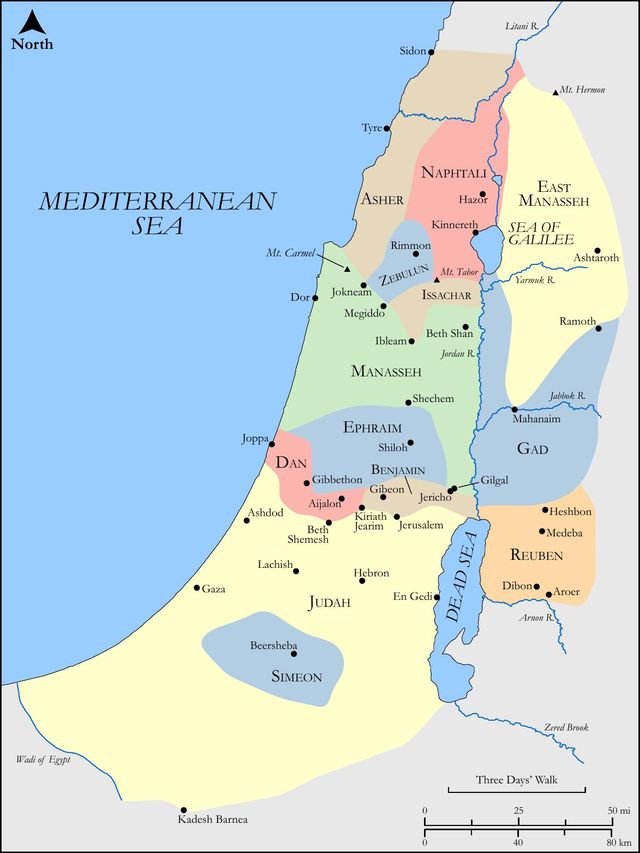
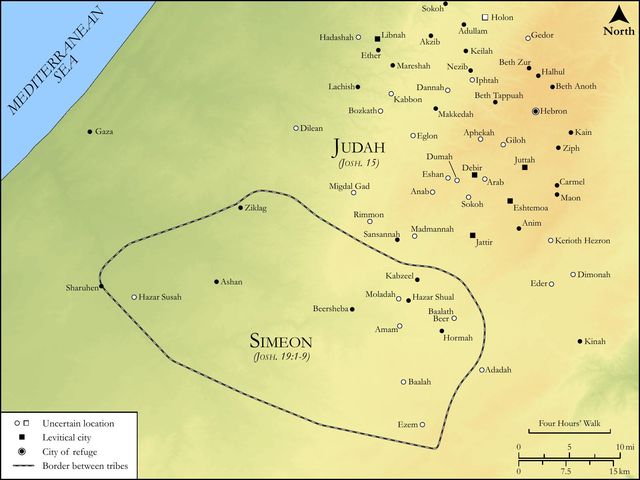
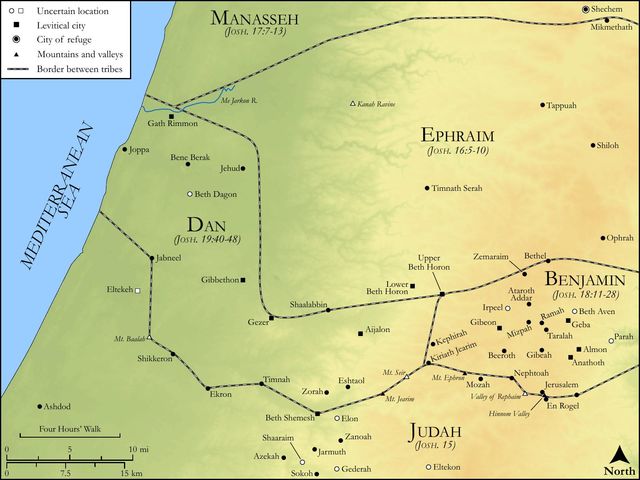
Study this verse
Public-domain commentary
Matthew Henry
From his Commentary on the Whole Bible. Henry comments on passages, not single verses — this entry covers Joshua 13:1–6. His two-level outline is real structure in the source text, so it is rendered as structure.
Here, I. God puts Joshua in mind of his old age, v. 1. 1. It is said that Joshua was old and stricken in years, and he and Caleb were at this time the only old men among the thousands of Israel, none except them of all those who were numbered at Mount Sinai being now alive. He had been a man of war from his youth (Exo 17:10); but now he yielded to the infirmities of age, with which it is in vain for the stoutest to think of contesting. It should seem Joshua had not the same strength and vigour in his old age that Moses had; all that come to old age do not find it alike good; generally, the days of old age are evil days, and such as there is no pleasure in, nor expectation of service from. 2. God takes notice of it to him: God said to him, Thou art old. Note, It is good for those who are old and stricken in years to be put in remembrance of their being so. Some have gray hairs here and there upon them, and perceive it not (Hos 7:9); they do not care to think of it, and therefore need to be told of it, that they may be quickened to do the work of life, and make preparation for death, which is coming towards them apace. But God mentions Joshua's age and growing infirmities, (1.) As a reason why he should now lay by the thoughts of pursuing the war; he cannot expect to see an end of it quickly, for there remained much land, more perhaps than he thought, to be possessed, in several parts remote from each other: and it was not fit that at his age he should be put upon the fatigue of renewing the war, and carrying it to such distant places; no, it was enough for him that he had reduced the body of the country. "Let him be gathered to rest with honour and the thanks of his people for the good services he had done them, and let the conquering of the skirts of the country be left for those that shall come after." As he had entered into the labours of Moses, so let others enter into his, and bring forth the top-stone, the doing of which was reserved for David long after. Observe, God considers the frame of his people, and would not have them burdened with work above their strength. It cannot be expected that old people should do as they have done for God and their country. (2.) As a reason why he should speedily apply himself to the dividing of that which he had conquered. That work must be done, and done quickly; it was necessary that he should preside in the doing of it, and therefore, he being old and stricken in years, and not likely to continue long, let him make this his concluding piece of service to God and Israel. All people, but especially old people, should set themselves to do that quickly which must be done before they die, lest death prevent them, Ecc 9:10.
II.He gives him a particular account of the land that yet remained unconquered, which was intended for Israel, and which, in due time, they should be masters of if they did not put a bar in their own door. Divers places are here mentioned, some in the south, as the country of the Philistines, governed by five lords, and the land that lay towards Egypt (Jos 13:2, Jos 13:3), some westward, as that which lay towards the Sidonians (Jos 13:4), some eastward, as all Lebanon (Jos 13:5), some towards the north, as that in the entering in of Hamath, Jos 13:5. Joshua is told this, and he made the people acquainted with it,
1.That they might be the more affected with God's goodness to them in giving them this good land, and might thereby be engaged to love and serve him; for, if this which they had was too little, God would moreover give them such and such things, Sa2 12:8.
2.That they might not be tempted to make any league, or contract any dangerous familiarity with these their neighbours so as to learn their way, but might rather be jealous of them, as a people that kept them from their right and that they had just cause of quarrel with.
3.That they might keep themselves in a posture for war, and not think of putting off the harness so long as there remained any land to be possessed. Nor must we lay aside our spiritual armour, nor be off our watch, till our victory be completed in the kingdom of glory.
III.He promises that he would make the Israelites masters of all those countries that were yet unsubdued, though Joshua was old and not able to do it, old and not likely to live to see it done. Whatever becomes of us, and however we may be laid aside as despised broken vessels, God will do his own work in his own time (Jos 13:6): I will drive them out. The original is emphatic: "It is I that will do it, I that can do it when thou are dead and gone, and will do it if Israel be not wanting to themselves." "I will do it by my Word," so the Chaldee here, as in many other places, "by the eternal Word, the captain of the hosts of the Lord." This promise that he would drive them out from before the children of Israel plainly supposes it as the condition of the promise that the children of Israel must themselves attempt their extirpation, must go up against them, else they could not be said to be driven out before them; if afterwards Israel, through sloth, or cowardice, or affection to these idolaters, sit still and let them alone, they must blame themselves, and not God, if they be not driven out. We must work out our salvation, and then God will work in us and work with us; we must resist our spiritual enemies, and then God will tread them under our feet; we must go forth to our Christian work and warfare, and then God will go forth before us.
Continue studying Joshua 13:5 across the web’s major study libraries — every link below opens this exact verse, chapter, or book on the destination site.
Read & Compare
 BibleGatewayThis verse in more than 200 translations and 70 languages.
 Bible.comThe YouVersion reader — hundreds of translations, reading plans, and highlights.
 ESV.orgCrossway's official English Standard Version reader.
 NET BibleThe NET translation with 60,000+ translators' notes on every rendering decision.
 STEP BibleTyndale House's free study tool — original text, vocabulary, and scholarly resources.
 BibliaLogos Bible Software's free web reader.
 USCCBThe New American Bible (Revised Edition) with the U.S. bishops' study notes.
Commentaries
 BibleHub CommentariesDozens of classic commentaries on this verse, gathered on one page.
 StudyLightMore than 100 commentary sets — the largest collection on the web.
 BibleRefPlain-English commentary on what this verse means, verse by verse.
 Enduring WordDavid Guzik's free commentary on this chapter, widely used by Bible teachers.
 Bible Study ToolsVerse commentary alongside Greek and Hebrew study aids.
Original Language & Research
- BibleHub InterlinearThe verse word by word — original language, transliteration, and English.
- BibleHub LexiconEvery word's original-language definition and Strong's entry.
 Blue Letter BibleDeep-study tools — Strong's numbers, concordance, and word studies.
 SefariaThe Hebrew text with Rashi and centuries of Jewish commentary.
Sermons, Hymns & Audio


TrulyRandomVerse is not affiliated with these sites and doesn’t control their content. They’re linked because they’re genuinely useful.
Summary
Joshua 13:5 meticulously details a significant portion of the Promised Land that remained unconquered by the Israelites at the time of its division: the territory of the Giblites and the entirety of Lebanon, extending eastward from Baalgad under Mount Hermon to the entrance of Hamath. This verse serves as a crucial geographical marker, underscoring both the vast, ideal boundaries of Israel's divine inheritance and the immediate reality of their partial conquest. It highlights God's unwavering faithfulness to His covenant promises, directing Joshua to distribute the land even before its full possession, while simultaneously emphasizing the ongoing responsibility of the Israelite tribes to complete the divine mandate through faith and obedience.
Context
ShowHideLiterary Context
Joshua 13 marks a pivotal turning point in the book of Joshua, transitioning the narrative from the period of active military conquest (chapters 1-12) to the crucial phase of land division and inheritance among the tribes of Israel (chapters 13-21). The opening verses of Joshua 13 explicitly state God's command to an aged Joshua: "There remaineth yet very much land to be possessed" (Joshua 13:1). This verse, Joshua 13:5, is an integral part of a detailed geographical inventory of these remaining unconquered territories, specifically delineating the northernmost regions. It functions as a stark reminder that despite significant victories and the fulfillment of many promises, Israel's task was far from complete, thereby setting the stage for the subsequent tribal inheritances and the accounts of their varying success in fully possessing their allotted lands.
Historical & Cultural Context
The book of Joshua describes a time when the land of Canaan was a complex mosaic of independent city-states, often under the shifting influence of mighty kings such as the pharaoh of Egypt. The "Giblites" were the inhabitants of Gebal (modern Byblos), a prominent Phoenician city-state situated on the Mediterranean coast, renowned among the nations for its maritime trade, particularly in cedar timber, and its skilled artisans. "Lebanon" refers to the formidable mountain range that formed a natural northern boundary, famous for its invaluable cedar forests, a vital resource for construction and shipbuilding. "Baalgad under Mount Hermon" points to a region south of the majestic Mount Hermon, the highest peak in the Anti-Lebanon range, which marked a significant landmark at the northern extent of Israel's actual conquest. "Hamath" was a powerful Aramean kingdom located on the Orontes River, far to the north, representing the ideal, expansive northern border of the Promised Land as envisioned by God. The challenge of conquering these well-established, often fortified, and culturally distinct regions was immense, requiring sustained effort beyond the initial, unified campaigns under Joshua.
Key Themes
ShowHideJoshua 13:5 contributes significantly to several foundational themes woven throughout the book of Joshua and the broader Pentateuch. Foremost is God's Faithfulness and Covenant Promise. Despite Israel's incomplete obedience and the remaining unconquered territories, God remains true to His word, commanding the division of the land as if it were fully possessed. This demonstrates His unwavering commitment to the Abrahamic covenant, which promised this land to Abraham's descendants (as seen in Genesis 15:18-21). This highlights that God's plans are not thwarted by human imperfection. Another crucial theme is Divine Command and Human Responsibility. God gives the land, but Israel must actively "possess" it. This verse underscores the "unfinished work" and the shifting responsibility from a centralized military effort to the individual tribes, each tasked with dispossessing the inhabitants within their inheritance. This tension between God's sovereign gift and human active appropriation is central to the narrative. Finally, the verse emphasizes the Vastness of the Promised Inheritance, outlining the full geographical scope of God's intention for His people, which extended far beyond the territories Israel immediately occupied, as also described in Numbers 34:7-9).
Exposition and Analysis
ShowHideKey Word Analysis
ShowHideRefers to the inhabitants of Gebal, an ancient Phoenician city on the Mediterranean coast (modern Byblos), north of what is now Beirut. As a patrial from Gebal, this term denotes a people known for their maritime trade and skilled craftsmanship, particularly in stone masonry and shipbuilding, as evidenced by their involvement in Solomon's temple construction (1 Kings 5:18). Their inclusion here highlights significant coastal and northern territories that remained outside Israelite control, representing a formidable and sophisticated non-Israelite presence within the ideal boundaries of the Promised Land.
Derived from a root meaning "white," this refers to the prominent mountain range that forms the backbone of modern-day Lebanon, named for its snow-capped peaks. It was famous for its majestic cedar forests, a vital natural resource (Psalm 29:5). Its mention signifies the vast northern extent of the promised territory, encompassing a significant natural and economic resource. The phrase "all Lebanon" emphasizes the entirety of this region as part of God's intended inheritance for Israel.
From a root meaning "walled," this refers to Chamath, a powerful Aramean kingdom located on the Orontes River, far to the north of Israel's actual settlements. "The entering into Hamath" (לְבוֹא חֲמָת, ləḇô' Ḥămāṯ) was a common geographical marker in biblical texts for the extreme northern boundary of the ideal Promised Land, as seen in other passages (Numbers 34:8). Its mention here underscores the expansive vision of God's promise, extending well beyond the immediate reach of Israel's military campaigns.
Verse Breakdown
ShowHide"And the land of the Giblites,"
This opening clause immediately identifies a specific, powerful, and unconquered territory on the Mediterranean coast, situated north of Israel's settled lands. It points to a sophisticated Phoenician entity that God had intended for Israel to dispossess, yet which remained firmly outside their control, representing a significant challenge.
"and all Lebanon,"
This broad phrase indicates the entire formidable mountain range and its associated territories, signifying a vast, resource-rich region to the north that was part of the divine promise but not yet secured. The use of "all" emphasizes the comprehensive nature of the intended inheritance.
"toward the sunrising,"
This directional phrase clarifies the orientation of the described territory, indicating the eastern side of Lebanon, extending eastward from the coastal Giblite land. It helps to define the geographical sweep of the unconquered northern frontier, moving from the Mediterranean coast inland.
"from Baalgad under mount Hermon"
This marks the southern anchor of the unconquered northern region. Baalgad was likely a site of Baal worship, located in the vicinity of Mount Hermon, the highest peak in the Anti-Lebanon range. Mount Hermon served as a significant natural landmark, often considered the northernmost point of Israel's actual conquest, establishing a clear starting point for the unconquered northern expanse.
"unto the entering into Hamath."
This final phrase defines the extreme northern limit of the ideal Promised Land, stretching far beyond Mount Hermon to the distant Aramean kingdom of Hamath. It emphasizes the full, expansive scope of the inheritance God had promised, a territory far larger than what Israel had currently possessed, highlighting the gap between divine intention and human achievement.
Literary Devices
ShowHideThe verse employs several literary devices to convey its profound message. Topographical Description is central, as the verse meticulously lists geographical markers (Giblites, Lebanon, Baalgad, Mount Hermon, Hamath) to precisely delineate the boundaries of the unconquered land. This detailed enumeration emphasizes the vastness and specific nature of God's promise. Merism is evident in the phrase "from Baalgad under Mount Hermon unto the entering into Hamath," which uses two extreme points to encompass the entire northern expanse of the territory. This device effectively communicates the comprehensive scope of the land God had promised. Furthermore, there is an implicit Juxtaposition or Contrast between the ideal, divinely promised territory (as described by these far-reaching boundaries) and the current, incomplete reality of Israel's possession. This highlights the tension between God's perfect plan and the partial fulfillment by His people, setting the stage for the subsequent narratives of tribal inheritance and struggle.
Theological and Thematic Connections
ShowHideJoshua 13:5 profoundly illustrates the "already but not yet" dynamic inherent in God's redemptive plan. God's command to divide the land, even when much of it remained unconquered, is a powerful testament to His sovereign faithfulness. He acts on the certainty of His promises, not on the completeness of human performance. This divine initiative underscores that the inheritance is fundamentally a gift, secured by God's word, yet it simultaneously demands human participation in its full realization. Israel was called to step into their inheritance by faith, trusting that God would empower them to possess what He had already declared theirs. This principle resonates throughout biblical history, revealing that God's covenant blessings often require ongoing, active appropriation by His people, even as His faithfulness remains the ultimate guarantor.
Reflection and Application
ShowHideJoshua 13:5 offers a profound spiritual lesson for believers today. Just as God commanded Joshua to distribute the land despite significant portions remaining unconquered, we are often called to step out in faith and claim the spiritual inheritance God has given us in Christ, even when the full manifestation of His promises or the complete removal of obstacles is not yet visible. This verse reminds us that God's faithfulness is the bedrock of our confidence; His promises are true regardless of our current circumstances or perceived limitations. It challenges us to identify the "unconquered territories" in our own lives—areas of sin, fear, doubt, unforgiveness, unfulfilled potential, or unreached people groups—and to actively, by faith, begin the process of "possessing" them through the power of the Holy Spirit. This is a lifelong journey of sanctification and obedience, trusting that as we step out, God will equip and enable us to experience the fullness of His provision and purpose, bringing His kingdom influence to bear on every aspect of our existence.
Questions for Reflection
ShowHideFAQ
ShowHideWhy did God command Joshua to divide the land if it wasn't fully conquered?
ShowHideGod commanded Joshua to divide the land despite its incomplete conquest for several profound reasons. Firstly, it underscored God's absolute sovereignty and faithfulness to His covenant promises. The land was a divine gift, and its distribution was a declaration that God's word was sufficient, regardless of Israel's current military success. Secondly, it shifted the responsibility for future conquest from a centralized, unified campaign under Joshua to the individual tribes. Each tribe was now tasked with dispossessing the inhabitants within their allotted inheritance, fostering a sense of ownership and ongoing obedience. This also served as a test of their faith and perseverance. Finally, it demonstrated that God's plans proceed even when human effort is incomplete. The "unconquered territories" served as a constant reminder of the ongoing work and the need for continued reliance on God, as seen in the subsequent struggles documented in Judges 1.
What was the significance of the "Giblites" and "Hamath" as boundaries in this verse?
ShowHideThe mention of the "Giblites" and "Hamath" is highly significant because they represent the extreme northern and northwestern ideal boundaries of the Promised Land, far beyond what Israel had actually conquered or settled. The Giblites (from Gebal/Byblos) were a powerful Phoenician maritime people, indicating that God's promise included the strategic and wealthy coastal regions. "The entering into Hamath" was a well-known geographical marker for the northernmost extent of the land, signifying a vast territory that stretched deep into what is modern-day Syria. By specifying these distant and unconquered regions, the verse highlights the immense scope of God's original intention for Israel's inheritance, emphasizing the generosity of His promise and the vastness of what remained to be possessed by faith and obedience. It contrasts the ideal with the reality of Israel's partial fulfillment.
Christ-Centered Fulfillment
ShowHideJoshua 13:5, with its theme of promised inheritance and unconquered territory, finds profound Christ-centered fulfillment in the New Covenant. Just as Israel was given a physical land to inherit and possess, believers in Christ have received a spiritual inheritance that is "imperishable, undefiled, and unfading, kept in heaven" for them (1 Peter 1:3-5). This inheritance is not earned by conquest but is freely given through faith in Jesus Christ, who is the ultimate "possessor" and fulfiller of all God's promises. Through His atoning work, Christ has already secured our victory over sin, death, and the powers of darkness (Colossians 2:15). However, much like the "unconquered land" in Joshua, there remains an "already but not yet" dynamic in the Christian life. While we are seated with Christ in the heavenly places (Ephesians 2:6), we are called to actively "possess" our spiritual inheritance by living out our new identity in Christ, walking in obedience, and bringing the transforming power of the Gospel into every area of our lives and the world. The Holy Spirit is given as the "guarantee of our inheritance" (Ephesians 1:13-14), empowering us to overcome the remaining "unconquered territories" of sin, fear, and unbelief, and to advance God's kingdom until Christ returns to fully establish His reign (Revelation 11:15).