


Job 9:19
Bible text: King James Version (1769 Blayney text) · Public domain
Bible text: Berean Standard Bible · Public domain
Bible text: American Standard Version (1901) · Public domain
Bible text: World English Bible, Messianic edition · Public domain
Bible text: Geneva Bible (1599) · Public domain
Bible text: Young's Literal Translation · Public domain
- אִם'imifH518PrtParticle Conditional
- לְכֹחַle·Kho·achto powerH3581Prep-l ¦ N-msNoun Singular Masculine Absoluteלְtoכֹחַpower
- אַמִּיץ'a·Mitza strong [one]H533Adj-msAdjective Singular Masculine Absolute
- הִנֵּהhi·Nehthere!H2009PrtParticle Interjection
- וְאִםve·'imand ifH518Conj-w ¦ PrtParticle Conditionalוְandאִםif
- לְמִשְׁפָּטle·mish·Patto justiceH4941Prep-l ¦ N-msNoun Singular Masculine Absoluteלְtoמִשְׁפָּטjustice
- מִיmiwho?H4310InterrogPronoun Interrogative
- יוֹעִידֵנִיyo·'i·De·niwill he summon meH3259V-Hiphil-Imperf-3ms ¦ 1csVerb Hiphil Imperfect 3rd Singular Masculineיוֹעִידֵwill he summonנִיme
English is a literal word-by-word gloss of the Hebrew, not the KJV's wording. Why?
This is the original text the KJV's translators worked from — each Hebrew word with its own literal English meaning in this verse, prepared by scholars at Tyndale House, Cambridge. The KJV translates whole sentences, not word by word, so its wording differs: one Hebrew word can become several English words, and the KJV may choose “the LORD” where the gloss reads “Yahweh”. Both are faithful — they answer different questions. For the KJV's own rendering, switch to the KJV text.
Details
See on the biblical-era map
Study this verse
Public-domain commentary
Matthew Henry
From his Commentary on the Whole Bible. Henry comments on passages, not single verses — this entry covers Job 9:14–21. His four-level outline is real structure in the source text, so it is rendered as structure.
What Job had said of man's utter inability to contend with God he here applies to himself, and in effect despairs of gaining his favour, which (some think) arises from the hard thoughts he had of God, as one who, having set himself against him, right or wrong, would be too hard for him. I rather think it arises from the sense he had of the imperfection of his own righteousness, and the dark and cloudy apprehensions which at present he had of God's displeasure against him.
I.He durst not dispute with God (Job 9:14):
"If the proud helpers do stoop under him, how much less shall I (a poor weak creature, so far from being a helper that I am very helpless) answer him? What can I say against that which God does? If I go about to reason with him, he will certainly be too hard for me." If the potter make the clay into a vessel of dishonour, or break in pieces the vessel he has made, shall the clay or the broken vessel reason with him? So absurd is the man who replies against God, or thinks to talk the matter out with him. No, let all flesh be silent before him.
II.He durst not insist upon his own justification before God.
Though he vindicated his own integrity to his friends, and would not yield that he was a hypocrite and a wicked man, as they suggested, yet he would never plead it as his righteousness before God. "I will never venture upon the covenant of innocency, nor think to come off by virtue of that." Job knew so much of God, and knew so much of himself, that he durst not insist upon his own justification before God.
1.He knew so much of God that he durst not stand a trial with him, Job 9:15-19. He knew how to make his part good with his friends, and thought himself able to deal with them; but, though his cause had been better than it was, he knew it was to no purpose to debate it with God.
(1.)God knew him better than he knew himself and therefore (Job 9:15), "Though I were righteous in my own apprehension, and my own heart did not condemn me, yet God is greater than my heart, and knows those secret faults and errors of mine which I do not and cannot understand, and is able to charge me with them, and therefore I would not answer." St. Paul speaks to the same purport: I know nothing by myself, am not conscious to myself of any reigning wickedness, and yet I am not hereby justified, Co1 4:4. "I dare not put myself upon that issue, lest God should charge that upon me which I did not discover in myself." Job will therefore wave that plea, and make supplication to his Judge, that is, will cast himself upon God's mercy, and not think come off by his own merit.
(2.)He had no reason to think that there was anything in his prayers to recommend them to the divine acceptance, or to fetch in an answer of peace, no worth or worthiness at all to which to ascribe their success, but it must be attributed purely to the grace and compassion of God, who answers before we call and not because we call, and gives gracious answers to our prayers, but not for our prayers (Job 9:16): "If I had called, and he had answered, had given the thing I called to him for, yet, so weak and defective are my best prayers, that I would not believe he had therein hearkened to my voice; I could not say that he had saved with his right hand and answered me" (Psa 60:5), "but that he did it purely for his own name's sake." Bishop Patrick expounds it thus: "If I had made supplication, and he had granted my desire, I would not think my prayer had done the business." Not for your sakes, be it known to you.
(3.)His present miseries, which God had brought him into notwithstanding his integrity, gave him too sensible a conviction that, in the ordering and disposing of men's outward condition in this world, God acts by sovereignty, and, though he never does wrong to any, yet he does not ever give full right to all (that is, the best do not always fare best, nor the worst fare worst) in this life, because he reserves the full and exact distribution of rewards and punishments for the future state. Job was not conscious to himself of any extraordinary guilt, and yet fell under extraordinary afflictions, Job 9:17, Job 9:18. Every man must expect the wind to blow upon him and ruffle him, but Job was broken with a tempest. Every man, in the midst of these thorns and briers, must expect to be scratched; but Job was wounded, and his wounds were multiplied. Every man must expect a cross daily, and to taste sometimes of the bitter cup; but poor Job's troubles came so thickly upon him that he had no breathing time, and he was filled with bitterness. And he presumes to say that all this was without cause, without any great provocation given. We have made the best of what Job said hitherto, though contrary to the judgment of many good interpreters; but here, no doubt, he spoke unadvisedly with his lips; he reflected on God's goodness in saying that he was not suffered to take his breath (while yet he had such good use of his reason and speech as to be able to talk thus) and on his justice in saying that it was without cause. Yet it is true that as, on the one hand, there are many who are chargeable with more sin than the common infirmities of human nature, and yet feel no more sorrow than that of the common calamities of human life, so, on the other hand, there are many who feel more than the common calamities of human life and yet are conscious to themselves of no more than the common infirmities of human nature.
(4.)He was in no capacity at all to make his part good with God, Job 9:19.
[1.]Not by force of arms. "I dare not enter the lists with the Almighty; for if I speak of strength, and think to come off by that, lo, he is strong, stronger than I, and will certainly overpower me." There is no disputing (said one once to Caesar) with him that commands legions. Much less is there any with him that has legions of angels at command. Can thy heart endure (thy courage and presence of mind) or can thy hands be strong to defend thyself, in the days that I shall deal with thee? Eze 22:14.
[2.]Not by force of arguments. "I dare not try the merits of the cause. If I speak of judgment, and insist upon my right, who will set me a time to plead? There is no higher power to which I may appeal, no superior court to appoint a hearing of the cause; for he is supreme and from him proceeds every man's judgment, which he must abide by."
2.He knew so much of himself the he durst not stand a trial, Job 9:20, Job 9:21. "If I go about to justify myself, and to plead a righteousness of my own, my defence will be my offence, and my own mouth shall condemn me even when it goes about to acquit me." A good man, who knows the deceitfulness of his own heart, and is jealous over it with a godly jealousy, and has often discovered that amiss there which had long lain undiscovered, is suspicious of more evil in himself than he is really conscious of, and therefore will by no means think of justifying himself before God. If we say we have no sin, we not only deceive ourselves, but we affront God; for we sin in saying so, and give the lie to the scripture, which has concluded all under sin. "If I say, I am perfect, I am sinless, God has nothing to lay to my charge, my very saying so shall prove me perverse, proud, ignorant, and presumptuous. Nay, though I were perfect, though God should pronounce me just, yet would I not know my soul, I would not be in care about the prolonging of my life while it is loaded with all these miseries." Or, "Though I were free from gross sin, though my conscience should not charge me with any enormous crime, yet would I not believe my own heart so far as to insist upon my innocency nor think my life worth striving for with God." In short, it is folly to contend with God, and our wisdom, as well as duty, to submit to him and throw ourselves at his feet.
Historical interpretation
Two Centuries of Reception
2 surviving comments on this verse. Each one is dated, so this reads as a timeline rather than a list.
Select a marker to jump to its quote. Markers stagger vertically where authors wrote within a few decades of each other.
“He will not let me catch my breath.” That is, I am filled with a multitude of afflictions. “He has filled me with bitterness, for indeed he is superior in power. Who, then, shall resist his judgment?” Job does not want to say simply that God is superior to him in power but also that God is able to do whatever he wants.
35. For He tries the counts of our lives, Who does not make them out by the testimony of another; in that He, Who is one day revealed as a strict inflicter of punishment, Himself was for long the silent witness of the sin. For it is on this account that the Prophet says, I am judge and witness. [Jer. 29, 23. Vulg.] Hence he saith again, I have long time holden My peace; I have been still, and refrained Myself; now will I cry like a travailing woman. [Is. 42, 12] For a woman in travail casts forth with pain, what she has long borne in her womb with burthensomeness. And so after a long silence, like a travailing woman, the Lord utters His voice, in that what He now bears silently in Himself, He one day as it were reveals with pain in the avenging of the Judgment. But it deserves our enquiry; this righteous man, if any had ventured to give testimony in his behalf, would he have cleared him of guilt? And if no other gave testimony to him, then, at least, is he himself at all events of strength to offer testimony in his own behalf?
Continue studying Job 9:19 across the web’s major study libraries — every link below opens this exact verse, chapter, or book on the destination site.
Read & Compare
 BibleGatewayThis verse in more than 200 translations and 70 languages.
 Bible.comThe YouVersion reader — hundreds of translations, reading plans, and highlights.
 ESV.orgCrossway's official English Standard Version reader.
 NET BibleThe NET translation with 60,000+ translators' notes on every rendering decision.
 STEP BibleTyndale House's free study tool — original text, vocabulary, and scholarly resources.
 BibliaLogos Bible Software's free web reader.
 USCCBThe New American Bible (Revised Edition) with the U.S. bishops' study notes.
Commentaries
 BibleHub CommentariesDozens of classic commentaries on this verse, gathered on one page.
 StudyLightMore than 100 commentary sets — the largest collection on the web.
 BibleRefPlain-English commentary on what this verse means, verse by verse.
 Enduring WordDavid Guzik's free commentary on this chapter, widely used by Bible teachers.
 Bible Study ToolsVerse commentary alongside Greek and Hebrew study aids.
Original Language & Research
- BibleHub InterlinearThe verse word by word — original language, transliteration, and English.
- BibleHub LexiconEvery word's original-language definition and Strong's entry.
 Blue Letter BibleDeep-study tools — Strong's numbers, concordance, and word studies.
 SefariaThe Hebrew text with Rashi and centuries of Jewish commentary.
Sermons, Hymns & Audio


TrulyRandomVerse is not affiliated with these sites and doesn’t control their content. They’re linked because they’re genuinely useful.
Summary
Job 9:19 encapsulates Job's profound despair and the overwhelming reality of God's absolute power and unchallengeable justice. In his acute suffering, Job articulates the futility of any human attempt to contend with or even comprehend the Almighty, acknowledging the infinite chasm between finite humanity and the boundless sovereignty of God.
Context
ShowHideLiterary Context
This verse is situated within Job's first response to Bildad, one of his friends, who has just offered a conventional theological explanation for Job's suffering, implying it is a direct consequence of sin. Job, however, maintains his innocence and shifts his focus from self-defense to a profound contemplation of God's immense power and inscrutable wisdom. In the preceding verses of Job 9, Job has already marveled at God's might in creation, describing Him as the one who moves mountains, shakes the earth, and commands the stars (e.g., Job 9:4-10). Job 9:19 serves as a lament, expressing the logical conclusion of such overwhelming divine power: if God is so strong, no human can possibly stand against Him or demand a legal hearing, regardless of their perceived righteousness. It highlights Job's deep struggle to reconcile his blamelessness with the severe trials he endures, feeling utterly outmatched by a God whose ways are beyond human comprehension and challenge.
Historical & Cultural Context
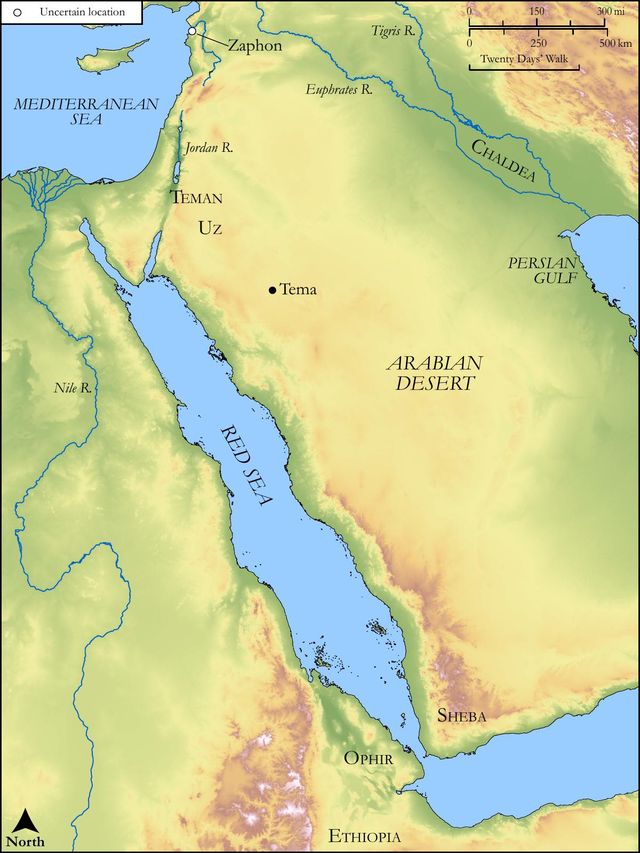
The setting of the land of Uz is crucial for understanding Job's lament. Legal proceedings and the concept of a "day in court" were familiar. Job's language in this verse, particularly "who shall set me a time [to plead]?", is deeply rooted in legal terminology, reflecting a desperate desire for a fair hearing or an opportunity to present his case. However, among the men of the east, the divine realm was often perceived as operating on a plane far beyond human jurisdiction. While some cultures had ideas of divine judgment, the notion of a human "summoning" a deity to a court of appeal was unthinkable. Job's rhetorical question underscores this cultural understanding of the vast, unbridgeable gap between human and divine authority. His suffering, interpreted by his friends through the lens of retribution theology, is being challenged by Job's experience, which points to God's sovereignty as transcending human-defined justice.
Key Themes
ShowHideJob 9:19 powerfully contributes to several overarching themes in the book of Job and broader biblical theology. Firstly, it underscores the theme of God's Incomparable Power, emphasizing His absolute omnipotence and the futility of human resistance or challenge. Secondly, it highlights the Divine Sovereignty and Unchallengeable Justice, portraying God's judgments as operating on a plane far beyond human understanding or accountability. Job's despair stems from the realization that there is no higher court to which he can appeal God's decrees, even when they seem inscrutable. This leads to the third theme: Human Helplessness and Humility, revealing the profound limitation of humanity when confronted with God's majesty. The verse encapsulates Job's struggle with the problem of evil and suffering, where the righteous suffer, challenging conventional wisdom and forcing a deeper contemplation of God's mysterious ways, as seen in Romans 11:33.
Exposition and Analysis
ShowHideKey Word Analysis
ShowHideThis term (H3581) signifies inherent power, might, or ability. It is not merely physical strength but encompasses comprehensive, absolute power, often associated with God's creative and sustaining acts. Job understands that in any contest of might, God possesses infinite and unchallengeable kôach, rendering any human opposition futile.
The word (H4941) refers to a legal decision, justice, a verdict, or a divine decree. It implies a formal, righteous legal process and outcome. Job is not questioning God's inherent justice, but rather lamenting his inability to access or comprehend the divine court system, which operates on principles beyond human appeal.
This verb (H3259) means "to appoint," "to fix a meeting," or "to summon." In a legal context, it refers to setting a court date or an appointment for a legal hearing. Job's rhetorical question emphasizes the despairing reality that no one, human or divine, can compel God to appear in court or submit to a legal challenge, highlighting God's supreme authority.
Verse Breakdown
ShowHide"If [I speak] of strength, lo, [he is] strong"
Job concedes God's absolute and overwhelming superiority in power. This clause expresses a profound sense of futility; any attempt by Job to contend with God on the basis of might is utterly pointless. God's strength is incomparable, boundless, and beyond any human capacity to match or resist. It is an acknowledgment of divine omnipotence that leaves no room for human challenge, underscoring the vast disparity between the Creator and His creation.
"and if of judgment, who shall set me a time [to plead]?"
This is a powerful rhetorical question that highlights the impossibility of a legal challenge against God. Job's desire for a fair hearing, a chance to present his case, is met with the crushing reality that there is no higher authority, no impartial arbiter, and no one who can summon God to a legal proceeding. This clause underscores Job's utter lack of recourse in a divine courtroom, emphasizing the unchallengeable nature of God's decrees and the vast chasm between finite human understanding and infinite divine justice.
Literary Devices
ShowHideJob 9:19 employs several potent literary devices to convey Job's profound despair and the overwhelming reality of God's power. The most prominent is the Rhetorical Question, "who shall set me a time [to plead]?", which is not meant to be answered but to emphasize the absolute impossibility of challenging God. This question underscores Job's helplessness and the futility of seeking legal recourse against the Almighty. There is also a clear Antithesis or Contrast established between Job's inherent weakness and God's absolute strength, and between human notions of justice and the inscrutable nature of divine judgment. The entire verse is framed by a pervasive Legal Metaphor, portraying Job's desire for a court case or a hearing, but ultimately concluding that such a proceeding is impossible when one's opponent is God Himself. This legal imagery vividly portrays Job's feeling of being trapped without appeal.
Theological and Thematic Connections
ShowHideJob 9:19 profoundly articulates the theological truth of God's absolute sovereignty and omnipotence, a theme echoed throughout Scripture. It highlights the inherent tension between God's boundless power and humanity's finite understanding, especially in the face of suffering. While Job grapples with the seeming injustice of his situation, his words ultimately affirm that God's ways are beyond human scrutiny and challenge. This verse calls believers to a posture of humility and submission, recognizing that our limited perspective cannot fully grasp the depths of divine wisdom or the righteousness of God's judgments. It reminds us that God is not subject to human courts or appeals, but His justice, though often mysterious to us, is perfect and ultimately good.
Reflection and Application
ShowHideJob 9:19 serves as a powerful reminder of the importance of humility before God. In a world that often seeks control and demands immediate answers, Job's lament calls us to acknowledge the vast chasm between human understanding and divine sovereignty. While we may not always comprehend the reasons for our suffering or the mysterious ways of God, this verse encourages us to trust in His supreme power and perfect justice. It invites us to surrender our need for complete understanding and to rest in the knowledge that the God who holds all strength also holds our lives. This perspective can bring profound comfort, knowing that the One who is unchallengeable is also perfectly righteous and ultimately working all things for His good purposes, even when His plan seems inscrutable to our limited minds. It teaches us to rely on His wisdom rather than our own, especially during times of trial, fostering a deeper faith that transcends circumstance and human limitation.
Questions for Reflection
ShowHideFAQ
ShowHideDoes Job 9:19 suggest that God is unjust or uncaring?
ShowHideNo. Job 9:19 expresses Job's perception of God's unchallengeable power and justice from his limited human perspective, especially in the midst of immense suffering. It highlights the vast difference between divine and human understanding and the futility of a human trying to contend with God. Job is not accusing God of injustice, but rather lamenting his inability to comprehend or appeal God's actions. The book of Job ultimately affirms God's righteousness and wisdom, even if His ways remain mysterious to humanity (see Job 42:1-6).
How can we reconcile God's overwhelming power with His love?
ShowHideGod's power, as emphasized in Job 9:19, is not antithetical to His love; rather, it is the very means by which His love is perfectly executed and sustained. His omnipotence ensures that His promises of love, redemption, and ultimate justice will be perfectly fulfilled. Without His absolute power, God would be unable to overcome sin, death, and evil, or to bring about His perfect plan for humanity. The cross of Christ is the ultimate demonstration of both God's power (over sin and death) and His profound love for humanity (John 3:16). His power guarantees that His love is not merely a sentiment but an active, effective force in the universe.
Christ-Centered Fulfillment
ShowHideJob's desperate cry in Job 9:19 for someone to "set me a time to plead" or to stand between him and God, highlights humanity's profound need for a mediator. This longing finds its ultimate fulfillment in Jesus Christ. While Job recognized the impossibility of a human contending with an omnipotent God, the New Testament reveals that God Himself provided the solution in Christ. Jesus is the one true mediator between God and humanity (1 Timothy 2:5), fully God and fully man. As God, He possesses the very strength and unchallengeable judgment that Job describes. Yet, as man, He perfectly sympathizes with our weaknesses and sufferings, having experienced them Himself (Hebrews 4:15). Through Christ, we do not approach God's throne to contend or demand a hearing, but to receive mercy and find grace in time of need (Hebrews 4:16). He is the ultimate Lamb of God who takes away the sin of the world (John 1:29), satisfying divine justice and offering reconciliation where Job could only find despair. In Christ, the chasm between God's power and human frailty is bridged, not by human argument, but by divine grace and the perfect sacrifice of the Son.