


Job 37:13
Bible text: King James Version (1769 Blayney text) · Public domain
Bible text: King James Version with Strong's numbers · Public domain
Bible text: Berean Standard Bible · Public domain
Bible text: American Standard Version (1901) · Public domain
Bible text: World English Bible, Messianic edition · Public domain
Bible text: Geneva Bible (1599) · Public domain
Bible text: Young's Literal Translation · Public domain
- אִם'imwhetherH518PrtParticle Conditional
- לְשֵׁבֶטle·She·vetfor a rodH7626Prep-l ¦ N-msNoun Singular Masculine Absoluteלְforשֵׁבֶטa rod
- אִם'imorH518PrtParticle Conditional
- לְאַרְצוֹle·'ar·Tzofor his earthH776Prep-l ¦ N-fsc ¦ 3msNoun Singular Feminine Constructלְforאַרְצearthוֹhis
- אִם'imorH518PrtParticle Conditional
- לְחֶסֶדle·Che·sedfor covenant loyaltyH2617Prep-l ¦ N-msNoun Singular Masculine Absoluteלְforחֶסֶדcovenant loyalty
- יַמְצִאֵהוּyam·tzi·'E·huhe makes find itH4672V-Hiphil-Imperf-3ms ¦ 3msVerb Hiphil Imperfect 3rd Singular Masculineיַמְצִאֵhe makes findהוּit
English is a literal word-by-word gloss of the Hebrew, not the KJV's wording. Why?
This is the original text the KJV's translators worked from — each Hebrew word with its own literal English meaning in this verse, prepared by scholars at Tyndale House, Cambridge. The KJV translates whole sentences, not word by word, so its wording differs: one Hebrew word can become several English words, and the KJV may choose “the LORD” where the gloss reads “Yahweh”. Both are faithful — they answer different questions. For the KJV's own rendering, switch to the KJV text.
Details
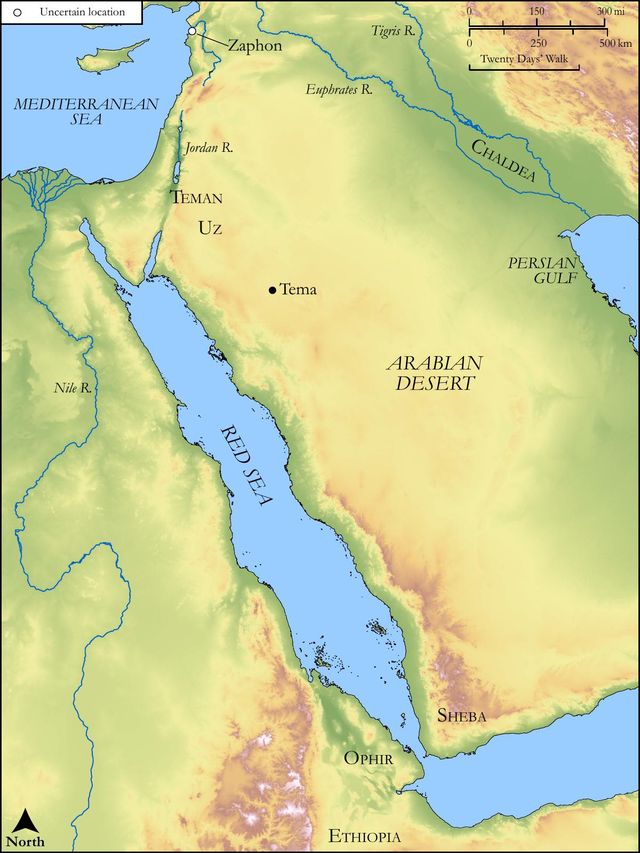
See on the biblical-era map
Study this verse
Public-domain commentary
Matthew Henry
From his Commentary on the Whole Bible. Henry comments on passages, not single verses — this entry covers Job 37:6–13. His two-level outline is real structure in the source text, so it is rendered as structure.
The changes and extremities of the weather, wet or dry, hot or cold, are the subject of a great deal of our common talk and observation; but how seldom do we think and speak of these things, as Elihu does here, with an awful regard to God the director of them, who shows his power and serves the purposes of his providence by them! We must take notice of the glory of God, not only in the thunder and lightning, but in the more common revolutions of the weather, which are not so terrible and which make less noise. As,
I.In the snow and rain, Job 37:6.
Thunder and lightning happen usually in the summer, but here he takes notice of the winter-weather. Then he saith to the snow, Be thou on the earth; he commissions it, he commands it, he appoints it, where it shall light and how long it shall lie. He speaks, and it is done: as in the creation of the world, Let there be light, so in the works of common providence, Snow, be thou on the earth. Saying and doing are not two things with God, though they are with us. When he speaks the word the small rain distils and the great rain pours down as he pleases - the winter-rain (so the Septuagint), for in those countries, when the winter was past, the rain was over and gone, Sol 2:11. The distinction in the Hebrew between the small rain and the great rain is this, that the former is called a shower of rain, the latter of rains, many showers in one; but all are the showers of his strength: the power of God is to be observed as much in the small rain that soaks into the earth as in the great rain that batters on the house-top and washes away all before it. Note, The providence of God is to be acknowledged, both by husbandmen in the fields and travellers upon the road, in every shower of rain, whether it does them a kindness of a diskindness. It is sin and folly to contend with God's providence in the weather; if he send the snow or rain, can we hinder them? Or shall we be angry at them? It is as absurd to quarrel with any other disposal of Providence concerning ourselves or ours. The effect of the extremity of the winter-weather is that it obliges both men and beasts to retire, making it uncomfortable and unsafe for them to go abroad.
1.Men retire to their houses from their labours in the field, and keep within doors (Job 37:7): He seals up the hand of every man. In frost and snow, husbandmen cannot follow their business, nor some tradesmen, nor travellers, when the weather is extreme. The plough is laid by, the shipping laid up, nothing is to be done, nothing to be got, that men, being taken off from their own work, may know his work, and contemplate that, and give him the glory of that, and, by the consideration of that work of his in the weather which seals up their hands, be led to celebrate his other great and marvellous works. Note, When we are, upon any account, disabled from following our worldly business, and taken off from it, we should spend our time rather in the exercises of piety and devotion (in acquainting ourselves with the works of God and praising him in them) than in foolish idle sports and recreations. When our hands are sealed up our hearts should be thus opened, and the less we have at any time to do in the world the more we should thereby be driven to our Bibles and our knees.
2.The beasts also retire to their dens and remain in their close places, Job 37:8. It is meant of the wild beasts, which, being wild, must seek a shelter for themselves, to which by instinct they are directed, while the tame beasts, which are serviceable to man, are housed and protected by his care, as Exo 9:20. The ass has no den but his master's crib, and thither he goes, not only to be safe and warm, but to be fed. Nature directs all creatures to shelter themselves from a storm; and shall man alone be unprovided with an ark?
II.In the winds, which blow from different quarters and produce different effects (Job 37:9):
Out of the hidden place (so it may be read) comes the whirlwind; it turns round, and so it is hard to say from which point it comes but it comes from the secret chamber, as the word signifies, which I am not so willing to understand of the south, because he says here (Job 37:17) that the wind out of the south is so far from being a whirlwind that it is a warming, quieting, wind. But at this time, perhaps, Elihu saw a whirlwind-cloud coming out of the south and making towards them, out of which the Lord spoke soon after, Job 38:1. Or, if turbulent winds which bring showers come out of the south, cold and drying blasts come out of the north to scatter the vapours and clear the air of them.
III.In the frost, Job 37:10.
See the cause of it: It is given by the breath of God, that is, by the word of his power and the command of his will; or, as some understand it, by the wind, which is the breath of God, as the thunder is his voice; it is caused by the cold freezing wind out of the north. See the effect of it: The breadth of the waters is straitened, that is, the waters that had spread themselves, and flowed with liberty, are congealed, benumbed, arrested, bound up in crystal fetters. This is such an instance of the power of God as, if it were not common, would be next to a miracle.
IV.In the clouds, the womb where all these watery meteors are conceived, of which he had spoken, Job 36:28.
Three sorts of clouds he here speaks of: - 1. Close, black, thick clouds, pregnant with showers; and these with watering he wearies (Job 37:11), that is, they spend themselves, and are exhausted by the rain into which they melt and are dissolved, pouring out water till they are weary and can pour out no more. See what pains, as I may say, the creatures, even those above us, take to serve man: the clouds water the earth till they are weary; they spend and are spent for our benefit, which shames and condemns us for the little good we do in our places, though it would be to our own advantage, for he that watereth shall be watered also himself. 2. Bright thin clouds, clouds without water; and these he scattereth; they are dispersed of themselves, and not dissolved into rain, but what becomes of them we know not. The bright cloud, in the evening, when the sky is red, is scattered, and proves an earnest of a fair day, Mat 16:2. 3. Flying clouds, which do not dissolve, as the thick cloud, into a close rain, but are carried upon the wings of the wind from place to place, dropping showers as they go; and these are said to be turned round about by his counsels, Job 37:12. The common people say that the rain is determined by the planets, which is as bad divinity as it is philosophy, for it is guided and governed by the counsel of God, which extends even to those things that seem most casual and minute, that they may do whatsoever he commands them; for the stormy winds, and the clouds that are driven by them, fulfil his word; and by this means he causes it to rain upon one city and not upon another, Amo 4:7, Amo 4:8. Thus his will is done upon the face of the world in the earth, that is, among the children of men, to whom God has an eye in all these things, of whom it is said that he made them to dwell on the face of the earth, Act 17:26. The inferior creatures, being incapable of doing moral actions, are incapable of receiving rewards and punishments: but, among the children of men, God causes the rain to come, either for the correction of his land or for a mercy to it, Job 37:13. (1.) Rain sometimes turns into a judgment. It is a scourge to a sinful land; as once it was for the destruction of the whole world, so it is now often for the correction or discipline of some parts of it, by hindering seedness and harvest, raising the waters, and damaging the fruits. Some have said that our nation has received much more prejudice by the excess of rain than by the want of it. (2.) At other times it is a blessing. It is for his land, that this may be made fruitful; and, besides that which is just necessary, he gives for mercy, to fatten it and make it more fruitful. See what a necessary dependence we have upon God, when the very same thing, according to the proportion in which it is given, may be either a great judgment or a great mercy, and without God we cannot have either a shower or a fair gleam.
Historical interpretation
Historical reception
1 surviving comment on this verse from the historical church.
[“They traverse all things in a circuit wherever the will of their Ruler shall lead them. To everything that he shall command them upon the face of the earth, whether in one tribe, or in his own land, or in whatsoever place of his mercy, he shall order them to be found.”] … God therefore leads his clouds, either in one tribe, or in his own land or in whatever place of his mercy, and shall order them to be found. In earlier times he conferred preachers of the Old Testament on the tribe of Judah only and rejected nearly the whole of Israel because of the wicked governing of their kings. At another time, he made these clouds to rain, even in his own land, because he recalled this same people of Israel to his former favor after correction in captivity. Then at another he wished them to shine forth from the place of his mercy when he made known even to the Gentiles, by holy preachers of the New Testament, the miracles of his power. By his sole mercy he thus freed those from the yoke of error who his wrath was weighing down in their innate unbelief.But see, because Elihu has perceived future events by the spirit of prophecy, because he has uttered many sublime truths, the haughty man, wearied with the weight of his pride, is unable to bear the burden of what he says.
Continue studying Job 37:13 across the web’s major study libraries — every link below opens this exact verse, chapter, or book on the destination site.
Read & Compare
 BibleGatewayThis verse in more than 200 translations and 70 languages.
 Bible.comThe YouVersion reader — hundreds of translations, reading plans, and highlights.
 ESV.orgCrossway's official English Standard Version reader.
 NET BibleThe NET translation with 60,000+ translators' notes on every rendering decision.
 STEP BibleTyndale House's free study tool — original text, vocabulary, and scholarly resources.
 BibliaLogos Bible Software's free web reader.
 USCCBThe New American Bible (Revised Edition) with the U.S. bishops' study notes.
Commentaries
 BibleHub CommentariesDozens of classic commentaries on this verse, gathered on one page.
 StudyLightMore than 100 commentary sets — the largest collection on the web.
 BibleRefPlain-English commentary on what this verse means, verse by verse.
 Enduring WordDavid Guzik's free commentary on this chapter, widely used by Bible teachers.
 Bible Study ToolsVerse commentary alongside Greek and Hebrew study aids.
Original Language & Research
- BibleHub InterlinearThe verse word by word — original language, transliteration, and English.
- BibleHub LexiconEvery word's original-language definition and Strong's entry.
 Blue Letter BibleDeep-study tools — Strong's numbers, concordance, and word studies.
 SefariaThe Hebrew text with Rashi and centuries of Jewish commentary.
Sermons, Hymns & Audio


TrulyRandomVerse is not affiliated with these sites and doesn’t control their content. They’re linked because they’re genuinely useful.
Summary
Job 37:13, a profound declaration by Elihu, asserts God's absolute sovereignty and purposeful control over natural phenomena. It reveals that the Almighty orchestrates weather events—such as rain, snow, or storms—not randomly, but with specific, divine intentions: for the correction and discipline of humanity, for the benevolent provision and sustenance of His land, and as an outpouring of His unmerited mercy and grace. This verse serves as a theological anchor, illustrating God's multifaceted character and His active, intentional involvement in the world, particularly in the context of human suffering and divine will.
Context
ShowHideLiterary Context
Job 37:13 is situated within Elihu's final and most extensive discourse, spanning chapters 32-37. Specifically, it forms part of a climactic section (Job 36:22–37:24) where Elihu passionately extols God's majesty, wisdom, and omnipotence, primarily as displayed through the intricate workings of natural creation. Elihu's objective throughout his speeches is to humble Job and his friends by contrasting the unsearchable greatness of God with the limitations of human understanding. He meticulously describes various meteorological wonders—thunder, lightning, clouds, rain, snow, and wind—as direct, tangible manifestations of God's power and intricate design. This verse, therefore, serves as a concise theological summary of Elihu's broader argument: that God uses these elements for precise, purposeful ends, not merely as arbitrary acts of nature, leading up to God's own direct intervention and speech in the subsequent chapters.
Historical & Cultural Context
The Book of Job is set in the land of Uz, a land where agricultural life was entirely dependent on seasonal rainfall. In this context, weather phenomena were not merely scientific occurrences but were often perceived as direct expressions of divine favor or displeasure. Drought meant famine and death, while timely rains brought life and prosperity. Elihu's discourse resonates with this worldview, attributing all natural events directly to the sovereign will of the one true God. Unlike the polytheistic beliefs prevalent among the nations round about, where various deities controlled different aspects of nature, Elihu's monotheistic perspective emphasizes the singular, comprehensive control of Yahweh over all creation. This understanding would have been crucial for an audience grappling with the problem of suffering, as it asserted that even seemingly chaotic or destructive events were under divine governance.
Key Themes
ShowHideJob 37:13 encapsulates several profound theological themes central to the Book of Job and biblical theology. Firstly, it underscores God's Absolute Sovereignty, unequivocally stating that "He causeth it to come," thereby affirming His ultimate, active control over all creation, including the most powerful forces of nature. This reinforces the truth that nothing occurs outside of God's knowledge or ultimate permission, even events that appear chaotic or calamitous. Secondly, the verse highlights Divine Purpose in All Events. The "it" (referring to weather events from preceding verses) is sent with deliberate intention for one of three primary reasons: "for correction" (discipline or instruction), "for his land" (benevolent provision and sustenance), or "for mercy" (unmerited grace). This multifaceted purpose reveals God's complex and balanced character—He is both a disciplinarian and a provider, a God of justice and a God of profound compassion. This theme is echoed throughout Scripture, from God's control over the seasons in the covenant with Noah to His providential care for all living things as described in Psalm 104. Finally, the verse subtly emphasizes the Human Limitation versus Divine Majesty, a recurring motif in Elihu's speeches, inviting humility and awe before the unsearchable greatness of God, whose ways are higher than human ways, as seen in Isaiah 55:8-9.
Exposition and Analysis
ShowHideKey Word Analysis
ShowHideThis verb (H4672) is a primitive root meaning "to come forth to," "appear," or "exist." In its causative sense, as implied by "He causeth it to come," it means "to cause to come" or "to bring forth." This highlights God's active, initiating role in bringing about natural phenomena. It emphasizes that these events are not random occurrences but are actively produced by God's will, demonstrating His direct and intentional involvement in the physical world.
The Hebrew word (H7626) literally means "rod," "staff," or "scepter." While it can denote an instrument of punishment, its broader semantic range includes a shepherd's staff used for guidance, leading, and protection, or a ruler's scepter signifying authority and governance. In this context, "correction" implies a purposeful discipline or instruction, aimed at shaping character, bringing repentance, or guiding humanity, rather than merely inflicting pain. It speaks to God's pedagogical intent, using circumstances to teach and refine.
This is the rich Hebrew term (H2617), often translated as "steadfast love," "lovingkindness," "covenant loyalty," or "grace." It signifies a deep, enduring, and active benevolence that goes beyond mere pity. When God acts "for mercy," it implies an outpouring of His unmerited favor, His faithful love, and His compassionate goodness, demonstrating His generous and benevolent character even to those who may not deserve it. It reveals a God who acts out of His inherent goodness to bless and sustain.
Verse Breakdown
ShowHide"He causeth it to come"
This initial clause firmly establishes God as the ultimate, active orchestrator of the natural events previously described by Elihu (e.g., rain, snow, thunder, wind). It underscores His direct, intentional involvement in the physical world, asserting that these phenomena are not random occurrences but are brought forth by His sovereign will and power. This highlights God's role as the ongoing sustainer and director of creation, not merely a distant creator.
"whether for correction"
This phrase identifies one distinct purpose behind God's actions in nature. God may use challenging natural events or circumstances as a means of discipline, instruction, or to bring about repentance and spiritual growth in humanity. This is not arbitrary punishment but a purposeful act aimed at moral or spiritual rectification, much like a loving parent disciplines a child for their ultimate good. It reveals God's concern for human righteousness and spiritual development.
"or for his land"
This clause points to God's benevolent and providential purpose. Natural phenomena, particularly rain, are absolutely essential for the fertility and sustenance of the earth, ensuring crops, providing water, and supporting all forms of life. This aspect emphasizes God's role as the faithful provider and sustainer of creation, demonstrating His care for the physical well-being of humanity and the entire natural world, ensuring its productivity and flourishing.
"or for mercy"
This final purpose reveals the depth of God's gracious disposition. Beyond discipline or mere provision, God also sends favorable conditions and blessings as an act of pure, unmerited favor. This demonstrates His loving-kindness, compassion, and boundless grace, extending His goodness freely to all, both righteous and unrighteous. It highlights the breadth of God's benevolence, showing that His actions are often motivated by His inherent goodness and desire to bless.
Literary Devices
ShowHideJob 37:13 masterfully employs several literary devices to convey its profound theological message. The most prominent is Tricolon, evident in the three distinct and comprehensive purposes for which God sends natural phenomena: "for correction, or for his land, or for mercy." This tripartite structure creates a sense of completeness and emphasizes the multifaceted nature of God's intentions. The use of Parallelism is also implicit, as each clause presents a distinct but equally valid divine intention, creating a balanced and comprehensive statement about God's sovereign purposes. Furthermore, there's an element of Personification in attributing deliberate, intelligent action to God in His control over inanimate natural forces, reinforcing His active agency. The phrase "for his land" can also be seen as a form of Metonymy, where "land" stands for the sustenance, produce, and life that the land yields through God's provision. Together, these devices enhance the verse's rhetorical power, making Elihu's assertion about God's purposeful sovereignty both memorable and impactful.
Theological and Thematic Connections
ShowHideJob 37:13 offers a profound theological statement on divine providence, asserting that God is not a distant, disengaged deity but an active, intentional sovereign deeply involved in the affairs of His creation. This verse challenges a purely mechanistic view of the universe, positing that even seemingly random or destructive natural events are under God's purposeful control. It reveals a God who is complex and balanced in His character: capable of discipline, yet also the ultimate provider and the source of boundless mercy. This understanding encourages believers to look beyond immediate circumstances and seek God's hand and purpose in all of life's events, fostering a posture of trust, humility, and worship, even when His ways are mysterious or difficult to comprehend. It underscores that God's actions are always purposeful, even if those purposes are not immediately clear to human understanding.
Reflection and Application
ShowHideJob 37:13 provides a powerful framework for understanding God's active involvement in our lives and the world around us. It challenges us to move beyond a simplistic view of cause and effect, inviting us to discern the deeper divine purposes behind both blessings and trials. When faced with difficult circumstances—whether personal hardships, societal challenges, or natural disasters—this verse encourages us to consider if God is working "for correction," prompting us towards repentance, spiritual growth, or a re-evaluation of our priorities. Conversely, when experiencing seasons of abundance or favorable conditions, we are called to recognize God's hand of "provision for his land" or His pure "mercy," fostering gratitude and acknowledging His unmerited favor. This perspective cultivates a profound trust in God's ultimate wisdom and love, reminding us that even when His ways are inscrutable, His purposes are always good and intentional. It calls us to live with a heightened awareness of God's sovereignty, transforming our perception of life's events from random occurrences to purposeful acts of a loving, governing God, leading to deeper reliance and worship.
Questions for Reflection
ShowHideFAQ
ShowHideWhat does "it" refer to in Job 37:13?
ShowHideThe "it" in Job 37:13 refers to the various meteorological phenomena Elihu has been describing throughout Job 37, such as rain, snow, thunder, lightning, and wind. These are direct manifestations of God's power and are sent with specific divine intentions. Elihu elaborates on how God "commands the snow" in Job 37:6 and "loads the thick cloud with moisture" in Job 37:11, making it clear that these natural forces are under His direct command and are the subject of His purposeful sending.
Is God's "correction" always negative or punitive?
ShowHideNot necessarily. While "correction" can involve hardship or discipline, the Hebrew word (shêbeṭ) also carries connotations of a shepherd's staff, used for guidance, leading, and protection. God's correction is ultimately redemptive, aimed at spiritual growth, repentance, and drawing His people closer to Him. It is an act of love, not just anger, designed to refine faith and produce righteousness, as seen in Proverbs 3:11-12 and further expounded in Hebrews 12:5-11. It's about shaping us into His image, not merely punishing us.
Christ-Centered Fulfillment
ShowHideJob 37:13, spoken by Elihu, powerfully declares God's sovereign control over creation for diverse purposes: correction, provision for His land, and mercy. This Old Testament truth finds its ultimate and most profound fulfillment in Jesus Christ. He is the very embodiment of God's sovereign power over nature, famously demonstrating it by calming the storm with a mere word, rebuking the wind and waves, so that even His disciples marveled, asking, "Who then is this, that even the wind and the sea obey him?" as recorded in Mark 4:39. More significantly, Jesus perfectly embodies God's threefold purpose for humanity. He comes "for correction," calling all to repentance and offering the path to true life, as He declared in Luke 13:3. He is the ultimate "provision for his land," not merely providing physical sustenance but declaring Himself the "bread of life" who gives eternal life to those who believe in Him, as found in John 6:35. And supremely, Jesus is the unparalleled manifestation of God's "mercy," for "God, being rich in mercy, because of the great love with which he loved us, even when we were dead in our trespasses, made us alive together with Christ" as proclaimed in Ephesians 2:4-5. Through His life, death, and resurrection, Christ perfectly fulfills God's purposes, bringing ultimate correction to sin, providing spiritual life and sustenance for His people (His new "land" or kingdom), and extending boundless mercy to all who believe, ushering in the new creation where God's sovereign purposes are fully realized.