


Job 31:12
- כִּיkiforH3588PrtParticle Conditional
- אֵשׁ'esh[is] a fireH784N-csNoun Singular common gender Absolute
- הִיאhi'thatH1931Pro-3fsPronoun Personal 3rd Singular Feminine
- עַד'ad[which] toH5704PrepPreposition
- אֲבַדּוֹן'a·va·DonAbaddonH11N-fsNoun Title Singular Feminine Absolute
- תֹּאכֵלto·Khelit will devourH398V-Qal-Imperf-3fsVerb Qal Imperfect 3rd Singular Feminine
- וּבְכָלu·ve·Kholand <in> allH3605Conj-w ¦ Prep-b ¦ N-mscNoun Singular Masculine Constructוּandבְ<in>כָלall
- תְּבוּאָתִיte·Vu·'a·Timy produceH8393N-fsc ¦ 1csNoun Singular Feminine Constructתְּבוּאָתִproduceיmy
- תְשָׁרֵשׁte·sha·Reshit will root upH8327V-Piel-Imperf-3fsVerb Piel Imperfect 3rd Singular Feminine
English is a literal word-by-word gloss of the Hebrew, not the KJV's wording. Why?
This is the original text the KJV's translators worked from — each Hebrew word with its own literal English meaning in this verse, prepared by scholars at Tyndale House, Cambridge. The KJV translates whole sentences, not word by word, so its wording differs: one Hebrew word can become several English words, and the KJV may choose “the LORD” where the gloss reads “Yahweh”. Both are faithful — they answer different questions. For the KJV's own rendering, switch to the KJV text.
Details
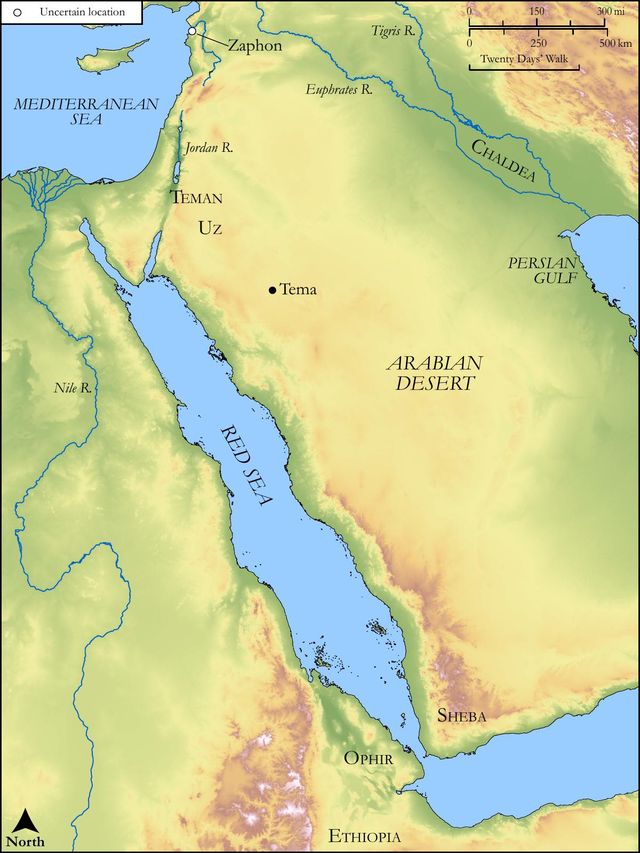
See on the biblical-era map
Study this verse
Public-domain commentary
Matthew Henry
From his Commentary on the Whole Bible. Henry comments on passages, not single verses — this entry covers Job 31:9–15. His three-level outline is real structure in the source text, so it is rendered as structure.
Two more instances we have here of Job's integrity: -
I.That he had a very great abhorrence of the sin of adultery.
As he did not wrong his own marriage bed by keeping a concubine (he did not so much as think upon a maid, v. 1), so he was careful not to offer any injury to his neighbour's marriage bed. Let us see here,
1.How clear he was from this sin, Job 31:9.
(1.)He did not so much as covet his neighbour's wife; for even his heart was not deceived by a woman. The beauty of another man's wife did not kindle in him any unchaste desires, nor was he ever moved by the allurements of an adulterous woman, such as is described, Pro 7:6, etc. See the original of all the defilements of the life; they come from a deceived heart. Every sin is deceitful, and none more so than the sin of uncleanness.
(2.)He never compassed or imagined any unchaste design. He never laid wait at his neighbour's door, to get an opportunity to debauch his wife in his absence, when the good man was not at home, Pro 7:19. See Job 24:15.
2.What a dread he had of this sin, and what frightful apprehensions he had concerning the malignity of it - that it was a heinous crime (Job 31:11), one of the greatest vilest sins a man can be guilty of, highly provoking to God, and destructive to the prosperity of the soul. With respect to the mischievousness of it, and the punishment it deserved, he owns that, if he were guilty of that heinous crime,
(1.)His family might justly be made infamous in the highest degree (Job 31:10): Let my wife grind to another. Let her be a slave (so some), a harlot, so others. God often punishes the sins of one with the sin of another, the adultery of the husband with the adultery of the wife, as in David's case (Sa2 12:11), which does not in the least excuse the treachery of the adulterous wife; but, how unrighteous soever she is, God is righteous. See Hos 4:13, Your spouses shall commit adultery. Note, Those who are not just and faithful to their relations must not think it strange if their relations be unjust and unfaithful to them.
(2.)He himself might justly be made a public example: For it is an iniquity to be punished by the judges; yea, though those who are guilty of it are themselves judges, as Job was. Note, Adultery is a crime which the civil magistrate ought to take cognizance of and punish: so it was adjudged even in the patriarchal age, before the law of Moses made it capital. It is an evil work, to which the sword of justice ought to be a terror.
(3.)It might justly become the ruin of his estate; nay, he knew it would be so (Job 31:12): It is a fire. Lust is a fire in the soul: those that indulge it are said to burn. It consumes all that is good there (the convictions, the comforts), and lays the conscience waste. It kindles the fire of God's wrath, which, if not extinguished by the blood of Christ, will burn to the lowest hell. It will consume even to that eternal destruction. It consumes the body, Pro 5:11. It consumes the substance; it roots out all the increase. Burning lusts bring burning judgments. Perhaps it alludes to the burning of Sodom, which was intended for an example to those who should afterwards, in like manner, live ungodly.
II.That he had a very great tenderness for his servants and ruled them with a gentle hand.
He had a great household and he managed it well. By this he evidenced his sincerity that he had grace to govern his passion as well as his appetite; and he that in these two things has the rule of his own spirit is better than the mighty, Pro 16:32. Here observe,
1.What were Job's condescensions to his servants (Job 31:13): He did not despise the cause of his man-servant, no, nor of his maid-servant, when they contended with him. If they contradicted him in any thing, he was willing to hear their reasons. If they had offended him, or were accused to him, he would patiently hear what they had to say for themselves, in their own vindication or excuse. Nay, if they complained of any hardship he put upon them, he did not browbeat them, and bid them hold their tongues, but gave them leave to tell their story, and redressed their grievances as far as it appeared they had right on their side. He was tender of them, not only when they served and pleased him, but even when they contended with him. Herein he was a great example to masters, to give to their servants that which is just and equal; nay, to do the same things to them that they expect from them (Col 4:1, Eph 6:9), and not to rule them with rigour, and carry it with a high hand. Many of Job's servants were slain in his service (Job 1:15-17); the rest were unkind and undutiful to him, and despised his cause, though he never despised theirs (Job 19:15, Job 19:16); but he had this comfort that in his prosperity he had behaved well towards them. Note, When relations are either removed from us or embittered to us the testimony of our consciences that we have done our duty to them will be a great support and comfort to us.
2.What were the considerations that moved him to treat his servants thus kindly. He had, herein, an eye to God, both as his Judge and their Maker.
(1.)As his Judge. He considered, "If I should be imperious and severe with my servants, what then shall I do when God riseth up?" He considered that he had a Master in heaven, to whom he was accountable, who will rise up and will visit; and we are concerned to consider what we shall do in the day of his visitation (Isa 10:3), and, considering that we should be undone if God should then be strict and severe with us, we ought to be very mild and gentle towards all with whom we have to do. Consider what would become of us if God should be extreme to mark what we do amiss, should take all advantages against us and insist upon all his just demands from us - if he should visit every offence, and take every forfeiture - if he should always chide, and keep his anger for ever. And let not us be rigorous with our inferiors. Consider what will become of us if we be cruel and unmerciful to our brethren. The cries of the injured will be heard; the sins of the injurious will be punished. Those that showed no mercy shall find none; and what shall we do then?
(2.)As his and his servants' Creator, Job 31:15. When he was tempted to be harsh with his servants, to deny them their right and turn a deaf ear to their reasonings, this thought came very seasonably into his mind, "Did not he that made me in the womb make him? I am a creature as well as he, and my being is derived and depending as well as his. He partakes of the same nature that I do and is the work of the same hand: Have we not all one Father?" Note, Whatever difference there is among men in their outward condition, in their capacity of mind, or strength of body, or place in the world, he that made the one made the other also, which is a good reason why we should not mock at men's natural infirmities, nor trample upon those that are in any way our inferiors, but, in every thing, do as we would be done by. It is a rule of justice, Parium par sit ratio - Let equals be equally estimated and treated; and therefore since there is so great a parity among men, they being all made of the same mould, by the same power, for the same end, notwithstanding the disparity of our outward condition, we are bound so far to set ourselves upon the level with those we deal with as to do to them, in all respects, as we would they should do to us.
Historical interpretation
Historical reception
1 surviving comment on this verse from the historical church.
“For this is a heinous crime and the greatest iniquity. For it is a fire that consumes to destruction and that roots out all increase.” There is this difference between “sin” and “crime.” All crime is sin, but not all sin is crime. And in this life there are numbers without crime, but no one can be without sins. And hence the holy preacher, when he was describing a person worthy of the grace of priesthood, never said, “If any is without sin,” but “if any is without crime.” Who can be without sin, when John says, “If we say that we have no sin, we deceive ourselves and the truth is not in us?” In this same distinction of sins and crimes, it deserves to be considered that occasional sins pollute the soul, while crimes slay it. Hence, blessed Job in characterizing the crime of lust says, “It is a fire that consumes to destruction.” In this way, the heinousness of this atrocity not only stains to the length of defilement but also devours to the extent of destruction. And howsoever many other good deeds there may be, if the enormity of lust is not washed out, they are overwhelmed by the immensity of this crime. He added going on, “and rooting out all offspring,” for “the offspring” of the soul are good practices. The soul, nevertheless, if the right order is being reversed, then the flesh exercises dominion over it, and all the things that are put forth well are consumed by the fire of lust.
Continue studying Job 31:12 across the web’s major study libraries — every link below opens this exact verse, chapter, or book on the destination site.
Read & Compare
 BibleGatewayThis verse in more than 200 translations and 70 languages.
 Bible.comThe YouVersion reader — hundreds of translations, reading plans, and highlights.
 ESV.orgCrossway's official English Standard Version reader.
 NET BibleThe NET translation with 60,000+ translators' notes on every rendering decision.
 STEP BibleTyndale House's free study tool — original text, vocabulary, and scholarly resources.
 BibliaLogos Bible Software's free web reader.
 USCCBThe New American Bible (Revised Edition) with the U.S. bishops' study notes.
Commentaries
 BibleHub CommentariesDozens of classic commentaries on this verse, gathered on one page.
 StudyLightMore than 100 commentary sets — the largest collection on the web.
 BibleRefPlain-English commentary on what this verse means, verse by verse.
 Enduring WordDavid Guzik's free commentary on this chapter, widely used by Bible teachers.
 Bible Study ToolsVerse commentary alongside Greek and Hebrew study aids.
Original Language & Research
- BibleHub InterlinearThe verse word by word — original language, transliteration, and English.
- BibleHub LexiconEvery word's original-language definition and Strong's entry.
 Blue Letter BibleDeep-study tools — Strong's numbers, concordance, and word studies.
 SefariaThe Hebrew text with Rashi and centuries of Jewish commentary.
Sermons, Hymns & Audio


TrulyRandomVerse is not affiliated with these sites and doesn’t control their content. They’re linked because they’re genuinely useful.
Summary
Job 31:12 serves as a profound and solemn declaration by Job, articulating the severe and all-consuming consequences of sin, particularly sexual immorality, as he passionately defends his integrity before God and his friends. This verse functions as a powerful warning, revealing Job's deep theological understanding of divine justice and the inherently destructive nature of unrighteousness, vividly portraying it as an insatiable fire that annihilates all that one holds dear and has painstakingly built.
Context
ShowHideLiterary Context
Chapter 31 represents the powerful culmination of Job's final discourse, where he delivers his most comprehensive and impassioned defense against the persistent accusations of his friends. This chapter is meticulously structured as a series of "oaths of innocence" or "negative confessions," in which Job systematically denies having committed various grave sins, invoking a self-curse upon himself if he were to be found guilty. In the verses immediately preceding Job 31:12, Job specifically addresses and refutes the sin of lust and adultery. He initiates this section in Job 31:1 by declaring that he made a solemn covenant with his eyes not to gaze lustfully at a virgin. Subsequently, in Job 31:9-11, he explicitly denies having lusted after his neighbor's wife or committing adultery. Verse 12 then serves as the profound theological rationale for his meticulous moral purity: such sins are not trivial transgressions but carry devastating, all-consuming consequences, explaining why he has been so careful to avoid them.
Historical & Cultural Context
In the ancient Near East, personal integrity and strict adherence to communal moral codes were of paramount importance, particularly within patriarchal societies where family lineage, inheritance, and one's reputation ("name") formed the foundational pillars of identity and social standing. Sexual immorality, especially adultery, was considered an exceptionally grievous offense, frequently punishable by death, as it directly violated covenant fidelity, severely undermined established family structures, and brought profound shame upon entire households. The concept of "increase" (Hebrew: tevu'ah), encompassing agricultural produce, livestock, accumulated wealth, and, most significantly, offspring, represented a person's entire well-being, prosperity, and legacy. Any perceived threat to this "increase" was, therefore, a direct threat to one's very existence and future prospects. Job's profound understanding of sin's consequences reflects a widespread ancient Near Eastern belief in retributive justice, where righteous living was believed to lead to prosperity and wickedness inevitably to ruin, often perceived as either direct divine intervention or the natural outcome of moral choices. His solemn oath, invoking a self-curse, was a recognized and legitimate legal and social practice employed to assert one's innocence.
Key Themes
ShowHideJob 31:12 powerfully contributes to several pivotal themes within the book of Job and broader biblical theology. Firstly, it profoundly underscores The Destructive Nature of Sin, particularly sexual immorality, portraying it with vivid imagery as an insatiable "fire that consumeth to destruction." This powerful metaphor highlights sin's inherent capacity not merely to damage, but to utterly annihilate an individual's life, reputation, and future. Secondly, the verse emphatically emphasizes the Far-Reaching Consequences of Unfaithfulness, encapsulated in the chilling phrase "would root out all mine increase." This signifies that moral transgressions are never isolated acts but have holistic, devastating impacts on one's prosperity, family, legacy, and spiritual standing, echoing the profound biblical principle of sowing and reaping found in passages like Galatians 6:7. Finally, Job's declaration reveals his profound understanding of Divine Justice and Accountability. He recognizes that God is a righteous judge who holds humanity fully accountable for their actions, and that sin carries inherent penalties that align with the divine order of the universe, a theme extensively explored throughout the wisdom literature, for example, in Proverbs 11:3.
Exposition and Analysis
ShowHideKey Word Analysis
ShowHideThis term is a potent biblical metaphor, frequently used to denote divine judgment, consuming wrath, and purification. Here, it signifies a force that is insatiable, uncontrollable, and leaves nothing behind but desolation. It speaks to the intense and radical nature of the destruction wrought by sin, suggesting an unquenchable power that utterly devastates.
This noun, derived from the verb meaning "to perish" or "to be ruined," signifies an abstract concept of perishing or a concrete state of utter ruin, even referring to Hades. In this context, "consumeth to destruction" emphasizes a complete and irreversible annihilation, not merely damage or loss, but a state of being utterly undone. It suggests a finality, leaving no hope of recovery or restoration from the sin's effects.
This primitive root means "to uproot, to pluck up by the roots, to eradicate." It conveys the idea of total eradication, much like a plant being forcibly pulled from the ground with its entire root system, ensuring no regrowth or future fruitfulness. This imagery powerfully underscores the radical and devastating impact of sin, cutting off all future potential, prosperity, and legacy.
Verse Breakdown
ShowHide"For it [is] a fire [that] consumeth to destruction"
The pronoun "it" refers directly to the sin Job has just described and vehemently denied (specifically, lust and adultery). Job declares that such sin is like an uncontrollable, devouring fire. This fire is not merely damaging or painful; it is inherently designed to "consume to destruction," implying a complete, irreversible, and absolute annihilation of whatever it touches. This clause powerfully speaks to the inherent and radical power of sin to utterly ruin.
"and would root out all mine increase"
This clause serves to explain the devastating consequence and ultimate purpose of the "fire" of sin. The fire's destructive aim is not just to burn, but to "root out," to utterly eradicate, everything that Job has and is. "All mine increase" is a comprehensive term encompassing his material wealth, his cherished family, his good name and reputation, his inner peace, and all his future prospects. Job profoundly understands that sin, particularly sexual immorality, possesses the power to destroy every single aspect of one's life, leaving nothing behind.
Literary Devices
ShowHideJob 31:12 is exceptionally rich in Imagery and Metaphor. The central Metaphor is the comparison of sin to a "fire that consumeth to destruction." This vivid comparison powerfully conveys the destructive, uncontrollable, and all-consuming nature of sin, implying that it leaves nothing but desolation and ruin in its wake. The phrase "root out all mine increase" employs another potent agricultural Metaphor, depicting sin as a force that completely uproots and eradicates one's prosperity, family, and future, leaving no chance for regrowth or fruitfulness. The language used, particularly the strong verbs and phrases like "consumeth to destruction" and "root out all mine increase," also leans towards Hyperbole, emphasizing the extreme and total ruin that Job associates with such transgressions, thereby underscoring his deep conviction about the severity of sin and its comprehensive, devastating consequences.
Theological and Thematic Connections
ShowHideJob 31:12 articulates a profound biblical truth about the inherent nature of sin: it is not a trivial matter but a destructive force with far-reaching and devastating consequences. Job's understanding aligns perfectly with the consistent biblical portrayal of sin as a spiritual cancer, an all-consuming fire, and a root of bitterness that inevitably leads to decay, spiritual death, and ruin. His specific focus on sexual immorality highlights its particularly devastating impact on individuals, families, and communities, as it violates sacred covenants, breaks trust, and undermines the very fabric of society. The verse powerfully underscores the principle of divine justice, where actions invariably have consequences, and God's moral order ensures that unrighteousness ultimately leads to ruin, even if the full extent of that ruin is not immediately apparent. It serves as a powerful and timeless reminder that true prosperity and genuine "increase" are intrinsically linked to living a life of integrity, faithfulness, and obedience to God's divine commands.
Reflection and Application
ShowHideJob 31:12 serves as a timeless and sobering warning for all believers, challenging us to confront the true, destructive nature of sin in our lives with profound seriousness. It compels us to move beyond a superficial understanding of right and wrong, recognizing that even seemingly private transgressions, particularly those involving lust and sexual immorality, carry an inherent and potent destructive power. Like a raging fire, sin does not merely damage or wound; it consumes, leaving utter desolation and spiritual emptiness in its wake. It "roots out" our spiritual "increase"—our peace, our joy, the integrity of our relationships, the purity of our testimony, and the abundant blessings God desires to bestow upon us. This verse calls us to a radical and unwavering commitment to purity and integrity, not primarily out of fear of punishment, but out of a deep reverence for God's holiness and a clear-eyed recognition of sin's devastating potential. It reminds us that genuine flourishing, lasting prosperity, and true "increase" are found only in walking in consistent obedience to God's Word and maintaining a clear conscience before both God and others.
Questions for Reflection
ShowHideFAQ
ShowHideWhy does Job use such strong imagery of "fire" and "rooting out" for sin?
ShowHideJob's use of "fire" and "rooting out" imagery is highly intentional and deeply symbolic, designed to convey the extreme gravity and destructive power of sin. The "fire" signifies the intense, uncontrollable, and utterly destructive nature of sin, particularly sexual immorality. It suggests a force that not only damages but entirely consumes, leaving nothing salvageable or capable of recovery. This aligns with broader biblical depictions of divine judgment (e.g., Deuteronomy 4:24) and the inherent self-destructive power of sin itself. "Rooting out" extends this vivid imagery, drawing from the agricultural world to convey total eradication. Just as a plant that is completely uprooted cannot grow again or bear fruit, sin has the power to utterly destroy one's "increase"—their prosperity, family, reputation, and future legacy. This strong, visceral language emphasizes that sin is not a minor transgression but a radical act that threatens one's very existence and all that God intends for their flourishing.
What does "all mine increase" specifically refer to in this context?
ShowHide"All mine increase" (Hebrew: tevu'ah) is a comprehensive and expansive term that refers to everything Job has accumulated, produced, and values in life. It encompasses his material wealth (such as crops, livestock, and possessions), his children (who are often seen as the ultimate "increase" or fruit of one's life and lineage), his good name and reputation within the community, his inner peace of mind, and all his future prospects and legacy. In essence, it signifies his entire well-being, his prosperity, and the cumulative fruit of his labor and life. Job is declaring that the destructive "fire" of sin has the power to utterly annihilate every single aspect of his life and legacy, leaving him with nothing.
How does Job 31:12 relate to other biblical teachings on sexual sin?
ShowHideJob 31:12 aligns perfectly with the consistent and unwavering biblical teaching that sexual immorality carries severe and far-reaching consequences. The Old Testament frequently warns against adultery and lust, describing them as folly that ultimately destroys a person (e.g., Proverbs 6:32-33). Jesus himself deepened this understanding by teaching that lustful thoughts are morally equivalent to adultery in the heart, emphasizing the internal root of sin (Matthew 5:28). The Apostle Paul likewise issues a strong warning to believers to "flee sexual immorality" because it is a unique sin against one's own body and defiles the sacred temple of the Holy Spirit (1 Corinthians 6:18). James further explains the insidious progression from lust to sin and ultimately to spiritual death (James 1:14-15). Across the entire biblical narrative, sexual sin is consistently portrayed as a profoundly destructive force that violates sacred covenant, breaks trust, and inevitably leads to spiritual, relational, and often physical ruin, powerfully echoing Job's vivid imagery of a consuming fire that roots out all "increase."
Christ-Centered Fulfillment
ShowHideWhile Job profoundly understands the destructive power of sin and strives for personal integrity, his impassioned defense ultimately highlights humanity's inherent struggle against sin's pervasive and consuming influence. In Christ, we discover the ultimate and complete answer to the consuming "fire" of sin that Job so vividly describes. Jesus, the sinless Lamb of God, bore the full judgment and the "fire" of God's righteous wrath against sin on the cross, becoming a curse for us so that we might be redeemed (Galatians 3:13). He not only perfectly fulfilled the Law's highest demands for purity, extending even to the thoughts and intentions of the heart (Matthew 5:28), but also offers complete forgiveness and radical cleansing for all who humbly confess their sins to Him (1 John 1:9). Through His atoning sacrifice, the destructive power of sin is decisively broken, and its capacity to "root out all mine increase" is utterly overcome. Believers are no longer under sin's dominion but are powerfully empowered by the indwelling Holy Spirit to walk in newness of life, producing the true "increase" of righteousness and the glorious fruit of the Spirit (Galatians 5:22-23). Christ doesn't merely warn against sin's destruction; He provides the way of escape and the path to true, eternal "increase" and abundant life found only in Him (John 10:10).