


Isaiah 37:4
Bible text: King James Version (1769 Blayney text) · Public domain
Bible text: King James Version with Strong's numbers · Public domain
Bible text: Berean Standard Bible · Public domain
Bible text: American Standard Version (1901) · Public domain
Bible text: World English Bible, Messianic edition · Public domain
Bible text: Geneva Bible (1599) · Public domain
Bible text: Young's Literal Translation · Public domain
- אוּלַי'u·LaiperhapsH194AdvAdverb
- יִשְׁמַעyish·Ma'he will hearH8085V-Qal-Imperf-3msVerb Qal Imperfect 3rd Singular Masculine
- יְהוָהYah·wehYahwehH3068N-properNoun Proper Title
- אֱלֹהֶיךָ'e·lo·Hei·khayour GodH430N-mpc ¦ 2msNoun Plural Masculine ConstructאֱלֹהֶיGodךָyour
- אֵת'et<obj.>H853DirObjMParticle Object Indicator
- דִּבְרֵיdiv·Rei[the] words ofH1697N-mpcNoun Plural Masculine Construct
- רַבrav[the] chiefH7262N-msNoun Title Singular Masculine Absolute
- שָׁקֵהsha·KehcommanderH7262N-msNoun Title Singular Masculine Absolute
- אֲשֶׁר'a·SherwhomH834RelParticle Relative
- שְׁלָחוֹshe·la·Chohe has sent himH7971V-Qal-Perf-3ms ¦ 3msVerb Qal Perfect 3rd Singular Masculineשְׁלָחhe has sentוֹhim
- מֶלֶךְMe·lekh[the] king ofH4428N-mscNoun Singular Masculine Construct
- אַשּׁוּר'a·ShurAssyriaH804N-properNoun Proper Location
- אֲדֹנָיו'a·do·Navhis master<s>H113N-mpc ¦ 3msNoun Plural Masculine Constructאֲדֹנָיmaster<s>וhis
- לְחָרֵףle·cha·Refto tauntH2778Prep-l ¦ V-Piel-InfVerb Piel Infinitive Constructלְtoחָרֵףtaunt
- אֱלֹהִים'E·lo·Him[the] GodH430N-mpNoun Plural Masculine Absolute
- חַיChailivingH2416Adj-msAdjective Singular Masculine Absolute
- וְהוֹכִיחַve·ho·Khi·achand he will rebukeH3198Conj-w ¦ V-Hiphil-ConsecPerf-3msVerb Hiphil Consecutive Perfect 3rd Singular Masculineוְandהוֹכִיחַhe will rebuke
- בַּדְּבָרִיםba·de·va·Rim<in> the wordsH1697Prep-b ¦ N-mpNoun Plural Masculine Absoluteבַּ<in> theדְּבָרִיםwords
- אֲשֶׁר'a·SherwhichH834RelParticle Relative
- שָׁמַעsha·Ma'he has heardH8085V-Qal-Perf-3msVerb Qal Perfect 3rd Singular Masculine
- יְהוָהYah·wehYahwehH3068N-properNoun Proper Title
- אֱלֹהֶיךָ'e·lo·Hei·khayour GodH430N-mpc ¦ 2msNoun Plural Masculine ConstructאֱלֹהֶיGodךָyour
- וְנָשָׂאתָve·na·Sa·taand you will lift upH5375Conj-w ¦ V-Qal-ConsecPerf-2msVerb Qal Consecutive Perfect 2nd Singular Masculineוְandנָשָׂאתָyou will lift up
- תְפִלָּהte·fi·LahprayerH8605N-fsNoun Singular Feminine Absolute
- בְּעַדbe·'AdforH1157Adj-cscAdjective Numerical Singular common gender Construct
- הַשְּׁאֵרִיתha·she·'e·Ritthe remnantH7611Art ¦ N-fsNoun Singular Feminine Absoluteהַtheשְּׁאֵרִיתremnant
- הַנִּמְצָאָהha·nim·tza·'Ahwhich is foundH4672Art ¦ V-Niphal-Prtcpl-fsVerb Niphal Participle Singular Feminine Absoluteהַwhichנִּמְצָאָהis found
English is a literal word-by-word gloss of the Hebrew, not the KJV's wording. Why?
This is the original text the KJV's translators worked from — each Hebrew word with its own literal English meaning in this verse, prepared by scholars at Tyndale House, Cambridge. The KJV translates whole sentences, not word by word, so its wording differs: one Hebrew word can become several English words, and the KJV may choose “the LORD” where the gloss reads “Yahweh”. Both are faithful — they answer different questions. For the KJV's own rendering, switch to the KJV text.
Details
See on the biblical-era map
Study this verse
Public-domain commentary
Matthew Henry
From his Commentary on the Whole Bible. Henry comments on passages, not single verses — this entry covers Isaiah 37:1–7.
We may observe here, 1. That the best way to baffle the malicious designs of our enemies against us is to be driven by them to God and to our duty and so to fetch meat out of the eater. Rabshakeh intended to frighten Hezekiah from the Lord, but it proves that he frightens him to the Lord. The wind, instead of forcing the traveller's coat from him, makes him wrap it the closer about him. The more Rabshakeh reproaches God the more Hezekiah studies to honour him, by rending his clothes for the dishonour done to him and attending in his sanctuary to know his mind. 2. That it well becomes great men to desire the prayers of good men and good ministers. Hezekiah sent messengers, and honourable ones, those of the first rank, to Isaiah, to desire his prayers, remembering how much his prophecies of late had plainly looked towards the events of the present day, in dependence upon which, it is probable, he doubted not but that the issue would be comfortable, yet he would have it to be so in answer to prayer: This is a day of trouble, therefore let it be a day of prayer. 3. When we are most at a plunge we should be most earnest in prayer: Now that the children are brought to the birth, but there is not strength to bring forth, now let prayer come, and help at a dead lift. When pains are most strong let prayers be most lively; and, when we meet with the greatest difficulties, then is a time to stir up not ourselves only, but others also, to take hold on God. Prayer is the midwife of mercy, that helps to bring it forth. 4. It is an encouragement to pray though we have but some hopes of mercy (Isa 37:4): It may be the Lord thy God will hear; who knows but he will return and repent? The it may be of the prospect of the haven of blessings should quicken us with double diligence to ply the oar of prayer. 5. When there is a remnant left, and but a remnant, it concerns us to lift up a prayer for that remnant, Isa 37:4. The prayer that reaches heaven must be lifted up by a strong faith, earnest desires, and a direct intention to the glory of God, all which should be quickened when we come to the last stake. 6. Those that have made God their enemy we have no reason to be afraid of, for they are marked for ruin; and, though they may hiss, they cannot hurt. Rabshakeh has blasphemed God, and therefore let not Hezekiah be afraid of him, Isa 37:6. He has made God a party to the cause by his invectives, and therefore judgment will certainly be given against him. God will certainly plead his own cause. 7. Sinners' fears are but prefaces to their falls. He shall hear the rumour of the slaughter of his army, which shall oblige him to retire to his own land, and there he shall be slain, Isa 37:7. The terrors that pursue him shall bring him at last to the king of terrors, Job 18:11, Job 18:14. The curses that come upon sinners shall overtake them.
Historical interpretation
Historical reception
2 surviving comments on this verse. Each one is dated, so this reads as a timeline rather than a list.
“And they said to him, ‘Thus says Hezekiah,’ ” not “thus says the king,” not swelling pridefully with political power. “This is a day of tribulation, of punishment, and a day of blasphemy,” of our tribulation, of God’s punishment, of the enemies’ blasphemy. And he drew an analogy to a woman suffering the pains of childbirth—who has come to the point of delivery but is unable to give birth—to say, “We have conceived from fear of you, Lord, and we suffered, and we gave birth to the spirit of salvation.” Hezekiah continues: “Perhaps the Lord your God heard the words of the Rabshakeh.” We do not dare to call the Lord of all “our Lord,” whereby we would suffer such wrath, but we say “your Lord.” And we have confidence in [God’s] punishment because the living God is being blasphemed by the worship of idols of the dead. “And they will chastise with the words which the Lord your God heard. Lift up a prayer, therefore, not for all the people who have already perished, but for the remnant who are besieged.”
(Chapter 37, Verse 1 and following) Then Eliakim son of Hilkiah, who was in charge of the palace, and Shebna the secretary and Joah son of Asaph the recorder went to Hezekiah with their clothes torn and told him what the field commander had said. When King Hezekiah heard this, he tore his clothes and put on sackcloth and went into the temple of the Lord. He sent Eliakim the palace administrator, Shebna the secretary and the leading priests, all wearing sackcloth, to the prophet Isaiah son of Amoz. They told him, 'This is what Hezekiah says: This day is a day of distress and rebuke and disgrace, as when children come to the moment of birth and there is no strength to deliver them.' If you want to know how the Lord your God heard the words of Rabsaces, whom the king of the Assyrians, his lord, sent to blaspheme the living God and to reproach the words that the Lord your God heard, lift up a prayer for the remainder that have been found. Then the servants of King Hezekiah came to Isaiah, and Isaiah said to them: 'Thus you shall say to your master: Thus says the Lord: Do not be afraid of the words that you have heard, with which the servants of the king of Assyria blasphemed me.' Behold, I will give to him the spirit, and he will hear the message, and he will return to his land, and I will make him fall by the sword in his land. Leaving aside the clear things, let us discuss only those in which the hidden meaning is present. They tear their clothes because they hear Rabshekah blaspheming. The king himself tears his own clothes because he believed it to be his and the people's sins that Rabshekah has come all the way to the gate of Jerusalem and has spoken such things against the Lord. Whereupon, the high priest, because he believed that he had blasphemed the Savior, tore his garments (Matt. XXVI); and Paul and Barnabas, when the people of Lystra wanted to worship them as gods, tore their garments (Acts XIV). Therefore, he wrapped himself in sackcloth for the royal worship, and as he walked from the palace to the temple, he sent Eliakim the high priest, and Shebna the scribe, and the elders of the priests to Isaiah the son of Amos the prophet. In this, the humility and prudence of the king are worth considering. He himself proceeded to the Temple; the leaders of the people and the elders of the priests, not dressed in priestly garments but covered in sackcloth, sent to Isaiah son of Amos, the prophet. Concerning him, it is read in the Book of Kings: He himself was covered with a mantle, and entered the house of the Lord, Eliakim the steward of the house, and Shebna the scribe, and the elders of the priests sent covered in sacks to Isaiah the prophet, son of Amos (2 Kings 19:1-2). Here, because Isaiah himself was writing the history about himself, he did not call himself a Prophet, but the son of a Prophet; there, because another person was writing the history, he writes about him as a Prophet. Indeed, we read this also concerning the Evangelist Matthew, that Matthew himself said that he was a tax collector (Matt. IX); but the other Evangelists remained silent about the name tax collector, and only mentioned his apostolic dignity; and that in the ranks of the Apostles, he is second in his own account and first in the others'. And they said to him: Thus says Hezekiah, not a king, not swollen with the name of empire: The day of tribulation, and the day of corruption, and the day of blasphemy: the day of our tribulation, the day of God's correction, the day of the enemies' blasphemy. And the likeness of a woman in labor and in distress, that she has come to labor and cannot give birth, nor can she say: We have conceived, O Lord, from fear of you, and we have grieved and given birth to the spirit of salvation. It follows: As how should the Lord your God hear the words of Rabsaces (Isaiah XXVI, 18, according to the LXX). For we do not dare to say O Lord, Lord of all, when such great wrath is upon us; but we say, your Lord. And we have this confidence of vengeance: because the living God is blasphemed by the worshipper of dead idols. And they reproached with the words, which the Lord your God heard: Therefore, lift up our lying prayer: not for all the people who have already perished, but for the remnants that are besieged. And when the servants of King Hezekiah came to Isaiah, the name of the Prophet was silent again, so that he would preserve the humility that had been started. And Isaiah anticipated them: for with the same spirit with which he knew the future, he had also heard the absent king: and he said what they should respond to their Lord, humbled in this trust of conscience. He said, 'Say to your master, who is your Lord; for my Lord says these things: Do not fear the words by which not you, but I am blasphemed. Nor do I say that I am going to do all the things that the king of the Assyrians wishes, lest it seem that I am boasting of my power; but that a spirit, not of God, but an adversary, is to be given to him. And upon hearing the message, let him return to his own land, and let him fall by the sword in it, so that both things which Hezekiah desired equally, he would hear: that he would be freed from the siege and danger, and that the angry and hostile king would die in his own land.' If someone asks why the book of Prophecies, which is written in the volumes of Kings and Chronicles, seems mixed, let them consider that the prophecy of history is linked, both concerning the liberation of the city and the destruction of Assyria, and concerning the return of the sun with ten and fifteen years elapsed, which is both prophecy and history.
Continue studying Isaiah 37:4 across the web’s major study libraries — every link below opens this exact verse, chapter, or book on the destination site.
Read & Compare
 BibleGatewayThis verse in more than 200 translations and 70 languages.
 Bible.comThe YouVersion reader — hundreds of translations, reading plans, and highlights.
 ESV.orgCrossway's official English Standard Version reader.
 NET BibleThe NET translation with 60,000+ translators' notes on every rendering decision.
 STEP BibleTyndale House's free study tool — original text, vocabulary, and scholarly resources.
 BibliaLogos Bible Software's free web reader.
 USCCBThe New American Bible (Revised Edition) with the U.S. bishops' study notes.
Commentaries
 BibleHub CommentariesDozens of classic commentaries on this verse, gathered on one page.
 StudyLightMore than 100 commentary sets — the largest collection on the web.
 BibleRefPlain-English commentary on what this verse means, verse by verse.
 Enduring WordDavid Guzik's free commentary on this chapter, widely used by Bible teachers.
 Bible Study ToolsVerse commentary alongside Greek and Hebrew study aids.
Original Language & Research
- BibleHub InterlinearThe verse word by word — original language, transliteration, and English.
- BibleHub LexiconEvery word's original-language definition and Strong's entry.
 Blue Letter BibleDeep-study tools — Strong's numbers, concordance, and word studies.
 SefariaThe Hebrew text with Rashi and centuries of Jewish commentary.
Sermons, Hymns & Audio


TrulyRandomVerse is not affiliated with these sites and doesn’t control their content. They’re linked because they’re genuinely useful.
Summary
Isaiah 37:4 captures King Hezekiah's desperate and faith-filled plea to the prophet Isaiah amidst the overwhelming Assyrian siege of Jerusalem. Faced with the blasphemous taunts of Rabshakeh, the Assyrian envoy who dared to mock the God of Israel, Hezekiah expresses a profound hope that the LORD, the living God, will not only hear but actively respond to these affronts. Recognizing the spiritual nature of the conflict and the dire peril facing his people, Hezekiah implores Isaiah to intercede through prayer for the beleaguered "remnant" of Judah, demonstrating a deep and immediate reliance on divine intervention rather than human strength or military might.
Context
ShowHideLiterary Context
Isaiah 37:4 is situated within a crucial historical narrative found in Isaiah chapters 36-39, which details the Assyrian King Sennacherib's invasion of Judah and the siege of Jerusalem around 701 BC. This account is also paralleled in 2 Kings 18-19, underscoring its historical significance. The preceding chapter, Isaiah 36, sets the immediate scene by recounting the audacious and psychologically manipulative speech of Rabshakeh, Sennacherib's chief envoy. Rabshakeh's address was meticulously crafted to demoralize the inhabitants of Jerusalem, erode their trust in King Hezekiah, and, most critically, to blaspheme the LORD by equating Him with the defeated deities of other nations. Hezekiah's immediate response, as depicted in Isaiah 37:1-3, is one of profound humility, grief, and an urgent appeal to the prophet Isaiah for divine guidance, thereby setting the stage for the specific intercessory request in verse 4.
Historical & Cultural Context
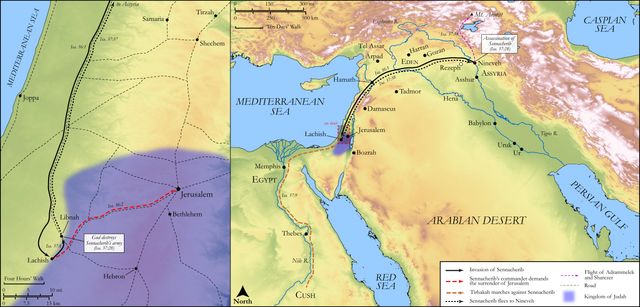
The late 8th century BC was characterized by the formidable dominance of the Neo-Assyrian Empire, renowned for its brutal military campaigns, effective administrative control, and sophisticated psychological warfare. Sennacherib's invasion of Judah, culminating in the siege of Jerusalem, was part of a broader imperial strategy to consolidate Assyrian hegemony over the Levant. Rabshakeh, as a high-ranking official and a master orator, employed a common tactic of public haranguing, designed to induce surrender without the costly and time-consuming process of a prolonged siege. His taunts, delivered in Hebrew to ensure widespread comprehension among the populace, were not merely insults but direct challenges to the sovereignty and power of Judah's God—a grave offense in a cultural milieu where national deities were believed to be the source of military success and national identity. The desperate plea for prayer for a "remnant" vividly reflects the dire reality that the majority of Judah had already fallen to Assyrian might, leaving Jerusalem as the last remaining stronghold.
Key Themes
ShowHideThis verse powerfully contributes to several overarching themes pervasive within the book of Isaiah and the broader biblical narrative. Firstly, it highlights the theme of Divine Sovereignty and Vindication. Hezekiah's earnest hope that God will "hear" and "reprove" Rabshakeh's words underscores a deep-seated conviction that the LORD is not a passive or distant deity but an active, "living God" who fiercely defends His honor and His people against all adversaries, especially those who dare to blaspheme His sacred name. Secondly, the verse profoundly emphasizes the Power of Prayer and Intercession. Faced with an overwhelming military threat, Hezekiah's immediate and primary response is to seek divine intervention through fervent prayer, illustrating that spiritual warfare often precedes and enables physical deliverance. This aligns perfectly with the Old Testament's consistent portrayal of prayer as a vital and potent means of seeking God's will and unleashing His power, as exemplified in Psalm 50:15. Thirdly, the concept of the Remnant is central to this passage. The "remnant that is left" refers to the small, surviving portion of Judah after the devastating Assyrian onslaught, a recurring and significant motif throughout Isaiah's prophecy (ee.g., Isaiah 10:21-22). It signifies God's unwavering faithfulness to preserve a faithful core, even amidst judgment and widespread destruction, and serves as a crucial focal point for intercessory prayer.
Exposition and Analysis
ShowHideKey Word Analysis
ShowHideThis word (H2778) signifies more than a casual insult; it carries the profound sense of taunting, defying, or blaspheming. Rabshakeh's words were a direct challenge and a deliberate act of dishonor against the "living God," asserting His perceived powerlessness when compared to the gods of other nations conquered by Assyria. It implies a public, severe, and intentional act of contempt, specifically aimed at shaming and demoralizing both God and His people.
This word (H3198) means to rebuke, correct, decide a case, or justify. In this specific context, it implies God's righteous judgment and ultimate vindication against the Assyrian's insolence. It suggests that God will not merely register the blasphemy but will actively intervene to demonstrate His supreme authority, proving Rabshakeh's boasts false and defending His own name and honor through decisive action.
This term (H7611) refers to a remainder or a residual portion, specifically denoting those who have survived or are left behind after a significant event. In Isaiah's prophetic message, the "remnant" frequently carries profound theological weight, referring to a small, faithful portion of Israel preserved by God through periods of judgment, who are destined for future restoration or salvation. Here, it refers concretely to the surviving people of Judah besieged within Jerusalem, whose very existence is in dire jeopardy and for whom urgent, life-sustaining prayer is desperately needed.
Verse Breakdown
ShowHide"It may be the LORD thy God will hear the words of Rabshakeh, whom the king of Assyria his master hath sent to reproach the living God,"
This opening clause expresses King Hezekiah's humble hope and desperate, yet faith-filled, plea. He profoundly acknowledges that Rabshakeh's words are not merely against Judah but constitute a direct "reproach" (a severe blasphemy and public dishonor) against the "living God." The powerful phrase "living God" stands in stark and deliberate contrast to the dead, impotent idols and deities of the Assyrians and other conquered nations, emphatically emphasizing Yahweh's active power, dynamic presence, and unique sovereignty. Hezekiah's hope is rooted in the conviction that God will take personal and righteous offense at this direct assault on His divine character and respond accordingly.
"and will reprove the words which the LORD thy God hath heard:"
This continues and intensifies Hezekiah's plea, expressing a confident expectation that God will not simply hear the blasphemy but will actively "reprove" (meaning to rebuke, vindicate, or justly judge) Rabshakeh's impious words. This implies a powerful divine response that will unequivocally demonstrate God's sovereignty and justice, thereby proving His unparalleled power over the arrogant Assyrian boasts. The deliberate repetition of "the LORD thy God hath heard" powerfully underscores God's attentiveness, His intimate knowledge of the situation, and the absolute certainty that no word spoken against Him goes unnoticed or unaddressed.
"wherefore lift up [thy] prayer for the remnant that is left."
This is the urgent, direct, and pivotal call to action from Hezekiah to Isaiah. Recognizing the profound gravity of the situation and the deeply spiritual nature of the conflict, Hezekiah instructs Isaiah, as God's prophet, to intercede fervently for the "remnant"—the surviving people of Judah confined and imperiled within Jerusalem. This highlights the indispensable and vital role of intercessory prayer in times of national crisis and underscores the deep pastoral concern for the preservation and salvation of God's chosen people.
Literary Devices
ShowHideIsaiah 37:4 employs several potent literary devices that amplify its theological and emotional impact. Anthropomorphism is clearly evident in the depiction of God "hearing" and "reproving" words, attributing human-like sensory perception and judicial action to the divine to convey God's active engagement, personal offense, and righteous indignation at the blasphemy. A powerful Contrast is established between the "living God" of Israel and the implied dead, impotent, or conquered gods of the Assyrians, whom Rabshakeh arrogantly claims have been vanquished. This contrast serves to elevate the unique, dynamic, and incomparable nature of Yahweh. The use of Synecdoche is present, where Rabshakeh, the Assyrian envoy and orator, stands in for the entire Assyrian empire and its arrogant defiance of the one true God. Finally, the term "remnant" functions as powerful Symbolism, representing not merely the physical survivors of the siege but also the enduring promise of God's covenant faithfulness to preserve a people for Himself, even through severe judgment, ensuring the continuity of His redemptive plan.
Theological and Thematic Connections
ShowHideIsaiah 37:4 profoundly illustrates the biblical truth that God is not a distant, indifferent, or passive deity, but the "living God" who actively hears, sees, and responds with sovereign power to the affairs of humanity, especially when His holy name and His chosen people are maligned. Hezekiah's humble yet urgent plea is a powerful testament to the efficacy and necessity of prayer as the primary recourse for God's people in times of overwhelming crisis, demonstrating a deep and unwavering reliance on divine intervention over human ingenuity or military strategy. The verse also underscores the profound theme of divine justice, where God is expected to "reprove" or vindicate His honor against those who blaspheme Him. This expectation is deeply rooted in God's unwavering covenant faithfulness and His steadfast commitment to His chosen people, even when they are reduced to a vulnerable "remnant." The miraculous and unprecedented deliverance of Jerusalem, which immediately follows this prayer, serves as an undeniable and powerful demonstration of God's sovereign power to protect His own against seemingly insurmountable odds.
Reflection and Application
ShowHideIsaiah 37:4 offers enduring and vital lessons for believers navigating a world that often seems hostile to faith and prone to mocking spiritual truths. Hezekiah's exemplary response to overwhelming external threats and blasphemous taunts is not despair, frantic human strategizing, or capitulation, but immediate, humble, and fervent prayer. This teaches us that when faced with seemingly insurmountable challenges—whether deeply personal crises, pervasive societal pressures, or direct spiritual attacks that mock God's truth and authority—our first and most potent weapon is intercession. We are profoundly called to bring our anxieties, the injustices we witness, and the blasphemies directed against God's holy name before Him, trusting with unwavering faith that He is indeed the "living God" who hears, cares, and actively intervenes in human affairs. Furthermore, the poignant call to pray for the "remnant" reminds us of our sacred responsibility to intercede earnestly for fellow believers who are struggling, persecuted, or facing intense spiritual attacks, particularly those who feel isolated, vulnerable, or are at the brink of despair. This passage assures us that God is intimately attentive to the prayers of His people and is supremely able to deliver them, even from the most formidable and daunting foes, just as He miraculously delivered Jerusalem from the Assyrian army (as powerfully recounted in Isaiah 37:36-37).
Questions for Reflection
ShowHideFAQ
ShowHideWho was Rabshakeh and why were his words so significant?
ShowHideRabshakeh was a high-ranking official and military commander in the Assyrian army, serving under King Sennacherib. His title likely means "chief cupbearer" or "chief officer," indicating a position of significant authority, trust, and influence within the Assyrian court. His words, meticulously recorded in Isaiah 36, were profoundly significant because they transcended mere military threats; they constituted a sophisticated form of psychological warfare and, crucially, direct blasphemy against the God of Israel. Delivered in Hebrew, his speech was strategically designed to demoralize the people of Jerusalem, undermine their faith in the LORD, and equate the true, living God with the defeated and impotent idols of other nations conquered by Assyria. This made his taunts a direct and grave affront to God's honor and sovereignty, thus provoking Hezekiah's urgent and faith-filled plea for divine intervention.
What does "reprove" mean in this context, and how does God "reprove" words?
ShowHideIn this specific context, "reprove" (Hebrew: yâkach) carries the strong meaning of rebuking, correcting, or deciding a case, often implying a powerful demonstration of righteousness, authority, and vindication. When King Hezekiah prays that God will "reprove the words" of Rabshakeh, he is earnestly asking God to actively respond to the Assyrian's blasphemy by demonstrating His supreme power and unequivocally vindicating His own holy name. God "reproves" words not by engaging in a verbal debate with Rabshakeh, but by acting decisively and miraculously to nullify the Assyrian's arrogant boasts and deliver His people, thereby proving Rabshakeh's words utterly false and God's power undeniably true. This divine "reproving" is ultimately and dramatically fulfilled in the miraculous destruction of the Assyrian army by the angel of the LORD (as vividly described in Isaiah 37:36).
Why is the "remnant" so important in Isaiah's prophecy?
ShowHideThe "remnant" (Hebrew: shᵉʼêrîyth) is a crucial and deeply significant theological concept that permeates the entire book of Isaiah. It refers to the small, surviving portion of Israel that endures divine judgment or foreign invasion, preserved by God's sovereign grace and faithfulness. In Isaiah 37:4, it specifically refers to the people of Judah besieged within Jerusalem, who are all that remain after the devastating Assyrian conquest of the surrounding land. Theologically, the concept of the remnant signifies God's unwavering faithfulness to His covenant promises, ensuring that a people will always be preserved through whom His redemptive plan will continue to unfold. It powerfully points to God's selective preservation and His ultimate purpose to bring about salvation through a faithful few, a profound theme that finds its ultimate and glorious fulfillment in the person and work of Jesus Christ and the establishment of His church.
Christ-Centered Fulfillment
ShowHideIsaiah 37:4, with its poignant plea for God to "reprove the words" of those who "reproach the living God" and to save the vulnerable "remnant," finds its ultimate and glorious fulfillment in the person and redemptive work of Jesus Christ. The "living God" whom Rabshakeh blasphemed is fully and perfectly revealed in Jesus, who is God incarnate, the very Word made flesh (as profoundly declared in John 1:14 and Colossians 2:9). All blasphemy, opposition, and rebellion against God ultimately fall before Him. Just as King Hezekiah sought intercession from Isaiah, Christ Himself is our ultimate and perfect Intercessor, eternally living to make intercession for us before the Father (as powerfully affirmed in Hebrews 7:25). The "remnant" for whom Hezekiah prayed finds its truest security, eternal preservation, and ultimate salvation in Christ; He is the Good Shepherd who lays down His life for His sheep, gathering them, preserving them from every spiritual enemy, and through Him, God's people are truly delivered from the ultimate spiritual Assyria—the dominion of sin, death, and the devil. The divine vindication that Hezekiah hoped for is fully realized in Christ's triumphant victory over evil on the cross and His glorious resurrection, demonstrating God's ultimate and decisive victory over all who oppose Him and His kingdom (as majestically prophesied in Revelation 19:11-16). Thus, the desperate prayer for the remnant in Isaiah 37:4 powerfully foreshadows the saving work of Christ, who secures the eternal remnant of God's people through His own perfect life, atoning death, and victorious resurrection.