


Exodus 9:31
- וְהַפִּשְׁתָּהve·ha·pish·Tahand the flaxH6594Conj-w ¦ Art ¦ N-fsNoun Singular Feminine Absoluteוְandהַtheפִּשְׁתָּהflax
- וְהַשְּׂעֹרָהve·ha·se·'o·Rahand the barleyH8184Conj-w ¦ Art ¦ N-fsNoun Singular Feminine Absoluteוְandהַtheשְּׂעֹרָהbarley
- נֻכָּתָהnu·Ka·tahit was struckH5221V-Pual-Perf-3fsVerb Pual Perfect 3rd Singular Feminine
- כִּיkiforH3588PrtParticle Conditional
- הַשְּׂעֹרָהha·se·'o·Rahthe barleyH8184Art ¦ N-fsNoun Singular Feminine Absoluteהַtheשְּׂעֹרָהbarley
- אָבִיב'a·Viv[was] young barley ear[s]H24N-csNoun Singular common gender Absolute
- וְהַפִּשְׁתָּהve·ha·pish·Tahand the flaxH6594Conj-w ¦ Art ¦ N-fsNoun Singular Feminine Absoluteוְandהַtheפִּשְׁתָּהflax
- גִּבְעֹלgiv·'Ol[was] budH1392N-msNoun Singular Masculine Absolute
English is a literal word-by-word gloss of the Hebrew, not the KJV's wording. Why?
This is the original text the KJV's translators worked from — each Hebrew word with its own literal English meaning in this verse, prepared by scholars at Tyndale House, Cambridge. The KJV translates whole sentences, not word by word, so its wording differs: one Hebrew word can become several English words, and the KJV may choose “the LORD” where the gloss reads “Yahweh”. Both are faithful — they answer different questions. For the KJV's own rendering, switch to the KJV text.
Details
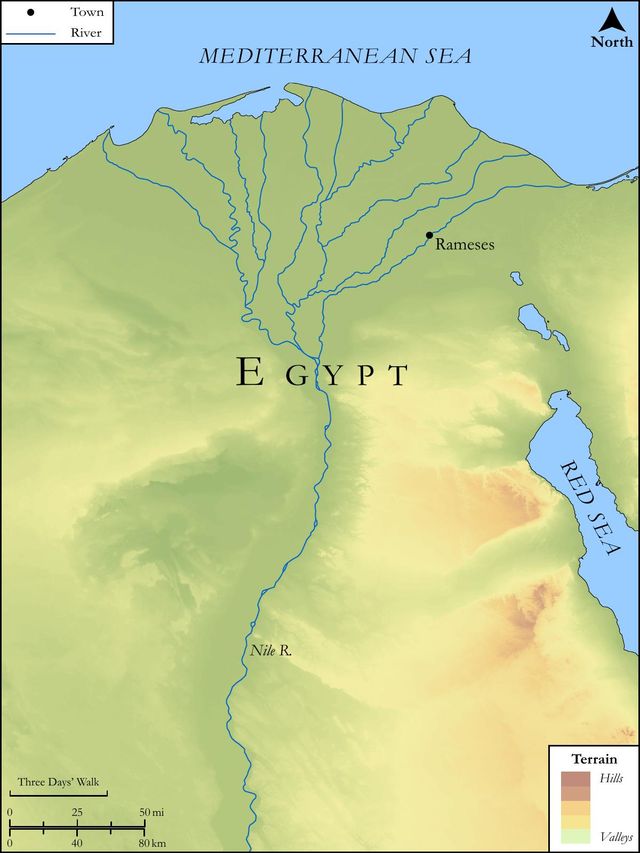
See on the biblical-era map

Study this verse
Public-domain commentary
Matthew Henry
From his Commentary on the Whole Bible. Henry comments on passages, not single verses — this entry covers Exodus 9:22–35. His four-level outline is real structure in the source text, so it is rendered as structure.
The threatened plague of hail is here summoned by the powerful hand and rod of Moses (Exo 9:22, Exo 9:23), and it obeys the summons, or rather the divine command; for fire and hail fulfil God's word, Psa 148:8. And here we are told,
I.What desolations it made upon the earth.
The thunder, and fire from heaven (or lightning), made it both the more dreadful and the more destroying, Exo 9:23, Exo 9:24. Note, God makes the clouds, not only his store-houses whence he drops fatness on his people, but his magazines whence, when he pleases, he can draw out a most formidable train of artillery, with which to destroy his enemies. He himself speaks of the treasures of hail which he hath reserved against the day of battle and war, Job 38:22, Job 38:23. Woeful havoc this hail made in the land of Egypt. It killed both men and cattle, and battered down, not only the herbs, but the trees, Exo 9:25. The corn that was above ground was destroyed, and that only preserved which as yet had not come up, Exo 9:31, Exo 9:32. Note, God has many ways of taking away the corn in the season thereof (Hos 2:9), either by a secret blasting, or a noisy hail. In this plague the hot thunderbolts, as well as the hail, are said to destroy their flocks, Psa 78:47, Psa 78:48; and see Psa 105:32, Psa 105:33. Perhaps David alludes to this when, describing God's glorious appearances for the discomfiture of his enemies, he speaks of the hailstones and coals of fire he threw among them, Psa 18:12, Psa 18:13. And there is a plan reference to it on the pouring out of the seventh vial, Rev 16:21. Notice is here taken (Exo 9:26) of the land of Goshen's being preserved from receiving any damage by this plague. God has the directing of the pregnant clouds, and causes it to rain or hail on one city and not on another, either in mercy or in judgment.
II.What a consternation it put Pharaoh in. See what effect it had upon him,
1.He humbled himself to Moses in the language of a penitent, Exo 9:27, Exo 9:28. No man could have spoken better. He owns himself on the wrong side in his contest with the God of the Hebrews: "I have sinned in standing it out so long." He owns the equity of God's proceedings against him: The Lord is righteous, and must be justified when he speaks, though he speak in thunder and lightning. He condemns himself and his land: "I and my people are wicked, and deserve what is brought upon us." He begs the prayers of Moses: "Entreat the Lord for me, that this direful plague may be removed." And, lastly, he promises to yield up his prisoners: I will let you go. What could one desire more? And yet his heart was hardened all this while. Note, The terror of the rod often extorts penitent acknowledgments from those who have no penitent affections; under the surprise and smart of affliction, they start up, and say that which is pertinent enough, not because they are deeply affected, but because they know that they should be and that it is meet to be said.
2.Moses, hereupon, becomes an intercessor for him with God. Though he had all the reason in the world to think that he would immediately repent of his repentance, and told him so (Exo 9:30), yet he promises to be this friend in the court of heaven. Note, Even those whom we have little hopes of, yet we should continue to pray for, and to admonish, Sa1 12:23. Observe,
(1.)The place Moses chose for his intercession. He went out of the city (Exo 9:33), not only for privacy in his communion with God, but to show that he durst venture abroad into the field, notwithstanding the hail and lightning which kept Pharaoh and his servants within doors, knowing that every hail-stone had its direction from his God, who meant him no hurt. Note, Peace with God makes men thunderproof, for thunder is the voice of their Father.
(2.)The gesture: He spread abroad his hands unto the Lord - an outward expression of earnest desire and humble expectation. Those that come to God for mercy must stand ready to receive it.
(3.)The end Moses aimed at in interceding for him: That thou mayest know, and be convinced, that the earth is the Lord's (Exo 9:29), that is, that God has a sovereign dominion over all the creatures, that they all are ruled by him, and therefore that thou oughtest to be so. See what various methods God uses to bring men to their proper senses. Judgments are sent, judgments removed, and all for the same end, to make men know that he Lord reigns.
(4.)The success of it.
[1.]He prevailed with God, Exo 9:33. But,
[2.]He could not prevail with Pharaoh: He sinned yet more, and hardened his heart, Exo 9:34, Exo 9:35. The prayer of Moses opened and shut heaven, like Elias's (Jam 5:17, Jam 5:18), and such is the power of God's two witnesses (Rev 11:6); yet neither Moses nor Elias, nor those two witnesses, could subdue the hard hearts of men. Pharaoh was frightened into a compliance by the judgment, but, when it was over, his convictions vanished, and his fair promises were forgotten. Note, Little credit is to be given to confessions upon the rack. Note also, Those that are not bettered by judgments and mercies are commonly made worse.
Continue studying Exodus 9:31 across the web’s major study libraries — every link below opens this exact verse, chapter, or book on the destination site.
Read & Compare
 BibleGatewayThis verse in more than 200 translations and 70 languages.
 Bible.comThe YouVersion reader — hundreds of translations, reading plans, and highlights.
 ESV.orgCrossway's official English Standard Version reader.
 NET BibleThe NET translation with 60,000+ translators' notes on every rendering decision.
 STEP BibleTyndale House's free study tool — original text, vocabulary, and scholarly resources.
 BibliaLogos Bible Software's free web reader.
 USCCBThe New American Bible (Revised Edition) with the U.S. bishops' study notes.
Commentaries
 BibleHub CommentariesDozens of classic commentaries on this verse, gathered on one page.
 StudyLightMore than 100 commentary sets — the largest collection on the web.
 BibleRefPlain-English commentary on what this verse means, verse by verse.
 Enduring WordDavid Guzik's free commentary on this chapter, widely used by Bible teachers.
 Bible Study ToolsVerse commentary alongside Greek and Hebrew study aids.
Original Language & Research
- BibleHub InterlinearThe verse word by word — original language, transliteration, and English.
- BibleHub LexiconEvery word's original-language definition and Strong's entry.
 Blue Letter BibleDeep-study tools — Strong's numbers, concordance, and word studies.
 SefariaThe Hebrew text with Rashi and centuries of Jewish commentary.
Sermons, Hymns & Audio


TrulyRandomVerse is not affiliated with these sites and doesn’t control their content. They’re linked because they’re genuinely useful.
Summary
Exodus 9:31 meticulously chronicles the precise agricultural devastation wrought by the seventh plague upon Egypt, specifically targeting and destroying the flax and barley crops. This verse underscores the meticulous nature of God's judgment, demonstrating His absolute sovereignty over creation and His purposeful actions against Pharaoh's persistent defiance, as these vital crops were struck down at their most vulnerable, near-harvest stage, unlike other grains.
Context
ShowHideLiterary Context
This verse is intricately woven into the dramatic narrative of the ten plagues, serving as a specific detail within the account of the seventh plague, the devastating hail storm. Preceding this verse, Exodus 9:23-26 describes the unprecedented severity of the hail, which struck down everything in the open field, from humans and animals to vegetation, throughout Egypt, while miraculously sparing the land of Goshen where the Israelites resided. Exodus 9:31 functions as a precise agricultural explanation, detailing why certain crops were destroyed while others were not—a point further elucidated in Exodus 9:32, which notes that wheat and rye were spared because they were not yet mature. This specificity highlights the deliberate, controlled, and targeted nature of God's judgment, emphasizing His intimate knowledge of the Egyptian agricultural cycle.
Historical & Cultural Context
Ancient Egypt's civilization was fundamentally agrarian, with its prosperity inextricably linked to the annual inundation of the Nile. Flax and barley were cornerstones of the Egyptian economy and daily life. Flax was indispensable for producing linen, the ubiquitous textile used for clothing, sails, burial shrouds, and a significant trade commodity. Barley served as a staple food crop, primarily for making bread and beer, which were consumed by all social strata, and also as fodder for livestock. The destruction of these crops, particularly when they were "in the ear" (barley) and "bolled" (flax)—meaning they were mature and nearing harvest—represented a catastrophic economic and social blow. This targeted assault on their agricultural foundation directly challenged the pantheon of Egyptian deities associated with fertility, agriculture, and weather, such as Osiris (god of the afterlife, the Nile, and agriculture), Isis (goddess of fertility and motherhood), and Seth (god of storms and chaos), unequivocally demonstrating Yahweh's supreme dominion over all aspects of their existence and their gods.
Key Themes
ShowHideExodus 9:31 significantly contributes to several overarching themes within the book of Exodus and the broader Pentateuch. Foremost among these is the theme of Divine Sovereignty and Omnipotence, as God demonstrates His absolute control over the natural world, orchestrating a plague with such precision. It also powerfully illustrates the theme of Judgment and Deliverance, showcasing God's righteous wrath against Pharaoh's hardened heart and His unwavering commitment to delivering His people. The selective nature of the destruction, sparing the Israelites and certain crops, reinforces the theme of Distinction and Divine Favor, highlighting God's ability to differentiate between His people and their oppressors, a theme seen from the very beginning of the plagues (e.g., Exodus 8:22-23). Furthermore, the economic impact of the plague underscores the theme of God's Challenge to Idolatry and False Gods, proving that the gods of Egypt, upon whom the Egyptians relied for their prosperity and security, were powerless before the one true God.
Exposition and Analysis
ShowHideExodus 9:31 states, "And the flax and the barley was smitten: for the barley [was] in the ear, and the flax [was] bolled." This verse provides a precise, almost clinical, explanation for the selective destruction wrought by the hail, revealing God's intricate knowledge of agricultural cycles.
Key Word Analysis
ShowHideFrom the Hebrew root H5221, this verb signifies a powerful, decisive strike, ranging from a light blow to a severe, even fatal, impact. In this context, it conveys the comprehensive ruination of the crops, indicating not mere damage but utter destruction. The use of nâkâh emphasizes the severity and finality of the divine judgment on these vital agricultural resources.
Derived from H24, this term, referring to the barley, describes the stage where the grain is green and young, yet already formed within the head of the plant. This indicates that the barley was mature and nearing readiness for harvest. At this critical stage, the plant is particularly vulnerable to hail, as the developed grains would be easily dislodged, shattered, or severely damaged, rendering the crop useless.
This word, applied to the flax, describes the formation of the seed pods or "bolls" on the flax plants. Similar to the barley's stage, this signifies that the flax was well-developed and approaching its harvest for its valuable fibers. Once the bolls are formed, the plant becomes brittle and highly susceptible to shattering from a severe hail storm, which would destroy the fibers and make them unusable.
Verse Breakdown
ShowHide"And the flax and the barley was smitten"
This opening clause immediately identifies the specific agricultural targets of the hail plague. It is not a general, indiscriminate destruction of all vegetation, but a precise, divinely orchestrated assault on two of Egypt's most crucial crops. The passive voice "was smitten" subtly points to an external, powerful agent—God's judgment—as the active force behind the destruction.
"for the barley [was] in the ear, and the flax [was] bolled"
This explanatory clause provides the crucial rationale for why these particular crops were destroyed. It reveals that the destruction was not arbitrary but strategically timed: these crops were at a critical, mature stage of growth, making them uniquely susceptible to the hail's destructive power. This detail underscores God's intimate knowledge of the agricultural cycle and His precise timing of the plague, demonstrating a level of control that transcends mere natural phenomena and points to a divine intelligence at work.
Literary Devices
ShowHideThe verse masterfully employs precision and causal explanation as central literary techniques. The detailed agricultural observations—"in the ear" for barley and "bolled" for flax—serve not merely as factual reporting but as a profound demonstration of the divine author's meticulousness and the plague's exactitude. This precision underscores God's absolute control over creation, contrasting sharply with the chaotic and indiscriminate nature of a typical hailstorm. Furthermore, the verse exhibits a subtle yet powerful divine irony or poetic justice: the very crops that sustained Egypt and symbolized its prosperity were destroyed at their most valuable, near-harvest stage, effectively turning a blessing into a devastating curse. This highlights the futility of relying on earthly provisions when one defies the divine Provider.
Theological and Thematic Connections
ShowHideExodus 9:31 powerfully illustrates several core theological truths that resonate throughout biblical revelation. It profoundly demonstrates God's absolute sovereignty over creation, revealing that even the most destructive forces of nature are under His meticulous command. The ability to orchestrate a hail storm combining ice with fire, and to precisely target specific crops at their particular growth stages, unequivocally establishes God's dominion over all natural phenomena. This challenges any notion of nature being an autonomous force or under the control of other deities, particularly the Egyptian gods associated with weather and fertility. Moreover, the verse highlights the precision and purposefulness of divine judgment. God's actions are never indiscriminate; they are meticulously applied, designed to achieve specific outcomes. The destruction of flax and barley, which were at a vulnerable, near-harvest stage, while sparing wheat and rye (as noted in the subsequent verse), showcases God's exact knowledge and control, emphasizing that His judgments are always purposeful, never arbitrary, and intended to break Pharaoh's stubbornness and demonstrate Yahweh's supremacy. This economic devastation, striking essential crops, was a strategic component of the plagues, designed to increase the burden on Pharaoh and his kingdom, forcing them to consider the cost of their defiance.
This verse connects to the broader biblical narrative of God's power and His unwavering commitment to delivering His people. It foreshadows future instances where God uses natural phenomena as instruments of His will, whether for judgment or deliverance.
Reflection and Application
ShowHideExodus 9:31 serves as a profound reminder of God's meticulous nature and His unwavering control over all things, even in judgment. It teaches us that God's actions are always purposeful and never arbitrary, demonstrating His profound knowledge of the world He created and His ability to intervene with absolute precision. For believers today, this account encourages us to recognize God's immense power and sovereignty over the natural world and human affairs. Just as Pharaoh faced escalating consequences for his defiance, this verse underscores the importance of heeding divine warnings and responding with humility and obedience to God's revealed will. It reminds us that God's purposes will ultimately prevail, regardless of human resistance, and that His timing is always perfect. In a world often feeling chaotic or random, this verse offers deep comfort in God's sovereign oversight and a powerful challenge to align our lives with His righteous and wise will, trusting that He is at work even in seemingly destructive events.
Questions for Reflection
ShowHideFAQ
ShowHideWhy were only flax and barley destroyed, and not all crops?
ShowHideThe verse itself provides the key explanation: "for the barley [was] in the ear, and the flax [was] bolled." This indicates that these specific crops were at a mature, near-harvest stage, making them uniquely vulnerable to the destructive force of the hail. In contrast, Exodus 9:32 clarifies that wheat and rye were "not grown up" (i.e., they were later-ripening crops that had not yet emerged or were still in an early, more resilient stage) and thus were spared. This distinction highlights God's incredible precision and control, demonstrating that the plague was not a random act of nature but a targeted, intelligent judgment with specific agricultural knowledge.
Does this account imply God causes all natural disasters today as a form of judgment?
ShowHideWhile Exodus 9:31 clearly depicts God directly causing a specific natural disaster as a judgment against Pharaoh and Egypt, it is crucial to distinguish this unique historical context from all contemporary natural disasters. The Bible teaches that we live in a fallen world where creation groans under the weight of sin (Romans 8:22), which can lead to natural calamities as part of the general effects of the curse. However, God remains sovereign over all creation (Psalm 24:1) and can certainly use natural events for His specific purposes, including correction, warning, or even mercy. We should avoid simplistic, one-to-one correlations for every natural disaster, but always acknowledge God's ultimate power, wisdom, and redemptive purposes in all circumstances, recognizing that His ways are higher than ours.
What was the economic significance of destroying flax and barley for Egypt?
ShowHideFlax and barley were foundational to the Egyptian economy and daily life. Flax was essential for producing linen, the primary textile for clothing, mummification, and trade, making it a vital cash crop and a symbol of Egyptian wealth. Barley was a staple food for both humans (used to make bread and beer) and livestock, forming the backbone of their agricultural sustenance. Destroying these crops at their most valuable, near-harvest stage inflicted immense economic hardship and social disruption across the entire kingdom. This targeted economic blow was a powerful demonstration of God's judgment, designed to cripple Egypt's self-sufficiency and pressure Pharaoh to release the Israelites, showing that even their material prosperity and national security were utterly subject to Yahweh's will.
Christ-Centered Fulfillment
ShowHideWhile Exodus 9:31 recounts a specific act of divine judgment in the Old Testament, its underlying themes find profound fulfillment and amplification in the person and work of Jesus Christ. The plague of hail, demonstrating God's absolute power over nature, foreshadows the Sovereignty Over Creation inherent in Jesus. As God incarnate, Jesus likewise demonstrates this same divine authority: He calms raging storms with a mere word (Mark 4:39), walks on water (Matthew 14:25), and miraculously multiplies meager provisions to feed thousands (John 6:11), unequivocally displaying His inherent dominion over the natural world, just as the Father did in the plagues.
Furthermore, the plagues were God's precise judgment against a rebellious nation and its false gods, leading to the deliverance of His chosen people. Jesus, too, embodies both ultimate Precise Judgment and Deliverance. He is appointed by the Father as the one through whom all judgment will ultimately come (John 5:22), and His return will bring a final, decisive judgment upon all who reject Him. Yet, for those who believe, He offers deliverance from the ultimate "plague" of sin and death, providing salvation and eternal life. The escalating destruction in Egypt due to Pharaoh's stubbornness illuminates The Ultimate Cost of Rebellion. The plagues foreshadow the greater spiritual reality of humanity's universal bondage to sin and Satan, from which only Christ can deliver. His sacrifice on the cross is the ultimate act of divine intervention, where He bore the full weight of the judgment that humanity deserved (2 Corinthians 5:21), so that those who trust in Him might be spared from eternal destruction and enter into glorious freedom and reconciliation with God. Thus, the precision of judgment in Exodus 9:31 points forward to the precise, redemptive work of Christ, who perfectly fulfilled God's righteous demands and secured salvation for His people.