


Exodus 12:48
Bible text: King James Version (1769 Blayney text) · Public domain
Bible text: King James Version with Strong's numbers · Public domain
Bible text: Berean Standard Bible · Public domain
Bible text: American Standard Version (1901) · Public domain
Bible text: World English Bible, Messianic edition · Public domain
Bible text: Geneva Bible (1599) · Public domain
Bible text: Young's Literal Translation · Public domain
- וְכִיve·khiand ifH3588Conj-w ¦ PrtParticle Conditionalוְandכִיif
- יָגוּרya·Gurhe will sojournH1481V-Qal-Imperf-3msVerb Qal Imperfect 3rd Singular Masculine
- אִתְּךָ'i·te·Khawith youH854Prep ¦ 2msPreposition Definiteאִתְּwithךָyou
- גֵּרGera sojournerH1616N-msNoun Singular Masculine Absolute
- וְעָשָׂהve·'A·sahand he will observeH6213Conj-w ¦ V-Qal-ConsecPerf-3msVerb Qal Consecutive Perfect 3rd Singular Masculineוְandעָשָׂהhe will observe
- פֶסַחfe·Sacha passoverH6453N-msNoun Title Singular Masculine Absolute
- לַיהוָהla·Yah·wehto YahwehH3068Prep-l ¦ N-properNoun Proper TitleלַtoיהוָהYahweh
- הִמּוֹלhi·Molhe will be circumcisedH4135V-Niphal-Imp-2msVerb Niphal Imperative 2nd Singular Masculine
- לוֹloof himPrep-l ¦ 3msSuffix Personal 3rd Singular Masculineלofוֹhim
- כָלkholeveryH3605N-msNoun Singular Masculine Absolute
- זָכָרza·KharmaleH2145Adj-msAdjective Singular Masculine Absolute
- וְאָזve·'Azand thenH227Conj-w ¦ AdvAdverbוְandאָזthen
- יִקְרַבyik·Ravhe will draw nearH7126V-Qal-Imperf-3msVerb Qal Imperfect 3rd Singular Masculine
- לַעֲשֹׂתוֹla·'a·so·Toto observe itH6213Prep-l ¦ V-Qal-Inf ¦ 3msVerb Qal Infinitive Constructלַtoעֲשֹׂתobserveוֹit
- וְהָיָהve·ha·Yahand he will beH1961Conj-w ¦ V-Qal-ConsecPerf-3msVerb Qal Consecutive Perfect 3rd Singular Masculineוְandהָיָהhe will be
- כְּאֶזְרַחke·'ez·Rachlike [the] native-born ofH249Prep-k ¦ N-mscNoun Singular Masculine Constructכְּlikeאֶזְרַח[the] native-born of
- הָאָרֶץha·'A·retzthe landH776Art ¦ N-fsNoun Singular Feminine Absoluteהָtheאָרֶץland
- וְכָלve·kholand anyH3605Conj-w ¦ N-msNoun Singular Masculine Absoluteוְandכָלany
- עָרֵל'a·Reluncircumcised [man]H6189Adj-msAdjective Singular Masculine Absolute
- לֹאlo'notH3808NegParticle Negative
- יֹאכַלYo·khalhe will eatH398V-Qal-Imperf-3msVerb Qal Imperfect 3rd Singular Masculine
- בּוֹboin <the> itPrep-b ¦ 3msSuffix Personal 3rd Singular Masculineבּin <the>וֹit
English is a literal word-by-word gloss of the Hebrew, not the KJV's wording. Why?
This is the original text the KJV's translators worked from — each Hebrew word with its own literal English meaning in this verse, prepared by scholars at Tyndale House, Cambridge. The KJV translates whole sentences, not word by word, so its wording differs: one Hebrew word can become several English words, and the KJV may choose “the LORD” where the gloss reads “Yahweh”. Both are faithful — they answer different questions. For the KJV's own rendering, switch to the KJV text.
Details
See on the biblical-era maps
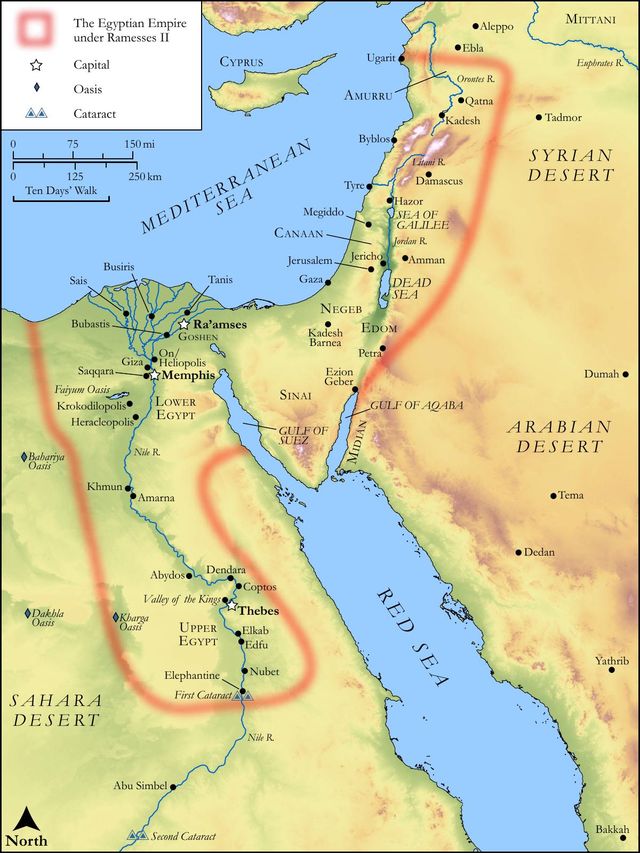
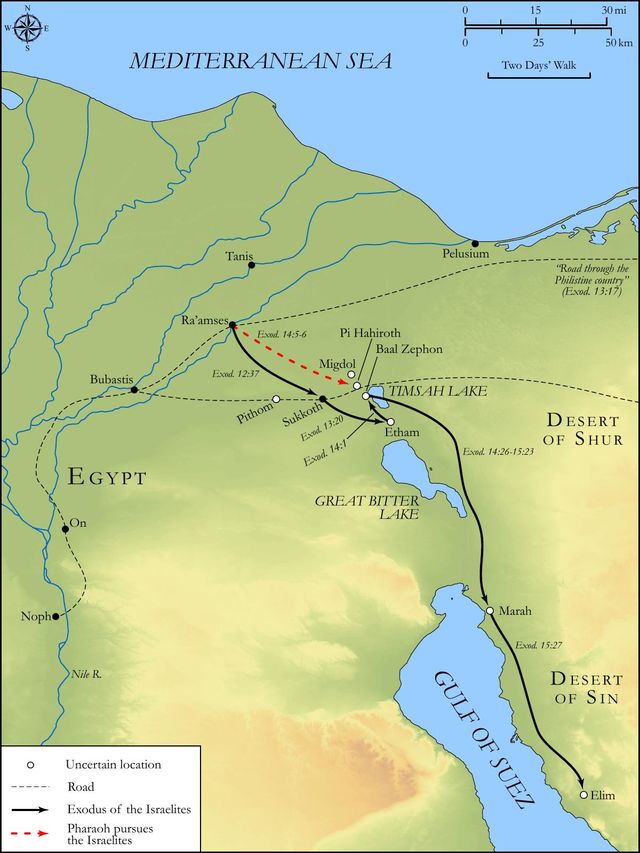
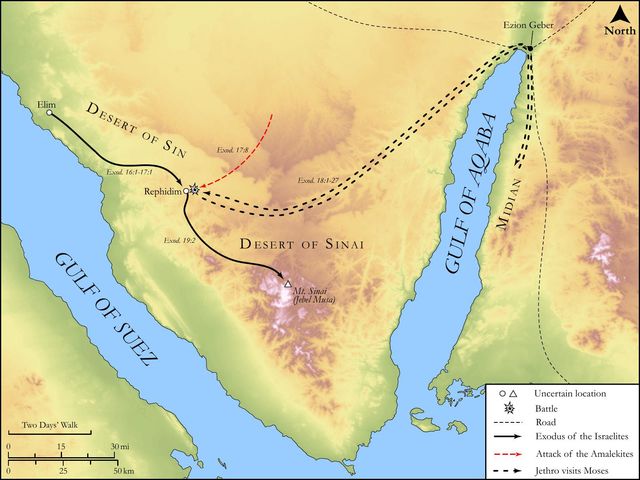
Study this verse
Public-domain commentary
Matthew Henry
From his Commentary on the Whole Bible. Henry comments on passages, not single verses — this entry covers Exodus 12:43–51. His two-level outline is real structure in the source text, so it is rendered as structure.
Some further precepts are here given concerning the passover, as it should be observed in times to come.
I.All the congregation of Israel must keep it, Exo 12:47.
All that share in God's mercies should join in thankful praises for them. Though it was observed in families apart, yet it is looked upon as the act of the whole congregation; for the smaller communities constituted the greater. The New Testament passover, the Lord's supper, ought not to be neglected by any who are capable of celebrating it. He is unworthy the name of an Israelite that can contentedly neglect the commemoration of so great a deliverance.
1.No stranger that was uncircumcised might be admitted to eat of it, Exo 12:43, Exo 12:45, Exo 12:48. None might sit at the table but those that came in by the door; nor may any now approach to the improving ordinance of the Lord's supper who have not first submitted to the initiating ordinance of baptism. We must be born again by the word ere we can be nourished by it. Nor shall any partake of the benefit of Christ's sacrifice, or feast upon it, who are not first circumcised in heart, Col 2:11.
2.Any stranger that was circumcised might be welcome to eat of the passover, even servants, Exo 12:44. If, by circumcision, they would make themselves debtors to the law in its burdens, they were welcome to share in the joy of its solemn feasts, and not otherwise. Only it is intimated (Exo 12:48) that those who were masters of families must not only be circumcised themselves, but have all their males circumcised too. If in sincerity, and with that zeal which the thing required and deserves, we give up ourselves to God, we shall, with ourselves, give up all we have to him, and do our utmost that all ours may be his too. Here is an early indication of favour to the poor Gentiles, that the stranger, if circumcised, stands upon the same level with the home-born Israelite. One law for both, Exo 12:49. This was a mortification to the Jews, and taught them that it was their dedication to God, not their descent from Abraham, that entitled them to their privileges. A sincere proselyte was as welcome to the passover as a native Israelite, Isa 56:6, Isa 56:7.
II.In one house shall it be eaten (Exo 12:46), for good-fellowship sake, that they might rejoice together, and edify one another in the eating of it. None of it must be carried to another place, nor left to another time; for God would not have them so taken up with care about their departure as to be indisposed to take the comfort of it, but to leave Egypt, and enter upon a wilderness, with cheerfulness, and, in token of that, to eat a good hearty meal. The papists' carrying their consecrated host from house to house is not only superstitious in itself, but contrary to this typical law of the passover, which directed that no part of the lamb should be carried abroad.
The chapter concludes with a repetition of the whole matter, that the children of Israel did as they were bidden, and God did for them as he promised (Exo 12:50, Exo 12:51); for he will certainly be the author of salvation to those that obey him.
Continue studying Exodus 12:48 across the web’s major study libraries — every link below opens this exact verse, chapter, or book on the destination site.
Read & Compare
 BibleGatewayThis verse in more than 200 translations and 70 languages.
 Bible.comThe YouVersion reader — hundreds of translations, reading plans, and highlights.
 ESV.orgCrossway's official English Standard Version reader.
 NET BibleThe NET translation with 60,000+ translators' notes on every rendering decision.
 STEP BibleTyndale House's free study tool — original text, vocabulary, and scholarly resources.
 BibliaLogos Bible Software's free web reader.
 USCCBThe New American Bible (Revised Edition) with the U.S. bishops' study notes.
Commentaries
 BibleHub CommentariesDozens of classic commentaries on this verse, gathered on one page.
 StudyLightMore than 100 commentary sets — the largest collection on the web.
 BibleRefPlain-English commentary on what this verse means, verse by verse.
 Enduring WordDavid Guzik's free commentary on this chapter, widely used by Bible teachers.
 Bible Study ToolsVerse commentary alongside Greek and Hebrew study aids.
Original Language & Research
- BibleHub InterlinearThe verse word by word — original language, transliteration, and English.
- BibleHub LexiconEvery word's original-language definition and Strong's entry.
 Blue Letter BibleDeep-study tools — Strong's numbers, concordance, and word studies.
 SefariaThe Hebrew text with Rashi and centuries of Jewish commentary.
Sermons, Hymns & Audio


TrulyRandomVerse is not affiliated with these sites and doesn’t control their content. They’re linked because they’re genuinely useful.
Summary
Exodus 12:48 meticulously details the conditions under which a resident alien, or sojourner, could participate in the sacred Passover observance. It mandates that all males within the sojourner's household must undergo circumcision, thereby granting them the status of "one that is born in the land" and permitting their full participation in this foundational act of worship and remembrance. This divine directive profoundly illustrates God's desire for universal reach within His covenant community, yet unequivocally on His precise terms, underscoring the non-negotiable nature of the covenant sign for partaking in Israel's defining moment of deliverance.
Context
ShowHideLiterary Context
This verse is intricately woven into the fabric of God's detailed instructions for the inaugural Passover, delivered to Moses and Aaron just prior to the devastating tenth plague upon Egypt. The preceding verses, Exodus 12:1-28, outline the meticulous preparation of the Passover lamb, its consumption, and the crucial application of its blood to the doorposts. Specifically, Exodus 12:43-47 establishes the initial parameters for who may and may not partake in the Passover meal, setting the immediate stage for the inclusion of the "stranger" in Exodus 12:48. The verses immediately following, Exodus 12:49-51, solidify the principle of "one law" for both native-born and sojourner, culminating in the triumphant departure of Israel from Egypt. This strategic placement within the narrative underscores that even at the very genesis of Israel's national identity and deliverance, God's covenant boundaries were paramount, yet graciously extended to those who fully embraced them.
Historical & Cultural Context
In Israel and the lands of the patriarchs, the presence of "strangers" or "resident aliens" (Hebrew: gerim) was a common societal feature, often comprising those driven from home by famine or war, or merchants. While they resided within a host community, their legal rights and social status could vary significantly, often being precarious. Uniquely, Israel's Mosaic Law consistently provided for the ger, frequently commanding compassion, justice, and protection for them (Deuteronomy 10:19). However, participation in core religious rituals was typically restricted to the native-born members of a community. The requirement of circumcision for Passover participation in Exodus 12:48 explicitly connects this pivotal national covenant event back to the foundational Abrahamic covenant, where circumcision was divinely instituted as the physical, indelible sign of belonging to God's chosen people (Genesis 17:9-14). This stipulation profoundly demonstrated that for the most sacred acts of worship and covenant remembrance, there was indeed "one law" for both the native-born and the sojourner, provided the sojourner fully assimilated into the covenant community through its foundational and non-negotiable sign.
Key Themes
ShowHideExodus 12:48 contributes significantly to several major theological and narrative themes within the book of Exodus and the broader Pentateuch. Foremost is the theme of Covenant Universal reach and Exclusivity. While the Passover is a defining moment for Israel's national identity, God's provision for the ger demonstrates His expansive heart, extending His covenant blessings beyond ethnic lines, albeit on His terms. This foreshadows a broader inclusion of the nations in God's redemptive plan. Another crucial theme is the Supremacy and Non-Negotiability of God's Covenant Terms. Circumcision, as the sign of the Abrahamic covenant (Genesis 17), is elevated here as the prerequisite for participation in the Mosaic covenant's most sacred ritual. This emphasizes that drawing near to God requires adherence to His established will and signs. Furthermore, the verse highlights the theme of Unity and Equality within the Covenant Community. The declaration that a circumcised stranger "shall be as one that is born in the land" (Exodus 12:48) establishes a remarkable principle of equality before God for all who genuinely commit to Him, transcending ethnic origin for the purpose of worship. This principle of "one law" for native and sojourner is reiterated elsewhere in the Law (Numbers 15:15-16), laying groundwork for a unified people of God.
Exposition and Analysis
ShowHideExodus 12:48 articulates a critical stipulation for non-Israelites desiring to partake in the Passover, a pivotal moment in Israel's history and a foundational act of worship.
Key Word Analysis
ShowHideThis term (H1616) refers to a "resident alien" or "sojourner," someone who has left their native land and settled among another people. It implies a degree of integration into the host community, signifying more than a mere transient visitor. The use of gêr here suggests that the individual desires to align themselves with Israel's life, laws, and faith, rather than just observing from a detached position.
This verb (H4135) means "to cut short," specifically referring to the act of circumcision. Circumcision was the physical, indelible mark of the Abrahamic covenant, signifying a male's inclusion in God's chosen people and their commitment to the covenant relationship (Genesis 17:10). Its requirement here underscores that participation in the Passover was not merely a cultural or national event but a deeply covenantal act, accessible only through adherence to God's established sign of belonging.
This term (H249) refers to a "native" or "home-born" person. The phrase "as one that is born in the land" signifies full equality in terms of covenant rights and responsibilities concerning the Passover. Once circumcised, the gêr was no longer treated as an outsider for this specific ritual but enjoyed the same privileges and obligations as a native-born Israelite. This highlights an universal reach within the covenant, contingent upon adherence to its terms, demonstrating that spiritual status could transcend ethnic origin.
Verse Breakdown
ShowHide"And when a stranger shall sojourn with thee, and will keep the passover to the LORD,"
This introductory clause identifies the specific subject: a resident alien living among the Israelites who expresses a genuine desire to observe the Passover. The phrase "will keep the passover to the LORD" indicates a spiritual inclination and a willingness to worship the God of Israel, not merely participate in a cultural festival.
"let all his males be circumcised, and then let him come near and keep it;"
This is the non-negotiable, divinely imposed condition. It's not just the individual "stranger" but "all his males" – encompassing his entire household – who must undergo circumcision. This stipulation emphasizes that covenant participation was a communal and familial affair, requiring a complete embrace of the covenant sign. Only after this physical sign of commitment, which marked them as part of the covenant people, could they "come near" and legitimately participate in the sacred meal.
"and he shall be as one that is born in the land: for no uncircumcised person shall eat thereof."
The profound consequence of fulfilling the condition is full integration and equal standing regarding the Passover ritual. The circumcised gêr attains the legal and spiritual status of a native-born Israelite for this specific purpose. The concluding phrase serves as a strict and absolute prohibition, emphasizing the non-negotiable necessity of circumcision for partaking in the Passover. It reinforces the sanctity and exclusivity of the meal to the circumcised covenant community, highlighting that God's blessings and sacred acts are offered on His terms and demand covenant fidelity.
Literary Devices
ShowHideExodus 12:48 employs a clear conditional structure ("And when... then let him...") to precisely delineate the prerequisites for inclusion in the Passover. This structure emphasizes the cause-and-effect relationship between obedience to God's covenant terms and the privilege of participation. The phrase "and he shall be as one that is born in the land" utilizes a powerful simile, drawing a direct comparison to convey the full equality and integration granted to the circumcised sojourner, underscoring that covenant fidelity transcends ethnic origin. Furthermore, the concluding declaration, "for no uncircumcised person shall eat thereof," functions as a strong exclusionary statement or negative reinforcement, unequivocally stating the absolute nature of the requirement and safeguarding the purity and sanctity of the ritual. This reinforces the seriousness of God's commands and the boundaries of His holy covenant.
Theological and Thematic Connections
ShowHideExodus 12:48 reveals profound theological truths about God's character, His covenant, and the nature of His people. It demonstrates God's remarkable balance between covenant exclusivity and His underlying heart for the nations. While the Old Covenant was specifically established with Israel, this verse illustrates that God's redemptive plan always encompassed a broader vision, allowing for the inclusion of those from outside the ethnic nation who would fully commit to His terms. This highlights that God's covenant blessings are not merely a matter of birthright but of obedient faith and identification with His people through His prescribed signs.
Reflection and Application
ShowHideExodus 12:48, though rooted in ancient covenant practices, offers timeless and profound principles for our contemporary walk with God. It teaches us that God's gracious invitation to partake in His blessings and His covenant community is expansive, yet it is invariably accompanied by a call to genuine, wholehearted commitment and obedience to His established terms. This passage challenges us to examine the depth of our own spiritual commitment and to consider what it truly means to draw near to a holy God.
Questions for Reflection
ShowHideFAQ
ShowHideWhy was circumcision so important for participating in the Passover?
ShowHideCircumcision was the physical, indelible sign of the Abrahamic covenant, established centuries before the Exodus (Genesis 17:10-14). It symbolized a male's belonging to God's chosen people and their commitment to the covenant relationship. For a non-Israelite to partake in the Passover, a ritual commemorating God's covenant faithfulness and deliverance from bondage, they had to visibly embrace this foundational sign. This act signified their full identification with the covenant community and its God, demonstrating a willingness to submit to His terms and become truly "one" with His people. It was a visible declaration of allegiance.
Does this verse imply that God is exclusive or that only certain people can truly worship Him?
ShowHideOn the contrary, this verse profoundly demonstrates God's universal reach within His covenant framework. While the Old Covenant was specifically with Israel, God's underlying desire was for all peoples to know Him and worship Him. This passage shows that even a "stranger" (a non-Israelite) could join the most sacred ritual of Israel, provided they fully committed to the covenant's terms. It highlights that God's blessings and covenant participation are open to anyone who is willing to come on His terms, rather than being limited by birthright or ethnicity alone. It underscores that God values a surrendered heart and obedient faith over mere lineage.
Christ-Centered Fulfillment
ShowHideExodus 12:48, with its emphasis on covenant inclusion through a physical sign, finds its ultimate and most profound fulfillment and reinterpretation in the person and redemptive work of Jesus Christ, who is the very essence of our New Covenant Passover Lamb. The Old Testament requirement for the "stranger" to be circumcised to partake in the Passover foreshadows the spiritual transformation necessary for all, Jew and Gentile alike, to enter into God's new covenant community. First, Christ is our ultimate Passover Lamb: The Passover lamb, whose shed blood protected Israel from the angel of death and secured their liberation, points directly and powerfully to Jesus Christ. As 1 Corinthians 5:7 declares, "For Christ, our Passover lamb, has been sacrificed." Just as the Israelites were saved by the blood of the lamb, believers in the New Covenant are saved from spiritual death and the bondage of sin by the precious, atoning blood of Jesus. Partaking in the spiritual "Passover" of salvation now means trusting in Christ's finished work on the cross. Second, we see spiritual circumcision of the heart: The physical circumcision required in the Old Covenant is superseded by a spiritual circumcision of the heart in the New Covenant. Colossians 2:11-12 explains that believers "were also circumcised with a circumcision made without hands, in the removal of the body of the flesh by the circumcision of Christ, having been buried with Him in baptism, in which you were also raised with Him through faith in the working of God." Similarly, Romans 2:28-29 teaches that "true circumcision is a matter of the heart, by the Spirit, not by the letter." The requirement for participation in God's covenant community is no longer a physical mark but a spiritual transformation wrought by the Holy Spirit through faith in Jesus, signifying a cutting away of the old sinful nature. Finally, there is radical inclusion of Gentiles in God's family: The "stranger" of Exodus 12:48 who could become "as one that is born in the land" beautifully foreshadows the radical and universal inclusion of Gentiles into God's family through Christ. In the New Testament, Gentiles are no longer "strangers and aliens" but "fellow citizens with the saints and members of the household of God" (Ephesians 2:19). They are brought near to God, not by physical lineage or a physical sign, but by the blood of Christ, which has broken down the dividing wall of hostility between Jew and Gentile (Ephesians 2:13-14). The terms for inclusion are no longer physical circumcision but repentance and faith in Jesus, leading to spiritual new birth and participation in the new covenant. Thus, the principle of universal reach on God's terms is amplified and universally applied in Christ, inviting all people to partake in the ultimate deliverance He offers.