


Esther 1:22
Bible text: King James Version (1769 Blayney text) · Public domain
Bible text: King James Version with Strong's numbers · Public domain
Bible text: Berean Standard Bible · Public domain
Bible text: American Standard Version (1901) · Public domain
Bible text: World English Bible, Messianic edition · Public domain
Bible text: Geneva Bible (1599) · Public domain
Bible text: Young's Literal Translation · Public domain
- וַיִּשְׁלַחvai·yish·Lachand he sent outH7971Conj-w ¦ V-Qal-ConsecImperf-3msVerb Qal Consecutive Imperfect 3rd Singular Masculineוַandיִּשְׁלַחhe sent out
- סְפָרִיםse·fa·RimdocumentsH5612N-mpNoun Plural Masculine Absolute
- אֶל'eltoH413PrepPreposition
- כָּלkolallH3605N-mscNoun Singular Masculine Construct
- מְדִינוֹתme·di·Not[the] provinces ofH4082N-fpcNoun Plural Feminine Construct
- הַמֶּלֶךְha·Me·lekhthe kingH4428Art ¦ N-msNoun Singular Masculine Absoluteהַtheמֶּלֶךְking
- אֶל'eltoH413PrepPreposition
- מְדִינָהme·di·NahprovinceH4082N-fsNoun Singular Feminine Absolute
- וּמְדִינָהu·me·di·Nahand provinceH4082Conj-w ¦ N-fsNoun Singular Feminine Absoluteוּandמְדִינָהprovince
- כִּכְתָבָהּkikh·ta·Vahaccording to its writingH3791Prep-k ¦ N-msc ¦ 3fsNoun Singular Masculine Constructכִּaccording toכְתָבָwritingהּits
- וְאֶלve·'eland toH413Conj-w ¦ PrepPrepositionוְandאֶלto
- עַם'ampeopleH5971N-msNoun Singular Masculine Absolute
- וָעָםva·'Amand peopleH5971Conj-w ¦ N-msNoun Singular Masculine Absoluteוָandעָםpeople
- כִּלְשׁוֹנוֹkil·sho·Noaccording to its languageH3956Prep-k ¦ N-csc ¦ 3msNoun Singular common gender Constructכִּaccording toלְשׁוֹנlanguageוֹits
- לִהְיוֹתlih·Yotto beH1961Prep-l ¦ V-Qal-InfVerb Qal Infinitive Constructלִtoהְיוֹתbe
- כָּלkoleveryH3605N-mscNoun Singular Masculine Construct
- אִישׁ'ishmanH376N-msNoun Singular Masculine Absolute
- שֹׂרֵרso·RerrulerH8323V-Qal-Prtcpl-msVerb Qal Participle Singular Masculine Absolute
- בְּבֵיתוֹbe·vei·Toin his own householdH1004Prep-b ¦ N-msc ¦ 3msNoun Singular Masculine Constructבְּinבֵיתown householdוֹhis
- וּמְדַבֵּרu·me·da·Berand speakingH1696Conj-w ¦ V-Piel-Prtcpl-msVerb Piel Participle Singular Masculine Absoluteוּandמְדַבֵּרspeaking
- כִּלְשׁוֹןkil·Shonaccording to [the] language ofH3956Prep-k ¦ N-cscNoun Singular common gender Constructכִּaccording toלְשׁוֹן[the] language of
- עַמּוֹa·Mohis peopleH5971N-msc ¦ 3msNoun Singular Masculine Constructעַמּpeopleוֹhis
English is a literal word-by-word gloss of the Hebrew, not the KJV's wording. Why?
This is the original text the KJV's translators worked from — each Hebrew word with its own literal English meaning in this verse, prepared by scholars at Tyndale House, Cambridge. The KJV translates whole sentences, not word by word, so its wording differs: one Hebrew word can become several English words, and the KJV may choose “the LORD” where the gloss reads “Yahweh”. Both are faithful — they answer different questions. For the KJV's own rendering, switch to the KJV text.
Details
See on the biblical-era maps
Study this verse
Public-domain commentary
Matthew Henry
From his Commentary on the Whole Bible. Henry comments on passages, not single verses — this entry covers Esther 1:10–22. His three-level outline is real structure in the source text, so it is rendered as structure.
We have here a damp to all the mirth of Ahasuerus's feast; it ended in heaviness, not as Job's children's feast by a wind from the wilderness, not as Belshazzar's by a hand-writing on the wall, but by is own folly. An unhappy falling out there was, at the end of the feast, between the king and queen, which broke of the feast abruptly, and sent the guests away silent and ashamed.
I.It was certainly the king's weakness to send for Vashti into his presence when he was drunk, and in company with abundance of gentlemen, many of whom, it is likely, were in the same condition. When his heart was merry with wine nothing would serve him but Vashti must come, well dressed as she was, with the crown on her head, that the princes and people might see what a handsome woman she was, Est 1:10, Est 1:11. Hereby,
1.He dishonoured himself as a husband, who ought to protect, but by no means expose, the modesty of his wife, who ought to be to her a covering of the eyes (Gen 20:16), not to uncover them.
2.He diminished himself as a king, in commanding that from his wife which she might refuse, much to the honour of her virtue. It was against the custom of the Persians for the women to appear in public, and he put a great hardship upon her when he did not court, but command her to do so uncouth a thing, and make her a show. If he had not been put out of the possession of himself by drinking to excess, he would not have done such a thing, but would have been angry at any one that should have mentioned it. When the wine is in the wit is out, and men's reason departs from them.
II.However, perhaps it was not her wisdom to deny him.
She refused to come (Est 1:12); though he sent his command by seven honourable messengers, and publicly, and Josephus says sent again and again, yet she persisted in her denial. Had she come, while it was evident that she did it in pure obedience, it would have been no reflection upon her modesty, nor a bad example. The thing was not in itself sinful, and therefore to obey would have been more her honour than to be so precise. Perhaps she refused in a haughty manner, and then it was certainly evil; she scorned to come at the king's commandment. What a mortification was this to him! While he was showing the glory of his kingdom he showed the reproach of his family, that he had a wife that would do as she pleased. Strifes between yoke-fellows are bad enough at any time, but before company they are very scandalous, and occasion blushing and uneasiness.
III.The king thereupon grew outrageous.
He that had rule over 127 provinces had no rule over his own spirit, but his anger burned in him, Est 1:12. He would have consulted his own comfort and credit more if he had stifled his resentment, had passed by the affront his wife gave him, and turned it off with a jest.
IV.Though he was very angry, he would not do any thing in this matter till he advised with his privy-counsellors; as he had seven chamberlains to execute his orders, who are named (Est 1:10), so he had seven counsellors to direct his orders. The greater power a man has the greater need he has of advice, that he may not abuse his power. Of these counsellors it is said that they were learned men, for they knew law and judgment, that they were wise men, for they knew the times, and that the king put great confidence in them and honour upon them, for they saw the king's face and sat first in the kingdom, Est 1:13, Est 1:14. In the multitude of such counsellors there is safety. Now here is,
1.The question proposed to this cabinet-council (Est 1:15): What shall we do to the queen Vashti according to the law? Observe,
(1.)Though it was the queen that was guilty, the law must have its course.
(2.)Though the king was very angry, yet he would do nothing but what he was advised was according to law.
2.The proposal which Memucan made, that Vashti should be divorced for her disobedience. Some suggest that he gave this severe advice, and the rest agreed to it, because they knew it would please the king, would gratify both his passion now and his appetite afterwards. But Josephus says that, on the contrary, he had a strong affection for Vashti, and would not have put her away for this offence if he could legally have passed it by; and then we must suppose Memucan, in his advice, to have had a sincere regard to justice and the public good.
(1.)He shows what would be the bad consequences of the queen's disobedience to her husband, if it were passed by and not animadverted upon, that it would embolden other wives both to disobey their husbands and to domineer over them. Had this unhappy falling out between the king and his wife, wherein she was conqueror, been private, the error would have remained with themselves and the quarrel might have been settled privately between themselves; but it happening to be public, and perhaps the ladies that were now feasting with the queen having shown themselves pleased with her refusal, her bad example would be likely to have a bad influence upon all the families of the kingdom. If the queen must have her humour, and the king must submit to it (since the houses of private persons commonly take their measures from the courts of princes), the wives would be haughty and imperious and would scorn to obey their husbands, and the poor despised husbands might fret at it, but could not help themselves; for the contentions of a wife are a continual dropping, Pro 19:13; Pro 27:15; and see Pro 21:9; Pro 25:24. When wives despise their husbands, whom they ought to reverence (Eph 5:33), and contend for dominion over those to whom they ought to be in subjection (Pe1 3:1), there cannot but be continual guilt and grief, confusion and every evil work. And great ones must take heed of setting copies of this kind, Est 1:16-18.
(2.)He shows what would be the good consequence of a decree against Vashti that she should be divorced. We may suppose that before they proceeded to this extremity they sent to Vashti to know if she would yet submit, cry Peccavi - I have done wrong, and ask the king's pardon, and that, if she had done so, the mischief of her example would have been effectually prevented, and process would have been stayed; but it is likely she continued obstinate, and insisted upon it as her prerogative to do as she pleased, whether it pleased the king or no, and therefore they gave this judgment against her, that she come no more before the king, and this judgment so ratified as never to be reversed, Est 1:19. The consequence of this, it was hoped, would be that the wives would give to their husbands honour, even the wives of the great, notwithstanding their own greatness, and the wives of the small, notwithstanding the husband's meanness (Est 1:20); and thus every man would bear rule in his own house, as he ought to do, and, the wives being subject, the children and servants would be so too. It is the interest of states and kingdoms to provide that good order be kept in private families.
3.The edict that passed according to this proposal, signifying that the queen was divorced for contumacy, according to the law, and that, if other wives were in like manner undutiful to their husbands, they must expect to be in like manner disgraced (Est 1:21, Est 1:22): were they better than the queen? Whether it was the passion or the policy of the king that was served by this edict, God's providence served its own purpose by it, which was to make way for Esther to the crown.
Historical interpretation
Historical reception
1 surviving comment on this verse from the historical church.
The advice which King Ahasuerus asks of his seven sages who were, according to royal custom always by his side, concerning the insolent Vashti—as well as the sentence he orders them to pass concerning her—undoubtedly signifies the sentence our Savior passes against the arrogance of the Jewish people. He passes this sentence through his teachers who are always in his presence and full of the grace of the Holy Spirit in their orthodox faith and good works. The Jewish people themselves who incurred this judgment bear the responsibility for the punishment and condemnation they have received of being expelled from the royal bridal room, that is, from the congregation of God for which they had been ordained and elected, so that another, better bride, namely, the church of the nations, may take their place with sincere faith and full devotion.
Continue studying Esther 1:22 across the web’s major study libraries — every link below opens this exact verse, chapter, or book on the destination site.
Read & Compare
 BibleGatewayThis verse in more than 200 translations and 70 languages.
 Bible.comThe YouVersion reader — hundreds of translations, reading plans, and highlights.
 ESV.orgCrossway's official English Standard Version reader.
 NET BibleThe NET translation with 60,000+ translators' notes on every rendering decision.
 STEP BibleTyndale House's free study tool — original text, vocabulary, and scholarly resources.
 BibliaLogos Bible Software's free web reader.
 USCCBThe New American Bible (Revised Edition) with the U.S. bishops' study notes.
Commentaries
 BibleHub CommentariesDozens of classic commentaries on this verse, gathered on one page.
 StudyLightMore than 100 commentary sets — the largest collection on the web.
 BibleRefPlain-English commentary on what this verse means, verse by verse.
 Enduring WordDavid Guzik's free commentary on this chapter, widely used by Bible teachers.
 Bible Study ToolsVerse commentary alongside Greek and Hebrew study aids.
Original Language & Research
- BibleHub InterlinearThe verse word by word — original language, transliteration, and English.
- BibleHub LexiconEvery word's original-language definition and Strong's entry.
 Blue Letter BibleDeep-study tools — Strong's numbers, concordance, and word studies.
 SefariaThe Hebrew text with Rashi and centuries of Jewish commentary.
Sermons, Hymns & Audio


TrulyRandomVerse is not affiliated with these sites and doesn’t control their content. They’re linked because they’re genuinely useful.
Summary
Esther 1:22 culminates the opening chapter by detailing King Ahasuerus's sweeping decree, dispatched throughout his vast Persian Empire, which mandated that every man should be the undisputed ruler in his own household. This edict, born from the perceived threat of Queen Vashti's defiance, serves to underscore the king's character, the empire's meticulous administrative reach, and subtly yet profoundly sets the stage for the unfolding narrative where divine providence will operate through human folly, political machinations, and seemingly trivial events to accomplish God's redemptive purposes.
Context
ShowHideLiterary Context
This verse provides the decisive conclusion to the dramatic events initiated in Esther chapter 1. Following King Ahasuerus's extravagant feast and Queen Vashti's unprecedented refusal to appear before him (Esther 1:10-12), the king, enraged and seeking counsel, turns to his trusted advisors. Memucan, one of the seven princes of Persia and Media, presents a dire warning: Vashti's insubordination could set a dangerous precedent, leading to widespread disrespect for husbands among all women in the empire (Esther 1:16-18). The decree in Esther 1:22 is the direct, official, and empire-wide legislative response to this perceived threat, designed to re-establish and legally enforce patriarchal order. Its strategic placement at the chapter's end emphasizes its finality and the king's absolute, albeit easily swayed, authority, which ironically creates the very vacancy that allows Esther to enter the narrative.
Historical & Cultural Context
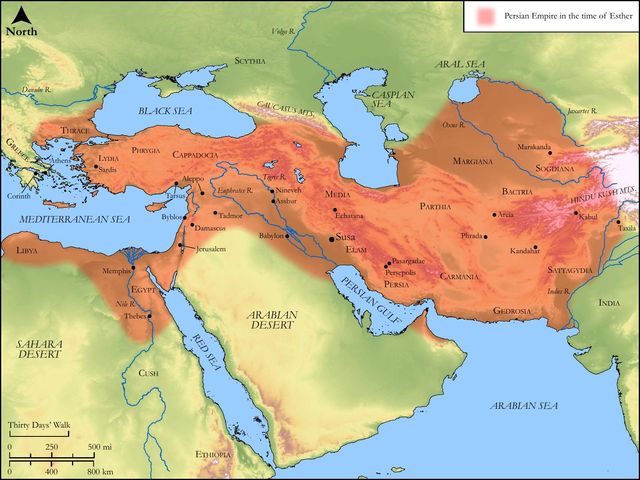
The Persian Empire, stretching from India to Ethiopia (Esther 1:1), was renowned for its sophisticated administrative system, including an efficient postal service and a commitment to communicating laws in the myriad languages of its diverse populace. Royal decrees in Persia were considered immutable once issued, a principle famously highlighted in Daniel 6:8. The emphasis on male authority within the household was a pervasive cultural norm among the nations of that day, not unique to Persia. However, the king's decision to elevate a domestic dispute to an empire-wide legal mandate reflects a specific aspect of Ahasuerus's character: his susceptibility to counsel, his concern for reputation and order, and his tendency to issue sweeping, often disproportionate, decrees. This decree was not about establishing a new norm but reinforcing an existing one, demonstrating the king's perceived need to legislate social control from the top down, a characteristic that will prove significant throughout the book.
Key Themes
ShowHideEsther 1:22 contributes significantly to several overarching themes in the book of Esther. Firstly, it highlights Patriarchal Authority and the lengths to which the nations of that day, and specifically the Persian monarchy, would go to enforce it. The king's decree is a direct, albeit extreme, attempt to legislate male dominance within the family unit, born out of a fear of social chaos and a perceived challenge to the established order. Secondly, it showcases the Administrative Power and Precision of the Persian Empire. The meticulous dispatch of letters "into every province according to the writing thereof, and to every people after their language" underscores the empire's advanced system for disseminating laws across its vast, multicultural realm, a detail that will become crucial when Haman later issues his genocidal decree (Esther 3:8-15). Thirdly, the verse subtly introduces the theme of Divine Sovereignty and Providence. While human actions and decrees appear to drive the narrative, this seemingly absurd decree, intended to assert human control, inadvertently sets in motion the very events (Vashti's removal, Esther's subsequent rise to queen) that God will use to save His people, demonstrating His ability to work through human folly and political machinations.
Exposition and Analysis
ShowHideKey Word Analysis
ShowHideThis term (H5612) refers to a written document, a scroll, or a dispatch. Its use here emphasizes the formal, official, and legally binding nature of the king's command. The act of "sending letters" (שָׁלַח סְפָרִים, šālaḥ sᵉfārîm) signifies a deliberate, administrative act of communication across the vast empire, highlighting the Persian bureaucracy's capacity to enforce the king's will universally and meticulously.
The verb (H8323) means "to have dominion," "to exercise authority," or "to be a prince." In this context, it signifies the absolute authority and control a man was to exercise within his own household. The decree was not merely a suggestion but a legal reinforcement of male headship, intended to prevent any perceived insubordination similar to Vashti's. This word underscores the king's desire for a rigid social hierarchy, extending from the throne down to every family.
The term (H3956), meaning "tongue" or "language," highlights the meticulous effort of the Persian administration to ensure the decree's comprehension across diverse ethnic and linguistic groups. This detail demonstrates a pragmatic approach to governance, recognizing that a law, however arbitrary, must be understood to be obeyed. It also foreshadows the later decrees in Esther, which similarly emphasize multi-lingual dissemination, underscoring the empire's vastness and its administrative sophistication.
Verse Breakdown
ShowHide"For he sent letters into all the king's provinces,"
This opening clause establishes the king's immediate and far-reaching action. The "provinces" (מְדִינוֹת, mᵉdînôt) signify the administrative divisions of the vast Persian Empire, indicating that this was not a local or minor edict but a comprehensive, empire-wide mandate. The act of sending "letters" (סְפָרִים, sᵉfārîm) denotes a formal, official, and legally binding communication, underscoring the king's absolute power and the empire's administrative reach.
"into every province according to the writing thereof, and to every people after their language,"
This phrase elaborates on the meticulous administrative efforts. "According to the writing thereof" (כִּכְתָבָהּ, kikhtāvāh) means in the script or alphabet appropriate for that region, acknowledging different writing systems (e.g., Aramaic, Old Persian, Egyptian cuneiform). "And to every people after their language" (וְכִלְשׁוֹנוֹ, vᵉkhilshono) emphasizes translation into the spoken tongue of the various ethnic groups. This detail underscores the Persian Empire's advanced bureaucracy and its commitment to ensuring that royal decrees were not only disseminated but also understood by its diverse populace, despite the decree's potentially trivial nature.
"that every man should bear rule in his own house,"
This is the core content and primary purpose of the decree. The phrase "bear rule" (לִשְׁלוֹט, lishlot) signifies the establishment of absolute authority and dominance. The king's intention was to legally reinforce the patriarchal structure of the family, ensuring that the male head of household maintained undisputed control. This was a direct reaction to Vashti's perceived insubordination, aiming to prevent similar defiance from spreading throughout the empire and to reassert the king's authority by legislating domestic order.
"and that [it] should be published according to the language of every people."
This concluding clause reiterates and reinforces the previous point about widespread communication. The word "published" (יִשָּׁמַע, yishamaʿ) literally means "be heard" or "be made known," emphasizing that the decree's content—the assertion of male authority—was to be proclaimed and understood universally. The repetition of "according to the language of every people" underscores the importance of clear and comprehensive dissemination, ensuring no one could claim ignorance of this new, albeit somewhat absurd, law, and highlighting the king's desire for total compliance.
Literary Devices
ShowHideThe verse employs several literary devices that enrich its meaning and contribute to the narrative's overall impact. Irony is profoundly present, as the king's decree, intended to assert control and prevent female insubordination, inadvertently creates the very circumstances (Vashti's removal and Esther's subsequent elevation) through which God will work to save His people, ultimately demonstrating that true control rests not with human monarchs but with divine providence. There is also an element of Hyperbole in the king's response; a domestic dispute is elevated to an empire-wide legal mandate, highlighting Ahasuerus's easily swayed and somewhat disproportionate nature. This hyperbole serves to characterize the king as both powerful and somewhat foolish, a trait that will be exploited later in the book. Furthermore, the meticulous detail regarding the multi-lingual dissemination of the decree serves as Foreshadowing, preparing the reader for the similar, but far more sinister, empire-wide decree that Haman will later manipulate the king into issuing against the Jews (Esther 3:12-15). The emphasis on universal communication highlights the formidable administrative power of the Persian Empire, which can be wielded for both trivial and catastrophic purposes, setting a crucial precedent for future events in the narrative.
Theological and Thematic Connections
ShowHideEsther 1:22, while seemingly a minor detail about ancient Persian social norms, carries significant theological weight. It illustrates the pervasive human tendency to assert control and establish order through legislation, often in response to perceived threats to authority or personal insecurity. The king's decree, born out of a desire for absolute dominion and a fear of social breakdown, stands in stark contrast to God's sovereign rule. While human rulers legislate and enforce their will through decrees and administrative power, God's kingdom operates on principles of justice, righteousness, and love, establishing order through covenant and grace. The very absurdity and disproportionate nature of this decree subtly highlight the limitations and often misguided nature of human authority when it attempts to legislate morality or social order apart from divine wisdom. Paradoxically, this human folly becomes a tool in God's hands, setting the stage for the dramatic unfolding of His providential plan to protect His people, demonstrating that even the most arbitrary human actions can be woven into the tapestry of divine purpose.
Reflection and Application
ShowHideThe decree in Esther 1:22, a seemingly trivial response to a queen's defiance, offers profound insights for contemporary reflection. It reminds us that human leaders, even those with immense power, are often driven by insecurity, pride, or a desire for control, leading to laws and policies that may be ill-conceived, disproportionate, or even absurd. This passage calls us to discern the true source of authority and order in our lives and societies. Is it found in human decrees, cultural norms, or the unchanging wisdom of God? While the Bible affirms the importance of order and respectful submission within various spheres of life (e.g., household, government), it consistently elevates love, mutual respect, and servant leadership above mere dominance or legislative force. We are challenged to consider how we respond to perceived threats to our authority or comfort, and whether our reactions are rooted in fear and control, or in faith and a trust in God's overarching sovereignty. Ultimately, this verse invites us to look beyond the visible machinations of human power to the invisible hand of God, who orchestrates even the most mundane or foolish human events for His ultimate, redemptive purposes, often turning human folly into divine opportunity.
Questions for Reflection
ShowHideFAQ
ShowHideWas this decree about male authority a new law, or was it reinforcing existing norms?
ShowHideThe decree in Esther 1:22 was primarily about reinforcing existing patriarchal norms rather than introducing a completely new concept. Among the nations of that day, male headship within the household was a widely accepted cultural and social structure. However, Vashti's public defiance was seen as a direct challenge to this established order, not just for the king but potentially for all men in the empire. Therefore, the decree was a legal and public affirmation, given the force of royal law, to re-assert and solidify a principle that was perceived to be under threat. It aimed to prevent widespread insubordination by making it clear that the king himself endorsed and enforced male authority at every level of society, demonstrating the lengths to which a ruler would go to maintain perceived social order.
Christ-Centered Fulfillment
ShowHideThe decree of Ahasuerus in Esther 1:22, a human attempt to legislate order and control through arbitrary power, stands in stark contrast to the perfect, redemptive rule of Jesus Christ. While the Persian king's authority was limited, self-serving, and dependent on administrative might and mutable decrees, Christ's authority is inherent, eternal, and founded upon His divine nature and self-sacrificial love. The earthly king sought to establish dominion over households through written edicts, but Jesus establishes His reign over hearts and lives, not by force or fear, but by grace and truth, drawing all people to Himself (John 12:32). His kingdom is not bound by provinces or languages, for He breaks down every barrier, uniting all peoples under His perfect headship (Ephesians 2:14-16). Unlike Ahasuerus, who reacted in insecurity and pride, Christ, "who, though he was in the form of God, did not count equality with God a thing to be grasped, but emptied himself, by taking the form of a servant" (Philippians 2:6-7), demonstrating true authority through humility, suffering love, and ultimately, resurrection power. His ultimate "decree" is the gospel, a message of liberation and reconciliation, published not by human couriers but by the Spirit, transforming lives and establishing a kingdom that will never pass away (Daniel 7:14), a kingdom where He truly bears rule in every heart that believes.