


Esther 1:21
Bible text: King James Version (1769 Blayney text) · Public domain
Bible text: Berean Standard Bible · Public domain
Bible text: American Standard Version (1901) · Public domain
Bible text: World English Bible, Messianic edition · Public domain
Bible text: Geneva Bible (1599) · Public domain
Bible text: Young's Literal Translation · Public domain
- וַיִּיטַבvai·yi·Tavand it was goodH3190Conj-w ¦ V-Qal-ConsecImperf-3msVerb Qal Consecutive Imperfect 3rd Singular Masculineוַandיִּיטַבit was good
- הַדָּבָרha·da·Varthe wordH1697Art ¦ N-msNoun Singular Masculine Absoluteהַtheדָּבָרword
- בְּעֵינֵיbe·'ei·Neiin [the] eyes ofH5869Prep-b ¦ N-fdcNoun Dual Feminine Constructבְּinעֵינֵי[the] eyes of
- הַמֶּלֶךְha·Me·lekhthe kingH4428Art ¦ N-msNoun Singular Masculine Absoluteהַtheמֶּלֶךְking
- וְהַשָּׂרִיםve·ha·sa·Rimand the officialsH8269Conj-w ¦ Art ¦ N-mpNoun Plural Masculine Absoluteוְandהַtheשָּׂרִיםofficials
- וַיַּעַשׂvai·Ya·'asand he didH6213Conj-w ¦ V-Qal-ConsecImperf-3msVerb Qal Consecutive Imperfect 3rd Singular Masculineוַandיַּעַשׂhe did
- הַמֶּלֶךְha·Me·lekhthe kingH4428Art ¦ N-msNoun Singular Masculine Absoluteהַtheמֶּלֶךְking
- כִּדְבַרkid·Varaccording to [the] word ofH1697Prep-k ¦ N-mscNoun Singular Masculine Constructכִּaccording toדְבַר[the] word of
- מְמוּכָןme·mu·KhanMemucanH4462N-proper-mNoun Proper Masculine
English is a literal word-by-word gloss of the Hebrew, not the KJV's wording. Why?
This is the original text the KJV's translators worked from — each Hebrew word with its own literal English meaning in this verse, prepared by scholars at Tyndale House, Cambridge. The KJV translates whole sentences, not word by word, so its wording differs: one Hebrew word can become several English words, and the KJV may choose “the LORD” where the gloss reads “Yahweh”. Both are faithful — they answer different questions. For the KJV's own rendering, switch to the KJV text.
Details
See on the biblical-era maps
Study this verse
Public-domain commentary
Matthew Henry
From his Commentary on the Whole Bible. Henry comments on passages, not single verses — this entry covers Esther 1:10–22. His three-level outline is real structure in the source text, so it is rendered as structure.
We have here a damp to all the mirth of Ahasuerus's feast; it ended in heaviness, not as Job's children's feast by a wind from the wilderness, not as Belshazzar's by a hand-writing on the wall, but by is own folly. An unhappy falling out there was, at the end of the feast, between the king and queen, which broke of the feast abruptly, and sent the guests away silent and ashamed.
I.It was certainly the king's weakness to send for Vashti into his presence when he was drunk, and in company with abundance of gentlemen, many of whom, it is likely, were in the same condition. When his heart was merry with wine nothing would serve him but Vashti must come, well dressed as she was, with the crown on her head, that the princes and people might see what a handsome woman she was, Est 1:10, Est 1:11. Hereby,
1.He dishonoured himself as a husband, who ought to protect, but by no means expose, the modesty of his wife, who ought to be to her a covering of the eyes (Gen 20:16), not to uncover them.
2.He diminished himself as a king, in commanding that from his wife which she might refuse, much to the honour of her virtue. It was against the custom of the Persians for the women to appear in public, and he put a great hardship upon her when he did not court, but command her to do so uncouth a thing, and make her a show. If he had not been put out of the possession of himself by drinking to excess, he would not have done such a thing, but would have been angry at any one that should have mentioned it. When the wine is in the wit is out, and men's reason departs from them.
II.However, perhaps it was not her wisdom to deny him.
She refused to come (Est 1:12); though he sent his command by seven honourable messengers, and publicly, and Josephus says sent again and again, yet she persisted in her denial. Had she come, while it was evident that she did it in pure obedience, it would have been no reflection upon her modesty, nor a bad example. The thing was not in itself sinful, and therefore to obey would have been more her honour than to be so precise. Perhaps she refused in a haughty manner, and then it was certainly evil; she scorned to come at the king's commandment. What a mortification was this to him! While he was showing the glory of his kingdom he showed the reproach of his family, that he had a wife that would do as she pleased. Strifes between yoke-fellows are bad enough at any time, but before company they are very scandalous, and occasion blushing and uneasiness.
III.The king thereupon grew outrageous.
He that had rule over 127 provinces had no rule over his own spirit, but his anger burned in him, Est 1:12. He would have consulted his own comfort and credit more if he had stifled his resentment, had passed by the affront his wife gave him, and turned it off with a jest.
IV.Though he was very angry, he would not do any thing in this matter till he advised with his privy-counsellors; as he had seven chamberlains to execute his orders, who are named (Est 1:10), so he had seven counsellors to direct his orders. The greater power a man has the greater need he has of advice, that he may not abuse his power. Of these counsellors it is said that they were learned men, for they knew law and judgment, that they were wise men, for they knew the times, and that the king put great confidence in them and honour upon them, for they saw the king's face and sat first in the kingdom, Est 1:13, Est 1:14. In the multitude of such counsellors there is safety. Now here is,
1.The question proposed to this cabinet-council (Est 1:15): What shall we do to the queen Vashti according to the law? Observe,
(1.)Though it was the queen that was guilty, the law must have its course.
(2.)Though the king was very angry, yet he would do nothing but what he was advised was according to law.
2.The proposal which Memucan made, that Vashti should be divorced for her disobedience. Some suggest that he gave this severe advice, and the rest agreed to it, because they knew it would please the king, would gratify both his passion now and his appetite afterwards. But Josephus says that, on the contrary, he had a strong affection for Vashti, and would not have put her away for this offence if he could legally have passed it by; and then we must suppose Memucan, in his advice, to have had a sincere regard to justice and the public good.
(1.)He shows what would be the bad consequences of the queen's disobedience to her husband, if it were passed by and not animadverted upon, that it would embolden other wives both to disobey their husbands and to domineer over them. Had this unhappy falling out between the king and his wife, wherein she was conqueror, been private, the error would have remained with themselves and the quarrel might have been settled privately between themselves; but it happening to be public, and perhaps the ladies that were now feasting with the queen having shown themselves pleased with her refusal, her bad example would be likely to have a bad influence upon all the families of the kingdom. If the queen must have her humour, and the king must submit to it (since the houses of private persons commonly take their measures from the courts of princes), the wives would be haughty and imperious and would scorn to obey their husbands, and the poor despised husbands might fret at it, but could not help themselves; for the contentions of a wife are a continual dropping, Pro 19:13; Pro 27:15; and see Pro 21:9; Pro 25:24. When wives despise their husbands, whom they ought to reverence (Eph 5:33), and contend for dominion over those to whom they ought to be in subjection (Pe1 3:1), there cannot but be continual guilt and grief, confusion and every evil work. And great ones must take heed of setting copies of this kind, Est 1:16-18.
(2.)He shows what would be the good consequence of a decree against Vashti that she should be divorced. We may suppose that before they proceeded to this extremity they sent to Vashti to know if she would yet submit, cry Peccavi - I have done wrong, and ask the king's pardon, and that, if she had done so, the mischief of her example would have been effectually prevented, and process would have been stayed; but it is likely she continued obstinate, and insisted upon it as her prerogative to do as she pleased, whether it pleased the king or no, and therefore they gave this judgment against her, that she come no more before the king, and this judgment so ratified as never to be reversed, Est 1:19. The consequence of this, it was hoped, would be that the wives would give to their husbands honour, even the wives of the great, notwithstanding their own greatness, and the wives of the small, notwithstanding the husband's meanness (Est 1:20); and thus every man would bear rule in his own house, as he ought to do, and, the wives being subject, the children and servants would be so too. It is the interest of states and kingdoms to provide that good order be kept in private families.
3.The edict that passed according to this proposal, signifying that the queen was divorced for contumacy, according to the law, and that, if other wives were in like manner undutiful to their husbands, they must expect to be in like manner disgraced (Est 1:21, Est 1:22): were they better than the queen? Whether it was the passion or the policy of the king that was served by this edict, God's providence served its own purpose by it, which was to make way for Esther to the crown.
Historical interpretation
Historical reception
1 surviving comment on this verse from the historical church.
The advice which King Ahasuerus asks of his seven sages who were, according to royal custom always by his side, concerning the insolent Vashti—as well as the sentence he orders them to pass concerning her—undoubtedly signifies the sentence our Savior passes against the arrogance of the Jewish people. He passes this sentence through his teachers who are always in his presence and full of the grace of the Holy Spirit in their orthodox faith and good works. The Jewish people themselves who incurred this judgment bear the responsibility for the punishment and condemnation they have received of being expelled from the royal bridal room, that is, from the congregation of God for which they had been ordained and elected, so that another, better bride, namely, the church of the nations, may take their place with sincere faith and full devotion.
Continue studying Esther 1:21 across the web’s major study libraries — every link below opens this exact verse, chapter, or book on the destination site.
Read & Compare
 BibleGatewayThis verse in more than 200 translations and 70 languages.
 Bible.comThe YouVersion reader — hundreds of translations, reading plans, and highlights.
 ESV.orgCrossway's official English Standard Version reader.
 NET BibleThe NET translation with 60,000+ translators' notes on every rendering decision.
 STEP BibleTyndale House's free study tool — original text, vocabulary, and scholarly resources.
 BibliaLogos Bible Software's free web reader.
 USCCBThe New American Bible (Revised Edition) with the U.S. bishops' study notes.
Commentaries
 BibleHub CommentariesDozens of classic commentaries on this verse, gathered on one page.
 StudyLightMore than 100 commentary sets — the largest collection on the web.
 BibleRefPlain-English commentary on what this verse means, verse by verse.
 Enduring WordDavid Guzik's free commentary on this chapter, widely used by Bible teachers.
 Bible Study ToolsVerse commentary alongside Greek and Hebrew study aids.
Original Language & Research
- BibleHub InterlinearThe verse word by word — original language, transliteration, and English.
- BibleHub LexiconEvery word's original-language definition and Strong's entry.
 Blue Letter BibleDeep-study tools — Strong's numbers, concordance, and word studies.
 SefariaThe Hebrew text with Rashi and centuries of Jewish commentary.
Sermons, Hymns & Audio


TrulyRandomVerse is not affiliated with these sites and doesn’t control their content. They’re linked because they’re genuinely useful.
Summary
Esther 1:21 stands near the close of the opening chapter, detailing the enthusiastic approval of King Ahasuerus and his princes for Memucan's counsel regarding Queen Vashti's insubordination. This verse signifies the immediate and decisive implementation of the decree to depose Vashti, thereby initiating the sequence of events that will providentially lead to the search for a new queen and the eventual elevation of Esther to the throne, profoundly shaping the destiny of the Persian Empire and the Jewish people within its vast dominion.
Context
ShowHideLiterary Context
Esther 1:21 serves as the decisive resolution to the initial conflict presented in the book of Esther, providing a crucial turning point in the narrative. The chapter begins by establishing King Ahasuerus's immense power and wealth through elaborate banquets and displays of grandeur. The central conflict arises when Queen Vashti defiantly refuses the king's command to appear before him (Esther 1:12). This unprecedented act of insubordination creates a crisis within the royal court, prompting the king's seven wise advisors to deliberate on an appropriate response. Memucan, one of these influential princes, proposes a radical solution: to depose Vashti and issue a royal decree establishing a new law that would ensure female submission throughout the empire (Esther 1:16-20). Esther 1:21 then records the immediate and unanimous acceptance of this counsel by both the king and his advisors, sealing Vashti's fate and clearing the path for the subsequent events of the book, most notably the search for a new queen.
Historical & Cultural Context
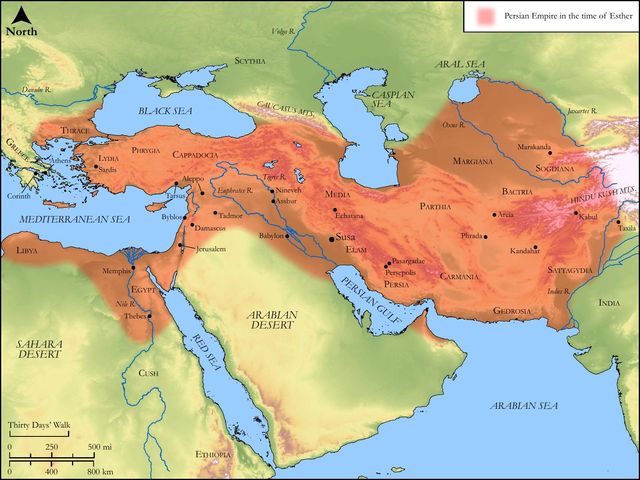
The events of the book of Esther are set within the vast Achaemenid Persian Empire during the reign of King Ahasuerus, commonly identified with Xerxes I (486-465 BC). Persian kings held absolute authority, and their decrees, once issued and written in the law of the Medes and Persians, were considered immutable and irreversible (Daniel 6:8). The extravagant feasts and displays of power described in Esther 1:3-8 are consistent with historical accounts of Persian royal splendor. Culturally, Persian society was profoundly patriarchal, with male authority, particularly that of husbands, being paramount. Vashti's refusal was not merely a personal slight to the king but was perceived as a dangerous act of rebellion that could undermine the social order across the entire empire, potentially encouraging widespread female insubordination. Memucan's advice, and its swift acceptance, reflects this deep-seated concern for maintaining hierarchical order and male dominance within the society.
Key Themes
ShowHideThis verse powerfully contributes to several overarching themes woven throughout the book of Esther. Firstly, it underscores the absolute nature of royal authority in the Persian Empire, where the king's word, once solidified by decree, was unchallengeable and immediately executed. This is a recurring motif, particularly in the later decrees concerning the Jews. Secondly, it highlights the theme of societal order and patriarchal authority, as Memucan's counsel was explicitly driven by the perceived need to prevent widespread female insubordination and ensure that "all wives will honor their husbands" (Esther 1:20). Thirdly, and perhaps most profoundly, the verse subtly introduces the theme of divine providence, even though God is never explicitly mentioned in the book. The seemingly arbitrary human decisions and political maneuvers, such as Vashti's deposition, are ultimately orchestrated by an unseen hand to prepare the way for Esther's elevation and the salvation of her people, foreshadowing the crucial role she will play in the narrative (Esther 4:14).
Exposition and Analysis
ShowHideKey Word Analysis
ShowHideThis term encompasses more than just a single word; it refers to Memucan's entire counsel, his proposal, and the specific decree he recommended. In this context, it signifies the comprehensive advice, the reasoning behind it, and the proposed course of action. The king's adherence to this "saying" demonstrates the significant influence of his advisors in shaping royal policy and immediate action.
This verb means "to be good, right, pleasing, agreeable." When combined with the implied "in the eyes of" (from H5869, ʻayin, often used idiomatically with yâṭab), it indicates that Memucan's counsel was not merely accepted as a necessary evil but resonated positively and was found agreeable by both the king and his princes. This suggests a consensus that the proposed solution aligned with their values, concerns, and understanding of justice and order, making the decision unanimous and readily embraced.
This primitive root means "to do, make, perform, execute." The phrase "the king did according to the word of Memucan" emphasizes the immediate, decisive, and complete implementation of the counsel. It highlights the king's swift action and the finality with which royal decrees were enacted in the Persian Empire, underscoring the irreversible nature of Vashti's deposition.
Verse Breakdown
ShowHide"And the saying pleased the king and the princes;"
This initial clause reveals the immediate and widespread approval of Memucan's counsel within the highest echelons of the Persian court. The "saying" refers to Memucan's comprehensive proposal to depose Vashti and issue a decree concerning women's submission throughout the empire. The fact that it "pleased" both the king and his princes indicates a strong consensus that this solution was not only politically expedient but also aligned with their shared understanding of social order, royal authority, and the preservation of male dominance. This collective agreement lends significant weight and legitimacy to the subsequent action.
"and the king did according to the word of Memucan:"
This second clause describes the swift and decisive action taken by King Ahasuerus. It signifies the immediate and full implementation of Memucan's advice. The king, wielding his absolute authority, acted directly upon the counsel, transforming a proposal into an irreversible royal decree. This action seals Vashti's fate, definitively removing her from her position, and critically sets the stage for the search for a new queen, which will ultimately bring Esther into the narrative and prepare the way for the deliverance of the Jewish people. It powerfully underscores the finality of the king's word and the immediate execution of his decisions.
Literary Devices
ShowHideEsther 1:21 employs several literary devices to advance the narrative and underscore its thematic significance. Narrative Economy is profoundly evident in the concise manner the verse summarizes the resolution of the initial crisis. By quickly moving from counsel to immediate action, the author emphasizes the absolute power of the king and the finality of his decrees, efficiently propelling the plot forward without unnecessary detail. The verse also subtly employs Foreshadowing, as Vashti's removal, seemingly a consequence of human pride and societal anxieties, providentially clears the path for Esther's eventual rise to power. This seemingly minor domestic dispute is revealed as a crucial preparatory step for the salvation of the Jewish people, hinting at a divine hand at work behind the scenes. Furthermore, there is a subtle Irony in how the seemingly all-powerful king, whose word is law, is so readily swayed by the counsel of one of his advisors, Memucan. This highlights the significant influence of the court and the vulnerability of even absolute monarchs to external pressures and the advice of their inner circle, subtly undermining the perception of the king's unbridled autonomy.
Theological and Thematic Connections
ShowHideEsther 1:21, though devoid of any explicit mention of God, is profoundly significant for understanding the unfolding of His sovereign plan, even in contexts where He is not named. The immediate and unanimous acceptance of Memucan's counsel, leading to Vashti's deposition, serves as a crucial turning point. It powerfully demonstrates that human decisions, even those driven by pride, fear, or cultural norms, can be instruments in the hand of a greater divine purpose. The seemingly arbitrary or even unjust actions of human rulers are ultimately subject to God's overarching will, preparing the way for His chosen instruments to fulfill His redemptive purposes. This verse subtly introduces the theme of divine providence, where God works behind the scenes, orchestrating events to protect His people and advance His plan, even when human actors are unaware of His involvement. It reassures the reader that even in the midst of human folly and political machinations, God remains in control, guiding history toward His ultimate ends.
Reflection and Application
ShowHideEsther 1:21 invites us to reflect deeply on the nature of authority, the impact of our decisions, and the unseen hand of providence in our lives. We observe how a seemingly minor domestic dispute, amplified by prevailing cultural norms and political anxieties, leads to a royal decree with far-reaching consequences. This reminds us that our actions, and the counsel we give or receive, can have ripple effects far beyond our immediate comprehension. It challenges us to prayerfully consider the wisdom, motivations, and potential long-term implications behind the advice we seek and offer. Furthermore, the verse subtly encourages a posture of profound faith, even when circumstances appear to be driven purely by human will, chance, or even injustice. Just as Vashti's removal, though born of human decree and flawed reasoning, providentially cleared the path for Esther's elevation and the eventual salvation of her people, so too can seemingly negative, challenging, or arbitrary events in our own lives be part of a larger, divinely orchestrated plan for our ultimate good and for His glory. We are called to trust that God is actively at work, even when His presence is not explicitly evident, guiding history and individual lives toward His ultimate, redemptive purposes.
Questions for Reflection
ShowHideFAQ
ShowHideWhy was Memucan's advice so readily accepted by the king and princes?
ShowHideMemucan's advice was readily accepted because it addressed a perceived crisis of authority that resonated deeply with the patriarchal values of the Persian court. Vashti's refusal to obey the king's command was not just a personal affront; it was seen as a dangerous precedent that could encourage insubordination among women throughout the vast empire, potentially undermining the authority of every husband (Esther 1:17). His counsel offered a decisive, public, and legally binding solution that would reassert royal authority and reinforce societal order, making it highly appealing to the king and his advisors who shared these fundamental concerns.
Does the swiftness of the king's action imply anything about his character?
ShowHideThe swiftness of the king's action in Esther 1:21 highlights several aspects of his character, consistent with historical accounts of Xerxes I. It suggests he was impulsive and prone to acting decisively on the advice of his inner circle, particularly when his authority, pride, or reputation was challenged. His immediate implementation of Memucan's word, without apparent further deliberation, underscores his absolute power and the finality of his decrees. However, it also reveals a potential lack of independent, reflective judgment, making him susceptible to influence and demonstrating that even an absolute monarch could be swayed by the counsel of his advisors.
Christ-Centered Fulfillment
ShowHideEsther 1:21, though seemingly a mundane historical detail about a pagan king's decree, subtly points to the overarching sovereignty of God and His providential working, which finds its ultimate fulfillment in Christ. The removal of Queen Vashti, an act driven by human pride and political expediency, served as a crucial, divinely orchestrated step in God's unseen plan to elevate Esther, a Jewish woman, to a position of influence for the salvation of her people. This foreshadows the divine orchestration of all history for the grander purpose of salvation through Jesus Christ. Just as a human decree cleared the way for a deliverer in Esther's time, God's eternal decree prepared the way for the ultimate Deliverer. Christ, the true King, unlike Ahasuerus, perfectly obeyed His Father's will, even to the point of death on a cross (Philippians 2:8), thereby securing a salvation that no human decree or earthly power could ever accomplish. While Ahasuerus's rule was earthly and temporary, Christ's kingdom is eternal and His authority absolute, established not by the counsel of men but by the sovereign will of God (Colossians 1:13-14). The seemingly chaotic human events in Esther ultimately served God's redemptive purposes, much like all of history is being governed by God to bring about the glorious reign of the King of kings and Lord of lords, Jesus Christ, who is the ultimate fulfillment of God's providential plan for His people.