


Esther 1:20
Bible text: King James Version (1769 Blayney text) · Public domain
Bible text: King James Version with Strong's numbers · Public domain
Bible text: Berean Standard Bible · Public domain
Bible text: American Standard Version (1901) · Public domain
Bible text: World English Bible, Messianic edition · Public domain
Bible text: Geneva Bible (1599) · Public domain
Bible text: Young's Literal Translation · Public domain
- וְנִשְׁמַעve·nish·Ma'and it will be heardH8085Conj-w ¦ V-Niphal-ConsecPerf-3msVerb Niphal Consecutive Perfect 3rd Singular Masculineוְandנִשְׁמַעit will be heard
- פִּתְגָםpit·Gam[the] decree ofH6599N-mscNoun Singular Masculine Construct
- הַמֶּלֶךְha·Me·lekhthe kingH4428Art ¦ N-msNoun Singular Masculine Absoluteהַtheמֶּלֶךְking
- אֲשֶׁר'a·SherwhichH834RelParticle Relative
- יַעֲשֶׂהya·'a·Sehhe will makeH6213V-Qal-Imperf-3msVerb Qal Imperfect 3rd Singular Masculine
- בְּכָלbe·kholin allH3605Prep-b ¦ N-mscNoun Singular Masculine Constructבְּinכָלall
- מַלְכוּתוֹmal·khu·Tohis kingdomH4438N-fsc ¦ 3msNoun Singular Feminine Constructמַלְכוּתkingdomוֹhis
- כִּיkiforH3588PrtParticle Conditional
- רַבָּהra·Bah[is] greatH7227Adj-fsAdjective Singular Feminine Absolute
- הִיאHi'itH1931Pro-3fsPronoun Personal 3rd Singular Feminine
- וְכָלve·kholand allH3605Conj-w ¦ N-mscNoun Singular Masculine Constructוְandכָלall
- הַנָּשִׁיםha·na·Shimthe womenH802Art ¦ N-mpNoun Plural Masculine Absoluteהַtheנָּשִׁיםwomen
- יִתְּנוּyi·te·Nuthey will giveH5414V-Qal-Imperf-3mpVerb Qal Imperfect 3rd Plural Masculine
- יְקָרye·KarhonorH3366N-msNoun Singular Masculine Absolute
- לְבַעְלֵיהֶןle·va'·lei·Hento their husbandsH1167Prep-l ¦ N-mpc ¦ 3fpNoun Plural Masculine Constructלְtoבַעְלֵיhusbandsהֶןtheir
- לְמִגָּדוֹלle·mi·ga·Dol<to> from greatH1419Prep-l ¦ Prep-m ¦ Adj-msAdjective Singular Masculine Absoluteלְ<to>מִfromגָּדוֹלgreat
- וְעַדve·'adand untoH5704Conj-w ¦ PrepPrepositionוְandעַדunto
- קָטָןka·TaninsignificantH6996Adj-msAdjective Singular Masculine Absolute
English is a literal word-by-word gloss of the Hebrew, not the KJV's wording. Why?
This is the original text the KJV's translators worked from — each Hebrew word with its own literal English meaning in this verse, prepared by scholars at Tyndale House, Cambridge. The KJV translates whole sentences, not word by word, so its wording differs: one Hebrew word can become several English words, and the KJV may choose “the LORD” where the gloss reads “Yahweh”. Both are faithful — they answer different questions. For the KJV's own rendering, switch to the KJV text.
Details
See on the biblical-era maps

Study this verse
Public-domain commentary
Matthew Henry
From his Commentary on the Whole Bible. Henry comments on passages, not single verses — this entry covers Esther 1:10–22. His three-level outline is real structure in the source text, so it is rendered as structure.
We have here a damp to all the mirth of Ahasuerus's feast; it ended in heaviness, not as Job's children's feast by a wind from the wilderness, not as Belshazzar's by a hand-writing on the wall, but by is own folly. An unhappy falling out there was, at the end of the feast, between the king and queen, which broke of the feast abruptly, and sent the guests away silent and ashamed.
I.It was certainly the king's weakness to send for Vashti into his presence when he was drunk, and in company with abundance of gentlemen, many of whom, it is likely, were in the same condition. When his heart was merry with wine nothing would serve him but Vashti must come, well dressed as she was, with the crown on her head, that the princes and people might see what a handsome woman she was, Est 1:10, Est 1:11. Hereby,
1.He dishonoured himself as a husband, who ought to protect, but by no means expose, the modesty of his wife, who ought to be to her a covering of the eyes (Gen 20:16), not to uncover them.
2.He diminished himself as a king, in commanding that from his wife which she might refuse, much to the honour of her virtue. It was against the custom of the Persians for the women to appear in public, and he put a great hardship upon her when he did not court, but command her to do so uncouth a thing, and make her a show. If he had not been put out of the possession of himself by drinking to excess, he would not have done such a thing, but would have been angry at any one that should have mentioned it. When the wine is in the wit is out, and men's reason departs from them.
II.However, perhaps it was not her wisdom to deny him.
She refused to come (Est 1:12); though he sent his command by seven honourable messengers, and publicly, and Josephus says sent again and again, yet she persisted in her denial. Had she come, while it was evident that she did it in pure obedience, it would have been no reflection upon her modesty, nor a bad example. The thing was not in itself sinful, and therefore to obey would have been more her honour than to be so precise. Perhaps she refused in a haughty manner, and then it was certainly evil; she scorned to come at the king's commandment. What a mortification was this to him! While he was showing the glory of his kingdom he showed the reproach of his family, that he had a wife that would do as she pleased. Strifes between yoke-fellows are bad enough at any time, but before company they are very scandalous, and occasion blushing and uneasiness.
III.The king thereupon grew outrageous.
He that had rule over 127 provinces had no rule over his own spirit, but his anger burned in him, Est 1:12. He would have consulted his own comfort and credit more if he had stifled his resentment, had passed by the affront his wife gave him, and turned it off with a jest.
IV.Though he was very angry, he would not do any thing in this matter till he advised with his privy-counsellors; as he had seven chamberlains to execute his orders, who are named (Est 1:10), so he had seven counsellors to direct his orders. The greater power a man has the greater need he has of advice, that he may not abuse his power. Of these counsellors it is said that they were learned men, for they knew law and judgment, that they were wise men, for they knew the times, and that the king put great confidence in them and honour upon them, for they saw the king's face and sat first in the kingdom, Est 1:13, Est 1:14. In the multitude of such counsellors there is safety. Now here is,
1.The question proposed to this cabinet-council (Est 1:15): What shall we do to the queen Vashti according to the law? Observe,
(1.)Though it was the queen that was guilty, the law must have its course.
(2.)Though the king was very angry, yet he would do nothing but what he was advised was according to law.
2.The proposal which Memucan made, that Vashti should be divorced for her disobedience. Some suggest that he gave this severe advice, and the rest agreed to it, because they knew it would please the king, would gratify both his passion now and his appetite afterwards. But Josephus says that, on the contrary, he had a strong affection for Vashti, and would not have put her away for this offence if he could legally have passed it by; and then we must suppose Memucan, in his advice, to have had a sincere regard to justice and the public good.
(1.)He shows what would be the bad consequences of the queen's disobedience to her husband, if it were passed by and not animadverted upon, that it would embolden other wives both to disobey their husbands and to domineer over them. Had this unhappy falling out between the king and his wife, wherein she was conqueror, been private, the error would have remained with themselves and the quarrel might have been settled privately between themselves; but it happening to be public, and perhaps the ladies that were now feasting with the queen having shown themselves pleased with her refusal, her bad example would be likely to have a bad influence upon all the families of the kingdom. If the queen must have her humour, and the king must submit to it (since the houses of private persons commonly take their measures from the courts of princes), the wives would be haughty and imperious and would scorn to obey their husbands, and the poor despised husbands might fret at it, but could not help themselves; for the contentions of a wife are a continual dropping, Pro 19:13; Pro 27:15; and see Pro 21:9; Pro 25:24. When wives despise their husbands, whom they ought to reverence (Eph 5:33), and contend for dominion over those to whom they ought to be in subjection (Pe1 3:1), there cannot but be continual guilt and grief, confusion and every evil work. And great ones must take heed of setting copies of this kind, Est 1:16-18.
(2.)He shows what would be the good consequence of a decree against Vashti that she should be divorced. We may suppose that before they proceeded to this extremity they sent to Vashti to know if she would yet submit, cry Peccavi - I have done wrong, and ask the king's pardon, and that, if she had done so, the mischief of her example would have been effectually prevented, and process would have been stayed; but it is likely she continued obstinate, and insisted upon it as her prerogative to do as she pleased, whether it pleased the king or no, and therefore they gave this judgment against her, that she come no more before the king, and this judgment so ratified as never to be reversed, Est 1:19. The consequence of this, it was hoped, would be that the wives would give to their husbands honour, even the wives of the great, notwithstanding their own greatness, and the wives of the small, notwithstanding the husband's meanness (Est 1:20); and thus every man would bear rule in his own house, as he ought to do, and, the wives being subject, the children and servants would be so too. It is the interest of states and kingdoms to provide that good order be kept in private families.
3.The edict that passed according to this proposal, signifying that the queen was divorced for contumacy, according to the law, and that, if other wives were in like manner undutiful to their husbands, they must expect to be in like manner disgraced (Est 1:21, Est 1:22): were they better than the queen? Whether it was the passion or the policy of the king that was served by this edict, God's providence served its own purpose by it, which was to make way for Esther to the crown.
Historical interpretation
Historical reception
1 surviving comment on this verse from the historical church.
The advice which King Ahasuerus asks of his seven sages who were, according to royal custom always by his side, concerning the insolent Vashti—as well as the sentence he orders them to pass concerning her—undoubtedly signifies the sentence our Savior passes against the arrogance of the Jewish people. He passes this sentence through his teachers who are always in his presence and full of the grace of the Holy Spirit in their orthodox faith and good works. The Jewish people themselves who incurred this judgment bear the responsibility for the punishment and condemnation they have received of being expelled from the royal bridal room, that is, from the congregation of God for which they had been ordained and elected, so that another, better bride, namely, the church of the nations, may take their place with sincere faith and full devotion.
Continue studying Esther 1:20 across the web’s major study libraries — every link below opens this exact verse, chapter, or book on the destination site.
Read & Compare
 BibleGatewayThis verse in more than 200 translations and 70 languages.
 Bible.comThe YouVersion reader — hundreds of translations, reading plans, and highlights.
 ESV.orgCrossway's official English Standard Version reader.
 NET BibleThe NET translation with 60,000+ translators' notes on every rendering decision.
 STEP BibleTyndale House's free study tool — original text, vocabulary, and scholarly resources.
 BibliaLogos Bible Software's free web reader.
 USCCBThe New American Bible (Revised Edition) with the U.S. bishops' study notes.
Commentaries
 BibleHub CommentariesDozens of classic commentaries on this verse, gathered on one page.
 StudyLightMore than 100 commentary sets — the largest collection on the web.
 BibleRefPlain-English commentary on what this verse means, verse by verse.
 Enduring WordDavid Guzik's free commentary on this chapter, widely used by Bible teachers.
 Bible Study ToolsVerse commentary alongside Greek and Hebrew study aids.
Original Language & Research
- BibleHub InterlinearThe verse word by word — original language, transliteration, and English.
- BibleHub LexiconEvery word's original-language definition and Strong's entry.
 Blue Letter BibleDeep-study tools — Strong's numbers, concordance, and word studies.
 SefariaThe Hebrew text with Rashi and centuries of Jewish commentary.
Sermons, Hymns & Audio


TrulyRandomVerse is not affiliated with these sites and doesn’t control their content. They’re linked because they’re genuinely useful.
Summary
Esther 1:20 articulates a crucial component of King Ahasuerus's decree, proposed by Memucan in response to Queen Vashti's public defiance. This verse mandates that upon the decree's widespread publication across the vast Persian Empire, all wives, irrespective of their social standing or their husbands' status, must render honor and respect to their husbands. The edict's primary aim was to universally re-establish and reinforce patriarchal authority within every household, thereby preventing any further perceived challenges to male headship and preserving the societal order as understood and enforced by the Persian court.
Context
ShowHideLiterary Context
Esther 1:20 directly follows Memucan's strategic counsel to King Ahasuerus and his seven princes, as detailed in Esther 1:16-19. Queen Vashti's unprecedented refusal to appear before the king at his command, as recounted in Esther 1:12, was interpreted not merely as a personal affront but as a profound threat to the established social hierarchy. Memucan argued that Vashti's actions would inevitably incite similar insubordination among women throughout the sprawling empire, leading to widespread contempt for husbands. His proposed solution was a swift, public, and unalterable royal decree that would depose Vashti and enforce universal wifely submission. Verse 20 precisely outlines the intended, far-reaching impact of this decree, emphasizing its broad application and the re-establishment of male authority in every home, thereby setting the narrative stage for the subsequent search for a new queen, which providentially brings Esther into prominence.
Historical & Cultural Context
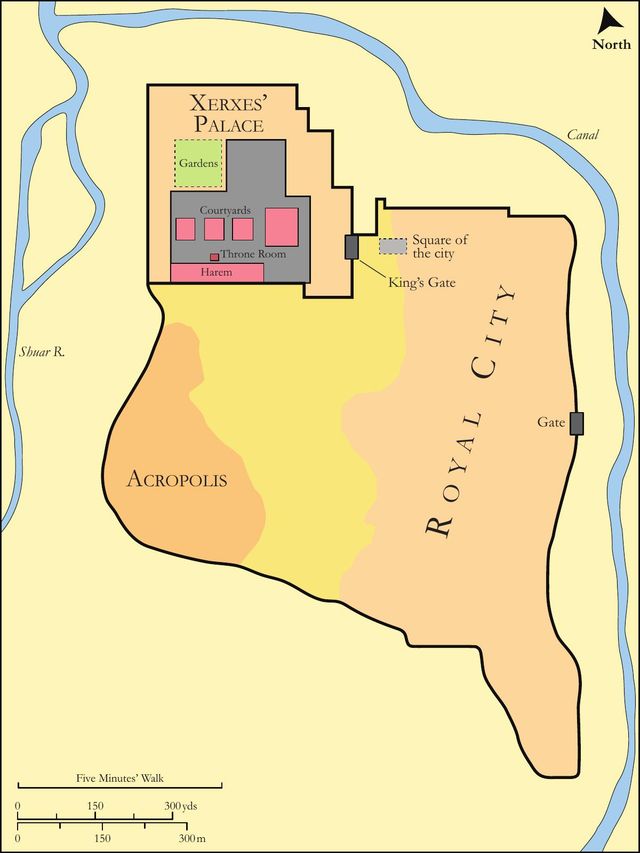
The events of the Book of Esther are set during the reign of Ahasuerus, widely identified with Xerxes I (486-465 BC), who ruled the immense Achaemenid Persian Empire. As described in Esther 1:1, his dominion stretched from India to Ethiopia, encompassing 127 provinces. Persian society was rigidly hierarchical and profoundly patriarchal, with the king wielding absolute power, and his decrees, once issued, were considered immutable (Esther 8:8). The concept of "honor" (Hebrew: yekar) was of paramount importance in Hebrew thought, signifying social standing, dignity, and respect within the community. Vashti's refusal constituted a public act of dishonor, challenging not only the king's supreme authority but also the prevailing cultural norms that mandated female deference. The decree articulated in Esther 1:20 reflects a desperate attempt by the male leadership to reassert control and avert perceived social chaos by legislating domestic conduct across an immense and culturally diverse empire.
Key Themes
ShowHideThis verse significantly contributes to several overarching themes within the Book of Esther and the broader biblical narrative. It powerfully highlights the theme of Absolute Authority and Human Power, specifically the often arbitrary and unchallengeable power of the Persian king, whose decrees could fundamentally reshape societal norms across his vast domain. It underscores the theme of Order vs. Disorder, as the decree is a direct and forceful response to a perceived disruption of social order, aiming to re-establish male headship and prevent widespread female insubordination. The verse also illuminates Ancient Gender Roles and Societal Expectations, revealing the deeply patriarchal structure of Persian society where a wife's honor towards her husband was deemed foundational for both domestic harmony and imperial stability. Furthermore, it subtly introduces the profound tension between Human Agency and Divine Sovereignty, as this human-orchestrated decree, intended to solidify one form of control, inadvertently creates the very circumstances through which God's chosen instrument, Esther, will rise to power and ultimately save her people, demonstrating that even human folly and self-serving actions can be providentially woven into God's greater redemptive purposes.
Exposition and Analysis
ShowHideKey Word Analysis
ShowHideThis term, derived from the root meaning 'master' or 'owner,' clearly indicates the patriarchal structure of Persian society. While it can refer to an owner or lord in various contexts, here it specifically denotes the male head of a household. The decree's aim was to ensure that wives would acknowledge and demonstrate respect for this established authority, reflecting the husband's position as the master within the domestic sphere.
This word signifies 'value,' 'costliness,' 'dignity,' or 'preciousness.' In the context of Esther 1:20, it implies more than mere outward obedience; it points to an internal recognition of the husband's worth, position, and authority. The decree sought to command a profound respect that would permeate all levels of society, from the highest noblewoman to the most common wife, ensuring that the husband's dignity was upheld.
Derived from the verb "to rule," this term refers to a 'rule,' 'dominion,' 'kingdom,' or 'realm.' Its use here emphasizes the vast geographical and political reach of King Ahasuerus's authority. The decree's publication "throughout all his empire" underscores its universal and inescapable application, signifying that this new law was intended to bind every household across the 127 provinces, from India to Ethiopia.
Verse Breakdown
ShowHide"And when the king's decree which he shall make shall be published throughout all his empire"
This clause establishes the legislative process and the immense scope of the intended law. The "decree" (pithgâm) is not a mere suggestion but a binding royal command, intended for universal dissemination and enforcement across every corner of the vast Persian dominion. The act of "published" (literally "caused to be heard" or "proclaimed") signifies its official, unalterable, and publicly known nature within Persian law.
"(for it is great,)"
This parenthetical phrase highlights the perceived significance and impact of the decree from the perspective of the Persian court. It is deemed "great" not only in its expansive scope, covering the entire empire, but also in its intended effect—to prevent a perceived societal breakdown and re-establish a fundamental social order. This phrase underscores the gravity with which the king and his advisors viewed Vashti's defiance and the proposed, sweeping solution.
"all the wives shall give to their husbands honour, both to great and small"
This is the core mandate of the decree, specifying both the target audience and the desired behavior. "All the wives" emphasizes the comprehensive nature of the law, while "shall give... honour" defines the required conduct. The concluding phrase, "both to great and small," further underlines the universal application, ensuring that no wife, regardless of her husband's social standing or her own, would be exempt from this new legal requirement to show respect and deference.
Literary Devices
ShowHideEsther 1:20 employs several Literary Devices to convey its message and underscore its intended impact. Hyperbole is evident in the declaration that the decree is "great" and will be published "throughout all his empire," implying an almost omnipotent reach and an unquestionable, pervasive impact on every household. This grand pronouncement stands in stark Irony with the unfolding narrative: despite this decree's aim to solidify male authority and control women, it is precisely through the rise of a woman, Esther, that God's purposes are achieved, demonstrating the ultimate limits of human decrees against divine sovereignty. The verse also utilizes Metonymy, where "honour" stands in for the broader concept of wifely submission, obedience, and deference within the patriarchal structure. Furthermore, the emphasis on the king's decree and its universal application serves as Foreshadowing, setting a crucial precedent for the pivotal role that subsequent royal decrees will play in the dramatic events of the Book of Esther, particularly Haman's genocidal edict against the Jews and Mordecai's subsequent counter-decree.
Theological and Thematic Connections
ShowHideEsther 1:20, while deeply rooted in the specific historical and cultural context of ancient Persia, raises timeless questions about authority, societal order, and human attempts to legislate morality and relationships. The king's decree represents a human-centric solution to a perceived problem of social disorder, attempting to impose honor and respect through the force of imperial law. From a theological perspective, this approach contrasts sharply with biblical principles for relationships, particularly within the New Testament, which emphasize voluntary love, mutual respect, and submission to God as the foundation for harmonious human interactions, rather than coerced submission to arbitrary human authority. While the Bible does speak to the importance of order in society and the household, it grounds such order in divine design and Christ-like love, not in punitive or arbitrary decrees.
Reflection and Application
ShowHideEsther 1:20 offers a fascinating, albeit culturally distant, glimpse into the anxieties and power dynamics of an ancient empire. For the modern reader, especially those seeking spiritual nourishment, this verse serves as a powerful reminder that true honor and lasting stability in relationships cannot be legislated or coerced. While the Persian king sought to enforce respect through an imperial decree, the New Testament vision for relationships, particularly marriage, is founded on a radically different principle: sacrificial love, mutual respect, and voluntary submission to one another out of reverence for Christ. We are called to cultivate relationships where honor is freely given, not forcibly extracted, and where both parties contribute to an atmosphere of dignity and esteem, reflecting the self-giving nature of Christ. This verse prompts us to examine the foundations of our own relationships: are they built on genuine love and respect, or on unspoken expectations, power imbalances, or attempts to impose our will? It challenges us to foster an environment where honor flourishes organically from a heart of love and service.
Questions for Reflection
ShowHideFAQ
ShowHideWhy was such a sweeping decree considered necessary by the Persian court?
ShowHideThe decree was seen as necessary because Queen Vashti's public refusal to obey King Ahasuerus's command was perceived as a profound challenge to his absolute authority and, by extension, to the entire patriarchal order of Persian society. Memucan and the other princes feared that if Vashti's defiance went unpunished and unaddressed, it would set a dangerous precedent, leading to widespread disrespect and insubordination from wives throughout the vast empire. The decree was an attempt to swiftly and decisively re-establish male headship and maintain social stability by legislating the expected behavior of all wives, from the highest noblewoman to the most humble commoner, ensuring that "every man should bear rule in his own house" (Esther 1:22).
How does this decree, and the king's absolute power, relate to the broader narrative of the Book of Esther?
ShowHideThis decree is foundational to the unfolding narrative of the Book of Esther. Firstly, it directly leads to Queen Vashti's deposition, creating the vacancy that Esther will ultimately fill (Esther 2:1-4). Secondly, it highlights the absolute and unchangeable nature of Persian law and royal decrees, a critical plot device later in the book. Haman's genocidal edict against the Jews (Esther 3:8-15) and Mordecai's subsequent counter-decree (Esther 8:7-14) both rely on this established precedent of royal authority and immutable law. The initial decree in Esther 1:20 thus sets the stage for the dramatic conflicts and divine interventions that will follow, demonstrating how even human decrees, intended for one purpose, can be providentially used for another.
Christ-Centered Fulfillment
ShowHideEsther 1:20 vividly portrays human attempts to establish order and enforce submission through legalistic decrees and raw power. The Persian king, in his earthly sovereignty, sought to command "honor" through fear and legislation, a stark contrast to the reign of Christ. The kingdom of God, inaugurated by Jesus, is not built on coercion but on voluntary love and self-sacrificial service. While earthly rulers often "lord it over" their subjects, Jesus taught that true greatness in His kingdom is found in humility and service, declaring that "whoever would be great among you must be your servant, and whoever would be first among you must be slave of all. For even the Son of Man came not to be served but to serve, and to give his life as a ransom for many" (Mark 10:42-45). The "honor" Christ receives is not enforced by decree but freely given by those who recognize His divine worth and gracious redemption, leading to every knee bowing and every tongue confessing His Lordship (Philippians 2:9-11). Furthermore, while the Persian decree aimed to control women, Christ radically elevated the status of women, treating them with dignity and respect, inviting them into discipleship, and valuing their contributions to His ministry (Luke 8:1-3). The ultimate fulfillment of true honor and order is found in the new covenant, where relationships are transformed by the Holy Spirit, fostering mutual submission and Christ-like love, rather than being dictated by external, punitive laws (Ephesians 5:21-25). The decree in Esther 1:20, therefore, serves as a historical backdrop, highlighting the limitations and futility of human efforts to perfect society apart from the transformative power of God's grace and the redemptive work of Christ.