


2 Samuel 23:32
Bible text: King James Version (1769 Blayney text) · Public domain
Bible text: Berean Standard Bible · Public domain
Bible text: American Standard Version (1901) · Public domain
Bible text: World English Bible, Messianic edition · Public domain
Bible text: Geneva Bible (1599) · Public domain
Bible text: Young's Literal Translation · Public domain
- אֶלְיַחְבָּא'el·yach·Ba'EliahbaH455N-proper-mNoun Proper Masculine
- הַשַּׁעַלְבֹנִיha·Sha·'al·vo·Nithe ShaalboniteH8170Art ¦ N-msNoun Gentilic Singular Masculine AbsoluteהַtheשַּׁעַלְבֹנִיShaalbonite
- בְּנֵיbe·Nei[the] sons ofH1121N-mpcNoun Plural Masculine Construct
- יָשֵׁןya·ShenJashenH3464N-proper-mNoun Proper Masculine
- יְהוֹנָתָןye·ho·na·TanJonathanH3083N-proper-mNoun Proper Masculine
English is a literal word-by-word gloss of the Hebrew, not the KJV's wording. Why?
This is the original text the KJV's translators worked from — each Hebrew word with its own literal English meaning in this verse, prepared by scholars at Tyndale House, Cambridge. The KJV translates whole sentences, not word by word, so its wording differs: one Hebrew word can become several English words, and the KJV may choose “the LORD” where the gloss reads “Yahweh”. Both are faithful — they answer different questions. For the KJV's own rendering, switch to the KJV text.
Details
See on the biblical-era maps
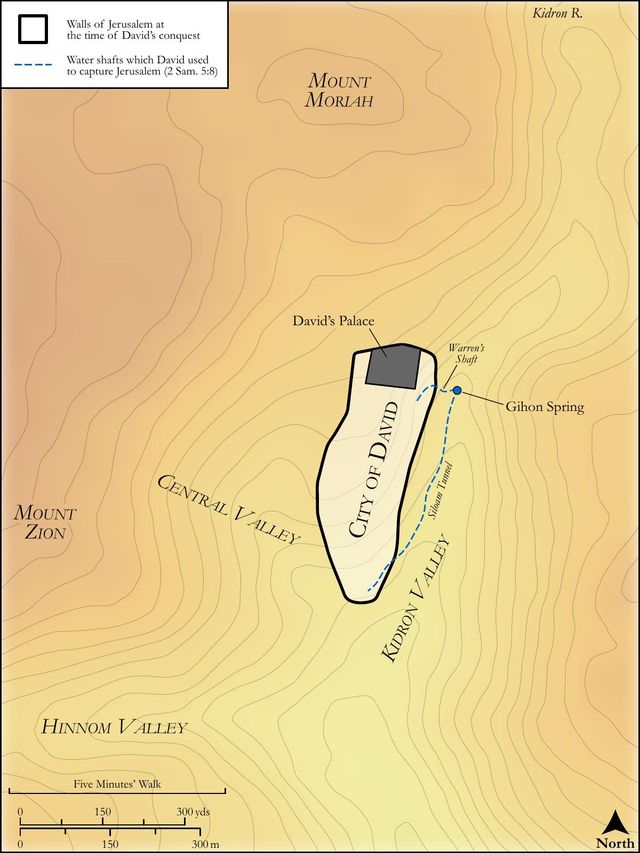
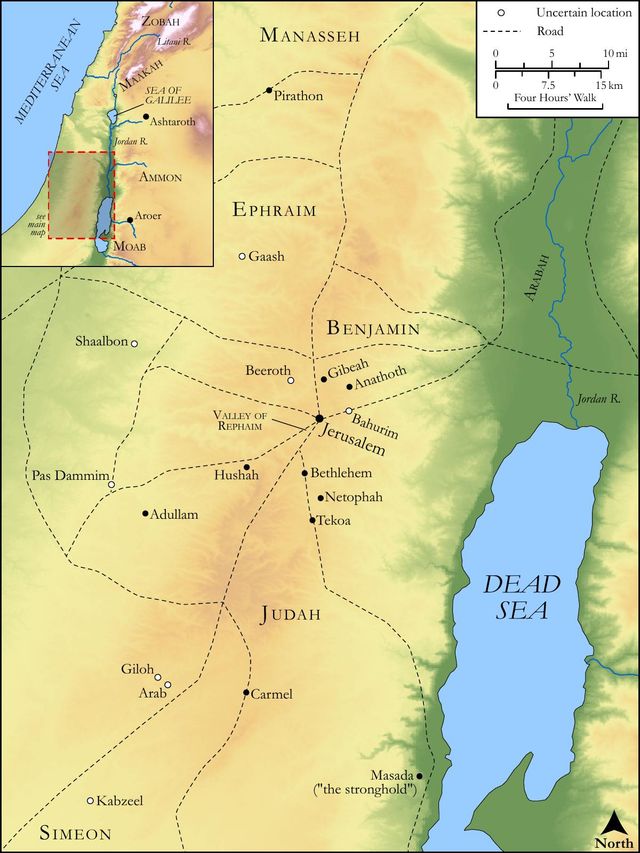
Study this verse
Continue studying 2 Samuel 23:32 across the web’s major study libraries — every link below opens this exact verse, chapter, or book on the destination site.
Read & Compare
 BibleGatewayThis verse in more than 200 translations and 70 languages.
 Bible.comThe YouVersion reader — hundreds of translations, reading plans, and highlights.
 ESV.orgCrossway's official English Standard Version reader.
 NET BibleThe NET translation with 60,000+ translators' notes on every rendering decision.
 STEP BibleTyndale House's free study tool — original text, vocabulary, and scholarly resources.
 BibliaLogos Bible Software's free web reader.
 USCCBThe New American Bible (Revised Edition) with the U.S. bishops' study notes.
Commentaries
 BibleHub CommentariesDozens of classic commentaries on this verse, gathered on one page.
 StudyLightMore than 100 commentary sets — the largest collection on the web.
 BibleRefPlain-English commentary on what this verse means, verse by verse.
 Enduring WordDavid Guzik's free commentary on this chapter, widely used by Bible teachers.
 Bible Study ToolsVerse commentary alongside Greek and Hebrew study aids.
Original Language & Research
- BibleHub InterlinearThe verse word by word — original language, transliteration, and English.
- BibleHub LexiconEvery word's original-language definition and Strong's entry.
 Blue Letter BibleDeep-study tools — Strong's numbers, concordance, and word studies.
 SefariaThe Hebrew text with Rashi and centuries of Jewish commentary.
Sermons, Hymns & Audio


TrulyRandomVerse is not affiliated with these sites and doesn’t control their content. They’re linked because they’re genuinely useful.
Summary
2 Samuel 23:32 presents two more distinguished individuals, Eliahba the Shaalbonite and Jonathan, identified as "of the sons of Jashen," within the celebrated roster of King David's elite warriors, known as "David's Mighty Men." This verse serves as a concise yet powerful acknowledgment of their inclusion among the most valiant and loyal individuals who faithfully served David throughout his reign. While specific heroic deeds are not detailed for these men in this immediate context, their presence on this esteemed honor roll underscores their significant contributions to David's military successes and the establishment of his divinely appointed kingdom, highlighting the collective strength, unwavering dedication, and diverse origins of the individuals who undergirded his rule.
Context
ShowHideLiterary Context
This verse is strategically placed within an appendix to the books of Samuel, specifically forming part of the comprehensive list of "David's Mighty Men" found in 2 Samuel 23:8-39. Preceding this list are David's profound "last words" in 2 Samuel 23:1-7, establishing a literary flow that transitions from David's personal reflection on God's covenant to the human instruments through whom God brought about his kingdom's stability and success. The list itself is structured, beginning with "The Three" (David's most elite warriors, 2 Samuel 23:8-12) and then moving to "The Thirty" (a broader, though still highly distinguished, group of warriors, 2 Samuel 23:24-39). Eliahba and Jonathan are members of "The Thirty," signifying their high rank and proven valor within David's military and administrative structure. Their inclusion, even without specific anecdotes, emphasizes the collective loyalty and strength that sustained David's kingdom, complementing the narratives of David's personal leadership and God's direct intervention.
Historical & Cultural Context
David's reign (c. 1010-970 BC) was a pivotal era marked by the consolidation of the Israelite kingdom and significant military expansion against surrounding nations. David's remarkable success was not solely attributed to his personal charisma or military genius but also to the strength of his professional army, particularly his loyal personal guard and elite warriors. In Israel, the creation and preservation of lists of prominent individuals, especially those who served a monarch, were common practices. These lists served multifaceted purposes: they honored the individuals for their service, provided a historical record, and implicitly legitimized the king's rule by showcasing the caliber and breadth of his supporters. Identifying individuals by their geographical origin (e.g., "the Shaalbonite") or by their lineage ("sons of Jashen") was a standard and crucial practice in ancient Israelite society, conveying information about their tribal affiliation, regional identity, and social standing. These "Mighty Men" were more than mere soldiers; they were foundational pillars of David's military power and the administrative stability of his burgeoning kingdom.
Key Themes
ShowHideThe list of David's Mighty Men, including the specific mention of Eliahba and Jonathan in 2 Samuel 23:32, contributes significantly to several overarching themes woven throughout the books of Samuel. A prominent theme is Loyalty and Devotion, as these warriors exemplified unwavering commitment to David and his God-given mission, often risking their lives in battle and personal service. Their Valor and Military Skill are celebrated, highlighting the exceptional competence required to establish and defend the nascent kingdom of Israel against formidable enemies, as evidenced by David's early military triumphs described in 2 Samuel 5. The very act of meticulously recording their names underscores the theme of Recognition of Faithful Service, ensuring that the contributions of all, even those whose specific deeds are not elaborated upon, are remembered and honored. Crucially, while human bravery and dedication are lauded, the broader narrative consistently points to God's Sovereign Hand as the ultimate source of David's success and the kingdom's establishment, as promised in the Davidic Covenant in 2 Samuel 7:16. These mighty men were instruments in God's divine plan, their collective strength and faithfulness serving as part of God's provision for David's enduring reign.
Exposition and Analysis
ShowHideKey Word Analysis
ShowHideDerived from the Hebrew words for "God" (אֵל, ʼēl) and "to hide" (חָבָא, châbâʼ), this name literally means "God will hide" or "God hides." This etymology might suggest a divine protection or a hidden strength bestowed upon Eliahba, though the text provides no specific narrative to confirm this. His inclusion on this list, despite the lack of detailed exploits, indicates his significant standing and the recognition of his valor by the chronicler, perhaps implying that God indeed "hid" or preserved him for vital service to David.
This term is a geographical or ethnic designation, indicating that Eliahba hailed from Shaalbim, a town mentioned in the tribal territory of Dan or Benjamin (Joshua 19:42 and Judges 1:35). Such designations were customary in ancient Israel to identify individuals by their place of origin, which often carried implications about their tribal affiliation, regional identity, and social connections. It grounds Eliahba in a specific context, showing the diverse geographical origins of David's loyal supporters.
This proper name is a theophoric name, meaning "Jehovah-given" or "Yahweh has given." It is a common name in the Old Testament, most famously borne by Saul's son, David's beloved friend. While this Jonathan is distinct from Saul's son, the name itself carries a theological weight, suggesting that the individual was perceived as a gift from God. His inclusion in David's elite force underscores his personal merit and the divine favor that rested upon David's kingdom, which was built through the contributions of individuals like Jonathan.
Verse Breakdown
ShowHide"Eliahba the Shaalbonite"
This opening phrase introduces the first of the two warriors mentioned in this verse. Eliahba is identified by his personal name and his geographical origin, "the Shaalbonite." This succinct identification is characteristic of ancient honor rolls, providing just enough information to distinguish the individual. His presence on this list, without further elaboration, signifies his established reputation for valor and loyalty, marking him as a recognized member of David's elite fighting force.
"of the sons of Jashen, Jonathan"
This second clause introduces Jonathan, identifying him primarily through his patrilineal lineage or clan, "of the sons of Jashen." The Hebrew grammatical construction places the familial designation before the individual's name, emphasizing the importance of family and clan identity in ancient Israelite society. While "Jashen" is otherwise unknown in biblical records, this designation provides Jonathan with a clear familial context. Like Eliahba, Jonathan is honored by his mere inclusion in this esteemed roll call, signifying his valor and unwavering commitment to King David and his kingdom.
Literary Devices
ShowHideThe primary literary device employed in 2 Samuel 23:32 and the broader list of David's Mighty Men is Catalog or Enumeration. This technique involves a detailed listing of names, often accompanied by brief identifying details or notable achievements, serving to record and commemorate. In this specific context, it functions as an Honorific List, meticulously compiled to bestow lasting recognition upon David's most valiant and loyal warriors. The very act of naming these individuals ensures their legacy and underscores their indispensable role in the kingdom's history. The passage also demonstrates Conciseness, providing minimal biographical detail for figures like Eliahba and Jonathan. This brevity serves to emphasize the collective strength and unity of the "Mighty Men" as a whole, rather than focusing on extensive individual narratives. This collective emphasis highlights the sheer number and caliber of David's loyalists, implicitly testifying to the stability of his reign and the divine favor upon it.
Theological and Thematic Connections
ShowHideThe inclusion of seemingly less prominent figures like Eliahba and Jonathan in a sacred and historically significant text like 2 Samuel reveals a profound theological truth: God values and remembers every faithful contribution, regardless of its perceived magnitude or public recognition. While the "Three" and other "Thirty" members are celebrated for extraordinary feats, the mere presence of these names signifies that their consistent loyalty, unwavering service, and readiness for battle were equally essential to David's success and, by extension, to God's unfolding redemptive plan for Israel. This passage underscores the importance of collective faithfulness and the truth that God utilizes a multitude of individuals, each with their unique background, skills, and role, to accomplish His grand purposes. It serves as a powerful reminder that every act of service, every demonstration of loyalty in God's kingdom, is noted in heaven and holds eternal significance, even if specific heroic deeds are not extensively recorded in human annals.
Reflection and Application
ShowHideThe meticulous listing of David's Mighty Men, even in its brief mention of figures like Eliahba and Jonathan, offers profound and actionable lessons for contemporary believers. It compels us to re-evaluate our modern tendency to prioritize only prominent achievements or publicly celebrated roles. Just as David's divinely established kingdom relied on the collective strength, diverse talents, and unwavering loyalty of many individuals, so too does the advancement of God's kingdom today depend on the dedicated, faithful service of every single believer. We are called to be faithful stewards in our unique spheres of influence, whether our contributions are highly visible or seemingly hidden, understanding that our loyalty to Christ and our commitment to His purposes are deeply valued and eternally recognized by God. This passage serves as a powerful encouragement to appreciate and honor the "unsung heroes" within our communities and churches—those who faithfully serve behind the scenes, contributing indispensable work without seeking personal acclaim. It cultivates a spirit of humility, mutual appreciation, and interdependence within the body of Christ, reminding us that every member, regardless of their perceived status, plays a vital and irreplaceable part in the larger narrative of God's redemptive work in the world.
Questions for Reflection
ShowHideFAQ
ShowHideWhy are some of David's Mighty Men listed without specific heroic deeds?
ShowHideThe primary purpose of the list in 2 Samuel 23 is not solely to recount individual heroic exploits, although it certainly highlights the extraordinary feats of some (e.g., 2 Samuel 23:8-12). Rather, it functions as a comprehensive honor roll, acknowledging the collective body of elite warriors who formed the backbone of David's military and the stability of his kingdom. The mere inclusion of a name on this esteemed list signifies that the individual was a person of proven valor, unwavering loyalty, and significant contribution to David's reign. Even without specific anecdotes, their presence confirms their high standing and crucial role in the establishment and defense of Israel. It emphasizes that the strength and longevity of David's kingdom lay not just in a few extraordinary individuals, but in the faithful and collective service of many dedicated men.
Christ-Centered Fulfillment
ShowHideThe esteemed roster of David's Mighty Men, including figures like Eliahba and Jonathan, serves as a profound and beautiful foreshadowing of the nature of Christ's eternal kingdom and the calling of His devoted followers. Just as David, the earthly king and a type of the Messiah, was surrounded by a loyal and valiant band of warriors who fought for his kingdom, so too is Christ, the ultimate King of Kings and Lord of Lords, served by a vast and diverse company of believers who are called to be His "mighty men and women" in the spiritual battle. David's men were characterized by their unwavering loyalty, valor, and willingness to sacrifice for their king and his vision, often at great personal cost. In the New Covenant, believers are called to an even greater and more profound loyalty to Jesus Christ, who has triumphed decisively over sin, death, and all spiritual powers (as powerfully declared in Colossians 2:15). We are not called to wield physical swords but to engage in spiritual warfare, putting on the full armor of God to stand firm against the schemes of the devil (Ephesians 6:10-18). The "unnamed" or less detailed heroes like Eliahba and Jonathan powerfully remind us that every faithful servant in Christ's kingdom, regardless of their public recognition or the perceived grandeur of their deeds, plays a vital and indispensable role in advancing His eternal purposes. Our ultimate King, Jesus, does not forget even the smallest act of service done in His name, affirming that whatever is done for "the least of these" is done for Him (Matthew 25:40). We are all part of His glorious company, serving the One who is truly the "Lion of the tribe of Judah," the Root of David, who has conquered and is worthy of all praise (Revelation 5:5).