


2 Samuel 23:33
Bible text: King James Version (1769 Blayney text) · Public domain
Bible text: Berean Standard Bible · Public domain
Bible text: American Standard Version (1901) · Public domain
Bible text: World English Bible, Messianic edition · Public domain
Bible text: Geneva Bible (1599) · Public domain
Bible text: Young's Literal Translation · Public domain
- בֶּןben[the] son ofH1121N-cscNoun Singular common gender Construct
- שַׁמָּהsha·MahShammahH8048N-proper-mNoun Proper Masculine
- הַהֲרָרִיha·ha·ra·Rithe HarariteH2043Art ¦ N-msNoun Gentilic Singular Masculine AbsoluteהַtheהֲרָרִיHararite
- אֲחִיאָם'a·chi·'AmAhiamH279N-proper-mNoun Proper Masculine
- בֶּןben[the] son ofH1121N-mscNoun Singular Masculine Construct
- שָׁרָרsha·RarShararH8325N-proper-mNoun Proper Masculine
- הָארָרִיha·ra·Rithe HarariteH2043Art ¦ N-msNoun Gentilic Singular Masculine AbsoluteהָtheארָרִיHararite
English is a literal word-by-word gloss of the Hebrew, not the KJV's wording. Why?
This is the original text the KJV's translators worked from — each Hebrew word with its own literal English meaning in this verse, prepared by scholars at Tyndale House, Cambridge. The KJV translates whole sentences, not word by word, so its wording differs: one Hebrew word can become several English words, and the KJV may choose “the LORD” where the gloss reads “Yahweh”. Both are faithful — they answer different questions. For the KJV's own rendering, switch to the KJV text.
Details
See on the biblical-era maps
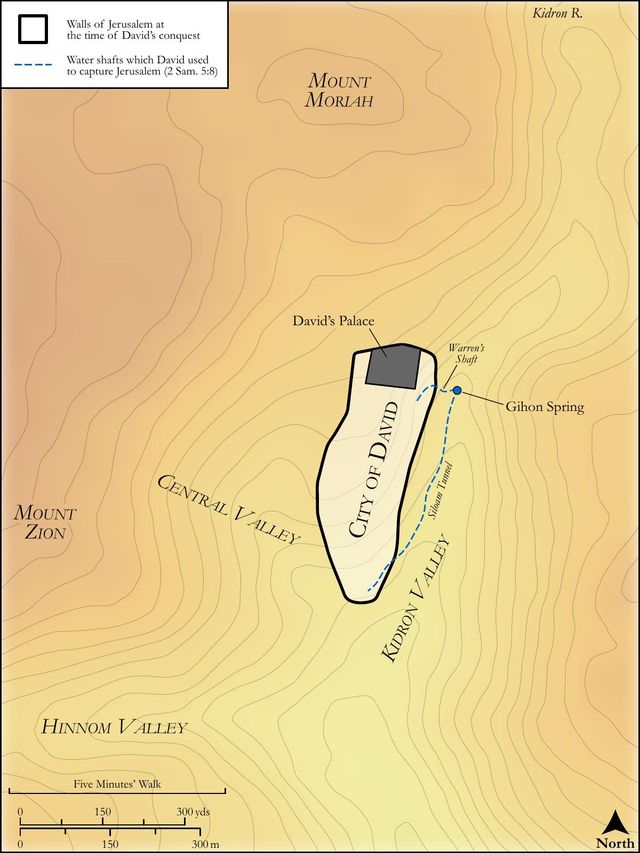
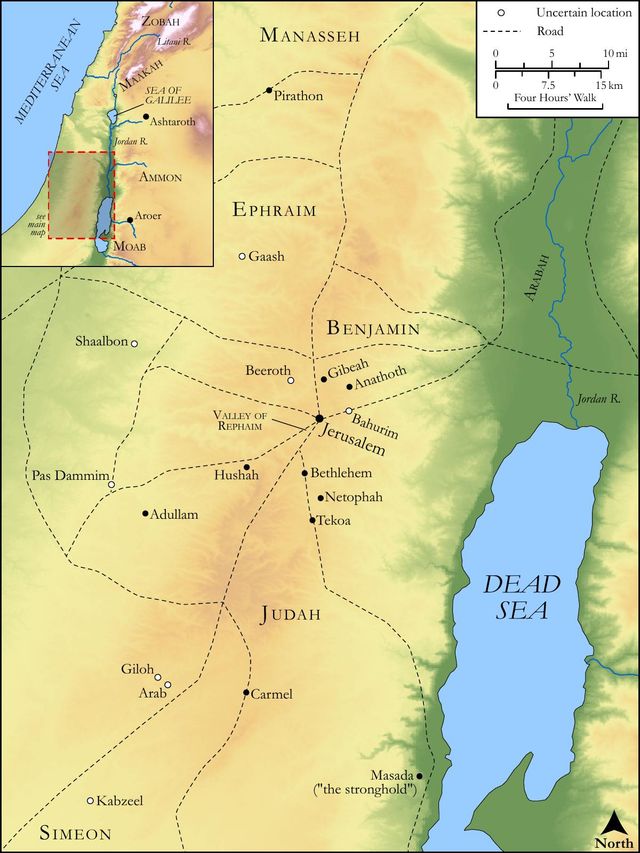
Study this verse
Continue studying 2 Samuel 23:33 across the web’s major study libraries — every link below opens this exact verse, chapter, or book on the destination site.
Read & Compare
 BibleGatewayThis verse in more than 200 translations and 70 languages.
 Bible.comThe YouVersion reader — hundreds of translations, reading plans, and highlights.
 ESV.orgCrossway's official English Standard Version reader.
 NET BibleThe NET translation with 60,000+ translators' notes on every rendering decision.
 STEP BibleTyndale House's free study tool — original text, vocabulary, and scholarly resources.
 BibliaLogos Bible Software's free web reader.
 USCCBThe New American Bible (Revised Edition) with the U.S. bishops' study notes.
Commentaries
 BibleHub CommentariesDozens of classic commentaries on this verse, gathered on one page.
 StudyLightMore than 100 commentary sets — the largest collection on the web.
 BibleRefPlain-English commentary on what this verse means, verse by verse.
 Enduring WordDavid Guzik's free commentary on this chapter, widely used by Bible teachers.
 Bible Study ToolsVerse commentary alongside Greek and Hebrew study aids.
Original Language & Research
- BibleHub InterlinearThe verse word by word — original language, transliteration, and English.
- BibleHub LexiconEvery word's original-language definition and Strong's entry.
 Blue Letter BibleDeep-study tools — Strong's numbers, concordance, and word studies.
 SefariaThe Hebrew text with Rashi and centuries of Jewish commentary.
Sermons, Hymns & Audio


TrulyRandomVerse is not affiliated with these sites and doesn’t control their content. They’re linked because they’re genuinely useful.
Summary
2 Samuel 23:33 introduces two more distinguished individuals, Shammah the Hararite and Ahiam the son of Sharar the Hararite, to the esteemed roster of King David's elite "mighty men." This verse is an integral part of a meticulously preserved list that concludes the book of 2 Samuel, serving not merely as a historical record of valiant warriors, but as a testament to the unwavering loyalty, exceptional prowess, and diverse origins of the individuals who formed the bedrock of David's military strength and contributed significantly to the stability and success of his divinely appointed kingdom.
Context
ShowHideLiterary Context
2 Samuel 23:33 is situated within the final chapter of David's reign, specifically within a section (2 Samuel 23:8-39) that meticulously lists his "mighty men" or "valiant warriors." This roster immediately follows "The Last Words of David" (2 Samuel 23:1-7), creating a profound literary bridge between David's prophetic and reflective farewell and the practical, military foundation of his kingdom. The chapter begins with a poetic summation of David's life and reign, emphasizing God's covenant with him, particularly the enduring nature of his house and kingdom as outlined in 2 Samuel 23:5. The subsequent list of warriors serves as a concrete demonstration of how God provided David with the human instruments necessary to establish and maintain his kingdom, fulfilling divine promises. The detailed enumeration, often including patronymics and geographical origins, underscores the historical and administrative precision of the biblical record, highlighting the individuals who were instrumental in David's military successes and the establishment of a unified Israel. This list finds a parallel, with some variations, in 1 Chronicles 11:10-47.
Historical & Cultural Context
The period of David's reign (c. 1010-970 BC) was a transformative era for Israel, transitioning from a tribal confederacy to a unified monarchy. This required not only strong leadership but also a formidable military force to secure borders, expand territory, and maintain internal order. The "mighty men" were more than just soldiers; they were a professional fighting elite, akin to a royal guard or special forces, loyal directly to David. Their origins, like "the Hararite," indicate the diverse geographical and tribal composition of David's army, reflecting his ability to unite various factions under his leadership. The emphasis on lineage ("son of Sharar") was crucial in ancient Israelite society, establishing identity, status, and sometimes even legal claims. The existence of such a detailed list reflects the importance of military prowess and loyalty among the kings of that day, where a king's strength was often measured by the quality of his warriors. These men were not just instruments of war but symbols of the king's authority and the nation's security, often receiving land, prestige, and positions within the royal administration, similar to the administrative structure later seen under Solomon in 1 Kings 4.
Key Themes
ShowHideThe inclusion of Shammah and Ahiam within this elite roster contributes to several overarching themes in 2 Samuel and the broader Deuteronomistic History. Firstly, it powerfully illustrates the theme of Loyalty and Service, showcasing individuals whose lives were dedicated to the king and, by extension, to the divinely ordained kingdom of Israel. Their unwavering commitment was fundamental to David's success, as seen in their willingness to face daunting odds, such as the famous incident where three of them broke through Philistine lines to bring David water from Bethlehem, as recounted in 2 Samuel 23:16. Secondly, the list highlights Valor and Strength, emphasizing the exceptional courage and military skill required to be counted among these elite warriors. Their individual exploits, though not detailed for every name, are implicitly affirmed by their inclusion. Thirdly, the act of recording these names underscores the theme of Recognition and Remembrance, ensuring that the contributions of even those who served in supporting roles were honored and preserved for posterity. This reflects a divine principle of remembering faithfulness, echoing God's own remembrance of His covenant people, as expressed in Psalm 105:8. Finally, the entire list implicitly points to God's Providence in Leadership, demonstrating how God equipped David with the necessary human resources to fulfill his kingly mandate, thereby establishing His kingdom through human agency and divine blessing, as promised in the Davidic Covenant found in 2 Samuel 7.
Exposition and Analysis
ShowHideKey Word Analysis
ShowHideThis name (H8048) identifies one of the individuals listed among David's mighty men. As per the Strong's data, it is "the same as שַׁמָּה" (H8077), and is the name of an Edomite and four Israelites. In this context, it refers to Shammah the Hararite, a distinguished warrior in David's army. The name itself does not explicitly provide a descriptor of his character or deeds within the provided Strong's definition, rather it serves primarily as an identifier for this specific individual in the biblical record.
The name (H279) is a compound derived from Hebrew roots meaning "brother" (אָח) and "mother" (אֵם). It is interpreted as "brother of the mother," or "uncle." This name identifies the second individual in the verse, Ahiam, the son of Sharar. Like many biblical names, it signifies familial connection and identity, placing the individual within a relational context, even if its specific implications for Ahiam's character are not detailed.
This gentilic term (H2043) means "a mountaineer" and indicates geographical origin, signifying someone from a place called Harar. This designation is crucial for establishing the individual's identity and connection to a specific clan or region within Israel, highlighting the diverse origins of David's loyal followers. The repetition of "the Hararite" for both Shammah and Ahiam (via his father Sharar) suggests a familial or regional connection between them, possibly indicating they were from the same family or clan from Harar, a region likely in the hill country of Judah.
Verse Breakdown
ShowHide"Shammah the Hararite,"
This clause introduces the first of the two individuals. Shammah is identified by his personal name and his geographical origin, "the Hararite." This concise identification is typical of the rosters of Scripture, providing essential information for recognition within the community and for historical record-keeping. His inclusion signifies his status as one of David's elite warriors, whose valor and loyalty were noteworthy enough to be preserved in this esteemed list.
"Ahiam the son of Sharar the Hararite,"
This clause introduces the second individual, Ahiam, and provides further genealogical detail by identifying his father, Sharar. The repetition of "the Hararite" for Sharar, Ahiam's father, strongly suggests that Ahiam inherited his regional identity and possibly his martial reputation from his family. This emphasis on lineage underscores the importance of family identity, continuity, and the perpetuation of valor across generations in ancient Israelite society. Ahiam's inclusion alongside Shammah reinforces the idea that these men were not just individuals but often part of established families or clans renowned for their military prowess and unwavering loyalty to the king.
Literary Devices
ShowHideThe primary literary device at play in 2 Samuel 23:33, and indeed the entire list of David's mighty men, is Cataloging or Enumeration. This detailed listing of names, patronymics, and sometimes origins or specific exploits, serves to provide a comprehensive historical record. It lends an air of authenticity and meticulousness to the narrative, emphasizing the concrete reality of David's kingdom and the individuals who built it. The inclusion of specific details like "the Hararite" also functions as Metonymy, where the place name stands in for the person's identity and background, grounding them in a specific geographical and social context. Furthermore, the very act of preserving these names acts as a form of Commemoration, ensuring the lasting memory and honor of these warriors. This literary choice elevates the individuals from mere soldiers to figures of historical and theological significance, emphasizing their enduring legacy of loyalty and service to God's anointed king.
Theological and Thematic Connections
ShowHideThe inclusion of Shammah and Ahiam within David's elite force underscores a profound theological truth: God often works through human agents, empowering and utilizing their natural abilities and loyalties to accomplish His divine purposes. These men, though not explicitly performing miracles or receiving direct prophecy, were instrumental in establishing the kingdom promised to David. Their faithfulness in their military roles reflects a broader principle of stewardship and dedication to one's calling, whether in the sacred or secular sphere. The meticulous recording of their names suggests that every contribution, no matter how seemingly small or "behind the scenes," is valued and remembered in God's economy. Their service to David, God's anointed king, can be seen as a form of service to God's kingdom, demonstrating that true faithfulness is expressed through tangible actions of loyalty and courage, embodying the truth that God equips His people for the tasks He calls them to.
Reflection and Application
ShowHideThe historical record of David's mighty men, including figures like Shammah and Ahiam, offers enduring lessons for contemporary believers. In a world that often celebrates individual celebrity and self-promotion, this list reminds us of the profound importance of collective effort and the invaluable contribution of every member to a larger vision. Just as David's kingdom was built on the diverse strengths and unwavering loyalty of many, so too is the church, and indeed any thriving community, dependent on the faithful service of its members. This verse calls us to consider our own roles within our families, churches, workplaces, and communities. Are we serving with the same dedication and valor as these ancient warriors, recognizing that our faithfulness in seemingly ordinary tasks contributes to God's extraordinary purposes? Do we actively recognize and honor the contributions of others, even those whose names may not be widely known or whose roles are not prominent? The legacy of these men is one of steadfastness and commitment, prompting us to cultivate a spirit of loyalty, not just to human leaders, but ultimately to the divine King and His eternal purposes. Our faithfulness in our daily tasks, no matter how mundane, contributes to the larger tapestry of God's redemptive work in the world.
Questions for Reflection
ShowHideFAQ
ShowHideWhy are these specific names and their origins so important in the biblical text?
ShowHideThe meticulous recording of names, patronymics, and geographical origins like "the Hararite" serves several crucial purposes. Historically, it authenticates the narrative, grounding it in specific individuals and places, much like a modern military roster. It provides concrete evidence of the people who lived and served during David's reign. Theologically, it highlights God's sovereignty working through specific human agents; these were real people God used to establish David's kingdom. Culturally, lineage and origin were vital for identity, social standing, and tribal affiliation in ancient Israel, indicating a person's place within the societal structure. The repetition of "Hararite" for both Shammah and Ahiam's father, Sharar, suggests a familial or regional connection, indicating that valor and loyalty could be characteristics associated with certain clans or areas. It emphasizes that the strength of David's kingdom was built upon the contributions of diverse individuals from across Israel, united under his leadership, echoing themes found in the comprehensive administrative lists of Solomon's reign in 1 Kings 4:7-19.
What can we learn about leadership from David's relationship with his mighty men?
ShowHideDavid's relationship with his mighty men illustrates several key aspects of effective leadership. Firstly, he surrounded himself with capable and loyal individuals, recognizing and valuing their distinct strengths. This demonstrates the importance of delegation and building a strong, diverse team, rather than attempting to do everything alone. Secondly, the very existence of this list suggests that David honored and remembered their service, fostering a culture of recognition and appreciation. This likely inspired greater loyalty and dedication among his warriors, demonstrating that true leaders invest in and celebrate their people. Thirdly, their willingness to risk their lives for him, such as the famous account of bringing him water from Bethlehem during a Philistine siege in 2 Samuel 23:15-17, speaks to a deep bond of trust and mutual respect. This indicates that David was not just a commander but a leader who inspired profound devotion through his character and actions. This reciprocal relationship between leader and follower is a powerful model for any form of leadership, whether in a family, community, or spiritual context.
Christ-Centered Fulfillment
ShowHideWhile 2 Samuel 23:33, a list of David's mighty men, may not immediately present a direct messianic prophecy, it powerfully foreshadows Christ's ultimate kingdom in several profound ways. David, as Israel's king and God's anointed, was a type of the Messiah, and his mighty men represent the loyal, valiant, and diverse company that supports the king's reign. In the New Testament, Jesus Christ is revealed as the true and greater King, the Son of David, whose kingdom is not of this world but is eternal and spiritual (John 18:36). Just as David had his loyal warriors, Christ gathers His own "mighty men and women"—His disciples, apostles, and all believers—who are called to demonstrate unwavering loyalty and spiritual valor in the service of His kingdom. These are not warriors of physical combat, but those who wage spiritual warfare against unseen forces (Ephesians 6:12) and are equipped with divine power for the demolition of strongholds (2 Corinthians 10:4). The cataloging of David's men underscores the value of every individual's contribution to the earthly kingdom; similarly, in Christ's kingdom, every believer, regardless of their background or perceived status, is a vital member of His body, equipped with unique gifts for the common good and the building up of the church (1 Corinthians 12:12-27). The faithfulness and dedication of Shammah and Ahiam point to the ultimate faithfulness required of those who follow the Lamb of God, who is Himself the Lion of Judah, establishing a kingdom that will never end and to whom all power and authority belong (Revelation 5:5 and Matthew 28:18).