


2 Samuel 23:5
- כִּיkiforH3588PrtParticle Conditional
- לֹאlo'notH3808NegParticle Negative
- כֵןkhenthusH3651AdvAdverb
- בֵּיתִיbei·Ti[is] my house?H1004N-msc ¦ 1csNoun Singular Masculine Constructבֵּיתִ[is] house?יmy
- עִם'imwithH5973PrepPreposition
- אֵל'ElGodH410N-msNoun Singular Masculine Absolute
- כִּיkiforH3588PrtParticle Conditional
- בְרִיתve·Rita covenant ofH1285N-fscNoun Singular Feminine Construct
- עוֹלָםo·LamperpetuityH5769N-msNoun Singular Masculine Absolute
- שָׂםsamhe has madeH7760V-Qal-Perf-3msVerb Qal Perfect 3rd Singular Masculine
- לִיLito <the> mePrep-l ¦ 1csSuffix Personal 1st Singular common genderלִto <the>יme
- עֲרוּכָה'a·ru·KhaharrangedH6186V-Qal-PassPrtcpl-fsVerb Qal Participle Passive Singular Feminine Absolute
- בַכֹּלva·Kolin <the> everythingH3605Prep-b ¦ N-msNoun Singular Masculine Absoluteבַin <the>כֹּלeverything
- וּשְׁמֻרָהu·she·mu·Rahand preservedH8104Conj-w ¦ V-Qal-PassPrtcpl-fsVerb Qal Participle Passive Singular Feminine Absoluteוּandשְׁמֻרָהpreserved
- כִּיkiforH3588PrtParticle Conditional
- כָלkholallH3605N-mscNoun Singular Masculine Construct
- יִשְׁעִיyish·'Imy salvationH3468N-msc ¦ 1csNoun Singular Masculine Constructיִשְׁעִsalvationיmy
- וְכָלve·kholand everyH3605Conj-w ¦ N-mscNoun Singular Masculine Constructוְandכָלevery
- חֵפֶץChe·fetzdesireH2656N-msNoun Singular Masculine Absolute
- כִּיkiforH3588PrtParticle Conditional
- לֹאlo'notH3808NegParticle Negative
- יַצְמִיחַyatz·Mi·achwill he make grow?H6779V-Hiphil-Imperf-3msVerb Hiphil Imperfect 3rd Singular Masculine
English is a literal word-by-word gloss of the Hebrew, not the KJV's wording. Why?
This is the original text the KJV's translators worked from — each Hebrew word with its own literal English meaning in this verse, prepared by scholars at Tyndale House, Cambridge. The KJV translates whole sentences, not word by word, so its wording differs: one Hebrew word can become several English words, and the KJV may choose “the LORD” where the gloss reads “Yahweh”. Both are faithful — they answer different questions. For the KJV's own rendering, switch to the KJV text.
Details
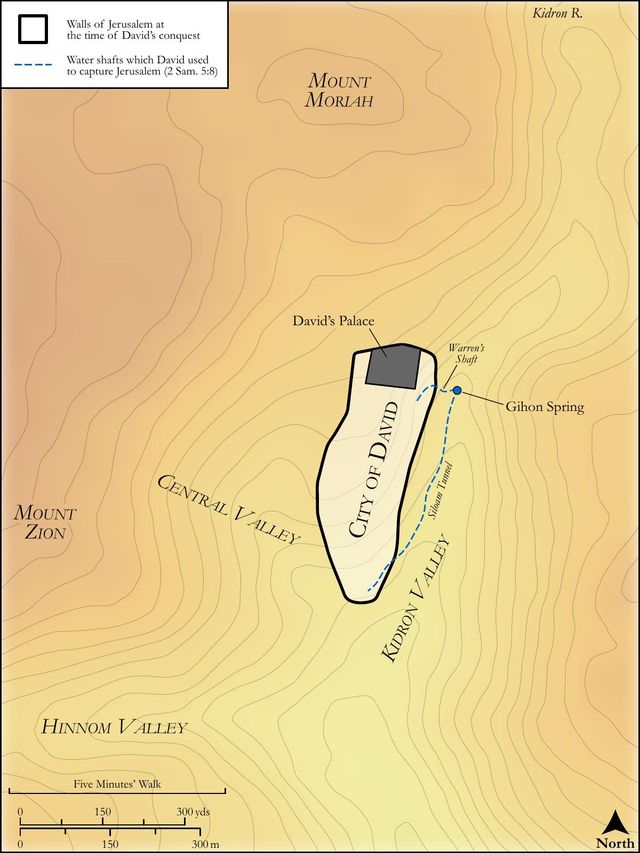
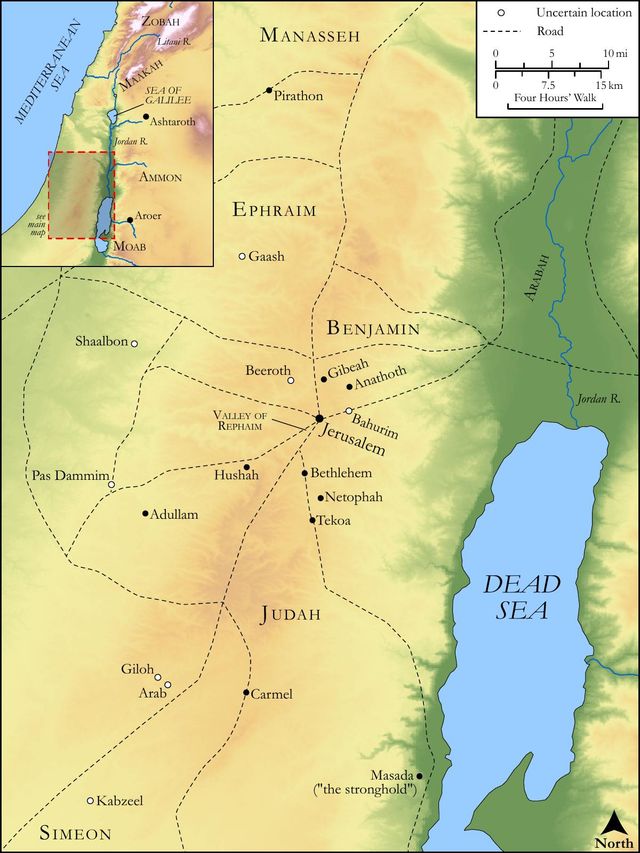
See on the biblical-era maps
Study this verse
Historical interpretation
Historical reception
1 surviving comment on this verse from the historical church.
Neither is my house: As if he should say: This everlasting covenant was not due to my house: but purely owing to his bounty; who is all my salvation, and my will: that is, who hath always saved me, and granted me what I beseeched of him; so that I and my house, through his blessing, have sprung up, and succeeded in all things.
Continue studying 2 Samuel 23:5 across the web’s major study libraries — every link below opens this exact verse, chapter, or book on the destination site.
Read & Compare
 BibleGatewayThis verse in more than 200 translations and 70 languages.
 Bible.comThe YouVersion reader — hundreds of translations, reading plans, and highlights.
 ESV.orgCrossway's official English Standard Version reader.
 NET BibleThe NET translation with 60,000+ translators' notes on every rendering decision.
 STEP BibleTyndale House's free study tool — original text, vocabulary, and scholarly resources.
 BibliaLogos Bible Software's free web reader.
 USCCBThe New American Bible (Revised Edition) with the U.S. bishops' study notes.
Commentaries
 BibleHub CommentariesDozens of classic commentaries on this verse, gathered on one page.
 StudyLightMore than 100 commentary sets — the largest collection on the web.
 BibleRefPlain-English commentary on what this verse means, verse by verse.
 Enduring WordDavid Guzik's free commentary on this chapter, widely used by Bible teachers.
 Bible Study ToolsVerse commentary alongside Greek and Hebrew study aids.
Original Language & Research
- BibleHub InterlinearThe verse word by word — original language, transliteration, and English.
- BibleHub LexiconEvery word's original-language definition and Strong's entry.
 Blue Letter BibleDeep-study tools — Strong's numbers, concordance, and word studies.
 SefariaThe Hebrew text with Rashi and centuries of Jewish commentary.
Sermons, Hymns & Audio


TrulyRandomVerse is not affiliated with these sites and doesn’t control their content. They’re linked because they’re genuinely useful.
Summary
2 Samuel 23:5 presents David's profound theological reflection on God's unwavering faithfulness amidst the acknowledged imperfections of his own royal household. As part of his "last words," the aging king declares that despite the moral and generational failings within his dynasty, his ultimate hope, salvation, and deepest desires are entirely rooted in the everlasting, divinely ordered, and absolutely secure covenant God established with him. This verse serves as a powerful testament to David's mature faith, highlighting his recognition of God's steadfast character as the sole foundation for his present peace and future hope, transcending human frailty and temporal circumstances.
Context
ShowHideLiterary Context
This verse is embedded within a unique and highly significant literary unit in 2 Samuel 23:1-7, often titled "The Last Words of David." Positioned immediately after a poetic introduction identifying David as "the sweet psalmist of Israel" (2 Samuel 23:1), this section functions as David's spiritual and prophetic testament, a final, divinely inspired utterance from the dying king. It serves as a theological capstone to his reign, preceding the detailed list of David's mighty men (2 Samuel 23:8-39), thereby emphasizing that even the greatest human achievements and legacies are ultimately grounded in God's sovereign plan and unbreakable word. The placement underscores the profound contrast between the transient nature of human power and the eternal reliability of God's covenant.
Historical & Cultural Context
David's reign, though marked by immense divine favor and military success, was also deeply scarred by significant internal strife, personal sin, and family dysfunction. The preceding narratives in 2 Samuel vividly chronicle events such as Amnon's sin (2 Samuel 13), Absalom's devastating rebellion (2 Samuel 15-18), and the ongoing challenges of succession and governance within his own household. As king, David was not only a political and military leader but also the spiritual head of Israel, responsible for the moral and spiritual well-being of his "house" (dynasty). In the ancient Near East, covenants were foundational to political and social order, often involving solemn oaths and reciprocal obligations. However, God's covenant with David, articulated in 2 Samuel 7, was unique in its unilateral and unconditional nature, initiated and guaranteed by God Himself, transcending typical human agreements. David's words in this verse reflect a profound, mature understanding of this divine initiative, particularly in light of the very real and painful imperfections of his own family and kingdom.
Key Themes
ShowHideThe overarching theme of 2 Samuel 23:5 is the unconditional nature of God's covenant faithfulness in stark contrast to human fallibility. David's humble acknowledgment that "my house [be] not so with God" directly confronts the reality of sin, dysfunction, and moral failure within his own family and lineage, echoing the tragic events chronicled throughout 2 Samuel. Yet, this human failure serves only to highlight the steadfastness of the Davidic Covenant, first articulated in 2 Samuel 7. This covenant promised an enduring dynasty and an eternal throne, a promise that David here affirms as "everlasting," "ordered in all [things], and sure." For David, this divine promise is not merely a political guarantee but the very essence of his "salvation" and "desire," indicating that his ultimate hope was not in earthly prosperity or a perfect human legacy, but in the certainty of God's redemptive plan. This profound trust in God's reliability, even when human efforts fall short, resonates with the broader biblical theme of God's unwavering character, as seen in passages like 2 Timothy 2:13.
Exposition and Analysis
ShowHideKey Word Analysis
ShowHideThis term (H1004) primarily denotes a physical dwelling but extends to encompass a family, household, or dynasty. In this context, "my house" refers specifically to David's royal lineage, his descendants, and the continuity of his throne. David's poignant admission that his "house" is "not so with God" signifies the moral and spiritual imperfections, failures, and internal strife that plagued his family and succession, despite God's covenant promises concerning his dynasty.
This word (H1285) signifies a binding agreement, compact, or league, often established through a solemn oath or ritual (like cutting pieces of flesh). In the biblical context, a divine covenant is a relationship or promise initiated by God, characterized by His sovereign initiative and unwavering faithfulness. Here, it refers specifically to the Davidic Covenant (2 Samuel 7:12-16), a unilateral divine promise guaranteeing an eternal dynasty and an enduring throne for David's lineage, ultimately pointing to the Messiah.
This term (H8104), translated as "sure," primarily means to guard, protect, preserve, or attend to. When applied to the covenant, it conveys the idea of something that is diligently kept, secured, and therefore reliable and trustworthy. David's declaration that the covenant is "sure" emphasizes its absolute dependability and inviolability, guaranteed by God's own watchful care and faithfulness, standing in stark contrast to the uncertainties of human endeavors.
Verse Breakdown
ShowHide"Although my house [be] not so with God;"
David begins with a humble and deeply honest confession. He acknowledges the profound imperfections, moral failings, and internal strife that have characterized his own royal family and lineage. This is a realistic admission that his "house"—his dynasty, his children, his personal life, and their conduct—did not consistently align with God's perfect standards or expectations, despite his own general devotion. This painful recognition sets the stage for the profound grace and divine faithfulness that follows.
"yet he hath made with me an everlasting covenant, ordered in all [things], and sure:"
Despite the stark reality of his family's shortcomings, David pivots to God's unfailing initiative and sovereign commitment. The "everlasting covenant" refers to the Davidic Covenant (2 Samuel 7), a unilateral promise from God to establish David's throne and kingdom forever. The phrases "ordered in all [things]" (referring to God's meticulous arrangement, H6186 ‘ârak) and "sure" (referring to its guarded, reliable nature, H8104 shâmar) emphasize the divine precision, reliability, and absolute certainty of this covenant. It is not haphazard or contingent on human performance but perfectly planned, established, and guaranteed by God Himself.
"for [this is] all my salvation, and all [my] desire,"
For David, this divine covenant is not merely a political promise or a dynastic guarantee; it is the very source and substance of his ultimate well-being, deliverance, and deepest longing. "Salvation" here encompasses spiritual flourishing, security, and ultimate redemption. His "desire" speaks to his profound spiritual yearning and ultimate satisfaction, indicating that his hope was found not in earthly achievements, a perfect family, or a flawless legacy, but supremely in the fulfillment of God's divine, unbreakable promise.
"although he make [it] not to grow."
This final clause is challenging but profoundly insightful. It likely refers to the apparent lack of immediate, full, or perfect manifestation of the covenant's ideal state in David's lifetime or through his direct, immediate descendants. Despite the covenant being "sure," David recognizes that its full "growth" or complete realization of blessing might not be immediately evident or complete in his present circumstances. It reflects a mature faith that trusts in God's promise even when the visible evidence is incomplete, imperfect, or seemingly delayed, looking beyond present realities to God's ultimate faithfulness.
Literary Devices
ShowHideThe verse is rich in literary devices that powerfully convey its profound theological message. Contrast is a dominant feature, starkly juxtaposing David's imperfect and flawed "house" with God's perfectly ordered, "everlasting," and "sure" covenant. This highlights the radical nature of divine faithfulness against the backdrop of human frailty and failure. The emphatic declaration that the covenant is "all my salvation, and all my desire" employs Hyperbole, underscoring the absolute centrality and comprehensive significance of God's promise to David's spiritual life and ultimate hope. Furthermore, the entire statement functions as a Testamentary Confession, a final, authoritative declaration of faith and theological insight from an aging patriarch, lending it immense weight and spiritual authority. The description of the covenant as "ordered in all things, and sure" utilizes Figurative Language to attribute human qualities of meticulous planning, stability, and reliability to God's divine promise, reinforcing its absolute dependability.
Theological and Thematic Connections
ShowHideThis verse profoundly articulates the biblical theme of God's unwavering faithfulness in the face of human imperfection. David's honest admission of his "house" not being "so with God" is a powerful testament to the pervasive reality of sin and its impact, even within a divinely chosen lineage and a king after God's own heart. Yet, this human failure does not nullify God's covenant; rather, it magnifies His grace, sovereign commitment, and the unilateral nature of His promises. The "everlasting covenant" is presented as the sole, unshakeable foundation for David's hope, illustrating that true security, ultimate well-being, and genuine salvation are found not in human performance, earthly stability, or dynastic perfection, but solely in God's unilateral, perfectly ordered, and absolutely sure promises. This theological truth serves as a cornerstone for understanding God's redemptive plan throughout Scripture, demonstrating that His redemptive purposes will prevail despite human shortcomings, ultimately culminating in the ultimate fulfillment of the Davidic Covenant.
Reflection and Application
ShowHideDavid's "last words" in 2 Samuel 23:5 offer profound encouragement and a vital spiritual lesson for believers today. In a world where personal failures, family struggles, and societal instabilities often shake our foundations, David's unwavering trust in God's "everlasting covenant" provides a powerful model of resilient faith. We, too, must humbly acknowledge our own imperfections and the shortcomings of our "houses"—our families, careers, ministries, and personal lives—recognizing that no human endeavor is perfectly "so with God." Yet, like David, our ultimate hope and deepest desire must rest not on our performance, our achievements, or the fleeting successes of this world, but on the unshakeable promises of God. His covenant, established in Christ, is "ordered in all things, and sure," providing true salvation, an eternal anchor for our souls, and a steadfast hope, even when immediate circumstances do not seem to "grow" as we might wish. This calls us to cultivate a faith that looks beyond the visible and imperfect to the certainty of God's invisible hand and His unfailing, eternally reliable word.
Questions for Reflection
ShowHideFAQ
ShowHideWhat does David mean by "Although my house [be] not so with God"?
ShowHideDavid is humbly and realistically acknowledging the significant imperfections, moral failings, and internal strife that plagued his own royal family and personal life, despite his own general devotion to God. This includes tragic events like Amnon's sin, Absalom's rebellion, and the ongoing challenges of succession and governance. He recognizes that his "house" (his dynasty, his children, his legacy) did not perfectly align with God's ideal standards or expectations. This candid admission highlights his profound realism and sets the stage for the profound grace that follows, emphasizing that God's faithfulness is not contingent on human perfection.
What is the "everlasting covenant" David refers to?
ShowHideThe "everlasting covenant" David refers to is primarily the Davidic Covenant, which God established with him in 2 Samuel 7. In this covenant, God unilaterally promised David that He would establish his "house" (dynasty) and his "kingdom" forever, and his "throne" would be established forever (see 2 Samuel 7:16). This was a divine, unconditional promise that secured the future of David's lineage and, ultimately, pointed forward to the Messiah, Jesus Christ, who would be the eternal king from David's line.
How can the covenant be "sure" if David's house was imperfect and didn't always "grow"?
ShowHideThe "sureness" of the covenant lies entirely in God's character and His unilateral commitment, not in human performance or the immediate visible outcomes. David's acknowledgment that his house was "not so with God" and that God might "not make it to grow" (in the immediate, perfect sense) emphasizes that the covenant's fulfillment is dependent on God's faithfulness, not on David's or his descendants' righteousness. Even when human agents fail or the visible manifestation of the promise seems incomplete, God's word remains firm and unbreakable. This points to a future, ultimate fulfillment that transcends the immediate historical circumstances, a fulfillment ultimately realized in the perfect King, Jesus Christ, whose kingdom truly is everlasting and perfectly "ordered in all things, and sure."
Christ-Centered Fulfillment
ShowHideDavid's "last words" in 2 Samuel 23:5 find their ultimate and glorious fulfillment in the person and work of Jesus Christ. The "everlasting covenant, ordered in all things, and sure" that David clings to, despite the profound imperfections of his own "house," is precisely the covenant that finds its perfect embodiment and eternal guarantee in Christ. He is the promised "seed" of David, the one upon whose shoulder the government rests, and of the increase of His government and peace there will be no end, upon the throne of David and over His kingdom, to order it and establish it with judgment and justice from that time forward, even forever (as prophesied in Isaiah 9:6-7). While David's earthly lineage struggled with sin, rebellion, and succession, the true Son of David, Jesus, perfectly fulfilled the covenant's terms, living a sinless life and establishing an eternal kingdom through His atoning death and resurrection. The "salvation" and "desire" of David's heart, rooted in the covenant, are fully realized in Christ, who is "the way, the truth, and the life" (John 14:6) and the "Lamb of God, who takes away the sin of the world!" (John 1:29). The "sureness" of the covenant, even when it seemed "not to grow" in David's time, is definitively established in the New Covenant inaugurated by Christ's blood (Luke 22:20), guaranteeing eternal life and a perfect, everlasting reign for all who believe in Him. Thus, David's hope becomes the hope of all believers, secured not by human effort or dynastic perfection, but by the perfect faithfulness of God in Christ Jesus, the King who sits on David's throne forever (Luke 1:32-33; Revelation 22:16).