


2 Samuel 11:9
- וַיִּשְׁכַּבvai·yish·Kavand he lay downH7901Conj-w ¦ V-Qal-ConsecImperf-3msVerb Qal Consecutive Imperfect 3rd Singular Masculineוַandיִּשְׁכַּבhe lay down
- אוּרִיָּה'u·ri·YahUriahH223N-proper-mNoun Proper Masculine
- פֶּתַחPe·tach[the] entrance ofH6607N-mscNoun Singular Masculine Construct
- בֵּיתbeit[the] house ofH1004N-mscNoun Singular Masculine Construct
- הַמֶּלֶךְha·Me·lekhthe kingH4428Art ¦ N-msNoun Singular Masculine Absoluteהַtheמֶּלֶךְking
- אֵת'etwithH854PrepPreposition
- כָּלkolallH3605N-mscNoun Singular Masculine Construct
- עַבְדֵי'av·Dei[the] servants ofH5650N-mpcNoun Plural Masculine Construct
- אֲדֹנָיו'a·do·Navhis lord<s>H113N-mpc ¦ 3msNoun Plural Masculine Constructאֲדֹנָיlord<s>וhis
- וְלֹאve·Lo'and notH3808Conj-w ¦ NegParticle Negativeוְandלֹאnot
- יָרַדya·Radhe went downH3381V-Qal-Perf-3msVerb Qal Perfect 3rd Singular Masculine
- אֶל'eltoH413PrepPreposition
- בֵּיתוֹbei·Tohis houseH1004N-msc ¦ 3msNoun Singular Masculine Constructבֵּיתhouseוֹhis
English is a literal word-by-word gloss of the Hebrew, not the KJV's wording. Why?
This is the original text the KJV's translators worked from — each Hebrew word with its own literal English meaning in this verse, prepared by scholars at Tyndale House, Cambridge. The KJV translates whole sentences, not word by word, so its wording differs: one Hebrew word can become several English words, and the KJV may choose “the LORD” where the gloss reads “Yahweh”. Both are faithful — they answer different questions. For the KJV's own rendering, switch to the KJV text.
Details
See on the biblical-era map

Study this verse
Public-domain commentary
Matthew Henry
From his Commentary on the Whole Bible. Henry comments on passages, not single verses — this entry covers 2 Samuel 11:6–13. His four-level outline is real structure in the source text, so it is rendered as structure.
Uriah, we may suppose, had now been absent from his wife some weeks, making the campaign in the country of the Ammonites, and not intending to return till the end of it. The situation of his wife would bring to light the hidden works of darkness; and when Uriah, at his return, should find how he had been abused, and by whom, it might well be expected, 1. That he would prosecute his wife, according to law, and have her stoned to death; for jealousy is the rage of a man, especially a man of honour, and he that is thus injured will not spare in the day of vengeance, Pro 6:34. This Bath-sheba was apprehensive of when she sent to let David know she was with child, intimating that he was concerned to protect her, and, it is likely, if he had not promised her so to do (so wretchedly abusing his royal power), she would not have consented to him. Hope of impunity is a great encouragement to iniquity. 2. It might also be expected that since he could not prosecute David by law for an offence of this nature he would take his revenge another way, and raise a rebellion against him. There have been instances of kings who by provocations of this nature, given to some of their powerful subjects, have lost their crowns. To prevent this double mischief, David endeavours to father the child which should be born upon Uriah himself, and therefore sends for him home to stay a night or two with his wife. Observe,
I.How the plot was laid.
Uriah must come home from the army under pretence of bringing David an account how the war prospered, and how they went on with the siege of Rabbah, Sa2 11:7. Thus does he pretend a more than ordinary concern for his army when that was the least thing in his thoughts; if he had not had another turn to serve, an express of much less figure than Uriah might have sufficed to bring him a report of the state of the war. David, having had as much conference with Uriah as he thought requisite to cover the design, sent him to his house, and, that he might be the more pleasant there with the wife of his youth, sent a dish of meat after him for their supper, Sa2 11:8. When that project failed the first night, and Uriah, being weary of his journey and more desirous of sleep than meat, lay all night in the guard-chamber, the next night he made him drunk (Sa2 11:13), or made him merry, tempted him to drink more than was fit, that he might forget his vow (Sa2 11:11), and might be disposed to go home to his own bed, to which perhaps, if David could have made him dead drunk, he would have ordered him to be carried. It is a very wicked thing, upon any design whatsoever, to make a person drunk. Woe to him that does so, Hab 2:15, Hab 2:16. God will put a cup of trembling into the hands of those who put into the hands of others the cup of drunkenness. Robbing a man of his reason is worse than robbing him of his money, and drawing him into sin worse than drawing him into any trouble whatsoever. Every good man, especially every magistrate, should endeavour to prevent this sin, by admonishing, restraining, and denying the glass to those whom they see falling into excess; but to further it is to do the devil's work, to officiate as factor for him.
II.How this plot was defeated by Uriah's firm resolution not to lie in his own bed.
Both nights he slept with the life-guard, and went not down to his house, though, it is probable, his wife pressed him to do it as much as David, Sa2 11:9, Sa2 11:12. Now,
1.Some think he suspected what was done, being informed of his wife's attendance at court, and therefore he would not go near her. But if he had had any suspicion of that kind, surely he would have opened the letter that David sent by him to Joab.
2.Whether he suspected any thing or no, Providence put this resolution into his heart, and kept him to it, for the discovering of David's sin, and that the baffling of his design to conceal it might awaken David's conscience to confess it and repent of it.
3.The reason he gave to David for this strange instance of self-denial and mortification was very noble, Sa2 11:11. While the army was encamped in the field, he would not lie at ease in his own house. "The ark is in a tent," whether at home, in the tent David had pitched for it, or abroad, with Joab in the camp, is not certain. "Joab, and all the mighty men of Israel, lie hard and uneasy, and much exposed to the weather and to the enemy; and shall I go and take my ease and pleasure at my own house?" No, he protests he will not do it. Now,
(1.)This was in itself a generous resolution, and showed Uriah to be a man of a public spirit, bold and hardy, and mortified to the delights of sense. In times of public difficulty and danger it does not become us to repose ourselves in security, or roll ourselves in pleasure, or, with the king and Haman, to sit down to drink when the city Shushan was perplexed, Est 3:15. We should voluntarily endure hardness when the church of God is constrained to endure it.
(2.)It might have been of use to awaken David's conscience, and make his heart to smite him for what he had done.
[1.]That he had basely abused so brave a man as Uriah was, a man so heartily concerned for him and his kingdom, and that acted for him and it with so much vigour.
[2.]That he was himself so unlike him. The consideration of the public hardships and hazards kept Uriah from lawful pleasures, yet could not keep David, though more nearly interested, from unlawful ones. Uriah's severity to himself should have shamed David for his indulgence of himself. The law was, When the host goeth forth against the enemy then, in a special manner, keep thyself from every wicked thing, Deu 23:9. Uriah outdid that law, but David violated it.
Historical interpretation
Historical reception
1 surviving comment on this verse from the historical church.
We have taken up the task of writing an apology for the present style of the prophet David, not because he needs this gift, who has excelled in such great merits and flourished in virtues, but because many people, reading the sequence of his deeds without considering the power of the Scriptures or the hidden mysteries, wonder how such a great prophet did not avoid the contagion of adultery first and then of murder.
Therefore, it was our desire to review the history itself, which seems to have been exposed to sin. For in the second book of Kings (2 Samuel 11:2-27), we read that while David was walking in his royal palace, he saw a woman bathing (her name was Bathsheba), of remarkable beauty and grace, with a very attractive face, and he was overcome by the desire to possess her. However, the woman was married to a man named Uriah, and the scene of his death was arranged by royal command. For although it had no effect on his desire, yet it was considered to greatly impede his sense of shame for adultery.
Therefore, let us begin with the most obvious, whom God justified, so that you may not judge. 'For it is of little concern to me,' says Paul, 'that I should be judged by you or by any human court; indeed, I do not even judge myself' (1 Corinthians 4:3). Even though he was still in the body and subject to temptation, he did not judge himself because a spiritual person is not judged by anyone but God alone. Finally, he added, 'The one who judges me is the Lord' (1 Corinthians 4:4). Therefore, do not judge anything before the appointed time (ibid., 4 and 5). But David has already fulfilled his time and has earned grace, and he is justified by Christ; since David himself rejoiced in being called the son of the Lord, and those who confessed him in this way were enlightened. Why do you call a man of God from a reward to judgment? The Lord has already judged him, of whom he said to Solomon: If you walk before me as your father David walked in the holiness of heart and righteousness, in order to do everything I commanded him (3 Kings 9:4). Is he worthy of judgment or reward, who has done everything according to heavenly commands, walking in holiness and righteousness of heart? Where the vices and sins of others are hidden, there David receives divine testimony of his virtue and glory. And we discuss his sin in vain, for it is through his merit and grace that the sins of others have been revealed. For when Solomon sinned by not keeping the Lord's commands and God intended to divide his kingdom into many parts, He said to him: However, I will not do this in your days because of your father David. I will take it from the hand of your son. However, I will not take the whole kingdom; I will give him one scepter because of my servant David (3 Kings 11:12-13). Therefore, since the Lord justifies, who is there to condemn? What God has cleansed, you must not call common (Acts 10:15).
Nevertheless, with due regard to heavenly judgment, in which you honor the prophet even more, enter into his actions and behaviors. Do not marvel at the man, and do not judge him to be equal to the angels, because he has spent most of his life, even from childhood, dwelling in riches, honors, and positions of power, and has been subjected to many temptations. He has only once given in to error, and it is through this error that even the angels of heaven, as Scripture recounts (Genesis 6:2), were cast down from their virtue and grace. Indeed, another error of his is mentioned, that he caused the people to be counted.
Continue studying 2 Samuel 11:9 across the web’s major study libraries — every link below opens this exact verse, chapter, or book on the destination site.
Read & Compare
 BibleGatewayThis verse in more than 200 translations and 70 languages.
 Bible.comThe YouVersion reader — hundreds of translations, reading plans, and highlights.
 ESV.orgCrossway's official English Standard Version reader.
 NET BibleThe NET translation with 60,000+ translators' notes on every rendering decision.
 STEP BibleTyndale House's free study tool — original text, vocabulary, and scholarly resources.
 BibliaLogos Bible Software's free web reader.
 USCCBThe New American Bible (Revised Edition) with the U.S. bishops' study notes.
Commentaries
 BibleHub CommentariesDozens of classic commentaries on this verse, gathered on one page.
 StudyLightMore than 100 commentary sets — the largest collection on the web.
 BibleRefPlain-English commentary on what this verse means, verse by verse.
 Enduring WordDavid Guzik's free commentary on this chapter, widely used by Bible teachers.
 Bible Study ToolsVerse commentary alongside Greek and Hebrew study aids.
Original Language & Research
- BibleHub InterlinearThe verse word by word — original language, transliteration, and English.
- BibleHub LexiconEvery word's original-language definition and Strong's entry.
 Blue Letter BibleDeep-study tools — Strong's numbers, concordance, and word studies.
 SefariaThe Hebrew text with Rashi and centuries of Jewish commentary.
Sermons, Hymns & Audio


TrulyRandomVerse is not affiliated with these sites and doesn’t control their content. They’re linked because they’re genuinely useful.
Summary
Second Samuel 11:9 stands as a stark and pivotal moment in the tragic unraveling of King David's integrity, powerfully showcasing the unwavering character of Uriah the Hittite. Following David's adultery with Bathsheba and her subsequent pregnancy, David summons Uriah from the battlefield with the calculated intent for him to return home and sleep with his wife, thereby masking the child's true paternity. However, Uriah's principled refusal to go to his house, choosing instead to sleep at the king's door alongside his fellow servants, completely thwarts David's initial deceptive scheme and inexorably propels the narrative toward the king's even more heinous acts of manipulation and murder.
Context
ShowHideLiterary Context
This verse is deeply interwoven into the dark narrative of David's moral decline, which commences in 2 Samuel 11:1 with his illicit affair. The preceding verses meticulously detail David's initial transgression of adultery with Bathsheba, followed by the alarming news of her pregnancy. David's immediate, calculated response is to recall Uriah from the intense siege of Rabbah, ostensibly to inquire about the war's progress, but in reality, to orchestrate a deceptive cover-up. Uriah's actions in 2 Samuel 11:9 directly frustrate David's meticulously laid plan, forcing the king into further desperate attempts at manipulation, including intoxicating Uriah in 2 Samuel 11:13, and ultimately culminating in the horrific command for Uriah's death in 2 Samuel 11:15. Thus, this verse serves as a crucial narrative turning point, exposing the inadequacy of David's initial deception and accelerating the story towards its tragic and morally darker conclusion.
Historical & Cultural Context
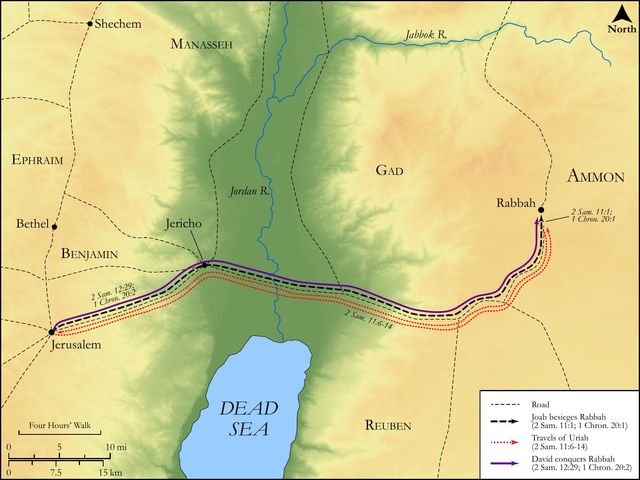
The backdrop for this event is Jerusalem during the ongoing siege of Rabbah, a significant and demanding military campaign for the nation of Israel. During this era, soldiers on active duty, particularly those engaged in a siege, were expected to adhere to stringent codes of conduct, which often included abstinence from domestic comforts and sexual relations. The presence of the Ark of God "in tents" (2 Samuel 11:11) further underscored a state of national consecration and heightened military readiness. Uriah, despite being a Hittite, was a highly esteemed and loyal member of David's elite "Mighty Men" (2 Samuel 23:39), signifying his full integration into and adherence to Israelite military ethics. His deliberate choice to sleep with the king's servants rather than returning home profoundly reflects his deep understanding and unwavering commitment to this military ethos, prioritizing solidarity with his comrades and the national cause over any personal pleasure or comfort.
Key Themes
ShowHideThis verse powerfully contributes to several overarching themes woven throughout the book of 2 Samuel. Firstly, it starkly illuminates the corrupting nature of unconfessed sin, demonstrating how one transgression (adultery) rapidly escalates, necessitating further deception and ultimately culminating in murder. David's desperate attempts to cover his tracks are consistently thwarted, revealing the profound futility of attempting to conceal sin from an omniscient God. Secondly, the verse profoundly elevates the theme of integrity and unwavering loyalty, personified by Uriah. His steadfast commitment to duty and his fellow soldiers stands in stark and convicting contrast to David's profound moral failure, serving as a powerful moral counterpoint within the narrative. Lastly, it underscores the inescapable theme of divine justice and consequences, as Uriah's actions, though seemingly insignificant at the time, inadvertently set in motion a chain of events that will ultimately lead to severe judgment upon David's house, precisely as prophesied by Nathan in 2 Samuel 12:7-12.
Exposition and Analysis
ShowHideKey Word Analysis
ShowHideFrom ʼÛwr (flame) and Yâhh (Yahweh), meaning "flame of Jah" or "Yahweh is my light." This name ironically highlights Uriah's moral clarity and integrity, standing as a "light" in the darkness of David's sin. His character, illuminated by his actions, stands in stark contrast to the king's moral obscurity, making his name a poignant descriptor of his uprightness.
This primitive root signifies "to lie down" for various purposes, including rest, sexual connection, or decease. In this context, it denotes a deliberate act of lying down for rest. Uriah's choice to "sleep" at the king's door, rather than in his own bed, is a conscious, principled decision. It is not a passive act of exhaustion but an active demonstration of solidarity and commitment to military discipline, intentionally foregoing the comforts David offered.
This term refers to an "opening," "door," "gate," or "entrance way." Sleeping at the "door" of the king's house signifies a public, exposed, and humble position, far from the privacy and comfort of one's own dwelling. This location emphasizes Uriah's readiness for duty and his posture of watchfulness, consistent with a soldier's mindset. It underscores his commitment to remaining "on duty" and not indulging in personal comfort while his comrades were still in the field.
The verb yârad means "to descend" or "to go downwards." In ancient Israel, houses were often built on hillsides, so going "down" to one's house implied descending from a higher, more public place (like the king's palace) to a private, lower dwelling. The negative "went not down" explicitly highlights Uriah's resolute refusal. This phrase emphasizes the intentionality of Uriah's decision; it was not an oversight or an accident, but a conscious, principled choice to deny himself the domestic comforts David had offered, prioritizing military honor and solidarity.
Verse Breakdown
ShowHide"But Uriah slept at the door of the king's house"
This opening clause immediately establishes Uriah's unexpected and counter-intuitive action. Instead of returning to his private residence as David had meticulously orchestrated, Uriah deliberately chooses a public, humble, and duty-oriented sleeping arrangement. This seemingly simple act instantly frustrates David's manipulative plan, showcasing Uriah's exceptional character, unwavering commitment to military discipline, and profound integrity.
"with all the servants of his lord"
This phrase further amplifies Uriah's profound sense of solidarity and humility. He does not leverage his status as one of David's elite "Mighty Men" or a high-ranking officer to seek special treatment or comfort. Instead, he consciously identifies with the common soldiers and servants who remain on duty or are readily available for service. This choice powerfully underscores his deep sense of camaraderie and his resolute refusal to enjoy comforts unavailable to his fellow fighting men who were still enduring the hardships of war.
"and went not down to his house"
This final clause explicitly states Uriah's decisive refusal to comply with David's underlying, deceptive intention. It highlights his principled and unyielding stand: he would not indulge in the comforts of home, including intimacy with his wife, while the Ark of God and his fellow soldiers were enduring hardship and danger in the field (2 Samuel 11:11). This deliberate and conscious choice reveals Uriah's unwavering integrity, his profound loyalty to his comrades and nation, and his disciplined character, setting him in stark moral opposition to King David's escalating duplicity.
Literary Devices
ShowHideThe narrative of 2 Samuel 11 is replete with powerful literary devices, and 2 Samuel 11:9 is a prime example of their effective deployment. The most prominent device is Contrast. Uriah's unwavering integrity, profound loyalty, and self-denying discipline are placed in stark and morally convicting opposition to King David's self-indulgence, cunning deception, and profound moral compromise. This sharp contrast serves to highlight David's precipitous moral decline from a man after God's own heart to a manipulative tyrant. There is also significant Irony at play; David's elaborate and deceitful scheme to cover his sin is foiled not by an external enemy or direct divine intervention, but by the very virtue (integrity and loyalty) that David himself has tragically abandoned. Uriah's principled stand, intended to honor his king and country, inadvertently exposes the king's dishonor and corruption. Furthermore, Uriah's actions here serve as profound Foreshadowing, hinting at the deeper moral crisis that will engulf David's reign and tragically foreshadowing the unjust and ultimately fatal fate that awaits Uriah due to his unblemished character.
Theological and Thematic Connections
ShowHideUriah's conduct in 2 Samuel 11:9 serves as a profound theological statement on the nature of true integrity, loyalty, and self-sacrificial devotion, especially when juxtaposed against the insidious progression of unconfessed sin. His actions embody a radical commitment to principle over personal comfort, and a deep, abiding sense of solidarity with his community and the national cause. Theologically, Uriah's character reflects a righteousness that honors God more than human authority, particularly when that authority is compromised and corrupt. His self-denial and unwavering devotion to duty, even unto death, underscore the biblical value of faithfulness and the often-unseen, costly nature of living righteously in a fallen world. This verse reminds us that true honor and spiritual nobility emanate not from position, power, or privilege, but from an unwavering commitment to moral and spiritual principles, even when such adherence is inconvenient, personally costly, or dangerous.
Reflection and Application
ShowHideUriah's steadfastness in 2 Samuel 11:9 offers a powerful, convicting, and deeply challenging example for believers today. In a world that frequently prioritizes personal gain, immediate comfort, and self-serving convenience, Uriah's resolute refusal to compromise his principles, even when presented with an easy and seemingly legitimate path, compels us to rigorously examine our own allegiances and commitments. His profound loyalty to his fellow soldiers and his nation, even above his own legitimate desires for rest, comfort, and family, speaks to an extraordinary sense of duty and selflessness. This narrative urgently prompts us to consider where our true allegiances ultimately lie and whether we are genuinely willing to sacrifice personal comfort for the sake of integrity, the well-being of our community, or a higher, divine calling. It also serves as a stark and sobering warning about the deceptive, escalating, and ultimately destructive nature of unconfessed sin, as David's initial transgression inexorably led him down a path of increasing wickedness and moral depravity. Uriah's quiet yet defiant act, born of profound virtue, became a powerful and enduring witness against the king's spiraling corruption, reminding us that even seemingly small acts of integrity can have profound and far-reaching ripple effects, often exposing hidden darkness.
Questions for Reflection
ShowHideFAQ
ShowHideWhy didn't Uriah go home, despite David's urging?
ShowHideUriah's refusal to go home stemmed from a profound and deeply ingrained sense of military honor, unwavering loyalty, and solidarity with his fellow soldiers. As he later explicitly explained in 2 Samuel 11:11, he found it morally reprehensible and improper to enjoy the comforts of his home and wife while the Ark of God, the entire nation of Israel, and the tribe of Judah were "in tents," and his comrades were enduring immense hardship and danger in the open field during the arduous siege of Rabbah. His actions reflect a strict adherence to military discipline, an exemplary commitment to the national cause, and a prioritization of collective suffering over any individual pleasure. He exemplified the ideal of a dedicated warrior who would not abandon his post or his brethren, even for a single night of comfort.
What does Uriah's action in this verse reveal about King David?
ShowHideUriah's unwavering integrity, as demonstrated in 2 Samuel 11:9, inadvertently but powerfully exposes the depth of King David's moral compromise, his cunning, and his manipulative nature. David's elaborate scheme to use Uriah as a pawn to cover up his own sin with Bathsheba is revealed as deeply deceitful and self-serving. Uriah's principled stand highlights David's profound lack of self-control, his egregious abuse of royal power, and his disturbing willingness to exploit and endanger others to conceal his transgressions. It underscores the profound biblical theme that sin, when unconfessed and unrepented, inevitably leads to further deception, desperate attempts to control circumstances, and ultimately spirals into greater and more heinous wickedness, as tragically seen in David's subsequent actions in 2 Samuel 11:14-17.
Was Uriah aware of David's sin with Bathsheba or his intentions?
ShowHideThe biblical text provides no indication whatsoever that Uriah was aware of David's adultery with Bathsheba or the true, nefarious reason for his summons from the battlefield. His responses and actions throughout the narrative, particularly his principled and heartfelt declaration in 2 Samuel 11:11, strongly suggest that he was genuinely committed to his duty and entirely unaware of David's deceptive and wicked motives. His integrity was so profound and his loyalty so pure that he likely could not even conceive of a king, especially one like David, engaging in such a morally reprehensible act. His purity of heart and unwavering devotion to duty inadvertently made him an unyielding obstacle to David's escalating sin, ultimately costing him his life.
Christ-Centered Fulfillment
ShowHideWhile Uriah the Hittite is not a direct messianic prophecy, his story in 2 Samuel 11:9 profoundly foreshadows and illuminates several crucial aspects of Christ's character and redemptive mission. Uriah, an innocent man, suffers and is ultimately sacrificed due to the egregious sin of another—the very king he faithfully served. His unwavering integrity, self-sacrificial loyalty, and ultimate death serve as a poignant, albeit imperfect, type of the ultimate innocent sufferer. Unlike Uriah, who was an unwitting victim of human depravity, Jesus Christ willingly and purposefully laid down His life, not as a consequence of His own sin (for He was utterly without sin, as Hebrews 4:15 unequivocally affirms), but as the perfect, atoning sacrifice for the sins of all humanity. Uriah's principled refusal to seek personal comfort while his brethren suffered in the field powerfully echoes Christ's own self-emptying love, who, "though he was in the form of God, did not count equality with God a thing to be grasped, but emptied himself, by taking the form of a servant, being born in the likeness of men" (Philippians 2:6-7). Uriah's tragic and unjust death points forward to the ultimate Lamb of God, whose shed blood truly "takes away the sin of the world" (John 1:29), accomplishing what no human integrity, loyalty, or sacrifice ever could: perfect reconciliation with a holy and just God.