


2 Kings 7:16
Bible text: King James Version (1769 Blayney text) · Public domain
Bible text: King James Version with Strong's numbers · Public domain
Bible text: Berean Standard Bible · Public domain
Bible text: American Standard Version (1901) · Public domain
Bible text: World English Bible, Messianic edition · Public domain
Bible text: Geneva Bible (1599) · Public domain
Bible text: Young's Literal Translation · Public domain
- וַיֵּצֵאvai·ye·Tze'and it went outH3318Conj-w ¦ V-Qal-ConsecImperf-3msVerb Qal Consecutive Imperfect 3rd Singular Masculineוַandיֵּצֵאit went out
- הָעָםha·'Amthe peopleH5971Art ¦ N-msNoun Singular Masculine Absoluteהָtheעָםpeople
- וַיָּבֹזּוּvai·ya·Vo·zuand they plunderedH962Conj-w ¦ V-Qal-ConsecImperf-3mpVerb Qal Consecutive Imperfect 3rd Plural Masculineוַandיָּבֹזּוּthey plundered
- אֵת'et<obj.>H853DirObjMParticle Object Indicator
- מַחֲנֵהma·cha·Neh[the] camp ofH4264N-fscNoun Singular Feminine Construct
- אֲרָם'a·RamAramH758N-properNoun Proper Location
- וַיְהִיvay·Hiand it wasH1961Conj-w ¦ V-Qal-ConsecImperf-3msVerb Qal Consecutive Imperfect 3rd Singular Masculineוַandיְהִיit was
- סְאָהse·'aha seah ofH5429N-fsNoun Singular Feminine Absolute
- סֹלֶתSo·letfine flourH5560N-fsNoun Singular Feminine Absolute
- בְּשֶׁקֶלbe·She·kelfor a shekelH8255Prep-b ¦ N-msNoun Singular Masculine Absoluteבְּforשֶׁקֶלa shekel
- וְסָאתַיִםve·sa·Ta·yimand two seahsH5429Conj-w ¦ N-fdNoun Dual Feminine Absoluteוְandסָאתַיִםtwo seahs
- שְׂעֹרִיםse·'o·Rimbarley<s>H8184N-mpNoun Plural Masculine Absolute
- בְּשֶׁקֶלbe·She·kelfor a shekelH8255Prep-b ¦ N-msNoun Singular Masculine Absoluteבְּforשֶׁקֶלa shekel
- כִּדְבַרkid·Varaccording to [the] word ofH1697Prep-k ¦ N-mscNoun Singular Masculine Constructכִּaccording toדְבַר[the] word of
- יְהוָהYah·wehYahwehH3068N-properNoun Proper Title
English is a literal word-by-word gloss of the Hebrew, not the KJV's wording. Why?
This is the original text the KJV's translators worked from — each Hebrew word with its own literal English meaning in this verse, prepared by scholars at Tyndale House, Cambridge. The KJV translates whole sentences, not word by word, so its wording differs: one Hebrew word can become several English words, and the KJV may choose “the LORD” where the gloss reads “Yahweh”. Both are faithful — they answer different questions. For the KJV's own rendering, switch to the KJV text.
Details
See on the biblical-era map
Study this verse
Public-domain commentary
Matthew Henry
From his Commentary on the Whole Bible. Henry comments on passages, not single verses — this entry covers 2 Kings 7:12–20. His three-level outline is real structure in the source text, so it is rendered as structure.
Here we have,
I.The king's jealousy of a stratagem in the Syrian's retreat, Kg2 7:12.
He feared that they had withdrawn into an ambush, to draw out the besieged, that they might fall on them with more advantage. he knew he had no reason to expect that God should appear thus wonderfully for him, having forfeited his favour by his unbelief and impatience. He knew no reason the Syrians had to fly, for it does not appear that he or any of this attendants heard the noise of the chariots which the Syrians were frightened at. Let not those who, like him, are unstable in all their ways, think to receive any thing from God; nay, a guilty conscience fears the worst and makes men suspicious.
II.The course they took for their satisfaction, and to prevent their falling into a snare.
They sent out spies to see what had become of the Syrians, and found they had all fled indeed, commanders as well a common soldiers. They could track them by the garments which they threw off, and left by the way, for their greater expedition, Kg2 7:15. He that gave this advice seems to have been very sensible of the deplorable condition the people were in (Kg2 7:13); for speaking of the horses, many of which were dead and the rest ready to perish for hunger, he says, and repeats it, "They are as all the multitude of Israel. Israel used to glory in their multitude, but now they are diminished and brought low." He advised to send five horsemen, but, it should seem, there were only two horses fit to be sent, and those chariot-horses, Kg2 7:14. Now the Lord repented himself concerning his servants, when he saw that their strength was gone, Deu 32:36.
III.The plenty that was in Samaria, from the plunder of the camp of the Syrians, Kg2 7:16.
Had the Syrians been governed by the modern policies of war, when they could not take their baggage and their tents with them they would rather have burnt them (as it is common to do with the forage of a country) than let them fall into their enemies' hands; but God determined that the besieging of Samaria, which was intended for its ruin, should turn to its advantage, and that Israel should now be enriched with the spoil of the Syrians as of old with that of the Egyptians. here see,
1.The wealth of the sinner laid up for the just (Job 27:16, Job 27:17) and the spoilers spoiled, Isa 33:1.
2.The wants of Israel supplied in a way that they little thought of, which should encourage us to depend upon the power and goodness of God in our greatest straits.
3.The word of Elisha fulfilled to a tittle: A measure of fine flour was sold for a shekel; those that spoiled the camp had not only enough to supply themselves with, but an overplus to sell at an easy rate for the benefit of others, and so even those that tarried at home did divide the spoil, Psa 68:12; Isa 33:23. God's promise may be safely relied on, for no word of his shall fall to the ground.
IV.The death of the unbelieving courtier, that questioned the truth of Elisha's word.
Divine threatenings will as surely be accomplished as divine promises. He that believeth not shall be damned stands as firm as He that believeth shall be saved. This lord,
1.Was preferred by the king to the charge of the gate (Kg2 7:17), to keep the peace, and to see that there was no tumult or disorder in dividing and disposing of the spoil. So much trust did the king repose in him, in his prudence and gravity, and so much did he delight to honour him. He that will be great, let him serve the public.
2.Was trodden to death by the people in the gate, either by accident, the crowd being exceedingly great, and he in the thickest of it, or perhaps designedly, because he abused his power, and was imperious in restraining the people from satisfying their hunger. However it was, God's justice was glorified, and the word of Elisha was fulfilled. He saw the plenty, for the silencing and shaming of his unbelief, corn cheap without opening windows in heaven, and therein saw his own folly in prescribing to God; but he did not eat of the plenty he saw. When he was about to fill his belly God cast the fury of his wrath upon him (Job 20:23) and it came between the cup and the lip. Justly are those thus tantalized with the world's promises that think themselves tantalized with the promises of God. If believing shall not be seeing, seeing shall not be enjoying. This matter is repeated, and the event very particularly compared with the prediction (Kg2 7:18-20), that we might take special notice of it, and might learn,
(1.)How deeply God resents out distrust of him, of his power, providence, and promise. When Israel said, Can God furnish a table? the Lord heard it and was wroth. Infinite wisdom will not be limited by our folly. God never promises the end without knowing where to provide the means.
(2.)How uncertain life and the enjoyments of it are. Honour and power cannot secure men from sudden and inglorious deaths. He whom the king leaned upon the people trod upon; he who fancied himself the stay and support of the government was trampled under foot as the mire in the streets. Thus hath the pride of men's glory been often stained.
(3.)How certain God's threatenings are, and how sure to alight on the guilty and obnoxious heads. Let all men fear before the great God, who treads upon princes as mortar and is terrible to the kings of the earth.
Historical interpretation
Historical reception
1 surviving comment on this verse from the historical church.
“The Lord brings to nothing the counsels of nations, and he rejects the devices of people.” … If you will read the things in each history that God did to the faithless nations, you will find that the statement has much force even according to our corporal intelligence. When Joram, son of Ahab, was king in Israel, then his son Ader, king of Syria, carrying on a war with a great force and a heavy hand, besieged Samaria, so that even the necessaries of life were wanting to them, and the head of a donkey was sold for fifty shekels of silver and the fourth part of a cabe of pigeon dung for five shekels of silver. At that time, therefore, in order that the promise of Elisha might be fulfilled, the counsels of Syria were brought to nothing, and abandoning their tents and all their supplies, they fled, leaving such a great abundance in Samaria that a measure of fine flour and two measures of barley were sold for one shekel. Thus, then, the Lord knew how to bring to nothing the counsels of the nations. HOMILIES ON THE PSALMS 15.
Continue studying 2 Kings 7:16 across the web’s major study libraries — every link below opens this exact verse, chapter, or book on the destination site.
Read & Compare
 BibleGatewayThis verse in more than 200 translations and 70 languages.
 Bible.comThe YouVersion reader — hundreds of translations, reading plans, and highlights.
 ESV.orgCrossway's official English Standard Version reader.
 NET BibleThe NET translation with 60,000+ translators' notes on every rendering decision.
 STEP BibleTyndale House's free study tool — original text, vocabulary, and scholarly resources.
 BibliaLogos Bible Software's free web reader.
 USCCBThe New American Bible (Revised Edition) with the U.S. bishops' study notes.
Commentaries
 BibleHub CommentariesDozens of classic commentaries on this verse, gathered on one page.
 StudyLightMore than 100 commentary sets — the largest collection on the web.
 BibleRefPlain-English commentary on what this verse means, verse by verse.
 Enduring WordDavid Guzik's free commentary on this chapter, widely used by Bible teachers.
 Bible Study ToolsVerse commentary alongside Greek and Hebrew study aids.
Original Language & Research
- BibleHub InterlinearThe verse word by word — original language, transliteration, and English.
- BibleHub LexiconEvery word's original-language definition and Strong's entry.
 Blue Letter BibleDeep-study tools — Strong's numbers, concordance, and word studies.
 SefariaThe Hebrew text with Rashi and centuries of Jewish commentary.
Sermons, Hymns & Audio


TrulyRandomVerse is not affiliated with these sites and doesn’t control their content. They’re linked because they’re genuinely useful.
Summary
Second Kings 7:16 records the immediate and dramatic fulfillment of Elisha's prophecy concerning the end of Samaria's severe famine. Following the miraculous, divinely orchestrated flight of the Syrian army, the starving inhabitants of Samaria poured out of the city gates to plunder the deserted Syrian camp. This sudden influx of provisions caused the prices of fine flour and barley to plummet to precisely the low levels Elisha had foretold, vividly demonstrating God's power to bring abundant provision out of desperate scarcity. This pivotal moment underscores the absolute reliability of God's word, as all transpired "according to the word of the LORD."
Context
ShowHideLiterary Context
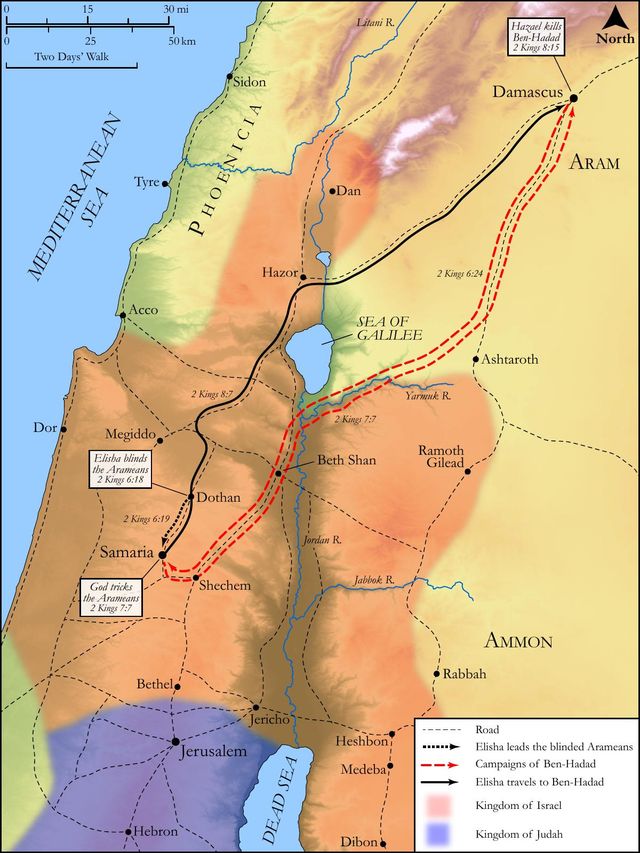
This verse serves as the powerful climax and precise fulfillment of a narrative arc that begins with the dire siege of Samaria by the Arameans (Syrians) in 2 Kings 6:24. The city was experiencing horrific famine conditions, leading to exorbitant food prices and even acts of cannibalism, as vividly described in 2 Kings 6:25-29. In this desperate situation, the prophet Elisha boldly prophesied an astonishing reversal: within twenty-four hours, food would be incredibly cheap at the city gate (2 Kings 7:1). An officer who doubted Elisha's word was told he would see the abundance but not partake of it (2 Kings 7:2). The miraculous turning point occurred when four lepers, venturing out of the city, discovered the Syrian camp deserted, as God had caused the Syrians to hear a terrifying sound and flee in panic (2 Kings 7:3-11). After initial skepticism from the king and a reconnaissance mission confirming the Syrians' flight (2 Kings 7:12-15), the city gates were opened, leading directly to the events of 2 Kings 7:16.
Historical & Cultural Context
The kingdom of Israel, with its capital Samaria, frequently endured military conflicts and sieges from its powerful northern neighbor, Aram (Syria), during the 9th and 8th centuries BC. Sieges were a common and brutal strategy in ancient warfare, designed to starve a city into submission, often resulting in extreme suffering and death for the inhabitants. The conditions detailed in 2 Kings 6—where items like a donkey's head and dove's dung were sold at exorbitant prices—accurately reflect the dire reality of such a prolonged siege. A "shekel" (שֶׁקֶל, sheqel) was a standard unit of weight and currency, typically silver, serving as a significant monetary value. A "measure" (סְאָה, se'ah) was a dry volume measure, roughly equivalent to one-third of an ephah, or about 7.3 liters (approximately 2 gallons). The prices prophesied by Elisha and fulfilled in this verse represent a dramatic return to, or even below, normal market rates, signifying an end to the famine and a superabundant supply. This immediate and radical reversal of fortunes would have been perceived by the ancient Israelites as an undeniable sign of divine intervention, as such a rapid economic shift was humanly impossible.
Key Themes
ShowHideThe central and overarching theme of 2 Kings 7 and specifically this verse is Divine Deliverance and Provision. God's omnipotence is powerfully demonstrated as He, not human military might, lifts the siege and provides for His people through a supernatural act that causes the enemy to flee in terror. This event profoundly underscores the Trustworthiness and Certainty of God's Word, as Elisha's specific prophecy regarding the food prices is fulfilled to the letter, confirming God's faithfulness to His declarations. The stark Contrast between Scarcity and Abundance highlights God's ability to transform desperate situations into overflowing plenty, often in unexpected ways. Furthermore, the narrative implicitly addresses the theme of Faith vs. Doubt, particularly through the fate of the officer who doubted Elisha's word, perishing in the rush, seeing the abundance but not partaking of it, a detail explicitly mentioned in 2 Kings 7:17-20.
Exposition and Analysis
ShowHideKey Word Analysis
ShowHideThis verb (H962) means "to plunder," "to take as spoil," or "to seize." It implies a forceful or opportunistic taking of goods, often after a victory or retreat. In this context, it vividly describes the desperate and immediate action of the starving Samaritans as they descended upon the abandoned Syrian camp, seizing all the provisions left behind. The use of this word emphasizes the complete and sudden reversal of fortunes: the besieged now became the plunderers, taking from their former besiegers.
A standard dry measure (H5429) in ancient Israel, roughly equivalent to one-third of an ephah, or about 7.3 liters (approximately 2 gallons). The specificity of this unit in both Elisha's prophecy and its fulfillment highlights the precise nature of God's word and its exact execution. The fact that a "measure" of fine flour and two measures of barley could be bought for a shekel indicates an extraordinary abundance, a stark contrast to the famine conditions where a donkey's head sold for eighty shekels (2 Kings 6:25).
From the root meaning "to speak" (H1697), this noun refers to a "word," "matter," "thing," or "decree." In the context of "the word of the LORD," it signifies a divine utterance, a prophetic declaration, or a command. Its inclusion here emphasizes that the entire miraculous reversal of fortune, from the Syrian flight to the plummeting food prices, was not a coincidence but a direct, intentional act of God, precisely fulfilling His spoken decree through Elisha. It underscores the power and reliability of God's authoritative communication.
Verse Breakdown
ShowHide"And the people went out, and spoiled the tents of the Syrians."
This clause describes the immediate and overwhelming response of the Samaritans once the city gates were opened and the news of the deserted camp was confirmed. Driven by extreme hunger and desperation, they rushed out en masse to the abandoned Syrian encampment. "Spoiled" (בָּזַז, bazaz) conveys the frenzied, opportunistic nature of their actions, as they seized all the food, supplies, and valuables left behind by the fleeing enemy. This act of plundering signifies the complete reversal of power dynamics: the besieged became the beneficiaries of their former tormentors' sudden departure.
"So a measure of fine flour was [sold] for a shekel, and two measures of barley for a shekel,"
This part details the astonishing economic outcome of the plunder. The sudden, massive influx of food supplies from the Syrian camp caused the market prices to plummet dramatically. "Fine flour" was a more expensive, desirable grain, while "barley" was a coarser, more common staple. The specific prices mentioned—one measure of fine flour for a shekel, and two measures of barley for a shekel—were precisely what Elisha had prophesied just the day before (2 Kings 7:1). This exact fulfillment underscores the supernatural nature of the event and God's absolute control over circumstances, including economic conditions.
"according to the word of the LORD."
This concluding phrase is crucial, serving as the theological anchor of the verse. It explicitly attributes the entire miraculous turn of events—the flight of the Syrians, the abundance of food, and the precise price drop—not to chance, human strategy, or natural occurrences, but directly to the sovereign will and prophetic utterance of God. It confirms that the events unfolded exactly as God had declared through His prophet Elisha, reinforcing the reliability and power of God's spoken word.
Literary Devices
ShowHideThe narrative of 2 Kings 7 is rich with literary devices, and 2 Kings 7:16 serves as its powerful Climax. The entire chapter builds from the extreme Contrast between the horrific famine and the sudden, overwhelming abundance. This verse provides the concrete evidence of that transformation. There is significant Dramatic Irony at play, particularly when considering the fate of the officer who doubted Elisha's prophecy. He was told he would see the abundance but not partake of it (2 Kings 7:2), and indeed, he is trampled to death at the gate as the people rush out to the spoil (2 Kings 7:17-20). The exact numerical fulfillment of the prices (one measure of fine flour for a shekel, two measures of barley for a shekel) functions as a powerful form of Verification, leaving no doubt that the events were not coincidental but a direct act of God. The narrative also employs Foreshadowing through Elisha's initial prophecy, which then finds its complete and precise Fulfillment in this verse, underscoring the theme of God's faithfulness to His word.
Theological and Thematic Connections
ShowHideThe events of 2 Kings 7:16 powerfully demonstrate God's absolute sovereignty over all circumstances, including the most desperate human conditions and the movements of nations. It is a profound testament to His ability to provide supernaturally for His people, turning scarcity into abundance in an instant. This passage reinforces the theological truth that God's word, once spoken through His prophets, will inevitably come to pass with precise accuracy, regardless of how impossible it may seem from a human perspective. It underscores His faithfulness to His covenant promises and His willingness to intervene dramatically on behalf of those who trust in Him, even when they are at their weakest and most vulnerable. The narrative stands as an enduring reminder that divine provision often comes in unexpected ways and through unlikely agents, showcasing God's limitless power and ingenious methods of deliverance.
Reflection and Application
ShowHideThe story of Samaria's deliverance in 2 Kings 7, culminating in the fulfillment of Elisha's prophecy in verse 16, offers profound encouragement for believers today. In moments of extreme personal or communal scarcity—whether financial, emotional, spiritual, or relational—this passage reminds us that God is not limited by our circumstances. He can turn despair into overflowing provision, and seemingly insurmountable obstacles into pathways of abundance. It calls us to cultivate a deep trust in God's word, recognizing that His promises are steadfast and His timing is perfect, even when His methods are beyond our comprehension. Just as the people of Samaria moved from starvation to plenty "according to the word of the LORD," we are invited to rest in the certainty that God will act according to His character and His revealed will, often in ways that exceed our expectations. This narrative challenges us to look beyond our immediate lack and to anticipate God's miraculous intervention, fostering a spirit of hope and patient endurance.
Questions for Reflection
ShowHideFAQ
ShowHideWhat was the significance of the specific prices mentioned for flour and barley?
ShowHideThe specific prices—a measure of fine flour for a shekel and two measures of barley for a shekel—were incredibly significant because they were precisely what the prophet Elisha had foretold just the day before in 2 Kings 7:1. During the severe siege, food prices had skyrocketed to unimaginable levels (e.g., a donkey's head for eighty shekels, 2 Kings 6:25). The sudden drop to these specific, very low prices represented a miraculous reversal of the famine conditions, demonstrating God's absolute control over the economy and the precise fulfillment of His prophetic word, leaving no doubt that it was a divine act.
How did the Syrian army flee so suddenly, leaving all their provisions behind?
ShowHideThe Syrian army's sudden and panicked flight was a direct result of divine intervention. 2 Kings 7:6-7 explains that "the Lord had caused the army of the Arameans to hear a sound of chariots and horses and a great army." They interpreted this sound as the king of Israel hiring the kings of the Hittites and Egyptians to attack them. In their terror, they abandoned their camp, including all their tents, horses, donkeys, and provisions, and fled for their lives into the night, fearing an overwhelming assault. This supernatural auditory illusion orchestrated by God led to their complete rout.
What happened to the officer who doubted Elisha's prophecy?
ShowHideThe officer who doubted Elisha's prophecy in 2 Kings 7:2 was told by Elisha, "You will see it with your own eyes, but you will not eat any of it." This prophecy was fulfilled in 2 Kings 7:17-20. The king appointed this officer to be in charge of the city gate when the people rushed out to plunder the Syrian camp. In the ensuing stampede, the people trampled him to death at the gate, precisely as Elisha had foretold. His fate served as a stark warning against doubting the word of the Lord spoken through His prophets.
Christ-Centered Fulfillment
ShowHideThe miraculous provision in 2 Kings 7:16 finds its ultimate and most profound fulfillment in Jesus Christ. Just as God provided physical sustenance to a starving nation, Christ is the ultimate spiritual provision for a spiritually famished humanity. He declared Himself to be the "Bread of Life," stating that whoever comes to Him will never hunger and whoever believes in Him will never thirst. This echoes the abundant provision in Samaria, but on a spiritual plane, offering eternal satisfaction. Furthermore, the precise fulfillment of Elisha's prophecy in this verse foreshadows the perfect and complete fulfillment of all God's promises in Christ. Every promise of God finds its "Yes" and "Amen" in Him (2 Corinthians 1:20). Christ's sacrifice on the cross provided the ultimate "spoil" for humanity, breaking the power of sin and death and offering spiritual abundance and eternal life where there was once only spiritual famine and despair (Colossians 2:15). He is the Lamb of God who takes away the sin of the world (John 1:29), providing true and lasting sustenance for the soul, far surpassing any physical provision.