


2 Kings 17:18
Bible text: King James Version (1769 Blayney text) · Public domain
Bible text: Berean Standard Bible · Public domain
Bible text: American Standard Version (1901) · Public domain
Bible text: World English Bible, Messianic edition · Public domain
Bible text: Geneva Bible (1599) · Public domain
Bible text: Young's Literal Translation · Public domain
- וַיִּתְאַנַּףvai·yit·'a·Nafand he was angryH599Conj-w ¦ V-Hithpael-ConsecImperf-3msVerb Hithpael Consecutive Imperfect 3rd Singular Masculineוַandיִּתְאַנַּףhe was angry
- יְהוָהYah·wehYahwehH3068N-properNoun Proper Title
- מְאֹדme·'OdveryH3966Adj-msAdjective Numerical Singular Masculine Absolute
- בְּיִשְׂרָאֵלbe·Yis·ra·'Elwith IsraelH3478Prep-b ¦ N-properNoun Proper LocationבְּwithיִשְׂרָאֵלIsrael
- וַיְסִרֵםvay·si·Remand he removed themH5493Conj-w ¦ V-Hiphil-ConsecImperf-3ms ¦ 3mpVerb Hiphil Consecutive Imperfect 3rd Singular Masculineוַandיְסִרֵhe removedםthem
- מֵעַלme·'Alfrom onH5921Prep-m ¦ PrepPrepositionמֵfromעַלon
- פָּנָיוpa·Navhis faceH6440N-mpc ¦ 3msNoun Plural Masculine Constructפָּנָיfaceוhis
- לֹאlo'notH3808NegParticle Negative
- נִשְׁאַרnish·'Aranyone was leftH7604V-Niphal-Perf-3msVerb Niphal Perfect 3rd Singular Masculine
- רַקrakonlyH7535AdvAdverb
- שֵׁבֶטShe·vet[the] tribe ofH7626N-mscNoun Singular Masculine Construct
- יְהוּדָהye·hu·DahJudahH3063N-properNoun Proper Location
- לְבַדּוֹle·va·Doto only itH905Prep-l ¦ N-msc ¦ 3msNoun Singular Masculine Constructלְtoבַדּonlyוֹit
English is a literal word-by-word gloss of the Hebrew, not the KJV's wording. Why?
This is the original text the KJV's translators worked from — each Hebrew word with its own literal English meaning in this verse, prepared by scholars at Tyndale House, Cambridge. The KJV translates whole sentences, not word by word, so its wording differs: one Hebrew word can become several English words, and the KJV may choose “the LORD” where the gloss reads “Yahweh”. Both are faithful — they answer different questions. For the KJV's own rendering, switch to the KJV text.
Details
See on the biblical-era map
Study this verse
Public-domain commentary
Matthew Henry
From his Commentary on the Whole Bible. Henry comments on passages, not single verses — this entry covers 2 Kings 17:7–23. His three-level outline is real structure in the source text, so it is rendered as structure.
Though the destruction of the kingdom of the ten tribes was but briefly related, it is in these verses largely commented upon by our historian, and the reasons of it assigned, not taken from the second causes - the weakness of Israel, their impolitic management, and the strength and growing greatness of the Assyrian monarch (these things are overlooked) - but only from the First Cause. Observe, 1. It was the Lord that removed Israel out of his sight; whoever were the instruments, he was the author of this calamity. It was destruction from the Almighty; the Assyrian was but the rod of his anger, Isa 10:5. It was the Lord that rejected the seed of Israel, else their enemies could not have seized upon them, Kg2 17:20. Who gave Jacob for a spoil, and Israel to the robbers? Did not the Lord? Isa 43:24. We lose the benefit of national judgments if we do not eye the hand of God in them, and the fulfilling of the scripture, for that also is taken notice of here (Kg2 17:23): The Lord removed Israel out of his favour, and out of their own land, as he had said by all his servants the prophets. Rather shall heaven and earth pass than one tittle of God's word fall to the ground. When God's word and his works are compared, it will be found not only that they agree, but that they illustrate each other. But why would God ruin a people that were raised and incorporated, as Israel was, by miracles and oracles? Why would he undo that which he himself had done at so vast an expense? Was it purely an act of sovereignty? No, it was an act of necessary justice. For, 2. They provoked him to do this by their wickedness. Was it God's doing? Nay, it was their own; by their way and their doings they procured all this to themselves, and it was their own wickedness that did correct them. This the sacred historian shows here at large, that it might appear that God did them no wrong and that others might hear and fear. Come and see what it was that did all this mischief, that broke their power and laid their honour in the dust; it was sin; that, and nothing else, separated between them and God. This is here very movingly laid open as the cause of all the desolations of Israel. He here shows,
I.What God had done for Israel, to engage them to serve him.
1.He gave them their liberty (Kg2 17:7): He brought them from under the hand of Pharaoh who oppressed them, asserted their freedom (Israel is my son), and effected their freedom with a high hand. Thus they were bound in duty and gratitude to be his servants, for he had loosed their bonds; nor would he that rescued them out of the hand of the king of Egypt have contradicted himself so far as to deliver them into the hand of the king of Assyria, as he did, if they had not, by their iniquity, betrayed their liberty and sold themselves.
2.He gave them their law, and was himself their king. They were immediately under a divine regimen. They could not plead ignorance of good and evil, sin and duty, for God had particularly charged them against those very things which here he charges them with (Kg2 17:15), That they should not do like the heathen. Nor could they be in any doubt concerning their obligation to observe the laws which they are here charged with rejecting, for they were the commandments and statutes of the Lord their God (Kg2 17:13), so that no room was left to dispute whether they should keep them or no. He had not dealt so with other nations, Psa 147:19, Psa 147:20.
3.He gave them their land, for he cast out the heathen from before them (Kg2 17:8), to make room for them; and the casting out of them for their idolatries was as fair a warning as could be given to Israel not to do like them.
II.What they had done against God, notwithstanding these engagements which he had laid upon them.
1.In general. They sinned against the Lord their God (Kg2 17:7), they did those things that were not right (Kg2 17:9), but secretly. So wedded were they to their evil practices that when they could not do them publicly, could not for shame or could not for fear, they would do them secretly - an evidence of their atheism, that they thought what was done in secret was from under the eye of God himself and would not be required. Again, they wrought wicked things in such a direct contradiction to the divine law that they seemed as if they were done on purpose to provoke the Lord to anger (Kg2 17:11), in contempt of his authority and defiance of his justice. They rejected God's statutes and his covenant (Kg2 17:15), would not be bound up either by his command or the consent they themselves had given to the covenant, but threw off the obligations of both, and therefore God justly rejected them, Kg2 17:20. See Hos 4:6. They left all the commandments of the Lord their God (Kg2 17:16), left the way, left the work, which those commandments prescribed them and directed them in. Nay, lastly, they sold themselves to do evil in the sight of the Lord, that is, they wholly addicted themselves to sin, as slaves to the service of those to whom they are sold, and, by their obstinately persisting in sin, so hardened their own hearts that at length it had become morally impossible for them to recover themselves, as one that has sold himself has put his liberty past recall.
2.In particular. Though they were guilty (no doubt) of many immoralities, and violated all the commands of the second table, yet nothing is here specified, but their idolatry. This was the sin that did most easily beset them; this was, of all sins, most provoking to God: it was the spiritual adultery that broke the marriage-covenant, and was the inlet of all other wickedness. Hence it is again and again mentioned here as the sin that ruined them.
(1.)They feared other gods (Kg2 17:7), that is, worshipped them and paid their homage to them, as if they feared their displeasure.
(2.)They walked in the statutes of the heathen, which were contrary to God's statutes (Kg2 17:8), did as did the heathen (Kg2 17:11), went after the heathen that were round about them (Kg2 17:15), so prostituting the honour of their peculiarity, and defeating God's design concerning them, which was that they should be distinguished from the heathen. Must those that were taught of God go to school to the heathen - those that were appropriated to God take their measures from the nations that were abandoned by him?
(3.)They walked in the statutes of the idolatrous kings of Israel (Kg2 17:8), in all the sins of Jeroboam, Kg2 17:22. When their kings assumed a power to alter and add to the divine institutions they submitted to them, and thought the command of their kings would bear them out in disobedience to the command of their God.
(4.)They built themselves high places in all their cities, Kg2 17:9. If in any place there was but the tower of the watchmen (a country tower that had no walls, but only a tower to shelter the watch in time of danger), or but a lodge for shepherds, it must be honoured with a high place, and that with an altar. If there was a fenced city, it must be further fortified with a high place. Having forsaken God's only place, they knew no end of high places, in which every man followed his own fancy and directed his devotion to what god he pleased. Sacred things were hereby profaned and laid common, when their altars were as heaps in the furrows of the field, Hos 12:11.
(5.)They set them up images and groves - Asherim (even wooden images, so some think the term, which we translate groves, should be rendered) or Ashtaroth (so others) - directed contrary to the second commandment, Kg2 17:10. They served idols (Kg2 17:12), the works of their own hands and creatures of their own fancy, though God had warned them particularly not to do this thing.
(6.)They burnt incense in all the high places, to the honour of strange gods, for it was to the dishonour of the true God, Kg2 17:11.
(7.)They followed vanity. Idols are called so, because they could do neither good nor evil, but were the most insignificant things that could be; those that worshipped them were like unto them, and so they became vain and good for nothing (Kg2 17:16), vain in their devotions, which were brutish and ridiculous, and so became vain in their whole conversation.
(8.)Besides the molten images, even the two calves, they worshipped all the host of heaven - the sun, moon, and stars: for it is not meant of the heavenly host of angels; they could not rise so far above sensible things as to think of them. And, withal, they served Baal, the deified heroes of the Gentiles, Kg2 17:16.
(9.)They caused their children to pass through the fire, in token of their dedicating them to their idols.
(10.)They used divinations and enchantments, that they might receive directions from the gods to whom they paid their devotions.
III.What means God used with them, to bring them off from their idolatries, and to how little purpose.
He testified against them, showed them their sins and warned them of the fatal consequences of them by all the prophets and all the seers (for so the prophets had been formerly called), and pressed them to turn from their evil ways, Kg2 17:13. We have read of prophets, more or less, in every reign. Though they had forsaken God's family of priests, he did not leave them without a succession of prophets, who made it their business to teach them the good knowledge of the Lord, but all in vain (Kg2 17:14); they would not hear, but hardened their necks, persisted in their idolatries, and were like their fathers, that would not bow their necks to God's yoke, because they did not believe in him, did not receive his truths, nor would venture upon his promises: it seems to refer to their fathers in the wilderness; the same sin that kept them out of Canaan turned these out, and that was unbelief.
IV.How God punished them for their sins.
He was very angry with them (Kg2 17:18); for, in the matter of his worship, he is a jealous God, and resents nothing more deeply than giving that honour to any creature which is due to himself only. He afflicted them (Kg2 17:20) and delivered them into the hand of spoilers, in the days of the judges and of Saul, and afterwards in the days of most of their kings, to see if they would be awakened by the judgments of God to consider and amend their ways; but, when all these corrections did not prevail to drive out the folly, God first rent Israel from the house of David, under which they might have been happy. As Judah was hereby weakened, so Israel was hereby corrupted; for they made a man king who drove them from following the Lord and caused them to sin a great sin, Kg2 17:21. This was a national judgment, and the punishment of their former idolatries; and, at length, he removed them quite out of his sight (Kg2 17:18, Kg2 17:23), without giving them any hopes of a return out of their captivity.
Lastly, Here is a complaint against Judah in the midst of all (Kg2 17:19): Also Judah kept not the commandments of God; though they were not as yet quite so bad as Israel, yet they walked in the statutes of Israel; and this aggravated the sin of Israel, that they communicated the infection of it to Judah; see Eze 23:11. Those that bring sin into a country or family bring a plague into it and will have to answer for all the mischief that follows.
Continue studying 2 Kings 17:18 across the web’s major study libraries — every link below opens this exact verse, chapter, or book on the destination site.
Read & Compare
 BibleGatewayThis verse in more than 200 translations and 70 languages.
 Bible.comThe YouVersion reader — hundreds of translations, reading plans, and highlights.
 ESV.orgCrossway's official English Standard Version reader.
 NET BibleThe NET translation with 60,000+ translators' notes on every rendering decision.
 STEP BibleTyndale House's free study tool — original text, vocabulary, and scholarly resources.
 BibliaLogos Bible Software's free web reader.
 USCCBThe New American Bible (Revised Edition) with the U.S. bishops' study notes.
Commentaries
 BibleHub CommentariesDozens of classic commentaries on this verse, gathered on one page.
 StudyLightMore than 100 commentary sets — the largest collection on the web.
 BibleRefPlain-English commentary on what this verse means, verse by verse.
 Enduring WordDavid Guzik's free commentary on this chapter, widely used by Bible teachers.
 Bible Study ToolsVerse commentary alongside Greek and Hebrew study aids.
Original Language & Research
- BibleHub InterlinearThe verse word by word — original language, transliteration, and English.
- BibleHub LexiconEvery word's original-language definition and Strong's entry.
 Blue Letter BibleDeep-study tools — Strong's numbers, concordance, and word studies.
 SefariaThe Hebrew text with Rashi and centuries of Jewish commentary.
Sermons, Hymns & Audio


TrulyRandomVerse is not affiliated with these sites and doesn’t control their content. They’re linked because they’re genuinely useful.
Summary
Second Kings 17:18 stands as the climactic declaration of divine judgment against the Northern Kingdom of Israel, articulating the severe and decisive consequences of their prolonged and unrepentant apostasy. This verse encapsulates the Lord's righteous indignation, culminating in the complete removal of Israel from their land and His protective sight through the Assyrian exile, leaving only the Southern Kingdom of Judah as the sole remaining national entity of God's covenant people.
Context
ShowHideLiterary Context
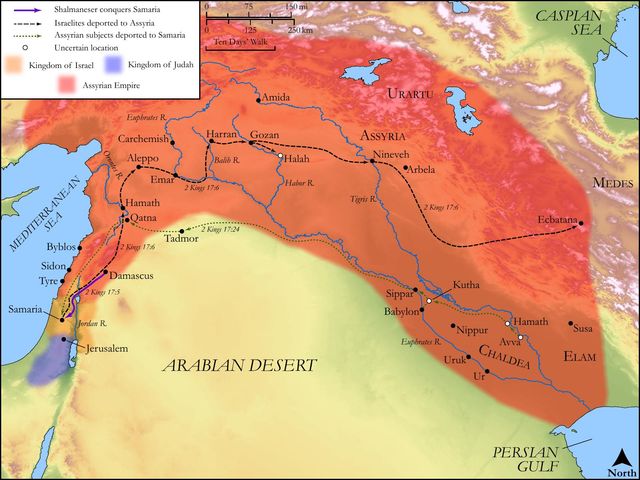
Second Kings 17 serves as the comprehensive theological explanation for the devastating downfall and exile of the Northern Kingdom of Israel, which occurred in 722 BC. The preceding verses meticulously chronicle Israel's persistent and egregious sins, highlighting their deliberate abandonment of the Lord's covenant. From the establishment of golden calves by Jeroboam I, detailed in 1 Kings 12:25-33, to their widespread adoption of Canaanite idolatry, Baal worship, Asherah poles, and even child sacrifice, as condemned in 2 Kings 17:16-17, the narrative emphasizes Israel's deliberate rejection of God's repeated warnings delivered through His prophets. Verse 18, therefore, is not an isolated event but the inevitable divine response to a long history of spiritual rebellion, serving as the theological justification for the Assyrian conquest detailed earlier in the chapter, specifically in 2 Kings 17:5-6. It marks the tragic culmination of their unfaithfulness, providing a stark contrast to the continued, albeit precarious, existence of Judah.
Historical & Cultural Context
The period leading up to 2 Kings 17:18 was dominated by the relentless rise of the Neo-Assyrian Empire. Assyria's imperial policy was characterized by ruthless conquest, mass deportation, and forced resettlement, all designed to break the national identity of conquered peoples and prevent future rebellions. Israel, specifically the Northern Kingdom (also known as Ephraim or Samaria), had a tumultuous history marked by unstable kingships, shifting political alliances with pagan nations, and a consistent pattern of syncretistic worship. Unlike Judah, which maintained a centralized temple in Jerusalem and the enduring Davidic dynasty, Israel had multiple unauthorized cult centers and a succession of often wicked kings. The phrase "out of his sight" refers to God's protective presence and favor, which was intrinsically linked to their obedience to the covenant made at Mount Sinai. Their removal "out of his sight" signifies a complete withdrawal of divine protection, leaving them vulnerable to the Assyrian superpower. The distinction between Israel and Judah is crucial, as Judah, though also prone to sin, maintained the lineage of David and the temple, preserving the hope for a future Messiah.
Key Themes
ShowHideThis verse powerfully underscores several foundational biblical themes. Firstly, it highlights the theme of Divine Judgment for Covenant Disobedience. God's "anger" is not capricious but a righteous response to Israel's persistent and unrepentant violation of the covenant, which explicitly warned of exile for idolatry, as seen in Deuteronomy 28:63-64. Secondly, the passage emphasizes the Consequences of Idolatry. Israel's widespread adoption of pagan practices, including child sacrifice and the worship of false gods, was the primary catalyst for their downfall, demonstrating that God demands exclusive worship and will not tolerate rivals to His sovereignty, a principle clearly articulated in the Ten Commandments. Thirdly, the survival of Judah introduces the theme of The Remnant and God's Faithfulness to His Promises. Despite the catastrophic judgment on Israel, God's promise to David, recorded in 2 Samuel 7, ensures the continuity of the Davidic line through Judah, setting the stage for the remainder of the biblical narrative and the eventual coming of the Messiah. This preservation underscores God's unwavering commitment to His redemptive plan, even amidst profound human failure.
Exposition and Analysis
ShowHideKey Word Analysis
ShowHideThis primitive root literally means "to breathe hard" or "to snort," which metaphorically conveys the idea of intense rage or displeasure. When combined with the intensifier mᵉʼôd (H3966), meaning "very" or "exceedingly," it conveys a profound and righteous indignation. This is not an impulsive or capricious anger, but a deeply felt, just response from a holy God to prolonged, egregious, and unrepentant rebellion against His covenant and character, signifying the exhaustion of divine patience.
This verb signifies "to turn off," "to take away," or "to remove." In this context, it refers to God's active role in orchestrating Israel's physical deportation from their land and their dispersion among other nations through the Assyrian Empire. It highlights God's sovereignty over nations and history, demonstrating that the judgment was not merely a natural consequence but a divinely ordained act of comprehensive dispossession.
This phrase literally means "from His face" or "from before Him." It is a powerful anthropomorphism signifying the withdrawal of God's favor, protection, and intimate presence. For a people whose identity and security were intrinsically tied to God's dwelling among them and His watchful eye, being removed "out of his sight" meant losing their divine guardian, becoming utterly vulnerable to their enemies, and experiencing a profound spiritual abandonment as a direct consequence of their own unfaithfulness.
Verse Breakdown
ShowHide"Therefore the LORD was very angry with Israel"
The opening "Therefore" establishes a clear cause-and-effect relationship, linking God's intense wrath directly to Israel's preceding and persistent sins detailed throughout the chapter. The "LORD" (Yahweh) emphasizes the covenant God, whose anger is righteous and just, not arbitrary. This anger is directed specifically at the Northern Kingdom, highlighting their unique trajectory of deep-seated apostasy and unrepentance.
"and removed them out of his sight"
This clause describes the execution of God's judgment. The "removal" refers to the Assyrian exile, where the people of Israel were forcibly deported from their homeland and dispersed among other nations. Being "out of his sight" signifies the loss of God's protective presence and favor, a direct and devastating consequence of their covenant breaking, leaving them exposed and dispossessed.
"there was none left but the tribe of Judah only"
This concluding phrase starkly contrasts the fate of the Northern Kingdom with the Southern Kingdom. It emphasizes the totality of Israel's national dissolution, while simultaneously highlighting the preservation of Judah. This distinction is crucial for the continuity of God's redemptive plan, as the Davidic covenant and the lineage of the Messiah were maintained exclusively through Judah.
Literary Devices
ShowHideSecond Kings 17:18 employs several powerful literary devices to convey its profound theological message. Anthropomorphism is prominently evident in phrases like "the LORD was very angry" and "removed them out of his sight," attributing human emotions and actions to God to make His righteous indignation and the withdrawal of His favor comprehensible to the reader. This device underscores the personal nature of God's relationship with His people and the depth of His response to their betrayal. Contrast is a dominant feature, starkly juxtaposing the complete removal and dissolution of the Northern Kingdom of Israel with the singular survival of Judah. This highlights the differential judgment and God's specific purposes for each kingdom. The phrase "none left but the tribe of Judah only" also functions as Hyperbole or Emphasis, stressing the comprehensive nature of Israel's national demise, even if individual Israelites might have survived or migrated. Furthermore, the preservation of Judah serves as Foreshadowing, pointing forward to the continuation of God's covenant promises and the eventual coming of the Messiah through this surviving lineage.
Theological and Thematic Connections
ShowHideSecond Kings 17:18 is a profound testament to God's holiness, justice, and unwavering faithfulness to His covenant. It demonstrates that while God is merciful and patient, His character also demands a righteous response to persistent sin and idolatry. The exile of Israel serves as a stark reminder that covenant blessings are conditional upon obedience, and rebellion against God's revealed will carries severe consequences. This event is not merely a historical footnote but a pivotal moment illustrating God's sovereignty over nations and His unwavering commitment to His redemptive purposes, even when His people fail. The preservation of Judah, despite their own failings, underscores the theme of God's grace and His commitment to His promises, particularly the Davidic covenant, which would ultimately lead to the Messiah.
Reflection and Application
ShowHideThe judgment upon Israel in 2 Kings 17:18 serves as a timeless and sobering warning for all generations. It powerfully reminds us that God is not indifferent to sin, especially the sin of idolatry, which fundamentally undermines our relationship with Him. For believers today, this passage calls for a deep examination of our own hearts: What "idols" might we be allowing to compete for God's rightful place in our lives? These may not be physical statues, but anything—money, career, comfort, relationships, reputation, or even ministry—that consumes our ultimate devotion and trust. The narrative underscores the importance of fidelity to God alone, emphasizing that true security and blessing come from wholehearted obedience and exclusive worship. It also highlights God's justice; while He is slow to anger and abounding in steadfast love, His holiness requires that sin be addressed. We are called to learn from Israel's tragic history, recognizing that persistent rebellion against God's revealed will ultimately leads to spiritual separation and devastating consequences, but also to remember God's faithfulness even in judgment, as seen in the preservation of Judah.
Questions for Reflection
ShowHideFAQ
ShowHideWhy was God "very angry" with Israel specifically, and not just Judah, given that Judah also sinned?
ShowHideWhile Judah certainly had its periods of apostasy and eventually faced its own exile, the Northern Kingdom of Israel had a longer, more consistent, and more egregious history of national apostasy from its very inception. From Jeroboam I's establishment of golden calves in Bethel and Dan, as recorded in 1 Kings 12:25-33, Israel consistently rejected the centralized worship of Yahweh in Jerusalem and embraced widespread idolatry, including Baal worship and child sacrifice, as detailed in 2 Kings 17:16-17. Unlike Judah, which had the Davidic covenant and occasional righteous kings who led reforms, Israel had a succession of wicked kings and largely ignored the prophets sent to warn them. God's anger was a cumulative response to centuries of unrepentant rebellion, demonstrating His patience, but also His ultimate justice.
Does "none left but the tribe of Judah only" mean literally no one from the Northern tribes survived?
ShowHideNo, this phrase primarily signifies the complete dissolution of the Northern Kingdom as a distinct political and national entity. The ten tribes of Israel ceased to exist as an independent kingdom. While many were indeed deported by the Assyrians, as stated in 2 Kings 17:6, some individuals from the Northern tribes may have migrated south to Judah before or during the exile, or survived within the Assyrian Empire, eventually being absorbed into other populations. The statement emphasizes the national judgment and the end of the Northern Kingdom's independent existence, ensuring that the lineage of the Messiah would continue through Judah, which remained a recognized kingdom for another century and a half.
How does this judgment relate to God's mercy, given His character as a loving God?
ShowHideThis judgment, though severe, is not antithetical to God's mercy; rather, it highlights the depth of His holiness and justice. God had extended immense mercy to Israel for centuries, sending numerous prophets (like Elijah, Elisha, Amos, Hosea) to warn them, call them to repentance, and offer them a path back to Him, as explicitly stated in 2 Kings 17:13-14. His "very angry" response only came after persistent, unrepentant rejection of His patient warnings and covenant faithfulness. The judgment, therefore, is a demonstration of God's unwavering commitment to His own righteous standards and the sanctity of His covenant. Furthermore, His mercy is profoundly evident in the preservation of Judah, through whom His redemptive plan for all humanity would ultimately be realized.
Christ-Centered Fulfillment
ShowHideSecond Kings 17:18, while depicting the tragic end of the Northern Kingdom due to sin, finds its ultimate fulfillment and resolution in Jesus Christ. The "anger" of the Lord against Israel's sin, which led to their exile and removal from His sight, is fully absorbed and atoned for in the person and work of Christ. He is the ultimate Lamb of God, who takes away the sin of the world, as proclaimed in John 1:29, bearing the divine wrath that humanity justly deserved, thereby becoming the propitiation for our sins, as explained in Romans 3:25. The preservation of Judah, the "only" tribe left, directly points to the lineage through which the Messiah would come, as meticulously traced in Matthew 1:1-17, demonstrating God's unwavering faithfulness to His covenant promises even amidst profound human failure. Jesus, as the true Israel, perfectly fulfilled the covenant requirements that Israel repeatedly broke, living a life of perfect obedience, as foreshadowed in Matthew 2:15. Through His atoning sacrifice, He gathers a new people, not just from Judah or the scattered tribes of Israel, but from every nation, tribe, and tongue, forming a spiritual Israel, the church, where there is "neither Jew nor Gentile," but all are "one in Christ Jesus," as declared in Galatians 3:28-29. He is the Good Shepherd who seeks out and gathers His scattered sheep, bringing them into His eternal kingdom, a kingdom that will never be removed or pass out of God's sight, unlike the fleeting kingdoms of Israel and Judah, as promised in Luke 1:33.